
Haval H5 Export Buying Guide for Dealers and Fleet Buyers
Plan a Haval H5 export purchase with buyer guidance on trims, petrol and diesel options, used versus new vehicles, live pricing, MOQ, shipping and market compliance.
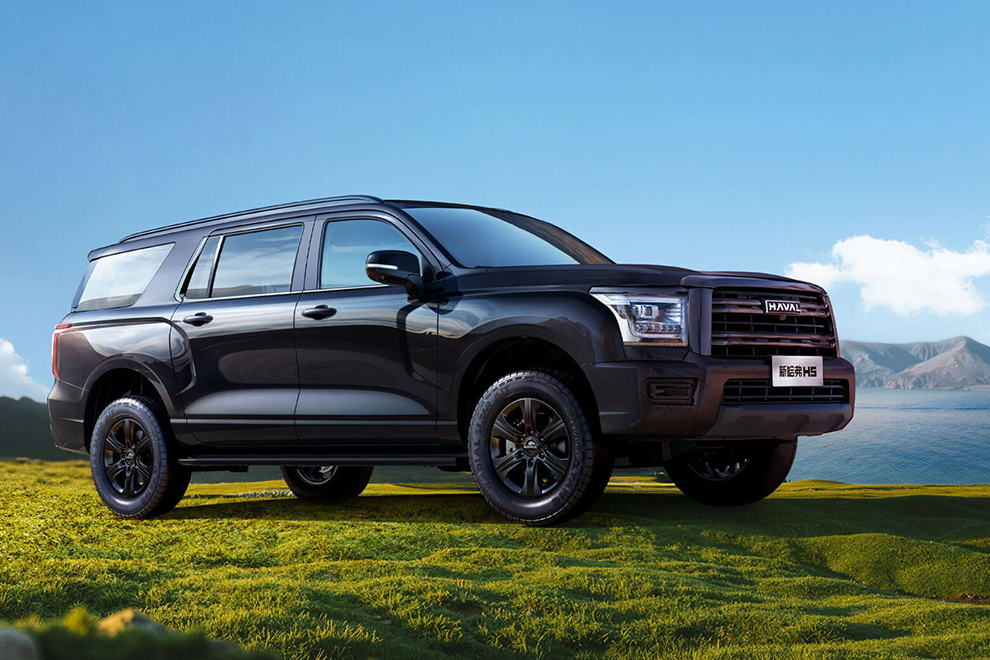
At a glance
- The H5 spans 2.0-litre petrol and diesel powertrains, with manual or automatic transmissions and 2WD or 4WD depending on trim.
- It suits value-focused SUV dealers and fleets needing a rugged, non-premium 4x4 rather than an electric vehicle.
- New vehicles offer a clearer condition baseline, while used Classic examples require detailed inspection and maintenance planning.
- Live export quotes depend on year, specification, condition, freight, Incoterm and destination charges.
- Confirm RHD availability, homologation, parts support, MOQ and documentation before paying.
Why the Haval H5 matters for export markets
The Haval H5 occupies a practical middle ground between a road-focused compact SUV and a dedicated off-road utility vehicle. Its available 2.0-litre petrol and 2.0-litre turbocharged engines, manual and automatic transmissions, and two- or four-wheel-drive layouts give importers several ways to serve different markets. That flexibility matters where buyers want SUV space, moderate off-road ability and lower operating costs without moving into a full-size premium 4x4. It is particularly relevant for independent distributors combining passenger-car dispatch with occasional construction, agricultural, tourism or utility work where local infrastructure is uneven or unreliable.
Demand should be understood by use case rather than assumed to be universal. The H5's traditional SUV format and 4WD options appeal to buyers who travel beyond paved routes, while two-wheel-drive versions can be more economical for urban fleets. Diesel derivatives may suit operators focused on torque and fuel use, whereas petrol derivatives are often easier to position to private buyers. The right market proposition depends on fuel rules, road conditions and after-sales expectations. Importers should therefore validate demand with local dealers, not simply transfer a domestic Chinese trim mix into an export catalogue.
[ChinaCarDirect's Haval brand hub](https://chinacardirect.com/car-brands/haval) is useful for narrowing the model family, but the export decision must still be vehicle-specific. Buyers should compare body condition, drivetrain, transmission, fuel and equipment against local demand, then confirm that parts and servicing can be supported. The H5's relevance lies in offering a credible value-oriented 4x4 proposition; it does not remove the work required to establish homologation, residual values and realistic ownership costs in each destination. For importers, that distinction between an attractive catalogue entry and a commercially supportable product is central from the outset.
- Petrol and diesel powertrain choices.
- 2WD and 4WD configurations.
- Local homologation remains essential.
Model range, trims and powertrain variants: how the lineup is structured and how to choose
The H5 range is best read as three connected choices: engine output and fuel, transmission, then drivetrain. Across the line-up, buyers can encounter 2.0-litre naturally aspirated and 2.0-litre turbocharged petrol engines, as well as 2.0-litre turbocharged diesel versions. Manual gearboxes appear on some Classic and entry-oriented variants, while automatics are attached to higher or newer equipment grades. Exact pairings differ by model year and edition, so the listing title must be treated as the starting specification, not a substitute for confirmation. Ask for photographs, plate, VIN and key documents before contracting.
Drivetrain should follow the operating environment, not simply the badge. A two-wheel-drive H5 can reduce complexity and may suit predominantly paved routes, fleet duties and buyers who prioritise purchase simplicity. Four-wheel-drive versions are more relevant for rural roads, winter access, construction sites or customers needing stronger traction. Do not assume every 4WD car has identical hardware: low-range provision, locking differentials, tyre type, ride height and equipment can differ, and these points deserve direct confirmation when traction is the reason for purchase. That distinction is especially important for commercial operators comparing life-cycle cost.
Trim labels such as Classic, Zhizun, Navigation, Leading, Innovation and Elite describe equipment and positioning within different generations, but translations are not always consistent across export catalogues. Buyers should build a requirement sheet: fuel, gearbox, 4WD or 2WD, trim equipment, condition and budget. Then compare equivalent configurations rather than assuming a higher-named edition is always better. Automatic transmissions can simplify daily operation, while manuals may suit buyers comfortable with that format and seeking a simpler specification. That choice should also reflect local mechanic familiarity, parts support and workshop experience over time.
- 2.0L and 2.0T options.
- Manual or automatic.
- 2WD or 4WD.
New vs used Haval H5: how export inventory is structured and how buyers choose
China's export channel for the H5 includes newer vehicles sold as new and older H5 Classic examples offered as used. These are different procurement propositions. A new vehicle should provide the most direct connection between current catalogue specifications and the importer's quality expectations, while a used vehicle can address demand for a lower purchase outlay, an established mechanical specification or a model year already familiar to local technicians. Availability should therefore be filtered by configuration and condition, not by a broad new-versus-used label. The live inventory remains the binding source for each offer.
Used H5 purchases demand a stricter inspection because the same model designation can cover large differences in age, mileage and maintenance history. Review the VIN, registration documents, engine and chassis photos, service records, accident history, underbody condition and evidence of off-road use. Check that the transmission, transfer case, differential and four-wheel-drive system operate correctly rather than assuming the 4WD badge guarantees a sound drivetrain. A pre-purchase inspection by an independent specialist is especially valuable before shipping a vehicle that cannot be returned easily or repaired after export without substantial cost.
New inventory is not automatically cheaper, and used inventory is not automatically riskier. The relevant comparison is total cost: vehicle price, expected repairs, financing, downtime, freight and eventual resale. New buyers gain a clearer condition baseline and should still inspect delivery, accessories and documentation. Used buyers may obtain a well-equipped 4WD at a lower entry point, but must price in maintenance, wear and uncertainty. A mixed wholesale brief can meet immediate needs with selected used units while preserving budget for newer models, subject to live seller terms and availability.
- New: clearer condition baseline.
- Used: lower entry outlay.
- Classic examples vary by condition.
How export pricing works: the factors behind a live listing price, and how to read one
An export listing price is a vehicle-specific commercial quote, not a permanent model price. The starting amount normally reflects model year, trim, engine, fuel, gearbox, drivetrain and whether the car is new or used. For a used H5, mileage, service history, cosmetic condition, accident repair, ownership, warranty status and the completeness of tools or accessories can move the amount materially. The same trim name can therefore produce very different figures once condition and specification are considered. Dealers should treat a displayed amount as a starting reference that must be matched to the particular vehicle and quoted terms.
Logistics also affect what a buyer ultimately pays. Currency movements, inland transport to the loading point, export handling, marine insurance, freight and destination charges all matter. The Incoterm is decisive because it defines where responsibility and cost transfer: a quote under one term may exclude sea freight, duties or local delivery that another quote includes. Compare like with like before judging competitiveness. A lower displayed vehicle figure can be more expensive once the buyer adds the same scope of transport, tax and compliance work. This applies equally to single vehicles and consolidated shipments.
To read a live H5 offer, first establish whether the amount covers the vehicle alone or a larger export package. Then identify the exact vehicle, its condition and every stated inclusion. Request an itemised quotation naming the Incoterm, destination, freight method, payment timing, documentation and validity period. Exact price, MOQ and availability belong to the individual live listing and can change; use the [current Haval H5 inventory](https://chinacardirect.com/products?q=H5&brands%5B%5D=25) as the binding source and the Haval brand hub to confirm model context. A written quotation should also state whether accessories, documentation and export handling are included.
- Compare identical configurations.
- Confirm freight and tax scope.
- Request an itemised Incoterm quote.
MOQ, ordering and payment: single units vs consolidating a container
Minimum order quantity is a seller and listing term, not a fixed characteristic of the H5. Some exporters may sell one vehicle directly; others may prefer multiples, a mixed batch or a full container to reduce handling and freight costs per unit. The live listing's MOQ field and the seller's written confirmation are therefore decisive. A buyer interested in Haval H5 wholesale supply should not infer a universal minimum from general vehicle data or assume that every supplier will split a container below its preferred quantity without prior written agreement.
Ordering one unit offers lower capital exposure and lets the importer test demand, specification accuracy and after-sales support before scaling. It may also mean less favourable freight economics or fewer consolidation options. Buying several comparable units can reduce unit logistics cost, simplify spare-parts planning and make marketing inventory easier to manage, but it increases exposure to slow sales, model-year obsolescence or a single condition problem. The best quantity therefore depends on verified demand, cash flow, destination-market rules and the seller's loading capability. A mixed order may offer compromise, provided the seller accepts it.
Payment structure should follow control of the goods and inspection rights. A workable sequence normally defines the specification, reserves the unit, records the agreed price and terms, verifies identity and documents, pays through the stated method, and then releases shipment after the required checks. Avoid transfers based only on a listing photograph or vague description. For a multi-vehicle order, use a condition schedule, serial-number list, packing plan and clear responsibility for damage, missing accessories, customs paperwork and release of funds, and use a written dispute process for discrepancies discovered before loading or delivery.
Shipping, homologation and market compliance caveats: LHD/RHD and import rules by country
China-spec H5 vehicles are commonly encountered as left-hand-drive, and RHD availability or conversion must not be assumed. Steering configuration affects the vehicle's identity, documentation, safety equipment and local registration. An importer should establish whether the manufacturer offers an RHD version for the destination before placing an order. If a steering conversion appears available, treat it as a separate engineering and compliance question covering controls, safety systems, visibility and certification rather than simply a mechanical swap. It also affects fleet familiarity, insurance acceptance and the availability of suitable replacement components in the destination market.
Local homologation is equally vehicle- and market-specific. Imported cars may need approval for emissions, noise, lighting, brakes, tyres, cybersecurity, radio equipment, software and crash-related requirements, depending on the country. Customs classification, age restrictions, emissions zones, roadworthiness tests and insurance can affect whether and when the H5 can be registered. The China-origin configuration does not by itself establish compliance overseas, so a local specialist or freight forwarder should review the VIN, engine, trim and intended use before non-refundable commitment. Compliance can also determine permissible modifications, noise limits and the paperwork sequence at the border.
Shipping method affects cost, lead time and vehicle exposure. Break-bulk or roll-on/roll-off handling suits individual vehicles more often than a standard container, while consolidated services can reduce cost but offer less control over grouping. Sea transit, port congestion, customs inspection, inland haulage, insurance and destination charges all affect the schedule. Confirm whether the vehicle is delivered as used, how keys and documents are packed, who handles customs, and which party bears damage during custody. Obtain a written delivery plan rather than relying on a general transit estimate or a booking confirmation alone.
- Verify RHD before payment.
- Review local homologation.
- Assign custody responsibility.
Who should buy the H5 — and who should pick a different vehicle
The H5 is a strong candidate for an importer seeking a non-premium SUV with a choice of 2WD and 4WD, petrol and diesel power, and manual or automatic transmission. It is particularly relevant for independent 4x4 dealers, regional distributors and fleet operators that can support the selected configuration and maintain realistic spare-parts access. Dealers serving markets with poor roads, variable traction or mixed urban and rural routes can use the range differences to build a genuine customer ladder rather than offering one generic specification with clear ownership costs and expectations.
It is less suitable when a buyer requires a factory-certified RHD model, advanced driver-assistance systems, a specific emissions compliance package or a tightly integrated European service network. Urban EV fleets should choose a battery-electric or plug-in hybrid vehicle, because the H5 is an internal-combustion model and has no battery range proposition. Buyers focused primarily on car-like ride, compact dimensions and low running costs may also prefer a road-oriented crossover. The strongest business case aligns the H5's durability with a clear local use case in advance rather than buying on appearance alone.
Before committing, run a simple portfolio test: does the target customer value 4WD, diesel economy, cargo utility or manual transmission enough to accept the vehicle's age, equipment style and ownership profile? Can the importer support parts, technician training and warranty work? Will exchange-rate and freight volatility still leave an acceptable margin? If the answers are uncertain, a road-focused SUV may move faster. If they are strong, the H5 can fill a useful gap between mainstream crossovers and expensive specialist off-road vehicles, provided those segments are not already heavily served locally.
Main rivals and how the H5 compares
Against Chinese-brand rivals, the H5's clearest distinction is its combination of traditional 4x4 utility positioning, 2.0-litre engine choices and a broad mix of manual, automatic, 2WD and 4WD configurations. It competes more directly with rugged, value-oriented SUVs than with premium off-road products. The closest alternatives include Jetour's X70 family, BAIC's BJ40 and Chery's Tiggo 7, although exact versions, equipment and homologation differ by market. The right comparison is therefore configuration against configuration, not badge against badge. Buyers should also consider service coverage, diesel availability, safety equipment and whether the alternative is more road-focused.
Jetour X70 models are a logical benchmark for buyers who want a Chinese SUV with a more road-oriented family-car brief and broader powertrain presentation. They may offer a different balance for private customers, while an H5 buyer needing a specific classic 4WD format may prefer the H5's utility positioning. BAIC BJ40 is closer for off-road styling and enthusiast use, but its equipment, service arrangements and ownership proposition should be checked locally. Neither brand should be assumed to have identical parts, dealer support or local homologation arrangements in the destination market.
Chery Tiggo 7 generally sits closer to a conventional crossover shopping list, which can make it easier to sell to comfort-focused drivers than a traditional utility SUV. The H5 may be the better match when low-range ability, 4WD access or diesel availability is central, but the buyer should verify whether those features are actually required. Across all rivals, compare documents, fuel economy expectations, cabin equipment, service intervals, safety provisions, parts and resale prospects. Price alone can hide differences in specification and whole-life cost. A test drive and document review can reveal more than a showroom comparison.
- Jetour X70: road-oriented SUV alternative.
- BAIC BJ40: off-road-focused rival.
- Chery Tiggo 7: comfort-led crossover.
Live Haval H5 export inventory
View all listings →Real units currently on ChinaCarDirect with per-unit asking prices and MOQ. Availability updates live from the catalogue.
Used Haval H5 2023 2.0T Automatic 4x4 Innovation Edition – Diesel
How to buy a Haval H5 from China
-
1
Define the market and operating use
Identify the destination country, typical roads, fuel rules and customer profile. Decide whether 2WD economy, 4WD access, diesel operation, manual simplicity or automatic convenience is the decisive requirement.
-
2
Build a configuration shortlist
Use the live Haval H5 listings to compare comparable engine, fuel, transmission and drivetrain combinations. Treat model year, trim name and condition as separate variables rather than assuming one grade covers every vehicle.
-
3
Verify identity, condition and documents
Request the VIN, registration documents, detailed photographs, service history and equipment list. For a used vehicle, arrange an independent inspection covering the engine, transmission, transfer case, chassis and four-wheel-drive system.
-
4
Request a landed quotation
Ask for an itemised written quote stating the vehicle price, Incoterm, destination, freight method, insurance, documentation and validity period. Compare offers on the same scope rather than comparing the displayed vehicle amount alone.
-
5
Clear destination compliance
Have a local specialist review registration, emissions, safety, customs, insurance and modification requirements. Confirm whether the vehicle is genuinely RHD and whether the proposed configuration can be homologated in the destination market.
-
6
Confirm MOQ and payment controls
Check the MOQ displayed for each live unit and obtain written confirmation of how mixed batches or container consolidation will be handled. Record the vehicle identity, condition schedule, payment milestones, inspection rights and release conditions before transferring funds.
-
7
Arrange shipping and vehicle release
Confirm the transport method, loading plan, insurance coverage, custody transfers, customs responsibility and export-document sequence. Inspect the vehicle and its accessories against the agreed condition record before final shipment or delivery.
H5 vs rivals
| Jetour X70 family | The X70 family is a close Chinese-brand benchmark with a generally more road-oriented family-SUV emphasis. It may suit private-car importers better, while the H5's 4WD utility format can be stronger for work-led or rough-road demand. |
|---|---|
| BAIC BJ40 | BJ40 is a closer alternative for buyers prioritising off-road styling and utility, with manual and 4WD choices also forming part of its proposition. Compare local homologation, service coverage and parts because the closest badge does not guarantee the closest ownership fit. |
| Chery Tiggo 7 | Tiggo 7 is more comfort- and crossover-oriented, which can broaden private-buyer appeal. The H5 makes more sense when 4WD access, diesel availability or a traditional utility format is central to the customer's requirements. |
Frequently asked questions
How is Haval H5 export pricing determined?
Every vehicle has its own export quote. The amount is driven by year, trim, engine and fuel, transmission, drivetrain, condition, mileage, logistics and the selected Incoterm. Check the current Haval H5 listings for the binding per-unit amount, then request an itemised written quotation.
What Haval H5 engine and transmission options are available?
The range includes 2.0-litre naturally aspirated petrol, 2.0-litre turbocharged petrol and 2.0-litre turbocharged diesel configurations. Manual and automatic transmissions are offered, while 2WD and 4WD depend on the trim. Confirm the exact pairing in the live listing and vehicle documents because it varies by edition.
Should an importer choose a new or used Haval H5?
A new vehicle offers a clearer condition baseline and a more direct link to current specifications, while a used Classic may offer a lower entry outlay and an established local repair base. Used purchases require more inspection and maintenance planning, so compare total ownership cost rather than purchase outlay alone.
What is the MOQ for Haval H5 vehicles?
MOQ is a seller and listing term rather than a universal H5 rule. Some sellers may accept a single vehicle, while others may require multiples or a consolidated shipment. Check the MOQ field on each live listing and obtain written confirmation before placing an order.
What affects Haval H5 shipping time and cost?
The shipping method, vessel space, port congestion, customs inspection, inland haulage, insurance, destination charges and vehicle handling all influence the schedule and landed cost. A written delivery plan should identify the route, Incoterm, custody transfers, documentation and any services excluded from the quoted freight.
Are spare parts available for the Haval H5?
Parts support depends on the destination, model year, trim and engine configuration. Importers should verify Chinese part numbers, catalogue coverage and local technician access before committing to fleet volumes, while allowing for model-specific differences in 2WD, 4WD, petrol and diesel components.
Is a right-hand-drive Haval H5 available for export?
RHD availability varies by seller, edition and destination, and China-spec H5 vehicles are commonly encountered as left-hand-drive. Check the live listing and ask the seller to confirm the original steering configuration. A conversion should not be assumed to satisfy registration, safety or homologation requirements.
How do I buy a Haval H5 from China?
Start with the live Haval H5 inventory, select an exact vehicle and request a written export quotation. After verifying documents, condition, MOQ, payment terms and destination compliance, confirm the shipping plan and inspection release process through the ChinaCarDirect RFQ team.
Ready to source the Haval H5?
Send your required Haval H5 configuration and destination to our RFQ team for a current vehicle-level export quote.
Request a quote