
Haval H6 Export Buying Guide for Dealers and Fleets
Buy Haval H6 from China with a practical guide to trims, 1.5T and 2.0T engines, used vehicles, export pricing, MOQ, shipping and market compliance.

At a glance
- The Haval H6 is a mainstream compact SUV with 1.5T and 2.0T turbocharged petrol choices.
- Manual and automatic transmissions and varied trim labels allow buyers to match equipment and drivetrain to local demand.
- Used Haval H6 purchases can reduce capital commitment but require condition, history and document checks.
- Export pricing depends on configuration, condition, logistics, exchange rates and the agreed Incoterm.
- Buyers should confirm steering side, exact model identity and destination-market compliance before committing funds.
Why the Haval H6 matters for export markets
The Haval H6 occupies the mainstream compact-SUV position: a practical five-door vehicle for private buyers, company fleets and resellers seeking a raised body, useful cargo space and a modern appearance without a premium-brand budget. Haval’s range includes city-oriented, comfort, sport and higher-specification versions, allowing the H6 to cover several market roles. For overseas buyers, it is often more relevant as an accessible Chinese-brand SUV alternative than as a luxury import. Its export appeal comes from familiar SUV proportions, multiple transmission choices and a clear relationship with the wider Haval model family.
Demand for the H6 is strongest in markets where buyers accept Chinese vehicle marques but still expect the qualities of an established SUV format: straightforward loading, good visibility, predictable fuel use and a broad choice of equipment. The model can suit a dealer building an accessible family-SUV range, a rental or company-fleet operator, or an importer replacing a vehicle category rather than a specific premium model. Its familiar proportions also make it easier to explain to customers than a niche derivative. Brand awareness, after-sales coverage and residual-value confidence still determine whether it becomes mainstream or remains value-led.
For an export manager, the H6’s importance is not that it is a globally uniform product. It is that the core name covers enough mechanical and equipment choices to serve several budgets, while the export market naturally includes many production years and conditions. A dealer can begin with a familiar automatic SUV, then widen the range if service feedback supports it. Before scaling, verify local brand recognition in the destination market, parts supply and the ability to support each exact configuration; these factors often matter more than a trim badge itself.
- Mainstream compact SUV from Haval.
- 1.5T and 2.0T petrol engines.
- Manual and automatic configurations.
Model range, trims and powertrain variants: how the lineup is structured and how to choose
Chinese-market trim labels on the H6 include combinations such as National Trend, Sport, Champion, Urban, Luxury, Elite, Pro and Max. These names describe market positioning more reliably than they describe a standardized global equipment list. The same label can be attached to different model years, and a manual version may sit below an automatic version in the domestic range. Buyers should therefore treat model year, engine, transmission, drivetrain and option list as the real configuration, using the trim name as shorthand rather than a substitute for the VIN and specification sheet.
The core powertrain choice is between 1.5-litre and 2.0-litre turbocharged petrol engines, often listed under GDIT or T designations. Manual and automatic transmissions are both represented in the export-facing mix, while two-wheel drive is common across many trims. The smaller engine generally prioritizes purchase cost, fuel consumption and urban drivability; the larger unit normally provides more torque reserve for laden trips, air-conditioned traffic and steeper roads. Neither engine is electric, so buyers should assess fuel consumption, refuelling needs and range planning for their destination market rather than apply battery or charging assumptions.
Start with the operating scenario, not the badge. A city fleet may prioritize automatic transmission, low running costs and straightforward servicing, while a family importer may favor a higher-spec automatic with better equipment and safety kit. Manual versions can suit price-sensitive buyers with straightforward operation. Compare the same year, engine and transmission across candidates because equipment, packaging and condition can change sharply. The live H6 search may also surface related H6S or H6L vehicles; those are not interchangeable with the standard H6, so confirm the exact model, body and VIN before calculating compliance or spares.
- Trim labels vary by model year.
- Two-wheel drive is common.
- Verify exact body and VIN.
New vs used Haval H6: how export inventory is structured and how buyers choose
The export inventory should be read as two distinct sourcing channels. New vehicles represent newer domestic production, while used H6s cover older generations and a broader set of trim histories, with mileage and condition varying by unit. This structure gives buyers different risk profiles: a new vehicle offers a cleaner ownership chain, whereas a used vehicle can make a particular body, engine or equipment combination more accessible. Model-year labels are useful for narrowing the search, but they do not replace an inspection, an ownership-history check and a document review before shipment.
Buying new favors buyers who want the latest available specification, predictable condition and the strongest basis for after-sales support. It also simplifies model comparison because the buyer can focus on current trims rather than reconciling repairs, replacements and age-related specification differences. The trade-offs are a higher acquisition outlay, faster depreciation after initial registration and less flexibility if a lower-cost configuration meets the market better. Fleet buyers should compare total operating cost over the planned holding period, not simply the newest sticker. A lower purchase outlay may be offset by higher financing, insurance and downtime costs.
A used H6 can be the rational choice where the buyer needs a proven model at a lower capital cost or where a specific earlier-generation design is more suitable. The trade-off is uncertainty: mileage may reflect mixed use, and wear can differ sharply between similarly priced vehicles. Inspect tyres, suspension, body panels, engine bay, transmission operation, cooling system and cabin condition, then request service records, ownership documents and a VIN history check. Match the advertised engine, transmission and equipment to the physical vehicle because sellers may reuse marketplace trim titles across model years.
- New vehicles reduce ownership uncertainty.
- Used vehicles require inspection and history checks.
- Match condition to holding period.
How export pricing works: the factors behind a live listing price, and how to read one
A Haval H6 export listing price is not based on the model name alone. The year, trim, engine, transmission, drivetrain, mileage, condition, ownership history, paint and accident or repair disclosures all affect a seller’s asking position. Market demand and the chosen unit’s specification can also create a large gap between otherwise similar advertisements. On top of that, vehicle cost, freight, insurance, port charges, customs, brokerage and destination taxes may sit outside the displayed amount. The correct comparison is therefore landed cost for equivalent vehicles, not the lowest headline figure visible in the listing.
Start by opening the live H6 listing and reading the full description rather than relying on the thumbnail title. Record the model year, engine, transmission, drive configuration, mileage, condition, seller location and every included or excluded item. Check whether the price refers to the vehicle alone, an export arrangement or another commercial basis, and which Incoterm is stated. Ask for the VIN, production month if shown, photos, inspection documents and any known damage disclosure before treating the advertised description as complete. Terms should be agreed in writing with the seller, not inferred from the page layout.
A useful export quote should separate the vehicle price from transport and import costs. Depending on the agreed Incoterm, it may cover different combinations of vehicle custody, port handling, ocean or road freight, insurance, documentation, duties and destination charges. Compare like-for-like terms because two listings can look cheaper until one excludes shipping or assumes a different delivery point. Exchange rates, bunker surcharges, congestion and the chosen sailing or road route can also move a quote. Exact current per-unit price, MOQ and availability should be confirmed on ChinaCarDirect’s live listings before ordering.
- Configuration and condition drive asking prices.
- Incoterm determines included logistics costs.
- Confirm current figures in live listings.
MOQ, ordering and payment: single units vs consolidating a container
MOQ means the smallest quantity a seller will accept for a given commercial arrangement. It is not a fixed attribute of the H6 and can vary by seller, vehicle specification, destination and logistics plan. For a dealer or wholesale buyer, a single-unit purchase may be possible where a seller accepts it, but it should not be assumed from general marketplace practice. Container consolidation usually requires enough compatible vehicles and clearer economics, yet introduces more coordination and inventory risk. Ask the seller to state the current MOQ for the selected listing and explain any unit discount or consolidated shipping terms in writing.
A disciplined export order follows a clear sequence. First define the destination market, desired powertrain, condition and budget, then shortlist live units by the correct identifiers. Next request a proforma quotation showing the vehicle price, Incoterm, payment milestones, documentation and validity period. After technical review and seller confirmation, a deposit or reservation may be requested, followed by the agreed balance before release or shipment. Payment method, fees and exact cancellation or refund conditions should be confirmed directly rather than inferred from a generic checkout process. Keep every version of the agreement.
When consolidating a container, compare the units as a homogeneous batch, not simply as a collection of discount opportunities. Confirm matching model year, engine, transmission, trim, emissions version, steering side and key options where local homologation requires consistency. Agree on who arranges loading, insurance, damage inspection and release of export documents. Photograph each vehicle at pickup and record VIN, condition and visible imperfections before departure. This discipline reduces the risk that a cheap unit becomes expensive after repair, damage or a compliance mismatch delays customs clearance.
- MOQ is set per commercial arrangement.
- Compare single-unit and consolidated economics.
- Agree payment milestones and documents.
Shipping, homologation and market compliance caveats: LHD/RHD and import rules by country
Steering configuration is one of the first checks for an overseas H6 because it affects driving usability, local registration and the vehicle itself. Vehicles sourced from China’s domestic market are commonly left-hand-drive, so a buyer requiring right-hand-drive should not assume that a standard listing will suit. Availability of a factory right-hand-drive H6 must be confirmed for the exact model year and market. Converting steering and related components may add cost, reduce warranty coverage or affect safety and consistency checks, so it should be treated as a separate engineering project rather than a simple preference.
Import rules are not standardized by the vehicle name. Each destination may apply its own type approval, safety-equipment, emissions, tax, duty, registration and used-vehicle age or condition rules. A China V or China VI designation in a trim title does not automatically prove approval in the destination country. Confirm VIN identity, emissions evidence, safety labeling, tyre and lighting compliance, and any required modifications with a qualified customs broker or local authority. For fleet use, also check registration categories, insurance classes and local inspection rules before committing funds to a shipment or retail program.
Logistics and compliance can change the economics as much as the vehicle price. Ocean freight depends on route, origin and destination ports, container type, season and carrier space; road delivery adds distance, tolls, border procedures and local handling. Insurance and cargo cover should be checked against the Incoterm and the value of the consignment. Used vehicles may face tighter import rules or inspection standards in some markets, so use a specialist broker to confirm admissibility before paying final balances. A pre-shipment document review is the simplest way to avoid discovering a VIN, description or classification mismatch after the vehicle has left the supplier.
- Confirm left- or right-hand drive early.
- Local approval is separate from the trim label.
- Use a destination-market compliance specialist.
Who should buy the H6 — and who should pick a different vehicle
The H6 is a strong fit for buyers who want a conventional compact SUV with automatic convenience, a broad selection of trim names and a purchase route that can include both new and used vehicles. It works well for dealer stock programs, company cars, rental fleets and distributors serving family and first-time SUV buyers. A buyer who values straightforward servicing, familiar controls and a choice between manual and automatic versions has several practical routes into the model. The two-wheel-drive versions are especially relevant where road conditions and load requirements do not justify added drivetrain complexity.
The H6 is less suitable for buyers whose core requirement is a hybrid, battery-electric drivetrain or a vehicle already certified to a specific overseas emissions standard. It may also disappoint an importer seeking a large seven-seat family SUV, premium safety technology or a direct factory warranty in the destination market. A buyer who expects one global specification, abundant alloy parts or effortless compatibility with every homologation regime should look elsewhere. These are not flaws in the H6; they are mismatches between a mainstream Chinese-market SUV and a different operating brief.
A useful buying test is to model the vehicle over its planned service life. Compare fuel consumption, insurance, depreciation, maintenance, tyres and downtime against the resale value and replacement cost in the destination market. An H6 with the right automatic trim and service support may be the lower-risk choice for a fleet, while a manual version could suit a cost-conscious buyer with a stable parking routine. The right decision is the configuration whose cash flow and downtime profile matches the operation, not the newest badge or the lowest asking price.
- Best for mainstream dealer and fleet demand.
- Unsuitable for EV or large-family priorities.
- Evaluate lifecycle cost, not badge age.
Main rivals and how the H6 compares
The closest alternatives include the Chery Tiggo 7, Geely Coolray, also known in some markets as the Binyue, and Changan CS35 Plus. All sit near the H6 in the mainstream compact-SUV class and are plausible alternatives for price-conscious dealer and fleet buyers. The closest competitor, however, depends on the destination because local service networks, safety expectations and brand recognition can outweigh a specification sheet. Compare the H6 against locally supported rivals rather than assuming every Chinese compact SUV is directly interchangeable. Especially for fleet procurement, local uptime matters more than a small equipment difference.
Against the Tiggo 7, the H6 should be judged on exact engine, transmission, equipment, condition and the importer’s support network rather than badge prestige. The Coolray offers a sportier visual proposition and is a useful benchmark for buyers who value design and a more youthful image, while the CS35 Plus is a relevant value-led alternative. Test the H6 against those rivals on fuel use, boot practicality, tyre and parts availability, safety equipment, dealer margins and resale prospects, not just purchase cost. A shortlist built around actual operating requirements is more reliable than a brand ranking.
The H6 is most persuasive when the importer can explain its practical strengths in the destination market and support it after sale. Its broad mix of engine, transmission and condition options creates flexibility but also makes careful configuration control essential. If the H6 offers the right powertrain, service coverage and total-cost advantage, it can be a strong value-led choice. If it does not, the comparison should move to a locally supported rival rather than accepting a weak assumption that any Chinese SUV will succeed with the same sourcing discipline.
- Tiggo 7, Coolray and CS35 Plus are direct benchmarks.
- Compare service support and operating costs.
- Choose after an exact-spec inspection.
Live Haval H6 export inventory
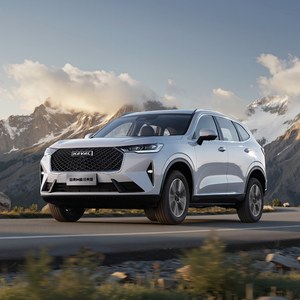
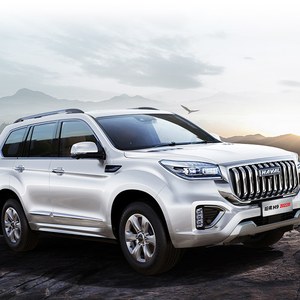
View all listings →Real units currently on ChinaCarDirect with per-unit asking prices and MOQ. Availability updates live from the catalogue.
How to buy a Haval H6 from China
-
1
Define the destination and use case
Identify the destination country, steering requirement, passenger or fleet role, preferred engine, transmission and planned holding period before comparing vehicles.
-
2
Shortlist exact H6 configurations
Use the live H6 inventory to compare model year, engine, transmission, drivetrain, trim, mileage and condition. Exclude H6S or H6L vehicles unless those related models are specifically required.
-
3
Verify identity and condition
Request the VIN, clear photographs, specification details, service records, ownership documents and known damage disclosures. For used vehicles, include an independent inspection in the purchase terms.
-
4
Request a written export quotation
Ask the seller to separate the vehicle price from freight, insurance, documentation, port charges and duties. State the intended Incoterm, destination and delivery point so quotations remain comparable.
-
5
Confirm payment and release terms
Agree the deposit or reservation, balance schedule, accepted payment method, fees and refund conditions in writing. Make release conditional on satisfactory inspection and correct export documentation.
-
6
Prepare shipping and compliance
Confirm VIN and model identity, steering side, customs classification, local type approval and destination charges with a specialist broker before shipment. Arrange pre-shipment photography, insurance and cargo documentation.
H6 vs rivals
| Chery Tiggo 7 | The Chery Tiggo 7 is a close China-origin compact-SUV benchmark for buyers focused on mainstream equipment and petrol powertrains. The H6 may suit importers seeking broader manual, automatic and used-unit choice, while the Tiggo 7 may be easier for some buyers to support through an established local network. |
|---|---|
| Geely Coolray (Binyue) | The Geely Coolray provides a sportier, design-led alternative in a similar mainstream class. It is worth testing against the H6 when customer demand favors styling and a newer visual identity over the H6’s practical SUV proposition. |
| Changan CS35 Plus | The Changan CS35 Plus is a value-oriented compact-SUV competitor for cost-sensitive dealers and fleets. Compare it with the H6 on engine, equipment, safety content, parts availability and local service support rather than assuming the lower purchase quote produces the lower operating cost. |
Frequently asked questions
How is the Haval H6 export price determined?
The live price is influenced by vehicle configuration, year, mileage, condition, market demand, exchange rates and the exporter’s commercial terms. Freight, insurance, port handling, customs duties and destination taxes can add costs depending on the Incoterm. Check the current per-unit price and availability on ChinaCarDirect’s live H6 listings, then request a written landed-cost quotation for the destination.
What engine and transmission options does the Haval H6 have?
The H6 uses turbocharged petrol engines in 1.5-litre and 2.0-litre forms, with manual or automatic transmissions depending on trim and year. Two-wheel drive is common, while the exact emissions version and equipment must be checked for each vehicle. It is not a battery-electric model, so range planning should focus on realistic fuel consumption and refuelling.
Should an overseas buyer choose a new or used Haval H6?
A new H6 provides a cleaner ownership chain, newer specification and stronger after-sales potential, but normally requires more capital and may depreciate sooner. A used H6 can offer better acquisition economics and access to particular body or equipment versions, but it carries condition, maintenance and documentation risk. The best choice depends on the holding period, resale expectations and local service capability.
Does buying an H6 from China require a full container?
There is no universal MOQ for the H6; the minimum quantity depends on the seller, vehicle, destination and commercial arrangement. A single-unit purchase may be accepted, while container consolidation requires enough compatible vehicles. Check the current MOQ on the selected live listing and have the seller confirm it in the written quotation.
What determines Haval H6 shipping time and cost?
Shipping time and cost depend on origin and destination ports, the selected Incoterm, carrier space, route, season, fuel and congestion surcharges, insurance, customs clearance and inland delivery. Used-vehicle inspection or port delays can add time. Request a door-to-door schedule and cost breakdown, and confirm whether any charge is excluded from the quoted vehicle price.
Are spare parts available for an exported Haval H6?
Parts availability varies by model year, engine, transmission and whether the vehicle was built for the Chinese or an export market. Before purchasing, ask for the VIN, engine and gearbox codes and confirm local stock, import lead time and warranty treatment with a Haval parts counter. This helps avoid sourcing parts for an older or mismatched configuration.
Is a right-hand-drive Haval H6 available for export?
China-domestic H6 vehicles are commonly left-hand-drive, and factory right-hand-drive availability is not guaranteed for every year or trim. State the required steering side before requesting vehicles and obtain written confirmation of the VIN and configuration. If no suitable unit exists, treat conversion as a separate regulated project rather than a routine shipping option.
How do I buy a Haval H6 from China?
Start with the live H6 listings, compare exact specifications, request a written export quotation and verify the vehicle identity and condition. Agree the Incoterm, payment schedule, documentation, inspection and shipping responsibilities before paying a balance. The seller should confirm the selected unit, current price, MOQ and availability in the final order confirmation.
Ready to source the Haval H6?
Send your destination, required H6 specification and quantity to ChinaCarDirect for a current unit-level export quote.
Request a quote