
Haval H9 Export Buying Guide for Dealers and Fleets
Build a cost-aware Haval H9 export plan by comparing 2.0T and 2.4T trims, five- or seven-seat layouts, used versus new units, pricing and shipping.
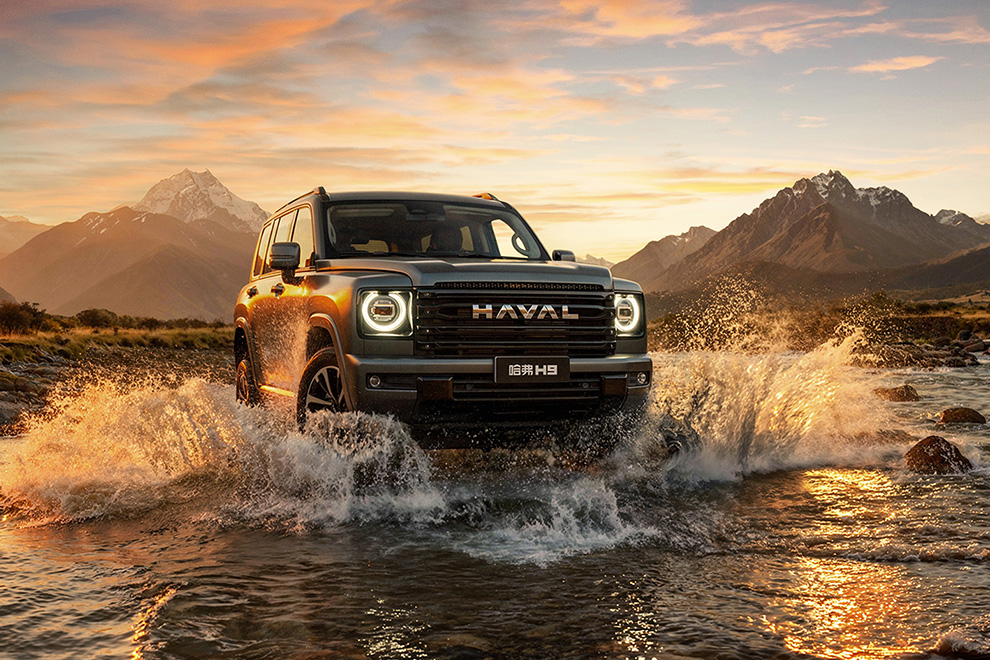
At a glance
- A body-on-frame 4x4 SUV with five- or seven-seat layouts.
- 2.0T gasoline and 2.4T diesel powertrain choices.
- New and used sourcing routes suit different dealer requirements.
- Live quotes must separate vehicle cost from freight, taxes and Incoterm.
- Steering side, homologation, parts support and shipping need early confirmation.
Why the Haval H9 matters for export markets
The Haval H9 sits in the large, body-on-frame 4x4 SUV segment, where overseas buyers often want more space and towing utility than a compact crossover without moving to a full-size pickup. It combines five- or seven-seat layouts with two powertrain families: 2.0T gasoline and 2.4T diesel. That mix lets distributors serve passenger, contractor and institutional customers from one model family. Its four-wheel-drive configurations and different equipment grades suit fleets and importers across varied road conditions. The result is a versatile platform for markets where passenger utility, cargo capacity and light off-road capability must coexist.
Demand for this kind of vehicle is not simply about headline acquisition cost. Fleets compare passenger capacity, luggage space, fuel choice, ground clearance and the ability to keep operating on poor roads; private importers also consider whether a seven-seat body can be serviced and insured economically. For dealers, the H9 bridges rugged utility vehicles and more comfort-focused large SUVs. Different editions can be matched to fleet specifications without changing the underlying model identity. That creates a clearer sourcing brief when carefully comparing a seven-seat flagship with a five-seat work-oriented derivative.
For overseas buyers evaluating a Haval H9 for export, international appeal depends on the model being adaptable rather than tied to one domestic specification. Steering side, emissions equipment, lighting, infotainment, safety equipment and regional type approval can affect whether a vehicle may enter and be registered in the destination country. Export sourcing therefore needs careful matching, not just a model-name search. Buyers who understand differences between Luxury, Premium, Elite, Extreme, Explorer and Territory editions can avoid paying for equipment the target market neither expects nor values. For fleet tenders, settle those distinctions before payment because later retrofits can erase an apparent sourcing advantage.
- Five- and seven-seat body choices.
- 2.0T gasoline and 2.4T diesel.
- Body-on-frame 4x4 positioning.
Model range, trims and powertrain variants: how the lineup is structured and how to choose
The line-up is easiest to read in three layers: powertrain, seating and equipment grade. The 2.0T gasoline versions cover combinations of Premium, Elite, Luxury, Extreme and Smart Enjoyment configurations, while the 2.4T diesel versions appear with Extreme, Explorer, Territory, Premium and Luxury labels. Labels and equipment can change by model year, so “4WD,” “4x4” and “AWD” describe configurations rather than a universal equipment package. Compare the complete vehicle description, not just a familiar trim badge. Request the actual equipment list because regional production can make similarly named editions materially different from one another.
Seating choice is often the clearest difference between two otherwise comparable H9 listings. A five-seat version can be easier to load, offer more luggage space behind the second row and suit fleets with fewer passengers. A seven-seat version adds third-row utility for families, shuttle operators and institutional buyers. Before ordering, check the seat count, luggage capacity with the third row installed and the expected cargo arrangement. Do not assume a seven-seat cabin retains the same load floor as the five-seat body. Inspect photographs and ask for packaging details before committing.
Engine choice should follow utilization and fuel availability rather than badge appeal. The 2.0T gasoline option is easier to consider where petrol is widespread, while the 2.4T diesel option may suit higher-distance commercial use where diesel service and fuel standards are established. Four-wheel-drive versions add capability for poor surfaces, but not every market can absorb their purchase, fuel and maintenance cost. Confirm the automatic transmission, engine output, axle layout and local homologation for the exact vehicle. Because performance figures and gearbox types can vary by generation, use the live listing as the unit-level source of truth.
- Match engine to duty cycle.
- Verify seats and cargo layout.
- Compare full equipment by year.
New vs used Haval H9: how export inventory is structured and how buyers choose
The export market for the H9 is structured around two distinct purchasing routes. New vehicles represent factory configurations and are normally assessed by model year, trim, seating, drivetrain and delivery condition. Used vehicles are sold as individual assets and should be assessed through mileage, service history, accident or repair evidence, wear, title status and documentation completeness. A new-versus-used label alone is not a condition report. For dealers, each route requires a separate sourcing and remarketing checklist. That discipline prevents a standardized trim name from concealing differences in condition, specification or readiness for sale.
For a used H9, the VIN and production year should anchor the file. Ask for registration documents, import history where available, maintenance invoices, photographs of the body and underside, tyre information, and a report on electronic and mechanical condition. Check that the listed engine, seats and drive layout match the inspection vehicle, because trim descriptions can be inconsistent. For fleet buyers, structural integrity, fluid condition, restraint systems and corrosion matter more than a clean cabin. Inspection should also cover cold starting, transmission behavior, steering and braking before releasing any balance payment.
New units offer a different risk profile, especially when a buyer wants a consistent specification for resale or fleet deployment. Confirm production timing, factory status, warranty coverage in the destination country, included accessories, and whether the vehicle has the exact equipment shown in the listing. For a mixed export program, some dealers use newer vehicles as showroom or premium fleet demonstrators while sourcing selected used units for value-sensitive customers. That strategy works only if the customer is told clearly which vehicle they are buying. Compare total delivered cost and expected resale positioning.
- Used: inspect history and condition.
- New: confirm production and warranty.
- Match specification to customer.
How export pricing works: the factors behind a live listing price, and how to read one
A Haval H9 export price results from several interacting variables. Model year and condition set the starting point, while trim, 2.0T or 2.4T powertrain, five- or seven-seat layout, drivetrain specification and visible equipment affect comparability. Mileage and repair history matter most for used units. Beyond the vehicle itself, exchange rates, payment timing, freight route, insurance, port handling, Incoterm and destination taxes can change landed cost. A live vehicle price is not automatically the total import cost. Separate the seller's quoted vehicle amount from every charge required after the vehicle leaves its origin.
When reading a live listing, first confirm what the quoted amount covers: the vehicle only, inland transport, export documentation, shipping, marine insurance or a broader delivered service. Check the currency, whether taxes and duties are included, the named port or place of delivery, and the Incoterm that allocates risk between the parties. Then look for a quote-validity date or a seller confirmation requirement. A precise-looking price can still be unusable if those elements are missing. Request a written quotation for the exact unit and destination rather than assuming a search-result figure has the same scope.
Buyers often compare listings that are not economically equivalent. Two H9s can differ in engine, seats, condition, mileage and equipment, so ranking them only by the visible amount rewards a lower-spec vehicle rather than the better acquisition. The more useful comparison is landed cost per vehicle, followed by running cost and residual value. Use the live H9 inventory to shortlist like-for-like units, then request current unit-level pricing and a full cost breakdown. Only a live listing or current seller quotation should be treated as binding. If the quote uses another currency, confirm its exchange-rate date and repricing terms.
- Separate vehicle and landed costs.
- Read Incoterm and tax scope.
- Compare like-for-like units only.
MOQ, ordering and payment: single units vs consolidating a container
Minimum order quantity is a commercial field attached to the individual offer, not a permanent characteristic of the H9. A dealer seeking to buy Haval H9 from China should ask whether the selected listing can be purchased as one unit and what minimum the seller will accept. Some inventory can be bought separately, while larger movements may receive different terms. Do not infer a catalogue-wide rule from one search result: verify the current MOQ shown against the chosen unit before placing funds. The practical quantity should also reflect homologation demand, parts planning and the sales cycle.
Container consolidation can make mixed-model or mixed-year buying more practical, but it adds coordination. Different H9 trims may have different equipment, documentation, production periods or destination eligibility, so they should not be grouped merely to fill space. Agree the final vehicle count, inspection standard, payment schedule and allocation of charges before vehicles move to the consolidation point. The freight forwarder then needs accurate dimensions and weight for each vehicle, not a generic H9 estimate. Confirm whether the shipment will use container, flat-rack or roll-on/roll-off handling based on the actual vehicle and port.
A sound ordering workflow starts with a written specification, followed by a pro forma invoice identifying the vehicle or vehicles, price, Incoterm, deposit, balance, document schedule and refund conditions. Pay only through the account and channel shown in the transaction workflow, and reconcile beneficiary details independently. Before final payment, inspect or commission an independent inspection of the exact unit where practical. For used vehicles, verify that the inspection report, title file and agreed VIN correspond to the same vehicle. Keep every amendment and approval in one transaction record for traceability.
- Confirm MOQ on each listing.
- Coordinate mixed units before consolidation.
- Match invoice to inspection unit.
Shipping, homologation and market compliance caveats: LHD/RHD and import rules by country
The first compliance question for a Haval H9 import is steering configuration. Left-hand-drive and right-hand-drive vehicles are not interchangeable for registration in every market. A left-hand-drive unit may be appropriate in many countries, while a right-hand-drive version is needed in others; changing steering side is not a routine conversion and can affect equipment, safety and homologation. Confirm the configuration shown in each live listing, and ask the seller for available production or export-market documentation before committing to freight. Availability of the correct side and specification is a sourcing constraint, not merely a preference.
Homologation and import rules are country-specific and can be stricter for used vehicles. Check VIN and type-approval requirements, emissions and noise standards, lighting and safety equipment, customs classification, age limits, inspection rules, quotas, and any local restrictions on diesel passenger vehicles. Taxes or duties may vary with engine size, fuel, age, emissions class and vehicle category, so an initial estimate should be confirmed with a local customs broker. A vehicle that is roadworthy in China is not automatically compliant in the destination country. Allow time for modifications or document corrections before registration.
Shipping method should follow vehicle condition, route economics and port handling. Complete H9 units may move by container, flat rack or roll-on/roll-off depending on dimensions, equipment and availability, while used vehicles need protection against leaks, abrasion and weather exposure. Freight cost is influenced by origin and destination ports, sailing or trucking frequency, container or specialist-trailer capacity, fuel surcharges, insurance, customs clearance and inland delivery. Ask for a landed freight quotation with loading and discharge points named, and document pre-shipment condition before the vehicle leaves the supplier. Marine transit remains an estimate until the carrier confirms routing.
- Confirm steering side before freight.
- Check destination type approval.
- Name ports and protection terms.
Who should buy the H9 — and who should pick a different vehicle
The H9 is a strong fit for distributors serving markets where a rugged, seven-seat 4x4 has a practical role: mining and energy projects, construction supervision, emergency response, regional government, NGOs and long-distance commercial fleets. It is also suitable for importers adding a large SUV to a dealer range that otherwise jumps from compact crossovers to full-size premium models. The 2.0T gasoline choice broadens the likely customer base, while 2.4T diesel versions can suit intensive users with established refueling and maintenance support. Fleet operators should still model payload, towing needs and driver acceptance.
It is less suitable for buyers whose priority is a small urban footprint, minimal operating cost or a plug-in powertrain. The H9's size and four-wheel-drive hardware can be inconvenient in congested cities, and a diesel configuration may be unattractive where diesel policy, fuel quality or maintenance capability is weak. Buyers seeking a premium passenger-car experience may prefer a more closed body and lower running costs. If the requirement is a city commuter rather than a long-distance utility platform, a smaller crossover or electrified model may be more rational. Fleets without a secure parts plan should not buy before confirming workshop support.
The most reliable buying decision is based on total cost over the planned ownership period. Include acquisition, inland and ocean freight, insurance, taxes, fuel, scheduled maintenance, tyres, parts, downtime and expected residual value rather than focusing on the vehicle price alone. For a used H9, condition can materially change operating cost even when two listings carry similar titles. For a new H9, equipment overlap with your market can improve resale, while unsupported options may add little value. Use a spreadsheet to compare shortlisted live units on the same assumptions, especially for a regional fleet program.
- Suited to rugged fleet and family use.
- Weak fit for compact urban commuting.
- Compare full ownership costs.
Main rivals and how the H9 compares
The closest alternatives to the Haval H9 in the large 4x4 SUV export segment are typically the Toyota Fortuner, Mitsubishi Pajero Sport and Isuzu MU-X. Each competes for distributors seeking passenger capacity, durable four-wheel-drive architecture and operating costs suited to regional fleets. The H9’s distinguishing package is its body-on-frame format, choice of five or seven seats, and 2.0T gasoline or 2.4T diesel powertrains. Local brand recognition and after-sales reach can matter as much as the vehicle itself. A sound comparison should use destination-specific landed cost, registration rules, fuel availability and workshop support.
Against the Toyota Fortuner, the H9 may appeal to buyers who want a broader selection of seating and powertrain combinations or a different equipment-value equation. The Fortuner, however, often benefits from a well-established international brand identity and a large regional service ecosystem, which can reduce perceived purchase risk and help resale. For a fleet buyer, compare expected parts lead times and workshop coverage in the destination rather than assuming either model is automatically cheaper or easier to support. Dealer network strength can outweigh a small equipment difference, and the correct choice is often the model agents can service consistently.
Against the Mitsubishi Pajero Sport and Isuzu MU-X, the H9 offers a China-origin sourcing proposition with multiple luxury, premium and off-road-oriented editions. The Pajero Sport has a strong regional reputation in many markets, while the MU-X is widely considered in fleet and commercial contexts; those strengths can make local acceptance and resale easier in appropriate regions. The H9 may be more attractive when its specific diesel or seven-seat configuration, condition, or wholesale terms suit the buyer better. No model wins universally: homologation, parts and after-sales evidence should carry more weight than brochure comparison. Test the shortlist against the actual duty cycle.
- Fortuner: stronger global brand recognition.
- Pajero Sport: strong regional reputation.
- MU-X: fleet-focused alternative.
Live Haval H9 export inventory
View all listings →Real units currently on ChinaCarDirect with per-unit asking prices and MOQ. Availability updates live from the catalogue.
How to buy a Haval H9 from China
-
1
Set the operating brief
Define passenger count, routes, cargo needs, towing requirements, fuel availability and budget. Use this to choose five or seven seats, gasoline or diesel, and the appropriate equipment grade.
-
2
Shortlist live inventory
Review the current Haval H9 listings and compare like-for-like units by year, condition, engine, seating, drivetrain and equipment. Record the exact live price shown for each unit.
-
3
Verify the selected vehicle
Request the VIN, production details, photographs, equipment list and inspection evidence. For a used Haval H9, also obtain maintenance records and ownership documents.
-
4
Build a landed quotation
Ask for the vehicle amount, inland transport, export documentation, freight, insurance, port charges, tax or duty status and Incoterm. Ensure the delivery place and currency are stated.
-
5
Check destination compliance
Confirm steering side, homologation, emissions, safety requirements, customs classification and any used-vehicle age restrictions with an experienced local broker.
-
6
Agree the order and payment
Review the pro forma invoice, MOQ, deposit, balance, refund conditions and title requirements. Use only verified beneficiary details and the payment channel shown in the transaction workflow.
-
7
Inspect, release and ship
Complete the agreed pre-shipment inspection, check the vehicle and documents together, and then release the balance. Book freight under the confirmed loading method and retain condition photographs and shipping records.
H9 vs rivals
| Toyota Fortuner | The Fortuner often benefits from stronger international brand familiarity and broader regional after-sales recognition. The H9 may better suit buyers prioritizing more seating and powertrain combinations or a different China-origin wholesale proposition. |
|---|---|
| Mitsubishi Pajero Sport | The Pajero Sport has strong acceptance in many markets and is a natural comparison for diesel-oriented fleet buyers. The H9 offers a broader equipment ladder and body-on-frame seven-seat option, but local parts and workshop support should decide the outcome. |
| Isuzu MU-X | The MU-X is widely considered in fleet and commercial contexts and can benefit from established market recognition. The H9 may offer a broader passenger and powertrain mix, while the MU-X can be preferable where its local service network is stronger. |
Frequently asked questions
How is Haval H9 export pricing determined?
Pricing depends on model year, condition, trim, engine, seating, drivetrain, equipment, mileage where relevant, exchange rates, freight, insurance, Incoterm and destination charges. The visible vehicle amount is not necessarily the landed cost. Check the current per-unit price in the live Haval H9 listings and request a written quotation for the chosen vehicle and destination.
What engine and powertrain options are available?
The H9 is offered with 2.0T gasoline and 2.4T diesel engines, generally with automatic transmissions and four-wheel-drive configurations. Five- and seven-seat bodies are available depending on trim. Exact output, gearbox type, emissions equipment and homologation vary by model year and market, so confirm them in the live listing.
Should I buy a new or used Haval H9?
A used H9 can reduce acquisition cost but requires detailed scrutiny of mileage, repair history, corrosion, mechanical condition and documents. A new H9 offers a more standardized specification and newer production, although the buyer should confirm destination-country warranty coverage. Compare delivered cost, expected resale and fleet requirements rather than making the decision on condition label alone.
What is the MOQ for Haval H9 orders?
MOQ is an offer-specific commercial term rather than a permanent model characteristic. Ask whether the selected unit can be purchased separately and confirm the minimum quantity shown for that listing before payment. Larger consolidated orders may qualify for different commercial or freight terms.
What determines Haval H9 shipping time and cost?
Origin and destination ports, carrier schedule, container or specialist-trailer capacity, fuel surcharges, insurance, customs clearance and inland delivery all affect freight cost. Shipping method should match the vehicle dimensions, condition and handling requirements. Transit time is an estimate until the carrier confirms the route and booking.
How do I source spare parts for the H9?
Use the VIN, model year, engine and trim to identify compatible components, because parts can differ between production periods and market variants. Confirm whether original, remanufactured or aftermarket alternatives are available and compare expected lead times with local workshop requirements. A parts plan should be agreed before placing a large fleet order.
Can I buy a right-hand-drive Haval H9?
Right-hand-drive availability depends on the live inventory and the destination market. Check the steering configuration shown for each unit and obtain supporting production or export-market documents before paying. Do not assume a left-hand-drive vehicle can be converted economically or will pass local homologation after conversion.
How do I order a Haval H9 from China?
Start with the live listings, select a vehicle that matches the required year, trim, powertrain, seating and condition, and then request a written quotation with the destination and Incoterm. Confirm MOQ, payment milestones, documentation, inspection and refund terms before paying. After the pre-shipment check, release the balance and arrange freight under the agreed delivery terms.
Ready to source the Haval H9?
Send your destination, trim preference, quantity and timeline for a tailored Haval H9 export quote.
Request a quote