
HIMA Aito M5 Export Guide for Overseas Buyers
Compare HIMA Aito M5 trims, powertrains, export pricing, shipping and compliance, then review live listings for current unit quotes and importer-ready options.
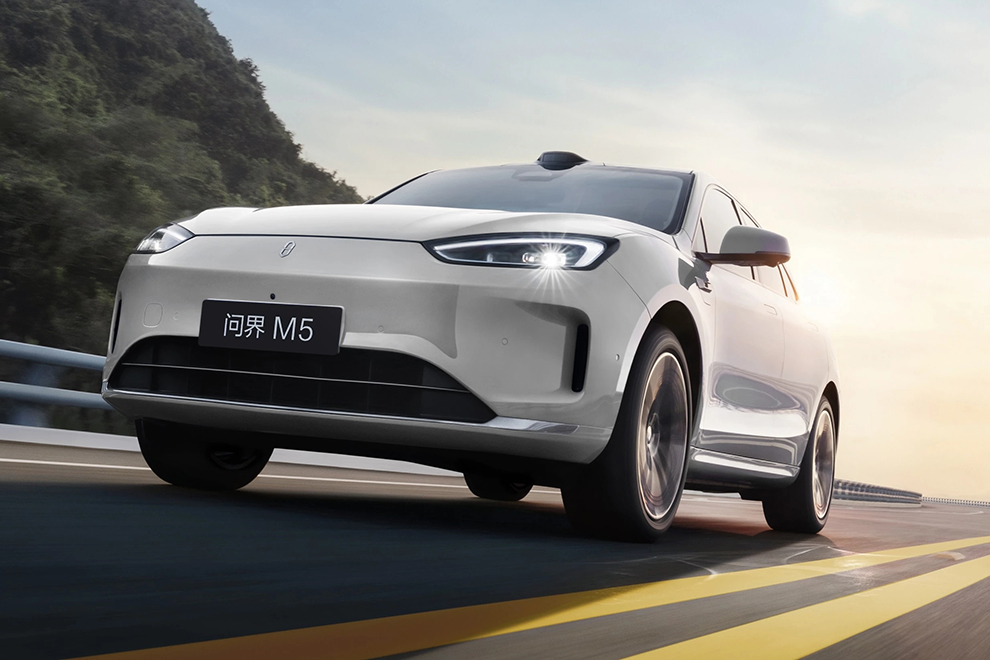
At a glance
- The Aito M5 is a compact SUV offered with range-extended and pure-electric powertrain concepts.
- Rear-drive and all-wheel-drive trims suit different cost, traction and operating priorities.
- Range, battery, dimensions and equipment depend on the exact version and model year.
- Export prices move with trim, condition, currency, freight, insurance, duties and Incoterms.
- Single-vehicle RFQs and planned container consolidation require different ordering and documentation workflows.
Why the HIMA Aito M5 matters for export markets
The HIMA Aito M5 matters in export markets because it combines a relatively compact SUV footprint with two distinct electrified propositions: a range-extended version for buyers who want electric daily driving without relying entirely on charging, and a pure-electric version for markets with usable charging networks. That combination gives importers more flexibility than a one-powertrain catalogue, while positioning the model against globally familiar electric crossovers. For overseas dealers, the appeal is less about a single universal specification and more about matching vehicle architecture, operating costs and local infrastructure to a clearly defined customer.
The Aito name also brings a technology-led showroom proposition that can differentiate an independent dealer from a traditional used-car offer. Buyers should assess that proposition through the actual vehicle: check which intelligent-driving and cabin functions are fitted, whether they can operate in the destination language, and whether local rules permit the relevant cameras, radar and software. Hardware labels alone do not prove that a feature is approved, activated or supported after delivery. The same discipline matters for replacement parts, map services and diagnostics, because these can determine ownership usefulness long after the sale.
Export relevance can be strongest for importers serving urban and regional customers who value SUV packaging, electrified efficiency and a high specification at a competitive equipment level. It may be less suitable where buyers prioritize an established local dealer network, straightforward type approval or proven residual values. Before treating the Aito M5 as a core range filler, examine the intended market’s charging pattern, fuel network, road rules and service capability rather than relying on headline positioning. This is a market-fit judgement rather than a sales-volume claim. Start with the [HIMA brand hub](https://chinacardirect.com/car-brands/hima) before narrowing the model.
- EREV and BEV suit different charging needs.
- Technology claims need local approval checks.
- Service capability can outweigh showroom specification.
Model range, trims and powertrain variants: how the lineup is structured and how to choose
The Aito M5 line-up is easier to decode as three separate decisions: energy type, driven axle and equipment tier. Range-extended and pure-electric versions use different operating logic, while rear-wheel-drive and all-wheel-drive variants change traction, packaging efficiency and likely operating costs. Names such as Standard, Ultra, Performance, Intelligent Driving, Flagship, Max and Max RS indicate hierarchy, but translated Chinese trim labels can shift between model years. The safest method is to match the complete listing name to its model year, then confirm the powertrain and driven axle from the vehicle documents rather than from a family-level brochure.
For a buyer choosing between powertrains, the range-extended model is the more flexible long-distance option because an engine-driven generator can support the battery when plug-in charging is unavailable or inconvenient. The pure-electric model removes the onboard range extender and depends on charging for ordinary use. That makes charging access, annual mileage and the buyer’s tolerance for charging routine more important than a single headline range figure, which can differ by test cycle and trim. Used examples also require battery and generator condition checks before that flexibility can be treated as dependable in daily service.
Rear-wheel-drive variants generally suit buyers who prioritize simpler drivetrain architecture, efficiency and fleet cost, while all-wheel-drive versions add traction capability where roads are wet, steep or poorly surfaced. Performance-oriented and higher equipment trims may also change brakes, suspension, tyres and software, so they should not be judged only by badging. Intelligent-driving versions require an extra check of sensor fit, calibration and regulatory status in the destination country. A practical shortlist should therefore record energy type, driven axle, body condition, charging access and required local features for every candidate, then compare total cost rather than purchase price alone.
- Confirm powertrain before comparing specifications.
- RWD favors efficiency; AWD adds traction.
- Trim labels do not prove exact equipment.
New vs used HIMA Aito M5: how export inventory is structured and how buyers choose
Export inventory for a Chinese model can arrive through dealer transfers, fleet disposals, demonstration vehicles, parallel imports or conventional new-car channels. The Aito M5 listing must therefore be read as a condition-specific asset, not simply as a model name. Check whether the year, trim and powertrain are stated unambiguously; mixed labels such as Range-Extended, Pure Electric and All-Electric are useful only when supported by the VIN, registration documents and physical inspection. For a current quote, use the [live Aito M5 listings](https://chinacardirect.com/products?q=Aito%20M5&brands%5B%5D=964) and request the exact vehicle documents before committing or placing a deposit.
A used Aito M5 can make sense for a dealer seeking immediate model access, a known configuration or a lower acquisition commitment than a factory-new purchase. The trade-offs are depreciation already taken, uncertainty over service history and wear, and potentially reduced battery life on a pure-electric car. A range-extended example adds generator, fuel-system and engine-maintenance checks. New inventory may offer a later model year and clearer factory history, but it can still be a China-specification vehicle without the destination-market approvals a local buyer expects. That distinction should guide the sales claim to local buyers.
For used units, an independent inspection should cover body structure, paint, accident evidence, tyre age, brake condition, chassis condition and a full diagnostic report. For a BEV, ask for battery state-of-health data and evidence of charging performance; for an EREV, also inspect the generator, exhaust and service records. Verify recalls, outstanding faults, software entitlement and whether replacement modules can be diagnosed locally. These checks are more valuable than assuming that a newer listing is automatically the best-equipped vehicle. The goal is to buy a documented, serviceable vehicle rather than merely a low advertised number.
- Match VIN, registration, trim and vehicle.
- Inspect battery health and generator service separately.
- New status does not guarantee homologation.
How export pricing works: the factors behind a live listing price, and how to read one
A live Aito M5 export price is not one fixed wholesale figure. It is the intersection of model year, trim, range-extended or pure-electric configuration, battery or equipment version, mileage, exterior condition, service history and the seller’s commercial terms. A listing may reflect an asking price for the vehicle alone, while an RFQ can add payment, documentation, inland transport, freight, insurance, duty and destination charges. Always establish what is included before comparing offers. Exchange rates and freight routes can move the landed total materially even when the vehicle specification has not changed.
Currency conversion is only one layer. The relevant rate may change between quotation and settlement, and it can affect the seller’s willingness to revise an asking price. Freight also depends on origin and destination ports, vehicle dimensions, transport mode, insurance, congestion, seasonal demand and the Incoterm selected. A buyer comparing EXW, FOB, CIF or another structure should identify exactly where risk, insurance, customs clearance and payment obligations transfer. The same model can therefore have different economics under different terms and obligations. Do not compare a delivered quotation with a vehicle-only asking price.
To read a live listing, start with the vehicle identity and options, then check the quoted currency, condition, year, trim and included documents. Next determine whether the displayed amount is an asking price, a seller-negotiated price or an export quote, and whether freight, tax and insurance are excluded. Ask for the calculation behind any change and request a written pro forma invoice. The [live Aito M5 inventory](https://chinacardirect.com/products?q=Aito%20M5&brands%5B%5D=964) is the place to obtain current per-unit numbers; only that quote and the signed sale terms should govern a purchase decision in writing.
- Separate vehicle price from landed cost.
- Compare quotations under one Incoterm.
- Use listings and written invoices as evidence.
MOQ, ordering and payment: single units vs consolidating a container
The buying unit for an individual vehicle and the commercial unit for an importer are not the same. A dealer may be able to request an individual matching unit through an RFQ, subject to the seller’s approval and the quoted commercial terms, without treating a catalogue-wide minimum as a fixed promise. Fleet or distributor buyers may ask for several units, but the required mix should be specified by year, trim, powertrain and destination. The safest first step is a written requirement rather than a vague container request, with agreed tolerances clear before quotation.
Consolidating a container can reduce per-vehicle transport and handling costs when several buyers or vehicles share compatible loading requirements, but it adds coordination risk. Different model years, high-roof equipment, battery declarations and destination rules may complicate consolidation. Responsibility must be fixed for vehicle collection, inspection, customs papers, insurance, loading, damage inspection and terminal release. In a consolidated move, one delayed document or damaged vehicle can affect vehicles belonging to several buyers, so roles and recourse should be explicit. This makes consolidation attractive for planned volume but unsuitable for an untested supplier relationship.
Payment sequencing should follow evidence, not sales pressure. A normal framework may reserve the vehicle after identity and ownership checks, collect a deposit against a pro forma invoice, and balance after inspection or agreed shipment milestones. Available payment methods, refund conditions and buyer protection should be confirmed in writing because international transfers and currency conversion carry counterparty and compliance risk. Use the seller’s verified company and beneficiary details, obtain an invoice and sales contract, and avoid releasing funds to an unrelated personal account. Any guarantee or escrow arrangement should be independently verifiable.
- Single-unit orders need vehicle-level verification.
- Consolidation multiplies document and damage risk.
- Tie payments to verifiable milestones.
Shipping, homologation and market compliance caveats: LHD/RHD and import rules by country
Start with the left-hand-drive or right-hand-drive question. A Chinese-market vehicle should not be assumed to be suitable for either steering configuration, and China specification does not automatically mean an export-ready hand-drive variant. The listing must state the steering side, and the physical vehicle and documents should confirm it for that vehicle. RHD availability can be limited or absent, so buyers in markets such as Australia, the United Kingdom or Japan should treat that requirement as a gating check rather than a late conversion request. Converting steering is not a substitute for homologation.
Import and sale usually require several country-specific approvals: vehicle type approval, emissions and safety rules, customs valuation and duties, VIN or registration compliance, radio and charging provisions, and local rules for driver-assistance software and data. Electric vehicles also raise questions about battery transport documentation and charging equipment. A vehicle can be mechanically sound yet legally unsaleable if its configuration lacks required certification. Buyers should obtain a destination-specific compliance checklist before paying, and the importer or local homologation specialist should confirm both road legality and registration for the exact configuration before shipment.
Shipping choice affects both cost and risk. Enclosed container transport can offer greater handling separation, while roll-on/roll-off may suit certain routes and loading constraints; either method needs securement, moisture protection and careful pre-loading inspection. Sea freight is only one component: origin handling, inland haulage, terminal charges, marine insurance, destination customs, port fees, storage, delivery and VAT or other taxes can all matter. Compare delivered, landed and duty-unpaid quotations on the same Incoterm, and document who bears responsibility from the factory or collection point to the final customer without hidden assumptions and responsibilities.
- Verify steering side before committing.
- Approval must cover the exact configuration.
- Define responsibility through unloading and release.
Who should buy the Aito M5 — and who should pick a different vehicle
The Aito M5 best fits buyers who want a technology-oriented compact SUV, have a real use case for either range extension or pure electric travel, and can support a China-origin ownership plan. Rear-drive versions may suit cost-sensitive fleets, while all-wheel-drive and higher-specification versions may suit buyers needing traction or more equipment. Dealers should target customers who can operate or receive support for Chinese-language systems, charging procedures and potentially imported parts. It is a stronger proposition when local support is planned before delivery. A vehicle history file and remote support agreement can turn that proposition into a manageable ownership package.
The model is less suitable for buyers who require a factory-new vehicle with immediate local certification, a broad established service network or highly predictable resale values. It may also be a poor fit where charging is unreliable and operating patterns are incompatible with a range-extended system’s maintenance needs, or where local fleet rules discourage imported software and driver-assistance functions. Used purchases add battery, wear and history uncertainty. In such markets, a conventionally homologated hybrid, pure-electric or combustion SUV may lower operational and compliance risk, even if its imported price appears attractive.
Fleet buyers should run a total-cost comparison that includes energy or fuel, insurance, maintenance, tyres, software support, depreciation, import charges and downtime. A range-extended vehicle can suit mixed charging access and longer routes; a BEV can suit predictable duty cycles with dependable charging. For a used EREV, generator servicing and battery health can materially affect cost. The decision should therefore follow route and infrastructure analysis, not simply the powertrain label, and should include a test vehicle or independently verified inspection before a larger commitment, especially for mixed fleet environments abroad and its accompanying documentation.
- Best for technology-led buyers with charging plans.
- Less suitable where approval and service dominate.
- Fleet decisions should follow duty-cycle analysis.
Main rivals and how the Aito M5 compares
The Tesla Model Y is the clearest global benchmark because it combines a familiar electric-crossover format with strong brand recognition and an established charging proposition in many markets. It is pure electric, so buyers who require an onboard range extender lose that option, and local price, tax and delivery terms can compare differently. The Model Y may be easier for some customers to support and resell; the Aito M5 offers more powertrain choice and a China-specific technology proposition, subject to local approvals. Service coverage and used-car transparency should be checked rather than assumed.
BYD’s Sealion 7 is a closer size-and-price competitor in markets where it is sold, with electrified crossover positioning and, depending on the local range, battery-electric or plug-in-hybrid choices. It may be attractive to dealers already familiar with BYD channels and parts support. The Aito M5 is generally positioned as a more compact, technology-led alternative with both range-extended and pure-electric variants. The deciding evidence should be homologation, after-sales reach, actual charging capability and total cost, not badge or brochure comparisons. Availability and equipment can change by country, so confirm the exact derivative.
Leapmotor C10 is a useful direct comparison because it is also offered in pure-electric and range-extended SUV forms and is exported through international distribution partnerships. It may appeal where value, simpler specification and partner-distributor logistics lead the brief. Aito M5 can counter with a distinct intelligent-cabin proposition and a different range of equipment tiers, but neither brand’s imported support should be presumed. Buyers should compare warranty handling, software updates, parts, battery assurance and verified residual demand before choosing. A [broader brand comparison](https://chinacardirect.com/car-brands) can help buyers place those alternatives in context.
- Model Y is the global BEV benchmark.
- Sealion 7 competes in electrified SUV markets.
- C10 directly challenges the EREV and BEV offer.
Live HIMA Aito M5 export inventory
View all listings →Real units currently on ChinaCarDirect with per-unit asking prices and MOQ. Availability updates live from the catalogue.
Used Hima AITO M5 2025 Extended-Range Ultra Rear-Wheel-Drive Version
Used Hima AITO M5 2025 Extended-Range Ultra All-Wheel-Drive Version
Used Hima AITO M5 2025 Extended-Range Ultra All-Wheel-Drive Version
Used Hima AITO M5 2024 Extended-Range Max Rear-Wheel Drive Advanced Intelligent Driving Version
How to buy a HIMA Aito M5 from China
-
1
Define the duty cycle
Choose EREV when charging access is inconsistent or long routes dominate; choose BEV when daily routes have dependable charging and the buyer accepts pure-electric operation. Record annual mileage, route profile and local fuel or charging access.
-
2
Set destination requirements
Specify the destination country, steering side, language, charging interface, safety and driver-assistance requirements, quantity and budget framework. Have a local broker or homologation specialist confirm approval and registration before paying.
-
3
Shortlist matching vehicles
Use the [live Aito M5 listings](https://chinacardirect.com/products?q=Aito%20M5&brands%5B%5D=964) to compare year, trim, powertrain, drivetrain, condition and equipment. Treat each listing as a separate vehicle requiring document and identity checks.
-
4
Verify identity and history
Match the VIN to the listing, registration, ownership record, service history and physical vehicle. Ask specifically for accident evidence, outstanding recalls, diagnostic reports and battery or generator records appropriate to the powertrain.
-
5
Request an itemized export quote
Send the exact vehicle requirement through the [RFQ page](https://chinacardirect.com/contact). Require a written quotation stating currency, Incoterm, freight, insurance, inland transport, duties, taxes, payment milestones, documents and delivery scope.
-
6
Inspect before final payment
Use an independent inspection for a used vehicle, covering bodywork, tyres, brakes, underbody, electronics and charging where applicable. Release the balance only after the inspection findings and vehicle identity match the contract.
-
7
Book compliant transport
Confirm the carrier or consolidation plan, battery transport paperwork, cargo insurance, loading instructions and inspection points. Track the vehicle through inland collection, export, customs clearance, unloading and final delivery.
Aito M5 vs rivals
| Tesla Model Y | The Model Y is a globally familiar pure-electric crossover with a strong charging and resale proposition, making it attractive where buyers prioritize established support. The Aito M5 provides range-extended and pure-electric choices and a China-specific technology proposition, but imported support and local approval must be verified. |
|---|---|
| BYD Sealion 7 | The Sealion 7 is a close electrified-SUV competitor in markets where it is offered, with battery-electric or plug-in-hybrid derivatives depending on the country. The Aito M5 is the more compact option with a technology-led range and different trim hierarchy; compare homologation, service reach and total operating cost. |
| Leapmotor C10 | The C10 directly competes through pure-electric and range-extended SUV versions, often appealing to value-focused importers. The Aito M5 offers a distinct intelligent-cabin and equipment proposition, so the final choice should turn on verified warranty handling, parts support, software access and residual demand. |
Frequently asked questions
How is the HIMA Aito M5 export price determined?
A live asking price is shaped by model year, trim, powertrain, battery or equipment version, mileage, condition, options and seller terms. Freight, insurance, inland transport, customs charges, taxes and the selected Incoterm can change the landed total. Check the [live Aito M5 listings](https://chinacardirect.com/products?q=Aito%20M5&brands%5B%5D=964) for the current per-unit amount, then request a written export quote stating what is included.
Which powertrain and range should I choose?
The line-up includes range-extended and pure-electric versions, with rear- or all-wheel drive depending on trim. An EREV offers generator support for flexible charging access, while a BEV depends on regular charging and has no onboard fuel tank. Exact battery, motor and range figures differ by version and test cycle, so check the live listing and model-year documentation.
Should I buy a new or used HIMA Aito M5?
A used vehicle can provide an established configuration at a lower acquisition commitment, but the buyer inherits depreciation, wear and service-history uncertainty. A BEV adds battery-health questions, and an EREV requires generator and fuel-system checks. A newer vehicle may simplify ownership history, although China-specification status still requires destination-market homologation.
What is the MOQ for an Aito M5 order?
MOQ is agreed for the specific quotation rather than assumed from a model-level catalogue page. An individual-unit RFQ may be possible for a suitable vehicle, while larger orders should specify the trim and powertrain mix and any consolidation plan. Confirm the seller’s minimum, payment milestones and cancellation terms in writing before placing a deposit.
How long does shipping take, and what drives cost?
Transit time and cost depend on origin and destination, transport mode, vehicle dimensions, port handling, freight rates, insurance and congestion, plus any inland delivery. Electric vehicles also require the correct battery transport documentation. Compare quotations under the same Incoterm and ask for separate vehicle, freight, insurance, duty and destination-charge lines.
Are spare parts and software support available?
Availability depends on the destination and the seller’s or manufacturer’s local support arrangements, so buyers should verify this before committing. Ask for diagnostic capability, parts lead-time methods, software-update access and the effect of a failed module on the warranty. For fleet use, a documented parts and remote-support plan is more important than a generic promise of availability.
Is a right-hand-drive Aito M5 available?
Do not assume that a Chinese-market Aito M5 is right-hand drive; the steering side must be confirmed for the exact vehicle. RHD availability and conversion legality vary by country, and a conversion can create compliance, warranty and residual-value issues. Include the destination in the RFQ and require written confirmation before ordering.
How do I order a HIMA Aito M5 from China?
Start with the live inventory, select a matching vehicle or request a tailored RFQ, then verify the VIN, ownership documents, condition and destination compliance. Obtain an itemized quotation and contract with clear deposit, balance, inspection, freight and Incoterm terms. After payment and inspection, use a compliant carrier or consolidation plan and track the vehicle through export, customs and final delivery.
Ready to source the HIMA Aito M5?
Send your destination, preferred powertrain, trim, quantity and delivery requirements for a current unit-level quote and export plan.
Request a quote