
HIMA Aito M7 Export Buying Guide for Dealers and Fleets
Compare HIMA Aito M7 trims, powertrains, used-vehicle options, export pricing, MOQ, shipping and homologation before ordering safely from China.
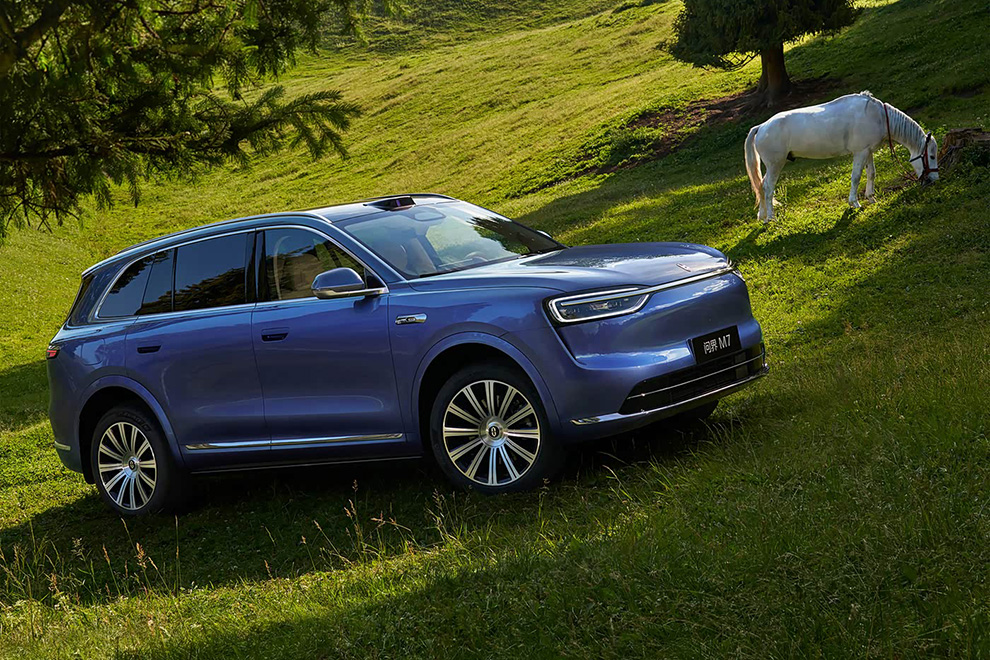
At a glance
- The Aito M7 spans petrol, range-extender and pure-electric powertrains, with rear-drive and all-wheel-drive choices by trim.
- Five- and six-seat layouts address family, executive, passenger-transport and company-fleet requirements.
- Trim labels reveal useful hardware tiers, but the VIN-linked build sheet remains the controlling document.
- Used-unit value depends on condition, service history and battery health where applicable.
- Landed cost, MOQ and current availability must be confirmed in the live listing and written quotation.
Why the HIMA Aito M7 matters for export markets
The HIMA Aito M7 occupies an unusual export position: a technology-led, mid-size SUV offered with petrol, range-extending and battery-electric configurations, rather than a single global specification. For overseas dealers and fleet buyers, that breadth makes it relevant where customers want a spacious five- or six-seat vehicle, a modern digital cabin and the option to choose an energy format suited to local infrastructure. Its appeal is strongest in markets comfortable with Chinese vehicles and prepared to support their electronics and service requirements. That makes careful trim and market validation more important than badge recognition.
Demand for this type of SUV is driven less by one universal ranking and more by the match between use case and local conditions. Rear-drive petrol versions may suit buyers prioritizing straightforward operation and predictable long-distance refuelling. Range-extender and electric versions address routes where charging access varies or where quiet electric running is desirable. Six-seat derivatives can serve larger families and executive transport, while five-seat versions may be easier to manage in dense markets. Export success therefore depends on honest customer education and a service plan for the destination market.
The model also brings a particular buying risk: sophisticated Chinese vehicles can be sold internationally faster than local parts, software support or technician knowledge can mature. A strong importer should examine the exact vehicle, not just the HIMA and Aito M7 names. Check whether the driver-assistance functions and cockpit services work with the language, connectivity and data expectations of the destination. Long-term value will depend as much on parts access and repair capability as on the original purchase decision before promotion to customers rather than relying on showroom specifications alone.
- Five- and six-seat layouts.
- Multi-powertrain export choice.
- Local service readiness is critical.
Model range, trims and powertrain variants: how the lineup is structured and how to choose
Aito M7 trim names are the first specification filter. The range includes rear-drive 1.5T versions labelled Comfort, Plus, Pro, Max and Ultra, plus four-wheel-drive versions with luxury or intelligent-driving emphasis. Seat counts are part of the designation rather than a separate accessory. A buyer should therefore compare the complete title, including engine, drive layout, seat count and equipment tier, because two listings sharing the Aito M7 name may not be equivalent products. Ask the seller to reconcile the trim label with the build sheet and VIN before placing an order.
The powertrain map is broader than the 1.5T badge alone suggests. Export-relevant configurations include conventional petrol models, range-extender derivatives and pure-electric Max versions. Petrol suits buyers with reliable fuel networks; a range extender combines electric driving with a petrol energy source, while a battery-electric vehicle depends on charging access and route planning. The lineup also spans rear drive and all-wheel drive. These choices should follow infrastructure and utilization, not merely a buyer's preference for the newest technology. For fleet bids, confirm the energy source available at each charging or refuelling base.
Intelligent Driving, Pro, Max and Ultra labels indicate different equipment positions, but they should not be treated as proof of identical hardware in every export vehicle. Software activation, camera coverage, radar specification and feature naming can differ by model year and market. Buyers should request the build sheet, confirm which functions are physically fitted and test the user interface. If a fleet requires a particular level of autonomy branding, regulatory constraints and terminology must be checked before those labels are used in local marketing, advertising or customer contracts without overstatement.
- Verify trim against the VIN build sheet.
- Choose drive layout after route review.
- Confirm assistance hardware and activation.
New vs used HIMA Aito M7: how export inventory is structured and how buyers choose
Export inventory should be understood as a changing mix of vehicles with different depreciation, use and documentation histories. A used Aito M7 can offer a lower acquisition hurdle and immediate specification availability, but its value depends on condition rather than the model name alone. Conversely, a new vehicle may reduce uncertainty around wear, but availability, configuration and local homologation can limit choice. Buyers should evaluate each unit on the same checklist rather than assuming one category is universally cheaper or safer in the target market or more liquid after export.
For a used unit, mileage is only one part of the story. Inspect tyres, brakes, suspension condition, bodywork, interior wear and the completeness of service records. On range-extender and battery-electric cars, request battery state-of-health information, charging-cycle history and confirmation that the high-voltage system has not been altered or damaged. Check accident disclosure, title status and VIN history. A clean inspection report linked to the exact VIN is more valuable than a generic used-vehicle assurance. This matters especially where local technicians may not yet know the model or its hybrid systems.
Fleet buyers should compare total operating cost rather than acquisition price alone. Electric and range-extender vehicles can change fuel and maintenance economics, but depreciation depends on battery confidence, local policy and resale support. Used units may fit tight replacement budgets; newer vehicles may suit employers standardizing driver-assistance and connectivity. For any large order, sample one unit, standardize acceptance criteria and reserve funds for port charges, repairs, software setup and parts. A supplier unable to document those items has not demonstrated export readiness for long-term fleet ownership in that country or dealer support.
- Inspect every used vehicle by VIN.
- Request electrified battery health reports.
- Standardize fleet acceptance criteria.
How export pricing works: the factors behind a live listing price, and how to read one
An export listing is a starting quote, not automatically a landed cost. The displayed unit price can move with model year, exact trim, seat count, drivetrain, powertrain, mileage, condition and optional equipment. For used vehicles, battery health, tyre replacement needs and repair history can materially affect value. Dealer margins, exchange-rate movements and the urgency of a particular unit also influence the ask. The correct comparison is like-for-like: same year, title, powertrain, seating and condition. Ask for a written quotation that identifies every included charge and exclusion before placing funds online.
Freight, insurance, port handling, documentation, customs duties and taxes belong in the landed-cost calculation, but whether they appear in the listing depends on the seller's Incoterm and quotation structure. A vehicle priced for delivery at a Chinese port is not directly comparable with one quoted delivered to the importer's warehouse. Exchange rates also affect the home-currency value of a renminbi-denominated ask. Request the currency, tax basis, validity period and payment conditions, then model scenarios for exchange-rate and freight changes rather than accepting a headline figure as final cost for the importer.
Read each live listing as a structured offer. Confirm the title, year, complete trim, drivetrain, seating, odometer, condition grade, VIN and equipment list. Then look for the asking price, MOQ, location, lead time and Incoterm. These details explain why two similarly named units can differ. ChinaCarDirect shows exact price, MOQ and availability per unit in the live Aito M7 inventory, the authoritative reference for present commercial terms. Treat them as a live commercial input and always verify first.
- Compare identical years, trims and condition.
- Separate vehicle price from landed cost.
- Use written, dated quotations.
MOQ, ordering and payment: single units vs consolidating a container
MOQ is a commercial term, not a fixed property of the Aito M7 model. It can be set by the seller, the chosen configuration, the exporter, or the terms attached to a particular listing. For a small pilot purchase, ask whether one vehicle can be ordered and how the seller defines the minimum order quantity. For a wholesale program, request the unit price at several volumes and clarify whether mixed years or trims can share one shipment. Always read the MOQ shown on the specific live listing before checkout or contracting.
A single-unit order is useful for testing demand, photography, inspection capability and local customer reactions. It can also expose shipping costs that are less visible in a large fleet discount. Consolidation can improve freight efficiency, especially when several units share a carrier booking, but it increases working capital, delays access to every vehicle and complicates inspection of mixed configurations. A buyer should compare the savings after handling, storage and financing costs with the benefit of receiving inventory sooner. Consolidation is a logistics decision, not merely a price-volume choice for importers.
Ordering mechanics should be written down before funds move. The purchase contract should identify the specific vehicle or VIN, trim, colour, options, condition, price currency, MOQ, deposit, balance trigger, inspection standard, documents and cancellation terms. Use a staged payment plan linked to documentary and inspection milestones, and confirm which party holds the vehicle after shipment. For a consolidated order, attach a unit-level packing list and serially record any discrepancy. A clear contract reduces the chance that an attractive headline price becomes an expensive dispute over missing accessories or damage claims.
- Check MOQ on each listing.
- Contract the VIN and milestones.
- Include all handling costs.
Shipping, homologation and market compliance caveats: LHD/RHD and import rules by country
Chinese-market vehicles are commonly configured for left-hand-drive use, and an export-bound Aito M7 should not be assumed to have a right-hand-drive version. Dealers in right-hand-drive markets should ask the seller for a factory-market RHD example or a documented conversion option, then confirm whether the steering, instrument cluster, infotainment functions and safety systems remain compliant. A local conversion can add cost and may affect warranty, insurance or approval. Factory provenance is generally easier to homologate than a late conversion, so resolve this before the vehicle is booked. This decision cannot be deferred.
Import compliance is country-specific and should be treated as a separate workstream. Depending on the destination, authorities may require type approval, emissions conformity, safety checks, cybersecurity or software governance, radio approval, customs valuation, tax payment and registration. Range-extender and battery-electric systems may also attract different tariff or declaration treatment. The importer must confirm the exact homologation category and supporting documents with a qualified customs broker; a seller's statement that the vehicle is exportable is not the same as local legal approval before carefully committing to shipment terms or import dates.
Transport choice affects both cost and risk. A covered or roll-on/roll-off carrier can suit complete vehicles, while container or flat-rack options depend on the carrier's loading method and the package's exact dimensions. Obtain booking confirmation rather than relying on a generic transit estimate. Battery-equipped vehicles require compliant handling, isolation and documentation, and port congestion, customs inspections, weather and sailing schedules can add delays. Confirm insurance coverage, security arrangements and the process for recording damage before accepting delivery. Verify carrier approval for the vehicle and powertrain package before shipment is confirmed.
- Confirm LHD or RHD first.
- Seek destination-specific homologation advice.
- Verify carrier and insurance terms.
Who should buy the Aito M7 — and who should pick a different vehicle
The Aito M7 is a strong candidate for buyers seeking a technology-rich SUV with more powertrain choice than a conventional dealer programme usually offers. Five-seat versions suit families, executives and company fleets that value ride comfort, cockpit technology and driver assistance. Six-seat versions appeal to larger households or passenger-transport operations where a third row has practical value. A dealer can build a proposition around quiet electric urban use, long-range flexibility or familiar petrol refuelling, but only after matching the exact version to customer infrastructure and locally available service support.
It may be the wrong choice for buyers with a very small budget, a need for a compact city vehicle or limited access to specialist servicing. A large SUV can be harder to park and may have higher freight, insurance and running costs than a smaller crossover. Buyers without reliable charging may find an electric or range-extender proposition harder to use than expected, while buyers who need a simple, globally standardized ownership experience may prefer an established local brand. The decision should include total cost and support, not delivery-day impressions.
Used Aito M7 buyers should also ask whether the vehicle's history fits the intended role. An ex-fleet car with documented maintenance and accurate mileage may suit a replacement programme, but intensive use may have reduced cosmetic life or accelerated wear. A newer vehicle can simplify warranty handover, yet its technology may still be unfamiliar to local mechanics. Pilot with the exact specification, maintain a service and parts plan, and budget for software or hardware differences. For resale, Chinese-origin demand and local charging infrastructure should be tested before committing volume levels.
- Strong fit for feature-rich family fleets.
- Match powertrain to refuelling access.
- Test servicing before scaling orders.
Main rivals and how the Aito M7 compares
The closest direct alternative is the Li Auto L7, another Chinese five-seat SUV built around a range-extender proposition and family-oriented technology. Aito M7 buyers comparing it should focus on seating flexibility, available equipment, charging and fuel support, software updates and importer aftersales. The L7 may appeal where range-extender familiarity is stronger, while the M7 offers a broader mix of petrol, range-extender and pure-electric choices. Neither should win on specification sheets alone; local service and residual-value evidence are more useful especially over the planned sales life of the vehicle line.
Toyota Highlander Hybrid represents a more conventional global family-SUV alternative with established market familiarity and a different hybrid architecture. It may be easier for some buyers to value because local parts, financing and service expectations are already established. The M7 can counter with a newer technology environment, more dramatic powertrain choice and a broad SUV format, but those advantages require the importer to validate software, parts and technician support. A Highlander comparison is most useful for buyers who prioritize low operational uncertainty over specification variety and a familiar resale market.
For a premium battery-electric comparison, the NIO ES6 offers a different path: no petrol range extender and a focus on electric performance, digital services and brand experience. The M7's petrol and range-extender versions may therefore be more practical where charging coverage is incomplete, while its pure-electric versions create a more direct product overlap. In either case, compare usable range only under realistic route conditions, charging compatibility, warranty treatment and the local parts network. The best rival is the one that matches the market and operating plan, not merely the brochure.
- Li Auto L7: closest range-extender rival.
- Toyota Highlander Hybrid: familiar ownership.
- NIO ES6: premium electric alternative.
Live HIMA Aito M7 export inventory
View all listings →Real units currently on ChinaCarDirect with per-unit asking prices and MOQ. Availability updates live from the catalogue.
Used Hima AITO M7 2024 1.5T Intelligent Drive 4WD Ultra Version 5 Seats
How to buy a HIMA Aito M7 from China
-
1
Define the operating requirement
Set the daily range, charging access, passenger count, luggage needs and local refuelling expectations. This will narrow the Aito M7 powertrain and body layout before trim names influence the decision.
-
2
Shortlist the configuration
Compare petrol, range-extender and pure-electric versions, then select rear drive or all-wheel drive and the required seating. Reconcile every shortlisted trim with its VIN-linked build sheet.
-
3
Compare exact live units
Review year, complete trim, mileage, condition, equipment, VIN, MOQ and location on each live listing. Compare like-for-like vehicles and retain the specific listing identifiers for quotation.
-
4
Request a written quotation
Ask for the currency, unit price, payment milestones, validity period and Incoterm, followed by an itemized estimate for freight, insurance, port charges, customs and taxes.
-
5
Complete compliance and inspection review
Confirm LHD or RHD configuration, destination-market homologation and required documents. For used vehicles, inspect the VIN-specific condition and request battery health for electrified versions.
-
6
Contract, pay and book transport
Put the VIN, condition, MOQ, payment triggers, inspection standard and cancellation terms in writing. Record every unit in a consolidated order, verify insurance, and obtain carrier booking confirmation before release.
Aito M7 vs rivals
| Li Auto L7 | The L7 is the closest direct range-extender comparison for Chinese family-SUV buyers, while the M7 provides a broader selection of petrol, range-extender and pure-electric versions. Choose between them using local charging coverage, equipment priorities, aftersales support and expected resale demand. |
|---|---|
| Toyota Highlander Hybrid | The Highlander Hybrid offers a more familiar global ownership proposition and established local service expectations. The M7 offers greater technology and powertrain variety, but that advantage depends on stronger importer support for parts, software and technicians. |
| NIO ES6 | The ES6 is a closer comparison for premium battery-electric buyers, whereas the M7 can also serve petrol and range-extender needs. The deciding factors will be usable range under local route conditions, charging compatibility, warranty coverage and service-parts accessibility. |
Frequently asked questions
How is the HIMA Aito M7 export price determined, and where can I see the live price?
A live price reflects the unit's year, complete trim, powertrain, seating, drivetrain, mileage, condition and market adjustments. Freight, insurance, port charges, taxes, exchange rates and the chosen Incoterm can change the landed cost, so ask whether those items are included. Current per-unit prices and availability appear in ChinaCarDirect's live Aito M7 listings; request a written quote for the selected vehicle and destination.
What powertrain and range options are available?
The lineup includes 1.5T petrol, range-extender and pure-electric configurations, with rear-drive and four-wheel-drive options by trim. Five- and six-seat bodies are also offered. Exact battery capacity, electric range, motor output, charging system and consumption depend on the exact version, so use the build details in the live listing rather than a generic model range.
Should a buyer choose a new or used HIMA Aito M7?
Used vehicles may fit a lower acquisition budget and can be available in specific configurations, but buyers should inspect condition, service history, title and, for electrified versions, battery state of health. A new vehicle can reduce wear-related uncertainty but may offer fewer market-specific choices. Compare total ownership cost, warranty transfer, support and residual value for each actual unit.
How does MOQ work for an Aito M7 order?
MOQ is set by the seller and the terms of each listing, not by the model name. Ask whether single-unit purchasing is permitted for the selected vehicle and whether mixed configurations can be consolidated. The applicable MOQ appears on the live listing and should be repeated in the purchase contract, together with unit prices, deposits and delivery terms.
What determines shipping time and cost?
Shipping cost depends on transport mode, vehicle and package dimensions, origin and destination ports, carrier booking, insurance, fuel surcharges, customs handling and congestion. Time is influenced by documentation, port inspection, weather and vessel or road schedules. Get an all-in freight quote and a realistic delivery window before paying the balance.
How are spare parts supplied for exported Aito M7 vehicles?
Confirm that the seller can support the exact vehicle with parts documentation, diagnostic procedures and software accounts before purchase. Chinese models may require parts to be sourced regionally or ordered from China, so lead times and cross-border costs should be modeled. For fleet buyers, holding critical spares and a trained local technician can be more important than a small variation in unit price.
Is a right-hand-drive HIMA Aito M7 available?
Do not assume the China-market Aito M7 is available in right-hand-drive form. RHD buyers should request a factory-market example or a documented conversion and verify steering, instruments, software and safety compliance in the destination market. A conversion may affect warranty, insurance, homologation and residual value, so resolve it before ordering.
How should an overseas buyer order an Aito M7 from China?
Start by defining the powertrain, seating, drive layout and budget, then compare exact units in the live inventory. Request a written quote with the VIN, condition, MOQ, Incoterm, payment milestones, documents and delivery terms. Inspect the vehicle against the agreed standard before release, and use a contract that identifies every unit in a consolidated shipment.
Ready to source the HIMA Aito M7?
Request a current Aito M7 quotation for your preferred trim, condition, quantity and destination market.
Request a quote