
HIMA Aito M8 Export Buying Guide for Overseas Buyers
Compare HIMA Aito M8 trims, range-extender and pure-electric options, export pricing logic, ordering, shipping and compliance for overseas buyers.

At a glance
- The M8 is a large luxury SUV with five- or six-seat layouts and both range-extender and pure-electric powertrains.
- Range-extender choices include a 37 kWh Max five-seat version and 53.4 kWh Max+ and Ultra five- or six-seat versions.
- Pure-electric variants include long-range Max+ and all-wheel-drive Max+ and Ultra configurations.
- Exact vehicle price, condition and availability should be checked on the live ChinaCarDirect inventory.
- Import success depends on local homologation, right-hand-drive needs, charging support, parts, software and technician coverage.
Why the HIMA Aito M8 matters for export markets
The HIMA Aito M8 gives export buyers a relevant product: a large luxury SUV offered in five- and six-seat layouts, with both range-extender and pure-electric versions. That combination gives importers access to a premium, technology-focused vehicle without choosing only one energy architecture. The range-extender is aimed at buyers who want electric daily driving plus an engine-backed fallback; the battery-electric versions cater to fleets with dependable charging access. Its size and premium positioning put it against established luxury SUVs, while the two powertrain families broaden the addressable buyer base beyond markets with extensive charging networks.
Why this model matters commercially is the breadth of its proposition rather than a single headline specification. Dealers can match a five-seat vehicle to executive transport or premium fleet use, while a six-seat version addresses family hospitality and chauffeured operations. A buyer searching to buy HIMA Aito M8 from China should also recognize that the export proposition includes parts, software, servicing and homologation—not only the vehicle itself. Those support issues determine whether an attractive-looking SUV becomes a workable import for a new distributor or a small regional importer carefully.
For overseas demand, the most credible case is a dealer or operator able to serve the right customer rather than a generic claim of universal popularity. The Aito M8's choice of battery sizes, seating and drive configurations allows a distributor to build a focused product range rather than stock a single specification. Before committing, compare local tax treatment, expected residual values, charging infrastructure or fuel support, and the availability of technical training. Those checks are more useful than treating domestic Chinese demand as proof of export demand in another country.
Model range, trims and powertrain variants: how the lineup is structured and how to choose
The core lineup is built around two energy types and two practical body configurations. The range-extender family includes a Max version with a 37 kWh battery and five seats, plus Max+ and Ultra versions with a 53.4 kWh battery in five- or six-seat form. Pure-electric choices include Max+ long-range five- and six-seat versions, Max+ all-wheel-drive five-seat versions, and Ultra all-wheel-drive five- and six-seat versions. Some Max+ range-extender and pure-electric listings also identify 896-line LiDAR. Because these names combine seating, battery and equipment, compare the complete designation rather than matching on Max+ or Ultra alone; a sound shortlist starts with the exact vehicle architecture.
For an EREV, the battery is the primary traction source while the combustion engine generates electricity when required; it is not the same as a conventional plug-in hybrid driven primarily by the engine. Buyers prioritizing fewer charging interruptions should examine whether the smaller 37 kWh Max five-seat version meets their use case, while the 53.4 kWh versions offer a larger energy basis for electric-only journeys. Because certified range, engine output and charging figures vary by market and specification, use the live listing and destination-market homologation file for the official figures that apply after approval.
Pure-electric buyers should assess charging reliability, route patterns and thermal management before focusing on brochure range. The long-range Max+ versions prioritize the five- or six-seat brief, while all-wheel-drive variants make more sense where traction, payload or operating conditions justify the additional hardware. Ultra versions are positioned above Max+ in the hierarchy, but equipment rather than the name alone should drive value decisions. Confirm motor output, charging standard, battery capacity, curb weight and dimensions for the exact vehicle; where a listing does not state them, request those data before issuing a purchase order.
- Confirm every suffix and seat count.
- Treat EREV and BEV separately.
- Verify range, charging and motor data.
New vs used HIMA Aito M8: how export inventory is structured and how buyers choose
Export inventory can include factory-fresh vehicles, dealer demonstrators, former fleet cars and private vehicles, so provenance and warranty status must be checked separately. A new HIMA Aito M8 may provide a clean ownership chain and current factory warranty position, but destination coverage and handover terms must be confirmed. A used Aito M8 can be attractive when a vehicle has covered modest distance, remained dealer-maintained and has clear title and inspection records. The correct comparison is therefore configuration-to-configuration, not simply new against used in the abstract before any commercial commitment is made.
For a used vehicle, ask for the VIN, registration or title documents, service history, battery state-of-health report, odometer evidence and high-resolution inspection photographs. On an EREV, also examine the engine, generator, fuel system, exhaust and cooling components; on a BEV, inspect the battery enclosure, charging port and DC fast-charge history where available. Accident repair, flood exposure, software or domain-controller replacement, and missing maintenance records can materially affect the import decision. Treat an attractive listing price as incomplete until the unit-specific condition file supports it before payment or freight is released.
New units suit buyers who prioritize delivery condition, current software and a defined manufacturer warranty more than acquisition value. Used units can reduce initial outlay while preserving the same body style and powertrain choice, but they carry more uncertainty and may have less remaining warranty. Fleet managers should compare total cost over the holding period, including reserve parts, maintenance, battery work and downtime, rather than focusing on the purchase line. Any historical inventory summary should be replaced by a unit-by-unit review of the live listings, where the current asking price and availability appear.
- Match VIN to condition report.
- Audit battery and power hardware.
- Compare full holding cost.
How export pricing works: the factors behind a live listing price, and how to read one
An HIMA Aito M8 export price is the result of several interacting variables, not a single fixed wholesale tariff. The starting point is the vehicle's year, exact trim, seating layout, battery version, drivetrain, optional equipment and assessed condition. Mileage, service history, title status, color or cosmetic condition, and whether the unit is new or used can further affect the seller's asking price. Currency choice and exchange-rate movements can also change the amount payable abroad. Because live inventory changes, buyers should open the individual listing and treat its displayed price as the current vehicle-level reference rather than relying on an old article or a remembered market band.
Export cost extends beyond the vehicle's asking price. Freight depends on transport mode, route, port pair, vehicle dimensions and the carrier's handling method; insurance, export documentation, inspection, storage, terminal charges and inland haulage may be quoted separately. Payment terms can also alter the cash requirement. Incoterms decide where risk and cost transfer, so EXW, FOB, CIF or another basis cannot be compared by the vehicle figure alone. Ask for a written landed-cost worksheet that separates vehicle price, freight, insurance, duties, taxes and every handling fee before the purchase order is approved.
When reading a ChinaCarDirect listing, first confirm that the title matches the intended powertrain, battery capacity, seat count and equipment grade. Then check year, mileage, condition description, VIN availability, images, seller location and every stated inclusion. A wholesale inquiry should identify the exact listing and request a pro forma invoice showing currency, payment schedule, Incoterm, named port, estimated sailing window and what happens if inspection or documentation fails. That sequence turns the visible HIMA Aito M8 export price guide into an auditable transaction rather than a headline comparison for serious buyers.
- Separate vehicle price from landed cost.
- Confirm the Incoterm and named port.
- Price only the identified VIN.
MOQ, ordering and payment: single units vs consolidating a container
MOQ is a commercial term that should be negotiated and confirmed for the specific transaction, not inferred from a general model page. A single used vehicle may be suitable for a test sale, while a dealer program or container consolidation may require several units to make freight, documentation and marketing economics work. Some live offers are available one unit at a time; others are sold under a batch arrangement. Buyers seeking HIMA Aito M8 wholesale terms should ask the supplier to state the minimum for each exact trim, whether mixed configurations qualify, and how the requirement changes for a trial order versus a repeat program.
For container consolidation, the key question is whether the vehicles are ordered as separate unit purchases under one shipping instruction or as a formal wholesale lot. In the first case, each buyer may retain title to a particular VIN and receive separate commercial documents, while the carrier and forwarder consolidate cargo. In the second, the seller or consolidator may control allocation and require a common inspection, payment and delivery condition. Clarify who is the importer of record, who owns vehicles in transit, how title passes, and whether a damaged or non-conforming unit affects the other buyers in the same shipment.
Payment mechanics should mirror the risk profile of the deal. A common sequence is a deposit to reserve the identified VIN, inspection of the actual vehicle, payment of the balance, and release against shipping documents; the exact sequence must be written into the pro forma invoice and sales contract. Confirm accepted payment methods, beneficiary identity, invoice requirements, refund triggers and who bears bank charges. For a multi-vehicle shipment, also establish whether inspection is pre-shipment or at the destination, and how claims for mismatch, damage or missing accessories are handled. These protections matter more than a low headline vehicle quote.
- Confirm MOQ for the exact trim.
- Separate unit titles from cargo consolidation.
- Match payment to inspection milestones.
Shipping, homologation and market compliance caveats: LHD/RHD and import rules by country
Shipping begins with choosing the transport method and defining the Incoterm before comparing carrier quotations. Roll-on/roll-off carriers may suit complete vehicles, while enclosed containers can provide greater protection but require careful securing and sufficient clearance; the forwarder must confirm whether the booking is a conventional container or a ro-ro slot. Lithium-battery vehicles can trigger dangerous-goods, battery-state and documentation rules under international shipping standards. The forwarder should confirm packing compliance, vehicle restraint, booking acceptance, departure routing and insurance coverage for the specific vehicle and route before loading, with written booking acceptance.
Shipping time and cost are route-specific rather than universal. Distance, vessel space, port congestion, transshipment, customs clearance, terminal handling, storage, insurance and inland delivery all affect the final schedule and landed budget. A quote based only on the origin port can omit destination charges that later appear at the receiving terminal. Ask for an all-in estimate with a stated sailing window, free-time allowance, demurrage responsibility and the latest document cutoff. Seasonal congestion and carrier capacity can move either figure, so a dated booking confirmation is more reliable than a generic estimate shown in an article.
Importability must be checked separately from vehicle condition. Chinese-market vehicles are generally configured for left-hand drive, while some destination markets require right-hand drive and may restrict conversions or require manufacturer-supported variants; confirm availability on the live listing before making plans. Local rules may cover type approval, emissions, noise, safety equipment, radio, cybersecurity and software, data handling, charging voltage, lighting, insurance, age restrictions and registration taxes. The customs classification of an EREV can also differ from a BEV, so obtain a written ruling or broker opinion on duties and taxes. Never assume a Chinese-market listing is road-ready in another country.
- Confirm method before booking freight.
- Budget destination and inland charges.
- Obtain a local compliance ruling.
Who should buy the Aito M8 — and who should pick a different vehicle
The Aito M8 is strongest for buyers who need a spacious premium SUV and can support a vehicle with sophisticated electronics. Five-seat versions may suit executive cars, hotels, VIP transport and drivers who prioritize rear-seat space over a third row. Six-seat versions fit executive MPV-like use, family hospitality and chauffeured operations where a usable third row matters. The range-extender choice can suit buyers with uneven charging access, while pure-electric versions make sense for routes with reliable high-power charging and an established local service network. Residual-value assumptions should also reflect local brand awareness and after-sales coverage.
It may be a poor fit for buyers whose priority is the lowest purchase outlay, minimal electronic complexity or a proven nationwide parts network in a new market. Chinese luxury vehicles can require software support, diagnostic tools and technician training that a small importer may not yet have. A BEV version also adds charging-infrastructure and high-voltage maintenance obligations; an EREV does not eliminate those because it still carries a substantial traction battery. Fleet buyers with tight residual-value assumptions should also test demand for right-hand-drive or locally homologated variants before committing to a large order.
The decision should be framed as a business case rather than a feature checklist. Model the landed cost, expected duty and tax treatment, registration lead time, service parts, technician training, charging support, insurance, residual value and the cost of holding unsold units. For a dealer, a limited test shipment can reveal local customer reactions to size, styling and software without committing to a broad mixed inventory. For a fleet, measure utilization and total operating cost. If the destination cannot support the powertrain or after-sales model, a more conventional premium SUV may offer lower execution risk.
- Match seats to the operating scenario.
- Test charging and service readiness.
- Model residual value before scaling.
Main rivals and how the Aito M8 compares
The closest direct alternative for many importers is the Li Auto L9, another large premium SUV sold with range-extender and pure-electric concepts. Its appeal is a similar combination of family-space packaging, technology and long-distance travel, so compare the exact seating, battery, charging and destination-market support rather than assuming equivalent equipment. The M8 may suit buyers drawn to HIMA's feature set and design, but the L9's local awareness and service representation can be decisive in markets where AITO support is still developing. Neither brand removes the need for homologation and residual-value analysis.
The NIO ES8 is a more relevant benchmark for the M8's six-seat battery-electric proposition. As a battery-electric large SUV, it competes on space, premium cabin technology and the appeal of a sophisticated Chinese new-energy brand, so buyers can use it to test whether charging access and software support justify the BEV route. The Aito M8 offers both range-extender and pure-electric choices, giving an importer broader sourcing options within one model family. By contrast, a buyer committed to battery-electric operation may value NIO's ecosystem more, while an M8 buyer may prefer the availability and packaging options of its dual-powertrain range.
The BYD Yangwang U8 sits higher in the luxury hierarchy and provides a useful benchmark for buyers seeking a premium off-road-oriented image. It is a plug-in hybrid rather than an EREV or pure EV, so its operating concept, energy-use behavior and import classification must be compared directly with the Aito M8. The M8 may be a more practical export choice for buyers prioritizing five- or six-seat family utility and the option of a full battery-electric version. The U8 can appeal more to a niche seeking dramatic styling and off-road presentation, but buyers should compare regulatory, service and total-cost realities rather than badges.
Live HIMA Aito M8 export inventory
View all listings →Real units currently on ChinaCarDirect with per-unit asking prices and MOQ. Availability updates live from the catalogue.
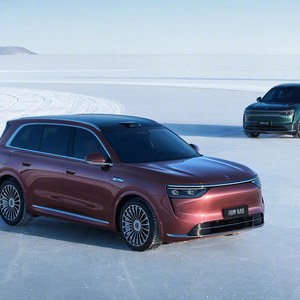
Used Hima AITO M8 2025 Extended-Range Max Version 37 kWh 5-Seater
Used Hima AITO M8 2025 Extended-Range Ultra Version 53.4 kWh 5-Seater Edition
Used Hima AITO M8 2025 Extended-Range Max+ Version 53.4 kWh 6-Seater Edition
Used Hima AITO M8 2025 Model Pure Electric Max+ Five-Seat Long-Range Version
How to buy a HIMA Aito M8 from China
-
1
Shortlist the exact configuration
Choose range-extender or pure-electric drive, then match battery, seat count, equipment grade and intended operating route.
-
2
Review the live vehicle listing
Confirm the VIN, year, mileage, condition description, photographs, seller location and every included item on the specific listing.
-
3
Request the unit inspection file
Ask for title documents, service records, battery health information and an inspection covering accident, flood and power-hardware history.
-
4
Build a landed-cost quotation
Request separate figures for vehicle price, freight, insurance, documentation, terminal handling, inland delivery, duties and taxes under a stated Incoterm.
-
5
Clear destination-market compliance
Use a local broker or compliance specialist to check homologation, customs classification, emissions, safety, software, data and right-hand-drive requirements.
-
6
Agree MOQ, title and payment terms
Confirm whether units are purchased individually or consolidated, identify each VIN and document the deposit, inspection, balance and refund process.
-
7
Book freight and inspect on arrival
Approve the carrier method, battery-compliance documentation, insurance and loading plan, then arrange receipt inspection before registration or resale.
Aito M8 vs rivals
| Li Auto L9 | A close large-SUV alternative with similar range-extender and pure-electric positioning. The L9 may have stronger recognition or service support in some markets, while the M8 offers a distinct HIMA feature set and configuration choice. |
|---|---|
| NIO ES8 | The most relevant comparison for a six-seat battery-electric M8, competing on space, premium technology and new-energy brand appeal. The M8 is more flexible for importers because its range includes both range-extender and pure-electric versions. |
| BYD Yangwang U8 | A higher-positioned luxury SUV that uses a plug-in-hybrid system and emphasizes dramatic styling and off-road presentation. The M8 may serve broader family and executive transport needs more directly, but the U8 can suit buyers seeking a more specialized image. |
Frequently asked questions
How is HIMA Aito M8 export pricing determined?
The vehicle's year, trim, battery, seating, drivetrain, equipment, mileage and condition form the vehicle-level starting point. Freight, insurance, exchange rates, duties, documentation and the selected Incoterm determine the final landed cost. Current per-unit prices are shown on the live ChinaCarDirect listings and should be confirmed through an RFQ.
Which HIMA Aito M8 powertrains and battery sizes are available?
Range-extender versions use either a 37 kWh battery in the Max five-seat configuration or a 53.4 kWh battery in Max+ and Ultra five- or six-seat configurations. Pure-electric Max+ and Ultra versions are also offered with long-range and all-wheel-drive layouts. Exact export-market range, motor output and charging figures should be checked on the selected live listing.
Are used HIMA Aito M8 vehicles a sensible import choice?
They can be when mileage, service history, title, battery condition and accident history are well documented. Used vehicles usually offer a different acquisition and warranty position from new units, so buyers should compare the complete condition file rather than mileage alone.
What is the MOQ when buying an Aito M8 from China?
MOQ depends on the seller, exact trim and purchasing arrangement, so no model-wide minimum should be assumed. A live unit may suit a trial order, while a container program may require a batch. Ask the supplier to confirm the minimum, whether configurations can be mixed and how title is allocated.
How long does shipping take and what determines the cost?
Transport mode, route, vessel space, congestion, customs clearance, insurance and inland delivery affect both timing and cost. Obtain a booking-specific estimate with the named port, sailing window, free-time allowance and all destination charges rather than relying on a generic transit figure.
Are spare parts available for an exported HIMA Aito M8?
Parts support should be confirmed before purchase, especially for regional-market software, LiDAR, battery and electronic components. Chinese-market parts may not map directly to every export specification, so ask for a parts list, diagnostic procedure, software account process and estimate of lead time for common service items.
Can I order a right-hand-drive HIMA Aito M8?
Chinese-market vehicles are generally left-hand drive, so right-hand-drive supply must be verified on the live listing rather than assumed. Some markets permit approved conversion while others require a manufacturer-supported configuration. Confirm availability, conversion cost and local approval before placing the order.
How do I order a HIMA Aito M8 from China?
Select a live listing, request a pro forma invoice and unit documents, then complete compliance review and inspection before final payment. The contract should state the VIN, MOQ, payment milestones, Incoterm, freight method, documentation and remedy for mismatch or damage. Once agreed, the vehicle can be booked for transport and inspected again on arrival.
Ready to source the HIMA Aito M8?
Request a current HIMA Aito M8 quotation with unit details, Incoterm, freight options and export-document and compliance requirements.
Request a quote