
Honda Crider Export Guide: Specs, Pricing and Buying Advice
Buy a Honda Crider from China with clear guidance on trims, used vehicles, export pricing, MOQ, shipping, homologation and rivals for overseas buyers.
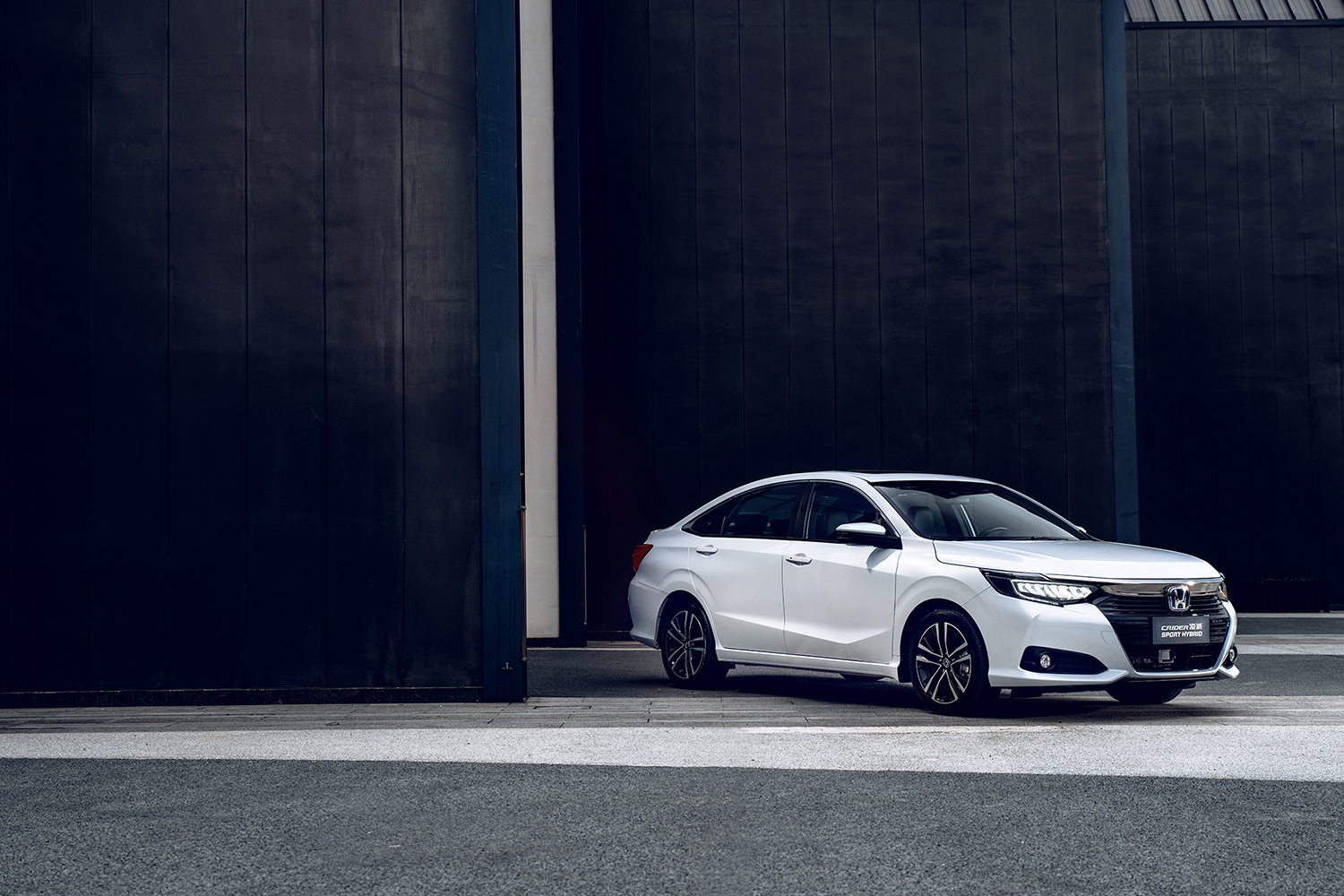
At a glance
- The Crider is a China-developed, four-door Honda compact sedan suited to fleet and private buyers.
- The lineup spans 1.8-litre petrol, 1.5-litre turbo, 1.5-litre hybrid and several transmission choices.
- Used sourcing requires VIN-level checks of condition, documents, emissions classification and service history.
- Export prices should be compared on a landed-cost basis because freight, Incoterms, exchange rates and condition all matter.
- Right-hand-drive availability, destination homologation and parts support must be confirmed before payment.
Why the Honda Crider matters for export markets
The Honda Crider is a China-market compact sedan from Honda, positioned between practical fleet transport and more comfort-focused private cars. Its four-door body, conventional packaging and broad choice of petrol and hybrid derivatives make it relevant to distributors, ride-hailing operators and used-car dealers serving markets where a compact sedan is easier to run and insure than a larger saloon. Overseas buyers sourcing a Honda Crider from China value the availability of well-understood Honda hardware in Chinese specification, not novelty. They should still treat each vehicle as a separate import rather than assume global parts equivalence.
Honda's badge gives the Crider useful recognition in markets where buyers already understand Honda sedans, while the model's local development creates features and packaging that may differ from a Corolla sold elsewhere. That distinction matters during homologation and parts planning: a visually similar global model does not guarantee identical engines, electronic architecture, steering, suspension or service procedures. Export buyers should value this Crider for documented specification and local availability, not assume that it is simply a rebadged international model before committing a container or a test unit to their destination.
For fleet and dealer channels, the Crider's strongest export logic is operational: it provides a conventional sedan platform, multiple transmission choices across years and trims, and versions positioned at comfort, luxury and leading-equipment levels. Buyers can therefore build a mixed stock policy around automatic simplicity, manual cost control, turbo performance or hybrid efficiency. The right choice depends less on badge prestige than on local fuel prices, road conditions, service capability, residual-value expectations and the availability of matching parts in the destination market. Model the business case carefully before the vehicles arrive.
- China-developed Honda compact sedan
- Practical four-door fleet platform
- Confirm local parts support
Model range, trims and powertrain variants: how the lineup is structured and how to choose
The Crider lineup is organized around three broad powertrain themes: a 1.8-litre naturally aspirated petrol engine, a 1.5-litre turbo petrol version commonly badged with the “180 Turbo” name, and a 1.5-litre hybrid derivative. Petrol cars appear with manual, conventional automatic and CVT transmissions depending on year and trim. Edition labels include Comfort, Luxury, Leading, flagship and special variants, while some names identify China V or China VI emissions standards. Translation is not standardized, so the exact grade on each unit must be verified directly against the vehicle's build information on the invoice.
For fleet users, the 1.8-litre petrol model is often the simplest proposition: it avoids turbo-system complexity and offers either CVT/automatic convenience or a manual option where one is offered. The turbo version can suit buyers wanting stronger mid-range response, but its real-world fit depends on fuel quality, maintenance discipline and local parts availability. CVT units prioritize ease of use and urban drivability; manuals may suit markets with established manual-transmission familiarity and accessible mechanical support. However, neither gearbox choice removes the need to inspect the specific vehicle's service history carefully before shipment.
The hybrid version deserves a separate business case. It can reduce fuel use where fuel is expensive and the fleet has high annual mileage, but buyers should confirm the hybrid system's condition, warranty transfer, battery-related inspection and local repair support. For any engine, match the version to the destination: China V and China VI labels describe the vehicle's Chinese emissions classification, not automatic approval under an overseas emissions regime. A newer standard or higher trim does not, by itself, guarantee easier import or registration in the importing country. Local destination approval must be confirmed separately.
- 1.8L petrol fleet option
- 1.5L turbo response option
- 1.5L hybrid system checks
New vs used Honda Crider: how export inventory is structured and how buyers choose
When planning an export programme for the Crider, buyers should structure the purchase around individual used vehicles rather than assume a factory-new programme. Export-relevant supply is commonly encountered across earlier model years, with each car having a defined trim, transmission, emissions version, mileage and condition. A new vehicle can still be evaluated if a seller offers one, but the sourcing logic, inspection burden and documentation package may differ. The practical unit of selection is the individual vehicle, not a generic model-year order for a mixed fleet order or an initial pilot shipment.
Used Criders make the most sense when the buyer can inspect condition, verify documents and price each vehicle independently. Ask for the VIN, production and registration dates, odometer reading, engine and transmission codes, emissions label, service records, accident or flood history and evidence of ownership. Inspect tyres, brake components, suspension, cooling system, battery or hybrid-system health, and the CVT or manual gearbox. A lower purchase commitment may be offset by near-term repairs, so the repair reserve should be part of the purchase decision before the vehicle is loaded at the origin.
New-versus-used selection should be made on total operating and selling risk rather than on the vehicle label alone. A new car may simplify initial condition concerns and warranty administration, but age restrictions, registration rules and market-specific configurations can still complicate import. A used car can offer a more accessible purchase outlay and a known market for ageing stock, but buyers should model maintenance, downtime and realistic residual value. For fleet resale, keep purchase and reconditioning assumptions separate; for rental use, prioritize uptime, fuel economy and parts access in the destination market.
- Used vehicles need VIN inspection
- New units need market approval
- Model maintenance and downtime
How export pricing works: the factors behind a live listing price, and how to read one
A Honda Crider export quote has two layers: the seller's vehicle price and the transaction and delivery costs attached to it. The vehicle-side price normally responds to model year, trim, engine and transmission, mileage, exterior condition, service evidence and the availability of matching stock. Transaction-side costs can include export documentation, inspection, inland transport, handling, insurance and international freight. Because a displayed listing may use a different Incoterm from a formal pro forma invoice, always clearly confirm exactly what is included before comparing one Crider with another for the same destination market.
Year is only one variable and should not be used as a shortcut. A later Crider may carry a different emissions designation, transmission, equipment set or service history, while an earlier luxury-badged car may be in better condition than a newer comfort model. Mileage must be read against age and use pattern, and cosmetic condition should be separated from mechanical condition. For a fleet buyer, also value commonality: mixing engines, gearboxes and trim-specific parts across a small shipment can raise training, stocking and workshop complexity for the receiving workshop team.
Read the live listing as a commercial record, not merely a model description. Check the stated condition, year, trim, transmission, steering side, seller location, available documents and whether the displayed amount excludes freight, insurance, duty or destination charges. Ask for a written quote tied to a specific VIN or SKU and the intended Incoterm. Then build a clear landed-cost worksheet separating vehicle cost, inland logistics, origin charges, sea or air freight, insurance, taxes and expected reconditioning. This makes it possible to compare the Crider with alternatives on the same commercial basis.
- Separate vehicle and freight costs
- Compare equivalent vehicle specifications
- Request VIN-specific written quotes
MOQ, ordering and payment: single units vs consolidating a container
MOQ on the Crider should be treated as a listing- and supplier-specific commercial term, not as a fixed property of the model. A marketplace seller may be willing to release one inspected vehicle, while a larger programme may involve a batch, a booking allocation or a minimum order tied to vehicle availability. The authoritative number is the MOQ shown on the live listing or confirmed in the quotation. Before requesting, state whether the order is a test unit, dealer batch or container plan so the seller can quote accurately.
The ordering sequence should move from specification to contractual evidence. Confirm the exact vehicle, steering configuration, emissions version, documents, inspection standard, delivery scope and Incoterm; then agree deposit and balance milestones, inspection rights, remedies for a material discrepancy and the release process. Payment terms should be documented in writing for both parties rather than inferred from a chat message. For a used vehicle, the VIN and listing reference should appear on the invoice, inspection record and transport instruction so that the paying party and shipping party cannot be working from different descriptions.
Consolidating a container can improve negotiation and logistics, but it should not mix too many variants without a parts plan. A dealer importing for resale may standardize one engine and transmission to simplify spares and technician training, while a fleet operator may accept a broader mix to satisfy different budgets. Ask the freight provider for loading, securing and documentation requirements, and calculate port storage or demurrage exposure. Splitting the first order into a small inspected group and a later expansion can reduce risk while still building supplier confidence and freight volume.
- Confirm MOQ with each seller
- Pilot before order expansion
- Record VIN, terms and Incoterm
Shipping, homologation and market compliance caveats: LHD/RHD and import rules by country
Vehicle logistics can change the landed cost and delivery schedule, so shipping should be planned before the vehicle payment is released. Sea transport on a vehicle carrier or a container service, where the vehicle and cargo arrangement is permitted, offers different cost and handling trade-offs; air freight may be considered for a small urgent shipment but is normally less economical per vehicle. Quote the origin port or terminal, destination, booking method, insurance, customs-clearance responsibility and delivery point. Treat transit time as an estimate because allocation, congestion, weather and inspections vary.
Steering configuration is a critical sourcing check. Most China-market Crider examples are configured for left-hand drive, so a buyer needing right-hand drive should not assume that a Chinese listing will be suitable on arrival. Some markets allow a controlled conversion or accept a left-hand-drive import under limited rules, while others impose stricter age, equipment or inspection conditions. Before paying, verify the steering side from the VIN and photographs, then ask the destination authority or a clearing agent whether conversion is permissible and whether the vehicle must be re-inspected for registration.
Import and market compliance are country-specific, so there is no universal Crider clearance checklist. Used vehicles may be restricted by age, engine capacity, emissions category, ownership documentation or safety features; other markets apply tariffs, VAT, quota rules or vehicle-age limits. China V and China VI labels describe the emissions standard assigned in China and cannot be assumed to map directly to a destination's emissions bands. Buyers should obtain a written pre-shipment assessment covering customs classification, duty and tax, VIN/chassis documents, registration, insurance and local emissions or safety inspection before committing funds.
- Compare carrier and container freight
- Verify steering before payment
- Check destination import rules
Who should buy the Crider — and who should pick a different vehicle
The Crider is a strong candidate for overseas dealers and fleet buyers that value a conventional, four-door Honda sedan and can properly support the exact Chinese specification being imported. It is especially relevant where used-car sourcing is part of the business, where a mixed budget can be built through comfort, luxury and leading trims, and where petrol, turbo and hybrid options address different operating priorities. Buyers with an established Honda service network gain familiarity with the marque; others should first confirm access to parts, diagnostics and trained technicians for support nearby.
The Crider may be a poor fit for a buyer who requires a factory specification already homologated for the destination, a guaranteed right-hand-drive build, or a model with a predictable global parts catalogue. That matters for retail customers unable to absorb customs, conversion or repair uncertainty. It can also be unsuitable for operators whose main objective is minimum fuel cost without ready hybrid expertise, or whose safety and driver-assistance expectations exceed what the selected vehicle actually provides. A Honda badge does not remove the need to inspect the exact car.
Start with a shortlist of destination-appropriate vehicles, not a model-wide assumption. For each shortlisted Crider, create a detailed decision sheet covering engine and gearbox, trim equipment, steering side, mileage, condition, parts availability, likely service interventions and the importer's own compliance requirements. If several vehicles meet the same criteria, standardise them to simplify parts and training. If none do, move to another Chinese sedan or a locally supported model rather than accepting a compliance or support risk merely to obtain the Crider badge before placing a paid order or reserving import capacity.
- Best for supported used operations
- Unsuitable where homologation is fixed
- Assess each vehicle individually
Main rivals and how the Crider compares
The Nissan Sylphy is a particularly close export-market comparison because it competes for many of the same compact-sedan fleet and private-buyer missions in markets served from China. Both offer a practical four-door layout, multiple petrol configurations and automatic options, so the decision is often driven by brand familiarity, local parts support, fuel use and the exact age and condition of available stock. A Crider buyer should compare the Sylphy on actual total landed cost and workshop compatibility, not assume that one is mechanically superior merely because its badge is more familiar.
The Volkswagen Lavida is another direct Chinese-built compact-sedan alternative, with a different emphasis on the specific engine, transmission and equipment mix offered in each model year. It may appeal where Volkswagen service familiarity or a variant fits, while the Crider may offer a different used-car selection and Honda ownership proposition. The Toyota Corolla is a global benchmark with broad hybrid recognition; compare the exact China-market Corolla, imported used example or alternative regional model rather than assume equivalence.
A structured comparison is more useful than a brand ranking. Put the Crider, Sylphy, Lavida and Corolla on the same sheet with engine size and fuel type, gearbox, steering side, equipment relevant to safety and use, service intervals, parts availability, expected downtime and compliance status. Then directly apply the importer's actual priorities: operating cost, driver appeal, fleet resale, tax treatment or access to technicians. For a high-volume fleet, commonality and warranty handling may outweigh a small difference in vehicle price; for retail buyers, condition, equipment and resale prospects may be decisive.
- Nissan Sylphy: close fleet rival
- Volkswagen Lavida: direct rival
- Toyota Corolla: global benchmark
Live Honda Crider export inventory
View all listings →Real units currently on ChinaCarDirect with per-unit asking prices and MOQ. Availability updates live from the catalogue.

How to buy a Honda Crider from China
-
1
Define the destination and operating requirement
Identify the import country, steering requirement, tax treatment, expected annual mileage and fleet or retail use. Confirm that the selected Crider configuration can be registered and serviced locally.
-
2
Build a shortlist from live inventory
Review the live Crider listings by year, trim, engine, transmission, steering side and condition. Use each listing for the current per-unit price, MOQ and availability, rather than relying on an old market range.
-
3
Verify each vehicle's identity and documents
Request the VIN, registration and production details, odometer reading, emissions version, ownership records and service history. Match every document to the exact vehicle and trim being quoted.
-
4
Request a written, vehicle-specific quotation
Specify the destination, Incoterm, inspection standard, payment milestones and required shipping scope. Ensure the quotation identifies the VIN or listing reference and lists all included and excluded charges.
-
5
Inspect before releasing the vehicle
Use a qualified independent inspector for a mechanical, structural and underbody inspection. Check fluid condition, tyres, brakes, suspension, transmission behavior and any hybrid-system warnings before final acceptance.
-
6
Confirm payment and transport instructions
Record the deposit, balance conditions, inspection rights, export documents, insurance and vessel or carrier booking in writing. Keep the invoice, inspection report and transport instruction linked to the same VIN.
-
7
Complete customs, registration and delivery
Use a destination clearing specialist to confirm customs classification, taxes, registration and any roadworthiness inspection. After a successful pilot shipment, review operating costs and parts demand before expanding the order.
Crider vs rivals
| Nissan Sylphy | A close China-market compact sedan for fleet and private buyers. It is worth considering where Nissan service familiarity or its exact variant mix is stronger than the Crider's. |
|---|---|
| Volkswagen Lavida | A direct Chinese-built rival with a different engine, transmission and equipment mix by model year. Compare the selected versions on parts access, destination compliance and landed cost. |
| Toyota Corolla | A global benchmark with broad hybrid recognition and international brand familiarity. It may suit buyers prioritizing standardized support, but the exact imported specification still requires inspection. |
Frequently asked questions
How is Honda Crider export pricing determined, and where can I see the live price?
The price reflects the vehicle's year, trim, engine, transmission, mileage and condition, combined with factors such as exchange rates, export handling, freight, insurance and the selected Incoterm. A listing headline may not include every destination or logistics charge. The exact current per-unit price, MOQ and availability are shown in the live Crider inventory on ChinaCarDirect and should be confirmed in a written quotation.
What engine and transmission options does the Honda Crider have?
The Crider range includes a 1.8-litre naturally aspirated petrol engine, a 1.5-litre turbo petrol version badged “180 Turbo” and a 1.5-litre hybrid. Depending on model year and trim, petrol cars may use a CVT, conventional automatic or manual transmission. Verify the exact powertrain against the VIN because there is no single engine or fuel-economy specification for every Crider.
Is a used Honda Crider more practical than a new one for export?
A used Crider can suit dealers and fleet buyers seeking a particular year, trim, mileage band or transmission at a manageable purchase commitment. It requires careful inspection, document verification and a maintenance reserve. A new vehicle may reduce initial condition concerns, but destination registration rules and warranty arrangements must still be confirmed.
How does MOQ work when ordering a Honda Crider from China?
MOQ is a seller- and listing-specific term rather than a fixed feature of the Crider model. Some sellers may accommodate a single test vehicle, while larger batches can carry additional conditions. Read the MOQ on the live listing and have it confirmed in the formal quotation before paying or arranging freight.
What determines Honda Crider shipping time and cost?
Shipping depends on the origin location, destination, transport mode, vehicle booking availability, distance, port handling, insurance and the selected Incoterm. Space allocation, congestion, weather and customs or port inspections can affect the schedule. Obtain a freight quote for the actual route and delivery scope rather than relying on a generic transit estimate.
Are spare parts available for an imported Honda Crider?
Parts availability depends on the exact engine, transmission, trim and model year, so a Chinese-market Crider should not be assumed to share every component with a global Corolla. Ask for the VIN, a parts list, known suppliers and any removed components before shipment. Confirm that the destination workshop can access the required service and repair parts.
Is right-hand-drive Honda Crider availability guaranteed?
No. Right-hand-drive availability varies by the individual listing and should be confirmed from the VIN, photographs and seller documentation. Some countries permit or restrict left-hand-drive imports and steering conversions, often with an additional inspection. Obtain local clearance advice before committing funds.
How do I order a Honda Crider from China?
Begin with the live Crider inventory, shortlist suitable vehicles and request a quote for the exact vehicle, destination and Incoterm. Agree the MOQ, inspection rights, payment milestones, documents, insurance and shipping responsibility in writing. After inspection and customs clearance, complete registration and monitor parts consumption before scaling the order.
Ready to source the Honda Crider?
Send an RFQ with your destination, preferred Crider trim, gearbox, steering side, quantity and inspection requirements for a vehicle-specific export quote.
Request a quote