
Honda Haoying Export Guide for Dealers and Fleet Buyers
Buy Honda Haoying from China with guidance on trims, powertrains, export pricing, MOQ, shipping, compliance and rivals for overseas dealers and importers.
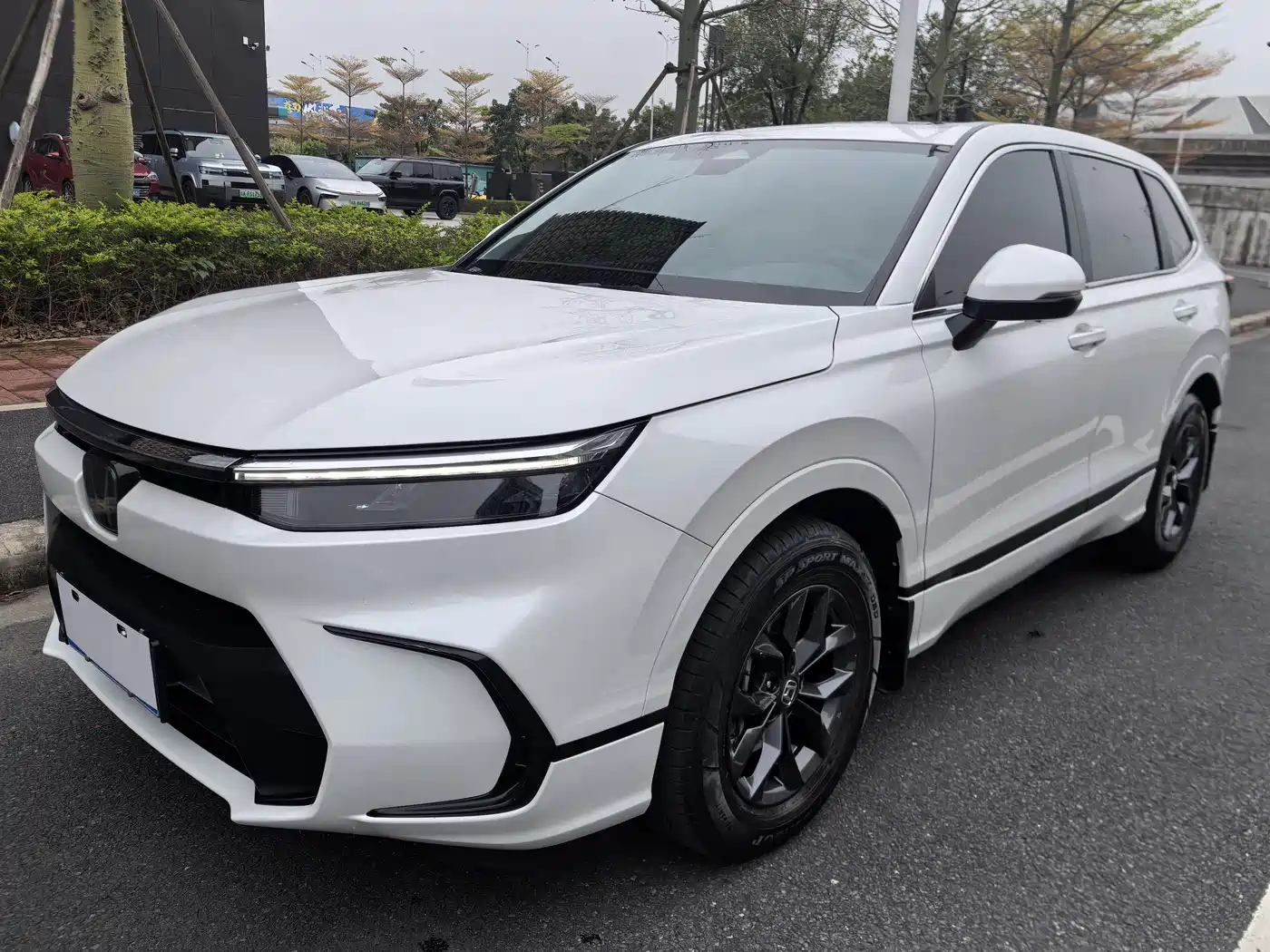
At a glance
- The Haoying combines compact-SUV packaging with five- or seven-seat choices, depending on trim.
- Buyers can select 240TURBO petrol powertrains or the Sharp Hybrid 2.0L 2WD, with selected four-wheel-drive turbo variants.
- Front-drive layouts suit mainstream fleet use, while seven-seat versions broaden the family and shuttle proposition.
- Export price varies with year, trim, condition, exchange rates, freight and Incoterm, so compare written landed-cost quotes.
- Steering configuration, homologation, parts support and live per-unit availability must be verified before ordering.
Why the Honda Haoying matters for export markets
The Honda Haoying is a China-built compact SUV that gives overseas buyers a practical alternative to larger, more expensive crossovers. Its defining export proposition is usable passenger space: selected versions are five-seater crossovers, while others add a third row for seven-seat families, shuttle operators and mixed-work fleets. Honda positioning adds familiarity, but buyers should judge the China-market model on its own equipment, homologation and aftersales support. That distinction matters because badge recognition alone does not guarantee parts support, software compatibility or straightforward registration in the destination country before a bulk commitment.
Within its segment, the Haoying competes on combination rather than a single headline specification. The platform offers turbocharged gasoline models, a gasoline-electric hybrid, front-drive layouts and selected four-wheel-drive versions, giving importers several ways to shape a range for a market. For dealers, that flexibility can reduce the need to source unrelated models; for fleet buyers, it allows a single platform to cover passenger, premium and seven-seat use cases. The strongest business case is therefore a clear target-market brief, not an assumption that one export trim will translate directly into every country.
Global demand is strongest where compact SUVs are mainstream but buyers need more flexibility than a small urban crossover offers. The seven-seat option is particularly relevant for family transport and light commercial users, while five-seat versions can appeal to private importers and company fleets. Demand still depends on fuel prices, taxation, driving standards and local consumer preferences. A Haoying export programme should therefore be built around verified homologated versions, not global assumptions about what buyers will accept. Local service capacity and realistic spare-parts lead times can decide success as much as the original sales pitch.
- Five- and seven-seat body choices
- Turbo, hybrid and selected 4WD options
- Homologation and aftersales drive export viability
Model range, trims and powertrain variants: how the lineup is structured and how to choose
The Haoying range is organised around the 240TURBO gasoline line and the Sharp Hybrid 2.0L 2WD derivative. In the turbo line, the 240TURBO petrol engine is paired with a CVT, while 2WD/FWD and 4WD labels separate the principal layouts. Grade names such as Smart, Elite, Premium, Luxury and Exclusive indicate progressively different equipment and positioning. Buyers should compare the complete trim description, because similar-sounding grades can differ in seating, drivetrain and convenience features. The listing title is therefore the first specification check, followed by the live vehicle page, accompanying images and the official model information.
Seating configuration is the most consequential choice for many importers. A five-seater generally prioritises cabin space, luggage capacity and a simpler rear-cabin layout for markets where large multi-row vehicles attract higher tax or registration costs. A seven-seater creates a clearer family and shuttle proposition, but buyers should inspect third-row access, luggage space with the row deployed and local rules for passenger-vehicle classification. The Haoying’s appeal is that both formats come from a related model family rather than unrelated vehicles. This can simplify parts and training for a dealer carrying several configurations.
The Sharp Hybrid 2.0L 2WD option is a different proposition from the turbocharged models. It combines a 2.0-litre petrol engine with electric assistance and should be considered where fuel consumption, stop-start driving and local emissions policy favour hybrids. It is not a plug-in hybrid or a battery-only vehicle, so charging infrastructure is not the deciding factor. Buyers should request the certified on-board hybrid data and local type-approval documents rather than infer performance from China-market equipment. For fleet procurement, driver familiarity and workshop support can be as important as the published consumption figures.
- 240TURBO: turbocharged petrol engine with CVT
- Sharp Hybrid: 2.0-litre petrol-electric, 2WD
- Confirm seat layout and complete grade
New vs used Honda Haoying: how export inventory is structured and how buyers choose
Export inventory must be read unit by unit because the same Haoying name covers different model years, grades and operating concepts. A live listing can show whether a vehicle is presented as new or used, its model year, mileage where relevant, trim, drivetrain and seller terms. Older examples should not automatically be treated as used, and newer examples should not automatically be assumed identical. The correct comparison starts with condition and specification, then moves to price. Current availability, minimum order quantity and binding terms are shown against the live unit being considered.
A new Haoying offers the cleanest starting point for a commercial programme: documented condition, current model-year presentation and less uncertainty about wear. It is often easier to standardise fleet specification, training and customer-facing descriptions when vehicles come from one production run. The trade-off is that buyers pay for that consistency and often lose the immediate cost advantage associated with an older vehicle. For used Honda Haoying purchases, the key question is whether the acquisition saving survives the likely maintenance and remarketing exposure. Inspection evidence should therefore be treated as part of the price.
Used vehicles become more attractive when the buyer can accept an earlier generation, verify service history and budget for refurbishment. They may offer a stronger value equation for a local fleet operator that replaces vehicles frequently, especially if the same Haoying can still meet local safety and emissions requirements. Conversely, a dealer promoting a used example as a near-new car needs clear condition photos, mileage evidence, ownership status and a recent inspection. Neither age nor the word “new” should replace document checks. A live listing remains the only binding availability record.
- Check condition and mileage evidence
- Match production run to fleet needs
- Price refurbishment and downtime
How export pricing works: the factors behind a live listing price, and how to read one
A Honda Haoying export price is the result of several interacting variables rather than one fixed model-level rate. Model year, trim, seat count, engine, hybrid battery specification and drivetrain establish the vehicle’s baseline; condition and mileage then affect a used example. Exchange rates, seller margin, payment terms, documentation and destination freight also matter. The figure shown on a live listing is therefore the starting point for a vehicle-specific quote, not automatically the landed cost in the buyer’s country. Always confirm the currency, Incoterm and whether freight, insurance and export charges are included in writing.
Read each live listing as a comparison sheet rather than relying on a headline number. Check the complete trim title, model year, seating, 2WD/FWD or 4WD arrangement, hybrid status, mileage, condition, options and any repair history. Then confirm the quoted currency, unit basis, payment schedule and Incoterm. Two Haoyings can look similar in a results grid while representing materially different products. Ask for the VIN or chassis identity and matching photographs before treating a listing as the same vehicle as another offer. A written specification prevents costly comparison errors during negotiation.
Buyers should build the commercial comparison as a landed-cost worksheet. Start with the live vehicle price, then add the options or services required, inland transport, export handling, ocean or roll-on/roll-off freight, insurance, destination charges, customs duties, taxes and registration. Put the Incoterm beside each quote so the boundary of responsibility is clear. Ask the seller to refresh the quote before payment because exchange rates and freight can move. ChinaCarDirect live listings remain the place to verify the current per-unit price and MOQ. No catalogue figure should replace a transaction-specific offer from the seller.
- Compare like-for-like trim and condition
- Separate vehicle price from landed cost
- Refresh quotes before payment
MOQ, ordering and payment: single units vs consolidating a container
Minimum order quantity is a commercial term that must be checked on the specific live listing rather than assumed for Honda Haoying wholesale purchasing. Some vehicle offers may be available to a single buyer, while a seller’s bulk terms can change the minimum, payment schedule or freight arrangement. Read the displayed MOQ and ask who applies it: the individual vehicle seller, a consolidating exporter or the freight provider. The figure is binding only when confirmed in the final quotation and purchase documents. It is not implied by the model name.
A single-unit purchase suits a dealer testing demand, a small fleet operator or an importer consolidating several vehicles from different sellers. It offers a narrower commitment, but the buyer still bears exposure to unit-specific price changes and may lack full-container freight efficiency. A container programme can improve shipment planning and seller coordination, but it requires common specifications, allocated deposits, inspection of every vehicle and careful matching of production years. Consolidation reduces empty-space risk only when the vehicles genuinely share destination and handover requirements. It can also delay the first sale.
The ordering sequence is straightforward but should be documented. Select a live Haoying listing, request a written quote, confirm the vehicle identity and MOQ, then pay through the agreed channel against the stated milestones. The seller should acknowledge deposit and balance terms, invoice details and the estimated release process. Before shipment, complete the agreed inspection and verify that the VIN, trim description, options and condition match the contract. Only then should the balance and shipping instructions be released. Use traceable records for every transfer and communication before the vehicle departs.
- Read the MOQ on each live listing
- Confirm consolidation rules in writing
- Match deposit to inspection milestones
Shipping, homologation and market compliance caveats: LHD/RHD and import rules by country
Steering-hand configuration is an early screening criterion. Haoyings sourced from China may be left-hand drive, and a right-hand-drive market should not assume that a visible or domestic-market listing is suitable for local registration. Ask for the steering position and whether the vehicle was produced or converted for the destination, then obtain written confirmation. Conversion can affect cost, warranty, parts availability and regulatory acceptance, so it should never be left as an informal post-delivery promise. Some importers may also need modifications for local safety equipment before shipment is legally completed. Do not otherwise assume factory conversion.
Import and road legality are country-specific. A buyer may need evidence covering emissions, vehicle identification, safety features, noise, lighting, cybersecurity or software updates, depending on local rules. Petrol and hybrid versions can attract different tax or incentive treatment, while seven-seat vehicles may fall under different registration categories from five-seat derivatives. Buyers should check the destination authority’s current rules and obtain a homologation assessment for the exact configuration. Dealer assurances that a model is “the same” abroad are not a substitute for documents. Local registration should be planned fully before payment.
Shipping should be planned around the vehicle, not just the route. Confirm whether the Haoying will travel as a complete vehicle by roll-on/roll-off or container carrier, and check that the chosen method suits the destination’s port and inland handling capability. Complete pre-shipment inspection, secure the vehicle and battery-related hybrid components where applicable, and review export documents, insurance and the loading sequence. Transit duration, port congestion, seasonality, fuel surcharges and customs work can all change the delivered cost, so ask for a current freight quote rather than assuming a fixed rate.
- Confirm LHD or RHD before contracting
- Verify destination-specific homologation
- Cost the vessel and destination handling
Who should buy the Haoying — and who should pick a different vehicle
The Haoying fits buyers who prioritise cabin practicality, a choice of five- or seven-seat layouts and a mainstream Honda badge at a more attainable acquisition point than many premium crossovers. Families can focus on the seven-seat versions, while company fleets may choose five-seat grades for employee transport or the hybrid for higher-utilisation duty cycles. Dealers can use the mix to serve several price-conscious segments without moving to unrelated model families. The strongest fit is a market where compact SUVs are popular and local homologation is achievable with credible aftersales support.
Different vehicles suit different operating priorities. Buyers who require a battery-only drivetrain, extensive seven-seat utility in a larger package, serious off-road capability or a globally deep service network may prefer another segment. A fleet with very short replacement cycles may value the predictable operating profile of a hybrid, while a driver seeking the turbo model’s performance character may accept less emphasis on fuel economy. Those trade-offs must be tested against the exact destination specification, not against showroom assumptions. Cost, compliance and support should be weighted before the purchase order is released.
Before buying Honda Haoying from China, conduct a three-part business case. First, verify that the intended trim is legal, serviceable and competitive in the destination. Second, model the full cost of ownership, including purchase, logistics, taxation, fuel, maintenance, residual value and expected downtime. Third, prove demand with a small, controlled order or a staged launch if the model is new to the market. This sequence turns a product advantage into a viable import programme rather than a one-off speculative purchase. It also exposes compliance and aftersales problems early before scale.
- Best for practical family and fleet use
- Strongest where compact SUVs are mainstream
- Reconsider if battery-only or premium status matters
Main rivals and how the Haoying compares
The closest comparison depends on destination because locally homologated rivals differ by market, but three models make a useful shortlist. The Honda HR-V is a close size and brand reference, with a five-seat layout and an established global footprint. The Toyota Corolla Cross competes in mainstream compact crossovers, particularly where hybrid efficiency and Toyota’s service proposition carry weight. The Mitsubishi Xforce is another regional rival, combining compact dimensions with five-seat practicality and hybrid options. These should be compared as destination-specification alternatives, not by badge alone. The Haoying’s counterargument is seating flexibility.
Against the HR-V, the Haoying’s clearest advantage is the availability of a seven-seat body option and a broader domestic-style trim ladder; the HR-V may appeal more where buyers prioritise a long-established international support network. Against the Corolla Cross, the Haoying offers more seating choice and a different equipment-value proposition, while the Toyota can be stronger for buyers prioritising mature hybrid acceptance and established residual-value expectations. Against the Xforce, the Haoying can better serve multi-row needs, whereas the Mitsubishi may be more familiar to regional dealers. Actual superiority depends on the versions available locally.
A disciplined comparison sheet should include seating needs, engine or hybrid strategy, drive layout, safety and emissions equipment, dimensions relevant to garage access, aftersales coverage, spare-parts lead time, warranty handling and delivered operating cost. Then test each candidate against the same destination rules and customer profile. The Haoying can be the stronger choice for buyers seeking Chinese supply variety, seven-seat flexibility or a particular Honda value proposition. If the competing model is cheaper to support locally or better aligned with regulations, however, it may produce the better commercial result overall.
- Honda HR-V: direct size and brand benchmark
- Toyota Corolla Cross: mainstream hybrid rival
- Mitsubishi Xforce: compact regional alternative
Live Honda Haoying export inventory
View all listings →Real units currently on ChinaCarDirect with per-unit asking prices and MOQ. Availability updates live from the catalogue.

How to buy a Honda Haoying from China
-
1
Define the destination and vehicle brief
Specify the destination country, steering configuration, five- or seven-seat requirement, powertrain preference, expected duty cycle and target handover timing. Check local registration and tax categories before selecting a vehicle.
-
2
Filter the live Haoying inventory
Review the current Honda Haoying listings by model year, complete trim, drivetrain, seating, condition and seller terms. Treat each listing’s price, MOQ and availability as vehicle-specific and verify it before proceeding.
-
3
Request comparable written quotes
Ask for the vehicle price, currency, payment milestones, Incoterm, freight method and included documentation on the same basis. Separately calculate duties, taxes, insurance, port charges, inland delivery and registration.
-
4
Confirm MOQ and order terms
Confirm whether the seller accepts a single vehicle or requires a batch, and whether the units can be consolidated for shipment. Record the deposit, balance, invoice identity, cancellation terms and refund conditions.
-
5
Verify the vehicle and complete inspection
Match the VIN or chassis identity, trim, drivetrain, seating and options to the written contract. Complete the agreed pre-shipment inspection before releasing the balance.
-
6
Arrange shipping, customs and registration
Confirm the vessel or carrier, insurance, export documents, loading plan, destination agent and inland delivery. Complete customs clearance and local registration before handing the vehicle to customers or the fleet.
Haoying vs rivals
| Honda HR-V / HR-V e:HEV | The HR-V is the closest badge-and-size benchmark, generally focused on five-seat use and an established international support network. The Haoying differentiates with seven-seat availability and a broader China-sourced trim mix, making it more relevant where multi-row practicality is commercially important. |
|---|---|
| Toyota Corolla Cross | The Corolla Cross is a mainstream compact-crossover rival, especially where Toyota’s dealer network and hybrid acceptance are decisive. The Haoying offers greater seating flexibility and a different equipment-value proposition for importers serving price-conscious family or fleet segments. |
| Mitsubishi Xforce | The Xforce is a relevant regional alternative with compact dimensions, five-seat practicality and hybrid options. The Haoying may suit buyers needing an additional seven-seat derivative, while the Mitsubishi can have advantages in markets with stronger Mitsubishi dealer familiarity. |
Frequently asked questions
How is Honda Haoying export pricing determined?
Export price is affected by model year, trim, seating, powertrain, hybrid specification, condition, mileage, exchange rates, seller terms, freight, insurance and the selected Incoterm. Check each live listing for the current per-unit price, because it is vehicle-specific rather than a fixed catalogue rate. Request a written quote stating the currency, validity and included charges.
Which Honda Haoying powertrains are available?
The range includes 240TURBO turbocharged petrol models with CVT and 2WD/FWD or selected 4WD layouts, plus the Sharp Hybrid 2.0L 2WD. The Haoying is not a battery-only or plug-in vehicle, so electric driving range is not the relevant benchmark. Check the live listing and homologation documents for exact engine output, fuel consumption and hybrid battery details.
Should an overseas buyer choose a new or used Honda Haoying?
A new vehicle normally reduces condition uncertainty and makes fleet specification easier to standardise. A used Haoying can improve acquisition economics but carries wear, service-history, refurbishment and downtime risk. Review the live listing, mileage evidence, ownership status and inspection report rather than judging condition from the model year alone.
How does MOQ work when buying a Haoying?
MOQ is a seller or listing term and may permit a single vehicle or impose a batch requirement. The live listing and final written quotation must confirm the applicable minimum. Importers planning a container can ask whether vehicles from multiple sellers can be consolidated under agreed inspection, payment and handover arrangements.
What determines Haoying shipping time and cost?
Shipping time and cost depend on the vehicle, origin port, carrier, vessel space, destination port, inland transport, insurance, fuel surcharges, customs work and congestion. Complete-vehicle roll-on/roll-off and container shipping can have different cost structures. Ask for a current freight quote based on the actual VIN, vehicle dimensions, destination and Incoterm.
How should buyers assess Honda Haoying spare-parts support?
Before ordering, confirm that the destination has a viable parts channel and ask the seller to validate common service items against the exact VIN and trim. Request information on parts ordering, lead times, packaging and warranty claims. A competitive vehicle price is less attractive if essential components are difficult to source or service locally.
Is right-hand-drive Honda Haoying availability possible?
RHD availability varies by vehicle and source, so buyers should not assume a China-market listing is suitable for a right-hand-drive market. Inspect the live listing and request written confirmation of the steering configuration and factory or conversion status. Check destination approval, warranty implications and parts availability before contracting.
How do I order a Honda Haoying from China?
Start with the live Haoying listings, select a vehicle, and submit an RFQ with the destination, required trim, quantity and Incoterm. Compare the written price and MOQ, pay against documented milestones, complete inspection and verify the vehicle identity before shipment. Use the ChinaCarDirect contact page to request a current vehicle-specific export quote.
Ready to source the Honda Haoying?
Send your destination market, seating, powertrain and quantity requirements to ChinaCarDirect for a current, vehicle-specific export quote.
Request a quote