
Honda Integra Export Guide for Overseas Dealers and Buyers
Buy a Honda Integra from China with clear guidance on 240TURBO and e:HEV trims, export pricing, MOQ, shipping, compliance and dealer due diligence.
At a glance
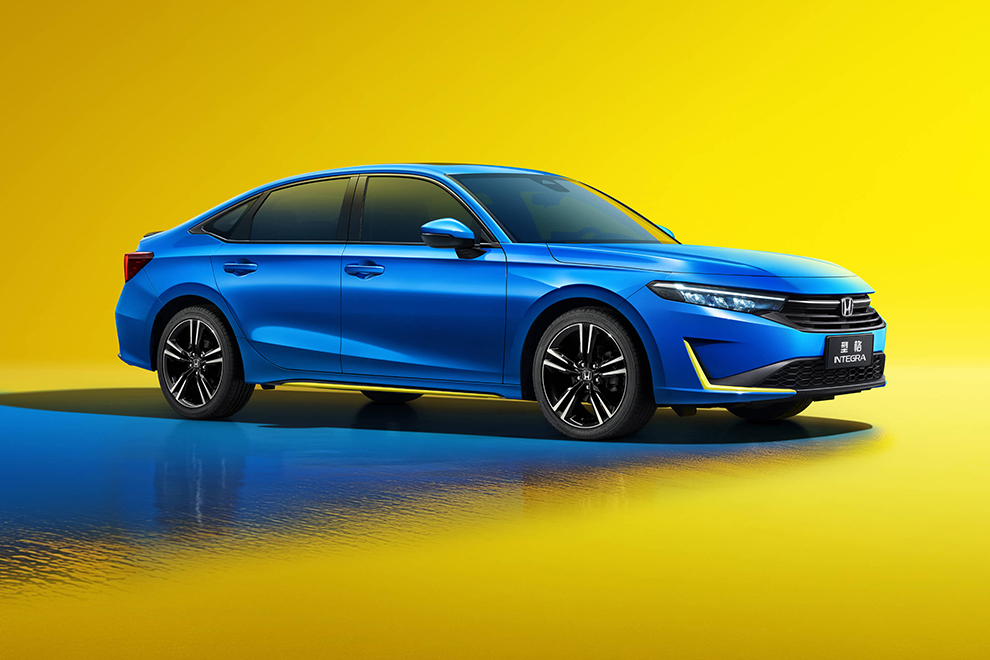
- The China-market Honda Integra is a compact five-door petrol or hybrid car, not the Japanese Type R.
- The 240TURBO range includes manual and CVT options, while the 2.0L e:HEV prioritises fuel efficiency.
- The model best suits dealers and fleets seeking distinctive styling, driving choice and manageable operating complexity.
- New-versus-used decisions should centre on condition history, warranty coverage, downtime and total operating cost.
- Export quotes vary with trim, model year, condition, freight, Incoterm and currency movements.
- Verify steering configuration, homologation, parts support and customs treatment before ordering.
Why the Honda Integra matters for export markets
The Honda Integra occupies an unusual place in Honda’s compact-car portfolio: it combines the proportions and everyday usability of a small hatchback with a more driver-focused visual and engineering proposition. The version normally exported from China is the China-market Integra, not the Japanese Integra Type R, so buyers should assess it on its actual powertrain, equipment and homologation rather than on Type R heritage. That distinction is essential for overseas dealers building a credible sales proposition. Its appeal lies in offering a recognizable Honda compact with more visual energy than a conventional family hatch.
For overseas trade, demand is strongest where buyers want a compact car that feels distinctive without sacrificing practical daily use. The Integra can suit urban dealers, company-car programmes and drivers moving from larger sedans who value a more expressive body shape. Its export appeal depends less on badge recognition than on whether local rules, fuel availability and expected residual values support the model. A well-specified, correctly homologated example can be easier to place than an exotic import with limited support, provided documentation and aftersales planning are credible for the destination market.
The model’s strongest argument is choice within one compact platform: turbocharged petrol versions can appeal to enthusiasts, while the e:HEV derivative targets buyers focused on fuel economy and everyday operation. Manual editions broaden the appeal for driving-focused markets, but transmission choice should be matched to local expectations and the skill of the eventual customer base. For a dealer, the Integra is therefore a range-planning opportunity rather than a single SKU: careful trim selection can address different segments without broadening the model into an unmanageable parts catalogue. That balance is central to its export proposition.
- China-market model, not Type R.
- 240TURBO petrol; 2.0L e:HEV hybrid.
- Confirm homologation and parts support.
Model range, trims and powertrain variants: how the lineup is structured and how to choose
The lineup is organised around two powertrain families: 240TURBO petrol models and the 2.0L e:HEV hybrid. Within the petrol range, Honda has offered CVT and manual transmissions, while equipment and appearance are divided through editions such as Technology, Tech, Exclusive, Luxury, Smart Enjoyment, Trend Leader, Phantom Night and Sharp variants. Some listings explicitly carry a HATCHBACK designation. Because these grade names are China-market labels rather than a global equipment hierarchy, compare the VIN-specific equipment sheet instead of assuming similarly named trims are identical across model years before placing an order for that car.
The 240TURBO branch pairs a 1.5-litre turbocharged petrol engine with either a manual gearbox or a CVT, depending on the selected car. The manual is the more engaging option for buyers who value driver involvement and are comfortable with a higher servicing and resale-management burden. The CVT is easier to operate in traffic and usually more convenient for fleet use. The 2.0L e:HEV branch uses a naturally aspirated petrol engine with Honda’s hybrid system and a planetary-style automatic transmission arrangement, prioritising smooth delivery and fuel efficiency over turbo performance for most buyers.
Choosing between these branches should start with duty cycle and market fit. A dealer serving keen drivers may prioritise the 240TURBO manual, while an urban fleet buyer may prefer the CVT or e:HEV for lower operating complexity and stronger economy credentials. Front-wheel drive is the model’s standard architecture, so buyers seeking an all-wheel-drive sports car should not mistake the Integra badge for one. Ask for the VIN, confirmed engine and transmission codes, equipment sheet, hybrid battery specification where applicable, and exact grade before signing off or releasing a payment deposit.
- Manual for engagement; CVT for convenience.
- e:HEV for efficiency; turbo for response.
- Compare equipment by VIN.
New vs used Honda Integra: how export inventory is structured and how buyers choose
New and used Honda Integra units should be treated as separate buying channels, not simply as cheaper and more expensive versions of the same product. A new listing may be a current-production vehicle, a recent unregistered demonstrator, or another end-of-line configuration; the status shown on the live record should therefore be checked carefully. Used units can include low-mileage ex-display cars or higher-mileage vehicles. The correct comparison starts with condition, history and expected total cost, not with the age label alone. Confirm directly whether the vehicle is road-ready, registered, or intended for export.
A used Integra may be economically attractive when a buyer can verify service history, physical condition and the absence of unresolved ownership or customs issues. Inspect paint, tyres, glass, interior wear, fluid condition and hybrid-specific components where applicable; a low reading alone does not explain the car’s history. For a petrol model, a complete service record and evidence of accident repair matter. For an e:HEV, the health and charging behaviour of the hybrid system deserve the same attention as the combustion engine, while battery capacity must be confirmed from the VIN or official document.
New inventory can simplify specification matching, particularly for fleet buyers who require a consistent engine, transmission and equipment level. It may also carry a manufacturer warranty or clearer original sales history, depending on the vehicle’s age and status. The trade-off is that a new unit may be a less common grade, have higher documentary age than expected, or require a longer sourcing and shipping cycle. Buyers should compare warranty transfer, production date, delivery terms and the total expected downtime before deciding which route gives the lower operating risk for the buyer.
- Check production date and exact specification.
- Inspect history, condition and hybrid system.
- Compare warranty, downtime and operating risk.
How export pricing works: the factors behind a live listing price, and how to read one
An Integra export price is built from several variables rather than one universal model rate. The vehicle’s model year and production date, petrol versus e:HEV powertrain, manual versus CVT, exact equipment grade, body designation and mileage or condition all influence the seller’s asking position. Currency movements also matter because Chinese export transactions are commonly cross-border. Dealers should therefore treat a live listing price as the starting point for that specific vehicle, not as a defensible benchmark for every Integra they may source next at a later date or under different terms.
To understand landed cost, separate the vehicle quotation from the transaction costs around it. Ocean or air freight, marine insurance, origin handling, destination terminal charges, customs brokerage, duties, taxes, registration and any conversion work can all change the final amount. Incoterms determine where responsibility passes between seller and buyer, but they do not remove local import charges. Request a written quotation that clearly identifies what is included, whether the vehicle is priced FOB or under another term, and which costs remain the importer’s responsibility in the destination country before contracting.
Reading a live listing correctly means recording the VIN or SKU, exact trim, model year, transmission, condition and stated Incoterm, then checking whether the displayed amount is an asking price, seller-negotiated price or landed estimate. Ask whether freight is separate, how long the quote remains valid, and what evidence supports the mileage and condition. For a multi-unit order, request price treatment by trim and a breakdown of per-unit and shared costs. Current binding prices and availability should always be confirmed on the live Honda Integra inventory on ChinaCarDirect rather than taken from an old article.
- Trim, year and condition affect price.
- Separate vehicle price from landed cost.
- Check live listings for binding figures.
MOQ, ordering and payment: single units vs consolidating a container
Minimum order quantity is a commercial term attached to an offer, not a permanent property of the Honda Integra. A live vehicle may be offered for individual purchase, while a seller arranging a special production, colour, conversion or multi-vehicle programme can impose different conditions. Buyers should read the MOQ field on the specific listing and confirm it in the quotation or pro forma invoice. If the intention is to take one car, state that clearly at enquiry stage and request written confirmation that the unit can be sold separately from any grouped shipment.
Container consolidation can reduce freight cost per vehicle only when the economics justify it. Buyers can combine compatible Integra units with other Chinese-built vehicles through an experienced freight forwarder, but each vehicle still needs a traceable VIN, export documents and individual pre-shipment inspection. Shared space also means one damaged, delayed or non-compliant vehicle can affect the whole group. Agree nomination deadlines, inspection standards, damage responsibility, insurance coverage and how charges will be allocated before paying deposits. Honda Integra wholesale buyers should compare that coordination risk with the freight saving before committing.
Ordering should follow a controlled sequence: specification approval, VIN or photo verification, written quote, payment terms, inspection, export documentation, freight booking and final release. Confirm the deposit and balance schedule, acceptable payment method, refund conditions and the legal receiving entity in writing. Never treat a listing photograph as sufficient identification of a car. The buyer should know which party owns the vehicle during transit, when risk passes, which party arranges customs clearance and what evidence is required before the balance payment is released to the appointed freight forwarder or agent.
- MOQ is listing-specific, not model-wide.
- Consolidation adds shared freight risk.
- Stage payment against inspection milestones.
Shipping, homologation and market compliance caveats: LHD/RHD and import rules by country
Steering configuration is one of the earliest checks. China-market Integra cars are commonly supplied in left-hand-drive form, while some destination markets require or strongly prefer right-hand drive. A conversion is not simply a steering-wheel swap: altered controls, safety requirements, local registration and compatible trim parts must all be considered. Because RHD availability can differ by source market and grade, ask for the actual hand-of-drive configuration and photographs before committing. A correctly prepared RHD example may be easier to import, but compliance must be confirmed independently against local regulations before shipment.
Import admissibility is determined by the destination country, not by the vehicle’s ability to run in China. Buyers should confirm VIN and title records, customs classification, engine and emissions requirements, safety or type-approval rules, duty and tax treatment, insurance, and registration procedures. Hybrid powertrains may be assessed differently from pure petrol models, and modifications can affect both tariff treatment and homologation. No listing should be called import-ready until the named documents and required technical certifications are checked against current local authority guidance and, where needed, advice from an import specialist.
Shipping cost and time depend on origin and destination ports, transport mode, booking space, container availability, route, customs clearance, terminal handling, weather, port congestion and the agreed Incoterm. A vehicle can spend substantial time in pre-export inspection, document correction or port queues before it sails, and insurance exclusions matter if the car is damaged before loading. Request an all-in schedule showing inspection, booking, gate-in, departure, arrival and clearance milestones, plus the process for reporting damage, missing parts or documentation discrepancies.
- Confirm LHD or RHD first.
- Local approval governs import.
- Itemise freight, insurance and clearance.
Who should buy the Integra — and who should pick a different vehicle
The Integra best suits overseas dealers, importers and fleet buyers that want a compact, visually distinctive car with a choice of petrol performance, manual engagement, CVT convenience or hybrid efficiency. It can work particularly well for urban company-car programmes, sales-finance fleets and retailers seeking a sportier alternative to a conventional family hatchback. The manual 240TURBO may appeal to a performance-oriented retail niche, while the CVT and e:HEV versions reduce driver workload. None of these advantages removes the need to model residual values and service demand in the local target market.
It is a poor fit for buyers whose priority is the lowest possible acquisition cost, maximum rear-seat and luggage space, all-wheel-drive capability or a battery-electric zero-emission fleet. The model’s five-door shape is more styled than the most space-efficient vans and estates, while performance-oriented variants and premium equipment can raise acquisition and maintenance costs. An e:HEV is not a plug-in hybrid or battery EV, so it does not provide zero-emission operation. Buyers needing a simple, rugged utility vehicle or a very low-cost fleet should compare other body styles and powertrains before expanding the Integra shortlist.
The right buyer is also operationally prepared: able to source spare parts, support hybrid or manual service demand, arrange inspections, manage export documents and market the car honestly rather than as a Type R. For a fleet, total cost should include depreciation, fuel, insurance, maintenance, tyres, downtime and regulatory preparation, not only the vehicle quote. For a dealer, a narrow set of well-supported trims is often healthier than every available edition. Confirm the aftersales network first; that check can be more decisive than a small difference in equipment or trim availability.
- Suited to style and urban fleets.
- Not for utility, AWD or EV fleets.
- Validate parts support before volume buying.
Main rivals and how the Integra compares
The closest conceptual rival is the Honda Civic, because it occupies the same compact, driver-oriented family-car territory and benefits from similar brand expectations. The Integra generally leans harder toward a hatchback-like appearance and a sportier trim image, whereas Civic availability may be sedan- or hatchback-led depending on the export market. Buyers should compare the exact powertrain, dimensions, equipment and local service package rather than assuming the badges imply identical products. For a dealer, the Civic is often the practical alternative when regional demand strongly favors the established sedan body style.
The Toyota Corolla, particularly in hybrid form, is the most direct benchmark for a buyer prioritising fuel economy, low operating risk and broad fleet acceptance. Its electrified petrol drivetrain serves a similar daily-use role to the Integra’s 2.0L e:HEV, but the Corolla’s market image is deliberately less performance-oriented. In markets with established Corolla demand, it can be easier to resell and service than a newer or more styled niche. The Integra counters with a more expressive design and a manual turbo option that the Corolla range does not offer in the same form.
For buyers seeking a more conventional premium compact, the Volkswagen Golf provides a benchmark for cabin finish, chassis refinement and road presence, but it is generally less directly comparable in powertrain choice and may carry a higher equipment cost. Its hatchback format makes it a credible alternative for European and other markets where buyers expect the Golf name. The Integra is more compelling when dynamic styling, manual availability and a broader visible equipment hierarchy matter. Neither brand guarantees good residual value; local supply, homologation and aftersales support remain decisive locally.
- Civic: closest Honda alternative.
- Corolla Hybrid: efficiency benchmark.
- Golf: premium hatch benchmark.
Live Honda Integra export inventory
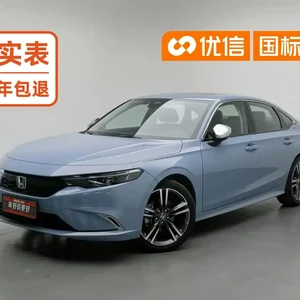
View all listings →Real units currently on ChinaCarDirect with per-unit asking prices and MOQ. Availability updates live from the catalogue.
How to buy a Honda Integra from China
-
1
Define the destination-market requirement
State the destination country, required steering configuration, powertrain, transmission, body style and preferred equipment grade before shortlisting vehicles.
-
2
Shortlist the live inventory
Review current Honda Integra listings and record each VIN or SKU, model year, trim, transmission, condition and stated Incoterm.
-
3
Verify the individual vehicle
Request build-sheet information, photographs, engine and gearbox confirmation, hybrid battery details where applicable, and ownership or customs documents.
-
4
Request an itemised landed quotation
Ask for the unit price, MOQ, quote validity, freight method, insurance, terminal charges, duties, taxes and any required conversion work.
-
5
Confirm the order and payment terms
Check the contracting seller, payment beneficiary, deposit and balance schedule, refund conditions, ownership transfer and the point at which cargo risk passes.
-
6
Inspect and document before shipment
Use an independent pre-shipment inspection to verify the VIN, condition, equipment, mileage and export documents, with dated photographs retained.
-
7
Book freight and destination clearance
Choose a suitable forwarder, agree consolidation and insurance arrangements, then track booking, loading, arrival, customs clearance and registration milestones.
Integra vs rivals
| Honda Civic | The closest brand and engineering-family benchmark, with similarly compact proportions and front-drive positioning. The Integra generally has a more hatchback-like, performance-focused image, while the Civic may be easier for local dealers to support where sedan demand dominates. |
|---|---|
| Toyota Corolla Hybrid | A strong alternative for fleets prioritising fuel economy, low operating complexity and broad resale acceptance. The Integra offers a more expressive design and a manual turbo option, but it generally occupies a more style-led and enthusiast-oriented position. |
| Volkswagen Golf | A conventional premium compact alternative for buyers prioritising cabin refinement and road presence. The Golf may carry higher equipment costs, while the Integra stands out with distinctive styling, manual availability and a broader visible trim hierarchy. |
Frequently asked questions
How is Honda Integra export pricing determined?
The live price reflects the specific vehicle’s year, trim, powertrain, transmission, condition, mileage, currency movement and the seller’s commercial terms. Freight, insurance, handling, duties, taxes and conversion work may be separate from the vehicle price. Check the live Honda Integra listings for the current per-unit amount, MOQ and availability, then request an itemised written quotation with a stated Incoterm.
What powertrain and driving-range options does the Honda Integra have?
The 240TURBO branch uses a 1.5-litre turbocharged petrol engine with a six-speed manual or CVT, depending on trim. The 2.0L e:HEV is a self-charging petrol-electric hybrid with a planetary-style automatic transmission, not a plug-in hybrid or battery EV, so it has no buyer-relevant electric-only driving range. Exact hybrid battery specifications should be checked against the individual vehicle.
Should an overseas buyer choose a new or used Honda Integra?
A new unit can provide more consistent equipment, clearer original history and possible warranty coverage, but its production date and exact grade still matter. A used Integra can reduce acquisition cost when service history, condition and hybrid-system health are properly verified. Compare expected downtime, warranty transfer and total operating cost rather than using the new or used label alone.
What is the MOQ for a Honda Integra?
MOQ is attached to the particular listing or commercial offer and is not a permanent model-wide rule. A live vehicle may be available for individual purchase, but special-production or grouped-shipment arrangements can carry different conditions. Read the MOQ on each listing and repeat it in the quotation or pro forma invoice before paying.
How long does Honda Integra shipping take and what affects the cost?
Transit time and cost depend on the origin and destination ports, transport mode, booking space, container availability, route, customs clearance, terminal handling, insurance and the Incoterm. Pre-export inspection, document correction and port queues can add time before loading. Request a milestone schedule and an itemised freight quotation rather than relying on a generic estimate.
Are spare parts available for manual, hybrid and RHD Integra versions?
Parts are organised by model, grade, powertrain and configuration, and specialised manual, hybrid or steering-layout components may take longer to source. Confirm the correct part number, interchangeability, dealer support and expected lead time before placing a bulk order. For RHD units, ask specifically about market-specific electrical and trim components rather than assuming every China-supplied part is interchangeable.
Is a right-hand-drive Honda Integra available for export?
China-market examples are commonly left-hand drive, while RHD availability can vary by trim and current source inventory. Buyers should check the actual hand-of-drive configuration on the live listing and ask about sourcing a prepared RHD vehicle or arranging a compliant conversion. Local type-approval, registration and safety rules must be checked before shipment.
How do I order a Honda Integra from China?
Start by choosing the destination, powertrain, transmission and grade, then shortlist the live inventory and request VIN-level verification and an itemised quote. Confirm MOQ, payment milestones, inspection, export documents, freight terms and customs responsibilities in writing. After pre-shipment approval, the forwarder can book transport while the importer arranges destination clearance and registration.
Ready to source the Honda Integra?
Send ChinaCarDirect your destination, preferred powertrain, transmission and trim to request a current unit-level export quotation.
Request a quote