
Honda HR-V Export Buying Guide for Overseas Dealers
A practical Honda HR-V export buying guide for overseas dealers, covering hybrid and petrol trims, live pricing, MOQ, shipping, compliance, and key rivals.
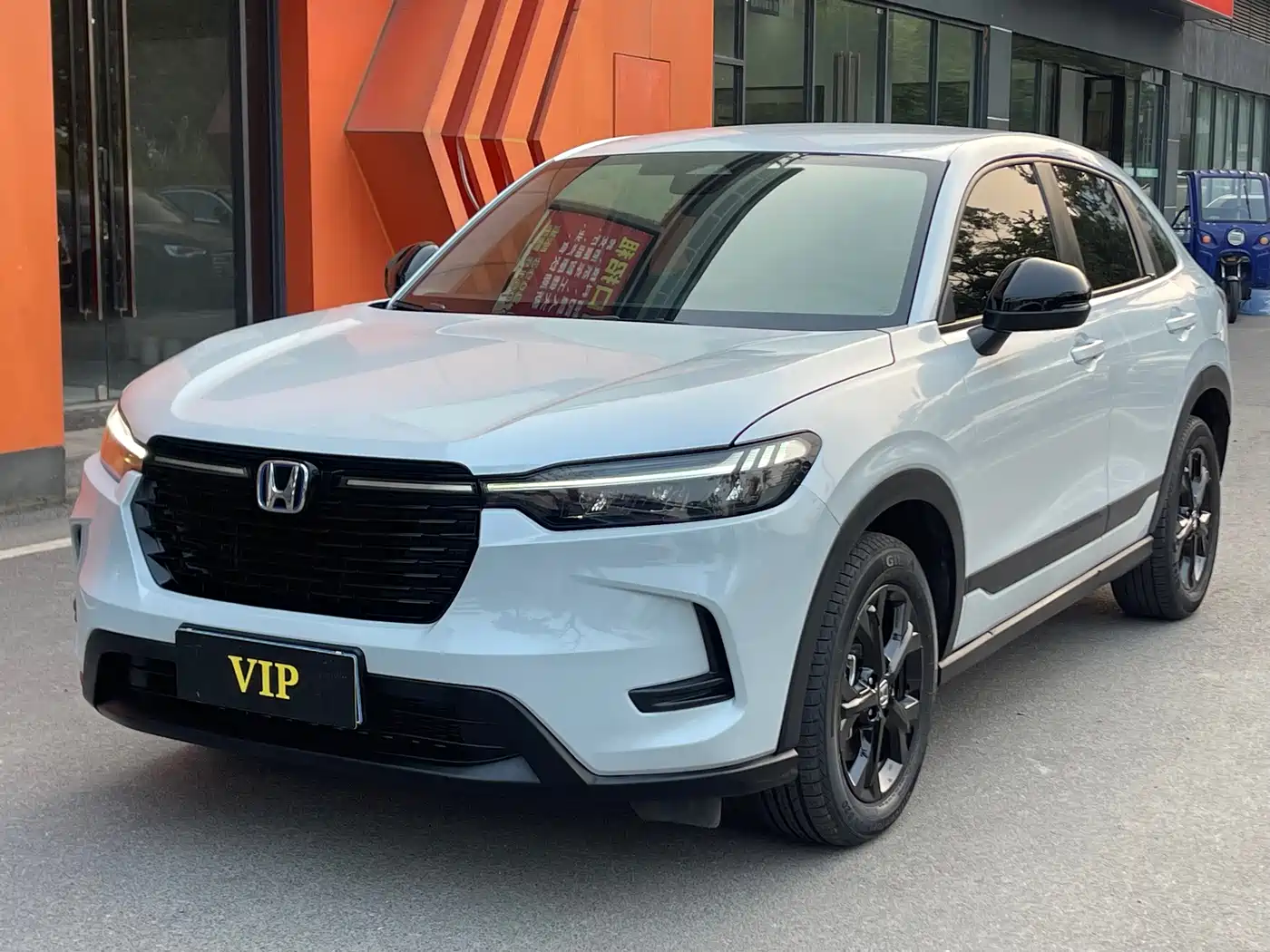
At a glance
- The HR-V combines compact-crossover packaging with Chinese-market e:HEV and 240TURBO powertrain choices.
- The e:HEV self-charges, while 240TURBO versions suit buyers who prefer conventional petrol operation.
- Wholesale decisions should compare live unit pricing with destination freight, taxes, insurance and homologation.
- Current price, MOQ and availability must be checked on the live unit listing, not inferred from model averages.
- Compact size and practical utility suit urban distributors and fleets, provided local aftersales support is adequate.
Why the Honda Hr-v matters for export markets
The Honda HR-V is a compact crossover that sits between a family hatchback and a larger SUV. Its appeal for export buyers comes from a practical mix: a five-door body, a raised driving position, usable passenger space and a cargo area that can carry everyday luggage or light trade equipment. That makes it relevant to urban distributors, ride-hailing operators and small fleets that need one vehicle to cover several jobs without moving into a large-SUV cost and consumption profile. It also simplifies parking, loading and inland distribution in destination markets.
Demand for this model comes from its versatility rather than a single specification. The Chinese lineup includes a self-charging e:HEV and 240TURBO petrol variants, giving importers different operating profiles for fuel-conscious private buyers and businesses that prefer petrol performance. Honda’s established brand recognition can reduce customer-education effort, although its strength in a destination depends on local dealer coverage, spare-parts access and how familiar buyers are with hybrid servicing. That is especially relevant for pilot shipments. This can suit importers entering the segment without funding a large local marketing and support network.
For export planning, the HR-V should be viewed as a flexible platform rather than a single export commodity. Buyers can prioritize fuel efficiency, cabin equipment, driver appeal or a lower acquisition burden for used units, but each choice affects the destination total cost. The smart first step is to define the customer, operating environment and aftersales support before selecting a trim. A model that fits local driving habits and can be maintained predictably is usually more valuable than a nominally stronger specification that creates compliance or parts problems after launch.
- Confirm local aftersales support.
- Match powertrain to customer use.
- Compare total landed costs.
Model range, trims and powertrain variants: how the lineup is structured and how to choose
The Chinese-market HR-V is organized around two distinct powertrain families: the 2.0L e:HEV Dynamic Smart Edition and two 240TURBO editions, Jingrui and Jin Chao. These names identify domestic-market trims and should not be translated automatically into equipment equivalents sold in Europe, North America or other regions. The e:HEV is a self-charging hybrid, while the 240TURBO choices are turbocharged petrol models. Buyers should therefore match the powertrain first and only then assess equipment, because features and homologation packages can vary by source market. Confirm the exact specification attached to each unit.
For an e:HEV buyer, the main attraction is everyday fuel reduction without plug-in charging or range anxiety. The petrol engine and electric motor work together, and the traction battery is replenished by the vehicle rather than from a cable. That simplicity suits routes with uncertain charging access and drivers who want familiar refuelling. It does not make the vehicle a battery-electric car, so the live specification should confirm system output, fuel consumption, warranty coverage and battery-related aftercare before the importer commits to a marketing claim consistently for the destination market.
The 240TURBO editions serve buyers who want a combustion-only vehicle, familiar petrol logistics and potentially more responsive performance. In the Jingrui and Jin Chao names, however, the domestic grade letters do not tell an overseas buyer what equipment is fitted. Ask for a specification sheet, including engine output, transmission, tyre size, infotainment, safety functions and any dealer-installed accessories. Compare that document with expected retail positioning. The correct trim is the one that meets the use case and compliance plan without paying for equipment that will not be used or resold.
- e:HEV self-charges.
- 240TURBO: petrol only.
- Verify unit equipment.
- Confirm warranty portability.
New vs used Honda Hr-v: how export inventory is structured and how buyers choose
Export inventory should be read as a set of individual propositions, not a single standardized HR-V product. New units may differ in production year, trim, option content and whether they are unregistered stock, while used units add mileage, ownership history and condition variables. The listed trim names provide a useful starting taxonomy, but they do not reveal the whole vehicle. Buyers should first establish whether the source vehicle was sold for private use or fleet operation, then request the documents and inspection evidence needed to compare like with like consistently.
A new HR-V can appeal to a dealer that wants standardized preparation, known ownership and simpler cosmetic refurbishment. Before treating it as such, verify the production date, invoice, registration status, warranty start date and whether the odometer and battery state are consistent with the vehicle’s history. Also confirm that tyres, tools and manuals are complete, match the documented specification, and that no accessory has been fitted in a way that affects compliance. A low-risk new vehicle still requires inspection because storage time, transport movement and dealer preparation can create discrepancies.
A used HR-V can make sense for a budget-conscious importer, a rental buyer or a dealer seeking a lower entry cost per vehicle. The trade-off is that savings at purchase can be offset by near-term servicing, wear or battery-related uncertainty, particularly for an e:HEV. Ask for an independent inspection covering body condition, mechanical service history, hybrid-system warnings, tires, fluids and roadworthiness. For petrol cars, scrutinize engine, transmission and maintenance evidence; for hybrids, ensure the high-voltage battery and power electronics are covered rather than merely visually presented in the inspection report.
- Match year and trim.
- Obtain service records.
- Inspect hybrid system.
- Recalculate warranty costs.
How export pricing works: the factors behind a live listing price, and how to read one
A live HR-V export price is the result of several variables, not a fixed model-level rate. The vehicle’s production year, trim, mileage, condition and option content affect its baseline value; a hybrid may also carry a price adjustment linked to battery version and system condition. Beyond the unit, exchange-rate movement, inland transport, export handling, freight, marine insurance, port charges, destination taxes and the selected Incoterm redistribute the final cost. Compare quotations on the same commercial basis, or apparent unit differences may simply reflect different scopes of supply and responsibility clarity.
When reading a live listing, separate the vehicle price from the landed-cost estimate. First confirm model year, exact trim, stock condition, mileage, VIN or chassis identity, and whether the displayed amount is an asking price subject to confirmation. Next identify what is already included: export documents, dealer fees, inland delivery, inspection, loading, freight, insurance and destination charges. A supplier should state the Incoterm and the point at which risk transfers. If those fields are missing, request a written quote before treating the visible number as a purchase budget for approval. Current, binding price, MOQ and availability must be confirmed in the live ChinaCarDirect inventory.
A useful export comparison works like this: take the live price of a specific unit, add all applicable seller-side charges, then add freight and destination costs under the stated Incoterm. Calculate the landed cost per vehicle, including tax and compliance work, and subtract verifiable operating benefits such as lower fuel use. It also reveals whether one chosen vehicle costs more than mixing less-suitable units for a shipment. This keeps decisions tied to the same specification and delivery condition, providing a defensible negotiating position without relying on an obsolete market average.
- Compare like-for-like Incoterms.
- Separate unit and landed prices.
- Itemize seller charges.
- Recheck live pricing.
MOQ, ordering and payment: single units vs consolidating a container
Minimum order quantity is a commercial field, not an inherent property of the HR-V. It can differ by seller, unit, trim and shipment plan, so the buyer should read the requirement on the exact live listing and include it in the RFQ. Sellers may accept one vehicle or set a lot or container minimum. Do not assume a model-wide MOQ or infer it from a few examples. If a single-unit purchase is important, state that requirement before negotiation because it determines whether freight, documentation and handling can be priced economically.
Buying one unit and consolidating a container are different procurement strategies. A single vehicle offers precise control and may suit a distributor testing demand or a fleet buyer adding several vehicles. A consolidated shipment can reduce duplicated freight and handling per unit, but only if the mix shares compatible dimensions, documentation standards and delivery timing. Compare the actual savings with the risks of holding extra inventory, mismatched trims or unsold units. Ask the supplier or freight partner to model the one-vehicle landed cost separately from a realistic multi-model container option.
The ordering sequence should be controlled. Select a live HR-V listing, obtain the seller’s identity and vehicle documents, negotiate the unit specification, and request a pro forma invoice that states the price, MOQ, Incoterm, payment milestones, documents, production date, warranty and dispatch window. Payment instructions should match the contracting entity, and any deposit should be linked to an order and inspection clause. Keep the final payment conditional on agreed documentary and pre-shipment checks. These controls matter when a shipment combines several HR-V trims or the buyer is unfamiliar with the seller.
- Read each listing’s MOQ.
- Request a pro forma invoice.
- Match payment to contract.
- Condition payment on inspection.
- Record dispatch terms.
Shipping, homologation and market compliance caveats: LHD/RHD and import rules by country
Steering configuration is the first physical import check. Vehicles sourced from the Chinese market are commonly left-hand-drive, so an importer needing a right-hand-drive HR-V must not assume local conversion is included or easy. Confirm the steering-wheel side in the live listing and ask the seller for an RHD example or a documented conversion plan. Conversion can involve parts, wiring, safety components, certification and quality-control costs, and it may reduce warranty coverage. For a fleet requiring standard right-hand-drive operation, sourcing from a market already configured that way is usually less disruptive.
Import rules are determined by the destination country and buyer channel, not by the vehicle’s export listing. A dealer should establish type approval, emissions and safety requirements, VIN or chassis documentation, customs classification, tariff and tax treatment, insurance, and age or emissions restrictions before committing. Chinese-market equipment may differ from local homologated versions even when the model badge is identical. Give the broker the VIN and equipment list early, retain original invoices and inspection records, and obtain written confirmation that the described unit is eligible for the intended registration route.
Shipping cost and time depend on origin handling, consolidation, sailing schedule, destination port, customs clearance and inland delivery. The supplier should identify whether the vehicle is delivered to an export terminal, loaded on a vessel, or sold under a door-to-door term, because each stage changes both price and risk. Secure the VIN and export documents before dispatch, photograph the vehicle and cargo area at handover, and use inspection and insurance appropriate to the value and route. Transit time should not be quoted as a guarantee without separating booked sailing time from terminal, customs and inland delays.
- Confirm steering configuration.
- Validate destination approval.
- Define risk transfer.
- Photograph dispatch condition.
Who should buy the Hr-v — and who should pick a different vehicle
The HR-V best fits buyers who want a compact crossover with more everyday utility than a hatchback but a smaller footprint than a mid-size SUV. It is a sensible candidate for independent distributors, urban ride-hailing or rental operators, company-car programmes, and dealers serving first-time SUV buyers who value a familiar Honda proposition. The e:HEV may suit routes where fuel use matters and charging infrastructure is limited, while petrol versions can simplify fleet operations where users are more comfortable with conventional drivetrains. It can serve mixed-use buyers with regular equipment-carrying needs.
Before ordering, translate the use case into measurable checks. Measure cargo volume and loading access against the equipment actually carried, confirm a service network for the chosen powertrain, estimate fuel and maintenance assumptions over real routes, and review the residual value of the selected trim. For a company fleet, check driver comfort, visibility, safety equipment and uptime support rather than relying on consumer styling alone. A live quote is useful only when the supplier confirms that the specific vehicle meets those operating and documentation requirements before a deposit is paid.
A buyer should look elsewhere if maximum cargo volume, seven-seat capability, serious off-road use or the lowest operating cost is the overriding requirement. Large fleet operators may also prefer a model with a deeper local parts network, simpler homologation history or a proven electric range. If every route has reliable charging and local regulations favour zero-emission vehicles, a battery-electric crossover may be a stronger fit than an e:HEV. The HR-V is less suitable when buyers need a guaranteed towing package, heavy-duty commercial construction or certification under another market’s specific rules.
- Good for compact fleets.
- Check cargo and service access.
- Use another class for heavy loads.
Main rivals and how the Hr-v compares
The closest alternatives depend on whether the buyer prioritizes hybrid efficiency, petrol performance, size or local aftersales support. Toyota’s Corolla Cross hybrid occupies a similar compact-crossover position and benefits from strong Toyota recognition in many markets. Hyundai’s Kona offers a wider design and powertrain mix, including hybrid and battery-electric versions in some markets. Nissan’s Qashqai provides a more conventional crossover alternative, but availability and specification should be checked for the exact destination rather than assumed from global model history. These rivals can differ materially in local certification and resale value.
Against the Toyota Corolla Cross hybrid, the HR-V offers direct access to specified Chinese-market trims, while Toyota’s retail footprint may reduce parts and service friction in some destinations. Against the Hyundai Kona, choice is more nuanced: the HR-V offers a self-charging hybrid and petrol alternatives, whereas Kona availability can include an EV that better serves markets with charging and zero-emission incentives. The Qashqai may appeal where a conventional petrol SUV and established Nissan support are priorities. For each, compare landed cost, homologation, service access and resale, not brochure equipment alone.
For an importer, the decisive comparison is often total operability after arrival. Build a shortlist using the same destination, passenger and payload assumptions, then attach each model’s compliant variant, expected fuel basis, likely maintenance items and realistic resale channel. The HR-V should be favoured when its compact size, Honda positioning and hybrid or petrol choice align with the customer base, not because a listing looks attractive before freight and compliance. A rival with easier homologation may be quicker to source, while stronger local support may deliver better lifetime value over time.
- Corolla Cross: service benchmark.
- Kona: wider electrified range.
- Qashqai: petrol benchmark.
Live Honda Hr-v export inventory
View all listings →Real units currently on ChinaCarDirect with per-unit asking prices and MOQ. Availability updates live from the catalogue.
How to buy a Honda Hr-v from China
-
1
Start with live HR-V inventory
Review matching units on ChinaCarDirect and note the production year, trim, condition, mileage and seller. Use each live listing for the current unit price, availability and listing-specific MOQ.
-
2
Request the full specification
Ask for the VIN or chassis identity, engine and hybrid details, transmission, equipment list, service history, warranty and document set. Resolve any material uncertainty before committing.
-
3
Check destination compliance early
Provide the VIN and equipment list to a customs broker or compliance adviser in the destination market. Confirm LHD or RHD suitability, type approval, taxes, duties and registration route before committing.
-
4
Build a comparable landed quote
Ask for a written quote that separates unit price, seller charges, freight, insurance, port costs, destination taxes and inland delivery. State the Incoterm so every quotation covers the same scope.
-
5
Agree MOQ, payment and documents
Confirm whether one unit can be ordered and obtain a pro forma invoice listing the MOQ, price, payment milestones, documents, warranty and dispatch window. Ensure payment instructions match the contracting entity.
-
6
Inspect before final settlement
Use an independent pre-shipment inspection to check condition, mileage, keys, tools, tyres, warning lights and hybrid-system information where applicable. Make final payment conditional on agreed inspection and document checks.
-
7
Book shipping and prepare registration
Confirm loading, secure transport, marine insurance and destination handover arrangements against the agreed Incoterm. Send the required registration documents to the broker before arrival.
Hr-v vs rivals
| Toyota Corolla Cross Hybrid | The Corolla Cross Hybrid is a close size-and-powertrain alternative where Toyota has strong local support. Its established service network may reduce operating friction, but the HR-V can win when a buyer specifically wants a specified Chinese-market e:HEV or 240TURBO unit. |
|---|---|
| Hyundai Kona | The Kona competes as a compact crossover with hybrid and, in some markets, battery-electric choices. It may fit charging-rich or EV-focused buyers better, while the HR-V offers petrol and self-charging hybrid options without plug-in dependency. |
| Nissan Qashqai | The Qashqai offers a conventional petrol crossover alternative and can appeal where Nissan support is strong. It does not directly replicate the HR-V’s e:HEV choice, so compare local powertrains and homologation rather than assuming trim parity. |
Frequently asked questions
How is Honda HR-V export pricing determined?
A live price reflects the specific vehicle’s year, trim, mileage, condition, option content and, for an e:HEV, relevant battery and system factors. Exchange rates, freight, insurance, port handling, destination taxes and the Incoterm can change the landed total. Check the live ChinaCarDirect inventory for the current unit price and request a written, all-in quote for the binding amount.
What powertrain and range should an overseas buyer expect?
The Chinese-market line includes a 2.0L e:HEV Dynamic Smart Edition, which is a self-charging hybrid rather than a plug-in electric vehicle, plus 240TURBO Jingrui and Jin Chao petrol variants. The e:HEV does not depend on public charging for its traction energy, so buyers should not interpret it as having a fixed electric-only driving range. Exact engine output, battery details, fuel consumption and range figures should be checked on the live unit listing.
Should I buy a new or used Honda HR-V?
A new unit generally offers clearer ownership history, warranty timing and simpler preparation, but production date, registration status and actual condition still need verification. A used unit can reduce acquisition cost, but buyers should examine mileage, service history, wear, tyres and hybrid-system evidence. Compare the fully prepared landed cost rather than purchase price alone.
What is the MOQ for Honda HR-V exports?
MOQ is set on each listing and may depend on the seller, trim and shipment plan, so there is no reliable model-wide figure. A buyer needing a single vehicle should state that in the RFQ and obtain written confirmation before paying. The pro forma invoice should show the applicable MOQ, price, Incoterm and payment milestones.
What drives shipping time and cost for an HR-V?
Origin handling, consolidation, sailing schedule, destination port, customs clearance and inland delivery all affect the total. Separate booked transit time from port, inspection, customs and inland delays, and ask for the Incoterm to identify where risk transfers. The quote should itemize freight, insurance, port charges and any destination fees that are not included.
Are Honda HR-V spare parts easy to source?
Parts support depends on the destination and the exact vehicle, not only on the Honda badge. Buyers should confirm local dealer support, electronic and high-voltage parts for the e:HEV, and realistic lead times for body, mechanical and hybrid components. Supply the VIN when requesting parts quotes so the supplier can identify the correct configuration.
Can I source a right-hand-drive Honda HR-V from China?
Chinese-market HR-Vs are commonly left-hand-drive, so right-hand-drive availability must be confirmed for each proposed unit. Ask whether an RHD example already exists or whether conversion is contemplated, since conversion can affect certification, quality, cost and warranty. Current unit details should be verified in the live listing rather than inferred from the model name.
How do I order a Honda HR-V from China?
Start with a live ChinaCarDirect listing, then request an RFQ that identifies the exact trim, condition, current price, MOQ, Incoterm, documents, warranty and dispatch window. Review the pro forma invoice and seller identity, use payment instructions tied to the contracting entity, and make the final payment conditional on agreed inspection and document checks. Confirm freight, insurance, destination charges and registration eligibility before the vehicle ships.
Ready to source the Honda Hr-v?
Request an RFQ to buy a Honda HR-V from China with the current live price, MOQ, Incoterm, documentation and shipping options.
Request a quote