
Hongqi H5 Export Buying Guide for Dealers and Fleets
Buy a Hongqi H5 from China with a clear comparison of petrol and PHEV trims, export pricing, MOQ, shipping, homologation and dealer checks.
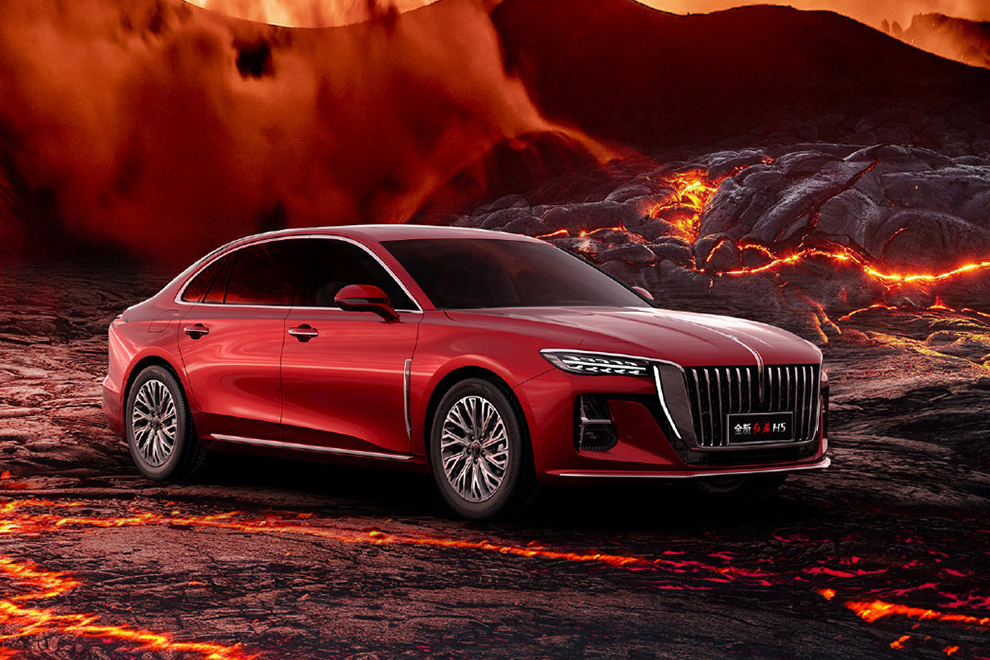
At a glance
- The H5 combines a four-door executive-sedan format with distinctive Chinese-brand positioning.
- Petrol choices include a 1.5T DCT version and a 2.0T automatic version.
- PHEV choices use the 130 and 170 Super Hybrid version labels.
- New and used export inventory require different document and inspection priorities.
- Landed cost, compliance and parts planning matter as much as the vehicle price.
Why the Hongqi H5 matters for export markets
The Hongqi H5 is a four-door executive sedan from a marque best known in China for a formal, premium-oriented identity. Its export proposition is not simply a low-cost transport car: it combines a substantial passenger footprint with Chinese-brand design, familiar Chinese vehicle hardware and equipment that can appeal to importers seeking a distinctive alternative to mainstream Japanese, Korean or European sedans. For overseas dealers, the H5 is best viewed as a China-origin alternative that needs the same commercial checks as any imported vehicle, including residual-value planning, parts support and destination-market compliance.
Demand should be assessed by segment rather than assumed from the badge. Fleets may value the H5 for executive transport, airport transfers and staff mobility where a comfortable sedan is more relevant than a compact hatchback. Dealers can test it as a lower-entry point to a Chinese marque, provided they secure clear title documents, a reliable parts channel and transparent aftersales support. The strongest case is in markets where Chinese vehicles already have buyer recognition and where the importer can handle the model as a product line rather than as an isolated bargain import.
Before committing, compare the H5 with the sedans already serving the same price and space band in the destination market. Chinese domestic models can carry equipment and comfort features that make them look well equipped next to established rivals, but badge recognition, resale expectations and workshop familiarity may differ. An importer should therefore model total operating cost and residual value, not just acquisition cost. If those advantages cannot offset weaker recognition and servicing arrangements, a better-established Japanese or Korean sedan may be the safer commercial choice for a private buyer.
- Executive sedan format suits chauffeur fleets.
- Chinese-brand appeal depends on local recognition.
- Parts support and residuals need early planning.
Model range, trims and powertrain variants: how the lineup is structured and how to choose
The lineup has two clear families: petrol sedans and plug-in hybrid sedans. Petrol versions appear with a 1.5-litre turbocharged engine paired with a DCT automatic transmission, while a 2.0-litre turbocharged petrol engine is offered with a conventional automatic transmission. These are not simply fuel-efficiency labels; they change the character buyers should expect from acceleration, gearbox behaviour, load carrying and operating costs. Availability of a specific engine depends on the live inventory and the trim designation shown for each vehicle in the target market at the time of purchase and before funds are committed.
PHEV choices are identified in the export catalogue by the 130 Super Hybrid and 170 Super Hybrid version names. Those labels should not be treated as a complete specification sheet: battery capacity, electric-only range, combined range, charging connector, charging rate and fuel consumption can differ by production batch and market specification. For a fleet with dependable charging, a PHEV may offer a useful operating model; for a buyer who cannot charge regularly, the petrol versions may be simpler to deploy. Ask for the homologated on-board data rather than relying on an online configuration before contracting.
Choose the engine around duty cycle, driver profile and charging access, not around the largest badge. The 1.5T DCT pairing is the more efficiency- and cost-oriented petrol option for mixed urban use, while the 2.0T automatic gives buyers a more conventional high-output alternative for frequent highway travel or a more relaxed stop-start experience. A PHEV can suit organisations seeking lower tailpipe emissions during electric driving, but only if staff can plug in and the local tax, emissions and fuel rules are commercially favorable. Confirm the final choice against the individual listing.
- 1.5T DCT targets mixed petrol use.
- 2.0T automatic serves conventional touring.
- 130 and 170 identify PHEV versions.
- Confirm battery, range and charging.
New vs used Hongqi H5: how export inventory is structured and how buyers choose
China-origin export inventory can mix newly produced Hongqi H5 sedans with used examples from earlier model years and registered demonstration vehicles. These categories should be separated carefully: a low odometer reading alone does not prove that a car is new, and the term new does not describe a vehicle’s exact registration, warranty or export history. Buyers should treat condition, title status and commercial classification as separate fields to verify. This structure lets an importer access both newer equipment and lower-entry used cars without treating every low-mileage vehicle as equivalent to a factory-fresh unit.
For a used H5, mileage is only the first checkpoint. Inspect tyres, brake condition, suspension, cabin wear, accident repairs, fluid leaks, service records and the accuracy of the odometer. For a used PHEV, also request battery-state-of-health information, evidence of charging and fuel use, and confirmation that the high-voltage system has not been modified or damaged. The VIN, registration documents and seller authority should match the vehicle being offered. These checks protect the importer from treating a low purchase quote as a low-cost asset after freight, tax and repairs are considered at destination.
Newer or near-new cars are usually easier to standardise for fleet customers because paint, cabin and equipment presentation are more consistent, although the importer still has to confirm production date, warranty transfer and delivery condition. Used vehicles can offer better value for secondary roles or an initial test market, especially when the buyer has a disciplined inspection and maintenance plan. The practical decision is to define the residual-life requirement first, then match it to the highest-condition vehicle that meets the budget. Neither category is automatically cheaper once freight, taxes, repairs and downtime are included at destination.
- Separate new, used and demo status.
- Used PHEVs need battery-health evidence.
- Inspect vehicles before shipment.
How export pricing works: the factors behind a live listing price, and how to read one
A Hongqi H5 export price is not one fixed national-market figure. It is a unit-level quote that reflects the vehicle’s model year, trim, petrol or PHEV version, mileage and condition, as well as market conditions at the time of sale. Currency movements can alter the apparent value, while shipping method, destination, insurance, port charges and the selected Incoterm determine what the buyer ultimately pays beyond the vehicle line. Always separate the displayed vehicle price from the estimated landed cost before comparing it with a rival or approving an order in writing.
To read a live listing properly, confirm the year, exact trim, engine or hybrid designation, gearbox, mileage, condition, VIN availability and what is included in the quoted scope. Check whether the displayed amount is the seller’s vehicle price or a delivered estimate, and identify any freight, export documentation, insurance, tax, port, storage or destination charges that sit outside it. For container or consolidated orders, ask how vehicles are grouped and who bears the cost of loading, customs delays or a damaged unit. These terms matter more than a temporary discount headline because Incoterms allocate risk as well as cost.
The most reliable workflow is to shortlist vehicles, request like-for-like written quotations, and then compare the complete landed scenarios. Ask whether the seller can hold a unit while financing or inspection is completed, and whether a deposit is refundable if the vehicle fails agreed checks. Use the live Hongqi H5 inventory for current per-unit figures, but do not treat an earlier enquiry, a catalogue page or another buyer’s quote as binding. A binding offer should identify the vehicle, commercial terms, validity period and payment schedule in writing before funds are transferred and ideally countersigned.
- Vehicle price differs from landed cost.
- Incoterms allocate cost and risk.
- Check current per-unit live quotations.
MOQ, ordering and payment: single units vs consolidating a container
One-unit buying is the practical entry point for a dealer testing Hongqi H5 demand, a small fleet sourcing a single executive car, or an importer consolidating several vehicles from different sellers. Some listings may be available individually, while bulk arrangements can involve a seller-specific minimum or a multi-vehicle shipment. The relevant MOQ is therefore the quantity attached to the selected listing or written quotation, not a marketplace-wide assumption. Confirm it before payment, along with whether mixed years, trims and conditions are permitted in one order for consolidated freight to the same destination.
Payment mechanics normally progress from vehicle selection and reservation to deposit, documentation, balance and release for shipment. The exact sequence and accepted methods depend on the seller and transaction structure, so the importer should obtain written instructions rather than assume a standard escrow process. Before transferring funds, verify the legal seller name, bank-account beneficiary, VIN and document set, and understand what happens if the vehicle does not match the specification or cannot be loaded. A clear cancellation and refund clause is particularly important for cross-border purchases, especially if shipping is delayed or a unit fails inspection.
Consolidating a container can improve freight efficiency, but it introduces matching and timing risks. A loader must reconcile VINs, keys, documents and condition reports against the packing list; differences in model year, trim, colour or mileage can complicate resale and customer handover. Group vehicles with similar specifications where possible, and agree in advance who pays for storage, demurrage, insurance, inspection and return of a rejected unit. For first-time importers, a small mixed order may offer better control than filling a whole shipment solely to obtain a lower unit freight rate, especially when demand is still being tested.
- Confirm MOQ on each listing.
- Consolidation can reduce freight cost.
- Reconcile VINs and documents.
Shipping, homologation and market compliance caveats: LHD/RHD and import rules by country
Import feasibility begins with steering configuration. Most Chinese-market Hongqi H5 vehicles are supplied in left-hand-drive form, so a right-hand-drive destination requires either a suitable RHD vehicle or a conversion that meets local type-approval and safety rules. Steering conversion is not merely swapping a wheel and should not be assumed to preserve warranty, insurance or regulatory compliance. Buyers in RHD markets should first ask the seller for documented RHD availability, then confirm the conversion pathway with a local specialist and the relevant authority before shipment, local sale, registration and clearance are confirmed.
Each country applies its own combination of vehicle type approval, emissions rules, customs classification, age restrictions, safety requirements, local taxes, registration charges and insurance conditions. The importer or broker must calculate duties and taxes from the exact engine, fuel type, power output, emissions data and vehicle age rather than from the Hongqi name. A PHEV may be taxed and treated differently from a petrol car, and local incentives can change the commercial result. Obtain a written landed-cost calculation from a customs specialist before treating any vehicle as importable and saleable in the destination country.
Shipping method should match quantity, urgency and risk tolerance. Container transport can suit grouped purchases, while RoRo or other specialist arrangements may suit a single vehicle; the final choice also depends on origin port, destination port, carrier availability and cargo dimensions. Arrange pre-shipment inspection, secure vehicle identity and export documents, confirm insurance, and define who is responsible at each handover point. Delivery time and cost are variables rather than fixed promises: congestion, port inspections, customs clearance, inland transport and storage can all extend the schedule or increase charges, so build contingency into launch plans.
- Most China-origin stock is LHD.
- RHD conversions need local approval.
- Confirm destination taxes and rules.
Who should buy the H5 — and who should pick a different vehicle
The H5 is a strong candidate for corporate chauffeur fleets, airport and hotel transfers, regional staff travel, and dealer programmes aimed at customers who prefer a formal sedan with a more distinctive Chinese marque identity. Its four-door layout and substantial body make it easier to justify for executive use than a small urban car. Fleets should assess rear-seat comfort, luggage capacity, fuel or charging policy, residual value and the availability of technicians before committing to a large order. A test vehicle is usually more informative than a showroom promise across several markets or destination countries.
It is less suitable for buyers whose priorities are minimum purchase outlay, very low running cost, seven-seat flexibility, off-road ability or the strongest resale confidence in a mature market. A high-mileage petrol H5 may fit a budget fleet, but maintenance and downtime must be included in the total-cost calculation. An organisation with firm emissions targets may prefer a full battery-electric vehicle when the PHEV’s electric range is uncertain or charging access is unreliable. Buyers in markets with strict type approval should avoid ordering before compliance is understood at every depot and upfitting first is confirmed in writing.
The H5 is also a sensible used-car purchase when the objective is to enter the model with lower acquisition exposure. Buyers can focus on a well-maintained vehicle from a preferred year and specification, then use the early performance to inform a larger wholesale decision. Conversely, a new or near-new car may be preferable for a launch fleet where appearance, warranty administration and predictable condition matter. The decisive question is whether the importer has the parts, compliance and residual-value capability to support the model after handover, not simply whether the listing looks competitive in its chosen segment.
- Strong fit for executive and staff fleets.
- Weaker for minimal-cost or off-road use.
- Useful for measured market testing.
Main rivals and how the H5 compares
The Volkswagen Passat is a logical benchmark because it occupies a similar mainstream executive-sedan role in many European and other markets. It generally benefits from stronger international brand familiarity, established parts expectations and a clearer residual-value story. The H5 differentiates through Chinese marque identity, local-market specification and the potential value of its equipment. An importer should compare the exact Passat generation and market specification, not assume every version is a direct equivalent, and include all duties and running costs before recommending it to fleet customers or private buyers for each market.
The Toyota Camry is another relevant rival, especially where a proven hybrid reputation, broad service familiarity and strong resale expectations influence buyers. The Hongqi H5’s PHEV versions can offer a different route for operators seeking electric-assisted operation, but they do not inherit Toyota’s established market perception or the same body of local service knowledge. For fleets prioritising uptime over badge differentiation, the Camry may carry lower adoption risk. For buyers deliberately seeking Chinese design and local-market value, the H5 can be the more distinctive proposition, provided compliance and support are arranged properly first.
The Hyundai Sonata is a closer value-oriented comparison in several markets, offering a similar four-door family-car format with broadly comparable space and a familiar badge. The H5 may present more visual distinction and a premium-oriented cabin identity, yet Korean-sourced Sonatas can benefit from established after-sales recognition. Decide between them by checking fuel strategy, warranty handling, parts lead times, insurance, resale assumptions and the actual loaded cost. The most persuasive H5 quote is not the cheapest one; it is the one whose lifecycle assumptions remain valid after tax, freight, maintenance and downtime are included.
- Passat offers stronger global familiarity.
- Camry has established hybrid expectations.
- Sonata provides a familiar value alternative.
Live Hongqi H5 export inventory
View all listings →Real units currently on ChinaCarDirect with per-unit asking prices and MOQ. Availability updates live from the catalogue.
How to buy a Hongqi H5 from China
-
1
Define the market and vehicle brief
Set the destination country, steering requirement, annual mileage, passenger profile, charging access and preferred petrol or PHEV powertrain. Include local taxation and registration rules in the commercial brief.
-
2
Shortlist live inventory
Use the live Hongqi H5 listings to compare exact trim, model year, gearbox, mileage, condition and seller location. Treat the displayed per-unit quotation as current information rather than a fixed catalogue price.
-
3
Verify documents and condition
Request the VIN, registration and title documents, service history and import-eligibility information. For a PHEV, verify battery health, charging evidence and high-voltage system condition.
-
4
Request a destination-specific landed quote
Specify the Incoterm, destination, quantity, insurance requirements and desired consolidation plan. Require the quotation to identify vehicle price, freight, documentation, port charges, payment milestones and validity period.
-
5
Inspect and secure the vehicle
Use a pre-shipment inspection and make the VIN, condition report and agreed specification part of the purchase conditions. Clarify deposit refunds, cancellation rights and responsibility if loading is delayed.
-
6
Ship, register and build support
Confirm export release, insurance, customs clearance, local registration and delivery inspection before the vehicle enters service. Establish spare-part and workshop arrangements before placing a larger wholesale order.
H5 vs rivals
| Volkswagen Passat | The Passat benefits from stronger international brand familiarity, established parts expectations and clearer residual-value assumptions. The H5 offers Chinese-brand differentiation and local-market equipment value, making it more suitable for buyers deliberately entering a Chinese marque segment. |
|---|---|
| Toyota Camry | The Camry carries stronger hybrid reputation and wider service recognition in many established markets, which can reduce adoption risk for uptime-focused fleets. The H5 PHEV offers a distinct route for operators prioritising Chinese design, electric-assisted use and local-market value. |
| Hyundai Sonata | The Sonata is a familiar value-oriented four-door alternative with broadly comparable space and established aftersales recognition. The H5 competes through visual distinction and premium-oriented Chinese branding, so buyers should compare loaded cost, parts access and resale assumptions carefully. |
Frequently asked questions
How is the Hongqi H5 export price determined?
A Hongqi H5 export price is calculated for the individual vehicle, not from a fixed catalogue amount. Model year, trim, petrol or PHEV version, mileage, condition, currency movement, freight, insurance, port charges and Incoterms can all change the commercial result. ChinaCarDirect’s live Hongqi H5 listings show the current per-unit quotation; request a written landed quote for your destination before relying on the figure.
Which engines and PHEV ranges are available?
The range includes 1.5T DCT and 2.0T automatic petrol versions, plus 130 Super Hybrid and 170 Super Hybrid PHEV versions. The PHEV labels identify versions, but battery capacity, electric-only and combined range, charging connection and rates must be checked for the exact listing and market specification. Do not infer those figures from the version name alone.
Is a used Hongqi H5 better value than a new one?
Used H5 vehicles can reduce acquisition exposure and are suitable for testing demand, but they carry more uncertainty in condition, service history, battery health and residual value. Newer vehicles are generally easier to standardise for fleet presentation, yet the importer should still verify production date, delivery condition and warranty handling. Compare the complete landed and maintenance scenarios, not the vehicle price alone.
What is the MOQ for Hongqi H5 orders?
MOQ is agreed at the listing or quotation level. Some Hongqi H5 vehicles are sold individually, while sellers arranging bulk or consolidated shipments may impose their own minimum or vehicle-mix requirements. Confirm the quantity, specification mix, deposit, balance and cancellation terms in writing before paying.
What determines shipping time and cost?
Shipping time and cost depend on origin and destination ports, carrier schedules, container or RoRo method, cargo size, customs clearance, inland delivery and current freight rates. Congestion, inspections, storage and demurrage can extend the schedule. The seller or freight forwarder should provide a route-specific estimate and identify which charges are included.
Are spare parts readily available for the H5?
Spare-part support should be assessed before scaling orders, especially for a new marque or a hybrid fleet. Confirm that the seller can supply VIN-specific service parts, identify the nearest authorised or independent workshop, and confirm lead times for tyres, fluids, brake components, infotainment items and high-voltage PHEV components. Parts availability is market-specific and should not be assumed from the vehicle badge.
Can I buy a right-hand-drive Hongqi H5?
RHD Hongqi H5 availability must be checked because most China-origin examples are left-hand drive. Ask the seller to confirm whether a genuine RHD vehicle exists, and have any conversion assessed locally for roadworthiness, type approval, insurance and registration before shipment. Do not order on the assumption that a steering-wheel conversion will automatically be accepted.
How do I order a Hongqi H5 from China?
Start on the live Hongqi H5 listings, shortlist the exact vehicle and trim, and send an RFQ with destination, Incoterm, quantity, payment capability and required documents. Verify the seller, VIN, title, condition and shipping terms, then use a written deposit and balance schedule with inspection and refund conditions. The final landed total should combine the current vehicle quotation, freight, insurance, taxes, port charges and local registration costs.
Ready to source the Hongqi H5?
Request a current Hongqi H5 vehicle list and destination-specific export quote through ChinaCarDirect’s RFQ team.
Request a quote