
Hongqi H5 Phev Export Buying Guide for Dealers
Export buying guide for Hongqi H5 Phev dealers and fleet buyers, covering trims, PHEV specifications, pricing factors, shipping, compliance and rivals.
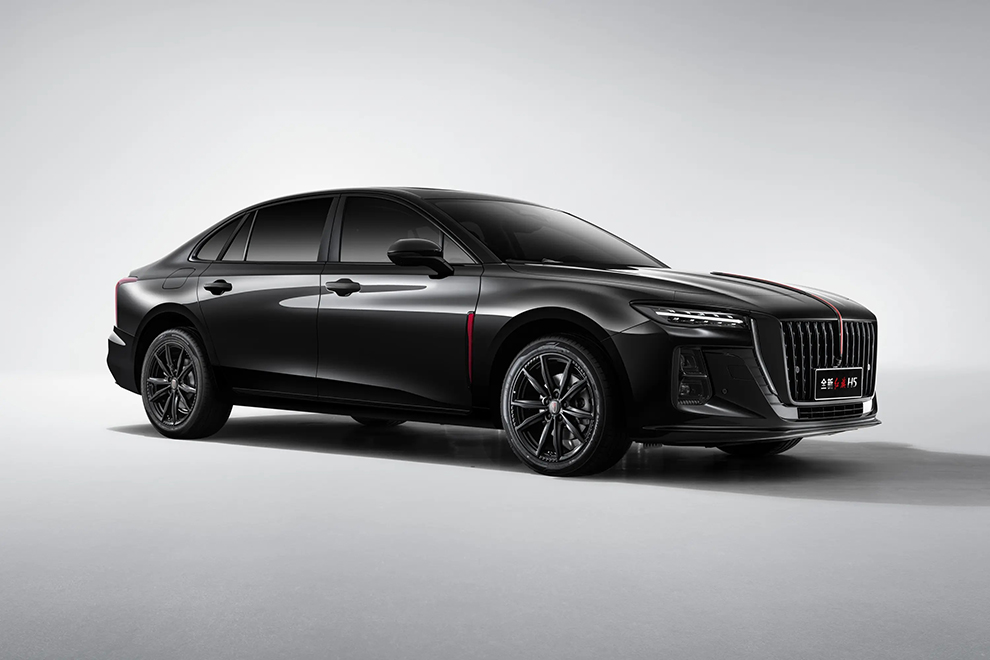
At a glance
- The H5 Phev combines a rechargeable electric drivetrain with a combustion engine for mixed-duty flexibility.
- The identified 130 and 170 Super Hybrid versions should be compared through VIN-linked specifications rather than trim-name assumptions.
- Used purchases require battery-state, diagnostic, service-history and accident checks.
- Export pricing changes with trim, condition, exchange rates, freight, insurance and Incoterm.
- MOQ, steering configuration and destination-market compliance must be confirmed before payment.
Why the Hongqi H5 Phev matters for export markets
Hongqi H5 Phev for export occupies a distinctive place between mainstream electrified sedans and premium mid-size saloons. It is a Chinese-built, four-door plug-in hybrid from a marque associated with prestige-oriented sedans, rather than a low-cost city car. That positioning gives distributors a different story from the mass of anonymous fleet sedans: executive styling, a combustion engine and electric drive. For overseas buyers, the proposition is not simply “more technology”; it is the ability to offer a premium-looking PHEV without moving the entire demonstration fleet to full battery-electric operation in one purchase decision.
Its addressable demand is likely strongest where charging is available for daily use but not dependable for intercity journeys. In that setting, a properly functioning PHEV can cover routine electric driving while retaining its combustion system as a separate option. This makes the H5 PHEV relevant to company-car programs, airport and hotel fleets, and dealer demonstrator plans that need more route resilience than a battery-electric sedan. It is less compelling where electricity is cheap and reliable everywhere, plug-in incentives are absent, or local rules make PHEV ownership expensive. Use destination-certified figures, not China-market claims.
For an importer, the decisive question is whether the brand can be supported after delivery, not merely whether the car looks competitive. Hongqi is better known in China than in many export markets, so verify diagnostic capability, technician training, parts channels, warranty administration and residual-value support before committing to volume. A transparent vehicle file, independent inspection and clear import plan are more valuable than vague assurances about recognition. Use live listings to confirm which trim can be supplied, then build the business case around that unit rather than a generic domestic-market H5 Phev.
- Premium Chinese PHEV sedan positioning.
- Best for mixed charging and routes.
- Local support determines export viability.
Model range, trims and powertrain variants: how the lineup is structured and how to choose
The range visible for the Hongqi H5 Phev is organized around two named configurations: the 130 Super Hybrid Version and the 170 Super Hybrid Version. Those names should be treated as trim identifiers, not automatically as destination-certified electric-range figures, because homologation and test cycles can differ by market. For an export buyer, the correct comparison is the VIN-linked specification sheet: battery capacity, electric range under the destination test cycle, engine and motor outputs, transmission, drivetrain, charging equipment and standard equipment. Request the exact document rather than inferring technical data from a listing title.
Within that structure, choosing between the 130 and 170 versions should begin with the operating cycle, not the badge. If the live specification confirms that the 170 designation corresponds to the higher electric-capability configuration, it is the logical shortlist for buyers seeking more plug-in range; the 130 version may suit a lower-mileage urban duty cycle. Verify this because the numbers alone do not reveal battery size, usable capacity or charging rate. Also compare equipment, tyres, comfort features and warranty terms, because similarly named versions can differ in more than energy data.
A sound trim decision separates four figures often blurred together: usable battery capacity, certified electric-only range, combined range and fuel needed when the battery is depleted. A larger label does not automatically guarantee lower operating cost if the vehicle is heavier, charging access is weak, or local fuel taxation changes the balance. Model a representative weekly route using certified figures, then confirm the charging connector, onboard-charger rating and any vehicle-to-load function required by fleet policy. Finally compare both versions with destination tax and incentive rules, because charging assumptions can change which has the stronger operating case.
- Compare both Super Hybrid build sheets.
- Separate usable capacity from certified range.
- Match charging to the actual duty cycle.
New vs used Hongqi H5 Phev: how export inventory is structured and how buyers choose
Export inventory for this model should be read unit by unit rather than treated as a uniform batch. Each listing needs its own model year, trim, condition, mileage, location, ownership history and commercial terms. In the used-car segment, “used” can cover an early-delivery demonstrator or a high-mileage fleet car, so the label alone offers little protection. The useful question is how much condition has been disclosed and whether the seller allows independent verification. Treat live listings as an initial shortlist, not evidence of fleet-wide specification consistency or mechanical uniformity across units.
For a used Hongqi H5 Phev, the hybrid battery is a critical inspection point because ordinary bodywork review will not reveal its state of health. Ask for a dated battery report, diagnostic scan, charging and discharge results, and confirmation that the high-voltage system has no unresolved faults. Review service records for the engine, transmission, braking system and hybrid components, and ask whether the vehicle was used as a demonstrator, ride-hailing car or company vehicle. Paint measurement, accident checks, cold-start inspection, road test and VIN verification help separate a well-maintained car from a superficially attractive listing.
The trade-off between new and used is straightforward but must include ownership risk. A new vehicle can provide a known production configuration, factory warranty, no prior customer use and delivery preparation, although the buyer should confirm destination homologation and included equipment. A used unit can fit buyers who do not need the full factory warranty, but adds uncertainty in battery condition, service history and remaining life. For a dealer, the better choice depends on resale timing and whether every advertised feature can be supported; for a fleet, uptime and warranty transferability may outweigh a purely financial comparison.
- Review every used listing individually.
- Require battery health and diagnostic reports.
- Verify service, ownership and accident history.
How export pricing works: the factors behind a live listing price, and how to read one
Export pricing for a Hongqi H5 Phev results from several decisions, not a fixed model price. The vehicle-level starting point is affected by model year, 130 or 170 Super Hybrid trim, used condition, mileage, service history, battery condition, options and release status. Transaction costs then move with the renminbi exchange rate, inland transport, export documentation, inspection, freight, marine insurance, port charges and selected Incoterm. Local duty and value-added tax may sit outside the seller’s quote because they depend on the importing country, vehicle classification, customs method, destination and specific route.
A listing quote and a landed cost are different documents. An EXW price leaves buyer obligations from the seller’s premises; FOB includes export handling and loading on board the nominated vessel; CIF adds freight and insurance to the destination port; DDP may include import clearance and duties. None removes the need to confirm what is included, because battery reports, PDI, local taxes, port service and destination charges can sit outside the basic scope. Ask for a quotation identifying Incoterm, named place, freight basis, insurance and validity before comparing offers.
When reviewing a live Hongqi H5 Phev listing, confirm that the quoted amount belongs to the selected VIN and trim rather than a starting or representative amount. Check the currency, condition label, mileage, seller location, export-document wording, payment schedule, and whether freight and insurance are included. Ask for a quotation with the destination port and Incoterm entered, because the same vehicle can produce different landed totals under different terms. Exact price, availability and binding commercial terms should come from current unit listings, not an old catalogue or remembered market figure.
- Condition and trim drive vehicle-level pricing.
- Freight and terms change landed cost.
- Use current unit listings for binding prices.
MOQ, ordering and payment: single units vs consolidating a container
MOQ should be treated as a listing and supplier term, not a permanent characteristic of the H5 Phev model. Some offers may accept one vehicle; others set a container-sized minimum or require a specific trim and model-year mix. Ask the seller to state the minimum in writing, explain whether deposits can be split, and confirm whether used and new cars can be combined. For a first wholesale transaction, one unit can be a sensible way to test the vehicle, logistics and aftersales relationship, but the seller should verify that its export policy supports that quantity.
When consolidating several H5 Phevs into one shipment, the apparent freight saving must be weighed against handling and paperwork risk. A full container gives better vehicle security but requires compatible dimensions and loading-plan discipline; less-than-container or shared vehicle-carrier space can improve flexibility but increases transshipment and damage exposure. Mixed model years or trims are workable only if the documents, keys, battery declarations and warranty paperwork are separated correctly. Because exact vehicle dimensions and loading rules are not safely inferred from the model name, obtain them from each VIN-level listing and confirm the forwarder’s plan before paying for freight.
The ordering sequence should separate commercial commitment from vehicle release. Review the listing and specification, negotiate the unit, MOQ, Incoterm and inspection rights, then request a pro forma invoice showing deposit and balance milestones, payment methods, refund conditions and shipment deadline. Link the balance to satisfactory inspection and correct export documents, while an independent inspection can be used before container loading or release. Budget separately for exchange-rate movement, bank charges, registration, insurance and rectification work. Written instructions and a named contact reduce errors more than a larger first order would.
- Confirm MOQ for each offer.
- Link payment release to inspection.
- Check dimensions before consolidation.
Shipping, homologation and market compliance caveats: LHD/RHD and import rules by country
Shipping planning starts with vehicle dimensions, destination port, sailing frequency, carrier space and battery-transport requirements. Complete sedans may travel by vehicle carrier or, where dimensions and port handling permit, by container or other secured method; the forwarder should confirm what is available. Lithium-battery declarations, UN 38.3 documentation where applicable, charging or state-of-charge instructions, and secure-lashing requirements can affect acceptance and routing. Transit time and cost vary with port pairs, transshipment, congestion, insurance and seasonal capacity, so include the shipment plan in the landed-cost model rather than treating it as final administrative detail.
Steering configuration is a critical sourcing check. Hongqi vehicles built for the Chinese market are commonly left-hand drive, but an importer should not assume that every available unit has the same configuration. Verify the steering-wheel position from clear photographs, the VIN-linked build sheet and the physical inspection, and state the destination’s requirement before placing a deposit. A factory right-hand-drive car is preferable where available because it reduces conversion risk; a converted vehicle may require additional mechanical, electrical and safety checks, can affect warranty treatment and may be less attractive to buyers who value original specification and residual value.
Import approval is market-specific and cannot be transferred automatically from China. Depending on the country, authorities may apply safety and type-approval rules, emissions limits, electrical and electromagnetic-compatibility checks, local plug and connector standards, battery transport and disposal provisions, customs valuation, duty, value-added tax and registration requirements. A China-market range figure should never be substituted for a destination-certified range, and a plug-in tax benefit may depend on occupation, charging or company rules. The importer or local homologation partner should confirm eligibility in writing before shipment, while the freight forwarder handles transport documentation and customs entries.
- Confirm steering configuration before payment.
- Verify battery transport and securement.
- Complete destination compliance review.
Who should buy the H5 Phev — and who should pick a different vehicle
The Hongqi H5 Phev is a strong candidate for an overseas buyer who wants a premium-styled Chinese sedan, a genuine plug-in hybrid and the operating flexibility of electric plus combustion power. It can fit company-car, executive-demo, airport-transfer and mixed-route fleet programs where drivers can charge regularly but may travel beyond reliable charging coverage. Dealers can position it for customers who want more presence than a mass-market PHEV without entering a large luxury sedan. These advantages become commercially sound only when the destination can support the model and the organisation can manage charging and maintenance assumptions.
It is a weaker choice for a buyer whose priorities are the lowest operating cost, deepest local service network, effortless parts availability or strongest liquid resale market. A battery-electric model may be better where charging is abundant and the buyer qualifies for zero-emission incentives. A conventional hybrid may be simpler where employees cannot charge, while an SUV, estate or van is usually more useful when cargo volume, ground clearance or rough use dominates. Where Hongqi lacks a practical service plan or confirmed right-hand-drive supply, a more familiar Japanese or Korean model may reduce operational risk despite a less distinctive proposition.
Before buying, build a total-cost model that follows the vehicle through its likely holding period. Include acquisition, inland and international freight, insurance, duty and tax, charging equipment, electricity and fuel, routine maintenance, hybrid-system work, parts, warranty administration, downtime and expected residual value. Test the plan against realistic electricity, fuel and exchange-rate scenarios rather than one optimistic case. For a dealer, begin with a carefully inspected pilot or limited batch and document parts lead times; for a fleet, use a controlled pilot to measure charging habits, uptime and driver feedback before scaling.
- Strong for managed mixed-route fleets.
- Weaker where local support is thin.
- Choose BEVs, hybrids or utilities as needed.
Main rivals and how the H5 Phev compares
The closest export benchmark for the H5 Phev is the BYD Qin Plus DM-i, a plug-in-hybrid sedan aimed at broad international acceptance. Buyers comparing the two should focus on certified electric range, real-world charging, standard equipment, warranty portability, parts support and the credibility of local aftersales rather than headline model names. The Qin Plus DM-i generally carries greater global PHEV recognition, which can simplify market education, while the Hongqi offers a more prestige-oriented marque identity. Neither advantage is universal, so the winning choice depends on the destination’s importer network and the fleet’s actual duty cycle.
Geely’s Preface PHEV is a closer Chinese-brand alternative when the brief is a larger, comfort-oriented sedan with plug-in capability. The H5 Phev and Preface should be compared with the same worksheet: passenger and luggage space, electric-only range, charging interface, engine and motor calibration, suspension, equipment, warranty and service arrangements. Hongqi’s premium image may help a distributor target executive and hospitality buyers, whereas Geely can have broader recognition in some markets. That is a positioning consideration, not proof of superior engineering, and neither badge should replace a VIN-level specification check or a local compliance review.
Roewe D7 PHEV offers another relevant Chinese mid-size PHEV comparison, particularly for fleet buyers who prefer a more conventional marque proposition. Against it, the H5 Phev’s strongest differentiator is Hongqi’s flagship-style prestige and visual character, while the decision should also turn on dimensions, electric performance, charging, equipment and aftersales support. Because export pricing changes with trim, condition and terms, compare written like-for-like quotations under one Incoterm rather than relying on advertised starting figures. The strongest choice is the model whose verified specification, landed cost and local support fit the destination better.
- Qin Plus DM-i: wider PHEV recognition.
- Preface PHEV: close comfort-sedan alternative.
- D7 PHEV: relevant fleet benchmark.
Live Hongqi H5 Phev export inventory
View all listings →Real units currently on ChinaCarDirect with per-unit asking prices and MOQ. Availability updates live from the catalogue.
How to buy a Hongqi H5 Phev from China
-
1
Define the destination and duty cycle
Specify the country, port, annual mileage, charging locations and route coverage. Confirm whether local fleet policy requires electric-only range, right-hand drive or a particular emissions class.
-
2
Shortlist the correct live units
Review the current Hongqi H5 Phev listings and compare the 130 and 170 Super Hybrid versions through VIN-linked specification sheets. Reject any unit whose condition, equipment or documentation is insufficiently described.
-
3
Request the vehicle and compliance file
Obtain the build sheet, ownership and title records, service history, battery-state report, diagnostic results and import-eligibility information. For a used car, include accident inspection and confirmation of how it was operated.
-
4
Get a like-for-like landed quotation
Ask for a written quote naming the Incoterm, destination port, freight basis, insurance level and treatment of local taxes. Keep vehicle price, freight and estimated import charges separately visible for comparison.
-
5
Confirm MOQ and payment mechanics
Have the supplier state the minimum quantity, permitted vehicle mix, deposit, balance milestone, refund conditions and inspection rights in writing. Confirm all bank fees and payment deadlines before transferring funds.
-
6
Complete local compliance review
Use a local importer or homologation specialist to verify type approval, emissions, electrical requirements, battery rules, tax treatment and registration. Verify LHD or RHD configuration before approving shipment.
-
7
Inspect, ship and register
Complete the agreed inspection before releasing the balance or loading the vehicle. Track export documents, customs clearance, freight, insurance, delivery and local registration as one controlled process.
H5 Phev vs rivals
| BYD Qin Plus DM-i | The Qin Plus DM-i is a mass-market PHEV sedan with wider international recognition and may be easier to support in some markets. The H5 Phev offers more prestige-oriented styling and brand positioning, so compare destination-certified range, charging, equipment, warranty and service support rather than assuming either is cheaper. |
|---|---|
| Geely Preface PHEV | The Preface PHEV is a close comfort-oriented Chinese alternative with broadly comparable sedan use cases. Choose between it and the H5 Phev on verified space, powertrain, charging, equipment, safety approval and local parts support; Hongqi’s image is the differentiator, not proof of superior ownership economics. |
| Roewe D7 PHEV | The Roewe D7 PHEV is a relevant mid-size Chinese PHEV benchmark for company-car buyers. The H5 Phev leans more toward executive prestige, while the D7 may present a more conventional brand proposition; compare like-for-like landed quotations and destination aftersales coverage. |
Frequently asked questions
How is Hongqi H5 Phev export pricing determined, and where can I see the live price?
Vehicle-level pricing depends on model year, 130 or 170 trim, condition, mileage, service history, battery condition and options. Freight, insurance, exchange rates, port charges and the selected Incoterm then affect the total. The binding per-unit amount is shown in the current ChinaCarDirect live listings, while a written quote should confirm the exact unit and landed terms.
What Hongqi H5 Phev powertrain and range details should I request?
The H5 Phev is a plug-in hybrid, combining a rechargeable traction battery and electric motor with a combustion engine. The visible variants are the 130 and 170 Super Hybrid Versions, but those labels should not be assumed to equal destination-certified electric range. Request the VIN-linked battery capacity, engine and motor outputs, charging specification and certified range for the destination test cycle.
Should I buy a new or used Hongqi H5 Phev?
A new vehicle offers a known configuration and factory warranty, but destination homologation and included equipment still require confirmation. A used vehicle can suit buyers who accept more condition risk, so battery health, diagnostic results, service history and accident repair should be independently verified. Use the live listing to assess the actual unit rather than applying one rule to every vehicle.
How does MOQ work when buying a Hongqi H5 Phev from China?
MOQ is an offer-specific commercial term rather than a permanent model rule. Some sellers may accommodate a single vehicle, while others require a larger order or a particular vehicle mix. Ask for the minimum, deposit structure, inspection conditions and cancellation terms in writing before placing an order.
What determines shipping time and cost for a Hongqi H5 Phev?
The main variables are the origin and destination ports, carrier frequency, available vehicle-carrier or container space, vehicle dimensions, transshipment, congestion, insurance and battery-document requirements. Exchange rates and local port charges also affect the invoice. Obtain a destination-specific freight quotation because shipping cost cannot be inferred from the model name alone.
How are spare parts and technical support handled?
Before buying, ask the seller and importing dealer where parts will be sourced, how diagnostic software is supported and whether warranty claims can be administered locally. Hybrid-system and high-voltage parts may require specialist handling or longer planning. Fleet buyers should document critical-part lead times and consider holding selected parts only after model approval.
Is right-hand-drive Hongqi H5 Phev availability confirmed?
RHD availability depends on the individual source vehicle and destination, so it should not be assumed from a Chinese-market listing. Check the build sheet, clear photographs and physical steering position before paying. Factory RHD is generally preferable because conversion can add cost and affect safety approval, warranty treatment and resale value.
How do I order a Hongqi H5 Phev from China?
Start with the live listings, select an exact vehicle and request its specification, inspection documents and VIN-linked records. Agree the MOQ, landed quotation, Incoterm, payment milestones and inspection conditions, then submit the written purchase order and required deposit. Release the balance only after the agreed inspection and document checks are satisfactory.
Ready to source the Hongqi H5 Phev?
Request a unit-specific Hongqi H5 Phev export quote with trim, condition, Incoterm, freight estimate and destination-compliance checklist.
Request a quote