
Hongqi H9 Export Guide: Trims, Pricing and Buying
Hongqi H9 export guide for overseas buyers: compare 2.0T and 3.0T trims, understand pricing, MOQ, shipping, compliance and live inventory before importing.
At a glance
- The H9 is a large executive sedan that offers a distinctive alternative to established global luxury brands.
- The range spans 2.0T and 3.0T turbocharged petrol variants, with four- and five-seat configurations.
- A China-origin H9 requires destination-specific homologation, steering checks and a credible parts plan.
- New inventory suits fleet standardization, while used vehicles require document and condition due diligence.
- Export pricing is unit-specific and changes with trim, year, condition, freight, Incoterm and exchange rates.
Why the Hongqi H9 matters for export markets
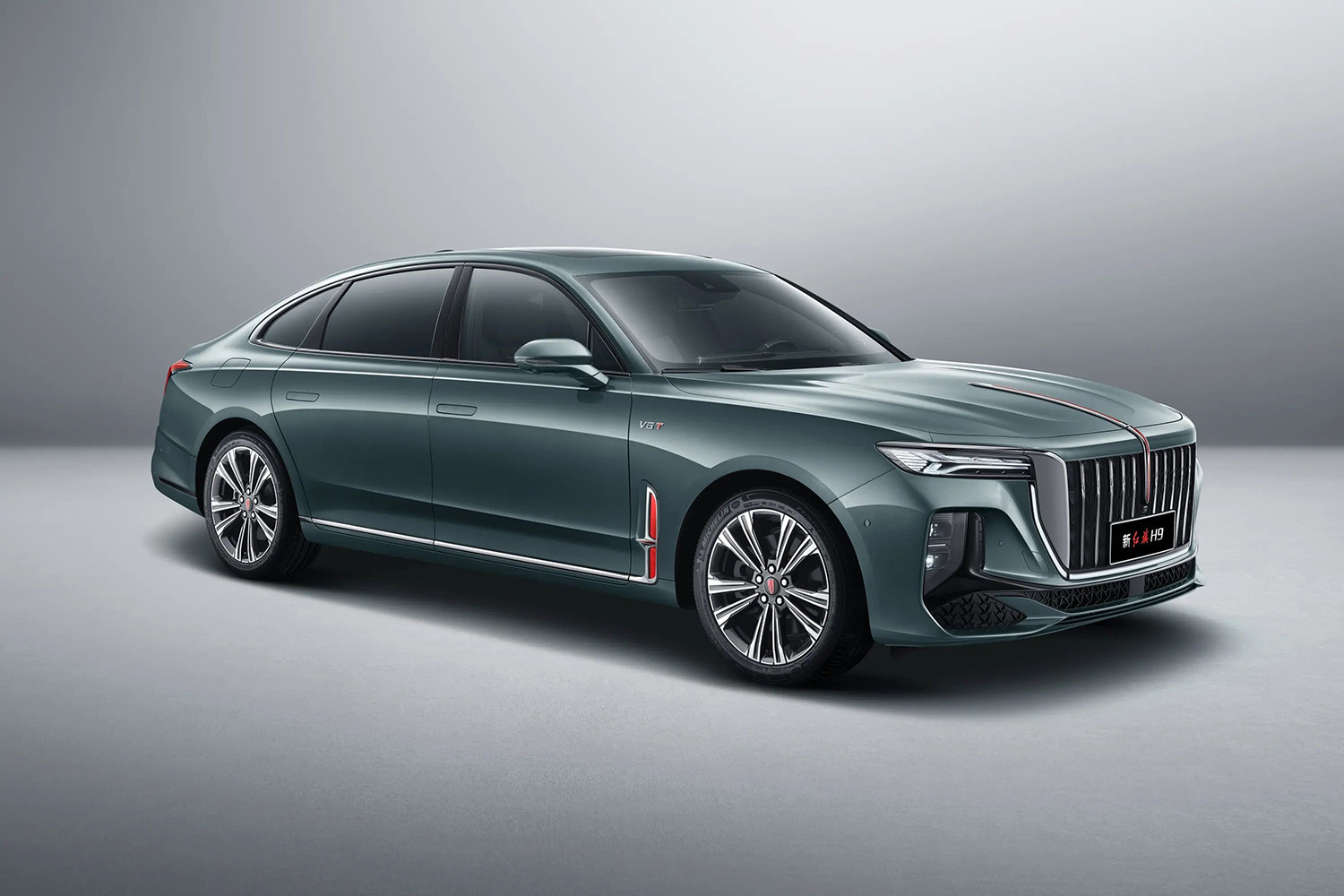
The Hongqi H9 is a large executive sedan that gives overseas buyers an alternative to the established German premium sedans. Its appeal combines formal road presence, a spacious passenger-car brief and the visual identity of a Chinese luxury marque. The range seen for export is organized around 2.0T and 3.0T petrol variants, with five-seat and four-seat configurations on selected versions. For a buyer searching Hongqi H9 for export, that mix is more relevant than headline figures: it identifies the type of vehicle and the decisions to make before arranging homologation.
Demand is likely to be selective rather than mass-market. The H9 suits operators and private buyers who value a formal sedan, rear-passenger comfort and distinctive Chinese badge more than the resale familiarity of a global mass-market brand. Five-seat versions can suit executive transport, chauffeur services and hospitality use, while four-seat versions better prioritize rear accommodation. It may also interest dealers seeking a flagship Chinese import with customization potential. These are use-case matches, however, not proof of local demand: dealers should test target customers, service capability and expected residual values before committing stock.
The model also needs a disciplined export proposition. A China-market H9 should not be treated as automatically homologated for another country, and an H9+ custom or luxury-badged listing does not guarantee identical equipment across markets. Buyers should verify year, engine designation, seating layout, options and document status on each listing. They should confirm local emissions, safety, tax and type-approval requirements. This makes the H9 relevant to international demand, while keeping compliance, parts support and resale planning in the same decision rather than treating Chinese luxury as a substitute for due diligence.
- Targeted demand favors executive and chauffeur use.
- Four-seat and five-seat layouts serve different buyers.
- Homologation and serviceability determine export viability.
Model range, trims and powertrain variants: how the lineup is structured and how to choose
Hongqi H9 specs differ by trim, but the range can be understood without treating edition names as interchangeable. Export listings include 2.0T two-wheel-drive Smart Connectivity, Qi Chang, Qixiang and private-style or luxury-business five-seat versions. The 3.0T group includes an H9+ Excellence Custom Edition and smart-connectivity derivatives, including a four-seat flagship. Names indicate market positioning, but they do not reveal every standard feature, and wording can change between model years. Treat the edition as a starting point, not proof of a complete specification. Obtain a year-specific equipment sheet before comparing quoted vehicles or finalizing a fleet order.
For fleet and dealer triage, separate powertrain from cabin and equipment. A 2.0T 2WD model may be the lower-complexity choice when the buyer prioritizes operating cost and does not need the higher-output engine; a 3.0T model may suit customers who want more performance reserve. Exact power, torque, gearbox and fuel-consumption figures are not consistently visible in the source listings, so they should be confirmed rather than inferred from the engine label. Ask for the vehicle specification sheet, approved nameplate and homologation documents, then compare insurance, fuel and taxation in the destination market.
Seating choice is equally practical. A five-seat H9 gives the rear bench and luggage area a more conventional role, which can help where the car carries three adults regularly or clients and luggage. A four-seat version creates a more formal rear compartment but should be checked for seat amenities and whether the packaging suits local buyers. Do not assume that a private-style label equals a standard equipment list across model years. Compare seat functions, infotainment, audio, driver aids and rear amenities only after the seller supplies a year-specific, VIN-linked equipment sheet.
- 2.0T and 3.0T are the core engine choices.
- Confirm transmission, outputs and equipment per VIN.
- Match seating layout to client and luggage use.
New vs used Hongqi H9: how export inventory is structured and how buyers choose
Hongqi H9 export inventory can include new vehicles and examples that have already been registered or used, but the balance changes continually. For used Hongqi H9 buyers, age, mileage, service history and condition become the central variables; for a new car, the priority shifts to model year, trim consistency and the warranty package actually offered. The live Hongqi H9 inventory should therefore be treated as the only current source for unit availability. Do not infer the structure from an older catalogue or assume that every newly listed vehicle has the same specification.
New inventory is easier to standardize across a reseller network and may reduce immediate repair uncertainty, while used stock can offer a lower entry point or access to a particular configuration. Neither is automatically cheaper after import: freight, duty, financing, compliance work and expected repairs can erase an apparent acquisition advantage. Compare total cost of ownership over the planned holding period, including servicing downtime. For fleet use, standardization of drivetrain, cabin layout and equipment can matter more than buying the lowest-priced example. Document expected refurbishment before assigning vehicles to customers.
If the H9 is used, inspect it as a separate asset rather than assuming that Chinese-market service history is complete. Request the vehicle identification number, registration documents, ownership record, maintenance invoices, diagnostic evidence, accident disclosure and photographs of the interior, body and underbody. Verify that the engine designation, seats and factory options correspond to the listing, and confirm whether the odometer and condition are accepted for registration in the destination country. Dealer buyers should also establish a parts and technical-information route before closing. A clean title alone does not resolve every local registration issue.
- New vehicles simplify fleet standardization.
- Used H9 value depends on documented condition.
- Current unit availability appears only in live listings.
How export pricing works: the factors behind a live listing price, and how to read one
A Hongqi H9 export price guide must separate vehicle value from the cost of bringing it into service. Engine, trim, model year, four- or five-seat layout, options, mileage and condition establish the underlying price. Exchange-rate movements, destination, freight method, insurance, duty, taxes, port charges and Incoterm then affect landed cost. A listing may or may not include freight, so never infer that from a displayed number alone. Ask for the price basis in writing and request a separate breakdown for the unit, inland transport, export handling and destination charges where applicable.
To read a live listing correctly, begin with its title and SKU, then verify year, engine, drivetrain, seating, condition, mileage where relevant, paint, options and equipment. Check whether photographs show the actual vehicle or a representative example. Look for the seller’s stated price validity, payment schedule, Incoterm, named destination and what the vehicle price includes. Request a written specification and commercial invoice matching the unit. Current binding price and availability must be confirmed on live H9 listings and in the final quote, because exchange rates and unit details can change.
Build the landed-cost model in destination currency. Start with the confirmed vehicle amount, add international freight and insurance, then taxes, duty, customs and port fees, followed by inland delivery and compliance work. Obtain a quote with an expiry date and identify who bears risk at each transfer point. If several units are involved, separate each vehicle’s value from shared freight charges so one attractive line does not conceal a weaker unit or higher group cost. This explains why similarly named H9s can have materially different quotations without relying on a fixed market price.
- Vehicle attributes set the base commercial value.
- Incoterm and freight must be read separately.
- Request the landed cost in destination currency.
MOQ, ordering and payment: single units vs consolidating a container
MOQ is a commercial term, not a permanent property of the Hongqi H9, and it must be checked on the specific seller and listing. Some export offers can accommodate one vehicle, while container-oriented suppliers may require a batch; others negotiate by model mix, payment terms or destination. Do not assume a displayed unit can be ordered alone or that wholesale tiering reduces the total due. When comparing Hongqi H9 wholesale options, ask the supplier to state the minimum units, whether all must share a trim, and whether the MOQ changes for mixed 2.0T and 3.0T consignments.
For a one-unit importer, request a complete pro forma invoice before transferring funds. It should identify the vehicle or SKU, price, currency, Incoterm, deposit, balance due, stock status, inspection rights, refund or cancellation terms and documents to be released. Confirm whether payment is due against a signed inspection report and how ownership, registration or customs problems are handled. Use established business and payment channels, verify beneficiary details independently, and retain every contract attachment. A low minimum is useful only if payment and delivery protections are equally clear to both sides.
Container consolidation can improve freight efficiency, but it adds selection and coordination risk. A forwarder or buying agent can group compatible vehicles, document each unit and arrange a shared booking while preserving VIN-level records and avoiding trim mismatches. Ask for a consolidated quote showing per-unit values, shared freight, insurance, port charges and allocation method. Inspect representative units before release and confirm that every vehicle’s documents, keys, accessories and condition report match its line. If demand is unproven, a staged order may reduce exposure compared with filling a container solely for a better unit rate.
- Check MOQ against the specific listing.
- Single-unit buyers need invoice-level payment protection.
- Consolidation reduces freight pressure, not selection risk.
Shipping, homologation and market compliance caveats: LHD/RHD and import rules by country
Shipping an H9 from China is only half the process; the vehicle must also enter the destination market legally. Rules vary by country and may cover emissions, roadworthiness, type approval, safety equipment, tax, insurance, registration and proof of ownership. Chinese-market equipment may not map directly to the destination’s standard. Before paying, give the exact vehicle description and VIN to a local customs broker or compliance specialist. Ask whether road use, registration or commercial use requires modification or certification, and treat the broker’s written requirements as part of the purchase decision.
Steering configuration is an early check. A left-hand-drive H9 may need conversion for right-hand-drive markets, but swapping the steering assembly does not by itself create homologated roadworthiness. Confirm whether a right-hand-drive example is actually available, then review electrical, lighting, parking-sensor, driver-assistance and accessory compatibility with the converter. Local rules can restrict modifications or require separate inspections. Because conversion, parts, software and certification add cost and delay, a buyer needing RHD should secure written confirmation of the vehicle’s origin, conversion scope and destination approval from the supplier before approving final payment or dispatch.
Freight quotations depend on confirmed dimensions and weight, container or breakbulk options, origin and destination terminals, cargo handling, route, season, insurance and delivery terms. Because dimensional data is not reliably stated in every H9 listing, request maker’s data or vehicle documents rather than estimating from the model name. Compare several Incoterms with the same duty and tax assumptions, and clarify whether port charges, customs clearance, inspection, insurance and inland transport are included. A compliant vehicle with a local service plan is more valuable than a cheaper shipment that cannot be registered or maintained economically.
- Verify destination rules before paying.
- RHD availability must be confirmed unit by unit.
- Dimensions and port terms affect freight.
Who should buy the H9 — and who should pick a different vehicle
The H9 is a sensible candidate for an overseas buyer who wants a large, formal Chinese luxury sedan and accepts a China-origin service proposition. It may suit a dealer building a premium Chinese-brand category, a chauffeur or executive-transport operator, or a customer who values rear-seat presentation, customization and distinctive branding. The 2.0T range provides a lower-output configuration for buyers focused on operating costs, while 3.0T versions address customers seeking additional performance reserve. The right choice comes from verified Hongqi H9 specs and destination economics, not the prestige of the H9 badge alone.
It is a weaker fit for buyers whose priorities are electric driving, minimal emissions, a small footprint, low running costs or a deeply embedded global aftersales network. The H9 sold in this context is an internal-combustion vehicle, so it does not address zero-emission fleet targets or charging-dependent use cases. It may also be unsuitable for buyers focused on sports handling or minimum turning size. Before ordering, test an H9 against the actual route, parking environment, climate-control needs and family or client requirements. Then verify that spare parts, diagnostics and warranty work can be delivered locally.
Total-cost buyers should also consider resale and utilization. A fleet with high daily mileage should model fuel, maintenance, downtime and residual value; a low-utilization executive fleet may prioritize appearance, cabin space and uptime instead. For a dealer, the H9 can broaden a showroom, but the stock decision should follow evidence of local inquiries and the availability of technicians, parts and body repair. Compare likely certification and modification costs against expected transaction margins. If those operating conditions are uncertain, a mainstream sedan with a larger service network may offer the safer commercial choice.
- Best for formal executive and chauffeur use.
- Weak fit for EV-first or small-car buyers.
- Service support can outweigh badge appeal.
Main rivals and how the H9 compares
The BMW 5 Series is the closest benchmark for a buyer comparing established executive-sedan branding, familiar engineering and wider international recognition. It may appeal where prestige, driver-focused character and easier access to global service and residual-value data dominate. The H9 differentiates through a China-origin luxury proposition, 2.0T and 3.0T choices, and four- or five-seat packaging that can be attractive to buyers seeking a distinctive executive car. The comparison should be made on verified dimensions, equipment, safety approval, fuel use and total ownership cost rather than badge assumptions in the destination market.
The Mercedes-Benz E-Class competes for customers who place comfort, cabin technology and brand familiarity first. Its established global presence can simplify ownership expectations for some importers, while the H9 offers a different procurement route and a strong Chinese luxury identity for customers seeking local-market exclusivity. A four-seat H9 may be especially relevant to chauffeur use, but rear amenities and ride quality should be inspected directly. Neither model should be chosen from exterior styling alone: compare the exact derivative, destination warranty, parts lead time, insurance class and the ability to obtain local regulatory approval.
The Audi A6 is another relevant large executive-sedan alternative, particularly for fleets already familiar with the Audi name and its conventional premium ownership model. The H9 may provide greater visual distinction and access to specific four-seat or Chinese-market customization concepts, while Audi may reduce uncertainty for buyers with established service contacts. Both routes carry market-specific acquisition and compliance work. Make a like-for-like comparison of the selected engine, transmission, seating, driver aids, safety homologation, cabin equipment and maintenance requirements, then include logistics and aftersales in the final decision for that market.
- BMW 5 Series: global-brand alternative.
- Mercedes-Benz E-Class: comfort and prestige alternative.
- Audi A6: large executive-sedan benchmark.
Live Hongqi H9 export inventory
View all listings →Real units currently on ChinaCarDirect with per-unit asking prices and MOQ. Availability updates live from the catalogue.
How to buy a Hongqi H9 from China
-
1
Define the operating requirement
Record the passenger count, luggage needs, route, climate, service radius and preferred engine. This determines whether a five-seat 2.0T car, a four-seat 3.0T version or another vehicle makes more sense.
-
2
Build a shortlist from live inventory
Review the live Hongqi H9 listings and save matching vehicle IDs, SKUs, model years and edition names. Use current listings to confirm availability, MOQ and the binding per-unit quote rather than relying on an old catalogue.
-
3
Verify the VIN-linked specification
Ask the seller for the VIN, engine and drivetrain, transmission, seating layout, factory options and complete document set. Confirm that the photographs and equipment correspond to the specific vehicle.
-
4
Request a landed quotation
Specify the destination, currency and Incoterm, then request separate figures for the vehicle, freight, insurance, export handling, taxes, duty, customs and inland delivery. Include the desired inspection and payment milestones.
-
5
Confirm MOQ and payment protection
State the intended quantity and model mix in the RFQ. Review deposit and balance terms, inspection rights, cancellation provisions, beneficiary details and refund handling before transferring funds.
-
6
Complete destination compliance checks
Give the vehicle description and VIN to a local customs broker or compliance specialist. Confirm registration, emissions, safety, tax, insurance and steering requirements before authorizing shipment or final payment.
-
7
Inspect, secure and ship
Arrange a pre-shipment inspection, verify the VIN, condition report, documents, keys and accessories, and approve a booking only after payment is protected. Track customs clearance and inland delivery with defined responsibilities for each party.
H9 vs rivals
| BMW 5 Series | The 5 Series is the stronger default for buyers prioritizing a globally familiar premium badge, established aftersales reach and a driver-focused ownership proposition. The H9 is the more distinctive China-origin option, with 2.0T and 3.0T choices and four- or five-seat configurations for buyers seeking specific executive-car packaging. |
|---|---|
| Mercedes-Benz E-Class | The E-Class competes directly for buyers focused on comfort, cabin technology and international brand recognition. The H9 offers a different procurement route, strong Chinese luxury identity and a four-seat concept that may suit chauffeur or executive customers better. |
| Audi A6 | The A6 is a close large executive-sedan benchmark for fleets already comfortable with established premium-brand ownership. The H9 provides more visual distinction and access to specific four-seat or Chinese-market customization concepts, although both require destination-specific compliance and service planning. |
Frequently asked questions
How is the Hongqi H9 export price determined?
The vehicle amount reflects trim, engine, model year, seating, options, mileage and condition, while freight, insurance, duty, taxes, port charges, Incoterm and exchange rate determine the landed cost. The current binding price for each unit must be checked on the live Hongqi H9 inventory and confirmed in a written quote with an expiry date.
Does the H9 have battery range or electric powertrain options?
The H9 versions represented in this range use 2.0T or 3.0T turbocharged petrol engines, so battery capacity, electric range and charging figures do not apply. Listed 2.0T versions include 2WD configurations; confirm the exact transmission and 3.0T drivetrain on the relevant live listing.
Should an overseas buyer choose a new or used Hongqi H9?
New vehicles are generally easier to standardize and reduce immediate repair uncertainty, while used vehicles may offer a different configuration or lower acquisition cost. A used H9 requires stronger inspection of mileage, service history, accident disclosure, title documents and local registration eligibility.
What is the MOQ for Hongqi H9 orders?
MOQ depends on the seller, listing, model mix, payment terms and destination rather than being a fixed characteristic of the H9. Check the current minimum on the specific listing or request an RFQ stating whether single-unit, mixed-trim and container quantities are accepted.
What determines H9 shipping time and cost?
Shipping depends on origin and destination terminals, route, vehicle dimensions and weight, container or breakbulk method, cargo handling, season, insurance and the selected Incoterm. Obtain a freight quote using the confirmed vehicle data and clarify which port, customs, inspection and inland-delivery charges are included.
Can spare parts be obtained for an imported Hongqi H9?
Parts support depends on the supplier, model year, destination and local technical infrastructure, so availability should never be assumed. Before ordering, request spare-parts references, diagnostic procedures, warranty terms and a local service contact for the exact H9 derivative.
Is a right-hand-drive Hongqi H9 available for export?
A right-hand-drive example may be available, but this must be confirmed for the individual listing rather than inferred from the model. Steering conversion also requires checks of electrical systems, lighting, parking sensors, driver aids and destination approval; it is not automatically a homologated solution.
How do I buy a Hongqi H9 from China?
Start with the live inventory, select a suitable vehicle and request a written quote covering specification, documents, payment, MOQ, Incoterm and freight. Complete destination compliance checks, arrange inspection and secure payment before shipment, then track customs clearance and delivery against agreed responsibilities.
Ready to source the Hongqi H9?
Review the live Hongqi H9 inventory and request an RFQ with trim, documents, Incoterm, freight and destination compliance confirmed.
Request a quote