
Hongqi Hs3 PHEV Export Buying Guide for Dealers
Hongqi Hs3 PHEV export guide for overseas dealers: compare trims, new and used options, pricing logic, MOQ, shipping and compliance before ordering.
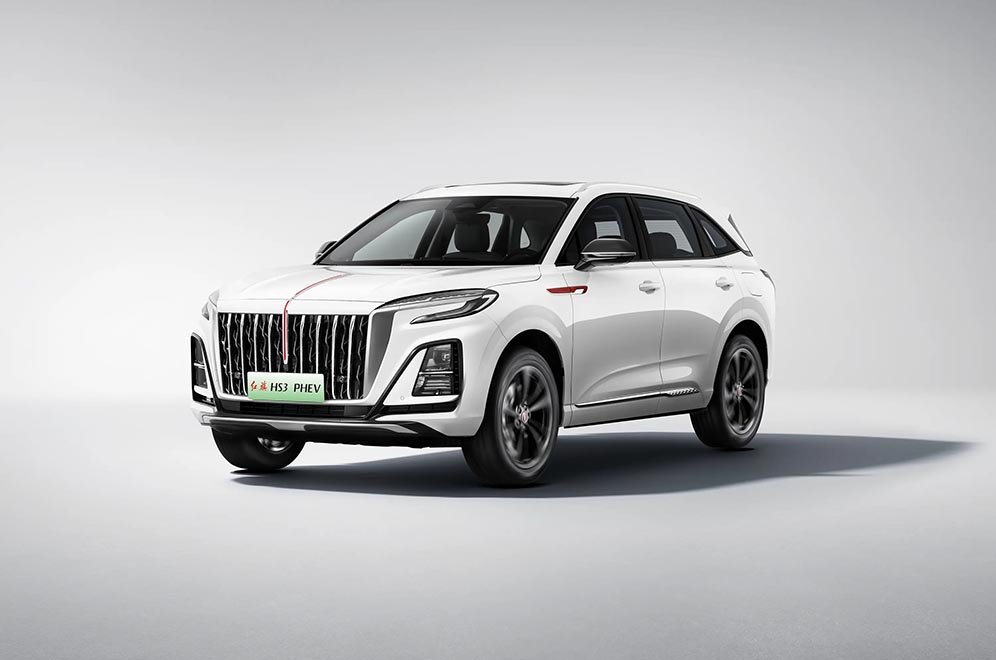
At a glance
- The Hs3 Phev combines a compact SUV format with plug-in-hybrid flexibility for mixed charging environments.
- The naming structure includes 115 km, 117 km and 125 km range designations, plus Jingwei, PLUS and commemorative editions.
- New units favor configuration consistency; used units require battery, mileage, service and accident checks.
- Export quotes vary with year, trim, condition, battery history, currency, freight and Incoterm.
- Current price and availability must be checked on live per-unit listings before requesting an RFQ.
Why the Hongqi Hs3 Phev matters for export markets
The Hongqi Hs3 Phev is relevant to overseas buyers because it combines a compact SUV format with a plug-in hybrid powertrain and identifiable range-oriented editions. Where charging networks are developing at different speeds, that format can offer more operating flexibility than a conventional hybrid and less daily dependence on charging than a battery-electric vehicle. The appeal is operational rather than promotional: distributors can compare versions against customers’ commuting patterns, parking access and local fuel use. Hongqi also provides a China-origin alternative to familiar Japanese and Korean hybrid SUVs available to importers.
Demand potential should be assessed market by market rather than inferred from China alone. Compact PHEV SUVs are most credible where buyers want SUV styling, useful road presence and the ability to replenish energy through charging, yet still need a combustion-engine fallback for longer trips or inconsistent charging access. Potential users include company-car programs, premium taxis and mixed fleets. For a distributor, the key question is whether the Hongqi badge, design and trim hierarchy create enough differentiation to justify local marketing, training and parts planning. Paper competitiveness alone is insufficient for success.
The Hs3 Phev shows why export evaluation must separate consumer fit from legal readiness. A PHEV can appeal on range flexibility, yet an imported example must satisfy the destination country’s type-approval, emissions, safety, customs, taxation and charging rules. RHD availability should be confirmed rather than assumed because a LHD example is not automatically compliant in a RHD market. Likewise, range numbers in edition names do not replace a homologated figure in the buyer’s country. Export relevance is strongest for distributors prepared to verify configurations, calculate landed costs and build an after-sales plan before committing.
- Compact PHEV SUV with distinct market positioning.
- Range choice depends on charging access and duty cycle.
- Verify homologation, RHD availability, and after-sales support.
Model range, trims and powertrain variants: how the lineup is structured and how to choose
The lineup has three useful layers: the Hs3 Phev model designation, the range designation in the trim name, and the edition suffix. Names include 115 km Jingwei, 117 km Jingwei and 125 km Jingwei versions, with PLUS and 2 Millionth Anniversary or Commemorative labels identifying further variants. This is a useful first filter, but naming alone does not reveal battery capacity, motor output, charging hardware, equipment or market certification. Details can change by model year and destination. Treat the full listing title as a starting point, then obtain a specification sheet for the exact vehicle.
Range choice should follow the duty cycle, not simply the largest title number. A buyer with dependable depot charging may prioritize an edition whose stated range designation appears to cover routine journeys, while a buyer without reliable charging should examine the complete driving proposition and local fuel availability. The 115 km, 117 km and 125 km labels offer a shortlist, but sellers should confirm what each number represents, which test cycle produced it and whether local homologation changes the claim. Daily range also varies with climate, speed, load, driving style and climate-control use.
Within a chosen range band, compare standard equipment, comfort, infotainment, safety assistance, cabin finish and warranty support rather than assuming a PLUS or commemorative edition is superior in every market. Special-edition badging may help branding but does not replace an equipment check. For fleets, the useful specification sheet includes charging-lead availability, expected battery condition for used cars, service intervals, spare-part references and compatibility documentation. For private buyers, ask the importer to explain Jingwei and higher-labelled variants plainly, including which benefits depend on local homologation or service infrastructure in the destination market.
- Compare 115 km, 117 km, and 125 km designations.
- Jingwei, PLUS, and commemorative labels structure the range.
- Verify battery, motor, charging, and equipment per listing.
New vs used Hongqi Hs3 Phev: how export inventory is structured and how buyers choose
New and used Hs3 Phev vehicles are different buying propositions. A new example offers the current model-year specification and clearest warranty position, but it can include features the destination will not value. A used example can provide a more accessible route into the model, yet its value depends on battery condition, mileage, service history, accident repair and PHEV-capable use. Export supply may mix registration years, but the relevant structure is a set of condition bands, not a stock count. Every listing must be assessed independently against the same inspection checklist.
For a used PHEV, visual inspection alone is inadequate. Request the VIN, registration and service records, charging history if available, and evidence of battery health or state of health. Check whether the car was mainly electric, frequently fast-charged, exposed to severe heat or modified. A hybrid system can make short-distance use less visible on the odometer, so review the battery report with fuel use and invoices. Inspect tires, brakes, suspension, underbody damage, fluid leaks and accident evidence. These checks separate a well-maintained low-mileage car from one whose nominal mileage understates use.
New inventory is more suitable when the importer needs predictable configuration, spare-parts standardization and a straightforward warranty workflow. Used inventory can make more sense when the buyer recognizes an established trim, accepts an earlier model year and can secure inspection, return terms and support in writing. The acquisition saving often associated with used vehicles should not be the only calculation: battery degradation risk, near-term maintenance, equipment uncertainty and weaker resale confidence can offset it. Compare complete ownership cost, and confirm that the chosen unit can be registered, serviced and supported in its destination market.
How export pricing works: the factors behind a live listing price, and how to read one
An export listing price is a starting datum, not a universal Hongqi Hs3 PHEV price. It normally responds to model year, exact trim and range designation, new or used condition, mileage, battery history, equipment and seller terms. For used vehicles, condition and service evidence can be as influential as the trim name. For new vehicles, production timing and factory specification can affect the quote. Currency movements matter because vehicle supply, freight, insurance and destination charges may use different currencies. A responsible quote identifies these inputs so two listings are compared on the same basis.
The Incoterm determines where responsibility and cost transfer. Under an ex-works structure, the buyer arranges collection and nearly every downstream movement; under a delivered or terminal-based arrangement, more tasks may be included, but the boundary still needs written confirmation. Freight varies with transport mode, routing, consolidated or dedicated shipment, pickup location, destination charges, cargo handling, insurance and port congestion. Taxes, customs brokerage, local registration and compliance work should be shown separately from the vehicle quote. This prevents a lower vehicle price from becoming a more expensive delivered purchase after logistics and entry costs are added.
To read a live listing, start with the title and SKU, then verify year, trim, condition, mileage, battery details, seller location and listed MOQ. Move to the price and identify currency, tax status and Incoterm; if an element is absent, request it before treating the number as comparable. Check photographs for condition, wheels, body panels and equipment, and compare the description with the specification. ChinaCarDirect’s live Hongqi Hs3 PHEV listings are the authoritative source for current per-unit price, availability and terms. An RFQ can then provide a written quote for the exact configuration and destination.
- Price changes with year, trim, condition, and battery history.
- Confirm currency, tax status, and Incoterm on every quote.
- Use live listings for current per-unit figures.
MOQ, ordering and payment: single units vs consolidating a container
MOQ is the minimum quantity a seller accepts, and it should be read from the individual listing rather than inferred from the model. Some offers may be sold to one buyer, while a seller may impose a batch requirement for an allocation, color, specification or production run. The listing should state the MOQ, and the buyer should confirm whether it applies to one mixed order or each model and trim. If unclear, do not assume either a container batch or one-unit availability. The commitment is established only when the seller confirms it in writing.
For a dealer testing demand, one unit can reduce inventory exposure and provide useful data on specification, charging habits and aftersales demand. It may not be the most efficient freight option because the vehicle still consumes space. A fleet or distributor can sometimes consolidate several HS3 PHEVs into one container or shared shipment, subject to dimensions, payload, securing requirements, destination rules and seller terms. Ask for a loading plan and realistic utilization rather than assume a unit count. Dimensions and weight must come from exact vehicle documents because they affect slotting, securing and freight calculation.
Payment structure should follow transaction risk. A common sequence may involve a deposit to reserve the vehicle, settlement of the balance, and payment against shipping documents, but the actual sequence must be agreed with the seller. The contract should identify the exact SKU or VIN, specification, condition, price currency, MOQ, Incoterm, payment deadlines, inspection rights, refund conditions and ownership-transfer point. For a larger order, assess whether payment security and production milestones are adequate. Never rely on a catalogue image or preliminary message to define the vehicle; attach the signed offer and vehicle record to the order.
- MOQ belongs to each listing, not the model.
- Request vehicle-level dimensions and loading advice.
- Contract should define vehicle, payment, and Incoterm.
Shipping, homologation and market compliance caveats: LHD/RHD and import rules by country
Shipping cost and timing begin with the Incoterm and end with the importing operation’s work after arrival. A typical China-export movement may use a vehicle carrier for complete vehicles or containerized transport where cargo and securing rules permit. The quote can be affected by origin and destination ports, inland handling, vessel space, booking date, season, congestion, insurance, fuel surcharges and destination charges. Air freight may be considered for a small, urgent shipment, but it is not automatically the quickest or cheapest door-to-door solution. Request transport options, state the delivery window, and separate vehicle price from freight, customs, terminal, storage, taxes and dealer delivery.
Steering configuration is a critical sourcing check. A LHD Hs3 PHEV may suit markets that normally use left-hand drive, but it should not be assumed acceptable in a RHD country. Ask the seller for the actual configuration and evidence of any RHD conversion, then confirm with the destination authority or import specialist what factory configuration, modification and inspection are permitted. Approval in one country does not transfer automatically to another. The importer should also verify VIN formats, customs classification, Certificate of Conformity or equivalent documents, emissions and safety requirements, local tax treatment, used-vehicle age restrictions and PHEV registration conditions. Rules vary, so compliance must be destination-specific.
Charging and after-sales arrangements should be settled before shipment. Confirm the supplied charging leads, local voltage compatibility, operating software and region-specific functions, then ensure the destination can support the vehicle’s service requirements. Parts planning should cover routine service items, high-voltage components, diagnostic tools, battery-related parts and likely body items; a low parts price is of limited value if lead times are long. Ask whether parts can be ordered against the VIN and whether diagnostic software, wiring diagrams and technical documentation are available. The commercial model should identify who handles warranty claims, returns, technical support and battery-related issues.
Who should buy the Hs3 Phev — and who should pick a different vehicle
The Hs3 Phev is a strong candidate for an overseas distributor seeking a compact SUV with a PHEV proposition and a visible range-oriented edition hierarchy. It may suit a customer who values the styling and technology of a China-origin vehicle, can charge routinely, and wants an efficient option for daily travel without committing fully to battery-electric range limitations. It can also fit mixed fleets where routes vary between urban depots and longer regional duties. The buyer should have a clear plan for charging advice, technician training, software and parts support. Without that infrastructure, technical appeal can be undermined by customer doubts after delivery.
It is less suitable for buyers who require a fully electric vehicle with no combustion engine, especially where charging is dependable and daily routes are short. Such users should compare a battery-electric compact SUV on energy use, charging architecture and local incentives instead. A driver expecting factory-approved charging equipment, advanced driver assistance or exact equipment in a particular overseas specification should verify those items before ordering. Buyers needing a larger cargo area, more seats, greater towing capability or a proven long-distance service network may prefer a different size or brand. A buyer without a viable parts and diagnostics plan should not treat a low purchase quote as value.
Fleet suitability should be tested against utilization, not badge appeal. Compare the PHEV against a conventional petrol model, a non-plug-in hybrid and a battery-electric alternative using representative routes, realistic charging access, fuel and electricity costs, downtime and resale demand. A depot-charged fleet with disciplined mileage can make plug-in capability more useful; a high-mileage operation should examine battery warranty limits and replacement exposure. Before a large order, run a small pilot, establish acceptance criteria for used units, document driver training and assign responsibility for compliance. This reveals whether the Hs3 PHEV’s range hierarchy and operating costs fit the fleet.
- Best for distributors with charging and service plans.
- Compare battery-electric models where full electric use is required.
- Pilot fleets before larger commitments.
Main rivals and how the Hs3 Phev compares
The BYD Song Plus DM-i is a direct alternative for buyers comparing compact PHEV SUVs. Its broad market recognition can simplify some consumer education and fleet acceptance, while the Hongqi offers a design-led premium-brand alternative that may help a distributor differentiate a showroom. Neither should be chosen from brand awareness alone. Compare the plug-in system, usable electric range, charging provision, equipment, warranty, parts support and local regulatory treatment. The Song Plus DM-i may appeal where familiarity is the priority, whereas the Hs3 PHEV may fit better where styling and a differentiated marque image are central to the sales proposition.
The Geely Galaxy L7 is a useful comparison when the buyer wants a PHEV SUV with a different size and family-SUV emphasis. It can be more appropriate when cabin space, seating flexibility and a more mainstream electrified-SUV presentation matter more than the Hongqi’s specific positioning. The Hs3 PHEV remains relevant when a compact footprint, distinctive design and the Jingwei range-edition hierarchy better match the target customer. Because exact dimensions and equipment vary by market and year, compare official data for the selected derivative rather than assume one model is larger or more capable. The practical test is whether the rival solves the buyer’s route, loading and fleet-support requirements.
The Chery Tiggo 7 C-DM is another relevant benchmark for buyers seeking a PHEV SUV with a conventional global-SUV presentation and a strong export-oriented product family. It may compete effectively on familiarity and fleet suitability, while the Hongqi’s appeal lies in its design language and trim structure. No rival wins automatically: charging access, actual equipment, local tax treatment, aftersales coverage and resale prospects can outweigh the badge. For an importer, request written quotations on identical destination and Incoterm assumptions. Compare vehicle condition for used purchases, battery and range evidence, expected parts support and total ownership cost over the intended holding period.
- BYD Song Plus DM-i: strongest familiarity-led comparison.
- Geely Galaxy L7: family-SUV alternative.
- Chery Tiggo 7 C-DM: export-oriented benchmark.
Live Hongqi Hs3 Phev export inventory
View all listings →Real units currently on ChinaCarDirect with per-unit asking prices and MOQ. Availability updates live from the catalogue.
Hongqi Hongqi HS3 PHEV 2025 125km Jingwei PLUS 2 Million Commemorative Edition
How to buy a Hongqi Hs3 Phev from China
-
1
Define the operating requirement
Map daily mileage, charging access, route length, climate, load and passenger or cargo needs. Use those requirements to determine which range designation and edition deserve further evaluation.
-
2
Review the live inventory
Use the live Hongqi Hs3 Phev listings to compare the current title, trim, condition, price, seller location and MOQ. Shortlist units that match the agreed operating brief.
-
3
Verify the exact specification
Request the vehicle sheet for the selected SKU or VIN, covering battery, motor, range basis, charging, equipment, warranty and destination-market certification. Do not rely solely on the trim name.
-
4
Assess new or used condition
For a used unit, examine battery health, mileage, service records, accident repair, tires, brakes and charging history. Agree inspection rights and acceptance criteria in writing.
-
5
Build a landed quotation
Ask for a written quote identifying the vehicle, currency, tax status, freight, insurance, Incoterm, destination charges and expected delivery window. Compare like-for-like options with the same trade basis.
-
6
Lock MOQ and payment terms
Confirm whether the MOQ applies to the selected trim or a mixed batch, then document deposits, balance deadlines, inspection rights, refund conditions and ownership transfer. Attach the agreed vehicle record to the contract.
-
7
Complete compliance and shipping
Confirm LHD or RHD suitability, homologation, customs classification, insurance, charging equipment, parts support and transport arrangements. Complete destination registration and delivery planning before the vehicle departs.
Hs3 Phev vs rivals
| BYD Song Plus DM-i | BYD Song Plus DM-i is the closest familiarity-led alternative for a compact PHEV SUV buyer. The Hongqi is the better fit for a distributor seeking more distinct design and marque positioning, subject to equivalent equipment and after-sales checks. |
|---|---|
| Geely Galaxy L7 | Geely Galaxy L7 competes as a more family-SUV-oriented PHEV option. Choose it where cabin and seating flexibility dominate; choose the Hs3 PHEV where its specific range-edition structure and styling fit the target market. |
| Chery Tiggo 7 C-DM | Chery Tiggo 7 C-DM is a credible export-oriented PHEV SUV benchmark with a more conventional global-SUV presentation. The Hongqi suits buyers prioritizing distinctive design, but the final decision should compare local support, parts, operating costs and resale rather than badge alone. |
Frequently asked questions
How is Hongqi Hs3 Phev export pricing determined, and where can I see the live price?
Price is determined by unit-specific factors such as year, trim and range designation, condition, mileage, battery history, seller terms, currency movement, freight and Incoterm. Review each live Hongqi Hs3 Phev listing and request an RFQ for the exact unit and destination, with currency, tax status and included costs stated in writing. Exact current figures are shown per vehicle in live inventory rather than as a fixed price guide.
What powertrain and range details should I expect for the Hongqi Hs3 Phev?
The Hs3 Phev is a plug-in hybrid. Available trim naming includes 115 km, 117 km and 125 km range designations, but buyers should confirm what each figure represents and which test cycle applies. Take the exact battery, motor, charging and homologated-range details from the live listing and destination-market documents.
Is a used Hongqi Hs3 Phev better value than a new one?
A new car generally provides a more consistent specification and warranty starting point, while a used car can reduce acquisition cost but adds battery and condition risk. For used vehicles, inspect battery health, mileage, service records, accident repair and charging history. Select according to total ownership cost and destination support, not only the purchase price.
Can I buy one Hongqi Hs3 Phev, or is the MOQ higher?
MOQ is determined by the seller and the individual listing, not by the model name alone. Read the listed requirement and ask the seller to confirm in writing whether it applies to one unit, each trim or a mixed batch. An RFQ can also explore consolidation where the seller permits it.
How long does shipping take, and what determines the cost?
Transit time and cost depend on the Incoterm, transport mode, origin and destination, routing, booking availability, handling, insurance, congestion and destination charges. Request a realistic delivery window and a door-to-door or terminal-to-terminal quotation with included costs identified. Customs, storage, registration and dealer delivery may occur outside the vehicle’s freight price.
Can I order spare parts for the Hongqi Hs3 Phev?
Parts availability should be confirmed for the exact vehicle and destination before an importer commits to volume. Ask whether components can be ordered against the VIN and whether diagnostic software, wiring diagrams, technical documentation and high-voltage support are available. Also establish realistic lead times, responsibility for warranty claims and the process for returning defective parts.
Is a right-hand-drive Hongqi Hs3 Phev available for export?
RHD availability must be confirmed for the specific vehicle rather than assumed from the model name. Ask whether the car is factory-configured for RHD or converted, and request supporting documentation. The destination authority or import specialist should confirm whether that configuration and any modification are legally acceptable for registration and road use.
How do I buy a Hongqi Hs3 Phev from China?
Start with the live listings, select a configuration and condition, then send an RFQ stating the destination, Incoterm and required documentation. Request the specification, inspection evidence, landed quotation, MOQ, payment milestones and shipping plan. After reviewing the exact vehicle record and contract, complete payment, compliance checks, transport, customs and destination registration.
Ready to source the Hongqi Hs3 Phev?
Request an RFQ for the exact Hongqi Hs3 Phev configuration, destination and Incoterm, then compare the written quote with the live listing.
Request a quote