
Hongqi Hs5 Export Buying Guide for Overseas Dealers
Buy Hongqi Hs5 from China with a clear view of 2.0T trims, 2WD and AWD choices, export pricing, MOQ, shipping, compliance and after-sales support.
At a glance
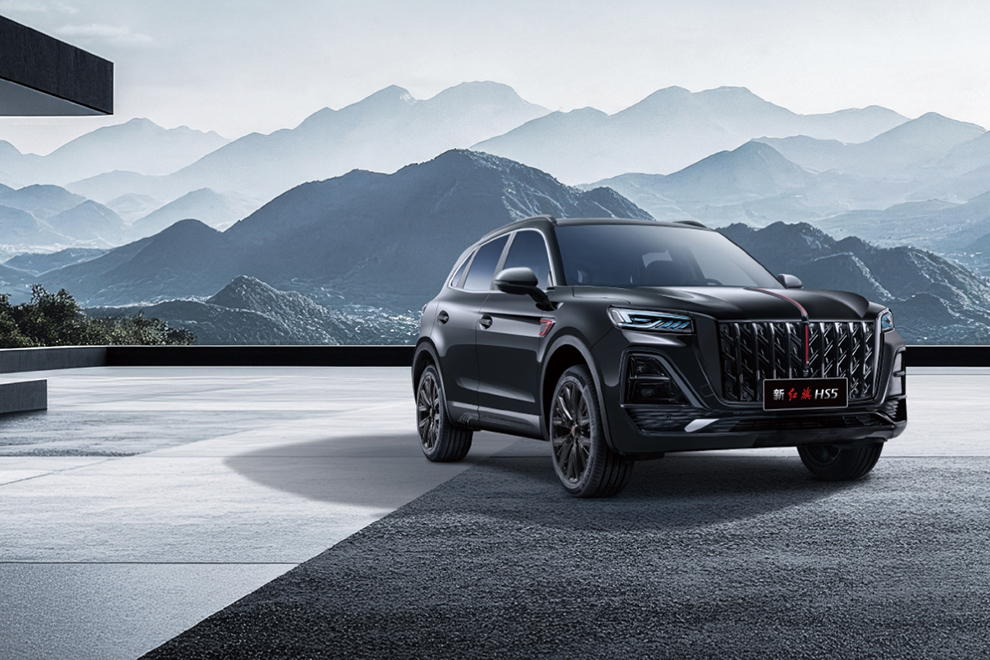
- The Hongqi Hs5 combines a design-led identity with a 2.0T gasoline powertrain.
- The line spans 2WD and AWD choices, with Smart, Qixiang, Flag, Leader Pro and special-edition naming.
- A Hongqi Hs5 export price should be judged as a landed, VIN-specific quote rather than a catalogue headline.
- New vehicles suit warranty-led fleet programmes, while used units require stricter history and condition checks.
- RHD availability, destination homologation, parts support and resale prospects are decisive before ordering.
Why the Hongqi Hs5 matters for export markets
The Hongqi Hs5 sits in the Chinese mid-size crossover segment, combining a design-led Hongqi identity with a 2.0T gasoline powertrain. For export markets, its appeal is not exotic engineering but the combination of spacious-SUV presentation, available all-wheel drive and a broad feature hierarchy at a more accessible point than many established premium nameplates. That makes it relevant to dealers seeking differentiation without moving into luxury-brand budgets. For fleet and premium-lite buyers, the key question is whether its equipment, comfort and ownership support can be justified against well-proven rivals after landed cost.
Demand is strongest where buyers want a visually distinctive Chinese SUV with more perceived substance than an entry-level crossover, yet still require a conventional engine and established export logistics. The Hs5 can serve company-driver programmes, airport and executive fleets, and retail dealers seeking a flagship alternative to mass-market brands. Its appeal can weaken where local service coverage, residual-value data or spare-parts access is limited, so brand confidence must be tested before placing a large order. The same vehicle can therefore be a strong product fit and a weak commercial fit in a given market.
For overseas buyers, the Hs5 is most compelling when the brief includes a comfortable cabin, a high-profile body style and selectable two- or four-wheel drive. It is less compelling as a low-cost mobility product where purchase price is the only criterion, because freight, taxes, certification, servicing and eventual resale all influence the real economics. Treat global demand as a use-case rather than a universal trend: regional preferences, fleet policies and the credibility of after-sales support will determine whether the model reliably converts into repeat sales for a given distributor network.
- Mainstream-sized alternative to premium SUVs
- 2.0T gasoline with 2WD or AWD
- Service support affects repeat demand
Model range, trims and powertrain variants: how the lineup is structured and how to choose
Hongqi Hs5 specs vary by model year and edition, but the consistent architecture is a 2.0-litre turbocharged petrol engine with either front-wheel drive or all-wheel drive. The visible trim ladder includes Qixiang, Smart, Flag, Leader Pro and Flagship naming, plus special or commemorative packages. Because those labels and their equipment can change over time, the correct method is to compare the exact model year, drive configuration and equipment list rather than assume every Flag car is equivalent. For an export purchase, also confirm whether the listing describes a China-market vehicle or an export-prepared specification.
Two-wheel-drive versions can suit importers that prioritise purchase simplicity, operating efficiency and easier servicing. AWD versions are more relevant for fleets operating across wet roads, rough access roads or regions where traction confidence affects resale. AWD does not automatically make a vehicle more capable, and buyers should distinguish the system’s intended use from off-road claims. The live listing should confirm the axle layout, tyre specification and any market-specific equipment before those assumptions enter a tender. For fleet tenders, matching the drivetrain to actual road conditions is usually more valuable than selecting the longest equipment list.
Upper trims may concentrate infotainment, comfort, driver assistance and visual details, while more functional editions may answer to a simpler fleet brief. Special editions can be desirable because of their specification or branding, but they should not be valued as a separate mechanical platform without documentary confirmation. Exact output, transmission details, dimensions, equipment and warranty should be checked in the live unit listing. For a Hongqi Hs5 wholesale order, send the buyer’s destination, annual mileage and required equipment to obtain a like-for-like quotation before comparing competing bids and landed cost.
- Match model year and exact edition
- Select drive layout around duty cycle
- Verify special-edition equipment
New vs used Hongqi Hs5: how export inventory is structured and how buyers choose
Used Hongqi Hs5 availability can include ex-fleet, demonstration and privately owned vehicles, but classifications differ by seller. Condition should therefore be judged from the VIN, mileage, service history, bodywork, tyres, interior wear and any accident disclosure—not simply from a “used” label. New vehicles generally offer clearer warranty pathways and simpler fleet onboarding, whereas a used example can suit buyers seeking a lower acquisition commitment. The commercial value of that saving survives only when freight, tax, rectification and downtime are included for the specific model year in the destination market.
New inventory is usually easier to standardise because colour, trim and specification can be ordered or selected around a fleet requirement. It also reduces uncertainty over wear and major consumables. However, “new” does not mean homologated for every destination, and production timing can affect colour availability, option combinations and delivery scheduling. Buyers should separate vehicle condition from export readiness: first decide the specification, then confirm documents, left- or right-hand-drive configuration and certification for the intended country. Dealers should also ask whether the vehicle has been prepared for export or remains a domestic-market specification.
A sound used-Hs5 buying process starts with a model-year-specific inspection and a document audit. Request the registration, VIN, service records, recall or campaign history, and evidence of ownership and import eligibility. Compare tyres, suspension wear and diagnostic results with the stated mileage, then negotiate rectification against the vehicle’s condition. If your business needs a uniform warranty or predictable delivery dates, the simplicity of a new vehicle may outweigh the purchase saving. If the brief is more value-driven, a carefully documented used unit can be rational when checked and imported correctly.
- New: warranty and fleet consistency
- Used: verify history and condition
- Condition does not prove export readiness
How export pricing works: the factors behind a live listing price, and how to read one
A Hongqi Hs5 export price guide should explain a quote rather than publish a fixed number. The vehicle’s model year, trim, 2WD or AWD configuration, mileage, condition, colour and production timing all affect its base value. A used vehicle also carries adjustment factors for service history, wear, accident repair and warranty transfer. Sellers then add or exclude costs associated with export preparation, documentation, inland transport, financing and the chosen Incoterm. Exchange-rate movements can alter an otherwise unchanged quote when the seller reprices the currency before the transaction is confirmed in the destination market.
Read every live listing as a commercial document, not just a product card. Confirm whether the displayed amount is the vehicle price only, whether it is FOB or another delivery basis, and what is excluded from export handling. Check the vehicle identifier and match it to the exact year and trim. Ask whether the quote remains valid, what deposit applies, and when payment is due. ChinaCarDirect live inventory is the controlling source for the current per-unit price, MOQ and availability shown against an individual vehicle at the time of enquiry.
Buyers should build a landed-cost worksheet alongside the vehicle quote. Separate the purchase price, inland transport, export clearance, freight, insurance, destination charges, taxes, registration and dealer margin. Then compare total acquisition cost per vehicle against the customer’s expected operating and resale economics. The same Hs5 can look economical under one Incoterm and expensive under another, particularly when several units share freight. A written quote tied to a specific VIN prevents a favourable headline price from being mistaken for the final payable cost in the destination market before any commitment is made.
- Price follows year, trim and condition
- Compare vehicle and landed-cost totals
- Require a VIN-specific written quote
MOQ, ordering and payment: single units vs consolidating a container
MOQ should be treated as a negotiable order condition, not a permanent property of the Hongqi Hs5. Some vehicle suppliers or export programmes require a lot, while other offers can be structured for a single unit. A buyer wishing to buy Hongqi Hs5 from China should state the required quantity, destination, specification and delivery schedule before asking for commercial terms. Then compare the per-unit price, available production or stock units, payment milestones and the consequences of a mixed-model or delayed allocation against the importer’s cash flow and operating plan needs.
For a single-unit importer, the priority is control: identify the exact vehicle, confirm its condition and specification, and avoid committing to a container-sized order for a model that has not been tested with buyers. For a multi-vehicle dealer, consolidation into a container can reduce freight and handling cost per unit, improve allocation control and simplify spare-parts planning. It can also lock cash into slower-moving trims. Model-year consistency and standard equipment may matter more than the nominal discount, especially for fleet resale and staff-driver programmes where uptime, appearance and handover dates must be predictable to customers.
A sensible order sequence is specification lock, quote approval, identity check, payment, inspection, documentation and release for shipment. Ask the seller to confirm how the deposit is protected, when it is refundable, what triggers final payment and which party controls the vehicle after production. A purchase contract should identify the agreed Hs5, VIN or production order, options, price basis, delivery term, inspection standard and remedies for mismatch or delay. These mechanics matter more than a low headline MOQ because they determine actual exposure through production and transit or delivery.
- MOQ belongs to the individual offer
- Test one vehicle before scaling
- Contract milestones, identity and remedies
Shipping, homologation and market compliance caveats: LHD/RHD and import rules by country
Chinese-market Hongqi vehicles are commonly configured for left-hand drive, so right-hand-drive availability should never be assumed from the model name. A buyer needing RHD should ask whether the seller has a market-prepared vehicle, whether steering and safety equipment are configured correctly, and whether conversion is legally and technically acceptable in the destination country. Conversion can affect cost, warranty, parts consistency and residual value. The safest route is to import an approved RHD specification rather than improvise after a local approval and installation process has been completed professionally there before shipment.
Import rules are destination-specific, and the Hs5 should clear the intended market before a fleet is committed. The homologation file may need to address safety, emissions, noise, lighting, cybersecurity, software updates, type approval and local registration requirements. Customs classification, age restrictions, emissions zones and left- or right-hand-drive rules can all change what is admissible. Obtain a written assessment from a local importer or conformity specialist, then compare it with the seller’s export documents. Do not treat a Chinese registration or export certificate as evidence of overseas type approval in the destination.
Shipping cost and time depend on the delivery term, origin and destination ports, vessel schedule, cargo method—RoRo or container—insurance cover, customs workload and the size and weight of each vehicle. Obtain a freight quotation tied to the agreed vehicle count and loading plan, and clarify which charges stop at the port and which continue inland. For a multi-unit Hs5 order, loading supervision, export sealing, photographs and a condition report reduce dispute risk. Keep the original bill of lading or transport document, customs papers, purchase invoice and inspection evidence together until acceptance.
- Confirm LHD or RHD first
- Check destination homologation early
- Link inspection records to the VIN
Who should buy the Hs5 — and who should pick a different vehicle
The Hs5 best fits buyers who value a design-led, comfortable mid-size SUV, a 2.0T petrol engine and the option of AWD without moving to a premium German badge. It can work well for company fleets, executive use, chauffeur operations and retailers seeking a visually stronger alternative to mainstream crossovers. The decisive qualification is operational: a distributor should already have or be prepared to build the right workshop capability, parts planning, staff training and residual-value knowledge. The vehicle cannot compensate indefinitely for an unsupported after-sales network in the target market.
A different vehicle is usually better when the buyer’s priority is the lowest possible acquisition cost, the broadest global dealer familiarity, or a battery-electric operating model. Mainstream Chinese rivals may offer simpler specifications and established international support, while other brands have clearer residual-value records. A pure EV avoids engine servicing and local emissions questions but requires charging infrastructure, different homologation and a different total-cost model. Buyers should not force the Hs5 into a brief it does not meet merely because its original equipment list looks attractive on paper alone.
Within the Hs5 range, buyers should also decide whether they need 2WD, AWD or a higher equipment tier. Fleet managers focused on simple duty cycles may prefer the lower-complexity option; premium corporate buyers may prioritise cabin and infotainment refinement; all-weather users may value AWD. Before buying Hongqi Hs5 units, test the intended business case against local taxes, insurance, fuel availability, servicing intervals and resale expectations. A vehicle that suits the company’s brand image but creates workshop or remarketing problems is not the right commercial purchase for that market.
- Strong for corporate and design-led buyers
- Conditional on local service support
- Weak for lowest-cost or EV-first briefs
Main rivals and how the Hs5 compares
The closest alternatives to the Hongqi Hs5 include the Haval H6, Chery Tiggo 8 Pro and Jetour X70 Plus because they address broadly similar Chinese-market crossover and SUV buyers with petrol powertrains and two- or four-wheel-drive choices. The right comparison depends on body size, equipment, brand support and the destination country’s homologation, not badge appeal alone. A buyer should test each model against the same mileage, load, climate, service and resale assumptions. That turns a visual comparison into an operating-cost and risk comparison using verified destination-market information for every candidate.
The Haval H6 is a practical alternative for a distributor prioritising broader international recognition and a more conventional mainstream-SUV proposition. The Hs5 can be more visually distinctive and premium in presentation, but buyers should verify local Haval support as readily as they verify Hongqi support. Against the Chery Tiggo 8 Pro, the Hs5 competes through design, cabin atmosphere and its own feature hierarchy; the Tiggo may appeal where familiarity with the export brand or a different equipment-value balance carries more weight. Neither should be selected without local compliance and service checks.
The Jetour X70 Plus is a closer functional alternative for buyers focused on a modern Chinese family SUV, including 2.0T and AWD considerations. The Hs5’s case rests on its individual styling, comfort focus and available equipment rather than a uniquely exclusive mechanical advantage. In a three-way test, compare documented outputs, dimensions, equipment, warranty, parts lead time, fuel use and certification for the destination. Then obtain landed quotations for each. The vehicle with the strongest complete offer may differ from the one with the most attractive brochure or badge on paper.
- Haval H6: stronger global familiarity
- Chery Tiggo 8 Pro: direct family-SUV option
- Jetour X70 Plus: close 2.0T/AWD comparison
Live Hongqi Hs5 export inventory
View all listings →Real units currently on ChinaCarDirect with per-unit asking prices and MOQ. Availability updates live from the catalogue.
How to buy a Hongqi Hs5 from China
-
1
Define the operating brief
Record the destination, driving side, annual mileage, passenger or cargo load, road conditions, service expectations and required equipment. Check local import and homologation requirements before treating a China-market configuration as suitable.
-
2
Filter and compare live units
Open the live Hongqi Hs5 listings and compare model year, trim, 2WD or AWD configuration, condition and visible MOQ. Treat each listing as a separate offer and verify its vehicle identifier.
-
3
Verify the exact specification
Match the VIN or production order to the advertised year, edition, drivetrain and equipment. Ask for current photographs, documents and confirmation of whether the car has export preparation or remains a domestic-market specification.
-
4
Request a landed quotation
Ask for the vehicle price, inland haulage, export handling, freight, insurance, taxes and duties separately. State the destination, preferred Incoterm, vehicle count and required quote-validity period.
-
5
Lock the order terms
Confirm the selected VIN or production allocation, deposit protection, refund conditions, payment milestones, warranty treatment, inspection standard and remedies for mismatch or delay in writing.
-
6
Inspect before release
Use an independent inspection to check the VIN, bodywork, tyres, fluids, diagnostic faults, odometer and option equipment. Tie the inspection report, photographs and export documents to the vehicle identity.
-
7
Complete shipping and import clearance
Approve the loading plan, supervise sealing, retain transport and customs evidence, and coordinate destination clearance and registration. Make sure the RHD, safety, emissions and software requirements have been addressed before delivery.
Hs5 vs rivals
| Haval H6 | The Haval H6 is a mainstream alternative with broader international brand familiarity, which can reduce parts and dealer-network uncertainty. The Hs5 offers a more design-led and premium-styled proposition, so it suits buyers prioritising presentation but requires the same level of local support and compliance diligence. |
|---|---|
| Chery Tiggo 8 Pro | The Tiggo 8 Pro is a close family-SUV competitor for Chinese 2.0T buyers, with the decision often turning on equipment value, brand familiarity and landed cost. The Hs5 differentiates through styling and a comfort-led presentation, but neither model should win on showroom appeal without comparing warranties, parts support and homologation. |
| Jetour X70 Plus | The X70 Plus is a close functional comparator for buyers considering a modern Chinese 2.0T SUV with AWD. Against it, the Hs5’s strongest case is its individual design, comfort focus and equipment hierarchy; compare verified outputs, dimensions, fuel use, parts lead time and destination compliance rather than assuming a class advantage. |
Frequently asked questions
How is the Hongqi Hs5 export price determined?
The live price is shaped by model year, trim, 2WD/AWD configuration, mileage and condition, plus any export preparation and the selected delivery term. Freight, insurance, exchange rates, destination charges and taxes affect the landed total even when the vehicle quote is unchanged. Check the current per-unit price on ChinaCarDirect’s live Hs5 listings and request a written, VIN-specific quote with the Incoterm stated.
What engine and drivetrain does the Hongqi Hs5 use?
The Hs5 line is based on a 2.0T gasoline engine, with 2WD and AWD configurations depending on trim. Exact output, transmission application, fuel consumption and equipment should be confirmed in the unit listing because model-year and edition differences matter. As a combustion SUV, the Hs5 should be evaluated through real-world fuel use and refuelling access rather than battery range.
Should an overseas buyer choose a new or used Hongqi Hs5?
New Hs5s generally simplify warranty, configuration and fleet onboarding. Used Hongqi Hs5 units can reduce acquisition cost, but buyers should audit the VIN, mileage, service history, accident disclosure, condition and local import eligibility. The cheaper vehicle is not necessarily cheaper after rectification, downtime, freight and resale uncertainty.
How does MOQ work for a Hongqi Hs5 wholesale order?
MOQ is set on each supplier or unit offer rather than being an inherent model rule. A buyer may request one vehicle, while a seller may offer a lot or a mixed allocation; confirm the quantity shown on the live listing and in the written quote. Consolidation can improve freight efficiency, but it increases exposure to slow-moving trims and ties up cash.
What determines Hongqi Hs5 shipping time and cost?
Shipping time and cost vary with origin and destination, carrier schedule, cargo method, insurance, customs handling, vehicle dimensions and the Incoterm. Freight for several Hs5 units may differ from a single-car movement, and destination charges may sit outside the vehicle quote. Ask for a shipment-specific cost breakdown and current schedule.
How will overseas buyers obtain spare parts?
Confirm that the seller can supply VIN- and model-year-matched parts and identify the nearest authorised or capable service channel. Ask about lead times for tyres, lamps, infotainment modules, electronic control units and service items before ordering. Chinese-market and export-market parts are not automatically interchangeable, so include spare-parts pricing and availability in the landed-cost model.
Is a right-hand-drive Hongqi Hs5 available for export?
Most Chinese-market Hs5 vehicles are left-hand drive, and an RHD version should not be assumed available. Ask for the steering configuration and market approval, or investigate whether a professional conversion is permitted and covered by warranty in the destination. Check live availability before building an RHD launch plan.
How do I order a Hongqi Hs5 from China?
Start with the live Hs5 listings, select a specific vehicle, then send the seller a request for a VIN-specific quotation and MOQ. Confirm the Incoterm, payment milestones, inspection standard, export documents, warranty treatment and shipping plan before paying a deposit. Use the RFQ form when the required specification or allocation is not clear from the listing.
Ready to source the Hongqi Hs5?
Send ChinaCarDirect your destination, quantity and Hs5 specification for a current VIN-specific export quote.
Request a quote