
Hongqi Hs7 Export Buying Guide: Specs, Trims and Rivals
Compare Hongqi Hs7 specs, PHEV and gasoline trims, used options, export pricing factors, shipping and compliance before buying from China with confidence.
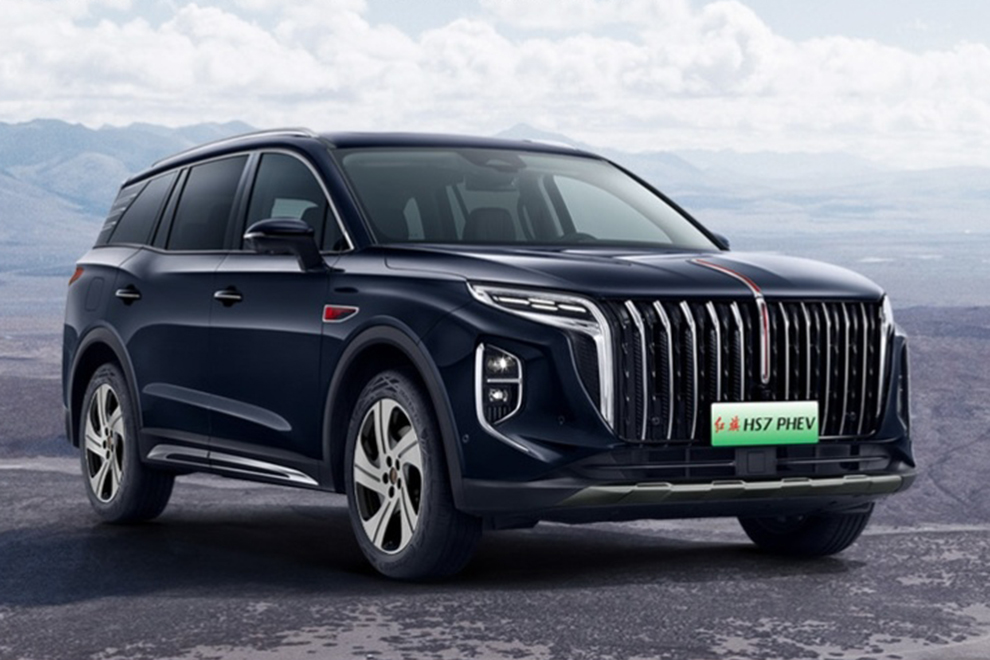
At a glance
- The Hongqi Hs7 for export is positioned as a three-row Chinese SUV for buyers prioritizing cabin space and powertrain choice.
- The line-up spans 2.0T PHEV, 2.0T petrol and 3.0T petrol applications, with multiple seating layouts.
- PHEV buyers should confirm battery, charging and electric-range data for the destination rather than relying on a generic model claim.
- A used Hongqi Hs7 can suit importers seeking a particular configuration, but mileage, condition, documents and battery health require close checks.
- Use live listings for current unit prices and availability, then build a landed-cost case around freight, duties, taxes and support.
Why the Hongqi Hs7 matters for export markets
The Hongqi Hs7 matters in export markets because it gives dealers a three-row, premium-oriented Chinese SUV with a broader powertrain mix than many single-powertrain export models. Its visible variants include petrol engines and plug-in hybrids, while seating choices range from five to seven places. That combination suits importers looking for a large family or executive vehicle without accepting a purely electrified line-up. It also gives ChinaCarDirect buyers a way to develop a marque with a distinctive domestic identity rather than importing a rebadged model already familiar in their destination market.
Demand is likely to be strongest where buyers combine a preference for SUV space with mixed urban and highway use. A PHEV Hs7 can appeal where petrol refuelling is convenient but daily journeys could benefit from electric operation; a petrol model may be easier for customers without reliable charging. Fleet and executive-import buyers can also value a premium cabin and three-row flexibility. However, this is not automatically a mass-market fleet proposition: running costs, residual values, parts coverage and local service capability must be tested against the same business case used for established Japanese, Korean or European brands.
The export case therefore rests less on headline specification and more on disciplined market selection. For each candidate, confirm steering position, seating configuration, powertrain, emissions documentation, software features, warranty coverage and the seller’s ability to support spare parts. The same Hs7 name can cover materially different vehicles, so a buyer should compare VIN-level details rather than rely on the model badge. ChinaCarDirect’s live Hongqi Hs7 listings are the practical starting point for current vehicle-level availability; each quote should then be converted into a landed-cost and compliance plan before a deposit is paid.
- Three-row importer use case.
- Petrol and PHEV options.
- Local support is critical.
Model range, trims and powertrain variants: how the lineup is structured and how to choose
Hongqi Hs7 specs are easiest to understand when the line-up is viewed as three main powertrain paths: 2.0T plug-in hybrid versions, a 2.0T petrol model offered with front-wheel drive and a DCT, and 3.0T petrol versions paired with automatic transmissions and all-wheel drive. PHEV trims in the export naming include two- and four-wheel-drive formats, predominantly with six- or seven-seat bodies. A 3.0T flagship example is named as a five-seater. Edition labels differ across listings and translations, so they should be treated as seller descriptions rather than a globally standardized grade ladder. Ask for the underlying equipment list rather than assuming one edition is mechanically identical to another.
For a PHEV, the sensible comparison starts with how the vehicle will be used. Confirm the battery capacity, usable capacity, charging connector, AC charging rate, electric-only range and fuel-system arrangement from the specific listing; these figures vary by market and cannot safely be inferred from “2.0T PHEV” alone. Also establish whether the quoted range is a Chinese test-cycle figure and whether the destination authority recognises the same measurement. For fleet use, towing or load requirements, charging access and the availability of a combustion-only mode are more useful than marketing badges for that destination market.
The non-plug-in choices sharpen the buyer’s trade-off. The 2.0T DCT front-wheel-drive version may suit importers focused on efficiency, straightforward road use and a lower-complexity drivetrain, although no fuel-consumption or performance figure should be assumed until the homologation sheet is checked. The 3.0T automatic all-wheel-drive version adds traction-oriented positioning and a five-seat Flagship configuration. Neither is categorically better: compare payload, boot volume, fuel rules, maintenance assumptions and the customer’s need for all-wheel drive against verified, market-specific data. A used example may also carry different equipment from a current car with a similar badge, so physical inspection and document matching remain essential.
- 2.0T PHEV: 2WD or 4WD.
- 2.0T petrol: FWD and DCT.
- 3.0T petrol: automatic AWD.
New vs used Hongqi Hs7: how export inventory is structured and how buyers choose
Export inventory for the Hs7 can include new vehicles and used examples, and the choice should follow the commercial purpose rather than a generic assumption that new is automatically better. New units are easier to standardise around factory configuration, delivery history and warranty commencement, while used cars offer access to particular model years and equipment at a different acquisition point. Because exact stock changes continually, the live inventory—not a remembered market snapshot—is the only reliable place to see which new and used Hs7 vehicles are presently available; check the selected units and current details before requesting a formal quotation.
New Hs7 vehicles are usually the cleaner choice for a dealer standardising a flagship model, opening a new Hongqi franchise point or supplying executive customers who value current software, paint options and factory warranty support. Their disadvantages are exposure to depreciation, model-year change and potentially higher acquisition cash. Buyers should still verify delivery mileage, production or VIN details, option list, tyre specification and the warranty’s geographic limits. “New” is not a substitute for inspection: check for transport damage, incomplete documentation or aftermarket changes before accepting delivery at the port or depot.
A used Hongqi Hs7 can make sense where the importer accepts more variability in exchange for a lower entry requirement or access to a specific configuration. Evaluate the VIN, registration history, mileage evidence, service records, accident repair, road-test condition and title status. For a used PHEV, ask for battery state-of-health evidence and confirmation that the high-voltage system, charging hardware and fuel system operate correctly; an ordinary workshop inspection may not cover them. Compare remaining warranty with repair exposure, then inspect the actual vehicle rather than relying only on photographs or a discount label.
- New: cleaner history.
- Used: condition checks.
- Current choices: live listings.
How export pricing works: the factors behind a live listing price, and how to read one
A Hongqi Hs7 export price is not a fixed manufacturer-style figure. It is built around the specific vehicle’s year, trim, seat count, petrol or PHEV version, mileage, condition, service history and options, then adjusted for the exporter’s margin, destination, payment terms and exchange-rate movement. Freight, marine insurance, export documentation, inland haulage and port charges may sit outside the listed vehicle price. For used vehicles, condition and remaining warranty can move the quote as much as the apparent model year. A buyer should therefore compare like with like, not a two-year-old petrol car against a newer PHEV.
When reading a live listing, separate the vehicle price from the delivered price and identify the trade term. EXW places the widest responsibility on the buyer, while FOB, CIF and CFR-style quotations allocate freight and risk differently. A listing may describe “AWD” and “four-wheel drive” interchangeably, so confirm the axle layout and whether the quoted vehicle has the same drivetrain as the one being priced. Also check whether images, options and the stated price belong to the exact SKU, and ask for a written quotation that remains valid for a defined period.
A useful Hongqi Hs7 export price guide starts with a landed-cost worksheet. Start with the binding vehicle price, then add the selected Incoterm, inland transport, freight, insurance, duties, taxes, port and local charges. Check whether the duty calculation uses the correct engine capacity, fuel type, seating class or valuation, and whether the destination treats a PHEV differently from a conventional petrol model. Currency also matters: compare at the same exchange-rate date and payment terms. The live ChinaCarDirect inventory provides current per-unit prices and availability, but the buyer must validate what those figures include.
- Compare like-for-like vehicles.
- Confirm Incoterm exclusions.
- Build landed cost.
MOQ, ordering and payment: single units vs consolidating a container
Minimum order quantity is a listing and supplier term, not a permanent feature of the Hs7 model. Some importers buy a single unit for evaluation or demonstration, while others coordinate several vehicles for a dealer launch or a mixed shipment. Read the MOQ shown on each live listing and include it in the RFQ rather than assuming that one vehicle, a full container or the whole catalogue behaves the same way. If a seller offers a one-unit order, confirm whether that applies to the exact PHEV, seat configuration and destination you need, or only to selected stock.
A sound ordering workflow starts with selecting a live vehicle, opening its detail page and requesting a written pro forma invoice. The document should identify the model, year, trim, seats, drivetrain, VIN or production identity, colour, mileage where relevant, options, price basis and delivery term. Ask the seller for the required sequence of deposit, inspection, balance payment and release of documents. Confirm the payment beneficiary, accepted currency, transfer fees, refund conditions and cancellation deadlines. No payment method should be selected merely because it is fast; traceability and a contract-backed allocation matter.
Container consolidation changes the calculation but not the need for control. Buying one Hs7 directly may be simpler and faster for a test vehicle; consolidating several can improve freight efficiency, yet it introduces handover points, longer storage risk, damage disputes and possible mismatches between the agreed trims and the units received. Freight forwarders may arrange a vehicle carrier or another compliant transport solution rather than forcing every model into a standard container. Give the forwarder exact dimensions, weight, fuel type and battery details, then specify who handles loading, securing, customs and delivery.
- Check listing MOQ.
- Match invoice to VIN.
- Define payment milestones.
Shipping, homologation and market compliance caveats: LHD/RHD and import rules by country
Shipping cost and time begin with the vehicle’s dimensions, weight, roadworthiness and destination, followed by origin handling, inland transport, vessel or carrier space, insurance, port congestion and customs clearance. The Hs7’s three-row proportions may affect carrier or container options, but the exact listing measurements should control the plan. For PHEV units, give the forwarder the battery declaration and transport instructions early because dangerous-goods paperwork can affect routing and handling. Quote the journey door to door, not only port to port, and confirm in writing which party bears risk at each transfer point.
Steering configuration is a first-order export check. The market naming does not by itself prove that an LHD or RHD example is available, so state the required hand clearly in the RFQ and request photographs of the steering wheel and driver controls. Local rules may also restrict a China-market vehicle even when the mechanical specification is correct. Import approval can involve emissions, type approval, VIN and title checks, safety requirements, local language labels, insurance and customs valuation. A PHEV may face additional review of its battery declaration, charging connector, on-board charger and recognised electric range.
Compliance should be cleared before the vehicle moves, not treated as a post-delivery administrative task. Ask for the homologation or conformity documents that match the exact configuration, and have a local customs broker confirm whether any modification, registration or inspection is required for the destination market. Confirm that warranty repair coverage, roadside assistance, recalls, software updates and spare-parts supply are available locally; a feature-rich imported vehicle has weak resale value if its electronics cannot be supported. For fleet deployment, also align insurance, charging infrastructure, driver training and maintenance standards with the intended operating country.
- Specify steering side.
- Verify conformity documents.
- Price customs and support.
Who should buy the Hs7 — and who should pick a different vehicle
The Hs7 is a strong candidate for an importer that wants a distinctive, premium- or executive-oriented three-row SUV and can support a Chinese marque over the ownership cycle. Six- and seven-seat PHEV versions make particular sense for chauffeur services, hotel and executive fleets, or family-use demonstrators where one vehicle must cover several roles. The five-seat 3.0T all-wheel-drive version may better suit a buyer who wants the larger petrol format and all-wheel-drive capability without the PHEV system. These use cases reward space and powertrain flexibility, provided the importer can justify parts and servicing.
It is a weaker choice when the buying brief prioritises the lowest purchase cost, minimal technical complexity or a service network already familiar to local customers. A PHEV is not automatically economical without reliable charging and a clear fuel-versus-electric usage pattern; a large SUV also brings higher consumption, insurance and tyre considerations. Buyers focused primarily on seven-seat transport may find a dedicated family SUV easier to support. Those with no tolerance for Chinese-market software, parts delays, title uncertainty or cross-border warranty work should resolve those risks first or select a better-supported rival.
Before ordering, convert the marketing brief into a weighted scorecard covering usable seats, luggage capacity under real load, verified range or fuel use, safety and driver-assistance homologation, service access, warranty, residual value and total landed cost. A sample drive and pre-shipment inspection should be treated as release conditions, while a refund or substitution clause should cover material specification differences. For a used Hongqi Hs7, reduce the score if battery health, repair history or documentation is incomplete. This process keeps the decision tied to the operating scenario rather than badge prestige alone.
- Executive and multi-role fleets.
- Weak fit for minimal complexity.
- Weigh support and residuals.
Main rivals and how the Hs7 compares
The closest conceptual rival is the BYD Tang DM-i: both are Chinese-built, three-row-family SUVs designed around plug-in-hybrid use and the possibility of six- or seven-seat configurations, depending on market. The Tang may appeal to importers already familiar with BYD’s electrified range, while the Hongqi offers a more marque-specific executive identity and a different selection of petrol and PHEV applications. Neither should win on name recognition alone. Compare the exact homologated PHEV system, guaranteed battery warranty, equipment, boot usability, service footprint and delivered cost. Availability and homologation will differ by destination, so the comparison must use vehicles approved for the same market.
The Jetour X90 is another Chinese-brand alternative for buyers targeting a large multi-row SUV, with market availability for different powertrain paths. It can be useful when a dealer wants a simpler purchasing relationship or a more conventional family-SUV proposition, but the Hs7 may have a stronger executive-cabin and Flagship-edition appeal. The correct comparison is variant to variant: a low-specification petrol X90 should not be compared with a PHEV Hs7 on price alone, nor should a new Hs7 be compared with an older used example without adjusting for depreciation and condition for the destination market.
Toyota Highlander Hybrid provides the clearest established-market benchmark for a large seven-seat family SUV, particularly for fleet buyers who prioritise global service familiarity, residual-value confidence and regulatory predictability. Its hybrid system is not a plug-in hybrid, and its cost structure may sit differently from the Hs7; equally, the Hongqi can offer a more distinctive product and a PHEV route unavailable to that rival. The final decision should come from a market-specific total-cost model, including registration, fuel or electricity, maintenance, downtime, insurance and resale—not from a generic specification chart and export realities under local rules.
- Tang DM-i: direct PHEV rival.
- Jetour X90: Chinese rival.
- Highlander: global benchmark.
Live Hongqi Hs7 export inventory
View all listings →Real units currently on ChinaCarDirect with per-unit asking prices and MOQ. Availability updates live from the catalogue.
Hongqi Hongqi HS7 PHEV 2025 2.0T PHEV 4WD 6-Seater Commemorative Edition
Used Hongqi HS7 PHEV 2024 2.0T PHEV Four-Wheel Drive Flagship Edition 6 Seats
Used Hongqi HS7 PHEV 2024 2.0T PHEV Four-Wheel Drive Flagship Edition 7 Seats
How to buy a Hongqi Hs7 from China
-
1
Define the Hongqi Hs7 brief
If your aim is to buy Hongqi Hs7 from China, decide seat layout, petrol or PHEV, drivetrain, steering hand, range or fuel priorities and destination before comparing listings.
-
2
Filter the live inventory
Review current new and used Hs7 vehicles, then shortlist the closest year, trim, seating configuration, drivetrain and condition rather than relying on a generic model name.
-
3
Verify each candidate
Request VIN-level specifications, PHEV battery, range and charging data, dimensions, service history, title documents and destination-market conformity evidence.
-
4
Build a landed quotation
Ask for the vehicle price, named Incoterm, inland transport, freight, insurance, duties, taxes, port charges, MOQ, payment milestones and quotation-validity period.
-
5
Inspect and allocate the unit
Use a pre-shipment inspection for new stock and a detailed used-vehicle inspection; tie the final invoice and payment release to the inspected vehicle or VIN.
-
6
Complete payment and export handoff
Verify the beneficiary and contract terms, collect required documents, coordinate safe loading and shipping, then complete customs, registration and local warranty setup.
Hs7 vs rivals
| BYD Tang DM-i | BYD Tang DM-i is the closest PHEV-oriented Chinese alternative, with a similarly large family-SUV brief. It may offer a more familiar electrified name to some importers, but the Hs7 should win or lose on the exact market-approved configuration, warranty and landed cost—not trim reputation. |
|---|---|
| Jetour X90 | Jetour X90 competes in the Chinese multi-row SUV segment and may suit buyers wanting a more conventional family-SUV choice. The Hs7’s executive positioning and Flagship naming give it a different character, while the petrol-versus-PHEV decision should be compared on verified use cases. |
| Toyota Highlander Hybrid | Toyota Highlander Hybrid is an established seven-seat benchmark for fleets that prioritise service familiarity, residual values and regulatory predictability. It is not a plug-in hybrid, so the Hongqi’s PHEV options appeal to buyers seeking electric running, but require closer scrutiny of local support and ownership costs. |
Frequently asked questions
How is the Hongqi Hs7 export price determined?
A live price reflects the vehicle’s year, trim, powertrain, mileage or condition, options, seller margin, currency assumptions and stated delivery term. Current per-unit price, MOQ and availability for each candidate are shown in the live Hongqi Hs7 inventory on ChinaCarDirect. Request a written landed-cost breakdown before paying because freight, insurance, duties and taxes may sit outside the vehicle price.
Which Hongqi Hs7 powertrains can be sourced?
The line-up includes 2.0T PHEV configurations with two- or four-wheel drive, a 2.0T petrol front-wheel-drive model with DCT, and 3.0T petrol automatic all-wheel-drive versions. Seating options include five, six and seven places, but not every powertrain is offered with every body. Confirm the exact pairing in the live listing and its vehicle-specific specification sheet.
What electric range and charging figures apply to the 2.0T PHEV?
Do not assign one range figure to every 2.0T PHEV Hs7. Battery capacity, usable capacity, charging connector, charging rate and electric-only range can differ by market and production year, so use the figures attached to the specific VIN and destination homologation. A Chinese test-cycle range should not be presented as the destination’s official rating.
Should an overseas buyer choose a new or used Hongqi Hs7?
New Hs7 vehicles generally offer cleaner configuration history, factory warranty commencement and simpler customer presentation. Used cars may suit importers seeking a particular year, seat layout or lower acquisition point, but mileage, condition, service history, title status and PHEV battery condition require greater scrutiny. The right choice depends on launch plans, warranty expectations and the buyer’s inspection capacity.
What is the MOQ for Hongqi Hs7 wholesale orders?
Do not assume a permanent Hs7 model-wide MOQ. Read the MOQ stated on each live listing and confirm it in the RFQ; a single-vehicle order may be permitted for a selected unit, while other stock or shipment arrangements may require more. Container consolidation is a freight and handover decision, not a substitute for the stated MOQ.
How long does shipping take and what does it cost?
Transit time and cost depend on origin and destination ports, carrier space, route, customs clearance, port congestion, insurance and the vehicle’s dimensions, weight and battery documentation. PHEV units may require transport paperwork earlier than petrol cars. Request a door-to-door quotation with the Incoterm, risk-transfer point, free time, demurrage responsibility and insurance shown separately.
Can spare parts and warranty support be arranged?
Parts and warranty support depend on the destination and the seller’s aftersales arrangement. Before ordering, ask for a VIN-based parts list, likely lead times, electronic and high-voltage component support, warranty labour coverage and a local repair contact. A low purchase price is not attractive if software faults or replacement parts require international shipping.
Is a right-hand-drive Hongqi Hs7 available, and how do I order?
Do not infer right-hand-drive availability from the Hs7 name or trim labels; state LHD or RHD in the RFQ and request steering and homologation evidence. To order, select a live unit, request a vehicle-specific pro forma invoice, agree MOQ, inspection, payment milestones and Incoterm, then complete payment, documentation, freight and destination registration. A used order should add a VIN-specific condition report.
Ready to source the Hongqi Hs7?
Request a vehicle-specific Hongqi Hs7 quote through ChinaCarDirect with your destination, preferred trim, steering side, Incoterm and compliance documents.
Request a quote