
Hyundai Encino Export Guide for Overseas Buyers
Buy a Hyundai Encino from China with practical guidance on trims, powertrains, export pricing, ordering, shipping, compliance and the best rivals for buyers.
At a glance
- The Encino is a China-specific compact crossover suited to overseas importers seeking a practical urban package.
- Available sourcing paths include a 1.6-litre turbo petrol with dual-clutch transmission and battery-electric versions.
- Used units can widen trim and powertrain choice, but condition, battery health and service history require careful verification.
- Export prices move with the exact vehicle, market conditions and delivery terms; live listings carry the current unit-level figures.
- Destination approval, RHD needs, charging access and aftersales support determine whether an Encino is commercially suitable.
Why the Hyundai Encino matters for export markets
The Hyundai Encino is a China-specific compact crossover positioned between city cars and larger SUVs. For overseas buyers, that makes it relevant where importers want a right-sized vehicle without moving into a large footprint. Its appeal is not based on one global badge or trim hierarchy: buyers must understand whether the unit is petrol or electric, its equipment, and whether the China-market version can be supported and registered in the destination country. This is especially important for wholesale programs, where a successful purchase depends on compliance, parts supply and resale confidence rather than appearance alone.
The Encino answers demand for a raised driving position, usable cabin and crossover flexibility at a size suited to dense roads and urban parking. Those characteristics can translate well for dealer groups serving ride-hailing, company cars or regional fleet operators, subject to local operating rules. The Hyundai name can help with initial recognition, but buyers should not assume that every overseas Hyundai workshop carries Encino-specific parts or understands its Chinese-market diagnostic systems. Parts lead time and electronic support therefore belong in the acquisition decision. This protects fleet uptime after delivery.
Demand for the model is strongest as a segment proposition rather than a familiar export name. The Encino is not sold under the same identity in every market, so overseas buyers should position it around compact dimensions, equipment and powertrain choice, not assume brand recognition equivalent to a long-established local model. For a Hyundai Encino for export program, the strongest case is a market with suitable import rules, credible aftersales support and demand for an efficient compact crossover. Where those conditions are weak, a more localized rival may be easier to sell.
- China-specific compact crossover
- Petrol and electric sourcing
- Compliance before wholesale commitment
Model range, trims and powertrain variants: how the lineup is structured and how to choose
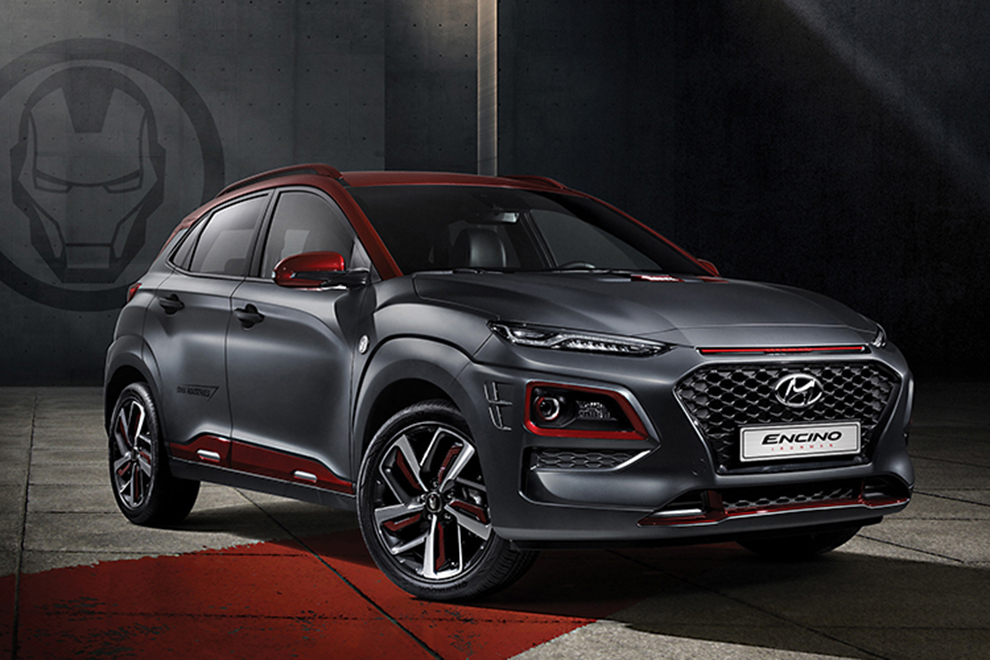
For practical Hyundai Encino specs, begin with the China-market grade structure: names such as Zhilian, ZhiPao, Prestige, Iron Man and GLS, with some 1.6T grades carrying a China V Standard designation. These labels help identify the source edition, but they do not map neatly onto every overseas trim ladder. A buyer should compare the actual equipment list, safety systems, infotainment, upholstery and warranty terms instead of assuming that a similarly named trim in another market is equivalent. The export catalogue can contain both combustion and electric versions, so powertrain is the first split.
For the petrol options represented under the Encino name, the 1.6-litre turbocharged engine is paired with a dual-clutch transmission. This combination suits buyers who want a familiar fuel vehicle with quick, convenient urban cruising and do not have dependable charging access. Dual-clutch hardware should not be judged solely by sales description: buyers should request service history, evidence of smooth operation and an inspection covering clutch engagement, mechatronic behavior and warning lights. Exact outputs and equipment can differ by grade, so the VIN-specific listing remains the controlling source for every purchase before contracting.
The electric Encino is a different procurement case. A battery-electric unit can suit urban fleets with managed charging and predictable routes because it removes petrol refuelling at the vehicle and places the operating burden on electricity supply. Against that benefit, a private buyer or reseller must examine usable range in local weather and traffic, charging connector compatibility, battery warranty, charging access and likely resale demand. Because the listing does not establish battery capacity, motor rating or certified range for every unit, request those data for the exact car before calculating total cost.
- 1.6T DCT petrol grades
- Electric GLS ZhiJie examples
- Compare equipment, not trim names
New vs used Hyundai Encino: how export inventory is structured and how buyers choose
New Encino units offer a route to standardized fleet specification. A buyer can select a powertrain and equipment mix, document that the vehicle has not carried commercial passengers, and align vehicles around one configuration. That consistency is valuable for training, maintenance planning and resale. The trade-off is a higher initial capital commitment and potentially faster depreciation, plus the need to wait for a production slot or allocation. New does not mean locally approved: the same emissions, safety and registration checks still apply as for a used import, including destination approval before delivery.
Used Hyundai Encino inventory can offer a broader mix of model years, grades and powertrains, which is useful when a buyer wants immediate selection or a lower acquisition hurdle for resale. The same flexibility transfers risk to the buyer: paintwork, interior wear, accident history, battery deterioration and mechanical condition may vary significantly. For a petrol DCT car, inspect service records and dual-clutch behavior; for an electric car, prioritize battery state-of-health evidence, charging tests and confirmation that the high-voltage system has no faults. A used unit should never be accepted on mileage alone.
A sound procurement method is to compare vehicles on a checklist, not merely by the trim badge. Obtain the VIN, production date, title or ownership documents, service records, recall status, option list and photographs. Have an independent inspector verify panel condition, roadworthiness, tires, fluids and diagnostic results; for an EV, add a battery report and charging-loss assessment. Confirm that the vehicle is eligible for the intended import category and that the seller can issue the documents your broker requires. This protects both the purchase decision and the later resale proposition before contracting.
- New units aid standardization
- Used units shift inspection risk
- VIN documents are essential
How export pricing works: the factors behind a live listing price, and how to read one
A Hyundai Encino export price guide should start with one rule: the price attached to a live unit is not a universal wholesale tariff. The asking amount reflects the vehicle's model year, grade, petrol or electric powertrain, mileage, condition, ownership history and equipment. Trim differences can matter because China-market editions may carry different safety, comfort and infotainment content. Because the same grade can appear in materially different condition, compare like with like and use the current unit listing as the baseline rather than relying on an old article or another vehicle's headline figure.
Export buyers must separate vehicle acquisition cost from landed cost. Ocean or roll-on/roll-off freight, marine insurance, terminal and documentation charges, inland transport, customs brokerage and destination taxes may all sit outside the displayed unit price. Exchange-rate movement can also change the payable amount between quotation and settlement. Ask the seller which Incoterm applies, what is included in the price, and whether charging equipment, tools, keys, manuals and export documentation are present. The same vehicle can therefore show different total economics under different delivery terms, even though its condition has not changed.
To read a listing, expand the description, confirm the details and request a written quotation for the destination. Compare the unit price with condition evidence, then ask for a landed-cost estimate that separates freight, insurance, duties, taxes and inland delivery. Treat the live listing as the source for the per-unit price and MOQ, while the seller's quotation and sales contract define what is binding. A buyer preparing a Hyundai Encino wholesale order should confirm payment currency, validity period and what happens if the vehicle is re-inspected before release or shipment.
- Compare like-for-like vehicles
- Separate unit and landed costs
- Written quotations define terms
MOQ, ordering and payment: single units vs consolidating a container
MOQ is a term, so it should be read from the live offer rather than generalized for the model. Each unit listing can state its minimum order quantity, and that figure is the starting point for the quoted vehicle. A buyer taking one Encino should ask the seller to confirm in writing that one unit is available for that SKU and whether payment, documentation or shipping consolidation conditions affect it. Do not infer a model-wide MOQ from a listing or from the fact that vehicles in a catalogue may be sold separately.
Container economics change the calculation. A full-container purchase can improve freight efficiency, but it requires enough compatible vehicles and careful administration of every title, condition report and delivery date. Consolidation can also involve a shared container with independently owned units, which may reduce freight cost per vehicle while adding coordination risk. Ask whether the seller or freight partner can arrange this, and confirm how vehicles are grouped, inspected, valued and insured. Mixing powertrains or very different grades may save space yet complicate customs declarations, parts planning and downstream marketing requirements locally.
An order begins with a specification and pro forma invoice, followed by the deposit, inspection and balance payment. The release step should depend on the buyer or an appointed inspector confirming identity, condition and documents, rather than on a deposit alone. Payment terms, currency, bank charges and refund conditions should be explicit, especially for a used vehicle whose condition is central to value. Sellers may use different sequences, but the contract should clearly connect each payment to documentary and inspection milestones. Keep the invoice, VIN, photo set and inspection report in the vehicle file.
- Read MOQ per listing
- Control container consolidation
- Link payments to inspection
Shipping, homologation and market compliance caveats: LHD/RHD and import rules by country
Import rules are destination-specific, and a China V grade label is not evidence that the vehicle has passed another market's type approval. Depending on the country, authorities may impose age limits, emissions standards, safety requirements, VIN checks, customs valuation, duties, VAT or other taxes, and restrictions on the age or condition of used vehicles. An importer should obtain a written view from a customs broker or the relevant authority before paying. Compliance work should also include confirming the vehicle's VIN, engine or motor details, emissions documentation and the exact category under which it will enter.
Steering configuration is another early filter. Chinese-market Encinos are commonly left-hand-drive, whereas some importing countries use right-hand-drive vehicles. A buyer needing RHD should establish whether the exact model and trim was factory-built that way before ordering; a later conversion adds cost and may affect warranty, insurance, registration and residual value. Conversion quality also matters because steering components, electrical architecture and diagnostic procedures may all be involved and should be documented. If a factory RHD example cannot be sourced, compare that uncertainty with a locally supported alternative rather than treating conversion as a routine accessory.
Shipping method should follow the powertrain and the seller's release condition. A petrol vehicle may travel in a shared container or by roll-on/roll-off, while an electric vehicle requires declared, compliant handling of its high-voltage battery and confirmation of the carrier's safety rules. Ask for the vehicle-specific dimensions and weights before booking because they affect securing, route and cost. Include export preparation, port handling, marine insurance, destination clearance and inland delivery in the delivery plan. A low freight quote that omits a battery-related procedure or a destination charge should not be treated as complete.
- Local rules govern imports
- Confirm factory RHD availability
- Declare EV battery handling
Who should buy the Encino — and who should pick a different vehicle
The Encino is a candidate for an importer seeking a compact Chinese-market crossover with petrol and electric buying paths, especially where compact packaging suits roads and charging infrastructure supports electric fleet deployment. Dealers can build a proposition around Hyundai styling, a practical elevated cabin and differentiated powertrain choice rather than relying on a familiar global model name. It also suits fleet buyers that can control charging, maintenance and replacement cycles. The decisive condition is operational: the importer must be able to register, service and resell the exact configuration without depending on uncertain parts or approvals.
Electric Encino buyers should choose it when charging, suitable routes and a battery-warranty framework outweigh any need for a petrol fallback. They should model energy consumption under local heat, cold, load and traffic rather than relying on a laboratory range figure, and they should verify charger and connector compatibility. Petrol DCT buyers gain a simpler refuelling proposition and station access, but they should budget for transmission service, fuel use and the possibility that buyers know the model less well. Neither powertrain is automatically cheaper after purchase; infrastructure, insurance, tax and residual value belong in the comparison.
Choose another vehicle when the target market has strong demand for a locally familiar model with a dealer network, simpler residual-value history or clearer parts support. Larger families may need more cargo space or seven-seat flexibility, while fleet operators with high daily uptime may prefer an established global model with readily available service items. Buyers requiring off-road capability, heavy towing or a model supplied with factory certification should also look beyond the Encino. These are not shortcomings of one specification; they are reasons to define the use case before selecting the powertrain and trim.
- Suits compact urban operations
- EV needs managed charging
- Alternatives offer deeper support
Main rivals and how the Encino compares
A fair rival analysis starts with the same criteria used to assess the Encino: vehicle size, powertrain availability, equipment, safety and software support, homologation route, spare-parts access and expected resale. A visually similar competitor is not enough if its import economics or local support differ. The Encino's main argument is access to China-specific Hyundai compact crossovers, including petrol DCT and electric choices. Its corresponding challenge is that buyers in some markets may recognize the segment rival more readily and find it easier to service, insure or resell after delivery.
The Hyundai Kona is the closest conceptual rival because it occupies a similar compact-crossover position and may offer a different mix of hybrid, petrol or electric choices depending on market. An importer with access to a locally supported Kona can gain stronger name recognition and easier service familiarity; an importer seeking a distinctive China-sourced model may prefer the Encino. The Kia Stonic is another direct subcompact-crossover alternative, with its own brand, styling and market-specific powertrains. Choose between the Encino and Stonic on verified equipment, landed cost and after-sales coverage, not on badge preference alone.
The Nissan Juke targets a similar urban crossover buyer but is differentiated by its more distinctive styling and its own packaging and powertrain choices. It can be the better choice where Nissan support and consumer recognition are stronger, or where local inventory makes compliance easier. The Encino can be the better choice for a dealer seeking Hyundai identity, a China V-market grade structure and a choice between combustion and electric sourcing routes. Whichever vehicle is selected, obtain a destination-specific quotation and service study before signing; positioning alone does not resolve freight, tax or homologation risk.
- Compare service and residuals
- Kona is closest conceptual rival
- Stonic and Juke compete directly
Live Hyundai Encino export inventory
View all listings →Real units currently on ChinaCarDirect with per-unit asking prices and MOQ. Availability updates live from the catalogue.
Used Hyundai ENCINO 2018 1.6T Dual-Clutch Zhilian Edition China V Standard
How to buy a Hyundai Encino from China
-
1
Set the destination and operating brief
Define the destination country, required steering side, fleet or resale use, preferred powertrain and charging conditions. Separate regulatory requirements from commercial preferences before selecting a vehicle.
-
2
Build a like-for-like shortlist
Compare current live Encino listings by model year, grade, powertrain, mileage, condition and equipment. Use the live listings for current per-unit price, MOQ and availability.
-
3
Verify identity and specifications
Request the VIN, production date, ownership documents, option list and service history. For an electric Encino, obtain the battery capacity, motor output, certified range, charging details and warranty terms for that exact vehicle.
-
4
Commission an independent inspection
Have an independent inspector assess body condition, roadworthiness, diagnostics and included equipment. Electric vehicles should also receive a battery health report and a documented charging test.
-
5
Price the delivered unit
Request a written quotation specifying the Incoterm, freight method, insurance, export preparation, customs brokerage, destination taxes and inland delivery. Compare total landed cost, not only the displayed vehicle price.
-
6
Confirm MOQ and payment milestones
Check the MOQ shown on the selected live listing and obtain written confirmation for the intended quantity. Link deposits and balance payments to the contract, inspection, document handover and vehicle-release milestones.
-
7
Complete export and destination clearance
Agree the shipping method, battery-handling requirements, insurance, export documents and port plan. Complete destination type approval, customs clearance, RHD requirements, registration and inland delivery before releasing the vehicle.
Encino vs rivals
| Hyundai Kona | The Kona is the closest conceptual rival in the compact-crossover class and may offer a different market-specific powertrain mix. Choose it where Hyundai service familiarity and local recognition are stronger; choose the Encino for China-specific sourcing and grade options. |
|---|---|
| Kia Stonic | The Stonic is a direct subcompact-crossover alternative with different styling, branding and market-specific equipment. The better choice depends on verified powertrain availability, landed cost, homologation and local Kia aftersales coverage. |
| Nissan Juke | The Juke competes for urban buyers seeking a distinctive compact crossover and may benefit from stronger Nissan recognition in certain markets. The Encino is more compelling where Hyundai identity and access to China-market petrol or electric variants matter. |
Frequently asked questions
How is the Hyundai Encino export price determined?
The price shown for a live Encino is unit-specific and can move with model year, trim, powertrain, mileage, condition, exchange rates and commercial terms. Freight, insurance, duties, taxes and inland delivery may be excluded, so ask for a destination-specific landed quotation. Current binding per-unit prices and MOQ are shown in the live Encino listings.
Which Encino powertrains and range figures should buyers expect?
The Encino range represented includes petrol 1.6T models with a dual-clutch transmission and battery-electric versions. Battery capacity, motor output, certified range, real-world range and charging details are unit- and market-specific, so check the exact live listing rather than carrying figures across versions.
Is a new or used Hyundai Encino better for an export purchase?
New units offer easier fleet standardization and a known pre-delivery condition, while used units can provide broader model-year and powertrain choice at a lower acquisition hurdle. Used vehicles require more scrutiny of service history, accident records, battery health and mechanical condition. Choose according to your inspection budget, financing plan and resale strategy.
How does MOQ work for an Encino order?
MOQ is shown for each live unit and should be confirmed with the seller for the selected SKU. A single-vehicle purchase may be possible where the listing permits it, while container buyers must coordinate compatible vehicles, documentation, payment and freight. The live listing provides the current starting point rather than a permanent model-wide rule.
What determines shipping time and cost?
Shipping time and cost depend on the origin and destination ports, sailing schedule, container or roll-on/roll-off method, vehicle dimensions, freight market, insurance, handling charges and customs clearance. Electric vehicles also require compliant battery handling and carrier approval. Request a door-to-door or port-to-port quotation with each charge identified.
Are Hyundai Encino spare parts readily available overseas?
Availability depends on the destination's Hyundai network and whether the required parts match China-market or export-market specifications. Ask for a parts list covering service items, electronic modules, body parts, trim items and charging accessories before importing. Obtain written lead-time and sourcing information for critical fleet spares.
Is a right-hand-drive Hyundai Encino available for export?
RHD availability depends on the exact model, trim and sourcing route, so buyers should check live listings rather than assume an LHD unit can be converted. Factory RHD is generally preferable for registration, warranty, insurance and residual-value reasons. If conversion is necessary, obtain a detailed scope and local technical approval first.
How do I buy a Hyundai Encino from China?
Begin with a live Encino listing, verify the unit's identity and specification, and request a written quote for the destination. Complete an independent inspection, agree the MOQ, payment milestones and Incoterm in the contract, and retain all export and customs documents. The seller or freight partner should then coordinate release, shipping and destination delivery.
Ready to source the Hyundai Encino?
Send your destination, preferred powertrain, quantity and operating requirements to ChinaCarDirect for a current unit-level quote and export plan.
Request a quote