
Hyundai Palisade Export Buying Guide for Dealers and Fleets
Plan a Hyundai Palisade export purchase with trim guidance, pricing methods, MOQ advice, shipping checks and compliance essentials for overseas buyers.
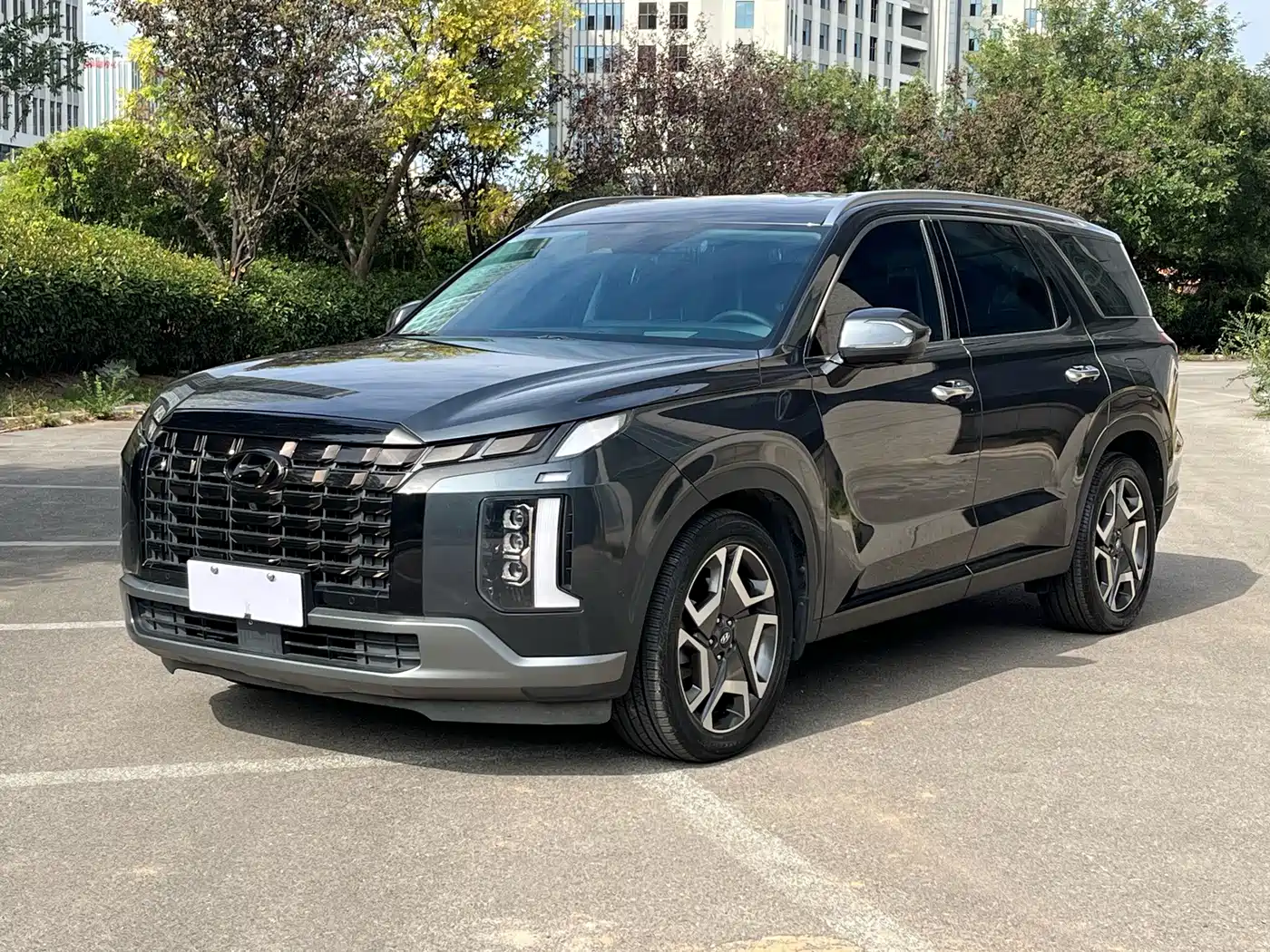
At a glance
- The Hyundai Palisade is a three-row midsize SUV suited to family, executive and light-fleet buyers.
- The export-facing range represented here uses a 3.5-litre automatic engine, with GLS and Calligraphy trims.
- Four-wheel-drive versions suit variable road conditions, but exact equipment must be verified for each source market.
- New and used vehicles demand different checks: status and warranty for new; history and inspection for used.
- Current per-unit prices, MOQ and availability must be confirmed on the live ChinaCarDirect inventory.
Why the Hyundai Palisade matters for export markets
The Hyundai Palisade occupies the mainstream three-row midsize-SUV position, between family-focused crossovers and larger vehicles for more passengers or cargo. Its combination of a 3.5-litre automatic powertrain, available four-wheel drive and a choice of GLS and Calligraphy specification gives export buyers a clear proposition: a practical family SUV with a more premium option for executive and fleet use. It is especially relevant where buyers need three-row capability without moving into a full-size off-road vehicle or a commercial van. Dealers can therefore serve family, chauffeur and institutional customers from a single model family.
Across export markets, demand is less about a niche performance proposition than dependable packaging, recognizable branding and manageable operating costs. The Palisade’s three-row cabin suits families, hotel courtesy vehicles, airport transport operators and employers that need one platform for passengers and luggage. Hyundai’s dealer network can matter when a buyer expects parts support, maintenance familiarity and eventual resale. Those advantages are market-dependent, however, so importer due diligence should confirm local service coverage rather than assume every Hyundai market has a Palisade-trained workshop with suitable diagnostic equipment available before any purchase commitment.
The model’s export proposition also depends on positioning it correctly. It is not a cheap utility van, nor should it be sold as a rugged off-roader: four-wheel drive can improve traction, but it does not change the vehicle’s on-road family-car character. Importers should compare local tax bands, fuel availability, parking limits and road conditions with competing three-row SUVs. A Palisade is usually most persuasive when the buyer values a comfortable, well-equipped SUV and a relatively straightforward specification story, not when lowest lifecycle cost or maximum cargo volume is the dominant requirement.
- Three-row family and fleet positioning
- GLS value versus Calligraphy premium positioning
- Check local parts support
Model range, trims and powertrain variants: how the lineup is structured and how to choose
The export-facing Palisade range represented here is built around a 3.5-litre petrol engine paired with an automatic transmission. GLS forms the more practical entry point, while Calligraphy is the higher-specification derivative with a stronger emphasis on comfort, visual upgrades and equipment. Drivetrain descriptions may appear as 4WD, 4x4 or AWD depending on the source market and listing terminology. Buyers should compare the actual drivetrain system and equipment on the individual vehicle rather than assume that similar labels guarantee identical hardware across production markets, which matters for correct import planning and compliance.
Choosing GLS usually makes sense when the buyer prioritizes purchase efficiency, durable family utility and the lowest specification complexity needed for the mission. Calligraphy makes more sense when appearance, cabin comfort, convenience equipment and a stronger customer-facing image influence the sale. Because equipment can change by model year and destination, the trim name alone is not a complete specification. Request the vehicle identification number (VIN), build plate, equipment list and photographs of the dashboard, seats, wheels and infotainment system before making a premium assumption about the vehicle sold in the destination market itself.
All-wheel drive can widen the Palisade’s appeal in places with wet roads, snow or uneven rural surfaces, but it is a traction aid rather than a substitute for correct tyres, sensible speed and maintenance. The export listings should be separated into groups by engine, transmission, drive layout and trim. For a dealer, a disciplined variant matrix makes quotations easier and reduces the risk of selling a Calligraphy at a GLS-equivalent position. For a fleet buyer, that matrix should be tied to duty cycles, passenger capacity, luggage requirements and local operating rules.
- Verify the 3.5L automatic configuration
- Compare actual equipment
- Clarify 4WD, 4x4 and AWD labels
New vs used Hyundai Palisade: how export inventory is structured and how buyers choose
New and used Palisade inventory serves different commercial strategies. A new or unregistered vehicle can suit dealers seeking a current specification, standardized presentation and a clearer potential new-vehicle warranty position; it may also be a demonstration, parallel-export or otherwise lightly used unit. A used example can offer a more accessible entry into the three-row SUV category and may preserve the model’s basic architecture while carrying a lower purchase commitment. Neither label alone proves condition, so buyers should treat the seller’s status, registration history, odometer reading and inspection report as separate evidence.
For a used Palisade, the commercial value lies in disciplined condition assessment rather than in the model year alone. Inspect bodywork and paint, underbody condition, tyre age and wear, brake condition, cabin wear, service records and evidence of accident repair. Verify that the odometer reading is supported by maintenance records and that the vehicle starts, shifts and drives without warning. An independent pre-shipment inspection is particularly valuable when the buyer cannot view the vehicle in person and when faults discovered after dispatch would be expensive to correct remotely or locally.
A new-status vehicle should be checked for the same mechanical and documentary rigor. Confirm whether it has been registered, used as a demonstrator, held as fleet stock or prepared for parallel export, and compare the stated new condition with any wear visible in photographs. Check the warranty’s geographic scope and whether consumables, service visits or bodywork are excluded. For buyers planning several vehicles, a batch-consistency check is more valuable than focusing on cosmetic differences: the same VIN-level documents, keys, tools, tyre condition and equipment should be present on every unit.
- Confirm status and warranty
- Inspect used vehicles independently
- Reconcile VIN and odometer
How export pricing works: the factors behind a live listing price, and how to read one
A live Hyundai Palisade export price is the output of several variables, not a universal model-level rate. Model year, trim, drivetrain description, mileage, condition, ownership status and the completeness of documents can all affect the vehicle’s asking position. Market conditions also matter: exchange rates, supplier terms, inspection and preparation costs, financing, insurance, transport and destination charges may be included or excluded. The most useful first step is to establish exactly what the quoted figure represents and which party bears costs from the Chinese origin through delivery at the named port.
It is also important to distinguish a vehicle price from a landed operating cost. Depending on the Incoterm, a buyer may still need to budget export documentation, inland haulage, port handling, vessel booking, marine insurance, destination customs, taxes, inspection and local delivery. Conversely, a higher vehicle figure may be offset by included preparation or transport, so it should not be judged without the accompanying scope. Compare like with like: same trim, condition, drive system, documentation status and delivery term. A low headline number can be more expensive after required work is priced.
When reading a live listing, work from the unit details outward. First confirm the model, year, trim, engine, transmission, drivetrain wording, condition and stated documents. Then check the displayed price basis, MOQ, seller or supplier terms, inspection options, preparation, Incoterm and shipping inclusions. Ask for a written pro forma invoice or quotation that itemizes the vehicle, options, inland transport, export charges, freight and any destination-side charges. Current binding figures should be taken from the live inventory page for the specific unit, not inferred from an old catalogue or a general market estimate.
- Compare like-for-like specifications
- Confirm Incoterm and inclusions
- Check live price and MOQ
MOQ, ordering and payment: single units vs consolidating a container
Minimum order quantity is a commercial term, so buyers should read it on each live unit or seller quotation rather than assume a catalogue-wide rule. One vehicle may suit an importer testing demand, while a larger order can improve transport planning and unit administration. Consolidation can reduce repeated fixed costs, but it also concentrates capital before individual buyers are confirmed. The correct quantity is therefore a balance between freight efficiency, working-capital exposure, after-sales support and the speed at which stock can be sold in the destination market rather than guessed in advance.
For a buyer intending to buy a Hyundai Palisade from China, the operational questions are still substantial: who owns the vehicle before shipment, which inspection standard applies, what deposit is required, when the balance becomes payable, and what happens if inspection or documentation reveals a discrepancy. Obtain the SKU or vehicle reference, a written specification, agreed photos, payment receipts and a pro forma invoice. Ensure the contract states whether the price covers the vehicle alone or agreed export services. This discipline prevents an easy single-unit purchase from becoming an unclear shipment.
For a consolidated vehicle order, agree the selection and inspection rules before paying the balance. Decide how mixed trims or drive systems will be allocated, who approves substitutions, and whether the freight quotation assumes a specific container or vehicle-carrier capacity. Maintain a unit-by-unit handover list linking each VIN to its condition report, keys, documents and accessories. Also agree the process for a unit that fails inspection, arrives damaged or cannot be released. Those contingency terms are more valuable than an assumed saving because they determine who absorbs the loss and delay.
- Read each listing’s MOQ
- Agree deposit and refund terms
- Link VINs to handover records
Shipping, homologation and market compliance caveats: LHD/RHD and import rules by country
Vehicle shipping economics depend on the carrier mode, origin and destination ports, sailing schedule, cargo handling, documentation, insurance and the urgency of the consignment. Ro-ro and container logistics each have different handling patterns, and availability can change with carrier schedules and port congestion. Freight quotations should state the chargeable basis, included origin or destination services, free-time allowances and the party responsible for terminal, customs and demurrage charges. Transit time is only one variable; the reliable measure is the expected door-to-door schedule and the consequences of delay, disruption or documentation holds.
Steering configuration is a procurement check. A vehicle sourced for the Chinese market may be left-hand drive, while Palisade production markets use right-hand drive; the listing title alone is not sufficient evidence. Confirm the steering-wheel position, instrument and control layout, seat-belt arrangement and market designation against the vehicle identification number and build information. If the destination requires right-hand drive, a left-hand-drive conversion can add cost, parts complexity and compliance risk. It is normally safer to source a native right-hand-drive example where available than to treat conversion as a routine last-mile task.
Destination import eligibility must be checked before commitment. Rules can cover vehicle age, emissions, safety, customs valuation, tariffs, taxes, conformity documents and used-vehicle restrictions; local rules may change by port or region. China’s used-vehicle export rules and available documents must also be checked. A Chinese-market vehicle may not carry the documents or approvals needed for local registration, even if it is mechanically suitable. Use an importer or customs broker to confirm the homologation route, title or ownership evidence, export declaration, bill-of-lading documents and inspection requirements. Obtain a compliance view rather than relying on a vehicle description.
- Verify LHD or RHD
- Price origin and destination charges
- Obtain local compliance review
Who should buy the Palisade — and who should pick a different vehicle
The Palisade is a fit for buyers who need a comfortable three-row SUV for family travel, executive transport, hotel or airport operations, and mixed passenger-and-luggage duties. GLS can serve cost-conscious dealers and fleet operators who want the essential SUV package, while Calligraphy suits customers who place greater value on cabin presentation and equipment. The 3.5-litre automatic powertrain is straightforward to position for overseas buyers, and four-wheel-drive versions can add confidence in regions where road grip varies. It is best suited to paved-road use with poor-weather or uneven-surface travel, not heavy off-road work.
It is a weaker choice for buyers whose priorities are very low fuel consumption, minimal operating cost, urban maneuverability or commercial load efficiency. A hybrid or plug-in-hybrid three-row SUV may be more suitable where those versions are homologated and charging or fuel supply is suitable. Small parking bays, narrow urban streets or routes with severe height restrictions can make a larger family SUV inconvenient. Buyers needing a commercial van’s payload, specialist off-road equipment or a high-capacity utility platform should consider purpose-built alternatives rather than stretching the Palisade beyond its design role.
For dealers and fleet buyers, the decision should be made through a total-cost and resale test. Calculate the landed vehicle cost, registration and compliance charges, expected fuel use, maintenance plan, insurance class and likely resale position for the exact specification. Compare the Palisade with the most suitable rival, not a premium full-size SUV. A dealer that can explain the GLS-to-Calligraphy hierarchy, support imported parts and serve the right segment will often create more value than one buying on the badge alone. Fleet buyers should also assess dispatch uptime and driver comfort.
- Best for family and fleet use
- GLS value; Calligraphy presentation
- Alternatives for lower running costs
Main rivals and how the Palisade compares
The Kia Telluride is the closest conceptual rival because it competes for the same family, executive and light-fleet buyers with a three-row, four-wheel-drive SUV format and a similar emphasis on usable space and equipment. Telluride may be compelling where local Kia dealer familiarity, servicing and resale are stronger, while Palisade buyers may prefer Hyundai’s badge, GLS and Calligraphy positioning, or a specific offer and specification. The decision should be based on an option-by-option comparison of warranty, safety equipment, cargo flexibility, fuel economy and landed cost rather than styling or marketing badge.
The Toyota Highlander competes where buyers place greater weight on fuel-efficiency choice, broad market familiarity and long-term service confidence. In markets where a hybrid version is offered, it can be especially relevant to fleets focused on operating cost, although availability, tax treatment and charging assumptions differ. The Palisade presents its 3.5-litre gasoline-led proposition, with Calligraphy providing a premium specification path. That does not make one automatically cheaper: compare fuel consumption, insurance, warranty coverage, depreciation and the cost of servicing each vehicle locally through authorized dealer networks in the destination market.
The Mazda CX-9 is a useful alternative for buyers who place greater emphasis on driving character, visual design and a somewhat different interpretation of the midsize three-row SUV. It can appeal where Mazda service and resale prospects are stronger, but the Palisade’s GLS and Calligraphy hierarchy gives dealers a clearer value-versus-premium sales story, and four-wheel-drive variants can matter for traction. None of these rivals wins automatically: local price, tax bands, parts lead times, fuel, safety equipment and warranty should be recorded directly in one spreadsheet using the same landed-cost assumptions.
- Telluride: closest direct rival
- Highlander: efficiency and hybrid choice
- CX-9: design and driving character
Live Hyundai Palisade export inventory
View all listings →Real units currently on ChinaCarDirect with per-unit asking prices and MOQ. Availability updates live from the catalogue.

How to buy a Hyundai Palisade from China
-
1
Define the target specification
Set the destination country, intended customers, GLS or Calligraphy preference, drivetrain requirement, condition and budget before selecting vehicles. Include local driving conditions, registration needs and aftersales expectations in the brief.
-
2
Review live Palisade inventory
Open the live Hyundai Palisade search and compare units by year, trim, drivetrain wording, condition and seller information. Use the current unit page for the binding price, MOQ and availability.
-
3
Verify identity and vehicle status
Request the VIN, build information, ownership or registration status, odometer disclosure and equipment list. Confirm whether a new-status vehicle is unregistered, a demonstrator or prepared for parallel export.
-
4
Request an itemized quotation
Ask for the vehicle price, MOQ, inspection scope, preparation, inland transport, export charges, freight basis and Incoterm in writing. Identify which destination customs, taxes, insurance and delivery costs are excluded.
-
5
Inspect and approve the unit
Use an agreed inspection standard, supported by photographs, service records and a VIN-level report. Approve any repair, substitution or downgrade in writing before the balance payment becomes due.
-
6
Confirm payment and ownership terms
Document the deposit, balance trigger, payment method, ownership-transfer process, invoice contents and refund or dispute remedies. Keep all receipts and condition records with the final handover file.
-
7
Book a compliant shipment
Confirm LHD or RHD suitability, export eligibility, shipping mode, insurance, carrier schedule and destination documents with the seller and local broker. Track the handover from the origin warehouse through port handling and final delivery.
Palisade vs rivals
| Kia Telluride | The Telluride is the closest direct rival for three-row family and light-fleet buyers. Choose it when local Kia servicing or resale is stronger; choose the Palisade when its GLS-to-Calligraphy specification, pricing and equipment align better with the target market. |
|---|---|
| Toyota Highlander | The Highlander is a credible alternative where local Toyota support, resale confidence or hybrid availability influences the decision. Compare the Palisade’s 3.5-litre automatic and Calligraphy option against the Highlander’s local powertrain and equipment choices, including fuel-cost implications. |
| Mazda CX-9 | The CX-9 offers a more driving-oriented alternative within the same three-row segment. It may suit buyers prioritizing styling and handling character, while the Palisade offers a clearer GLS-value to Calligraphy-premium hierarchy for dealers. |
Frequently asked questions
How is the Hyundai Palisade export price determined?
Export pricing is unit-specific and is driven by model year, trim, drivetrain, mileage and condition, documentation, exchange rates, freight, insurance, Incoterms, duties and local charges. A listed vehicle price may exclude export preparation, transport and destination taxes, so ask for an itemized written quotation. Check the specific unit’s current price and terms in the live Hyundai Palisade listings rather than relying on a general price guide.
What engine and powertrain does the export Palisade use?
The export units described use a 3.5-litre gasoline engine with an automatic transmission, offered in GLS and Calligraphy specifications with 4WD or AWD labels depending on the market. The Palisade is not a battery-electric model in this configuration, so electric range and charging figures do not apply. Confirm the exact engine, transmission, drive system and build details on the chosen vehicle.
Is a new or used Hyundai Palisade better for export?
New-status vehicles can suit buyers prioritizing current specification, presentation and warranty, but registration, demonstration or parallel-export history must be checked. Used vehicles can reduce the initial purchase commitment, yet they require stronger scrutiny of condition, mileage, service history, tyres and accident repair. Neither status should be accepted without documents and an inspection.
What is the MOQ for a Hyundai Palisade order?
MOQ is set by the individual listing or commercial quotation, so always read the requirement shown for the vehicle you intend to buy. Buyers may be able to request one unit, while larger orders may consolidate vehicles into a container; the seller must confirm which quantity and price applies. Use ChinaCarDirect’s live listing and RFQ process to secure current terms rather than assuming a catalogue-wide quantity.
How long does shipping take and what drives the cost?
Shipping time and cost vary with origin and destination ports, carrier mode, sailing schedule, handling, documentation, insurance, cargo volume and port congestion. The quotation should identify the Incoterm and show which origin, freight, terminal, customs and destination charges are included. Obtain an expected door-to-door schedule, not only a port-to-port transit estimate.
Can buyers source spare parts for an imported Palisade?
Parts support depends on the destination’s Hyundai dealer network and whether the required components are available locally or must be imported. Match parts using the VIN, build information and original equipment; do not assume a domestic-market trim has the same parts catalogue as a Chinese-market vehicle. For long-term fleet use, confirm common service and wear-item availability before committing to a large order.
Is right-hand-drive Hyundai Palisade availability an issue?
Chinese-market Palisade vehicles are commonly left-hand drive, while right-hand-drive versions exist for some markets, but the exact configuration must be verified for each unit. Check the steering position and VIN or build information before ordering, and confirm destination approval for the chosen configuration. If right-hand drive is mandatory, sourcing a native example is generally safer than planning a conversion.
How do I order a Hyundai Palisade from China?
Start with a live Hyundai Palisade listing, send an RFQ with the destination, trim, drive layout, condition and quantity, and request a written specification and itemized quotation. After document verification and inspection approval, agree the payment schedule, ownership transfer, export terms and freight plan in the contract. Release the balance only against the agreed inspection, documents and shipment arrangements.
Ready to source the Hyundai Palisade?
Send us your destination, trim, drive layout, quantity and inspection scope for a current Hyundai Palisade export quotation.
Request a quote