
Hyundai Santa Fe for Export: Overseas Buyer’s Guide
Compare Hyundai Santa Fe trims, engines, seating and drivetrains for export, then learn live pricing, MOQ, shipping, compliance and ordering from China.
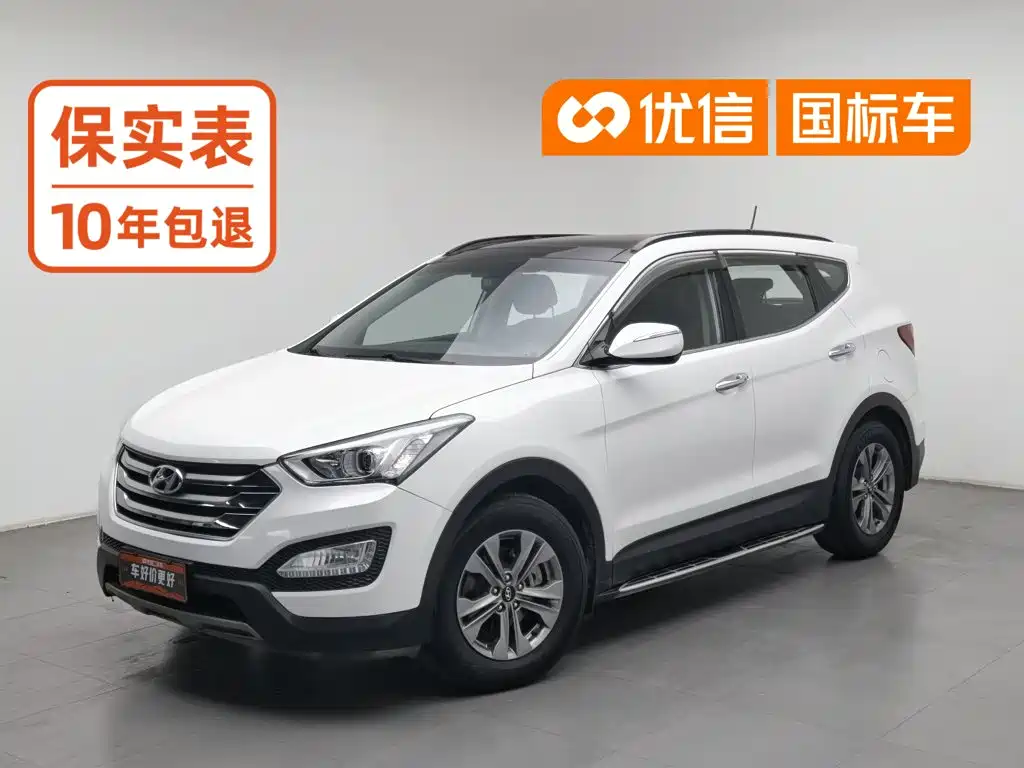
At a glance
- China-market Santa Fe sourcing covers petrol engines, automatic transmissions, two- and four-wheel-drive layouts, and five- or seven-seat configurations.
- Five-seat models suit conventional family and fleet use, while seven-seat versions add flexibility where third-row demand is genuine.
- New vehicles offer a more uniform condition and equipment story, while used units require rigorous provenance, inspection and condition checks.
- Export pricing should be compared through the current live listing, a stated Incoterm and a complete landed-cost estimate.
- Steering position, emissions, documentation and destination-country import rules must be confirmed before placing an order.
Why the Hyundai Santa Fe matters for export markets
The Hyundai Santa Fe occupies a useful middle ground in the global SUV market: it offers more passenger and cargo room than many compact crossovers without the size, fuel demand and commercial complexity of a full-size SUV. For overseas dealers, that makes the model relevant to family-car retailers, ride-hailing operators and fleet buyers seeking a durable, recognizable nameplate. China-market examples add another sourcing route, but their specification should be matched carefully to local expectations. That approach matters where emissions rules, steering position and seven-seat demand differ substantially between source and destination markets.
Global interest in the Santa Fe is supported less by a single specification than by a versatile proposition: three-row capability, a practical midsize footprint and an established badge that many road users recognise. Seven-seat versions suit larger families, shuttle operations and hotels, while five-seat derivatives are generally easier to reposition in markets where families normally use two rows. Dealers should therefore start with seating demand, not simply engine output or trim prestige. A disciplined market brief will prevent unsuitable seven-seat stock from inflating carrying costs or complicating registration in destinations with narrower family-car preferences.
The China sourcing case is primarily a fit-and-compliance case, not simply a low-cost arbitrage. A vehicle built for the Chinese market may differ from locally marketed Santa Fe generations in equipment, emissions labelling, infotainment, safety content and regional parts supply. Buyers gain model variety across 2.0T, 2.4L and 380 TGDi applications, but should treat each listing as distinct rather than assume every Chinese trim is exportable or equivalent to a home-market specification. That discipline protects resale value, simplifies parts planning and reduces the risk of buying attractive hardware that cannot be homologated.
- Match seating to local demand.
- Confirm destination-market compliance.
- Compare complete vehicle specifications.
Model range, trims and powertrain variants: how the lineup is structured and how to choose
The export-facing Santa Fe range is built around petrol engines and automatic transmissions, with configuration rather than a single headline specification doing most of the work. Listings identify 2.0-litre turbocharged, 2.4-litre naturally aspirated and 380 TGDi applications, normally paired with front-wheel drive, all-wheel drive or four-wheel drive. Five- and seven-seat bodies appear across the range. Because output figures are not consistently shown in available listings, buyers should request the exact engine code, output rating and axle arrangement before calculating tax, insurance and total operating costs for the destination market.
The 2.0T choice is most relevant for buyers wanting stronger performance, towing headroom or better payload than the naturally aspirated option. The 2.4L may be easier to service where 2.0T parts are less familiar. Labels such as Smart, GLS Luxury, Connoisseur and Traveler describe China-market equipment tiers, not a universal global hierarchy. The 380 TGDi covers other application and equipment combinations, so do not assume it is identical to every 2.0T badge. Test drives and engine-code checks are more reliable than trim-name inference; ask the seller to reconcile the badge, VIN, engine plate and factory record.
Seat count and drivetrain should be decided before trim level. Five-seat versions usually serve conventional family and executive use more efficiently, while seven-seat versions add flexibility but can be less desirable where third-row demand is weak. Two-wheel drive is usually the simpler urban and highway configuration; four-wheel drive or all-wheel drive adds capability for wet roads, rough access routes and regional climates, but raises fuel use, tyre and maintenance considerations. Compare usable load, towing limits and local fuel rules, not only whether a badge says 4WD or the listing’s axle designation.
- Confirm engine and axle code.
- Choose five or seven seats.
- Compare payload and operating needs.
New vs used Hyundai Santa Fe: how export inventory is structured and how buyers choose
A new Santa Fe offered through the China market is the more straightforward choice for buyers who need predictable condition, current equipment and a cleaner warranty discussion. Used examples broaden the sourcing pool and can make sense where acquisition cost matters more than cosmetic perfection or the latest interface. The key distinction is not simply age: compare mileage, service history, accident repair, tyre condition, option content and whether the vehicle has remained in one market or has completed a full import cycle. A pre-purchase inspection should verify each of those points independently where possible.
For any used Hyundai Santa Fe, document provenance before negotiating. The seller should provide the VIN, production date, engine and gearbox details, ownership history where available, service records, current emissions documentation and photographs of the underbody, wheels and interior. An independent inspection should look for structural repairs, fluid leaks, uneven wear, steering and suspension noise, electronic faults and evidence that seat belts, airbags and other safety equipment have not been altered. A clean exterior cannot compensate for incomplete records. Request a written condition statement and reconcile it against the inspection findings and title documents.
New inventory should be evaluated on the factory configuration, warranty terms, delivery status and whether the seller is an authorised channel or an independent exporter. It is not automatically safer to buy an older used car with one owner than a newer unit with uncertain papers. For fleets, align the purchase with residual-value assumptions: a used vehicle may have a lower entry cost but higher preparation expenditure, while a new vehicle may simplify initial presentation yet depreciate faster. Model the total cost over the intended holding period before committing funds.
- Verify provenance before negotiation.
- Inspect condition independently.
- Calculate full holding-period cost.
How export pricing works: the factors behind a live listing price, and how to read one
An export price is not one fixed Santa Fe value. It moves with model year, trim, engine application, seating, drivetrain, mileage, condition, equipment and whether the unit is new or used. Market movements also affect the local-currency cost converted for the buyer. On ChinaCarDirect, use the current live listing as the unit-level reference, but read the description carefully: two vehicles with similar names can differ in axle layout, seat count, condition and included documents. Exact price, MOQ and availability for each offer are shown in the live inventory rather than in general market commentary.
Price is only one layer of the acquisition decision. A buyer should separate the vehicle price from freight, marine insurance, port and terminal charges, inland haulage, export documentation, customs duty, taxes and local registration or compliance work. Exchange-rate movements can alter the final invoice even when the listing does not change. Ask whether the quoted amount is FOB, CIF, or another Incoterm, and establish which party bears risk at each handover point. A lower vehicle price can produce a higher landed cost if freight, tax or rectification costs are added later.
Use a repeatable comparison sheet for every shortlisted unit. Record the VIN or SKU, model year, trim, engine label, gearbox, drivetrain, seating, mileage, condition notes, documents, asking price, Incoterm and validity period. Then request an all-in landed-cost estimate and a written payment schedule. Do not infer that one listing includes inspection, export clearance or spare parts unless the seller confirms it. The practical advantage of live per-unit pricing is control: when the vehicle, paperwork and destination costs are visible together, buyers can compare like with like before committing any funds.
- Read every live unit carefully.
- Separate vehicle and landed costs.
- Compare quotes on one Incoterm.
MOQ, ordering and payment: single units vs consolidating a container
Minimum order quantity is a commercial term, not a universal feature of the model. Ask the supplier for the MOQ shown for the specific live unit or batch, and clarify whether a single vehicle can be ordered, whether used stock is sold individually, and whether mixed-model consolidation is permitted. An individual purchase gives flexibility but often has a higher cost per unit in freight, documentation and compliance. A consolidated container can reduce logistics costs, but it also concentrates capital, inventory and compliance risk in vehicles that may not sell evenly.
A wholesale container consolidation works best when several buyers can share transport and accept a common Incoterm, destination, documentation standard and delivery window. Mixed Santa Fe years or configurations may complicate insurance declarations, customs records and parts planning even when every vehicle is sound. For a dealer testing demand, a mixed consignment can be more rational than filling a container with identical units, provided selections are inspected and documented. Agree how units are allocated, who pays handling and what happens if a vehicle is rejected, damaged in transit or cannot be registered.
Before payment, obtain a pro forma invoice that identifies the vehicle, agreed price, Incoterm, deposit, balance trigger, expected documents, refund or cancellation conditions and validity period. Verify the seller’s legal identity and payment beneficiary, and make sure the invoice and ownership records match. International transfers can expose buyers to exchange charges and non-recoverable payments, so use the payment route and documentary protections specified in the written agreement. Keep inspection rights and acceptance criteria in the contract rather than relying on informal assurances after funds have been sent to the named seller.
- Confirm listing-specific MOQ.
- Use written payment terms.
- Define rejection and allocation rules.
Shipping, homologation and market compliance caveats: LHD/RHD and import rules by country
Shipping choice should follow the vehicle, route and commercial priority. Container shipping can offer greater vehicle separation and may suit higher-value consignments, while roll-on/roll-off transport can reduce handling for suitable SUVs and often suits smaller mixed loads. Availability depends on port, sailing schedule and vehicle dimensions. Confirm lashing requirements, underbody and paint condition at loading, insurance coverage and the procedure for recording new damage. Transit time is only one variable; port congestion, customs release, inland transport and holiday schedules can extend the total delivery period before placing a firm order.
Left-hand-drive and right-hand-drive are not interchangeable for commercial planning. China-origin vehicles are commonly encountered in left-hand-drive form, but a buyer must confirm the steering position for each unit rather than assume it from the model name. RHD availability can involve a steering conversion or sourcing an original RHD vehicle, and either route can affect price, homologation, safety, warranty and parts. Import rules vary by country and can include VIN checks, emissions standards, roadworthiness, customs valuation, duty, VAT or tax, minimum-age restrictions and local registration requirements specifically in the destination market.
Chinese emissions labels, such as the China V and China VI versions seen in some listings, describe the source-market configuration; they do not by themselves prove compliance elsewhere. Buyers should obtain a written homologation assessment for the destination market before paying for conversion or freight. Confirm the original title, bill of sale, VIN plate, export declaration, customs paperwork and any required inspection or conformity records. After arrival, budget for local registration, language or equipment changes, software limitations and technician availability. These costs can erase a modest advantage in the vehicle price.
- Confirm steering position early.
- Validate destination compliance.
- Document condition at loading.
Who should buy the Santa Fe — and who should pick a different vehicle
The Santa Fe is a strong candidate for overseas buyers who need a conventional, gasoline-powered SUV with more room than a compact crossover and do not require the towing or off-road limits of a body-on-frame utility. It suits family dealers, hotel and executive shuttles, airport operators, regional sales teams and mixed fleets that value a familiar passenger-car platform. Automatic transmissions and multiple seating and drivetrain choices simplify matching, but the right configuration still depends on load, roads, climate and local fuel availability rather than badge alone or purchase price alone.
Choose a five-seat Santa Fe when the third row is unnecessary and carrying efficiency, easier parking and broader family appeal matter. Choose seven seats for genuine passenger demand, luggage flexibility or occasional extra loads, but check third-row access, boot volume with the row raised and the tax or insurance treatment of a larger vehicle. Four-wheel drive is sensible where traction, snow or poor-surface access justify it; for urban buyers on maintained roads, two-wheel drive may reduce acquisition and running costs without compromising the core mission for that customer profile specifically.
A different vehicle is usually more sensible when requirements change sharply. A compact crossover may be easier to stock and operate in price-sensitive markets; a full-size SUV or pickup may be necessary for heavy loads and severe work routes; a battery-electric or plug-in hybrid may suit fleets with controlled charging and favourable operating costs. For high-mileage urban use, a smaller hybrid can reduce fuel consumption, while a commercial van may provide better load economics. Compare total operating cost and resale fit over the holding period, not merely the lowest purchase cost.
- Best for family and fleet use.
- Match seats and drive layout.
- Compare total ownership economics.
Main rivals and how the Santa Fe compares
Within the midsize family-SUV segment, the Toyota Highlander is the closest conventional rival, often appealing to buyers focused on seven-seat practicality, local brand familiarity and a broad service proposition. The Santa Fe’s attraction in Chinese sourcing is the variety of 2.0T, 2.4L and 380 TGDi configurations and the availability of both five- and seven-seat forms. Highlander can be the safer choice when local brand awareness, standardised parts or a destination-market specification is more important than Chinese-market fit. Compare warranty, emissions, equipment and landed cost rather than badges or headline specifications.
The Kia Sorento directly competes for seven-seat family and fleet buyers and may be preferable where its destination-market specification and Kia support network are stronger. The Santa Fe differentiates through a broad mix of China-market petrol engines, seating options and drive configurations, so compare warranty, emissions, parts and landed cost rather than assuming either badge is inherently better. The Sorento should win if its exact homologation, residual-value expectations or local service economics are more favourable for the intended market.
The Honda CR-V competes one size below, but it is a relevant alternative for operators prioritising fuel efficiency, driver visibility and a smaller fleet footprint. It may offer stronger commercial familiarity in some markets, whereas the Santa Fe’s larger body and available seven-seat configuration serve families or shuttle operators better. For an overseas importer, the CR-V can be the better fleet choice when load requirements are modest; the Santa Fe is the stronger fit when occasional extra seating or additional passenger space justifies the larger vehicle.
- Highlander: closest direct rival.
- Sorento: closely related seven-seat option.
- CR-V: compact alternative.
Live Hyundai Santa Fe export inventory
View all listings →Real units currently on ChinaCarDirect with per-unit asking prices and MOQ. Availability updates live from the catalogue.
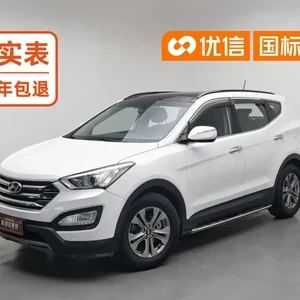
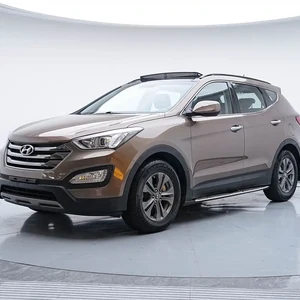
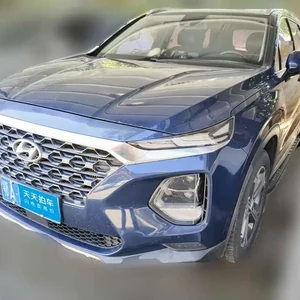
Hyundai Santa Fe 2019 Model 380 TGDi DLX Automatic 2WD Premium Smart Version PLUS China V
How to buy a Hyundai Santa Fe from China
-
1
Define the operating brief
Specify the destination country, five- or seven-seat requirement, two- or four-wheel-drive preference, fuel requirements, budget framework, RHD needs and intended holding period before selecting vehicles.
-
2
Create a like-for-like shortlist
Use the live Hyundai Santa Fe inventory and compare each candidate by VIN or SKU, model year, trim, engine, gearbox, seating, drivetrain, mileage, condition and stated Incoterm.
-
3
Verify identity and documents
Request the VIN, production details, title, bill of sale, ownership information where available, service records, emissions documentation and detailed photographs. Ensure the seller’s identity matches the invoice and ownership records.
-
4
Order an independent inspection
Have a qualified inspector check the engine, transmission, chassis, underbody, paint, tyres, fluids, brakes, steering, electronics and safety equipment. Record any structural repair, warning light, leak or uneven wear before payment.
-
5
Validate destination compliance
Confirm the country’s rules for steering position, emissions, roadworthiness, VIN, customs valuation, duty, taxes, vehicle age, conformity documents and registration. Obtain a written homologation assessment before paying for modifications.
-
6
Build a complete landed quote
Ask for an itemised quote covering the vehicle, freight, marine insurance, port charges, inland transport, documentation, duty, taxes and compliance work. State the Incoterm, MOQ, quote-validity period and responsibility for each charge.
-
7
Complete payment and shipping
Finalise a pro forma invoice, deposit, balance trigger, inspection acceptance conditions and refund terms. Verify the beneficiary, release funds against agreed milestones and retain transport, insurance and handover records.
Santa Fe vs rivals
| Toyota Highlander | The Highlander is the closest conventional midsize SUV alternative for buyers prioritising seven-seat practicality, local brand familiarity and established service access. The Santa Fe offers unusual choice in China-specific 2.0T, 2.4L and 380 TGDi configurations, but the Highlander may be easier to support and homologate where it is already established. |
|---|---|
| Kia Sorento | The Sorento directly competes for seven-seat family and fleet buyers and may be preferable where its destination-market specification and local support network are stronger. The Santa Fe differentiates through varied China-market petrol engines, seating options and drive configurations, so compare warranty, emissions, parts and landed cost. |
| Honda CR-V | The CR-V sits below the Santa Fe in size but remains a credible alternative for operators prioritising fuel efficiency, visibility and a smaller fleet footprint. It does not meet the same genuine seven-seat use case, whereas the Santa Fe is better suited to families or shuttles that regularly need third-row capacity. |
Frequently asked questions
How is Hyundai Santa Fe export pricing determined?
The vehicle price reflects model year, trim, engine, seating, drivetrain, mileage, condition and currency movements. Freight, insurance, port charges, inland delivery, duty, taxes and compliance work determine the landed cost. Check the current unit price and MOQ on the live ChinaCarDirect listings, then request an itemised quote under a stated Incoterm.
What engine, fuel and range options are available?
The vehicles shown in the China listings are petrol Santa Fe models rather than battery-electric versions, so battery capacity and electric range do not apply. Engine choices include 2.0T, 2.4L and 380 TGDi applications, with automatic transmission and two-wheel drive, four-wheel drive or all-wheel drive depending on the variant. Ask for the exact engine code and output because trim names alone do not establish performance or local tax treatment.
How do new and used Hyundai Santa Fe vehicles compare?
New examples generally offer a more uniform condition and easier equipment comparison, while used vehicles can suit buyers focused on acquisition cost but must be checked more carefully. Review provenance, mileage, service records, structural repairs, wear and document completeness, and compare preparation costs with expected resale value. Neither condition label nor model year alone proves fitness for a destination market.
What is the MOQ for buying a Hyundai Santa Fe from China?
MOQ is set by the seller and live inventory context rather than by the model name, so confirm it for each proposed unit or consignment. A single-unit request may be possible, whereas a container shipment may require several vehicles and compatible terms. Treat the MOQ shown on the current listing and the seller’s written quotation as binding.
How long does shipping take and what determines the cost?
Shipping time depends on origin and destination ports, vessel or vehicle-carrier schedules, customs release, inland haulage and congestion. Cost is affected by the transport mode, vehicle dimensions, route, insurance, port charges, documentation and whether vehicles are consolidated. Ask for the planned route, loading date, latest expected arrival and every charge allocated under the agreed Incoterm.
Are spare parts available for Chinese-market Santa Fe vehicles?
Parts availability depends on model year, engine, trim and whether the vehicle was built for the Chinese market. OEM or compatible items can require extra lead time, and imported used parts may face local restrictions, so provide the VIN when requesting a parts quotation. Confirm that technical support is available for the engine, electronics and wear items before committing to a vehicle.
Can I buy a right-hand-drive Hyundai Santa Fe?
Do not assume: China-origin units are commonly left-hand drive, but the steering position must be confirmed for each listing. An original RHD import or a professionally completed conversion may change price, homologation, safety, warranty and parts arrangements. Confirm the destination country’s steering and registration rules in writing before ordering.
How do I buy a Hyundai Santa Fe from China?
Start with the live listings, shortlist equivalent vehicles and send the destination, required seating, drivetrain, condition preference and timeline in an RFQ. Before payment, verify the VIN, ownership documents, condition, compliance path and a written landed quote stating price, MOQ, Incoterm, payment schedule, documents and delivery terms. Use a verified supplier and beneficiary, record inspection and acceptance conditions, and release the balance only against the agreed milestones.
Ready to source the Hyundai Santa Fe?
Send your destination, seat count, drivetrain, condition preference and timeline for a unit-specific Hyundai Santa Fe export quote and current availability check.
Request a quote