
iCAR 03 Export Buying Guide for Overseas Dealers
Plan an iCAR 03 export purchase by comparing range, drivetrain, trims, live pricing, shipping, homologation, rival SUVs, and buyer-fit considerations.
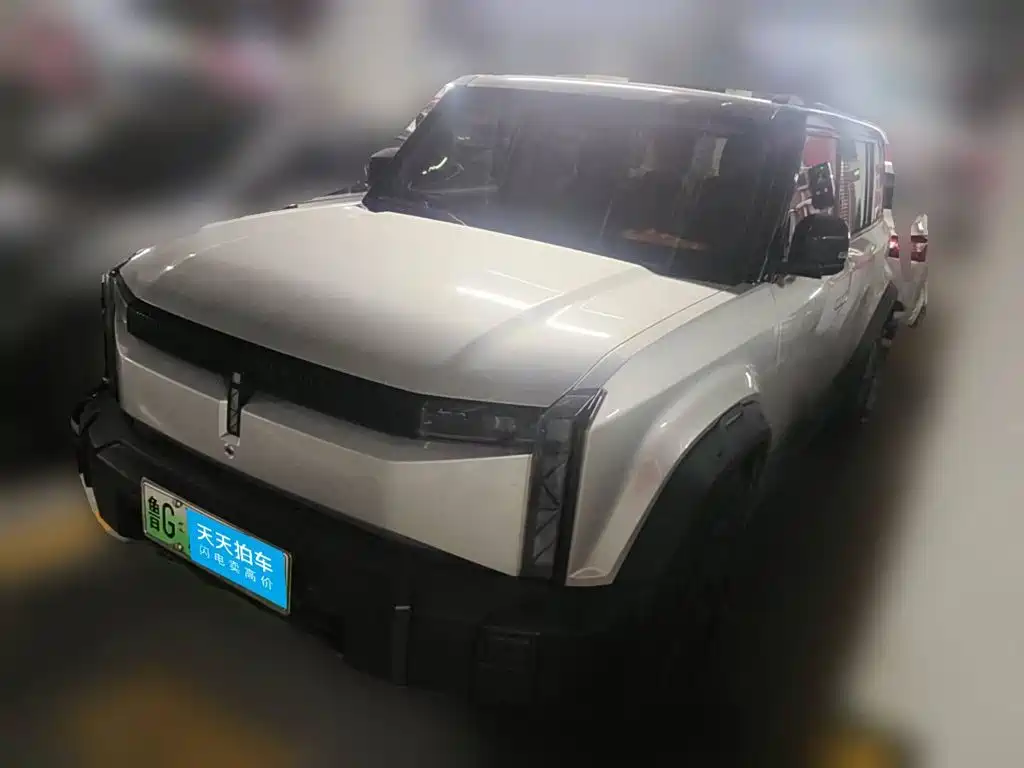
At a glance
- The iCAR 03 is a compact battery-electric SUV with listed 401 km, 472 km, and 501 km range variants.
- Buyers can select 2WD or AWD/4WD configurations according to range, traction, and fleet-use priorities.
- Standard, Advanced, Long Range, Joy Wave, Smart Wave, Smart, and Smart Driving names identify different equipment levels.
- The new-versus-used decision depends on battery condition, vehicle history, warranty, and documentation rather than appearance alone.
- Live export quotations should be compared by trim, condition, Incoterm, freight, duties, and destination compliance.
Why the iCAR 03 matters for export markets
For export markets, the iCAR 03 occupies the compact battery-electric SUV segment, where buyers want the practicality and raised seating of an SUV without moving into a large premium footprint. Its lineup spans 401 km, 472 km, and 501 km range-labelled versions, with two-wheel drive and all-wheel-drive configurations represented. That combination gives the model relevance where compact crossovers are easier to manage than full-size SUVs and where electric taxis, company fleets, and urban dealers need an efficient alternative to combustion vehicles. The range spread also lets importers match a battery variant to the duty cycle.
The model's export appeal is therefore not based on one universal configuration. A distributor serving dense cities may prioritize the shorter-range two-wheel-drive versions to minimize purchase outlay and energy use, while a regional buyer may favor an all-wheel-drive variant for extra traction or a higher range label. Overseas fleet operators can also assess whether its size suits parking, charging, and operational policies. The key is to translate those commercial requirements into a precise trim and destination-compliant specification before discussing a quotation, rather than treating every iCAR 03 as interchangeable.
Global EV demand also raises the importance of execution. Range labels originating from one test regime should not be compared directly with figures quoted under another regime, and charging access, local electricity practices, climate, and route profiles can alter real-world results. An overseas buyer should ask for the applicable test standard, charging interface and rates, battery warranty, and service arrangements. Those checks matter more than badge value because they determine whether the 03 can be registered, used economically, and supported after delivery. They also affect fleet residual value and customer confidence.
- 401–501 km listed range family.
- 2WD and AWD/4WD options.
- Charging and compliance shape export fit.
Model range, trims and powertrain variants: how the lineup is structured and how to choose
The iCAR 03 range is organized by range label, drive layout, and equipment tier. The 401 km versions are 2WD Standard or Standard Advanced. The 501 km family includes 2WD Long Range, Joy Wave and Smart Wave editions, while AWD/4WD long-range versions appear in 472 km and 501 km forms, including Smart and Smart Driving designations. In practical terms, the buyer first chooses between two-wheel drive and a powered alternative, then decides whether a standard, advanced, long-range, or smart equipment package is worth the additional cost.
Two-wheel-drive models are the simpler choice for paved, urban, or fleet use where efficiency and procurement cost are priorities. AWD/4WD versions add a traction-oriented dimension and should be considered where wet roads, gradients, snow, or mixed surfaces are routine. The 472 km and 501 km AWD labels demonstrate that the all-wheel-drive family is not tied to a single advertised range. Buyers should still verify motor outputs, tyre specification, ground clearance, and axle or cooling differences for the exact listing, because those details affect purchase suitability and operating cost.
Equipment names are a starting point, not a substitute for a build sheet. Standard, Advanced, Joy Wave, Smart Wave, Smart, and Smart Driving labels may affect infotainment, driver assistance, comfort equipment, and exterior details, but translated brochure wording can obscure what is standard or optional in an export unit. Ask the seller for a dated specification sheet covering battery capacity, motor rating, charging, dimensions, equipment, paint, and warranty. Without it, two vehicles carrying the same range label may not be commercially equivalent.
- 401 km: 2WD Standard variants.
- 501 km: 2WD and AWD/4WD trims.
- 472 km: AWD long-range variants.
New vs used iCAR 03: how export inventory is structured and how buyers choose
Export inventory for the iCAR 03 is best understood as individual vehicles defined by condition, model year, trim, drivetrain, range version, mileage where applicable, and visible options. Factory-new units offer the clearest relationship between advertised specification and delivered condition, with an unbroken delivery history from the supplier. For an importer, that reduces uncertainty around wear, battery history, and prior use, although it does not remove the need for pre-shipment inspection, document checks, or destination approval. A listing should therefore be treated as a vehicle-level offer, not a generic model campaign.
A used iCAR 03 can suit a buyer seeking lower acquisition cost, a particular former-fleet configuration, or an early demonstration vehicle. The discount is only meaningful after accounting for battery state of health, rapid-charge history, accident repairs, software updates, remaining warranty, and the availability of original documentation. Inspect high-voltage components and charging function where possible, request service and battery records, and verify that any claimed range is supported by a usable health report. Cosmetic condition alone is a weak proxy for long-term EV value and can hide expensive future repair or downtime risk.
Neither new nor used automatically produces the better business case. A high-utilization fleet that values standardized warranty administration may prefer factory-new vehicles, while a cautious buyer with charging expertise may accept used stock to reduce upfront exposure. A practical approach is to separate immediate transport demand from replacement-stock planning: source a small pilot first if the model is new to the local fleet, then use actual energy use, availability, and maintenance feedback to refine the next order. Always confirm the condition filter and unit details in the live inventory before proceeding.
- New units simplify condition checks.
- Used units require battery evidence.
- Pilot batches reduce market risk.
How export pricing works: the factors behind a live listing price, and how to read one
An iCAR 03 export price is a negotiated outcome, not a permanent list price for the nameplate. The starting point reflects trim and feature level, the 401 km, 472 km, or 501 km range variant, two-wheel drive versus AWD/4WD, model year, production specification, mileage and condition for used vehicles, and any market-specific options. Currency movements also alter the manufacturer's or exporter's local-currency cost. Freight, marine insurance, terminal handling, export documentation, and the selected Incoterm then determine how much of those logistics costs are embedded in the quoted figure.
To read a live listing correctly, first confirm which exact vehicle is being offered and whether the displayed price applies to one unit, a mixed shipment, or another commercial structure. Check the named trim and range, drive layout, production year, condition, options, and VIN or stock reference. Then identify the Incoterm and what is included: vehicle preparation, inland transport in China, export clearance, loading, ocean freight, insurance, destination charges, duties, and taxes should each be visible rather than assumed. Treat any quote as valid only for the stated scope and validity period.
The best comparison is a landed-cost worksheet with identical columns for every offer. Normalize the specification, currency, Incoterm, payment timing, warranty scope, and delivery point, then add destination charges excluded by the seller. Ask for a written pro forma invoice separating vehicle price from logistics and naming the customs-clearance party. Use live listings for the current per-unit reference and the RFQ channel for binding terms; do not infer a durable price band from one entry. Exact price, MOQ, and availability for each vehicle are shown in live inventory and confirmed in the RFQ.
- Specification sets the vehicle baseline.
- Incoterm allocates logistics costs.
- Live listings anchor current comparisons.
MOQ, ordering and payment: single units vs consolidating a container
MOQ means the smallest sale quantity a seller will accept for the vehicle and shipment arrangement, not an inherent property of the iCAR 03. Some live offers may support a single-vehicle inquiry, while other sellers may require a batch or a full container. Read the MOQ attached to each listing and confirm it in writing before placing funds, because the same model can be offered under different commercial terms. A single-unit purchase can be convenient for testing or a small fleet, but it may leave the buyer paying more per unit in freight and fixed charges.
Consolidating several compatible iCAR 03 units can improve freight efficiency and simplify deployment, but it creates inventory and allocation risk. Wholesale buyers should agree the model, trim, drivetrain, colour, production specification, and delivery sequence in advance, and designate which party approves the final units. Inspect representative vehicles rather than relying only on photographs, and make the loading plan conditional on those checks. Mixed cargo can broaden the economics of a consolidated shipment, yet every vehicle still needs its own VIN, matching paperwork, and clear handover record.
The ordering workflow should run from specification lock to vehicle allocation, contract, payment, inspection, and release for shipment. Verify the seller's legal entity, invoice issuer, bank-account beneficiary, refund terms, and ownership of the units; these details should be consistent across the pro forma invoice and communication. State the deposit, balance milestone, documentary requirements, inspection standard, and Incoterm in the contract. Do not treat a chat message or listing image as a substitute for a signed purchase agreement and shipment-release document. For larger orders, use a formal nomination and approval process.
- MOQ is seller- and offer-specific.
- Consolidation improves freight efficiency.
- Contract milestones control payment.
Shipping, homologation and market compliance caveats: LHD/RHD and import rules by country
Steering configuration is an early sourcing check. Vehicles prepared for different markets may be left-hand drive or right-hand drive, and the nameplate alone does not confirm availability, conversion status, or local suitability. Ask for the steering-wheel side, instrument display, lighting, charging connector, and VIN before committing. For right-hand-drive markets, confirm whether the vehicle is factory-configured or converted, whether the conversion is documented, and whether local authorities accept it. Local safety and registration rules remain controlling even for a new vehicle, and a conversion can affect warranty treatment, homologation, parts supply, and residual value.
Import compliance must be assessed country by country. Depending on the destination, the buyer may face type approval, VIN and manufacturer documentation, customs valuation, duty or VAT, local inspection, cybersecurity or software rules, and incentive eligibility for battery-electric vehicles. Electric status does not guarantee tariff preference or subsidy access. Obtain a written local compliance assessment from an experienced customs adviser or homologation specialist, and confirm that the exact motor, battery, software, and equipment configuration can be registered without modification. This review should happen before final vehicle allocation.
Transport planning combines regulation with practical cargo control. Electric vehicles may require battery-specific documentation, handling restrictions, charging during inspection, and secure stowage arrangements; the exact requirements depend on the carrier and route. Because dimensions and weight must be confirmed for the selected unit, request them before booking equipment. Build in time for pre-shipment inspection, document correction, export clearance, port handling, and sailing, and define who bears delay and demurrage risk in the Incoterm. Thorough origin inspection is cheaper than discovering a mismatch after cargo leaves China.
- Confirm steering before allocation.
- Review rules for the destination.
- Plan battery-compliant transport.
Who should buy the 03 — and who should pick a different vehicle
The 03 is a strong candidate for urban and suburban dealers, ride-hailing or company fleets, and mobility operators that want a compact electric SUV with a choice of range and drivetrain labels. Two-wheel-drive versions can suit fleets whose routes are predictable and whose charging depots are controlled. AWD/4WD variants make more sense for operators covering steeper, wetter, or less consistent roads. Buyers should also assess carrying capacity, loading access, and passenger-vehicle utility against their duty cycle before treating a headline range figure as the deciding specification. A pilot fleet can provide better utilization data than assumptions.
It is a weaker choice where charging is unreliable, routes routinely exceed the usable range, or vehicles must operate in extreme cold without adequate thermal management. Buyers who cannot obtain local homologation, warranty support, or reasonably priced spare parts should not proceed on vehicle price alone. The compact SUV format may also be insufficient for unusually heavy loads or specialist equipment, particularly where towing limits and payload certification matter. Those users should compare a larger or purpose-built EV rather than overloading a passenger vehicle, and should check exact certified limits rather than inferring them.
The right decision should be based on total operating cost and residual risk, not only the export invoice. Include energy, charging equipment, insurance, maintenance, tyres, software support, depreciation, and expected downtime, then test sensitivity against realistic routes and local electricity conditions. Fleet managers should also establish maintenance intervals, tyre replacement plans, battery diagnostics, and a parts-ordering route before scale-up. For a dealer, a manageable first batch may be more valuable than a large shipment of a trim the local market has not yet validated.
- Strong for compact urban fleets.
- AWD suits demanding roads.
- Weak without charging and support.
Main rivals and how the 03 compares
The BYD Atto 3, also known as the Yuan Plus in some markets, is a direct compact electric-SUV comparison. It generally benefits from a more visible international brand profile and broader familiarity among importers, which can simplify resale expectations and customer education. The iCAR 03 may offer a different trim and drivetrain mix, particularly for buyers seeking 472 km or 501 km AWD-labelled options. Compare the exact battery, charging, warranty, and service package rather than assume that the more familiar badge is automatically more suitable.
The Hyundai Kona Electric is another relevant rival for buyers who prioritize established after-sales support, brand confidence, and a mature international EV proposition. The iCAR 03 can be attractive where direct China sourcing, specification choice, or acquisition economics create an advantage, but those advantages must be weighed against parts access, technician familiarity, and residual-value confidence. Compare real insurance and service costs in the destination market, because a lower acquisition route loses much of its value if the vehicle cannot be supported efficiently after warranty work.
The GAC Aion V is a closer value-oriented Chinese-brand alternative, with its own range and drivetrain choices and a similar need for careful export due diligence. Against it, the 03's strongest distinction may be the particular combination of 401 km, 472 km, and 501 km labels and the breadth of Standard, Long Range, Joy Wave, Smart, and advanced naming. Compare dimensions, usable cargo space, charging, software, parts, and local homologation for equivalent vehicles. Test-cycle differences make headline range a weak final tie-breaker, so a structured evaluation is more reliable than badge reputation.
- BYD Atto 3: broader global familiarity.
- Hyundai Kona Electric: mature support.
- GAC Aion V: close value comparison.
Live iCAR 03 export inventory
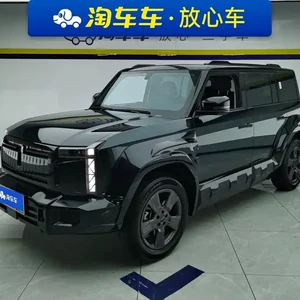
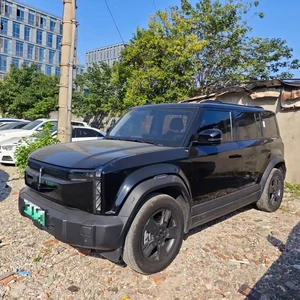
View all listings →Real units currently on ChinaCarDirect with per-unit asking prices and MOQ. Availability updates live from the catalogue.
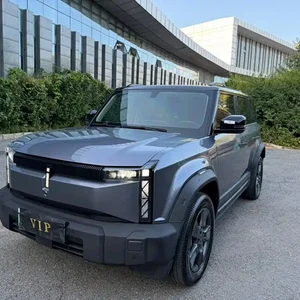
How to buy a iCAR 03 from China
-
1
Define the operating requirement
Record daily routes, charging access, load needs, terrain, climate, and the destination country. Use those requirements to choose a range variant, 2WD or AWD/4WD layout, and suitable equipment tier.
-
2
Build a focused trim shortlist
Compare the 401 km, 472 km, and 501 km families using the live iCAR 03 inventory. Shortlist the drive system and edition that match the fleet profile rather than including every available vehicle.
-
3
Verify each vehicle specification
Request a build sheet covering battery capacity, motor output, charging, dimensions, equipment, steering side, VIN, and warranty. Reconcile it with the exact trim name and photographs.
-
4
Normalize the export quotation
Ask for a written quote showing vehicle cost, currency, Incoterm, payment milestones, freight, insurance, documentation, and what remains payable at destination. Compare offers using the same landed-cost structure.
-
5
Complete destination compliance review
Provide the destination and proposed vehicle specification to a customs adviser or homologation specialist. Confirm registration, duty or VAT, incentive eligibility, software rules, and LHD/RHD acceptance before payment.
-
6
Lock the order and payment terms
Use a pro forma invoice and purchase agreement that identify the seller, beneficiary account, vehicle, MOQ, allocation method, refund conditions, inspection rights, warranty, and release process. Keep every payment milestone tied to a documented contractual event.
-
7
Approve, inspect, and ship
Complete or commission the agreed pre-shipment inspection, correct any document discrepancy, and issue formal shipment release. Confirm loading, insurance, carrier information, tracking contacts, and destination-arrival responsibilities.
03 vs rivals
| BYD Atto 3 | The BYD Atto 3, also marketed as the Yuan Plus in some countries, is a direct compact electric-SUV comparison with greater international brand familiarity. The iCAR 03 offers a distinctive trim and drivetrain choice, so buyers should compare exact battery, charging, warranty, and local support rather than rely on badge recognition. |
|---|---|
| Hyundai Kona Electric | The Hyundai Kona Electric competes for buyers who prioritize established after-sales support and residual-value confidence. The iCAR 03 may provide a China-sourcing and configuration advantage, but parts access, technician familiarity, and service costs must justify that acquisition benefit. |
| GAC Aion V | The GAC Aion V is a close value-oriented Chinese-brand alternative with overlapping range and drivetrain choices. The iCAR 03 distinguishes itself with its 401 km, 472 km, and 501 km family, so equivalent vehicles should be compared for dimensions, charging, software, homologation, and parts support. |
Frequently asked questions
How is iCAR 03 export pricing determined?
iCAR 03 export prices are built from trim, range version, drive layout, model year, condition, options, exchange rates, freight, insurance, and the selected Incoterm. A displayed figure may not include destination duties, VAT or GST, port charges, or final delivery. Check the live iCAR 03 listings for the current per-vehicle price, then request a written quote stating its inclusions and validity.
What powertrain and range options are available?
The iCAR 03 is a battery-electric compact SUV. Listed range families include 401 km 2WD versions, 501 km 2WD versions, and 472 km or 501 km AWD/4WD versions, depending on trim. Battery capacity, motor output, charging interface and rates, and the applicable test cycle should be confirmed in the live listing.
Is a new or used iCAR 03 better for an overseas buyer?
Factory-new vehicles provide the cleanest known condition and simpler warranty administration, while used vehicles can offer lower acquisition cost or a known fleet history. Used purchases demand battery state-of-health evidence, charging-function inspection, service records, accident checks, VIN verification, and confirmation of remaining warranty. The better choice depends on route intensity, charging control, and tolerance for repair risk.
How does MOQ work for an iCAR 03 order?
MOQ is the smallest quantity the seller will accept under a particular offer and can differ by listing and shipment plan. A buyer may request a single vehicle, a batch, or consolidated cargo where permitted, but must confirm the live listing's MOQ and the seller's allocation policy. Larger quantities should not be assumed to carry the same terms.
What factors determine iCAR 03 shipping time and cost?
Shipping cost and time depend on origin and destination ports, vehicle dimensions and weight, container or carrier plan, battery handling, documentation, customs clearance, congestion, sailing availability, and insurance. The Incoterm determines which party bears each cost and risk. Obtain a written freight quote and do not treat the listing price as an all-in delivered amount.
Can overseas buyers obtain spare parts for the iCAR 03?
Spare-part support must be checked for the exact export specification because parts codes, high-voltage service procedures, and warranty channels can differ by market. Before ordering, request a parts contact, diagnostic support route, common wear-item list, and expected cross-border delivery route. Availability of general EV components does not automatically mean every iCAR 03 component is readily supported locally.
Is a right-hand-drive iCAR 03 available for RHD markets?
Right-hand-drive availability is unit-specific and cannot be inferred from the model name. For an RHD market, ask the seller to confirm factory configuration or documented conversion, steering and lighting equipment, VIN, warranty treatment, and acceptance by local authorities. Check the live listing and obtain written confirmation before paying.
How do I order an iCAR 03 from China?
To buy an iCAR 03 from China, start with the live inventory, shortlist the range, drivetrain, and equipment version, and request a unit-level quotation. Confirm MOQ, Incoterm, payment milestones, document requirements, inspection rights, warranty, and shipping allocation in the pro forma invoice. After compliance approval and payment, complete pre-shipment inspection and formal release before loading.
Ready to source the iCAR 03?
Send your destination, preferred trim, quantity, and target Incoterm to ChinaCarDirect for a current iCAR 03 export quotation.
Request a quote