
iCAR V27 Export Buying Guide for Overseas Buyers
Compare iCAR V27 trims, range labels, export pricing, ordering, shipping and compliance, with practical guidance for overseas dealers and fleet buyers.
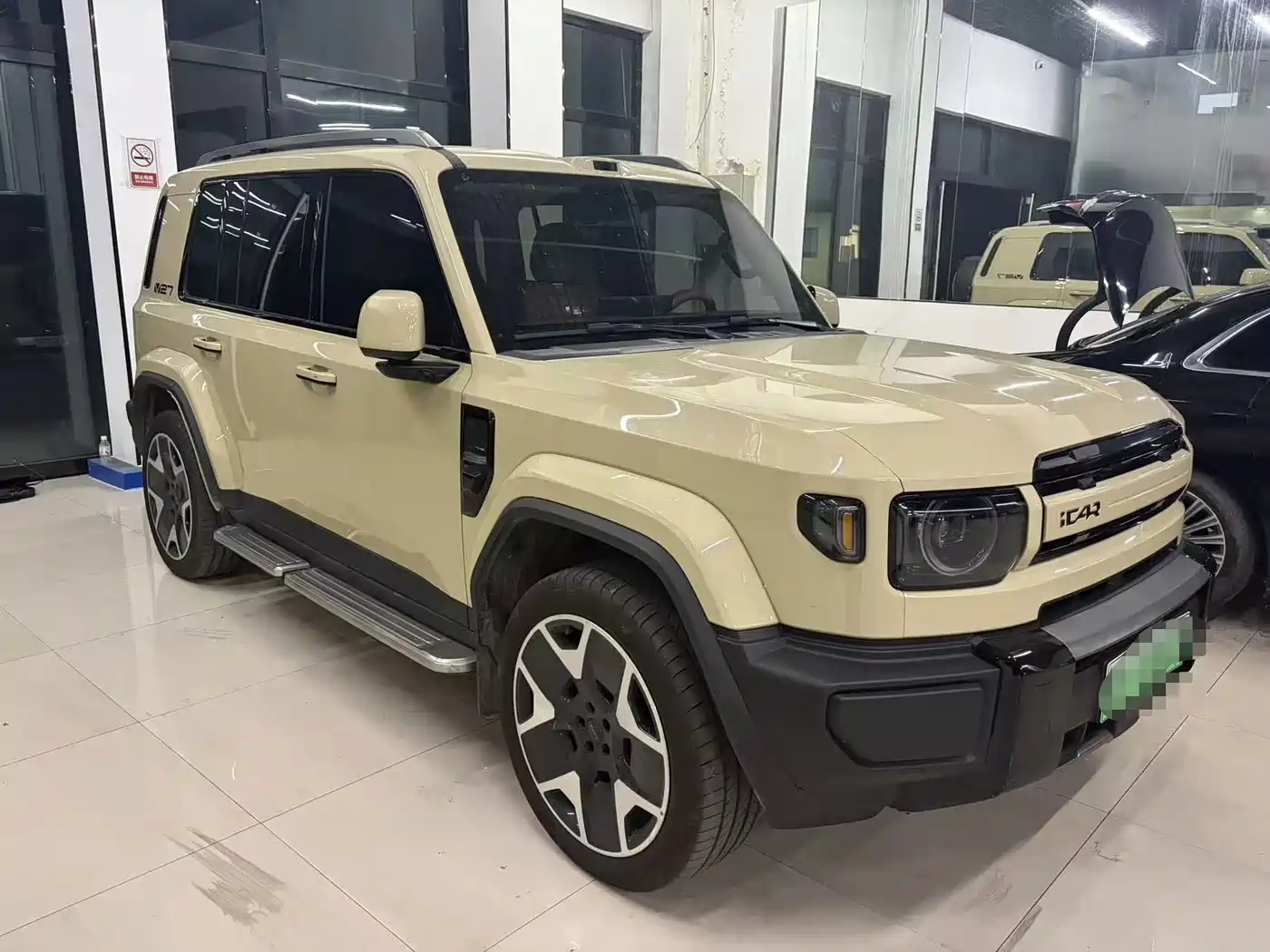
At a glance
- A compact electrified SUV positioned for dealers seeking differentiation from mainstream global brands.
- Named configurations include Model Base, LiDAR Edition and 200KM AWD Falcon 500.
- The 200KM trim designation needs test-cycle and energy-source confirmation before route planning.
- New vehicles simplify warranty planning, while used iCAR V27 purchases require battery and high-voltage inspections.
- Live export quotes should be compared using identical specifications, Incoterms and landed-cost assumptions.
Why the iCAR V27 matters for export markets
The iCAR V27 is a compact electrified SUV from a China-focused marque, and that positioning makes it interesting for overseas dealers seeking something more distinctive than a conventional combustion SUV. Its combination of a relatively manageable body concept, named technology-oriented trims and an available all-wheel-drive label can suit importers looking for a modern product in the competitive electric-SUV segment. For “iCAR V27 for export” buyers, the appeal is not simply novelty: it is the possibility of building a differentiated local range around a vehicle sourced directly from China without relying on a familiar global badge.
Interest is likely strongest with importers that understand Chinese new-energy vehicles and can support them properly after delivery. The V27’s LiDAR-branded edition may attract buyers interested in driver-assistance hardware, while the Falcon 500 designation identifies a more performance- or traction-oriented AWD configuration. Neither label proves that a particular assistance function will be legal, calibrated or commercially useful in the destination country. The sensible export case therefore rests on product-market fit, local charging access and credible after-sales support, not on the badge names alone. Buyers should also test demand with a small pilot before scaling orders.
The main commercial advantage is differentiation: a dealer can give mainstream electric-SUV shoppers a design and trim story that differs from the largest global brands. The main commercial risk is execution, because buyers will also ask about parts, software updates, insurance, financing and resale. An overseas operator with limited workshop capacity should investigate those issues before committing capital. Conversely, a dealer with strong EV expertise, direct supplier relationships and a clear route to homologation can turn the V27’s relative novelty into a useful competitive advantage rather than simply treating it as another low-cost import.
- Verify local parts and service support.
- Pilot before fleet-scale commitment.
- Confirm the range test cycle.
Model range, trims and powertrain variants: how the lineup is structured and how to choose
The visible iCAR V27 lineup is organized around Model Base, LiDAR Edition and 200KM AWD Falcon 500. Those names are useful for finding and comparing units, but they are not a substitute for a trim-by-trim equipment sheet. A listing should confirm whether a vehicle is the base specification, carries the LiDAR package, or is the AWD Falcon 500, and whether optional equipment or production changes apply. Because export inventory can include different production years and configurations, match the exact listing name rather than assuming every car with the same model badge is equivalent.
Range is the most sensitive specification for an export buyer, and the “200KM” text in the Falcon 500 trim name must be treated as a label rather than a planning figure. Confirm the applicable Chinese test cycle, whether the rating is battery-only, and whether the selected configuration is battery-electric or range-extended. Also obtain battery capacity, usable capacity, motor output, charging rates and curb weight from the live listing. Those figures determine real-world range, charging time, payload and freight impact; a nominal range badge alone cannot answer those questions for an importer.
Choose the trim by use case rather than by the most dramatic name. Model Base should be evaluated for fleet buyers who prioritize acquisition cost, standardization and simpler option logic, but essential equipment still needs to be confirmed. LiDAR Edition warrants a check of the actual sensor, software and functions included, including whether maps, language and calibration can be supported locally. Falcon 500 AWD may be preferable where traction matters, yet its efficiency, tyre cost and suitability for the buyer’s climate should be assessed against the exact specification for the intended operating cycle before ordering.
- Confirm the energy configuration.
- Verify LiDAR hardware and functions.
- Compare usable range and charging.
New vs used iCAR V27: how export inventory is structured and how buyers choose
Export inventory for the iCAR V27 is best understood as a changing mix of factory-new vehicles and, when available, previously registered cars. New vehicles generally offer the cleanest comparison because specification, paint, mileage and delivery history are easier to define. A used unit can suit a budget buyer, but condition becomes part of the product itself rather than just a line on the quotation. The current mix changes over time, so use the live listings rather than assuming that a particular vehicle category will always be available for export planning at the time of purchase.
For a used iCAR V27, mileage is only the first inspection point. Ask for battery state of health and warranty history where applicable, evidence of accident repair or flood exposure, high-voltage diagnostics, charging faults, and confirmation that the odometer and VIN match the documents. Also verify that software, assisted-driving functions, displays, cameras and charging equipment are complete and functional. These checks matter because a discounted used price can be offset by battery refurbishment, unresolved faults, missing parts or future software uncertainty that may emerge only after delivery in the importing market.
New and used vehicles should be compared on five-year total cost rather than on the advertised entry figure alone. For a fleet, factor residual assumptions, downtime, energy, maintenance, insurance and the cost of standardizing several configurations. For a dealer, consider warranty transfer, customer confidence and the time needed to move each unit. A mixed strategy can work: purchase new vehicles for the initial launch or high-visibility fleet, then consider used units for price-sensitive secondary markets only after a rigorous inspection and a clear understanding of their warranty position in that country.
- New: simpler warranty and specification checks.
- Used: inspect battery and high-voltage systems.
- Compare full operating-life cost.
How export pricing works: the factors behind a live listing price, and how to read one
This iCAR V27 export price guide starts with a principle: a live vehicle price is a configuration-specific seller quote, not a permanent market value. Year, exact trim, drivetrain, range or energy version, options, mileage, condition and production status can all change the amount. The currency exchange rate also affects the displayed figure. For “iCAR V27 wholesale” buyers, compare like with like and ask whether the quote includes export documentation or only the vehicle at the origin. The current binding amount must always be taken from the individual live listing for the exact unit.
When reading a live listing, check the vehicle name and trim, model year, range designation, drivetrain, exterior color, optional equipment, condition and VIN status before looking at the headline price. Confirm the quoted currency, whether taxes are included, and which Incoterm applies. Also establish whether the seller is offering a particular vehicle or asking for a broader wholesale discussion. A nominally cheaper unit with the wrong drive configuration, missing equipment or unsuitable documentation may cost more once it reaches the destination or passes inspection at the port or inspection stage before contracting.
The landed-cost comparison must add items that a listing may omit: international freight, marine insurance, origin handling, destination port charges, customs duties, VAT or sales tax, registration, compliance work, RHD conversion if required, and local delivery. Payment terms can also change the cash requirement even when the vehicle amount is unchanged. Request a written quotation tied to a VIN or exact listing, with validity and exclusions stated. That approach makes the iCAR V27 export price guide actionable without relying on a fixed figure that will quickly become outdated; request a formal, VIN-linked offer instead.
- Check currency, Incoterm, taxes and validity.
- Separate vehicle price from landed cost.
- Compare identical VIN-level specifications.
MOQ, ordering and payment: single units vs consolidating a container
There is no universal MOQ attached to the iCAR V27 name; ordering minimums belong to the individual seller, listing and transaction. A marketplace buyer should ask whether the selected listing can be purchased as a single vehicle, and whether any deposit, mixed-configuration or container-loading rules apply. If the seller requires more than one unit, clarify whether the threshold applies to one trim or to any V27 inventory. This distinction matters for test fleets and small importers as much as it does for high-volume wholesale programs or carefully structured trial orders before contracting.
A single-unit purchase is often the cleaner way to test demand, validate trim preferences and establish workshop procedures before a container commitment. A container order can improve freight planning and may give the buyer more negotiating leverage, but it introduces allocation, damage, payment and inventory risks. Mixed loads should be accepted only after the seller confirms each VIN, specification, battery documentation, keys, accessories and release status. Do not assume units shown together are identical; compare them line by line and define who bears the cost of a discrepancy or transport defect.
A sound ordering sequence starts with a written specification, followed by a pro forma invoice or contract that identifies the vehicle, price basis, Incoterm, payment milestones, inspection rights and document list. Before final balance payment, verify the VIN, exterior condition, mileage, charging function, warning lights, software presentation and included accessories, and confirm export eligibility and ownership. The buyer should also establish how the seller, freight forwarder and importer of record divide responsibilities. Any promise about parts, warranty or software support should be written into the agreement rather than treated as an informal assurance.
- Ask about single-unit ordering.
- Confirm any consolidation arrangements.
- Link final payment to inspection.
Shipping, homologation and market compliance caveats: LHD/RHD and import rules by country
Shipping an electric SUV requires more than booking a vessel. Confirm the carrier’s rules for new-energy vehicles, battery declarations, charging state, securing points, weather protection and vehicle inspection at origin. Container versus roll-on/roll-off availability depends on the port and carrier, so ask the freight forwarder to recommend the method that fits the actual loading dimensions and destination rules. The booking should reference the correct VINs and trim specifications, and all units should be photographed at loading. Insurance should cover the agreed risk from origin handling through delivery, not merely the sea leg.
Most vehicles exported from China are configured for left-hand drive, but an importer must never infer the steering configuration from the origin or a trim name. Right-hand-drive availability should be confirmed factory-first; otherwise, a conversion must be assessed for steering, pedals, controls, indicators, display functions, charging equipment and local type approval. Conversion adds cost, testing and warranty questions, and some assistance features may require recalibration. A buyer needing RHD should place that requirement in the written order and reject delivery until an authorized inspection confirms the completed configuration before release.
Market compliance is vehicle-specific and cannot be solved by the China export document alone. Depending on the destination, the importer may need UNECE or national type approval, emissions and noise documentation where applicable, battery safety and material records, charging conformity, cybersecurity and software-data rules, insurance, registration and proof of local conformity. Requirements for used vehicles can differ from those for factory-new cars. Name a qualified importer of record early, obtain a destination-specific compliance checklist, and make homologation a condition of the contract rather than assuming that Chinese-market equipment can be registered unchanged.
- Confirm factory RHD availability.
- Request battery transport documents.
- Name the importer of record.
Who should buy the V27 — and who should pick a different vehicle
The iCAR V27 is a strong candidate for an overseas dealer that wants a distinctive compact SUV, already understands Chinese EV platforms, and can arrange proper charging, servicing and parts support. It can also suit a fleet buyer running controlled routes with dependable charging, provided the operator models real-world range, residual value and workshop capability before scaling. The strongest use case is a thoughtfully supported launch rather than a speculative high-volume order. Buyers who value a familiar badge and extensive local service network may obtain less operational risk from a more established rival.
The V27 is a weaker fit for a buyer whose core requirement is minimal disruption: guaranteed mature residual values, abundant service locations, effortless parts availability, long-established financing, or an immediately available RHD conversion in a tightly regulated market. It may also be unsuitable where cold-weather range, heavy towing, rough-road durability or high-load operations dominate and the specific configuration has not been validated. The LiDAR and AWD labels do not resolve those questions. Before ordering, require written confirmation of the use case, relevant local approvals and a credible support plan from the supplier.
A sensible buyer’s test is operational, not emotional. Build a shortlist of the V27 and two or three segment alternatives, then compare the same route, charging assumptions, load, software features and local compliance work. Include downtime, dealer training, parts lead time, insurance, financing and resale in the total-cost model. If the V27 offers the desired design and configuration but the support network is not ready, delay the order or begin with a limited pilot. If a rival removes most of the service risk, choosing that rival may be more rational than accepting an attractive trim discount.
Main rivals and how the V27 compares
The closest international comparison points for the iCAR V27 are the BYD Atto 3 (marketed as the Yuan Plus in some countries), the Leapmotor C10 and the XPeng G6, although local specifications and launch status vary. The Atto 3 benefits from greater brand recognition and a longer-established international presence. The C10 competes through value-oriented positioning and, in relevant markets, electrified powertrain choices. The G6 is generally positioned as a more technology- and performance-focused premium compact SUV. The V27’s counterargument is a distinctive design, AWD and LiDAR-led trim differentiation, not automatic superiority in service coverage.
Against the Atto 3, the V27 may appeal more to buyers seeking a fresher visual identity and a different feature hierarchy, while the Atto 3 may reduce uncertainty for customers and workshop staff. Against the C10, compare the exact energy configuration, usable capacity, charging, warranty and equipment rather than assuming similarly positioned vehicles are equivalent. The G6 is a more natural fit for buyers prioritizing premium cabin technology and performance, while the V27 may be considered for a more distinctive, value-conscious offering. Financing, insurance and residual-value evidence can matter as much as the vehicle itself.
A useful head-to-head review uses the destination’s actual rules and the live specification of each vehicle, not brochure summaries from different markets. Check usable range, charging access, payload, safety and assistance equipment, software language, parts support, warranty and registration requirements. Then ask each supplier for a comparable delivered quotation under the same Incoterm and compare the total ownership case. The V27 can be the stronger choice for a dealer seeking differentiation, but it should win on a verified package, lifecycle cost and support plan—not simply on a new trim label or a lower headline vehicle amount.
Live iCAR V27 export inventory
View all listings →Real units currently on ChinaCarDirect with per-unit asking prices and MOQ. Availability updates live from the catalogue.
How to buy a iCAR V27 from China
-
1
Define the market and operating requirement
Set the destination, RHD requirement, route profile, payload and charging assumptions. Decide whether the AWD Falcon 500 or another configuration genuinely fits the use case.
-
2
Shortlist the live iCAR V27 inventory
Compare vehicles by exact trim, model year, condition, range designation and VIN. Use each live listing for its current vehicle amount and availability.
-
3
Buy an iCAR V27 from China with a verified specification
Request the energy version, battery and charging data, dimensions, equipment list, warranty terms and relevant export documents for the selected unit.
-
4
Request a VIN-linked landed quotation
Ask the seller to state the currency, Incoterm, payment schedule, freight inclusions and all excluded duties, taxes, compliance and delivery charges.
-
5
Complete destination compliance checks
Appoint the importer of record and obtain a destination-specific checklist covering type approval, battery records, charging, software, insurance and registration.
-
6
Inspect before final payment
Check the VIN, exterior, mileage, warning lights, charging function, software, options and accessories. Make final payment conditional on inspection and correct export documents.
-
7
Consolidate freight and monitor delivery
Confirm who can combine eligible units into one shipment, secure the loading method, record vehicle condition and maintain communication through customs and destination delivery.
V27 vs rivals
| BYD Atto 3 / Yuan Plus | The Atto 3 offers greater international brand familiarity and a more established support perception, which may reduce customer uncertainty. The iCAR V27 is the more distinctive option for a dealer seeking different design and trim positioning. |
|---|---|
| Leapmotor C10 | The C10 is a value-oriented alternative whose energy, range, charging and equipment should be compared directly with the selected V27 configuration. It may appeal where affordability and available powertrain choices dominate. |
| XPeng G6 | The G6 is generally a stronger fit for buyers prioritizing a more premium, technology- and performance-focused offering. The V27 may be considered by dealers seeking a differentiated compact SUV with AWD and LiDAR-led trims. |
Frequently asked questions
How is the iCAR V27 export price determined?
The amount is determined per listing by year, trim, energy and range version, drivetrain, options, condition, exchange rate, freight, insurance, taxes and Incoterm. The live iCAR V27 inventory provides the current vehicle price, while a written landed quotation is needed for the full delivered cost.
What powertrain and range specifications should I check?
The 200KM designation appears in the 200KM AWD Falcon 500 trim name, but it should not be used for route planning before the test cycle and operating mode are confirmed. Battery capacity, usable range, motor output and charging rates must be obtained from the exact live listing.
Should I choose a new or used iCAR V27?
New vehicles generally provide better specification consistency, clearer warranty terms and lower uncertainty about history. A used V27 can suit a price-sensitive buyer, but battery health, high-voltage condition, accident history, odometer accuracy and warranty status require careful verification.
What is the MOQ for iCAR V27 wholesale orders?
MOQ is set by the individual seller and listing rather than by the model name. Ask whether the chosen listing accepts a single unit and whether the requirement applies to one trim; larger container orders should specify every VIN, configuration and allocation condition.
How long does shipping take and what affects the cost?
Transit time and cost depend on origin and destination ports, carrier schedule, container or roll-on/roll-off availability, vehicle dimensions, insurance, handling charges and customs requirements. Freight forwarders should quote the selected units using their VINs, exact specifications and intended Incoterm.
How are spare parts supplied for the iCAR V27?
Request a parts quotation using the VIN, model year and build date, and confirm whether supply comes through iCAR, an authorized channel or another source. Buyers should also establish stock levels, lead times, software compatibility and the cost of international or local delivery before launch.
Is a right-hand-drive iCAR V27 available for export?
RHD availability must be confirmed for the production batch and destination rather than inferred from the Chinese listing. If factory RHD is unavailable, assess the cost, warranty, calibration and local approval requirements of a professional conversion.
How do I order an iCAR V27 from China?
Start with the live V27 listings or submit an RFQ with the destination, configuration, quantity, RHD needs and delivery requirements. The next steps are a VIN-level specification, written landed quotation, contract, inspection, payment, export documentation and freight booking.
Ready to source the iCAR V27?
Send ChinaCarDirect your destination, required configuration and target quantity for a current iCAR V27 export quotation.
Request a quote