
IM Motors Ls7 Export Buying Guide for Dealers and Fleets
IM Motors Ls7 export guide for overseas dealers and fleet buyers, covering trims, battery choices, pricing logic, MOQ, shipping, compliance and rivals.
At a glance
- The Ls7 is a large premium battery-electric SUV with 90 kWh and 100 kWh Pro battery options.
- Rear-wheel-drive and all-wheel-drive variants serve different traction and packaging needs.
- Buyers should compare a verified build sheet, certified range, charging details and destination-market approval.
- Live export prices vary with year, trim, condition, freight, currency and Incoterm, so compare landed-cost quotes.
- New and used examples suit different fleet and pilot strategies, with live inventory showing current unit terms.
Why the IM Motors Ls7 matters for export markets
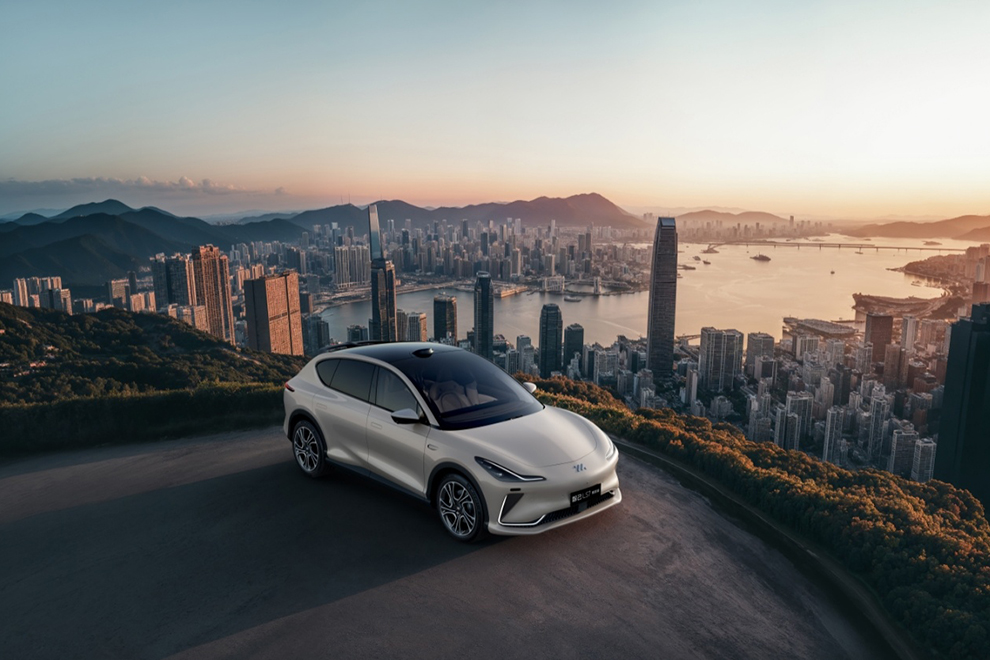
The IM Motors Ls7 sits in the large premium electric SUV segment, pairing family-scale packaging with a battery-only drivetrain and a technology-focused cabin. It appeals to overseas buyers who need more room and comfort than a mid-size electric crossover but want to avoid the fuel expense of a large combustion-engine SUV. For dealers, the Ls7 can work as a flagship EV proposition, bringing a distinctive Chinese marque and visible in-cabin technology to a segment otherwise dominated by familiar premium nameplates. It especially suits premium retail and fleet buyers entering the Chinese EV market.
For an export programme, the strongest case is a demonstration or premium retail channel: executive transport, hotel and VIP fleets, and customers who value rear-seat space and a high-tech cockpit. The vehicle’s China-built identity is central to this proposition, offering an alternative to established European and Japanese brands. That advantage does not automatically create broad demand, however. Brand awareness, parts support, residual values and confidence in local charging can matter more than the on-paper specification in certain markets. Buyers should assess those ownership realities before committing to a sizeable import programme.
Buyers should therefore treat the Ls7 as a market-fit decision, not simply a specification comparison. A capable distributor can build awareness, publish charging and ownership information, and prepare service support; a weak network can turn an attractive premium SUV into a difficult resale. The most credible purchase starts with a confirmed homologation path, realistic aftersales coverage and a landed-cost model. Where those conditions are weak, a more familiar premium electric SUV may be easier to sell and support at scale, particularly when the importer is building its first electric-SUV channel.
- Premium EV retail and VIP fleets.
- Homologation and aftersales are critical.
- Flagship product, not bulk fleet model.
Model range, trims and powertrain variants: how the lineup is structured and how to choose
The Ls7 line-up is structured around battery capacity, drive configuration and edition rather than one universal specification. Trim naming includes 90 kWh Elite AWD and RWD variants, a 100 kWh Pro AWD edition, and a Refreshed Edition Ultra. For an export buyer, that structure is useful because it separates the core questions of range packaging, traction and equipment. It also means that two vehicles carrying the Ls7 name should not be assumed to have identical hardware, software or market compliance. Confirm each combination against the seller’s build sheet and homologation file.
The 90 kWh versions form the core choice for buyers who need a large BEV but do not require the larger battery option. The naming indicates both rear-wheel-drive and all-wheel-drive versions, allowing the buyer to choose between a simpler drive layout and the traction expected from a dual-motor AWD model. The 100 kWh Pro AWD edition is aimed at the opposite priority: buyers willing to carry the larger pack to place range and performance first. Actual usable range still depends on homologation, speed, temperature, charging habits and vehicle load.
The refreshed or higher equipment labels should be assessed as complete configurations, not cosmetic badges. Ask for the model-year build sheet, motor output, rated and tested range, charging specification, suspension equipment, cabin layout and standard equipment list. Then compare those documents with the proposed use: urban executive transport, long-distance route planning, cold-climate operation or a mixed fleet. A higher-spec unit can be unnecessary for some buyers, while the wrong RWD or AWD choice can complicate insurance, charging planning or resale in the destination market if the documents are not reconciled.
- Compare RWD and AWD Elite.
- 100 kWh Pro prioritizes battery capacity.
- Verify every refreshed build sheet.
New vs used IM Motors Ls7: how export inventory is structured and how buyers choose
New and used Ls7 vehicles should be evaluated as different procurement routes, not simply cheaper and more expensive versions of the same car. A new unit generally offers a clearer chain from factory specification to delivery, consistent warranty conditions and less uncertainty over wear. It is usually easier to standardise a fleet when paint, trim, battery and drive configuration can be matched across units. For a first-time importer, that consistency can be more valuable than a small saving on a used example, especially when preparing vehicles for reliable commercial service.
A used Ls7 can make sense where acquisition cost matters more than factory-new consistency, provided the buyer accepts more technical and cosmetic risk. Mileage is only the first check: battery health, state-of-charge history, accident repair, tyre condition, cabin wear and software updates all affect value. Request a battery state-of-health report where available, a service record, the production date, a VIN and photographs of the underbody, wheels and charge port. Any remaining factory warranty should be confirmed as transferable and valid in the destination country, rather than assumed from the listing.
Live export inventory can contain examples from different production periods, sale events or ownership routes, so the soundest method is to compare each unit rather than infer condition from the model name. ChinaCarDirect’s Ls7 listings are the place to verify the current mix of year, trim, mileage, condition and seller terms, and to request the exact figures relevant to a proposed purchase. For a fleet, a mixed approach may work well: standardized new vehicles for predictable uptime and carefully inspected used vehicles for non-critical roles where lower entry cost is acceptable.
- New units favour fleet consistency.
- Used units require battery and history checks.
- Match condition to vehicle criticality.
How export pricing works: the factors behind a live listing price, and how to read one
A live Ls7 export price is not a fixed market-wide rate. It reflects a combination of model year, trim, battery and drivetrain specification, mileage or condition, options, seller terms and the currency in which the vehicle is offered. Freight, insurance, export handling, destination charges and the selected Incoterm can add cost after the vehicle price is agreed. A buyer comparing vehicles from different countries should therefore normalise quotes to the same currency and delivery basis before judging which offer is cheaper. The vehicle line is only one part of landed cost.
Read each live listing as a set of commercial variables rather than a headline number. Confirm the year, exact trim, battery version, drive layout, condition, mileage, photos, VIN availability, seller identity and what the stated price includes. Check whether export paperwork, domestic transport, loading, marine insurance or destination delivery are excluded. Also establish how long the quote remains valid and whether a deposit, payment timing or a change in exchange rate could alter the final payable amount. The same vehicle can therefore produce different economics under two Incoterms for the buyer.
Use a written, like-for-like quote that separates the vehicle, export preparation, transport and import charges. Ask the seller to confirm the SKU, build description, price validity, payment milestones, document set, inspection rights and delivery term. Then ask a local freight forwarder or customs broker to translate that quote into a landed cost, including taxes and duties that may apply in the destination country. Use the live listings as the starting point, then request an RFQ for the unit or specification. This avoids treating a catalogue figure as an import price.
- Compare currency and Incoterm.
- Separate vehicle and landed costs.
- Request written unit-specific terms.
MOQ, ordering and payment: single units vs consolidating a container
MOQ is a commercial term that should be confirmed on the selected live listing, not inferred from the model name. For a single Ls7, ask whether the seller will release one vehicle and whether the quoted price is vehicle-only or includes export services. A one-unit order can suit an importer testing demand, a VIP customer or a pilot fleet, provided the buyer accepts that unit-car freight and compliance costs can be higher. Do not assume that every trim, colour or production period has the same release terms. Ask in writing for that vehicle.
Container consolidation can improve freight efficiency when several Ls7 units share the same route and commercial terms. Buyers can combine standard trims, request matched configurations for fleet consistency, or place a larger order with a specialist importer. However, savings are not automatic: dimensional packaging, weight distribution, loading rules, port charges and a mix of delivery dates all affect the result. A full container also creates concentration risk if one vehicle is delayed or fails inspection. For smaller quantities, consolidated or shared loading may be more practical than forcing a full container.
The ordering sequence is enquiry, written quotation, pro forma invoice, deposit, production or vehicle verification, inspection, balance payment and release against agreed documents. The exact sequence can differ between a ready vehicle and a factory-order unit, so the sales contract should state milestones, inspection rights, cancellation terms and what happens if the vehicle does not match the agreed build. For larger transactions, a letter of credit may offer control, while other buyers may use a verified bank transfer. Confirm that the payment beneficiary matches the contracting seller and retain supporting records.
- Confirm MOQ per listing.
- Single units suit pilot buyers.
- Link payment to inspection milestones.
Shipping, homologation and market compliance caveats: LHD/RHD and import rules by country
Import rules are determined by the destination country, not by the vehicle’s Chinese origin alone. Before committing, ask an importer or local compliance specialist to confirm whether the exact Ls7 configuration may be registered, what emissions or battery documentation is accepted, and whether duties, taxes, quotas or local-content rules affect an electric vehicle. Type approval, cybersecurity and software-update requirements can also change over time. A vehicle approved for one market should not be assumed compliant in another, even when its mechanical specification is identical for the intended sales channel.
Steering configuration is another early filter. Vehicles prepared for left-hand-drive and right-hand-drive markets differ in steering hardware, controls, warning systems and sometimes documentation; an RHD conversion in China does not automatically make the car road-legal elsewhere. Ask for the actual configuration, VIN, photographs and approval records rather than assuming availability from the model name. Fleet buyers should also check lighting, indicators, mirrors, seat-belt reminders, radio connectivity, language, charging plugs and any driver-assistance functions against local rules. Local data and cybersecurity obligations may matter even when basic roadworthiness is satisfied locally.
Transport planning for a battery-electric SUV is not simply booking a covered carrier. The carrier must be approved for the battery load, the vehicle and battery documents must match, and charging or state-of-charge arrangements may be required at origin and during transit. Obtain a freight quote that states the route, vessel or trailer type, cargo insurance, loading assumptions and any excluded destination charges. Also arrange charging at the port, emergency procedures for a damaged vehicle and compliant onward transport. These controls reduce delay risk but do not replace the importer’s local registration obligations.
- Approve configuration before shipment.
- Verify steering side and equipment.
- Use compliant battery transport.
Who should buy the Ls7 — and who should pick a different vehicle
The Ls7 fits buyers who want a premium, large BEV with strong visual presence, a technology-rich cabin and enough space for executive or family transport. It is especially relevant to a dealer building a differentiated electric-SUV category, a company piloting executive vehicles, or a fleet operator whose drivers have reliable charging access and whose routes suit electric range. It can also serve as a flagship demonstrator that gives customers a premium Chinese alternative. These use cases reward the Ls7’s size and equipment without requiring maximum fleet uptime from every unit.
It is a weaker choice for budget-driven fleet procurement, drivers working long distances without dependable charging, or operators prioritising a ubiquitous service network and conservative residual values over technology. Heavy-duty towing or severe off-road use should not be assumed from the vehicle’s size; check the verified limits and local approvals. An importer may prefer an established luxury marque if its customers place more weight on badge recognition, finance, servicing and resale predictability. Similarly, a plug-in hybrid may be more practical where charging coverage is uneven but operating costs must fall.
A buying decision compares total operating and ownership economics rather than purchase price alone. Model charging time and energy consumption against the duty cycle, then add insurance, taxation, maintenance, depreciation and the cost of battery or software work outside the warranty network. For a pilot order, specify the evaluation criteria in advance: uptime, driver satisfaction, charging reliability, service response and residual-market feedback. If the Ls7 clears those tests in a representative market, it can justify a larger programme; if not, switching trim or model is less costly than carrying an unsuitable EV.
- Best for premium and executive fleets.
- Charging and route planning matter.
- Compare residuals and ownership economics.
Main rivals and how the Ls7 compares
The closest China-origin alternative is the NIO ES8, another full-size premium battery-electric SUV aimed at executive and family transport. The two can be compared directly on seating packaging, ride and equipment, battery strategy, software, homologation and service support. NIO’s ecosystem and battery-swap proposition in markets where it is available may influence the decision, while Ls7 buyers should assess IM Motors’ local coverage and parts pathway. Neither brand’s reputation transfers automatically, so a distributor’s demonstrated aftersales capability matters as much as the vehicle specification. Compare both carefully on landed operating cost.
The XPeng G9 is a closer premium-technology alternative in the electric SUV market, but it sits in a different size and positioning envelope. Buyers choosing between it and the Ls7 should compare cargo and passenger space, seat comfort, battery and drive options, driver-assistance functions and the importer’s ability to update vehicles. The G9 may appeal where a five-seat executive crossover is more appropriate; the Ls7 offers a larger package for buyers prioritising cabin and cargo volume. Local certification and software availability should be checked for both, without assuming China-market features will transfer.
The Mercedes-Benz EQE SUV provides an established-brand benchmark for buyers who want a premium electric SUV with a luxury network. Its badge, finance proposition and resale familiarity can carry more weight in some markets, but acquisition and ownership economics may be less favourable for importers seeking a Chinese-platform alternative. The Ls7 offers a different balance of size, technology and export value, but carries dependence on IM Motors recognition and local support. The comparison is a shortlist of homologated vehicles tested on the same routes, with a like-for-like landed-cost and service plan.
- NIO ES8: close Chinese BEV peer.
- XPeng G9: different packaging.
- EQE SUV: established luxury benchmark.
Live IM Motors Ls7 export inventory
View all listings →Real units currently on ChinaCarDirect with per-unit asking prices and MOQ. Availability updates live from the catalogue.
How to buy a IM Motors Ls7 from China
-
1
Define the market and duty cycle
Identify the destination country, expected route length, charging access, passenger needs and aftersales coverage. This determines which battery, drive configuration and homologation route are relevant.
-
2
Shortlist the exact live vehicle
Review the current IM Motors Ls7 listings by trim, battery, drivetrain, condition and year. Open the individual unit rather than relying on the model name or a general catalogue view.
-
3
Verify the build and compliance
Request the build sheet, VIN, certified range, charging details, warranty terms and approval records. Confirm steering side, equipment and import eligibility with a destination-market specialist.
-
4
Request comparable quotations
Send the exact listing or desired specification, quantity, destination and Incoterm in an RFQ. Ask for a written quote separating vehicle cost, export preparation, freight, insurance and destination charges.
-
5
Complete inspection and payment controls
Agree inspection rights, production or vehicle-verification milestones, payment stages and document requirements in the contract. Confirm that the payment beneficiary and refund or cancellation terms match the contracting seller.
-
6
Arrange consolidation and shipping
Compare single-unit, consolidated and full-container options with a freight forwarder. Confirm battery-compliant transport, cargo insurance, loading arrangements, charging at the port and the complete import-document set.
Ls7 vs rivals
| NIO ES8 | The ES8 is the closest full-size Chinese premium BEV peer, competing on space, comfort and technology. Choose between them on battery strategy, software support, homologation and local aftersales rather than badge alone. |
|---|---|
| XPeng G9 | The G9 occupies a somewhat smaller premium-electric-SUV envelope and may suit buyers wanting a five-seat executive crossover. The Ls7 prioritises larger cabin and cargo volume; compare local software, charging and service support. |
| Mercedes-Benz EQE SUV | The EQE SUV offers familiar luxury-brand ownership and stronger residual-value recognition in many markets, often with higher ownership costs. The Ls7 offers a Chinese-platform value and technology alternative but needs more deliberate support planning. |
Frequently asked questions
How is IM Motors Ls7 export pricing determined?
The live price reflects the vehicle’s year, trim, battery and drivetrain, condition, mileage, options, seller terms, currency and delivery basis. Freight, insurance, export handling, duties and taxes can change the landed cost. Check the current IM Motors Ls7 listings for the unit price and request a written RFQ for a binding quotation.
What powertrain and range options does the Ls7 have?
The Ls7 is a battery-electric SUV with 90 kWh Elite, 100 kWh Pro AWD and refreshed-edition configurations represented in the line-up. RWD and AWD choices depend on the exact trim, with AWD using dual motors. Certified range, motor outputs and charging rates vary, so confirm them in the live listing and build sheet rather than assuming one specification.
Should an overseas buyer choose a new or used Ls7?
New vehicles generally provide more consistent specifications, lower wear and clearer warranty handover, making them easier to standardise across a fleet. Used vehicles can reduce acquisition cost but require battery-health, accident, service, software and cosmetic checks. Current new and used availability must be checked in the live listings.
How does MOQ work for IM Motors Ls7 orders?
The applicable MOQ and any unit-specific release conditions appear on the selected live listing and must be confirmed with the seller. A single-unit order may suit a pilot, VIP customer or test fleet if the listing permits it. Larger buyers can discuss matched configurations or consolidation, but should obtain a separate freight quotation and written order terms.
What affects shipping time and cost for an IM Motors Ls7?
Shipping cost and timing depend on the origin and destination ports, transport mode, battery-approved loading arrangements, vessel or trailer availability, insurance, documentation and port charges. The vehicle’s dimensions, securing requirements and charging or state-of-charge instructions also affect the freight quote. Ask the forwarder for an all-in route quotation and identify which destination charges are excluded.
How are spare parts ordered for an IM Motors Ls7?
Parts should be ordered through the seller, an authorised distributor or a specialist importer, with availability and fitment confirmed before payment. Provide the VIN, production date, exact trim and original component part number, and clarify lead time, freight, duties and whether the part is new, remanufactured or used. Electronic modules may also require software pairing or compatibility checks.
Is the IM Motors Ls7 available in right-hand-drive markets?
Right-hand-drive availability depends on the individual vehicle, production batch, seller and destination-market approval. It should not be assumed from the model name or inferred from a visual conversion. Request the VIN, configuration photographs and approval records, then confirm steering, lighting, safety equipment and documentation with the local importer.
How do I order an IM Motors Ls7 from China?
Begin with the live Ls7 inventory, identify a suitable unit or specification and send an RFQ stating the quantity, destination, desired trim and Incoterm. Review the written quote, build sheet, payment milestones, inspection rights, warranty and document list before paying. After verification and final payment, coordinate export preparation and compliant shipping with the approved forwarder.
Ready to source the IM Motors Ls7?
Check the live Ls7 listings, then request a current RFQ with your exact trim, quantity, destination and Incoterm.
Request a quote