
Buy the IM Motors Ls9 from China: Export Guide
Buy an IM Motors Ls9 from China with a clear export strategy: compare battery options, live pricing, MOQ, shipping, homologation and key rivals.
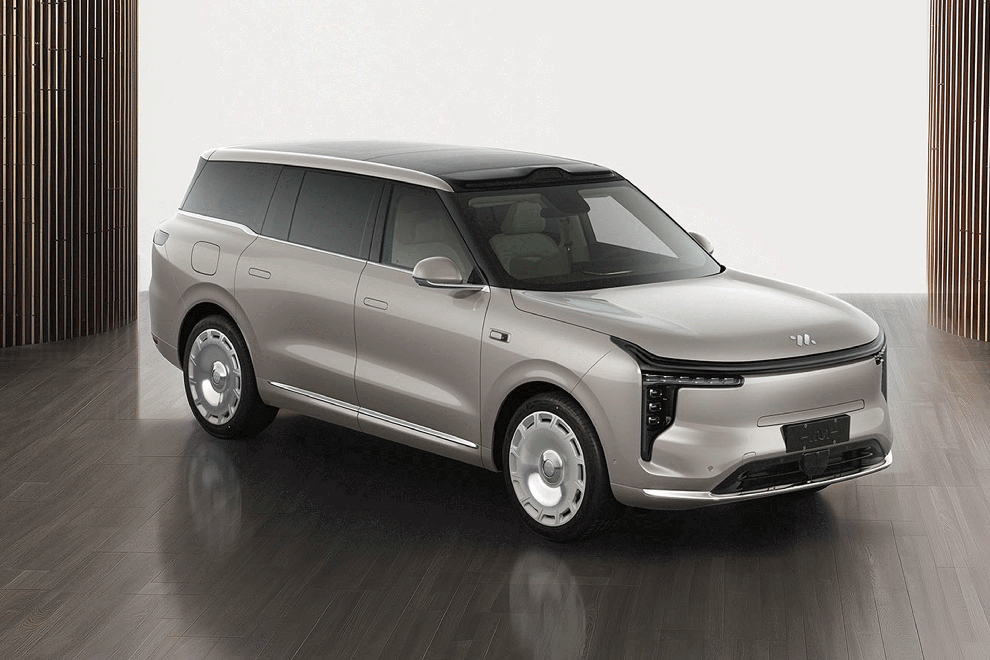
At a glance
- The Ls9 is a full-size electric SUV suited to spacious passenger, executive and fleet duties where charging is dependable.
- The reference export configuration is the 52 kWh Base Version; verify motor, drivetrain, range and charging on the live listing.
- Export cost is configuration-led, with freight, currency movements, Incoterms and destination charges affecting landed cost.
- New vehicles simplify documentation and condition control, while used examples require battery and history due diligence.
- Single-unit trials can test fit before consolidation, subject to the seller's live MOQ and order terms.
- LHD/RHD availability and destination homologation must be confirmed before shipment.
Why the IM Motors Ls9 matters for export markets
The IM Motors Ls9 sits in the full-size electric SUV segment, combining a passenger body with battery-electric propulsion. For buyers considering the IM Motors Ls9 for export, that positioning is relevant when they want more space and an EV powertrain without automatically moving to a premium European marque. An export buyer should assess it not simply as a large battery, but as a complete vehicle: seating, luggage capacity, ride comfort, software, service access and parts support all influence whether it can work commercially outside China. That makes it a fleet and executive-use candidate, not an urban runabout.
Demand for Chinese electric SUVs in export markets is driven by practical value: buyers can compare a large vehicle, EV operating costs and equipment levels without defaulting to an established global premium brand. The Ls9 is especially relevant where organisations need passenger space for hotels, executive transport or mixed business and family use. Its commercial case depends on local electricity access, charging reliability and duty cycles, because an electric SUV cannot be evaluated sensibly from body size alone. Those variables also explain why a low purchase quote alone does not settle the choice.
The main export risk is not lack of product appeal but the support structure around the vehicle. Overseas buyers should establish where the Ls9 will be serviced, how warranty claims are handled, which diagnostic tools are needed and how software or battery issues will be supported. Dealer standards, insurance acceptance and residual-value assumptions also vary by market. A serious importer therefore treats those questions as part of the vehicle decision, then confirms the exact configuration in the live inventory rather than assuming every Ls9 is equivalent before any deposit is paid.
- Large electric SUV for fleet use.
- Charging and service determine fit.
- Validate local support before scaling.
Model range, trims and powertrain variants: how the lineup is structured and how to choose
Start any IM Motors Ls9 specs comparison with the export-facing 52 kWh Base Version, rather than assuming a domestic high-spec variant will arrive under the same name. Confirm which specification is actually orderable. Battery capacity is only one part of the equation: motor count, drive layout, usable capacity, charging hardware, suspension equipment and cabin specification can alter suitability. Check the individual listing's specification sheet and ask the supplier to reconcile the model code with the photos and factory documents before treating it as an orderable configuration or a final shipment-ready specification.
Choosing a battery version should begin with the route and operating pattern, not the headline capacity. A 52 kWh pack may suit predictable urban or regional duties where charging is available, while a buyer with heavier loads, frequent long runs or cold-weather operations may need more energy or a more suitable vehicle. Larger packs also affect price, charging time, weight and tyre choice. Confirm the usable rather than nominal battery figure and request realistic charging guidance for the destination climate and whether onboard charging equipment is included for the intended fleet.
Range comparison must be handled carefully because laboratory figures may use a different test cycle from the one used in the destination market. A CLTC-labelled figure can help identify the variant, but it should not be treated as a guaranteed real-world driving range. Ask for the applicable test cycle, air-conditioning or auxiliary load, and the expected loss from speed, elevation, weather and charging stops. The live listing should supply the binding range and charging details for the exact vehicle. Also verify whether the quoted figure is for the base trim or another version.
- Reference trim: 52 kWh Base.
- Compare usable and nominal capacity.
- Match range to actual duties.
New vs used IM Motors Ls9: how export inventory is structured and how buyers choose
Export sourcing for the Ls9 should begin by deciding whether a new vehicle is essential or whether a used example can meet the mission. New examples are generally easier to standardise, photograph and compare, and may come with coherent factory documentation and warranty support. A used Ls9 can make sense where the buyer understands the battery, warranty and condition risks and needs a lower acquisition commitment, but no used Ls9 should be presumed available until it appears in the live listings for that exact market and configuration at the time of purchase.
The condition assessment for a used electric SUV is more technical than checking paint and mileage. Ask for battery state-of-health evidence, charging-cycle history, accident repair records, underside photographs, tyre condition, cabin wear and evidence of software updates. Verify whether the odometer is consistent with the vehicle history and whether the battery pack has been modified, flooded or damaged. A dealer should also state clearly whether any warranty remains and whether replacement parts can be obtained in the destination market before the vehicle is accepted or payment released in writing locally.
New versus used should ultimately be judged on total operating and residual cost, not acquisition price alone. A new vehicle may reduce near-term diagnostic uncertainty, while a well-documented used example can leave more of the purchase budget for charging infrastructure, insurance or fleet deployment. The best route for many importers is a controlled pilot: choose the required specification, document every acceptance criterion, then repeat the same checks on any larger batch. Keep new and used bids in separate worksheets so savings are not offset by higher preparation, warranty or downtime costs.
- New units simplify documentation.
- Used units need battery checks.
- Compare total operating cost.
How export pricing works: the factors behind a live listing price, and how to read one
An IM Motors Ls9 export price guide should separate the vehicle price from freight, duties and other transaction terms. Model year, trim, battery version, motor and drivetrain specification, mileage, condition, colour or equipment preferences, and factory options can all change the amount a seller will accept. For a used vehicle, service history and repair quality may affect the bid as much as mileage. Buyers should therefore compare like-for-like examples and confirm whether the quoted amount covers a specific VIN or only a generic configuration subject to final inspection and acceptance after arrival.
Logistics and commercial terms form the second layer. Freight charges vary with origin and destination ports, route distance, carrier capacity, fuel surcharges, insurance and the size and number of vehicles being moved. Currency conversion affects the amount a buyer ultimately recognises, while the selected Incoterm determines where risk and responsibility transfer. Quotation validity can also be limited by exchange-rate movements or carrier costs. A responsible quote should state the currency, payment basis, validity period and any expenses that remain outside the vehicle price rather than leaving them to be assumed.
Read each live listing as a structured quotation, not as the final landed cost. Confirm the exact model description, battery, drivetrain, production year, mileage and condition before comparing the displayed figure with another offer. Then establish what the price includes: documentation, export preparation, loading, inland transport, marine insurance, destination charges, customs duties, taxes and dealer margins may sit outside it. Check ChinaCarDirect's live IM Motors Ls9 inventory for the current per-unit price and availability, then request a written quotation and full cost schedule before treating any displayed number as binding.
- Specification and condition set price.
- Freight and Incoterms affect landed cost.
- Verify inclusions before commitment.
MOQ, ordering and payment: single units vs consolidating a container
Minimum order quantity is a transaction term, not a permanent property of the Ls9 model. It can depend on the seller, configuration, production slot, packaging requirement and whether a buyer is ordering a vehicle or a mixed shipment. A live listing may permit a single-unit purchase, but the buyer must confirm the MOQ shown for that listing and any supplier-imposed conditions. Treat the quantity, destination and payment terms as one package: securing a low headline price is less useful if the seller cannot ship the required number to the port.
A wholesale consolidation of several vehicles can improve freight and handling economics, especially when the models share a production batch and destination. It can also give an importer more negotiating leverage and a stronger basis for after-sales planning. The trade-off is exposure: a larger order ties up more capital before the vehicles are accepted and delivered, and one configuration mistake can affect the whole batch. Compare the per-vehicle saving with inspection time, financing cost, warehousing, insurance and the commercial priority of getting the first units into service successfully.
A sound order workflow begins with a written pro forma invoice, then moves through deposit, production or stock confirmation, inspection, balance payment and release against agreed documents. The exact payment schedule should be negotiated rather than assumed, and the buyer should verify the seller's legal identity, bank details and ownership of the vehicles. Use a milestone tied to inspection or shipping documents where possible, and independently verify instructions against a known company contact. Changes to trim, quantity, destination or Incoterm should trigger a revised quotation rather than an informal side agreement.
- Confirm listing-specific MOQ.
- Consolidate after controls are clear.
- Tie payment to inspection.
Shipping, homologation and market compliance caveats: LHD/RHD and import rules by country
Complete electric vehicles are normally moved as Ro-Ro cargo, with loading, lashing, voyage and discharge handled as one coordinated operation. Containerised vehicle transport may also be available, but the method, route and carrier should be selected around the vehicle's dimensions, battery requirements and destination infrastructure. Freight cost is not the only timing variable: factory readiness, export clearance, port congestion, weather, customs inspection and inland delivery can all extend the schedule. Obtain a milestone plan that names the documentary gate at each stage rather than relying on a simple collection date.
Import and market compliance must be resolved before committing vehicles to a voyage. Depending on the destination, an importer may need type approval, VIN and documentation checks, safety and electromagnetic-compliance work, battery transport records, local charging provisions or software changes. Government and municipal requirements can differ, and incentives may be linked to local registration, residency or fleet rules rather than merely importing the vehicle. Ask the supplier for the homologation documents it can provide, then have a destination broker or specialist confirm what the vehicle needs for registration and road use.
Steering configuration is a separate commercial issue. A left-hand-drive vehicle is suitable for many markets, while right-hand-drive production is required or strongly preferred in others; changing the steering system during export is not a substitute for approved production. Availability of an Ls9 in the required configuration must therefore be checked on the live listing and in the production plan. The buyer should model customs duty, VAT or sales tax, registration fees, insurance classification and local incentives before approval, since the cheapest vehicle does not necessarily produce the lowest compliant operating cost.
- Ro-Ro is a common shipping method.
- Review homologation before shipping.
- Match steering side to local rules.
Who should buy the Ls9 — and who should pick a different vehicle
The Ls9 is a strong candidate for organisations that need a spacious electric SUV and can provide dependable charging, administrative support and a vehicle-use policy. Executive transport, hotel and airport operations, premium staff vehicles, and mixed business-family fleets can all benefit from its size, but only when routes and dwell times allow charging. It is less suitable for buyers whose priority is the lowest acquisition cost, a small urban footprint or immediate access to an established worldwide service network. Fit should be judged against the duty cycle, not the model badge.
Buyers with frequent long-distance travel, limited charging access or a need for proven residuals may be better served by another powertrain or a different vehicle class. A smaller battery-electric crossover can reduce purchase and deployment complexity in dense cities, while a plug-in hybrid, hybrid or combustion model may offer greater route flexibility where charging networks remain sparse. These are category-level considerations rather than a verdict on the Ls9: the correct comparison is the operating cost and availability for the actual routes. A spreadsheet of route, energy and charging assumptions will expose weak assumptions.
A disciplined buyer can reduce risk by separating the vehicle decision from the scale decision. First, select the battery, drivetrain, seating and charging specification that meets the mission. Next, test the landed-cost and compliance assumptions with an RFQ, then order a pilot or inspect the first units before expanding. Record acceptance criteria for range-related tests, charging operation, interior condition, software features and document completeness. This approach is particularly valuable for an unfamiliar export brand because it creates evidence about service response and resale demand without committing the fleet programme at once.
- Best with reliable charging and support.
- Poorer with sparse charging networks.
- Pilot before fleet expansion.
Main rivals and how the Ls9 compares
The Mercedes-Benz EQS SUV is a close segment benchmark for buyers who prioritise a recognised luxury marque, premium cabin environment and an established international service proposition. The IM Motors Ls9 should be compared on the full package and landed cost rather than treated as a direct badge equivalent. It may offer a different cost equation for Chinese-market sourcing, but Mercedes can be stronger where dealer familiarity, financing, brand recognition and residual-value confidence matter most. Test the exact Ls9 specification against the Mercedes alternative in the buyer's market before final approval.
The BMW iX is another relevant full-size electric SUV competitor, with appeal for buyers focused on BMW's driver-focused positioning, technology brand and established dealer relationships. Its relevance does not remove the need for a like-for-like commercial comparison: equipment, software, range methodology, aftersales arrangements and delivered cost can differ by market. The Ls9 may suit a buyer who is comfortable building a relationship with a Chinese export marque, while the iX may be more familiar to local staff and service partners. Brand familiarity can be as important as a specification-sheet advantage.
The Volvo EX90 rounds out a premium-EV alternative for buyers prioritising Scandinavian design, restrained cabin style and a safety-led proposition. Again, the decision should not rest on styling or badge alone: compare the battery and drivetrain, usable cargo space, local charging support, parts lead times and total operating assumptions. The Ls9's case is strongest when its specification and export economics align with a buyer seeking a large Chinese-built electric SUV and prepared to support it. If that support is weak, a rival with deeper local coverage may be the safer commercial choice.
- EQS SUV: established luxury benchmark.
- BMW iX: driver-focused alternative.
- Volvo EX90: design and safety focus.
Live IM Motors Ls9 export inventory
View all listings →Real units currently on ChinaCarDirect with per-unit asking prices and MOQ. Availability updates live from the catalogue.
How to buy a IM Motors Ls9 from China
-
1
Define the operating requirement
Record routes, daily distance, passenger count, payload, charging locations, destination country and expected service life. These inputs determine which battery, drivetrain and body configuration should be shortlisted.
-
2
Shortlist the live inventory
Review the live IM Motors Ls9 listings and compare the model code, battery, motor, drivetrain, range test cycle, charging specification, dimensions, condition and production year. Check the current per-unit price, availability and listing-specific MOQ for every candidate.
-
3
Complete a compliance review
Give the proposed specification and destination to a local broker or homologation specialist. Confirm the LHD or RHD requirement, type-approval process, import duties, taxes, registration rules, charging provisions and required documentation before placing funds on deposit.
-
4
Request an itemised quotation
Submit the chosen trim, quantity, destination, preferred Incoterm and payment terms through the RFQ process. Request separate figures for the vehicle, export preparation, freight, insurance, destination charges and other costs, together with the quotation validity period.
-
5
Verify the seller and order terms
Confirm the seller's legal identity, vehicle ownership, bank details and ability to supply the specified configuration. Review the pro forma invoice, production or stock confirmation, inspection standard, warranty terms and documents required for payment release.
-
6
Use milestone-based payment
Negotiate deposits and balances against clear milestones such as configuration confirmation, inspection, shipment and handover of original documents. Independently verify payment instructions through a known company contact and revise the quotation whenever quantity, trim or Incoterm changes.
-
7
Inspect, ship and receive
Complete or commission a pre-shipment inspection covering VIN, condition, charging operation, software, mileage and included accessories. Then track export clearance, loading, marine insurance, arrival, discharge and local registration against the agreed shipping milestones.
Ls9 vs rivals
| Mercedes-Benz EQS SUV | The EQS SUV is the closest benchmark for buyers prioritising established luxury-brand recognition and international service familiarity. The Ls9 may present a different Chinese-sourcing cost equation, but the EQS can be stronger where brand confidence and established residual support outweigh equipment value. |
|---|---|
| BMW iX | The BMW iX is a driver-focused premium EV alternative suited to buyers already comfortable with BMW's technology and dealer relationships. The Ls9 may appeal to importers seeking a different cost and configuration equation, provided local aftersales support and staff familiarity are properly developed. |
| Volvo EX90 | The Volvo EX90 competes for buyers who prioritise Scandinavian design, a restrained cabin and a safety-led proposition. The Ls9 should be selected when its battery, drivetrain, space and export economics better match the mission and when the buyer can support the Chinese marque effectively. |
Frequently asked questions
How is IM Motors Ls9 export pricing determined?
The price combines the exact vehicle with the transaction terms, including production year, trim, battery, drivetrain, condition, mileage and selected options. Freight, insurance, exchange-rate movements, destination charges, duties, taxes and the chosen Incoterm then affect the landed total. Check the live IM Motors Ls9 listings for the current per-unit figure and request an itemized written quote for binding terms.
What powertrain, battery and range should I expect?
The Ls9 is battery-electric, and the reference export configuration is the 52 kWh Base Version. The exact motor, drivetrain, applicable test-cycle range and charging specification can vary by vehicle and destination, so read them on the live listing. Treat a CLTC figure as a laboratory reference rather than a guaranteed real-world result.
Should I buy a new or used IM Motors Ls9?
New examples usually offer more consistent specification, appearance and documentation. A used Ls9 may reduce the acquisition commitment but requires battery state-of-health, odometer, accident, service and warranty checks. Availability of used vehicles must be confirmed in the live listings.
How does MOQ work for wholesale orders?
MOQ is set by the seller, listing and order configuration rather than being a fixed attribute of the model. Some listings may accept one vehicle, while others may impose a batch condition; confirm the current listing-specific MOQ before ordering. Consolidation may improve freight economics but increases capital and configuration risk.
What determines shipping time and cost?
Cost and timing depend on origin and destination ports, carrier and route, Ro-Ro or container method, battery-related shipping requirements, documentation, port congestion, customs and inland delivery. Ask for a milestone schedule and an itemized freight quotation, and confirm whether insurance, destination charges and terminal fees are included.
Can I obtain spare parts for the IM Motors Ls9?
Parts availability depends on the seller, model year, destination and local technical support. Before ordering, request a recommended initial parts list, identifiers for common service items and realistic lead times. Many importers reserve critical spares with the vehicle shipment and establish a local service partner before scaling.
Is a right-hand-drive IM Motors Ls9 available for export?
Right-hand-drive availability must be confirmed on the live listing and with the seller; it should not be inferred from a model image or a general export catalogue. Many markets require or strongly prefer RHD, while others accept LHD. A local conversion is not automatically an approved substitute for factory RHD production.
How do I order an IM Motors Ls9 from China?
Start with the live IM Motors Ls9 listings, then send the chosen configuration, destination, quantity and preferred Incoterm through the RFQ process. Review the specification sheet, supplier identity, pro forma invoice, payment milestones, inspection terms, shipping documents and destination compliance requirements before releasing funds. After pre-shipment inspection, complete payment against agreed documents and track the shipment through the stated milestones.
Ready to source the IM Motors Ls9?
Request a current IM Motors Ls9 export quote by sharing your destination, required specification, quantity and preferred Incoterm with ChinaCarDirect.
Request a quote