
Infiniti Q50 Export Buying Guide for Overseas Dealers
Plan an Infiniti Q50 export purchase with clear guidance on trims, engines, pricing logic, MOQ, shipping, compliance and live vehicle availability.
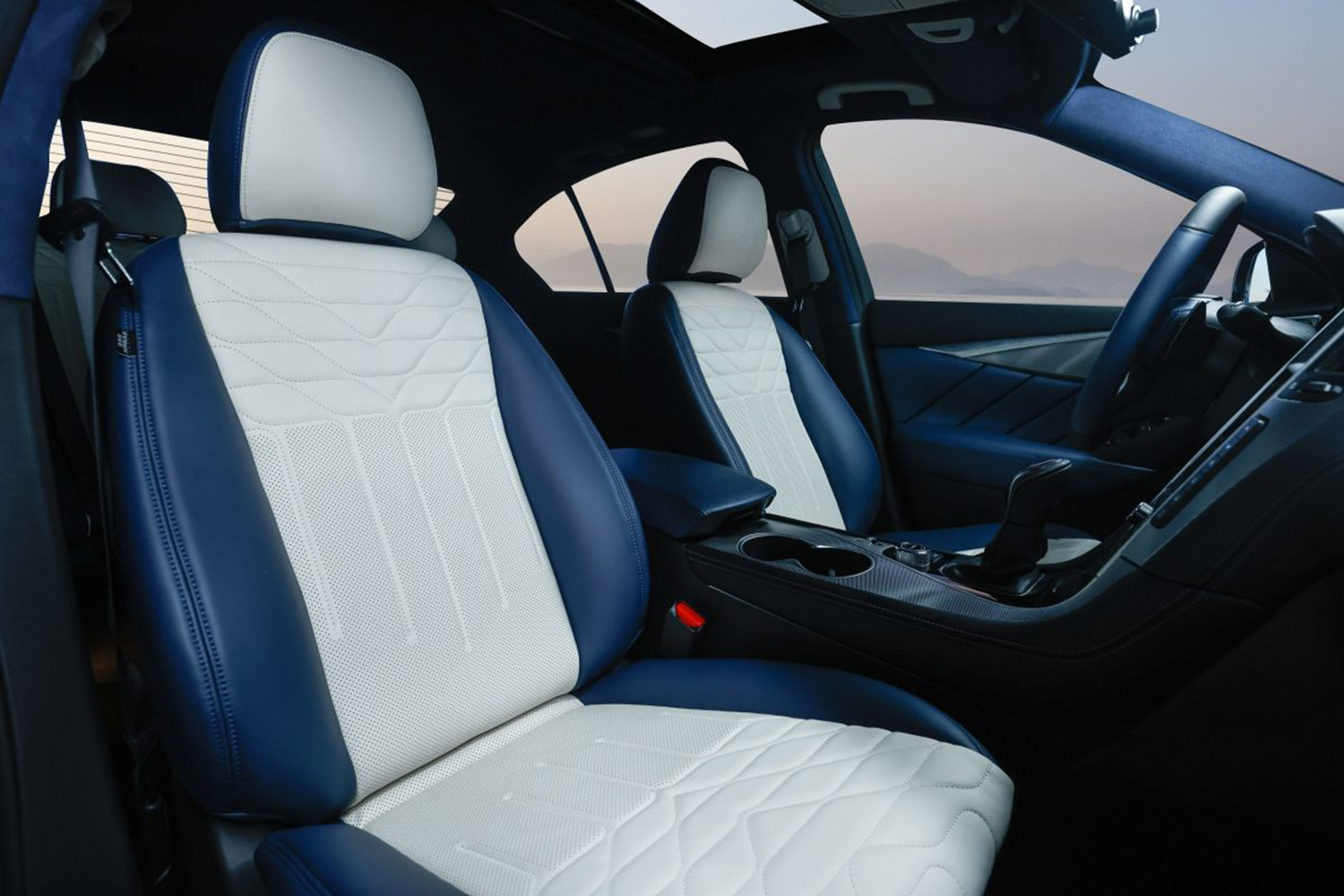
At a glance
- The Q50 is a rear-wheel-drive midsize luxury sport sedan, offered in standard Q50 and extended Q50L forms.
- Engine choices include a 2.0T turbocharged four-cylinder and a 3.7-liter naturally aspirated V6.
- Trim value should be judged by equipment, condition, parts support and local suitability rather than badge alone.
- Export pricing must be read per unit and separated from freight, insurance, taxes and registration.
- LHD/RHD configuration, destination approval and serviceability should be confirmed before a balance payment.
Why the Infiniti Q50 matters for export markets
The Infiniti Q50 occupies a useful middle ground in the global premium-sedan market: it combines Infiniti’s badge, rear-wheel-drive stance and driver-focused character with a format that is easier to import and stock than many larger luxury models. It appeals to overseas dealers seeking a recognizable premium name, but not an ultra-luxury price position. For buyers targeting markets where Infiniti has limited visibility, the model can provide a distinctive showroom alternative without moving into executive-car territory. Its four-door layout suits demonstration fleets, premium used-car lots and buyers who value restrained styling.
Global demand is strongest where the Q50’s combination of rear-drive handling, compact executive dimensions and Infiniti identity has a clear audience. It may appeal to importers in markets with established premium-sedan demand, including right-hand-drive countries, although local availability and compliance must be confirmed unit by unit. The Q50 is not a volume-car proposition: its value for a dealer depends on careful model identification, credible condition evidence and enough after-sales support to keep owners satisfied. That makes it a considered niche import rather than an impulse shipment assembled on price alone.
Compared with larger rear-drive luxury sedans, the Q50 generally offers a more manageable shipping and ownership proposition, while the China-market Q50L can add useful rear-seat space for chauffeur or executive use. However, “manageable” does not mean universally easy: engine emissions, steering configuration, parts identification and local certification can complicate otherwise straightforward imports. Buyers should treat the model’s global appeal as the reason to investigate it, not as proof that every listing clears their market. The strongest case combines clear specification, transparent documentation and a realistic route to registration and servicing.
- Q50 and Q50L differ in body format.
- Rear-wheel drive favors engaged drivers.
- Verify documents and local approval.
Model range, trims and powertrain variants: how the lineup is structured and how to choose
China’s Q50 catalogue is organized around 2.0T turbocharged four-cylinder versions and a 3.7-liter naturally aspirated V6, with trim names such as Progressive, Comfort, Premium, Leisure, Luxury Sport and special editions. Some cars are badged Q50L, so body style alone does not identify the exact vehicle. Start by separating model year, sedan length, engine and trim; this prevents a buyer from treating materially different cars as interchangeable when comparing equipment or replacement parts. The listing title is therefore a starting point, not a substitute for the rear identification plate, VIN and build documentation.
The 2.0T is the default for most export buyers because turbocharged output arrives in a compact four-cylinder package, while the 3.7L V6 offers a naturally aspirated character and conventional performance credentials. Buyers should not assume the larger engine is the better commercial choice: fuel use, tyre availability, servicing complexity and local parts support may matter more than acceleration. Conversely, a V6-focused importer can use the 3.7L Luxury Sport and Comfort variants to serve an enthusiast or executive niche. Choose the powertrain only after checking destination rules and realistic ownership costs.
Equipment should be read through the actual trim and market version rather than inferred from the Infiniti badge. Progressive-oriented cars may appeal to buyers prioritizing modern technology and everyday usability, while Comfort and Premium grades can suit traditional luxury expectations; Luxury Sport and Elite Sport names signal a more driver-focused specification. Because China VI, China V and non-suffixed trims appear separately, request equipment photos, option lists and the vehicle identification number before placing any assumption on safety, infotainment or driver-assistance content. A trim translation may clarify hierarchy, not replace inspection.
- Match Q50 and Q50L separately.
- Compare 2.0T and 3.7L needs.
- Verify China V/VI compliance.
New vs used Infiniti Q50: how export inventory is structured and how buyers choose
Export inventory can mix essentially new, previously unregistered and used Q50 vehicles, and the right category depends on the importer’s route to market. A new car may suit a dealer building a consistent showroom or a buyer seeking known condition and warranty arrangements; a used car can make more sense for a specialist refurbisher with transparent diagnostics. The listing’s condition label is only the starting point. Ask whether a vehicle is factory-sealed, demonstration stock, parallel-import stock or previously registered. That distinction affects documents, residual value, warranty claims and buyer expectations.
For a new vehicle, inspect production age, factory status, delivery mileage and the completeness of the original invoice and warranty pack. Low mileage alone does not prove that a car has never been registered, so the registration and customs history should be checked. For a used Q50, prioritize an independent inspection, service records, VIN verification, accident evidence and a cold-start report. A polished cabin cannot compensate for an undocumented powertrain, chassis or corrosion issue. Ask for dated photos, tyre and brake condition, fluid leaks, and odometer evidence matching service records.
Used-car value should be assessed as a package rather than by age alone. For the Q50, relevant checks include engine mounts, turbocharger behavior on the 2.0T, cooling-system condition on either engine, transmission shifts, steering and suspension wear, plus accident repair quality. Newer cars can still carry model-year depreciation, while older cars may require immediate tyres, fluids or service. A buyer who cannot inspect locally should use an independent pre-purchase survey and make the result a condition of payment. This approach is vital when the seller cannot provide a complete history.
- New cars offer consistent condition.
- Used cars need history checks.
- Inspect unseen cars independently.
How export pricing works: the factors behind a live listing price, and how to read one
A live Q50 export price is the result of several interacting variables, not a fixed model-level rate. Model year and trim influence depreciation and equipment; engine choice, Q50 versus Q50L body, mileage, condition and documentation affect the vehicle’s market position. Commercial variables matter: the exchange rate, supplier margin, inland transport, inspection, export documentation, freight and insurance all sit outside or alongside the displayed vehicle figure. A quote should therefore identify what is included rather than treating the headline number as a complete landed cost. Taxes and registration may follow separately.
To read a listing correctly, first match the exact model year, Q50 or Q50L designation, trim and engine. Then review condition, mileage, photos, VIN, seller location and the inclusion of export documents. For a used unit, ask whether the displayed amount reflects the vehicle in its current roadworthy condition or anticipates repairs. The most informative view is [ChinaCarDirect’s live Q50 inventory](https://chinacardirect.com/products?q=Q50&brands%5B%5D=72), where the current price, stated MOQ and available vehicle details are shown for that individual unit. Comparing similar units exposes differences hidden inside broad model or exact trim labels.
Exchange-rate movement can alter an overseas buyer’s effective cost even when the vehicle price itself has not changed. Freight depends on origin and destination ports, route, carrier space, fuel surcharges, terminal handling and insurance; container or roll-on/roll-off methods also produce different cost structures. The Incoterm defines where risk and responsibility transfer, so EXW, FOB, CIF and delivered arrangements cannot be compared by the vehicle amount alone. Ask for a written quotation with the charge boundary and payment currency stated. Duties, taxes, registration and local delivery may remain outside that quotation.
- Match year, trim, engine and condition.
- Separate freight, tax and vehicle cost.
- Confirm Incoterm and currency.
MOQ, ordering and payment: single units vs consolidating a container
MOQ is the minimum quantity a seller requires for a transaction, and its practical effect depends on the sales model. Some vehicle suppliers will release one unit for a test order, while others set thresholds by model, grade or shipment method. The binding requirement should be checked on each live listing or confirmed in the quotation; a general platform convention is not a substitute for the seller’s written terms. Buyers should compare MOQ against their cash exposure, expected demand and the administrative cost of handling multiple units. Confirm in writing.
Ordering one car offers the lowest inventory commitment and can validate a supplier’s documentation, communication and export process before scaling. It also spreads freight and fixed handling costs across fewer vehicles, so the per-unit landed cost may be less competitive. A wholesale order can improve commercial terms or shipment efficiency, but it raises capital risk, storage needs and exposure if trim demand is misjudged. A mixed container may combine years or equipment grades, which helps variety but makes presale and parts planning more complicated. Define the sales channel before committing.
Payment structure should match the risk being transferred. A typical sequence is a deposit to reserve the identified vehicle, inspection and document verification, payment of the balance, then release for export; exact stages vary by seller and destination. Confirm the payment currency, bank charges, refund triggers, title transfer, warranty treatment and what happens if inspection or shipping documents reveal a discrepancy. Never rely on a generic catalogue photograph or a copied VIN: the contract, invoice and vehicle identification should refer to the same unit. Retain every receipt and signed record.
- Check listing-specific MOQ.
- Test one unit before scaling.
- Link payment to verified documents.
Shipping, homologation and market compliance caveats: LHD/RHD and import rules by country
China-origin Q50 vehicles are commonly encountered in left-hand-drive form, so right-hand-drive demand needs especially careful sourcing. A vehicle must be confirmed as right-hand drive at the VIN or physical-inspection level; converting steering later does not automatically satisfy local type approval, safety rules or insurance requirements. Importers in RHD markets should establish whether a compliant RHD example can be secured before committing. Where only LHD cars are available, they should assess conversion cost, warranty loss and registration risk transparently. Local conversion specialists should confirm feasibility before an importer pays a balance.
Market compliance begins with engine and emissions category. China V and China VI labels in trim descriptions are clues, but neither proves acceptance in Europe, the UK, Australia, Japan or Gulf markets. EU and UK buyers should investigate type-approval pathways; Australian buyers should plan for import inspection and local conformity checks, while other markets apply their own emissions, age and roadworthiness rules. The engine, production date and equipment configuration may influence registration, as may local used-import restrictions. A car can be mechanically sound and still be legally non-importable as configured.
Freight choice depends on value, size and urgency. Roll-on/roll-off shipping is practical for sedans, while containerized vehicles provide enclosure but require securing and disciplined loading. Transit time and cost vary with origin and destination ports, sailing frequency, congestion, customs clearance, terminal charges and insurance. Add time for pre-shipment inspection, document correction, loading and destination registration. A low vehicle quote can still produce an unattractive landed result if steps are omitted. Sea freight creates handling risk, while duty and tax can depend on engine size, vehicle age, origin and destination classification.
- Confirm steering side before payment.
- China V/VI needs local approval.
- Budget freight, customs and registration.
Who should buy the Q50 — and who should pick a different vehicle
The Q50 fits buyers who want a rear-wheel-drive premium sedan, the Infiniti badge and a choice between a turbocharged four-cylinder and a naturally aspirated V6. It suits importers targeting the China-market Q50L, where the extended body can serve chauffeured or executive customers better than a compact executive sedan. Dealer appeal comes from a recognizable marque and equipment-rich trims, provided the importer can support owners with parts, diagnostics and clear warranty boundaries. It is strongest where those advantages are valued more than brand familiarity or established after-sales coverage across the importing market.
A different vehicle is usually wiser when the mission requires high ground clearance, a larger cargo bay, commercial-duty durability, seven-seat practicality or the lowest realistic operating cost. An electric car may also suit a fleet with charging infrastructure and emissions-policy incentives, although range, charging and homologation need separate evaluation. Buyers focused on a compact hatchback, a robust pickup or a vehicle with a deeply established local service network should preserve their original requirement. The Q50 should not be selected merely because it creates an attractive import margin. Fit comes first.
The ownership case should also be tested against the buyer’s own market. Premium sedans can deliver satisfying performance and comfort, yet insurance, tyres, brakes, scheduled service and repairs may not be inexpensive. A V6 car may be harder to support than the 2.0T where parts coverage is limited. Before scaling orders, ask local technicians about diagnostic tools, electrical-component availability and body-panel interchangeability. If owners cannot maintain the vehicle economically or registration is uncertain, a familiar rival may carry lower execution risk. That is a commercial limitation, not a quality judgment.
- Strong for rear-drive luxury.
- Q50L favors rear-seat space.
- Match body type to mission.
Main rivals and how the Q50 compares
The BMW 3 Series is a direct segment benchmark because it combines compact executive proportions, established export channels and a choice of efficient four-cylinder or stronger six-cylinder engines. The Infiniti counters with a distinctive badge, rear-drive dynamics and a naturally aspirated V6 choice for importers who value mechanical character over badge familiarity. However, the 3 Series generally has a more predictable international parts and homologation ecosystem. Choose the BMW when local familiarity matters more than Infiniti differentiation. The Q50 may offer more visual distinction for an importer seeking a niche.
The Mercedes-Benz C-Class occupies a similar premium-sedan position and is often attractive to buyers who prioritize cabin presentation, brand recognition and established residual-market support. The Q50 can compete through rear-drive balance, a broad choice of trims and the availability of a naturally aspirated V6 in the export catalogue. Against the C-Class, however, the Infiniti requires more deliberate verification of local parts, electronic support and homologation. Mercedes may be the safer brand fit; the Q50 is the more character-led alternative. Compare landed ownership rather than showroom appeal alone for every vehicle.
The Audi A4 is another close rival, with a similarly restrained profile, available rear-wheel drive and a familiar premium-sedan feature set. Audi can appeal to buyers who want a modern global brand and a broad specification language, while the Q50 offers more visual individuality and named equipment tiers that can help differentiate a showroom. The trade-off is support: verify the exact Infiniti parts ecosystem and destination certification rather than assuming equivalent service. Audi suits conservative fleet and private buyers; Infiniti suits dealers seeking a differentiated proposition with local support verified.
- BMW 3 Series: global familiarity.
- Mercedes C-Class: premium-brand support.
- Audi A4: standardized global alternative.
Live Infiniti Q50 export inventory
View all listings →Real units currently on ChinaCarDirect with per-unit asking prices and MOQ. Availability updates live from the catalogue.
How to buy a Infiniti Q50 from China
-
1
Define the destination and use case
List the destination country, steering side, intended buyer, Q50 or Q50L preference, engine choice and must-have equipment. Separate regulatory requirements from desirable options so the shortlist remains commercially realistic.
-
2
Shortlist exact live vehicles
Use the live Q50 inventory to compare model year, trim, body, condition, mileage and seller location. Treat the listing title as an identifier, then verify the VIN because similarly named trims can differ in equipment and emissions version.
-
3
Request identity and condition evidence
Ask for the VIN, production details, exterior and interior photographs, service or warranty history, and an independent inspection report. For used cars, request registration, accident, odometer and cold-start information before agreeing on terms.
-
4
Confirm specification and local compliance
Match the engine, transmission, emissions label, equipment and steering side to the destination, then ask a local compliance specialist about type approval, roadworthiness and import eligibility. Confirm parts support for the exact trim before paying the balance.
-
5
Request a written export quote
Ask for the unit price, currency, Incoterm, freight method, insurance, documentation, inland transport, payment schedule and stated MOQ. Use the live unit page and written quotation as the binding references for current price and MOQ; request a separate estimate for taxes and registration if needed.
-
6
Place the order against verified terms
Reserve the identified unit through a written agreement that links the VIN, invoice, refund conditions and warranty terms. Pay only through the agreed method, retain receipts, and make the balance conditional on satisfactory inspection and verified documents.
-
7
Complete pre-shipment and delivery
Approve a pre-shipment inspection, photograph the vehicle and loading condition, and reconcile chassis, commercial and export documents. Track freight, insurance, customs and arrival, then complete local registration and hand over service or warranty information to the buyer.
Q50 vs rivals
| BMW 3 Series | The BMW 3 Series is the closest global benchmark for compact executive sedans, with established importer channels and a broad four- and six-cylinder choice. The Infiniti offers more visual distinction, rear-drive character and a naturally aspirated V6 option for selected buyers; BMW may be safer where parts, RHD supply and homologation are already routine. |
|---|---|
| Mercedes-Benz C-Class | The Mercedes-Benz C-Class competes on premium presentation, brand recognition and established residual-market support. Q50 buyers may prefer its more individual Infiniti identity, rear-drive layout and V6 choice, but should verify local parts, electronics and type approval; Mercedes usually carries less execution risk in markets with a mature dealer network. |
| Audi A4 | The Audi A4 pairs restrained styling with available rear-wheel drive and a familiar premium-sedan feature set, making it a conservative alternative. The Q50 stands out more in the showroom and offers differentiated named trims, but its China-market specification and support network need careful verification; Audi is usually the lower-risk choice for buyers prioritizing standardized global service. |
Frequently asked questions
How is Infiniti Q50 export pricing determined?
Infiniti Q50 export pricing is calculated per vehicle from model year, trim, Q50/Q50L body, engine, mileage and condition, then adjusted for currency, freight, insurance, documentation and Incoterm. It is not a fixed price for the model name. Check the live ChinaCarDirect Q50 listings for the current unit price and request a written landed or transaction quote before budgeting.
What engine and powertrain options are available?
The China-market range includes a 2.0-liter turbocharged inline-four and a 3.7-liter naturally aspirated V6, normally paired with a seven-speed automatic and rear-wheel drive. Because trims, emissions labels and body lengths differ, use the live listing and VIN to confirm the exact configuration. Ask for engine, transmission and build-sheet photographs rather than relying on trim wording alone.
Is a new or used Infiniti Q50 better for export?
New vehicles suit dealers prioritizing consistent condition, known delivery history and straightforward showroom presentation. Used vehicles can offer broader year and trim choice, but require stronger inspection of registration history, mileage, accident repair, wear and service records. The better choice depends on the buyer’s refurbishment capability, warranty expectations and destination rules.
What is MOQ, and can I order one Infiniti Q50?
MOQ is the seller’s stated minimum order quantity for that vehicle or sales offer, not a universal Q50 rule. A buyer may request a single unit, but acceptance must be confirmed on the specific live listing or in a written quotation. Consolidating more units may improve commercial terms while increasing inventory and payment exposure.
How long does shipping take, and what affects the cost?
Shipping time and cost depend on origin and destination ports, sailing schedule, congestion, terminal handling, customs clearance, insurance and whether the vehicle moves by roll-on/roll-off or another permitted method. Q50 units are finished sedans, so roll-on/roll-off is often practical, but the route must be quoted for the specific car. Allow separate time and budget for inspection, documentation and destination registration.
Are Infiniti Q50 spare parts easy to source?
Parts availability depends more on the exact vehicle than on the Infiniti name. Use the VIN and full trim to identify engine, electrical and body parts, then compare Chinese references with parts suppliers in the destination country. For uncommon Q50L or V6 configurations, confirm suppliers, warranty boundaries and shipping lead times before placing a larger order.
Is a right-hand-drive Infiniti Q50 available for export?
Do not assume that a China-origin Q50 is right-hand drive. Left-hand-drive examples are common, and any steering conversion does not automatically provide local type approval or insurance acceptance. For the UK, Japan, Australia or another RHD market, first seek a confirmed RHD vehicle and verify its documents with the destination authority; otherwise price the conversion, downtime and compliance risk separately.
How do I order an Infiniti Q50 from China?
Start with live Infiniti Q50 listings, shortlist units by year, body, engine, trim, condition and steering side, then send the exact identifiers in an RFQ. Before paying, obtain the VIN, photos, condition report, export-document list, written MOQ, payment schedule and Incoterm. Tie the final balance to satisfactory inspection and verified documents, and use the ChinaCarDirect contact page to request the current quote.
Ready to source the Infiniti Q50?
Send your destination, preferred Infiniti Q50 or Q50L specification and required Incoterm to request a current unit-level export quote.
Request a quote