
Infiniti Q70 Export Buying Guide for Dealers and Fleets
Buy an Infiniti Q70 from China with practical guidance on trims, engines, export pricing, MOQ, shipping, market compliance and direct rivals.
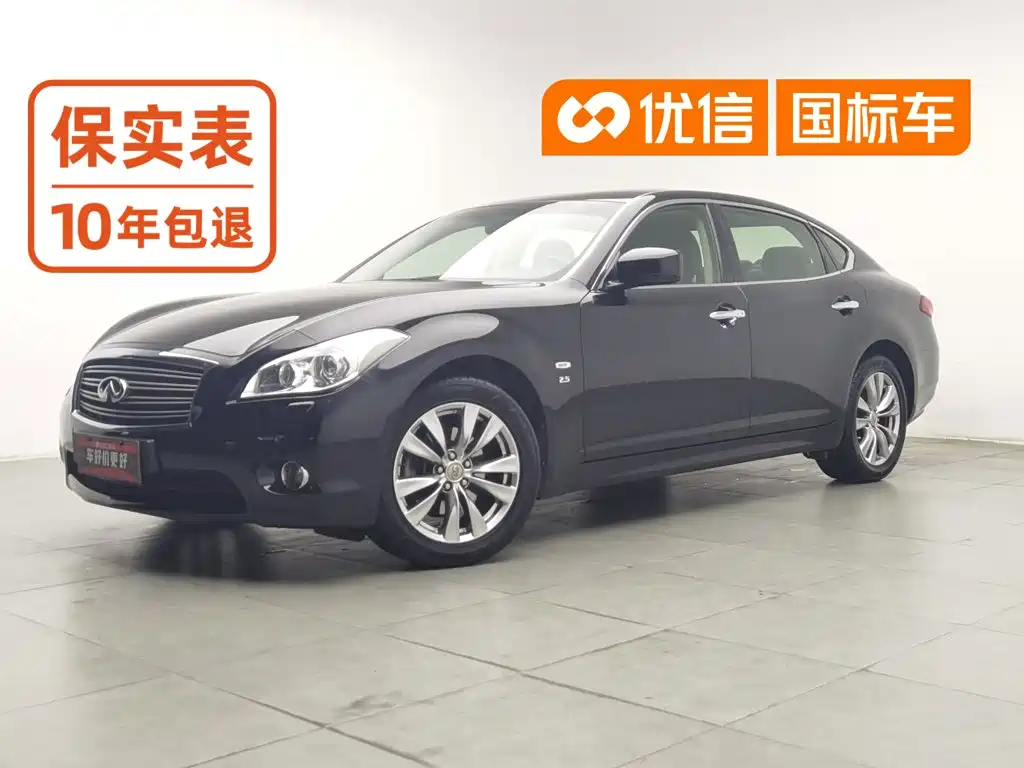
At a glance
- The Infiniti Q70 is a rear-wheel-drive midsize luxury sedan, with standard and long-wheelbase Q70L body options.
- Engine choices include a 2.5L V6, 2.0T turbocharged inline-four and 3.5L V6 hybrid, depending on year and market.
- Trim names alone are unreliable: compare the VIN-level equipment, engine, condition and destination-market suitability.
- A live listing price is only a vehicle-level reference; landed cost also reflects freight, tax, duties, insurance, exchange rates and Incoterm.
- Current price, MOQ and availability should be taken from the individual live listing and confirmed in a written quotation.
Why the Infiniti Q70 matters for export markets
The Infiniti Q70 is a midsize luxury sedan built around rear-wheel drive, a long-wheelbase Q70L variant and a choice of six-cylinder, four-cylinder or hybrid powertrains. That combination gives overseas buyers a credible alternative to the better-known BMW 5 Series, Mercedes-Benz E-Class and Audi A6. Its appeal is not novelty: it combines Japanese-brand identity, executive-car proportions and a broad specification range at the established premium-sedan tier. For dealers, the model can fill a price-conscious luxury slot when a buyer wants more substance than a compact executive car without moving into full-size flagship territory.
The export proposition is strongest where right-hand-drive compatibility, long wheelbase and premium-sedan presence matter more than badge recognition or compact dimensions. The Q70L can suit chauffeur, executive and airport-transfer use, while the shorter-wheelbase car is easier to manage for private buyers and fleets with mixed parking conditions. Its V6 options can appeal to buyers who prefer linear power delivery and conventional mechanical simplicity, although engine choice should reflect duty cycle and local fuel availability. The 2.0T offers a different balance for buyers prioritizing stronger performance per unit of displacement. No model should be exported on that assumption alone; inspect the exact configuration.
For an importer, the central export question is whether the Chinese-market Q70 can be adapted economically and supported after delivery. Steering configuration, parts availability, software and serviceability matter as much as the badge and trim sheet. Buyers should therefore treat the model as a strong fit for distributor portfolios seeking a distinctive rear-wheel-drive luxury sedan, not as a frictionless substitute for a mainstream European brand. That distinction keeps sourcing expectations realistic and prevents a visually attractive but poorly supported vehicle from becoming an expensive workshop liability or reputational risk in the destination market.
Model range, trims and powertrain variants: how the lineup is structured and how to choose
The range is built around Q70 and Q70L body variants, then divided by market, model year and equipment grade. Visible trim names include Comfort, Premium, Luxury Edition, Enjoyment, Elite and Edition PLUS, but their contents are not transferable between years or countries. A buyer should therefore avoid choosing from the badge alone. The dependable method is to compare the VIN-level specification: engine, transmission, seating, driver aids, infotainment, paint, upholstery and installed options. This matters especially for a China-origin car destined for export because cosmetic grade can conceal material equipment differences in the export market.
The 2.5L naturally aspirated V6 is the straightforward choice for buyers prioritizing smoothness, refinement and a conventional powertrain. The 2.0T turbocharged inline-four emphasizes performance and efficiency, but its character, fuel requirements and maintenance profile may suit a different operating environment. The 3.5L V6 hybrid adds electrification while retaining a six-cylinder architecture, making it relevant where fuel economy, urban stop-go use or corporate emissions positioning matter. Compare tax, insurance and fueling assumptions before selecting it, because hybrid economics vary by usage and jurisdiction. It should be selected from the total-cost case, not the badge alone.
Once powertrain and body are selected, equipment should be reconciled against the destination brief. For a fleet, prioritize durable upholstery, straightforward controls and serviceability; for an executive buyer, assess rear-seat comfort, climate control and ride quality. Driver-assistance features may differ from markets where the Q70 was originally sold, and a listed function should not be assumed to work exactly as marketed in another country. Request photos, option lists and diagnostic information before paying a premium for a named trim. Documents and equipment should be checked together, because cosmetic labels can be misleading.
- Q70L is the long-wheelbase derivative.
- Equipment varies by year and market.
- Verify options against the VIN.
New vs used Infiniti Q70: how export inventory is structured and how buyers choose
Export inventory can contain vehicles sold under different condition descriptions, including new, dealer-demo, parallel-imported, near-new and used cars. For the Q70, the word “new” may describe seller status rather than recent factory production, especially with an aging model generation. A buyer should therefore separate the listing label from objective evidence: build date, VIN, odometer reading, start count, tire age, body condition and documented service history. Those checks prevent a visually clean car from being treated as a newer product with a different depreciation and warranty position in the export market.
A genuinely new or unused vehicle is most suitable when a buyer wants predictable cosmetic condition, a complete factory warranty and minimum mechanical uncertainty. A used Q70 can offer a different value equation because depreciation has already occurred, but it brings measurable wear, uncertain history and possible repair exposure. For an overseas importer, the smartest comparison is landed cost against expected resale or fleet uptime, not purchase price alone. A lower acquisition cost can be false economy if parts, labor or downtime become expensive. Conversely, a carefully selected used example may meet fleet needs more economically than a newer car.
Chinese-origin Q70s can also sit outside the factory distribution network, so condition assessment should include fluid leaks, chassis corrosion, suspension wear, electrical faults and evidence of accident repair. A pre-purchase inspection by an independent specialist is especially valuable when the vehicle will be exported before problems become apparent. For fleet buyers, matching drivers to a consistent specification matters as much as buying the newest example. A mixed batch may be acceptable for spot sales, but a company fleet usually benefits from uniform keys, software, wheels, tires and service assumptions. Choose the condition route that fits the resale model, not the most optimistic listing description.
- Review condition independently of listing labels.
- Used cars trade uncertainty for depreciation.
- Standardize fleet specifications.
How export pricing works: the factors behind a live listing price, and how to read one
The price shown on a live ChinaCarDirect listing should be treated as a vehicle-level reference, not as the buyer’s final landed cost. The first variables are intrinsic to the car: model year, Q70/Q70L body, trim, engine, mileage, condition, ownership history and visible equipment. Market factors then alter the equation, including the yuan-dollar exchange rate, Chinese domestic demand, shipping cost, port charges, insurance, financing and the seller's chosen Incoterm. Because these inputs can change, compare like-for-like examples rather than treating the first result as a stable market quote or the lowest possible total.
To read a listing properly, separate the advertised vehicle price from costs that may sit outside it. Ask whether the seller includes export documentation, inland transport to the port, loading, sea freight, marine insurance, destination terminal charges, customs duties, VAT or sales tax, local registration and pre-delivery inspection. Terms such as Ex Works, FOB and CIF allocate different responsibilities and risk; a buyer may prefer one model but a different delivery term. Therefore ask for a written quote that names every included and excluded charge rather than relying on the listing headline alone.
A useful comparison exercise is to shortlist two Q70s with the same body, engine and equipment level, then ask for an all-in or clearly segmented quote for each. Check whether one is a parallel-import vehicle, whether the VIN and documents match the advertised car, and whether the seller permits inspection before payment release. Also confirm the currency, validity period and whether a deposit is refundable. The live Q70 listings are the source for current per-unit price, minimum order quantity and availability; only a binding quotation can establish what a buyer will actually pay.
- Vehicle price differs from landed cost.
- Incoterms shift cost and risk.
- Require a written unit quotation.
MOQ, ordering and payment: single units vs consolidating a container
MOQ is a commercial term that can vary by seller, vehicle and transaction. A marketplace may permit a single-unit purchase from one vehicle, while another seller may require a larger lot, a matching specification or a mixed batch. Never infer the rule from the Q70 model name: read the quantity terms on the individual listing and include them in the written quotation. If one unit is available to purchase, that does not automatically mean every seller on the platform shares the same order policy. The binding document is the pro forma invoice or sales contract.
Buying one unit gives a buyer flexibility to test demand and inspect one vehicle before committing to a larger program. It also creates possible inefficiency: the vehicle may remain in China until payment and documentation are complete, and a dealer may pay individual handling and freight charges without access to container consolidation. For a fleet order, aligning model year, engine, trim, color and condition improves resaleability and simplifies parts planning. It also reduces the risk that one vehicle becomes the weak link in an otherwise standardized batch before final dispatch begins.
The ordering sequence should be explicit: select the vehicle, request photographs and documents, agree specification and delivery terms, obtain a pro forma invoice, verify the payment instructions, complete any agreed inspection, and release the balance only after the stated conditions are met. Payment methods, deposit terms and refund conditions must be confirmed in writing rather than inferred from chat messages. For a consolidated order, the same sequence should identify who is the importer of record, which documents cover each vehicle, how titles and payments are allocated, and when shipping is released.
- MOQ varies by seller and listing.
- Single units reduce batch risk.
- Define payment and refund milestones.
Shipping, homologation and market compliance caveats: LHD/RHD and import rules by country
The steering configuration is the first destination check. A left-hand-drive Q70 cannot simply be called a right-hand-drive export car without conversion, and a conversion may involve more than replacing a steering-wheel assembly: wiring, gauges, controls, lighting and safety equipment may also require attention. Ask the seller for the actual configuration and supporting photographs, then confirm whether local registration accepts the vehicle in that form. Conversion costs and compatibility should be treated as separate line items in the landed quotation, not hidden inside a generic “export ready” claim for the destination market.
Import rules vary by country and can include emissions and roadworthiness standards, VIN and customs documentation, duty and tax treatment, age restrictions, insurance requirements, local inspection, licensing and spare-parts support. Software, camera or driver-assistance functions, lighting, lane markings and radio equipment may also need market-specific checks. A vehicle should not be booked until the importer confirms the destination's current requirements and the seller's documents match the VIN. Regulations change, so obtain a fresh compliance opinion for the model year and specification rather than relying on an earlier transaction or online claim for that model.
Shipping cost and lead time depend on the origin and destination ports, sailing schedule, carrier space, container or roll-on/roll-off allocation, cargo dimensions and weight, route disruption, customs clearance and the selected insurance and delivery term. Because exact dimensions are unit specific, the exporter should verify loading and securement information before choosing a transport method. Upon arrival, budget time for inspection, port handling, duty payment, registration and any rectification work. The vessel arrival date is only one milestone: a vehicle is not commercially delivered until local release and acceptance are complete for the buyer.
- Verify LHD or RHD first.
- Check destination-specific import rules.
- Allow clearance and rectification time.
Who should buy the Q70 — and who should pick a different vehicle
The Q70 is a good fit for an overseas buyer who wants a rear-wheel-drive executive sedan with a long-wheelbase option, a recognizable Japanese marque and a choice of V6, turbocharged four-cylinder or hybrid powertrains. The Q70L is particularly logical for chauffeur services, executive transport and customers who value rear-seat space over a small footprint. Dealer groups can also use it as a differentiated alternative to German executive sedans. The strongest purchase case is a destination where right-hand-drive compatibility, rear space and differentiated stock matter more than maximum brand recognition alone in practice.
It is less suitable for buyers whose priority is the lowest possible operating cost in markets where electrified powertrains receive especially favorable treatment. The hybrid Q70 can reduce fuel use, but it is not a plug-in hybrid or battery electric vehicle, and its economics still depend on fuel prices, duty cycles and local taxation. Infiniti also has a less visible support network than some mainstream Japanese marques in certain markets, making parts planning and workshop familiarity important. Neither issue makes the Q70 unsuitable; both should shape the final landed cost over time.
Fleet buyers should be particularly cautious about mixed control interfaces and inconsistent condition across a batch. Private buyers attracted by value may accept an older Q70L, but should budget for tyres, brakes, suspension and electronics as potential maintenance items rather than assume uniform reliability. Performance enthusiasts may find the Q70 less focused than a dedicated sports sedan, and city buyers with severe parking constraints may prefer a smaller luxury car. The better comparison is not “Infiniti or nothing,” but which Q70 powertrain, body and condition deliver the required operating economics for the buyer.
- Strong rear-drive executive fit.
- Best considered for Q70L chauffeur use.
- Analyze hybrid taxes and fuel use.
Main rivals and how the Q70 compares
The BMW 5 Series is the closest conventional benchmark for buyers focused on rear-wheel-drive handling and a familiar premium-sedan format. The Q70 competes through its V6 or turbocharged four-cylinder options, long-wheelbase availability and a less conventional visual identity. The 5 Series may be easier to compare for parts, service familiarity or technology, depending on the destination, while the Q70 can appeal where its specification and condition are more suitable. Neither should be selected from badge alone. Compare the exact VIN-level equipment, landed cost and likely resale support in the importing country before committing to a batch.
The Mercedes-Benz E-Class is the stronger alternative for buyers who put greater emphasis on recognized prestige, established aftersales support or a broader expectation of onboard technology, subject to local availability. The Q70 offers a more distinctive marque and a different balance of Japanese luxury design and rear-wheel-drive character, but the importer must check Infiniti parts and service support in the destination. E-Class examples may also present a broader selection of body and powertrain configurations. The correct choice turns on brand comfort, running costs, service access and condition—not on badge psychology alone.
The Audi A6 is another credible peer because it occupies a similar executive-sedan class and combines available rear-wheel-drive configurations with a more familiar design language. Its brand recognition and model familiarity may reduce resale friction for some buyers, while the Q70 can distinguish a portfolio through its 2.5L V6, 2.0T or hybrid choices and Q70L packaging. All three names require model-year and market checks because equipment, emissions systems and steering configurations differ. Run the same landed-cost worksheet for the Q70 and each rival, including freight, tax, parts, insurance and eventual resale planning.
Live Infiniti Q70 export inventory
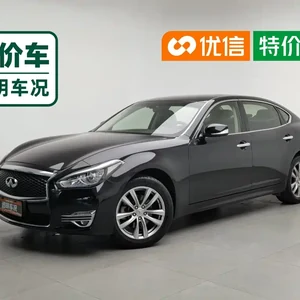
View all listings →Real units currently on ChinaCarDirect with per-unit asking prices and MOQ. Availability updates live from the catalogue.
How to buy a Infiniti Q70 from China
-
1
Define the destination and steering requirement
State the destination country, required LHD or RHD configuration, delivery point and intended use before selecting vehicles. This prevents unsuitable cars from entering the sourcing process.
-
2
Choose the body and powertrain
Compare Q70 and Q70L packaging, then select the 2.5L V6, 2.0T turbocharged four-cylinder or 3.5L hybrid according to duty cycle and running-cost priorities.
-
3
Review individual live listings
Check the VIN-level specification, equipment, condition and seller terms. Use the live listing for the current per-unit price, MOQ and availability rather than relying on an older market summary.
-
4
Verify condition and documents
Request production date, service records, photographs and supporting documents, and arrange an independent inspection where justified. Confirm that the VIN and advertised equipment agree.
-
5
Build a landed-cost quotation
Ask for a written quote separating vehicle price, inland transport, freight, insurance, port charges, customs duties, taxes, registration and inspection. State whether the order is a single unit or a container consolidation.
-
6
Agree the order and payment milestones
Review the pro forma invoice, deposit, balance, refund conditions and importer-of-record details before paying. Tie final payment to the agreed inspection and documentation requirements.
-
7
Prepare shipping and destination compliance
Confirm freight booking, securement, insurance, export documents, customs clearance and local registration requirements. Allow time for destination inspection and any necessary rectification before handover.
Q70 vs rivals
| BMW 5 Series | The BMW 5 Series is a direct rear-wheel-drive premium-sedan benchmark and may offer greater service familiarity for some importers. The Q70 stands out through its V6 options, Q70L availability and distinctive design, but parts support and technology familiarity should be checked locally. |
|---|---|
| Mercedes-Benz E-Class | The E-Class is a strong choice for buyers prioritizing brand recognition, comfort and established service expectations. The Q70 offers a more individual Japanese luxury proposition, but buyers should compare aftersales access and equipment availability before favoring it. |
| Audi A6 | The A6 occupies similar territory with familiar executive-sedan packaging and available rear-wheel-drive versions. The Q70 differentiates through its engine mix and long-wheelbase option, while resale confidence may depend more heavily on local recognition and model-year equipment. |
Frequently asked questions
How is Infiniti Q70 export pricing determined?
Export pricing is calculated from the vehicle’s year, body, trim, engine, mileage, condition and equipment, then adjusted for exchange rates, freight, insurance, port handling, customs duties, taxes and the selected Incoterm. A listing price is not automatically a landed total. Current per-unit prices are shown in the live Infiniti Q70 listings; ask for a written quotation for your destination, quantity and delivery term.
What powertrain options are available in the Infiniti Q70?
The range includes a 2.5L naturally aspirated V6, a 2.0L turbocharged inline-four and a 3.5L V6 hybrid, depending on model year and market. The Q70 is not a battery-electric vehicle, and the hybrid is not a plug-in model, so it does not have an external-charging range specification. Confirm the exact engine and transmission in the VIN-level listing.
Should I buy a new or used Infiniti Q70?
A new or unused example offers the most predictable cosmetics and the strongest warranty position, while a used example may have lower depreciation. Used Q70s require more attention to mileage, service history, tires, body condition and electronics. Choose the route that fits your total-cost and resale assumptions, not simply the listing label.
What is the MOQ for Infiniti Q70 exports?
MOQ is set by the seller and transaction, not by the Q70 model itself; it may permit one unit, several units or a matched batch. Read the current quantity requirement on each live listing and have it repeated in the pro forma invoice. Consolidation can improve freight efficiency, but it should not force incompatible specifications into one order.
How long does Q70 shipping take and what does it cost?
Shipping time and cost vary with origin and destination ports, carrier schedule, cargo space, route conditions, customs clearance, insurance and delivery term. Vessel arrival does not include local registration or rectification time. Ask the exporter for a door-to-door or port-to-port quote with each charge and milestone identified.
Can I order spare parts with an Infiniti Q70?
Spare parts can usually be ordered separately, but availability and compatibility should be confirmed for the exact model year, engine and trim before the vehicle ships. VIN-level identification is especially important for electrical, electronic and hybrid components. Include an initial parts allowance and confirm local dealer or specialist support in the destination market.
Is a right-hand-drive Infiniti Q70 available for export?
Right-hand-drive availability depends on the individual vehicle and the seller’s stock, and steering configuration cannot be assumed from the model name. Confirm whether the car is LHD or RHD with photographs and VIN documents before ordering. If conversion is required, obtain a destination-specific cost and compliance assessment first.
How do I buy an Infiniti Q70 from China?
To buy an Infiniti Q70 from China, start with the live listings, shortlist the required body, powertrain, steering side and condition, and send an RFQ with your destination and required quantity. Review the unit, specification sheet, document list and landed-cost quotation before accepting the pro forma invoice and agreed payment terms. Inspection, final payment and freight release should follow the milestones stated in the written contract.
Ready to source the Infiniti Q70?
Send ChinaCarDirect your destination, steering-side requirement, preferred Q70 variant and quantity for a unit-specific export quotation.
Request a quote