
Infiniti Qx50 Export Buying Guide for Dealers and Fleets
Plan an Infiniti Qx50 import from China with practical guidance on trims, 2.0T and 2.5L engines, used vehicles, landed pricing, shipping and compliance.
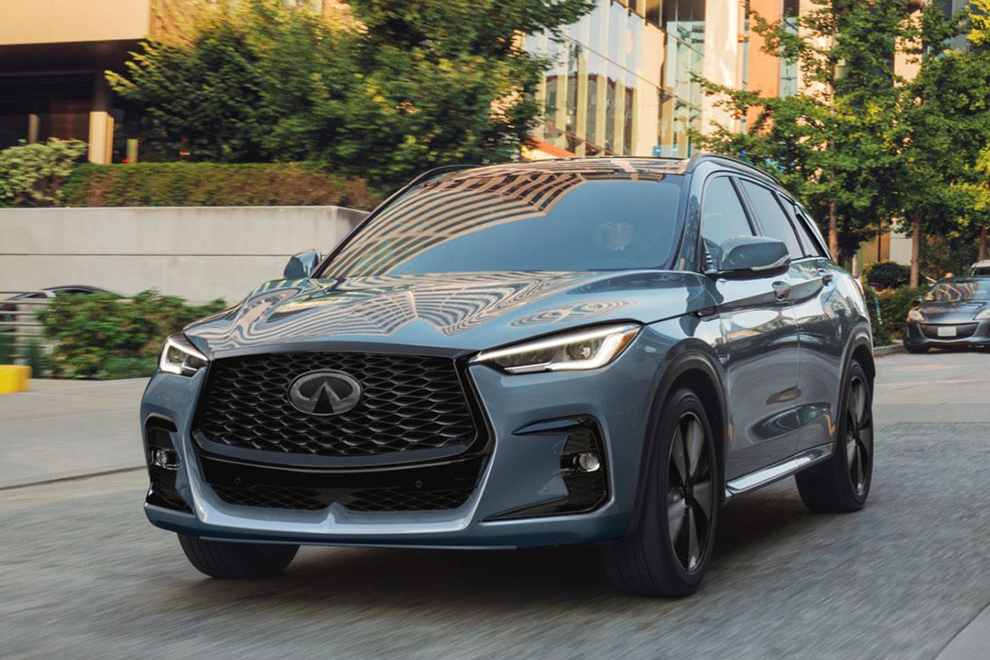
At a glance
- The Qx50 is a compact luxury crossover suited to premium-SUV dealer programmes.
- Turbocharged 2.0T and naturally aspirated 2.5L engine options serve different buyer priorities.
- Front-wheel drive and 4WD/AWD layouts vary by trim and market, so each unit needs verification.
- New and used vehicles require different condition, documentation and resale checks.
- Live listings provide the current per-unit price, MOQ and availability for export decisions.
Why the Infiniti Qx50 matters for export markets
The Infiniti Qx50 occupies the premium compact crossover segment, combining a luxury marque with a manageable footprint for importers, dealers and fleet buyers. Its appeal is strongest where customers want a premium badge, a raised driving position and turbocharged performance without moving into a larger, costlier SUV. For export markets, that positioning creates a useful middle ground between mainstream crossovers and full-size premium models. The model also gives export buyers a recognizable nameplate that can be positioned through independent dealers, while its compact dimensions generally make road transport and urban use easier to plan.
Demand is not uniform across countries. In markets with established premium SUV demand, the Qx50 competes on design, equipment and powertrain choice; in price-sensitive markets, its total cost depends heavily on local taxes, fuel costs and the availability of spare parts. Buyers should distinguish consumer interest from commercial viability: a vehicle may be attractive to end users but uneconomic for an importer if certification, warranty support or inventory turns are weak. Local driving conditions also matter: buyers with frequent rough roads, heavy loads or snowy travel may place greater value on all-wheel drive than urban consumers do.
For fleet and dealer buyers, the Qx50 can work as a test product rather than an all-in proposition. A small mixed order can reveal trim preference, buyer reaction and parts demand in one destination, while a larger consolidation improves shipping efficiency but ties up more capital. The model is therefore best evaluated against local premium rivals, service capability and expected residual value—not against an isolated vehicle specification or a temporary online asking price. A clear target market, realistic landed-cost budget and documented inspection reduce the risk of unsellable, unsupported vehicles.
Model range, trims and powertrain variants: how the lineup is structured and how to choose
The export lineup is organized around two gasoline engine families: a 2.0-liter turbocharged four-cylinder and a 2.5-liter naturally aspirated six-cylinder. The 2.0T versions appear with 2WD and 4WD/AWD descriptions across Fashion, Elite, Smart, Navigator and Luxury trims, while 2.5L cars include Comfort, Enjoyment and Elegant editions in the referenced market. Exact engine-to-trim availability changes by model year and production market, so the live unit specification must be checked directly. This matters because the same trim name can describe different equipment or drivetrain arrangements in different periods, particularly around facelift updates.
For fleet buyers, the 2.0T may deserve priority when fuel economy, turbo response and lower displacement matter. The 2.5L naturally aspirated six-cylinder provides an alternative for buyers who prefer linear power delivery and do not need the smaller turbo engine. These are general engineering distinctions, not a performance guarantee: calibration, output rating and market specification can differ, and buyers should request the engine number and homologation details for each vehicle. For used examples, check cooling-system condition and confirm the listed drivetrain suits the duty profile well. Compare actual fuel and tax requirements in the destination market.
Drivetrain choice is equally important. Two-wheel-drive variants can suit urban fleets, paved routes and buyers seeking simpler fleet economics, whereas 4WD or AWD versions add traction-oriented capability for wet, snowy or uneven roads. Trim labels help narrow the shortlist but do not replace a VIN-level check. Compare front-drive and rear-drive versions with the same engine and equipment, then select based on local climate, route profile, towing needs and the availability of equivalent parts in the destination country. Ask whether drivetrain components were modified; AWD alone may not justify a higher purchase cost.
- 2.0T turbo or 2.5L six-cylinder.
- 2WD, 4WD or AWD by market.
- Check engine and drivetrain on each unit.
New vs used Infiniti Qx50: how export inventory is structured and how buyers choose
New and used Qx50 vehicles serve different commercial roles in export inventory. New examples are generally easier to describe by model year, trim and factory specification, and may offer clearer provenance when supported by original documents. Used examples can widen trim and powertrain choice and may suit buyers with a lower acquisition budget, but their true value depends on mileage, service history, wear and whether the listing represents the car accurately. Neither category is automatically the better export purchase. Start with resale expectations, not simply the listed model year alone.
For a used Qx50, buyers should treat condition inspection as part of the purchase price rather than an optional service. Request body-panel photographs, underbody images, a cold start, diagnostic report and evidence of maintenance. A 2.0T vehicle deserves particular attention to turbocharger, cooling and oil-system condition, while any used car should be checked for fluid leaks, suspension wear, accident repairs and electrical faults. A lower asking price can be offset by repairs, downtime and weaker buyer confidence. Local inspection standards and access to Infiniti expertise are therefore central to a credible used-vehicle strategy.
A new export vehicle should be matched against expected holding period, financing and warranty administration. If the importer intends quick turnover, factory configuration and a coherent specification can help buyers compare like with like. If vehicles will be held longer, condition risk and model-year depreciation deserve more attention. Mixed orders can balance both objectives, but each vehicle should still be assessed on its own documents, options and commercial role rather than accepted as an undifferentiated batch. This matters where imported parts, diagnostic software or manuals are less available than for mainstream marques.
- New vehicles simplify trim matching.
- Used vehicles need documented condition evidence.
- Align purchase with planned holding period.
How export pricing works: the factors behind a live listing price, and how to read one
A live Qx50 export price is not a fixed wholesale rate. It is the intersection of the vehicle's age, trim, engine, drivetrain, mileage, condition, equipment and the seller's commercial terms, converted into the buyer's currency and then adjusted for destination costs. Model-year depreciation can be substantial, but condition and specification differences within the same year may matter just as much. Buyers should therefore compare equivalent vehicles rather than rank listings by the lowest visible number. A cheap older unit may need repairs, while a newer car can be costly after freight, tax and compliance.
Currency conditions influence the displayed amount, but they are only one layer of pricing risk. Confirm whether the quote is FOB, CIF, CFR or another Incoterm, and establish what is included in the vehicle price. Relevant variables include export documentation, inland transport at origin, marine or air freight, insurance, destination charges, customs duties, taxes and compliance work. For a true landed cost, ask for each charge as a separate line and state the destination port or city before accepting a comparison. The same vehicle can therefore appear inexpensive under one quote structure and costly under another.
To read a live listing properly, open the individual unit record rather than relying on a category page or a remembered market average. Check the year, exact trim, engine, drive configuration, mileage, condition notes, images and identifiers, then confirm whether the listed price is a vehicle-only figure or an export package. Current per-unit price, minimum order and availability are shown on the live ChinaCarDirect inventory, and those are the binding references when moving from comparison to negotiation. Ask the seller to restate material details and clarify which documents accompany the vehicle.
- Price follows age, specification and condition.
- Incoterms determine what the quote includes.
- Live unit listings carry current binding figures.
MOQ, ordering and payment: single units vs consolidating a container
Minimum order quantity is a commercial term, not a fixed characteristic of the Qx50 model. It can vary by seller, vehicle, destination and shipment plan, so the live listing and written quotation must be checked for the applicable requirement. Some transactions may be possible with one vehicle; others may be structured around a small batch or container. A buyer should not infer a universal MOQ from a catalogue page, promotional material or another importer's experience. One-unit buying supports testing, but unit pricing may not be economical for a full shipment.
Consolidation can reduce freight and handling costs per vehicle, but it changes the risk profile. A container filled with similar cars supports inventory planning and may make servicing easier, yet every unit becomes exposed to the same freight schedule, inspection findings and market-demand assumptions. Mixed consolidation can diversify trim risk but complicates resale planning. Before ordering, model the landed cost for each vehicle and compare it with the expected local margin under slower as well as faster turnover. Set a stop-loss level and inspection remedies if the batch sells more slowly than planned.
Ordering should proceed through a documented sequence: specify the vehicle, request a written quote, verify identity and condition, agree payment terms, complete pre-shipment inspection and only then release the balance against agreed milestones. Payment methods, deposit requirements and release timing vary by seller and transaction, so they should never be assumed. Verify the seller's legal entity and beneficiary details before transferring funds. For a single unit, confirm that the quotation, inspection report and export documents all identify the same vehicle; for a batch, apply the same discipline to every unit. Any agreed corrections should appear in the final invoice and shipping record before balance release.
- Confirm MOQ in the written quotation.
- Single-unit and container orders differ economically.
- Tie final payment to inspection milestones.
Shipping, homologation and market compliance caveats: LHD/RHD and import rules by country
Vehicles sourced from China should be treated as left-hand drive unless the individual unit proves otherwise, and a Chinese export listing should not be assumed to be right-hand drive. The steering arrangement, VIN, equipment and homologation record must be verified for the destination. Some importers source RHD vehicles from RHD production markets or use approved conversion arrangements; others accept LHD vehicles where local rules and customer demand permit. A steering-wheel conversion alone does not prove road legality or create a valid RHD homologation. Confirm this before committing funds, as the wrong configuration can make the vehicle unsellable locally.
Import rules are set nationally and sometimes locally, and they can cover emissions, safety, vehicle identification, customs valuation, taxes, insurance and age or condition limits. Used imports may face different treatment from new vehicles. A Qx50 that is road-legal in China is not automatically eligible for registration elsewhere. Before shipment, use the destination's official requirements or a qualified customs and homologation adviser to build a compliance checklist for the exact vehicle, rather than relying on a general statement that the model is approved. The importer should identify who bears each remediation cost.
Shipping mode should be selected against quantity, urgency and budget. Container or grouped vehicle freight is usually the economic choice for a substantial batch, while a small order may move more efficiently by roll-on/roll-off service or another approved method. Air freight can reduce transit time but is rarely the economical answer for a full batch. Transit time depends on origin handling, vessel or flight schedules, port congestion, customs clearance and inland delivery; the forwarder should provide a realistic range and identify which milestones are contractual. Insurance coverage should be confirmed before loading.
- Verify LHD or RHD before payment.
- Check destination-specific homologation requirements.
- Match freight mode to order size.
Who should buy the Qx50 — and who should pick a different vehicle
The Qx50 suits buyers who want premium-brand presence, compact packaging and a choice between turbocharged and larger naturally aspirated engines. It is particularly relevant to independent dealers serving customers who value an upscale badge but do not need a large SUV. Fleets with mixed urban and regional duty can also consider it when the selected drive system, payload and service plan match the application. The strongest case is a clear local customer segment and dependable after-sales support, not luxury styling alone. These conditions allow a coherent market offering rather than isolated vehicles.
Dealers should choose a different vehicle when their customers prioritize fuel efficiency, low operating cost or a large, mainstream parts network over premium positioning. Urban fleet operators with strict total-cost targets may also find a smaller crossover or a hybrid better aligned with duty. Heavy-load buyers should verify payload and towing limits rather than infer them from the Qx50 badge. If the intended market has weak Infiniti service coverage, a rival with better local support may deliver a more commercially resilient vehicle despite a higher purchase price. Serviceability is part of product value.
The Qx50 may also be a poor fit for buyers seeking the newest technology, a large third-row area, commercial-duty capability or a battery-electric product with published charging and range figures. A buyer should not substitute the Qx50's premium trim names for proof of current infotainment, driver-assistance or equipment standards. Compare the exact model year's features with local rivals, and calculate insurance, fuel, tax and service costs over the planned holding period. The best vehicle is the one whose strengths remain valuable after every operating cost is included. That calculation should precede any order.
- Best for premium compact-crossover buyers.
- Weak fit for strict operating-cost targets.
- Service coverage affects resale viability.
Main rivals and how the Qx50 compares
The Lexus NX is one of the closest premium compact-crossover rivals. It shares the Qx50's core appeal: premium branding, compact dimensions and an emphasis on a raised, refined driving position, while offering a different mix of hybrid and conventional powertrain choices depending on market. The decision often comes down to local brand recognition, confirmed drivetrain availability, service support and the landed cost of the exact specification rather than a universal specification advantage. The Qx50 may attract buyers wanting its design and 2.0T or 2.5L character, but compare the NX before ordering a container.
The Acura RDX is another direct competitor for buyers shopping premium compact SUVs with available all-wheel drive. Acura's local dealer familiarity and the RDX's own powertrain and equipment proposition may give it an advantage in markets with strong Acura support. The Qx50 remains relevant for dealers seeking a differentiated Infiniti offering, but they should verify parts availability, software support and realistic resale demand. A strong brand image cannot compensate for an unsupported vehicle after it reaches the destination. Compare parts lists, diagnostic procedures and owner documentation before selecting either model.
The Mazda CX-5 represents the mainstream value alternative. It may offer lower operating costs, a wider service network and lower parts-support risk for buyers whose customers do not require a luxury badge. The Qx50's counterarguments are its more upscale identity, a more distinctive design and, in many specifications, turbo response from the 2.0T engine; however, those benefits must survive a realistic landed-cost comparison. For fleet and dealer decisions, the best rival is the model that threatens the same buyer at the same total cost, not simply the most expensive alternative. A side-by-side test drive and parts audit should complete the decision.
Live Infiniti Qx50 export inventory
View all listings →Real units currently on ChinaCarDirect with per-unit asking prices and MOQ. Availability updates live from the catalogue.
How to buy a Infiniti Qx50 from China
-
1
Define the target specification
List the engine, drive layout, body condition, model year and operating priorities for the destination market. Separate mandatory requirements from desirable trim equipment before reviewing vehicles.
-
2
Choose the destination and compliance route
Confirm the import country, LHD or RHD requirement, applicable homologation process and expected customs treatment. Complete this check before paying because configuration or compliance issues can make a vehicle unsellable.
-
3
Review the live Qx50 inventory
Open the current Qx50 listings and compare equivalent vehicles using the individual unit record. Check the current price, MOQ and availability shown for each vehicle rather than relying on an earlier enquiry.
-
4
Request a unit-specific quotation
Send an RFQ identifying the chosen vehicle or required specification, destination and preferred Incoterm. Ask for an itemized quote showing the vehicle, documentation, origin handling, freight, insurance and destination charges.
-
5
Verify identity, condition and documents
Match the VIN or chassis identifier across the listing, quotation and inspection report. For used vehicles, obtain photographs, diagnostic evidence, maintenance records and an inspection covering the engine, drivetrain, body and underbody.
-
6
Agree MOQ, payment and inspection
Confirm the applicable minimum order, legal seller identity, payment milestones and inspection remedies in writing. Link final balance release to satisfactory inspection and correction of any material discrepancies.
-
7
Book freight and pre-arrival clearance
Choose a shipping method based on quantity, urgency and budget, then confirm insurance, export preparation and destination-agent responsibilities. Track customs clearance and inland delivery against written milestones before taking customer delivery.
Qx50 vs rivals
| Lexus NX | The NX is the closest premium compact-crossover alternative, with a different design and market-dependent hybrid and conventional powertrain choices. The Qx50 may suit dealers seeking its particular styling and 2.0T or 2.5L character, but the NX should be compared on local support and landed cost. |
|---|---|
| Acura RDX | The RDX competes directly for premium compact-SUV buyers and may benefit from stronger local Acura familiarity in some markets. The Qx50 offers a more differentiated Infiniti proposition, provided parts, diagnostics and resale support are available. |
| Mazda CX-5 | The CX-5 is the mainstream value alternative, potentially offering lower operating costs and broader service familiarity. The Qx50 adds upscale branding and a more distinctive powertrain proposition, but must justify that difference through a realistic landed-cost comparison. |
Frequently asked questions
How is the Infiniti Qx50 export price determined?
A live price reflects age, trim, engine, drivetrain, mileage, condition, equipment and the seller's commercial terms. Currency, freight, insurance, destination charges, duties and compliance can change the landed cost, so compare each live Qx50 listing and request an itemized quote using the intended Incoterm.
Which engine and powertrain options are available?
The referenced export mix is gasoline-powered, with 2.0-liter turbocharged four-cylinder and 2.5-liter naturally aspirated six-cylinder engines. Front-wheel drive and 4WD/AWD layouts occur by trim and market; confirm the exact engine, transmission and drive configuration on the individual unit.
Should I buy a new or used Infiniti Qx50?
New vehicles are easier to compare by year, trim and factory specification, while used vehicles can provide broader trim choice but carry condition and maintenance risk. The better option depends on holding period, financing, resale expectations and the quality of pre-shipment inspection.
How does MOQ work when ordering a Qx50?
MOQ is set by the seller and transaction, not by the Qx50 model. Check the current requirement on each live listing and in the written quotation; one-unit buying may be possible, while container plans can be negotiated separately.
What determines shipping time and cost?
Transit time and cost depend on origin handling, transport mode, routes, port or airport congestion, customs clearance, insurance and inland delivery. Ask the forwarder for a milestone-based estimate and clarify whether vehicle, freight, documentation and destination charges are included.
How can buyers secure spare parts for an exported Qx50?
Confirm that the destination has a realistic source for common service parts and that the seller can supply identifying information before shipment. Parts availability may differ by engine, trim and market, so compare the exact vehicle against rival models before promising fleet support.
Is right-hand-drive Infiniti Qx50 availability guaranteed?
RHD availability depends on the vehicle's production configuration and destination. Do not assume a China listing is RHD; verify the steering arrangement, VIN and homologation, and confirm that any conversion or imported configuration is legally acceptable and supported.
How do I order an Infiniti Qx50 from China?
Start with the live Qx50 listings, select an eligible vehicle, request an itemized quote and RFQ, then verify identity, condition, documents, payment milestones and shipping terms before releasing funds. The exact price, MOQ and availability are confirmed for each unit through ChinaCarDirect's live inventory and the seller's written quotation.
Ready to source the Infiniti Qx50?
Request an Infiniti Qx50 RFQ for current per-unit pricing, MOQ, availability and an itemized landed-cost estimate.
Request a quote