
Infiniti Qx60 (import) Export Guide for Dealers & Fleets
Explore Infiniti Qx60 (import) trims, hybrid and petrol options, export pricing logic, shipping, homologation and compliance for overseas buyers.
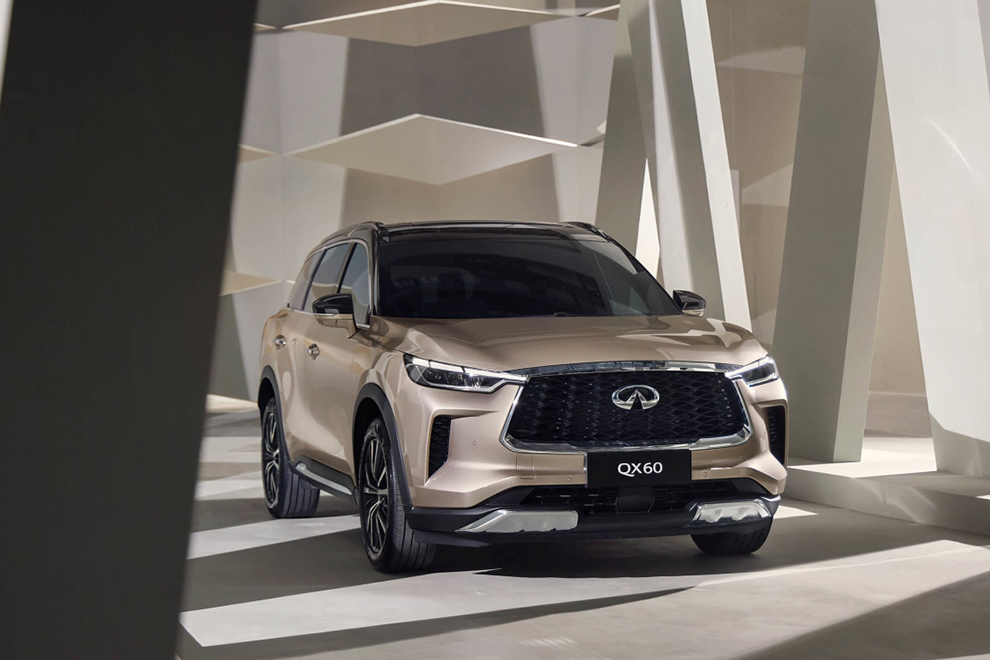
At a glance
- The Qx60 (import) combines premium three-row utility with hybrid and petrol powertrain choices.
- Two-wheel-drive and all-wheel-drive variants suit different operating routes and budgets.
- Model year, trim, condition, freight, Incoterms and exchange rates drive export quotations.
- LHD/RHD configuration and destination-country approval must be checked before contracting.
- Live unit listings provide the current binding price and MOQ for each vehicle.
Why the Infiniti Qx60 (import) matters for export markets
The Infiniti Qx60 (import) for export sits between family utility and premium transport, combining a three-row crossover format with Infiniti-level comfort and equipment. Its relevance is not simply that it is a large SUV: it gives importers access to a model that may be difficult to source through their usual domestic channels. Buyers are typically seeking a commanding road presence, flexible passenger and cargo capacity, and a powertrain suited to long-distance use without relying on public charging. That combination can suit hotels, executive transport, chauffeur operations and premium family fleets where three-row utility matters.
Global demand for this vehicle is shaped by regional preferences for large, comfortable crossovers and by the uneven availability of premium three-row models. In markets where luxury-brand networks are limited, an imported Infiniti may appeal to buyers who recognize Nissan engineering and want a more established Infiniti badge than a mainstream premium alternative. Yet popularity does not remove the need to check local service coverage, spare-parts access, fuel quality and repair familiarity before committing to a batch. This is especially important when vehicles will be sold or operated over several years rather than quickly resold.
For an export buyer, the strongest case for the Qx60 (import) rests on a clear total-cost assessment rather than badge appeal alone. Compare landed operating costs, likely resale demand, parts lead times and the cost of resolving non-compliance against better-supported alternatives. The live inventory should be used to identify the exact model year, trim, drive configuration, condition and documents attached to each vehicle; those unit-level details determine whether the apparent fit is commercially sound. This protects dealer margin and reduces the risk of buying attractive vehicles that are difficult to register or support locally.
- Three-row luxury utility for cross-border buyers.
- Hybrid and petrol powertrain paths.
- Service coverage must support the badge.
Model range, trims and powertrain variants: how the lineup is structured and how to choose
When comparing Infiniti Qx60 (import) specs, the import lineup is structured around two visible powertrain paths: 2.5 S/C Hybrid derivatives, offered with either two-wheel drive or all-wheel drive, and a 3.5L petrol derivative listed with four-wheel drive. Trim names such as Excellence, Champion Family, All-Round, Ultimate and China V describe the seller’s listed grade or equipment set. They should be translated into a requirement sheet—powertrain, drive layout, seating, equipment and documents—rather than treated as internationally standardized trim levels. A buyer comparing two units should therefore compare the underlying hardware and compliance documents, not only the marketing badges.
Within the hybrid branch, the choice between 2WD and AWD is primarily operational. Two-wheel-drive versions may suit buyers focused on urban use, predictable fuel consumption and lower complexity, while AWD units add traction-oriented hardware for wet roads, snow, gravel or frequent travel outside paved networks. That distinction does not automatically make AWD the better import: tyre availability, maintenance records and the destination market’s road conditions should carry more weight than the drivetrain badge alone. Confirm the exact drive designation and any market-specific electronic assistance features in the listing.
The 3.5L petrol four-wheel-drive option serves buyers who prefer a conventional engine-only configuration, broader refuelling familiarity or a different used-vehicle cost profile from the hybrids. Since hybrid battery condition, motor operation and fuel consumption can be harder for non-specialists to assess, a petrol unit may simplify due diligence in some markets. Conversely, it will not suit an operator whose economics depend on hybrid efficiency. No range, battery-capacity or output figure should be assumed from the trim name; ask for the vehicle’s homologation data and verified condition report for each shortlisted unit before contracting.
- 2.5 S/C Hybrid: 2WD or AWD.
- 3.5L petrol: listed as 4WD.
- Compare trim hardware, not names alone.
New vs used Infiniti Qx60 (import): how export inventory is structured and how buyers choose
Export inventory for this model is easiest to understand at the individual-vehicle level. Listings may combine different model years, grades, drive systems and condition descriptions, so the category view should not be treated as one homogeneous vehicle. “New” is a condition category, not a guarantee of the latest production year. Buyers should read the year, trim name, VIN, mileage, photos and inspection statement together, and ask whether the vehicle is factory-new, dealer demonstrator, parallel-imported stock or another non-used category. The binding description should be the one written on the sales invoice.
A vehicle sold as new can be attractive for fleet buyers because it may reduce uncertainty around prior wear and allow a more coherent warranty or resale proposition. The trade-off is that age is not eliminated: an older new-stock vehicle can still require servicing, consumable replacement or correction of cosmetic and market-specification issues. Dealers should therefore ask for the manufacture or production date, factory status, start-date evidence, underbody condition and an itemized list of any preparation performed before dispatch. These details matter more than the simple new label in the sales file.
When a used example is offered through the marketplace, the purchase case shifts from delivery preparation to condition risk management. Older imports may be attractive where the buyer can repair vehicles internally, but depreciation, wear, deferred maintenance and hybrid-system uncertainty must be reflected in the decision. Inspect paint, tyres, brakes, suspension, cabin wear, service history and the high-voltage system where applicable. For any used purchase, obtain an independent inspection rather than treating photographs as proof of mechanical condition. Compare that cost with the premium required for a documented new vehicle variant.
- “New” describes condition, not model year.
- Check VIN, date, mileage and inspection.
- Used vehicles need independent assessment.
How export pricing works: the factors behind a live listing price, and how to read one
A useful Infiniti Qx60 (import) export price guide treats every live quote as a transaction-specific figure, not a permanent value for the model. The model year, exact trim, hybrid or petrol configuration, drive layout, condition, mileage and preparation level all affect the amount a seller will accept. Currency conversion matters because the vehicle cost may be denominated in Chinese yuan while the buyer settles in another currency. A responsible comparison therefore keeps specification and condition constant before looking at the quoted total. Ask for the quote validity period, currency and any tax treatment stated in writing.
Land transport to the departure port, origin handling, documentation, sea freight or roll-on/roll-off carriage, insurance and destination charges may all sit outside the vehicle price shown in a basic listing. Incoterms define where responsibility passes, but they do not remove import duty, value-added tax, customs fees or local registration charges. Because these variables differ by route, season and cargo method, compare like-for-like delivered or port-basis quotations and state the destination port in the request. A lower vehicle line can still produce a higher landed cost if logistics or compliance costs are omitted.
On each live listing, check what the displayed amount represents, which documents are supplied, whether the seller accepts one vehicle, and whether shipping or taxes are excluded. Ask for a written quote tied to the VIN or SKU, including validity, deposit terms, payment currency and the exact Incoterm. Treat the current ChinaCarDirect live inventory as the source for the binding unit price and MOQ, and use an RFQ for scenario pricing rather than extrapolating a generic model-level estimate. This approach makes two supplier quotations genuinely comparable for the same destination and specification.
- Hold model year, trim and condition constant.
- Separate vehicle cost from landed charges.
- Confirm quote validity and Incoterm.
MOQ, ordering and payment: single units vs consolidating a container
For Infiniti Qx60 (import) wholesale buying, minimum order quantity, or MOQ, is a commercial rule attached to a seller or quotation; it is not a fixed characteristic of the model. Some importers can buy a single vehicle, while sellers or freight consolidators may set a larger unit requirement to make loading, documentation or resale economics workable. Read the MOQ shown for each live unit, but also ask whether it is a listing condition or a negotiation term. Never assume one universal quantity applies to every trim or supplier. Confirm any volume discount separately.
Payment structure should follow the risk profile of the deal. A common sequence is a deposit to reserve a specified vehicle, documentary settlement or balance payment before release, and payment for freight and destination charges separately. The sales contract should identify the vehicle, ownership status, inspection evidence, invoice, export declaration and refund remedies if the unit materially differs from the agreed description. For a larger consolidation, align payment milestones with actual loading evidence rather than relying only on a general purchase order. The named vehicle should be the same one shown in inspection photos.
A single-unit purchase gives an importer direct control of one retail vehicle and may fit a dealer test order, but it exposes the buyer to the full fixed cost of transport, customs and compliance per vehicle. Consolidating several compatible units can spread freight and handling costs, yet it increases inventory risk, requires tighter specification control and makes one damaged or non-compliant vehicle more consequential. Before consolidating, agree trim and drivetrain standards, inspection evidence, replacement remedies, loading access and the order of dispatch. Keep unit identities and payment records reconciled throughout.
- MOQ belongs to the seller or quote.
- Tie deposits to a named vehicle.
- Reconcile units before consolidation.
Shipping, homologation and market compliance caveats: LHD/RHD and import rules by country
Handedness is the first configuration check for an imported Qx60. China-origin examples are commonly left-hand-drive, whereas many importing countries expect or accept only right-hand-drive vehicles. A steering-wheel conversion can make a vehicle physically operable in another market, but it does not by itself satisfy local type approval, emissions, safety, insurance or registration rules. Buyers serving right-hand-drive markets should ask whether the unit is factory RHD or LHD, require photographs of the steering position and verify the VIN against homologation records before paying. A conversion supplier’s claim is not a substitute for regulator confirmation.
Import rules are country-specific, so “China V” or “import” in a trim description should not be treated as evidence of road legality elsewhere. Depending on the destination, the importer may need a VIN check, homologation or individual approval, emissions compliance, customs classification, proof of ownership, customs value, duties and taxes, and a local safety inspection. Left-hand-drive vehicles may also face age restrictions or usage limitations in certain markets. Obtain a written route-to-market plan from a customs broker or compliance specialist before committing. Local restrictions can outweigh an attractive purchase specification.
Transport method affects both cost and vehicle condition. Roll-on/roll-off shipping can suit enclosed SUVs when available, while breakbulk or container transport requires careful securing and may make dimensions important. Compare freight quotations using the same port pair, cargo method, insurance level and Incoterm; do not assume one method is automatically cheaper. Secure the vehicle against movement, inspect it at loading, photograph damage, preserve cargo documents and understand whether destination handling is included. Transit insurance should cover the vehicle through the agreed delivery point. Any pre-existing marks should appear in the handover record.
- Verify factory LHD or RHD configuration.
- China V does not mean global approval.
- Compare freight on identical route terms.
Who should buy the Qx60 (import) — and who should pick a different vehicle
The Qx60 (import) is most suitable for a dealer or fleet operator that needs a premium-feeling, three-row vehicle and can support its ownership and import requirements. It is particularly relevant to chauffeur, executive, airport-hotel and premium family fleets, provided that local safety, emissions and registration rules are met. The strongest buyer therefore has realistic demand for a large Infiniti, access to servicing or a trusted repair partner, and a route-to-market plan that treats compliance as part of the vehicle’s value. Buyers focused only on acquisition cost may overlook those operating requirements.
It is a weaker choice for buyers who need the lowest purchase and operating cost, minimal import administration, abundant local parts or a vehicle with a simple, widely understood specification. A mainstream three-row crossover may be easier to source and support, while a premium crossover without three rows may be more appropriate when the third row is seldom used. The Qx60 also makes less sense if the intended market penalizes left-hand-drive imports or if the operator cannot justify a large, luxury-positioned vehicle. Its size can also complicate urban parking and fleet efficiency.
Use a shortlist test before ordering. First eliminate any unit that cannot be registered or economically serviced in the destination; next, compare the hybrid and petrol choices against expected annual distance and refuelling access; then assess whether 2WD or AWD matches the operating routes. Only after those gates should the buyer compare trim equipment, appearance, acquisition terms and resale prospects. This sequence reduces the risk of selecting the most attractive sheet-metal specification while missing a basic compliance or operating constraint. Document each decision so the final order is commercially defensible.
- Best for premium three-row fleet use.
- Weak fit for minimal-cost operations.
- Eliminate non-compliant units first.
Main rivals and how the Qx60 (import) compares
The closest corporate-family rival is the Acura MDX: both are large Infiniti/Acura premium crossovers aimed at buyers wanting a high seating position, generous space and a mix of comfort and utility. The MDX may appeal where Acura has stronger local recognition or where its powertrain and service arrangements are better understood. Neither brand’s presence is automatically strong in every country, so local dealer coverage, parts logistics and residual demand should influence the decision more than badge preference alone. Compare verified local support rather than assuming shared corporate backing solves every service issue.
The Volvo XC90 competes for buyers who prioritize a premium three-row cabin, strong safety perception and a more overtly European ownership experience. It is generally a useful alternative for safety-led family and executive buyers, particularly where Volvo support is established. The Qx60 (import) may offer a different acquisition route and a broader availability of imported configurations, but it should not be selected if weaker service familiarity or uncertain parts support would create unacceptable downtime. Evaluate both as long-term assets, not only as imported vehicles. Ownership cost and support must be checked locally.
The Toyota Highlander is the more pragmatic mainstream rival, with a widely understood three-row package, strong brand familiarity in many export markets and a reputation for straightforward fleet operation. It may be the better answer when minimizing downtime, simplifying parts planning or reaching a wider resale audience matters more than premium branding. The Qx60 (import) offers a more distinctive luxury identity and a mix of 2.5 S/C Hybrid and 3.5L four-wheel-drive choices. The final comparison should test expected utilization, fuel strategy, compliance and support against the price of the exact unit.
- Acura MDX: closest premium sibling.
- Volvo XC90: safety-led premium alternative.
- Toyota Highlander: pragmatic mainstream choice.
Live Infiniti Qx60 (import) export inventory
View all listings →Real units currently on ChinaCarDirect with per-unit asking prices and MOQ. Availability updates live from the catalogue.
Infiniti Infiniti QX60 (Import) 2020 Model 2.5 S/C Hybrid All-Wheel Drive Ultimate Edition
Infiniti Infiniti QX60 (Import) 2020 Model 2.5 S/C Hybrid All-Wheel Drive Ultimate Edition
Infiniti Infiniti QX60 (Import) 2020 2.5 S/C Hybrid 2WD Excellence Edition
How to buy a Infiniti Qx60 (import) from China
-
1
Define the destination and duty cycle
Specify the destination country, required seating, handedness, annual distance and operating roads. This establishes which Qx60 configurations are eligible before comparing vehicles.
-
2
Shortlist the live inventory
Review the current Qx60 (import) listings by model year, trim, powertrain and drive configuration. Use the unit-level entry for the binding price, MOQ and available vehicle-specific information.
-
3
Request unit-level evidence
Ask for the VIN, production date, detailed photographs, equipment list, condition report, service history and relevant ownership or export documents. A seller should answer questions against the same unit named in the quotation.
-
4
Validate compliance and landed costs
Have a customs broker or local compliance specialist check registration, emissions, safety, import-tax and LHD/RHD implications. Obtain a separate logistics estimate covering origin handling, freight, insurance and destination charges.
-
5
Agree MOQ, payment and Incoterm
Confirm the quantity requirement for the selected quotation, deposit structure, balance-payment evidence, named vehicle, refund remedies and exact Incoterm. Keep the payment milestones aligned with inspection and loading evidence.
-
6
Inspect, secure and dispatch
Approve a pre-shipment inspection, document existing damage, verify export paperwork and confirm cargo securing. Photograph loading and retain insurance, customs, shipping and handover records through delivery.
Qx60 (import) vs rivals
| Acura MDX | The MDX is the closest corporate-family alternative for premium three-row buyers. It may be the stronger choice where Acura service recognition and local parts support are clearly better. |
|---|---|
| Volvo XC90 | The XC90 is a strong premium alternative for buyers prioritizing a modern three-row cabin and safety-led ownership proposition. It may suit markets where Volvo support is better established than Infiniti support. |
| Toyota Highlander | The Highlander is the pragmatic mainstream choice for buyers prioritizing fleet uptime, familiar servicing and broad resale appeal. The Qx60 (import) offers a more distinctive luxury position and a broader premium identity. |
Frequently asked questions
How is the export price of an Infiniti Qx60 (import) determined?
The price is specific to the vehicle’s year, trim, powertrain, drivetrain, condition, mileage and the seller’s commercial terms. Freight, insurance, exchange rates, Incoterms, taxes and compliance work can change the landed cost. Current unit-level prices and MOQs appear on the [live Qx60 (import) listings](https://chinacardirect.com/products?q=Qx60%20%28import%29&brands%5B%5D=72), while a written RFQ should confirm the final scope.
Which Infiniti Qx60 (import) powertrain and range options are available?
The lineup includes 2.5 S/C Hybrid versions with either 2WD or AWD, plus a 3.5L petrol derivative listed as 4WD. The hybrid is a conventional petrol-electric system that does not depend on external plug-in charging. Battery capacity, motor output, rated range and fuel economy are not stated by the trim name alone, so check the exact vehicle’s technical documents and live listing.
Should I choose a new or used Infiniti Qx60 (import)?
A new-condition vehicle may reduce wear uncertainty and simplify fleet preparation, but it may still be an older production year and require servicing. A used vehicle can offer lower acquisition exposure or repair potential, but it carries depreciation, wear and hybrid-system risks. Base the decision on a VIN-specific inspection and the total cost of preparing the vehicle for its intended market.
What is the minimum order quantity for an Infiniti Qx60 (import)?
MOQ is set by the individual seller or quotation, not permanently by the model. Some offers may be available to single-unit buyers, while larger requirements may apply to consolidation or loading arrangements. Read the MOQ on the live unit and confirm it in the written RFQ, invoice and sales contract.
How long does shipping take, and what changes the cost?
Transit time depends on origin port, destination port, carrier availability, cargo method, customs clearance and seasonal congestion. Cost is affected by distance, roll-on/roll-off or container handling, insurance, fuel surcharges, origin charges and destination fees. Compare freight quotations using the same route, Incoterm, cargo method and insurance level.
Can spare parts be sourced for a China-spec Infiniti Qx60 (import)?
Parts can usually be ordered against the VIN, model year and exact configuration, but availability and lead time vary. Buyers should confirm whether required items are held by Infiniti, Nissan or a specialist before shipping a vehicle into a remote operating area. Keep a parts list and expected delivery time as part of the ownership calculation.
Is a right-hand-drive Infiniti Qx60 (import) available?
RHD availability depends on the individual vehicle, and China-origin examples are commonly left-hand drive. A steering-wheel conversion does not automatically make an LHD vehicle compliant for local registration. Confirm factory handedness, VIN approval and destination rules using the current live inventory.
How do I buy an Infiniti Qx60 (import) from China?
Start with the live listings, identify a suitable unit and request a written quote tied to its VIN or SKU. Confirm documents, condition, MOQ, payment milestones, compliance and the Incoterm before paying a deposit. After inspection and export preparation, the vehicle should be shipped under agreed insurance and handover arrangements.
Ready to source the Infiniti Qx60 (import)?
Send an RFQ with your destination, powertrain, quantity and Incoterm via the [ChinaCarDirect contact page](https://chinacardirect.com/contact).
Request a quote