
Isuzu D-max Export Buying Guide for Overseas Buyers
Buy an Isuzu D-max from China with practical guidance on trims, diesel and gasoline powertrains, export pricing logic, MOQ, shipping, compliance and key rivals.
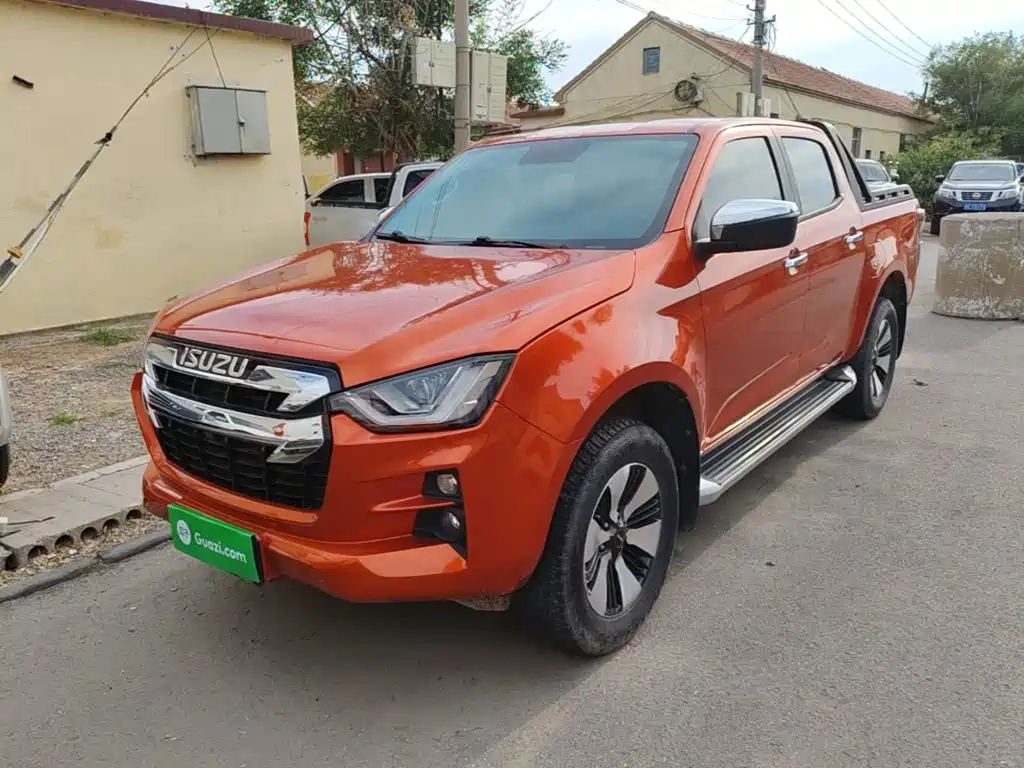
At a glance
- The D-max combines pickup utility with road-oriented comfort for fleet, farm, construction and specialist-vehicle buyers.
- Chinese inventory includes 1.9T and 2.5T diesels, a 2.0T gasoline and a 3.0T diesel, with manual and automatic choices.
- Two-wheel-drive and four-wheel-drive layouts, standard and long wheelbases, and five-seat or camper-conversion bodies should be matched to the duty cycle.
- New vehicles offer specification consistency, while documented used units can provide broader configuration and equipment choice.
- Current unit price, condition, MOQ and seller terms must be checked in ChinaCarDirect's live D-max inventory.
Why the Isuzu D-max matters for export markets
The Isuzu D-max sits between a working truck and a road-oriented family pickup, giving overseas buyers a practical balance of load-carrying ability, ride quality and midsize dimensions. Isuzu has a long-established identity in commercial pickups, and that recognition matters where diesel service networks, agricultural users and fleet operators already know the marque. For an importer, the model is attractive not because every market treats it identically, but because it can address several customer groups with one platform. Its pickup format suits users who need capability without moving to a much larger commercial vehicle.
Common export demand comes from distributors serving farms, construction contractors, utility fleets, mining-support businesses and regional transport operators. The D-max can also make sense as a base for specialist vehicles or camper conversions, particularly when a buyer wants a familiar chassis and more refined road behavior than a bare work truck. Chinese-market examples may offer high-clearance, long-wheelbase, navigation, luxury or five-seat configurations, so the use case determines which body and drivetrain should be shortlisted. A buyer should therefore start with payload, towing and local infrastructure needs rather than with a badge or a single export listing.
For export planning, the D-max is strongest when its advantages are matched to local operating conditions. Diesel versions may suit regions with established diesel fuel and service networks, while gasoline versions can offer broader fuel availability or suit buyers who prefer gasoline offerings visible in the Chinese range. Steering configuration, emissions rules, axle loads, safety equipment and parts support can determine whether a Chinese-spec truck can actually be registered and supported in the destination country. Treat the Chinese specification as a starting point, then obtain written confirmation of destination approval before committing funds.
- Match payload and towing to the duty cycle.
- Verify steering, loads and emissions.
- Compare Chinese and local D-max versions.
Model range, trims and powertrain variants: how the lineup is structured and how to choose
The Chinese D-max range is broad because it spans several diesel and gasoline engines, manual and automatic transmissions, two-wheel-drive and four-wheel-drive layouts, and different cab, bed and wheelbase formats. Visible engine families include 1.9T, 2.0T, 2.5T and 3.0T units, with displacement and fuel type varying by trim. Rather than treating every listing as a simple base, mid or top model, buyers should decode the powertrain, axle, transmission, seating and body configuration together. A long-wheelbase automatic 4x4 diesel serves a different duty cycle from a manual two-wheel-drive work truck, even when both wear the D-max name.
Drivetrain should follow terrain and load. Two-wheel-drive models generally make sense for paved regional distribution, farmyards with maintained access or buyers seeking the simplest configuration. Four-wheel-drive versions add traction capability for rough tracks, muddy fields and remote work, but they also carry a different purchase and running profile. Automatic transmissions can reduce driver workload in stop-and-go traffic, while manuals may suit fleet drivers familiar with them and straightforward mechanical operation. Ask each supplier for final-drive, axle, differential-lock and tyre details, since the term 4WD alone does not describe every off-road capability or recovery requirement.
Body choice is equally practical. Standard-wheelbase and long-wheelbase versions trade maneuverability for load-space or passenger room, while extended-body, high-clearance, navigation, flagship, luxury and factory-style camper configurations serve specialized buyers. Five-seat vehicles are common in the visible range, but converted recreational versions can have different seating. For fleet use, check cab dimensions, bed measurements, ground clearance, fuel-tank capacity and towing requirements in the live specification rather than extrapolating them from the model name. Request photographs or a measurement sheet for the exact unit, especially for a camper conversion or an extended bed intended for specialist equipment.
- Match 2WD or 4WD to terrain.
- Compare gearbox options with fleet use.
- Verify bed, seating and towing data.
New vs used Isuzu D-max: how export inventory is structured and how to choose
Export inventory should be read as a mixed market rather than a single standardized model programme. Chinese listings can include vehicles described as new and used examples from different model years, with condition, mileage and equipment varying by seller. A live vehicle record should therefore be treated as the unit-level source of truth: confirm whether it is new or used, its production or model year, mileage, service history and any disclosed damage or refurbishment work. New units generally reduce specification uncertainty, while a well-documented used vehicle can deliver a more suitable configuration at a lower acquisition outlay.
Used D-max units require a different risk assessment. Buyers should request exterior and underbody photographs, chassis and frame inspection evidence, tyre condition, fluid-leak checks, cabin wear, OBD fault information, service records and the engine-starting video commonly used to establish condition. Also verify that repairs did not alter controlled emissions components and that the steering, cooling, brake and electrical systems work as expected. Age alone is less informative than a documented inspection and coherent maintenance history. For a converted camper, additionally inspect insulation, gas or electrical installations, roof loads and the legality of local conversion approvals.
New vehicles suit buyers who need a known specification, standardized fleet configuration, predictable cosmetic condition or manufacturer support arrangements. Used vehicles can suit buyers seeking a particular older diesel, manual gearbox, factory camper or equipment-rich 4x4 that may not be offered new. Because warranty scope for a China-market unit may differ from destination-market cover, do not assume that new equals fully homologated or that used has no transferable protection. Obtain written warranty and service terms for the exact vehicle and cross-check the live record against an inspection report and sales invoice.
- New units reduce specification uncertainty.
- Used units require inspection evidence.
- Confirm warranty and service coverage.
How export pricing works: the factors behind a live listing price, and how to read one
An export listing price is the result of several interacting variables, not a universal D-max price. The vehicle's year, exact trim, engine and gearbox, drivetrain, mileage, condition, ownership history and cosmetic or mechanical work all influence the seller's ask. Market demand for a common configuration can also affect the amount a supplier is willing to accept. For a buyer, this means comparing like with like and asking what is included in the displayed figure before treating it as a landed cost. Ask whether local taxes, registration documents, export treatment, inspections and dealer margin are separate.
Operating and logistics assumptions can move the final figure even when the vehicle price is unchanged. Freight is affected by origin and destination ports, route, container type, cargo weight, fuel surcharges, security requirements and seasonal capacity. Payment terms, the chosen Incoterm, exchange-rate movement, insurance, export documentation and the importer's clearance obligations also affect affordability. These variables are especially important when comparing one unit with a consolidated shipment, because the buyer may pay for capacity that is not fully used. Freight quotations should use the final vehicle specification, declared options and realistic loading assumptions.
On ChinaCarDirect, use the live inventory page as the transactional reference for the exact unit. Open the relevant D-max result and check the displayed price, currency, condition, year, trim, seller information, minimum order quantity and included documents; those details can change as individual vehicles are repriced or sold. Treat the visible number as the vehicle quotation, then build a separate landed-cost worksheet. Ask for a written pro forma invoice that identifies the vehicle, packing, inland transport, export charges, payment milestones and Incoterm. Compare that quote with an independent freight estimate before sending the balance.
MOQ, ordering and payment: single units vs consolidating a container
Minimum order quantity is a seller-level commercial term, so it should be checked for the selected listing rather than assumed for every D-max. Some vehicle suppliers will release one unit to a serious importer or fleet buyer; others set a lot requirement or prefer consolidated orders. This matters because a single-unit purchase may be possible even when a full container would offer better freight economics. A buyer should ask whether the MOQ applies to one model configuration or may be met with mixed D-max units, and whether the threshold changes for a repeat order.
For a single vehicle, the ordering sequence is usually straightforward: agree the exact listing or build specification, request a pro forma invoice, pay the agreed deposit, complete pre-delivery inspection, pay the balance against the agreed milestones, and release the unit for export. Payment methods and buyer protection should be confirmed in writing. Never rely on screenshots or verbal promises for the VIN or chassis number, engine number, equipment list, condition report, export documents or refund terms; those items must appear on the invoice and inspection record. Keep versions of every document until the buyer accepts the vehicle.
A container wholesale programme requires more coordination. The importer can calculate how many vehicles fit using verified packed dimensions and weight, but should not order on nominal bed dimensions alone. Confirm whether the supplier loads loose vehicles, combination-cargo containers or vehicles with other goods, and who bears lashing, securing, damage and excess-weight risk. For mixed units, create a loading list with chassis numbers, trim and destination allocation. The shipping release should occur only after the final packing plan and condition photographs have been approved. This sequence reduces the risk of costly unloading and re-handling abroad.
- Check the listing's stated MOQ.
- Use a written pro forma invoice.
- Approve packing and chassis-number lists.
Shipping, homologation and market compliance caveats: LHD/RHD and import rules by country
Shipping begins with confirming whether the unit is configured for left-hand drive or right-hand drive and whether that configuration is legal for the destination. D-max availability in a particular steering format can differ by trim, production run and source market, so 4x4 does not answer the question. The buyer should also identify the destination's rules for emissions stage, noise, lighting, catalytic converters, fuel labelling, vehicle approval, import age, customs value and proof of ownership. A vehicle can be mechanically sound yet still be refused registration if its specification does not match local rules.
Chinese-market D-max vehicles can carry China VI emissions hardware and market-specific equipment, while local approval may require a particular technical standard or conversion. Before dispatch, ask the supplier or a qualified compliance adviser for the engine management, emissions-control and diagnostic information needed for registration in the target country. Changes to steering, lighting, exhaust or emissions systems can affect both legality and warranty. If a local conversion is possible, document who performs it, the component approvals, inspection evidence and the effect on load, safety and after-sales support. Allow time for inspection and rectification.
Freight cost and transit time depend on the selected Incoterm, origin port, destination port, sailing or air route, container availability, customs workload and the documents required at each border. Insurance is equally important: confirm that the vehicle remains covered from supplier premises through loading, voyage, customs and discharge, and check exclusions for used cargo, camper conversions or specialist equipment. Obtain the original bill of lading or air waybill, commercial invoice, packing list, chassis and engine numbers, export declaration and every certificate required by the destination before release or arrival.
Who should buy the D-max — and who should pick a different vehicle
The D-max is strong for importers and fleet buyers needing pickup versatility but preferring a comfortable, road-oriented vehicle to a basic commercial truck. It fits agriculture, construction, utilities, local delivery, outdoor equipment and regional government or NGO fleets when payload, towing and off-road requirements align with the selected configuration. It is also logical for a dealer planning a mixed portfolio: work trucks, higher-spec passenger cabs and specialist camper conversions can address different customer segments within the same model family. The deciding factors are fuel availability, parts support, payload and the ability to register each configuration.
Choose a different vehicle when the requirement is a full-size heavy-duty pickup, a high-capacity electric truck, an urban unladen van, or a passenger SUV with no commercial cargo role. A full-size pickup may offer greater towing and payload capability, while purpose-built electric platforms can suit fleets with charging and duty-cycle support. If commercial registration, tax treatment or payload certification differs sharply by body type, compare the legal vehicle class before comparing purchase cost. The D-max is versatile, but it does not automatically satisfy every load, emission, licensing or local operational requirement.
For an overseas buyer, ownership fit is as important as the brochure. Check whether local Isuzu workshops can service the selected engine and gearbox, whether common service parts are available, and whether a dealer can support tyres, chassis, electrical and emissions components. A vehicle that is easy to inspect and repair may be more valuable than one with a higher specification but poor support. For used units, a documented history and professional inspection can outweigh model-year novelty; for new units, the ability to obtain parts and a clear warranty may outweigh cosmetic consistency.
- Suitable for mixed commercial and passenger fleets.
- Review payload, towing, fuel and support.
- Consider larger, electric or non-pickup alternatives.
Main rivals and how the D-max compares
The Toyota Hilux is the closest global benchmark for buyers comparing the D-max, with a similarly established pickup identity, diesel and gasoline options, manual or automatic choices and two- or four-wheel-drive configurations. Its principal advantage in many established markets is a broad homologated dealer and parts network, which can reduce service risk and support resale. The D-max can offer equipment-rich Chinese trims, but the buyer should compare the exact local-market Hilux with the Chinese vehicle because steering, safety, emissions and equipment may not match. Compare both carefully on a specification-for-specification basis before purchase.
The Ford Ranger occupies a similar midsize pickup segment and is a relevant alternative where fleet buyers value a broad global powertrain and configuration portfolio. Depending on the market, it may offer petrol and diesel engines, manual or automatic transmissions, selectable drive modes and different cab styles, so it can be easier to match with familiar fleet standards. Chinese D-max inventory includes diesel-heavy choices and option-rich trims. The deciding comparison is local after-sales support, payload certification, safety specification and total operating suitability rather than brochure output alone.
The Mitsubishi Triton, also sold as the L200 in many markets, is another close pickup competitor with a similar blend of commercial utility, passenger-cab comfort and off-road versions. It can appeal to buyers who prefer a recognizable global model or a particular local drivetrain and equipment package. The D-max remains relevant through its diesel range, automatic and manual options, four-wheel-drive availability and the unusual choice of factory-style camper and extended-body examples in Chinese inventory. Neither brand wins automatically: compare the locally approved version, service network, parts lead time and real-world load requirement.
- Hilux: benchmark for dealer reach and resale.
- Ranger: broad fleet configurations.
- Triton/L200: close global pickup rival.
Live Isuzu D-max export inventory
View all listings →Real units currently on ChinaCarDirect with per-unit asking prices and MOQ. Availability updates live from the catalogue.
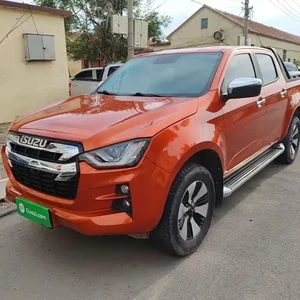
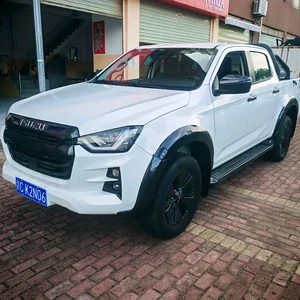
Isuzu D-MAX 2021 Model 1.9T Automatic 2WD Diesel Global Tough RZ4E
How to buy a Isuzu D-max from China
-
1
Define the duty cycle and destination
Record expected payload, towing, terrain, fuel type, fleet size and delivery destination before selecting a trim. Include local registration, tax and driving-configuration requirements.
-
2
Compare the Isuzu D-max specs
Use the live inventory to compare engine, transmission, drivetrain, cab, bed, seating and steering configuration. Shortlist only units that satisfy the operational brief.
-
3
Request unit-level evidence
Ask for chassis and engine numbers, detailed photographs, specifications, service history and an inspection report. For a camper, request conversion and component documentation.
-
4
Request a quote and landed-cost estimate
Ask for a written pro forma invoice identifying the vehicle, packing, inland transport, export charges, payment milestones and Incoterm. Obtain a separate freight and clearance estimate.
-
5
Run the compliance review
Confirm steering configuration, emissions, axle limits, lighting, safety equipment and destination type-approval requirements before paying the balance.
-
6
Confirm the order and payment
Record the selected chassis number, condition, documents, deposit, balance milestones, warranty scope and cancellation terms in the contract. Keep verified copies of every approval and inspection record.
-
7
Approve loading and shipping
For an individual unit or container shipment, approve the packing plan, condition photographs, loading list, lashing responsibility and insurance coverage. Release freight only when the details match the agreed order.
D-max vs rivals
| Toyota Hilux | The Hilux is the closest global benchmark for the D-max, with familiar diesel and gasoline, manual and automatic, and 2WD/4WD choices. Its established local dealer network can reduce service risk, so compare that advantage with the D-max's equipment-rich Chinese trims and confirm homologation before buying. |
|---|---|
| Ford Ranger | The Ranger competes directly in the midsize pickup class and often gives fleet buyers a broad, familiar configuration menu. The D-max may offer more Chinese-market trim variety, but local parts access, safety equipment, payload certification and after-sales support should decide the choice. |
| Mitsubishi Triton / L200 | The Triton/L200 is a close utility rival with comparable 2WD/4WD roles and a familiar global footprint. The D-max stands out for the breadth of Chinese diesel trims, extended-body and factory camper examples, but local homologation and parts support remain decisive. |
Frequently asked questions
How is Isuzu D-max export pricing determined?
Export pricing reflects the unit's year, trim, engine, gearbox, drivetrain, mileage, condition and refurbishment, plus the chosen Incoterm, freight, insurance, payment terms and exchange rate. The exact current vehicle price is shown on the live ChinaCarDirect D-max inventory and can change per unit. Buyers should therefore request a written pro forma invoice and calculate duty, tax, clearance and inland transport separately.
Which D-max engine and drivetrain options are available from China?
The Chinese range includes 1.9T and 2.5T diesels, a 2.0T gasoline and a 3.0T diesel, with manual or automatic transmissions and 2WD or 4WD depending on trim. There is no single engine choice that is best for every market. Check the exact listing for the engine code, gearbox, axle and emissions specification, then confirm fuel and service support in the destination.
Should an overseas buyer choose a new or used Isuzu D-max?
New vehicles generally offer more predictable specification and condition, while used units can provide access to older engines, manuals, camper conversions or equipment-rich 4x4 trims. A used D-max should be supported by a current inspection, service history and identity documents. A new China-market unit still needs destination-market compliance and warranty confirmation.
What is the MOQ for buying a D-max from China?
MOQ is set by the seller and the specific offer, not by the D-max model name. Some offers may permit a single unit, while others require a lot or container quantity; the current requirement appears on the live listing. Ask whether mixed configurations can count toward the MOQ and whether it changes for repeat wholesale orders.
How long does shipping take and what affects the cost?
Shipping time and cost depend on origin and destination, sea or air route, container availability, Incoterm, cargo weight, fuel surcharges, insurance, customs workload and required documents. A pickup generally moves by sea in a vehicle container, but the route should be confirmed for the exact unit. Obtain a freight quote using verified packed dimensions and weight rather than nominal bed dimensions.
Can spare parts be ordered for an exported D-max?
Parts availability depends on the engine, gearbox, trim and destination dealer network. China-market vehicles may use different part numbers or equipment from vehicles sold under the D-max name elsewhere, so request the VIN or chassis number, EPC references and diagrams before ordering. For long-term fleet support, compare lead time and return logistics with a local Isuzu dealer.
Is a right-hand-drive Isuzu D-max available?
Right-hand-drive D-max examples may be available, but availability depends on trim, production run and source market. Check each live listing and ask the supplier to confirm the steering configuration in writing. If a unit requires conversion, verify local type approval and warranty consequences before paying.
How do I order an Isuzu D-max from China?
Start from the live D-max listings, select a vehicle matching the required engine, drivetrain, body and steering, then request an RFQ and pro forma invoice. After document and inspection review, agree the deposit, balance milestones, export documents, loading plan and Incoterm in writing. Release payment and freight only after the vehicle, compliance evidence and shipping details match the agreed contract.
Ready to source the Isuzu D-max?
Request a unit-level D-max quote with your destination, fleet size, powertrain and operating requirements.
Request a quote