
JAC Motors Iev6e Export Guide for Dealers and Fleets
Plan a JAC Motors Iev6e export purchase with trim, battery and range guidance, pricing logic, shipping checks and compliance advice for overseas buyers.
At a glance
- The Iev6e is a compact battery-electric hatchback aimed at cost-sensitive urban and fleet use.
- Base, Upgrade, Sport, Premium Package and Youth labels describe a varied trim structure rather than a single specification.
- Battery capacity, usable range and charging details must be verified by model year, VIN and homologation record.
- Wholesale economics depend on configuration, condition, freight, Incoterms, exchange rates and destination charges.
- A pilot vehicle can test charging, compliance and demand before a fleet or container commitment.
Why the JAC Motors Iev6e matters for export markets
The JAC Motors Iev6e is a compact, battery-electric hatchback built for cost-sensitive urban mobility rather than long-distance touring. Its export proposition combines a small footprint, a relatively simple electric drivetrain and a format suited to city fleets, campus transport, ride-hailing and short commercial loops. For overseas buyers, it can serve as an affordable pilot vehicle when local import rules and charging infrastructure are already in place. That makes it most relevant to importers who can verify homologation and after-sales support before scaling a larger fleet order in that destination market.
Demand for this kind of vehicle is strongest where operators need many usable cars but do not need premium cabins, high performance or long highway range. Electric drivetrains also reduce routine service items associated with an internal-combustion engine, although tires, brakes, suspension, charging equipment and eventual battery work still require maintenance budgets. The Iev6e is therefore best evaluated as an operating tool: useful route range, charging downtime, residual value and parts access should matter more than badge appeal or maximum equipment count. A successful export program starts with these use-case questions, not with a single catalogue image.
The model also helps overseas buyers enter the EV segment at a more accessible vehicle size. It is not a global-standard export program with one specification for every country, so trim labels, battery versions and documentation must be checked unit by unit. Names seen in catalogues—including base, Upgrade, Sport, Premium Package and Youth descriptions—should be treated as version identifiers, not proof of identical equipment. The [JAC Motors brand hub](https://chinacardirect.com/car-brands/jac-motors) helps establish the seller context, while the live inventory should determine what can actually be purchased for the destination market and its specific operating requirements.
- Strong fit for planned urban and short-route fleet use.
- Pilot homologation, charging and demand before scaling.
- Treat trim names as identifiers, not equipment guarantees.
Model range, trims and powertrain variants: how the lineup is structured and how to choose
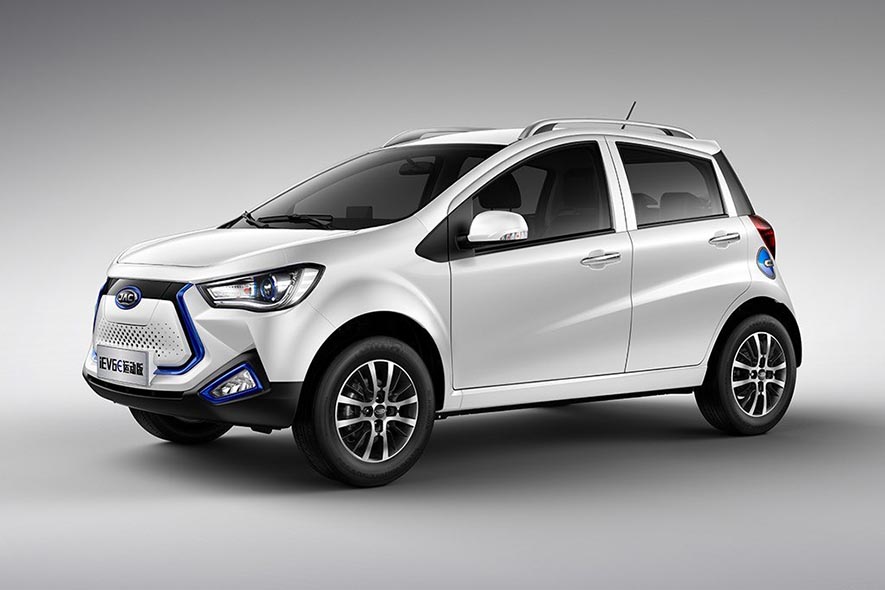
The Iev6e range is organized around a pure-electric powertrain and several descriptive trim packages. Across the versions represented in export catalogues, buyers may encounter the plain iEV6E, Upgrade Edition iEV6E Luxury Smart Model, Model Sport iEV6E Luxury Smart, Sport Edition iEV6E Luxury Smart Premium Package and Youth Edition iEV6E Smart Enjoyment Type. These names help identify a seller’s source vehicle, but words such as Luxury, Smart or Premium should not be treated as a verified equipment list without photographs, a written configuration and the VIN for the exact vehicle being considered.
Because this is an EV, there is no conventional multi-speed gearbox to compare; power goes through an electric motor and single-speed reduction gear to the front wheels. Model-year development produced different battery capacities and range ratings, so the correct comparison is battery usable capacity, stated range and the test cycle behind that figure. A CLTC-labelled domestic range number cannot be compared directly with a WLTP, EPA or local approval value. Ask for the battery code, rated capacity, usable capacity, odometer and range methodology for every shortlisted unit before pricing it for duty and charging needs.
Choose the trim by operational value rather than by the most elaborate name. A fleet buyer may prioritize range, air-conditioning, wheel and tire availability, battery warranty and repair simplicity, while a private buyer may care more about cabin equipment and appearance. Confirm whether claimed functions are fitted, operational and supported in the destination market. If two listings use similar labels, compare their VIN-level specification sheets, charging equipment, software state and service history; the trim name alone is not a dependable basis for ordering with confidence or negotiating the final price.
- Compare usable battery capacity and certified range.
- Verify equipment against VIN-level documents.
- Check charging, warranty and local repair support.
New vs used JAC Motors Iev6e: how export inventory is structured and how buyers choose
New and used Iev6e vehicles serve different procurement decisions. New export stock is generally the cleaner starting point when a buyer wants predictable condition, known odometer reading and a simpler ownership history, but the buyer must still verify whether the car has been registered, whether the battery warranty has started and whether the declared condition is supported by inspection photographs. In a used purchase, lower acquisition cost may be offset by higher wear, uncertain battery health, repair history and weaker residual-value expectations. These issues matter especially in former fleet use.
Condition labels are only a starting point. A low-mileage used car can still have hard urban use, while an ex-fleet car may have a coherent maintenance record that supports continued operation. For any used vehicle, request a VIN-specific service history, battery state-of-health report if available, charging test evidence, photos of the underbody and battery area, and an explanation of accident or flood exposure. The seller should disclose whether the odometer has been replaced or whether the vehicle was used for ride-hailing, delivery or other high-utilization duty before final payment is cleared.
Availability and condition must be assessed from the current unit records rather than assumed from the model name. Live Iev6e listings are the authoritative place to see which condition categories, years and trims are presently offered, and each listing should state its own pricing and ordering terms. If a buyer specifically needs a used example, use the relevant search filters or send a precise RFQ when none is visible. The [live Iev6e inventory](https://chinacardirect.com/products?q=Iev6e&brands%5B%5D=1343) should always be checked on the day a sourcing decision is made, because export stock changes continuously and quotes may expire before final approval.
How export pricing works: the factors behind a live listing price, and how to read one
A live Iev6e price is a starting commercial reference, not automatically the landed cost of putting the vehicle in your warehouse. The first driver is the vehicle itself: model year, trim, battery version, mileage, condition, options and the quality of its export documents. A newer or higher-capacity battery, a better-equipped trim and a cleaner history can move the asking price, but the relationship is not fixed. Always read the individual description rather than inferring value from the model badge or a marketplace-wide average or relying on an outdated buyer guide.
Logistics then add a second layer. Exchange-rate movements can alter an otherwise unchanged quotation; freight depends on origin and destination ports, sailing or road schedule, cargo handling, insurance and battery-transport requirements. Incoterms such as EXW, FOB, CIF or DDP determine which party arranges carriage, bears risk and handles export clearance. Other charges may include documentation, inspection, terminal handling, storage, inland delivery, destination duty, VAT and local registration. Ask for each item separately so a cheaper vehicle price is not confused with a cheaper delivered purchase. The quote should state validity dates and the exchange-rate basis used for payment.
Buyers should compare offers on the same basis. Confirm the quoted currency, whether the amount covers the vehicle only or includes a named transport service, the Incoterm, payment milestones, documentation scope, warranty treatment and validity period. Then reproduce the arithmetic using the destination address and expected delivery terms. Current per-unit asking prices and any applicable MOQ are shown in the [live Iev6e listings](https://chinacardirect.com/products?q=Iev6e&brands%5B%5D=1343), but a binding landed-cost quotation should come from the supplier after the VIN, destination and Incoterm are confirmed. Request that quote in writing before placing funds with the supplier.
MOQ, ordering and payment: single units vs consolidating a container
MOQ is a supplier and transaction rule, not a permanent attribute of the Iev6e model. Ask whether the chosen listing or exporter will release a single vehicle, whether that price is tied to one unit, and whether mixed-year or mixed-trim cars can share an LCL (less-than-container-load) or container consignment. A single-unit purchase lowers inventory exposure and allows a buyer to test homologation, charging and demand, but freight may be higher per vehicle. Consolidating several compatible units can improve logistics economics while tying up more capital. It can also create pressure to move slower-selling stock.
Before confirming a consolidated order, build a vehicle mix that matches the destination rather than simply taking the closest price. Check that each VIN, trim specification, battery version and documents are acceptable, and model the cost of storage, demurrage, insurance, local homologation and unsold inventory. A mixed container can increase flexibility, but it can also complicate customs descriptions, warranty administration and resale if one configuration sells faster than the rest. A written picking and loading plan should state the exact VIN assigned to every position and prevent substitution without approval.
Payment structure should follow verified milestones. A typical sequence may involve a deposit to reserve a VIN, documentary payment or balance before release, and final settlement against agreed inspection or shipping evidence, but the actual method is supplier-specific. Verify the exporter’s legal identity, beneficiary bank details, pro forma invoice and export declaration; confirm that every invoice line matches the chosen vehicle and terms. Changes to bank instructions should be independently verified before payment, and ownership documents should be prepared for release only after the shipping conditions are satisfied where supported by the transaction.
- Confirm the MOQ and release terms per supplier.
- Approve every VIN before loading.
- Use independently verified payment milestones.
Shipping, homologation and market compliance caveats: LHD/RHD and import rules by country
Sea, rail and road transport can all move an Iev6e, but the battery makes documentation and carrier acceptance a central planning issue. The applicable dangerous-goods classification depends on battery chemistry, state of charge and transport method, so request the required battery declaration and confirm the forwarder’s procedures rather than assuming ordinary-cargo paperwork. The seller should provide a commercial invoice, packing list, export declaration, VIN and plate documents, certificate of origin where relevant, inspection evidence and transport instructions. Freight quotes should state the route, Incoterm, insurance and any restrictions for the exact consignment.
Steering configuration must be agreed before payment. Vehicles sourced for China are commonly described around left-hand-drive configurations, while some export programs may offer right-hand-drive production or conversion. The Iev6e’s listed trim name does not by itself prove the steering side. Ask for a clear exterior and cabin photograph, the VIN and a written configuration sheet, and confirm whether a conversion is factory-authorized, professionally completed and acceptable to the destination authority. Local registration rules can restrict modified vehicles even when the conversion is mechanically sound. Do not assume every market accepts either version.
Homologation is country-specific and belongs to the importer’s regulatory work, not merely to the shipping documents. Depending on the jurisdiction, a vehicle may need local type approval, safety and battery checks, charging-equipment approval, radio and software compliance, emissions or cybersecurity rules, data-localization requirements, local-language materials, recycling arrangements, insurance and proof of warranty support. Zero tailpipe emissions does not create an exemption from customs duty, VAT, safety rules or subsidy conditions. Engage a local compliance adviser before committing to a large fleet and before the vehicle leaves production or final payment.
- Confirm LHD or RHD before paying the balance.
- Verify dangerous-goods and carrier documentation.
- Start local homologation before fleet commitment.
Who should buy the Iev6e — and who should pick a different vehicle
The Iev6e is a strong candidate for importers, ride-hailing operators, delivery fleets, hotels, campuses and municipal or corporate buyers whose routes are largely urban and can be planned around charging. Its compact dimensions and electric operation can make dense deployments easier to manage than larger vehicles. It is also useful as a controlled pilot for a dealer testing EV demand, service capability and customer acceptance. The purchase case is strongest where the operator values running simplicity and acquisition efficiency more than prestige, long highway capability or a large passenger compartment under a total-cost model.
It is also suitable for private buyers who can charge at home or work, drive limited daily distances and accept the ownership considerations of an older-generation compact EV sold through export channels. Original iEV6E examples can be practical when battery condition, software, warranty and parts support are fully understood. A buyer should establish the battery’s remaining usable capacity and whether replacement or diagnostic coverage exists locally. A nominal range label alone is insufficient for judging long-term ownership or resale. This is especially important where public charging coverage is still developing rapidly.
A different vehicle is wiser when the duty cycle includes frequent motorway travel, heavy passenger loads, rough roads, towing, severe temperature exposure without reliable thermal management, or routes where charging downtime affects revenue. Buyers needing seven seats, a larger cargo area, an SUV body, advanced driver assistance or a broad, standardized service network may also prefer a newer rival. Fleet operators with tight residual-value assumptions should test demand before scaling. The Iev6e makes sense only when its compact urban strengths outweigh its size, range and support limitations for the target market, clearly identified and operationally suitable.
- Best for urban fleets with planned charging access.
- Pilot demand, compliance and service capability first.
- Choose another vehicle for intensive long-distance duty.
Main rivals and how the Iev6e compares
The closest alternatives should be compared by body size, route range, charging method, homologation status and local service support, not by headline range alone. The BYD e2 is a direct compact battery-electric hatchback competitor and can be attractive where a newer model, broader battery choice or stronger brand familiarity is available locally. The Leapmotor T03 is another small urban EV aimed at affordability and city use, offering a different design and generation comparison. For each, verify the exact export specification rather than transferring specifications from one trim or market to another because they can compete on fleet economics.
The Dongfeng Fengshen E70 is a useful direct comparison in the compact electric hatchback class, with a more conventional family-car presentation and model choices that may appeal to private buyers or mixed fleets. Against it, the Iev6e may appeal to buyers prioritizing its established export familiarity and compact urban footprint, but the E70 may merit closer examination where newer hardware, battery range or charging performance is decisive. Neither should be shortlisted from photographs alone. Put the proposed VIN or local homologated specification into the same route and total-cost worksheet for the same duty cycle.
Rival selection changes by market. In a price-sensitive urban fleet, a smaller city EV may have lower operating costs and simpler charging needs; in a mixed private fleet, a newer compact hatch with a stronger residual-value case may be more rational. The Iev6e remains most competitive when acquisition cost is the priority, routes are predictable and the importer can support the vehicle properly. Review the [JAC hub](https://chinacardirect.com/car-brands/jac-motors) and [broader brand listings](https://chinacardirect.com/car-brands) for alternatives, but base the final decision on a sample quotation, verified specification and destination compliance review rather than model reputation alone. It is not automatically the cheapest delivered option.
- BYD e2 is the closest direct hatchback comparison.
- Leapmotor T03 targets compact city-fleet economics.
- Fengshen E70 merits review for conventional family use.
Live JAC Motors Iev6e export inventory
View all listings →Real units currently on ChinaCarDirect with per-unit asking prices and MOQ. Availability updates live from the catalogue.
JAC Motors JAC iEV6E 2019 Sport Edition iEV6E Luxury Smart Premium Package
How to buy a JAC Motors Iev6e from China
-
1
Define the duty cycle and destination
Record daily mileage, route profile, charging access, passenger needs and the destination country before selecting a vehicle. Separate urban fleet use from long-distance or high-payload requirements so the Iev6e is not selected outside its strongest use case.
-
2
Shortlist live Iev6e inventory
Review the [current Iev6e listings](https://chinacardirect.com/products?q=Iev6e&brands%5B%5D=1343) by condition, trim and model year. Record each unit’s VIN, battery version, equipment, asking price and stated ordering terms.
-
3
Verify vehicle-level specifications
Request the battery code, usable capacity, rated range and test cycle, charging details, motor configuration, steering side and warranty scope. Check these against the VIN, photographs and the destination homologation record.
-
4
Request a landed-cost quotation
Ask the supplier for a written quote stating currency, Incoterm, freight method, insurance, documentation, destination charges, payment milestones and validity. Use the same destination and delivery terms for every rival vehicle.
-
5
Confirm MOQ and payment terms
Confirm whether a single-unit release is accepted or whether several vehicles must share a consignment. Approve the exact VIN mix and verify the exporter, invoice, beneficiary bank details and ownership-document release process.
-
6
Complete compliance and logistics planning
Engage the destination importer or compliance adviser on homologation, LHD or RHD rules, taxes, battery transport and local registration. Arrange inspection, export documents, freight booking, insurance and delivery tracking before the final payment milestone.
Iev6e vs rivals
| BYD e2 | The e2 is a direct compact BEV hatchback alternative worth comparing where a newer generation or different battery and range choices are locally available. Choose it when its homologated specification, charging support and service network offer a better operational fit than the Iev6e. |
|---|---|
| Leapmotor T03 | The T03 is a small urban EV competing on affordability, city-running simplicity and charging convenience rather than maximum space. It may suit very compact fleets, while Iev6e buyers should compare the actual dimensions, cargo volume and range of each local specification. |
| Dongfeng Fengshen E70 | The E70 is a close compact electric-hatchback comparison with a more conventional family-car presentation. It may merit closer examination when newer hardware or range is important, while the Iev6e can appeal to cost-led urban buyers that can establish dependable local support. |
Frequently asked questions
How is the JAC Motors Iev6e export price determined?
A live Iev6e price reflects the vehicle’s year, trim, battery version, mileage, condition and commercial terms. Freight, insurance, Incoterms, exchange rates, duties and local charges can change the delivered total, so compare written quotes on the same basis. Check the [live Iev6e listings](https://chinacardirect.com/products?q=Iev6e&brands%5B%5D=1343) for current per-unit asking prices and request a landed-cost quote for your destination.
What powertrain and range should I expect from the Iev6e?
The Iev6e is a battery-electric, front-wheel-drive hatchback with a single-speed reduction gear. Battery capacity, motor output and rated range vary by version and model year, so use the VIN and homologation record rather than relying on a trim label. Treat CLTC and other test-cycle figures as separate until officially recognized for the destination.
Should I buy a new or used JAC Motors Iev6e?
New units generally offer clearer condition and ownership history, while used units can suit buyers seeking a lower acquisition cost but carry more uncertainty around wear, battery condition and repair history. For either condition, inspect the VIN, odometer, battery warranty, title and export documents. Current condition categories and units are shown in live listings rather than guaranteed by this guide.
Can I order one Iev6e, and how does MOQ work?
MOQ is agreed per supplier and listing, not a fixed model-wide rule. A buyer may be able to release one vehicle if the exporter accepts a single-unit order, while container consolidation requires a larger capital commitment and can mix compatible configurations. Confirm the MOQ, compatible VINs and per-unit terms on the live listing or in the written RFQ.
What affects Iev6e shipping time and cost?
Shipping time and cost depend on origin and destination, transport mode, sailing or road schedule, handling, insurance and battery classification. Port congestion, documentation readiness, space availability and inland delivery can also change the result. Ask for a door-to-door or port-to-port quote with the Incoterm, route, validity and all surcharges clearly stated.
Are spare parts available for the JAC Motors Iev6e?
Spare-parts support depends on the importer’s relationship with JAC or a local distributor, the model year and whether the required part is held as fast-moving stock. Before ordering, request the VIN, parts diagram, catalogue number and lead time for tires, brake components, suspension parts, charging leads and service tools. If no local stock or technical support exists, do not assume the vehicle can be maintained commercially.
Is right-hand-drive Iev6e availability confirmed?
Right-hand-drive availability must be confirmed for the individual vehicle or supplier program; a trim name does not prove the steering configuration. RHD production and professional conversion are different, and destination authorities may treat converted vehicles differently. Review the live inventory and ask for a VIN photograph and written configuration before committing to freight.
How do I buy a JAC Motors Iev6e from China?
Start by defining the destination, use case and required configuration, then shortlist the live Iev6e inventory. Ask the supplier for a VIN-specific specification, landed-cost quotation, MOQ, payment milestones, documentation list and delivery estimate. After compliance review, submit the destination and vehicle details through the RFQ page, then verify the pro forma invoice and beneficiary details before paying.
Ready to source the JAC Motors Iev6e?
Request a VIN-specific Iev6e quotation with landed cost, MOQ, payment milestones and shipping options through the ChinaCarDirect RFQ page.
Request a quote