
JAC Motors J7 Export Guide for Overseas Dealers and Fleets
Compare JAC Motors J7 trims, export pricing, ordering, shipping and compliance, then source new or used examples through live China export listings.
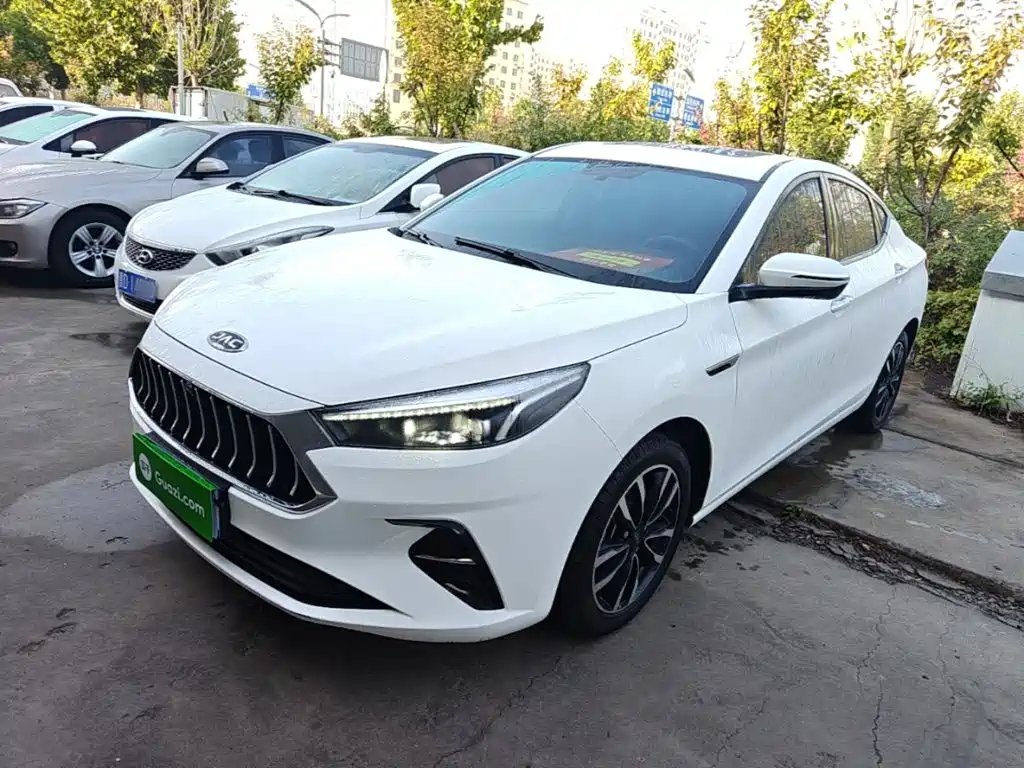
At a glance
- The JAC Motors J7 for export proposition combines a compact SUV format, a 1.5-litre turbo petrol engine and manual or CVT choices.
- The trim structure includes Surpass, Surpass+, Elite and Dream, but equipment should be verified for the selected model year.
- New and used JAC Motors J7 purchases require different checks covering delivery condition, vehicle history, warranty and roadworthiness.
- Export quotations depend on trim, transmission, condition, model year, exchange rates, freight, insurance and the selected Incoterm.
- Buyers should confirm right-hand-drive availability, homologation, parts support and landed costs before placing an order.
Why the JAC Motors J7 matters for export markets
The JAC Motors J7 matters in export markets because it combines a compact SUV format with a 1.5-litre turbocharged petrol engine and both manual and CVT transmission options. That mix targets importers who want a recognisable SUV body, a turbocharged powertrain and a manageable spread of mechanical choices without moving into a larger premium vehicle. It is particularly relevant to dealer trials, urban fleet programmes and owner-operators who prioritise ease of use, familiarity and operating cost over prestige. Its export appeal is practical rather than image-led. Specification discipline is therefore more important than headline badge appeal.
The J7's export demand is most credible where compact crossovers are familiar and buyers still expect petrol with straightforward fuel and service arrangements. Its relatively compact dimensions can help with urban parking and logistics compared with larger SUVs, although the final shipping envelope must be checked for the exact vehicle. Because local JAC support can be less extensive than that of established marques, overseas buyers should judge warranty coverage, parts channels and residual demand before a volume commitment. The car may win on purchase practicality; the business case must still include after-sales capability.
For a ChinaCarDirect buyer, the J7 is a value-oriented compact SUV whose final attractiveness depends on disciplined specification and market preparation. The brand hub is a useful starting point for understanding the marque, while live JAC Motors J7 listings provide unit-level trim, model year, condition, transmission and seller information for a serious purchase decision. Rather than treating every J7 as interchangeable, buyers should build a shortlist around the likely market, driver profile and support network, then request documentary evidence. This turns a catalogue search into a vehicle programme that can be sold and supported after arrival.
Model range, trims and powertrain variants: how the lineup is structured and how to choose
The J7 line-up is structured around a 1.5-litre turbocharged petrol engine, paired with either a manual gearbox or a CVT depending on grade. Across the JAC Motors J7 range, the visible hierarchy includes Surpass, Surpass+, Elite and Dream, with some grades offered in more than one transmission. Surpass and Elite form the core naming levels, while Surpass+ and Dream signal higher positioning. Equipment can change with model year and destination, so trim name alone is not a complete specification.
Transmission choice should follow local driving patterns and the skills of the intended driver. Manual versions can suit markets where drivers are familiar with them, where fleet policy values a straightforward mechanical gearbox, or where buyers want a broader price comparison between related units. CVT grades prioritise convenience and consistent momentum, which may make more sense for private buyers, staff transport or mixed traffic conditions. Neither transmission should be selected by badge alone: confirm clutch or torque-converter condition, service history and availability of the correct replacement parts before shipment or after arrival.
When comparing JAC Motors J7 specs, build a requirement sheet before looking at appearance. List the drivetrain, transmission, seating and luggage needs, expected annual distance, local fuel availability, preferred warranty and the equipment drivers will actually use. Then compare Surpass, Surpass+, Elite and Dream against that brief, asking for photographs of the dashboard, infotainment, instruments, wheels, body panels and boot. Verify whether advertised equipment is standard, optional or market-dependent. For fleet buyers, durability and serviceability should outweigh cosmetic differences; for retail buyers, safety, warranty and resale positioning may carry more weight.
- Manual: driver familiarity and fleet policy
- CVT: lower workload in dense traffic
- Trims: verify equipment for model year
New vs used JAC Motors J7: how export inventory is structured and how buyers choose
Export inventory for the J7 should be understood as a set of individual vehicles rather than a uniform product. Some sellers may offer new examples from production or pre-delivery channels, while a used JAC Motors J7 normally represents a vehicle already registered or operated in its origin market. The two channels serve different buyers. New inventory can be attractive for consistency, warranty administration and presentation; used stock can make sense where a tested model year, acquisition value or known specification is more important. Availability changes, so check every live listing.
For a new unit, the central question is whether it is genuinely ready for delivery and correctly described. Compare the VIN, model year, production date, declared equipment and delivery mileage with the invoice. Ask for pre-delivery inspection evidence, exterior and interior photographs, tyre date codes, paint condition, and confirmation of the warranty's territorial coverage. For fleet procurement, also check service intervals, spare-key arrangements and whether the supplier can support the first scheduled maintenance. A clean photograph set is helpful, but it should complement—not replace—documentary verification. Reconcile every discrepancy in writing.
A used JAC Motors J7 requires a different risk assessment because the vehicle's history is part of its commercial value. Obtain the registration or title record, odometer evidence, service invoices, finance-release confirmation and a history check where available. An independent inspection should cover cold start, smoke, fluid leaks, clutch slip or CVT behaviour, brakes, suspension, underbody corrosion, tyre condition, air conditioning and accident repair. Check whether the age and emissions status of the vehicle permits import into the destination market. Used pricing should reflect condition and remediation work, not simply a lower starting figure.
- New: verify VIN, mileage and PDI
- Used: inspect history and roadworthiness
- Import: check age and emissions rules
How export pricing works: the factors behind a live listing price, and how to read one
A JAC Motors J7 export price guide should begin with the vehicle itself: model year, trim, transmission, options, mileage and condition. A manual Surpass, CVT Elite or Dream version is not automatically equivalent, and differences in equipment or history can affect both buyer demand and likely resale. At the transaction level, exchange rates, supplier margin, local charges, freight, insurance and the chosen Incoterm all influence the number a buyer ultimately sees. Exchange-rate movements and routing conditions can change the quote, so a price sent weeks ago should be treated as an indication rather than a fixed promise.
Read each live listing line by line rather than focusing on the headline amount. Confirm whether it uses an ex-warehouse, FOB, CFR or CIF basis and what the seller includes in preparation, export documentation, inland transport, loading, sea freight, insurance and destination charges. Duty, VAT or other taxes, port fees, registration, homologation and local delivery may be separate. Ask whether the amount applies to one vehicle and whether shared-container savings were allocated to each unit. The most useful quote is not necessarily the lowest; it is the one whose scope can be compared like for like with competing listings and rivals.
ChinaCarDirect's live JAC Motors J7 listings are the correct place to check the current per-unit price, stated MOQ and availability because these details can vary by seller and vehicle. Use each listing as a starting point, then request a written quotation repeating trim, model year, transmission, condition, Incoterm, payment milestones and delivery scope. That written version should become the basis for comparison and the RFQ record. For a JAC Motors J7 wholesale order, ask whether the seller offers volume tiers, but do not assume a catalogue discount automatically includes freight or guarantees resale conditions in another country.
- Compare like-for-like vehicle specifications
- Confirm every freight and tax exclusion
- Use live listings for current figures
MOQ, ordering and payment: single units vs consolidating a container
MOQ is the minimum quantity a seller accepts for a given quotation, not a permanent property of the J7 or marketplace. Some vehicle listings may be available as single units, while a seller may set a larger minimum for a production batch, grade or destination. Check the figure attached to each live listing before assuming either one-unit buying or container-sized procurement is permitted. If a vehicle can be bought singly, clarify whether the seller will consolidate it with other orders for transport or whether the buyer must arrange a separate container. That distinction affects cash planning and the final delivered cost.
Container consolidation changes the economics rather than the vehicle. Buying one J7 outright does not always mean shipping one vehicle alone: a freight forwarder or marketplace logistics partner may group compatible orders into a shared container, subject to volume and destination rules. A full-container buyer should confirm the loading plan, securing, axle loads, export packing and who bears the risk of damage. A buyer needing only one unit can ask about LCL, shared-container or roll-on/roll-off options where suitable, but must accept that transit may be longer or handling more complex. The same trim should ideally be grouped because mixed configurations increase documentation and unloading complexity.
A disciplined order sequence reduces exposure. After specification and compliance are agreed, request a pro forma invoice identifying the vehicle, price basis, Incoterm, MOQ, deposit, balance, payment method, stock status and cancellation terms. Verify the seller's legal entity, beneficiary details and title to the vehicle, and confirm whether inspection is required before the balance is released. Keep every change—trim, shipping method, destination, port and payment deadline—in writing. Payment terms should reflect risk: a larger balance before inspection gives the buyer less leverage, while withholding all funds until documents and handover can create seller friction.
- Verify MOQ on each seller quotation
- Request written payment milestones
- Clarify shared versus dedicated freight
Shipping, homologation and market compliance caveats: LHD/RHD and import rules by country
A freight quotation for the J7 should be built from the actual unit's shipping dimensions and weight, not a generic SUV allowance. Ask whether the route is by container, roll-on/roll-off, or shared/less-than-container load, and confirm which ports, inland legs, terminal fees and insurance are included. Freight cost and transit time also respond to sailing frequency, port congestion, fuel surcharges, seasonality and documentation readiness. Because the J7 is a conventional petrol vehicle rather than an EV, battery-related hazardous-goods restrictions are not normally the central issue, but the vehicle still requires proper lashing, moisture protection and export paperwork. Inspect loading photographs and the condition report at handover.
The J7 should not be assumed to be right-hand-drive merely because it is available for export. Confirm the steering position, market specification and VIN of each vehicle before payment. For right-hand-drive markets, ask whether the conversion is factory-supported or a documented aftermarket conversion and whether it affects the warranty, wiring, instrument cluster, lighting, controls, cooling equipment and parts catalogue. Local registration may impose its own requirements, and visual conversion alone does not establish compliance. Where a destination expects a specific regional version, sourcing the correct configuration from the outset is safer than modifying an unsuitable car after arrival.
Passenger-vehicle compliance is jurisdiction-specific, so a Chinese-market listing cannot be treated as export-approved by default. Europe may require UNECE-derived type approval, while Gulf, ASEAN and other markets use national or regional approval systems; the exact route depends on the vehicle and destination. Local rules may require evidence covering emissions, safety equipment, VIN or customs documentation and registration. Used imports can face stricter age, emissions-zone and inspection rules. Confirm the HS classification and whether duty, VAT or other taxes are included. Before dispatch, confirm the homologation route for LHD and RHD examples separately and keep approval, purchase and vehicle-identification documents together.
- Verify steering position before payment
- Approve homologation for destination market
- Document loading condition at handover
Who should buy the J7 — and who should pick a different vehicle
The J7 is a strong candidate for importers and fleet buyers who want a compact, petrol-powered SUV with a turbocharged engine and a clear choice between manual and CVT. It can suit urban staff fleets, regional dealer stock-building, courtesy vehicles and owner-driver programmes where a smaller footprint and familiar service category matter. The manual grades may appeal to markets with strong manual-driving habits, while the CVT can reduce driver workload in dense traffic. For private buyers, the same formula becomes a sensible way to obtain SUV styling and useful performance without entering the premium compact-SUV price tier.
The J7 is less suitable for buyers who require a battery-electric powertrain, zero-emission compliance, heavy towing, unusually high payload or all-terrain capability. It is also a weaker proposition for markets where JAC lacks a credible dealer or parts network, or where buyers prioritise residual values, long-term warranty certainty and a highly developed service network. A manual can also conflict with fleet policy even where the model itself is suitable. Before placing a fleet order, test one vehicle against local registration, insurance and operating requirements. If those support services are uncertain, a more established rival may reduce procurement and residual-value risk.
The best way to decide is to compare total operating and ownership cost rather than the purchase listing alone. For each shortlisted trim, estimate acquisition, registration, fuel, insurance, maintenance, downtime and expected resale over the intended holding period. Confirm that spare parts, service manuals, warranty claims and technical support can be obtained for the exact variant. For a new vehicle, factor delivery preparation and warranty administration; for a used J7, add likely remediation from inspection. Dealers should also consider parts availability and resale speed. A controlled trial can reveal cabin ergonomics, ride quality and serviceability more effectively than a long specification sheet.
- Best for urban fleets and dealer trials
- Strong on value-oriented SUV positioning
- Avoid if premium resale is essential
Main rivals and how the J7 compares
The closest global segment rivals are generally the Hyundai Creta, Kia Seltos and Chery Tiggo 4: each occupies the affordable compact-crossover field with petrol powertrains and export-oriented production. Their exact engines and transmissions vary by country, so a fair comparison must use the local specification rather than a global brochure. Against these alternatives, the J7's distinguishing points are its 1.5-litre turbocharged petrol option, manual and CVT availability, and Chinese-export procurement access. The established Hyundai and Kia names may carry stronger recognition and service expectations, while Chery can be a more familiar choice for buyers already sourcing from China.
An importer comparing the J7 with a Creta or Seltos should prioritise local warranty, parts, safety, software and resale. Hyundai and Kia often benefit from greater brand familiarity and broader service coverage, although that advantage varies by town and country. The J7 may be more attractive where manual availability, CVT choice or direct sourcing from China is central, but the buyer must assess parts and support more actively. Against the Chery Tiggo 4, the comparison is direct: both are China-sourced compact SUVs, so equipment, homologation, dealer network and delivered cost should outweigh badge origin. Test the actual vehicle, not the model badge.
Choose the J7 when the brief is a petrol compact SUV, the budget and route support China procurement, and the buyer can verify after-sales support. Choose the Creta or Seltos where dealer reach, brand recognition and residual-value confidence outweigh the benefits of direct sourcing or a particular transmission choice. Consider the Tiggo 4 when a JAC-specific parts route is weak but another Chinese marque is better supported locally. For wholesale decisions, obtain like-for-like landed quotations, including port, tax, compliance and warranty work, and compare the vehicles in a back-to-back test. That comparison should include service-part lead times, not merely brochure equipment.
Live JAC Motors J7 export inventory
View all listings →Real units currently on ChinaCarDirect with per-unit asking prices and MOQ. Availability updates live from the catalogue.
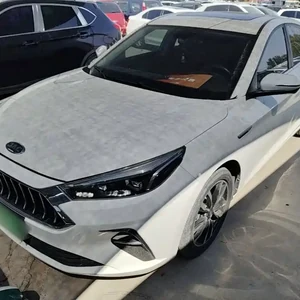
How to buy a JAC Motors J7 from China
-
1
Define the destination and use case
Set the target country, LHD or RHD requirement, expected annual mileage, load needs and aftersales coverage before choosing a trim. This prevents a nominally attractive J7 from being unsuitable for local registration or fleet policy.
-
2
Compare live unit listings
Review the live JAC Motors J7 inventory and compare units with the same model year, trim, transmission and condition. Use the displayed per-unit price, MOQ and availability only as the current starting point.
-
3
Verify the vehicle and history
Request the VIN, invoice, production details, photographs and service records for a new unit, or registration, title, odometer and inspection evidence for a used vehicle. Reconcile every discrepancy with the seller in writing.
-
4
Validate homologation and steering
Confirm the destination-country approval route, HS classification, tax treatment and whether the selected vehicle is LHD or RHD. For an RHD conversion, request supporting documentation and approval evidence.
-
5
Request a written quotation
Ask for a quotation that states the trim, condition, Incoterm, freight inclusions, payment schedule, lead time, MOQ and validity period. Identify destination charges that remain outside the quoted amount.
-
6
Agree payment and consolidation
Review the pro forma invoice, beneficiary details, inspection conditions and cancellation terms before paying. Clarify whether a single vehicle will be shipped alone, consolidated with other orders or allocated a dedicated container.
-
7
Inspect before shipment and export
Approve the vehicle condition, loading plan, insurance, document set and export booking. Retain the inspection report, condition photographs, purchase documents and vehicle-identification records for customs clearance and registration.
J7 vs rivals
| Hyundai Creta | A close global compact-SUV rival whose broader brand recognition and established dealer and residual-value network can appeal to conservative fleet and retail buyers. The J7 may suit importers prioritising a 1.5-litre turbo petrol engine, manual or CVT choice, or direct China procurement, subject to verifying local support. |
|---|---|
| Kia Seltos | Another close segment rival with a comparable compact-SUV format and market-dependent petrol powertrains. The J7 distinguishes itself through direct export access and its available transmission choices, while the Seltos may offer greater familiarity for buyers already served by Kia. |
| Chery Tiggo 4 | A particularly relevant China-export alternative for procurement teams already familiar with Chinese-brand logistics. Compare the J7 and Tiggo 4 on delivered cost, exact equipment, homologation, parts channels and local dealer support rather than assuming equivalent badge value. |
Frequently asked questions
How is JAC Motors J7 export pricing determined?
Export pricing is influenced by model year, trim, transmission, condition, mileage, options, seller margin, exchange rate, freight, insurance and Incoterm. Destination taxes, port fees, registration and homologation may fall outside the listing. Check the current per-unit amount on the live JAC Motors J7 listings and request a written quotation defining every inclusion and exclusion.
What engine and transmission does the JAC Motors J7 use?
The J7 range uses a 1.5-litre turbocharged petrol engine, with manual or CVT transmissions depending on the grade. As a combustion-powered vehicle, it does not have a battery capacity or electric driving range to compare. Confirm the exact powertrain and gearbox fitted to the selected vehicle.
Should I buy a new or used JAC Motors J7?
A new vehicle is generally easier to standardise and may carry clearer warranty administration, while a used J7 can suit buyers with a defined budget and model-year requirement. A used purchase demands additional scrutiny of the VIN, title, odometer, service history, accident repair and mechanical condition. Inspect the individual vehicle rather than choosing by inventory label alone.
What is the MOQ for a JAC Motors J7 wholesale order?
MOQ is set by the seller and the individual quotation, not permanently by the model or marketplace. Some listings may permit a single unit, while a seller may require more for a particular grade, batch or destination. Check the current live listing and have the accepted quantity stated on the pro forma invoice.
How long does J7 shipping take and what affects the cost?
Transit time and freight cost depend on the transport mode, route, ports, sailing frequency, congestion, season, fuel surcharges, vehicle dimensions, weight, documentation and insurance. Ask whether a quotation is port-to-port or door-to-door and obtain an estimate for the exact vehicle and destination rather than relying on a generic route timeline.
Are spare parts available for the JAC Motors J7?
Parts availability depends on the exact trim, transmission, model year and the importer's local JAC support network. Before ordering, request common service-item references, maintenance information, warranty procedures and a parts-supply contact. A used vehicle may also require non-standard replacement parts identified during inspection.
Is a right-hand-drive JAC Motors J7 available for export?
Right-hand-drive availability can vary between listings and sellers, so it should be confirmed for every unit. Check the steering position, market specification, VIN and any conversion documentation, then confirm that the configuration meets local registration and type-approval rules. Do not assume a standard China-market vehicle can be registered without modification.
How do I buy JAC Motors J7 from China?
Start with the live listings, shortlist comparable vehicles and send an RFQ requesting a written quote and supporting documents. Verify the seller's identity, vehicle title, price basis, MOQ, payment milestones, homologation route and freight arrangement before paying. Release the balance in accordance with the agreed inspection and document conditions, then retain all records for customs clearance and registration.
Ready to source the JAC Motors J7?
Request a current JAC Motors J7 quotation and confirm the unit, MOQ, Incoterm, RHD availability and landed-cost scope before paying.
Request a quote