
JAC Motors Refine Export Guide for Overseas Buyers
Plan a JAC Motors Refine export purchase with practical guidance on trims, petrol and diesel options, pricing, MOQ, shipping, compliance and rival models.
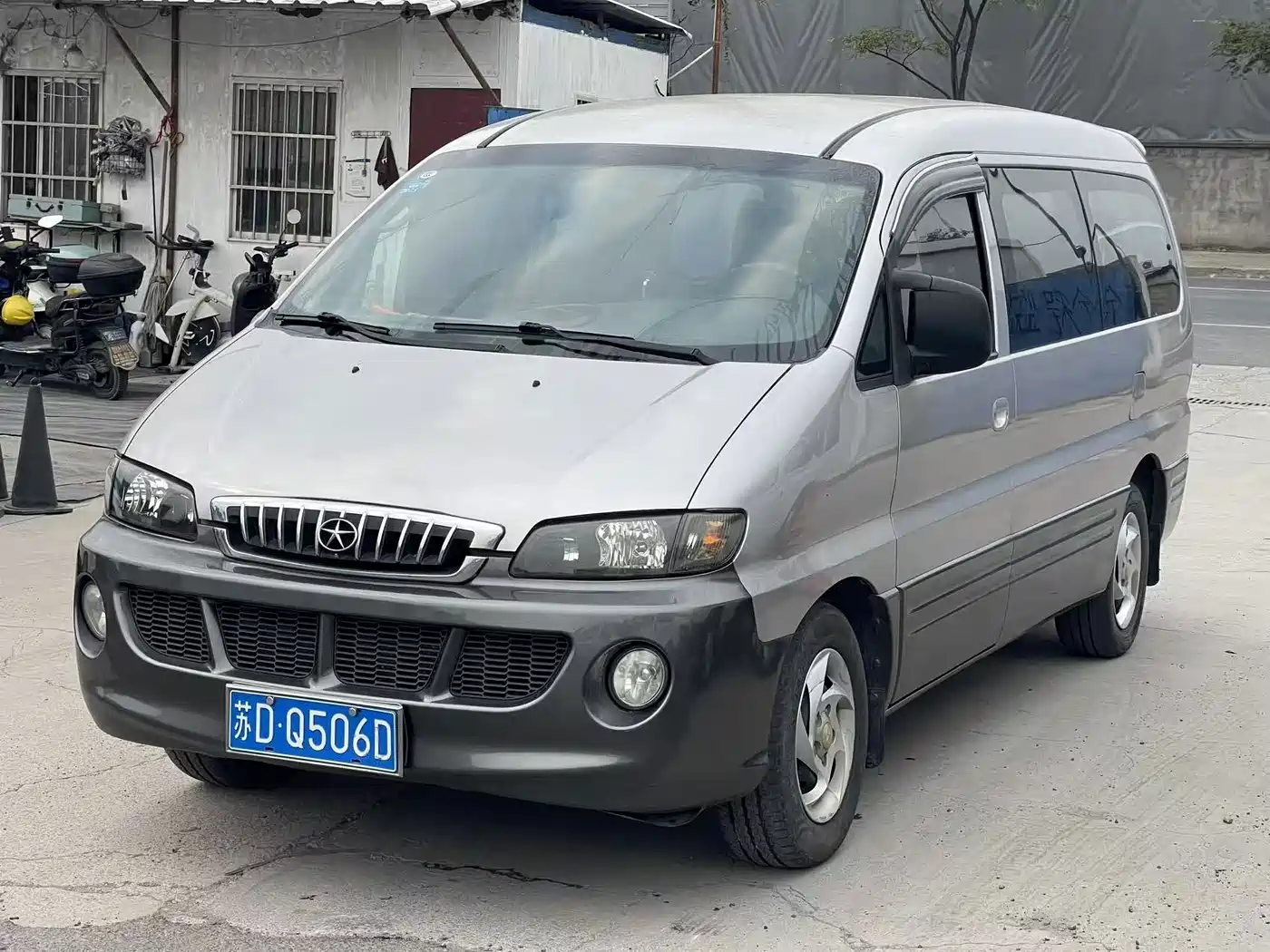
At a glance
- The Refine is a multi-body-style China-origin range offering petrol and diesel engines with manual, CVT and automatic transmissions.
- S2 mini, S2, S3, S5, S7, M5 and A60 designations should be matched to the exact listing because their intended uses differ.
- The range can suit passenger transport, local distribution, staff mobility and shuttle operations where configuration flexibility is valuable.
- Compare each unit's body, engine, transmission, seating, condition, mileage and documents rather than relying on the trim name alone.
- A landed-cost comparison should include the vehicle, freight, insurance, duty, taxes, compliance work and after-sales support.
- Current per-unit pricing, MOQ and availability should be confirmed through live Refine listings and a written quotation.
Why the JAC Motors Refine matters for export markets
The JAC Motors Refine matters in export markets because it gives distributors access to a broad, practical vehicle family rather than a single narrow configuration. Listings under the Refine name include S2 mini, S2, S3, S5, S7, M5 and A60 designations, with applications spanning passenger transport, business use and shuttle or commercial duties. That variety is useful where buyers want one sourcing platform but need different sizes, seats and powertrains. The strongest opportunity is not indiscriminate volume, but matching each market to a suitable body style and cost structure locally.
For overseas dealers, the Refine's relevance is strongest in value-led passenger and light-commercial segments. The range includes small-capacity derivatives such as the S2 mini and larger long-wheelbase shuttle versions, allowing a buyer to address urban fleet, family transport or group-use requirements from one model family. Global demand is therefore driven less by a fashionable design and more by usable packaging, accessible replacement parts and the ability to match local fuel and operating conditions. The result is a sourcing case based on operational fit, configuration control and after-sales planning rather than badge prestige.
Buyers should nevertheless avoid treating Refine as a single global product with one specification sheet. A listing may combine a model label, engine, transmission and equipment grade that do not appear together in another market. Before placing an order, importers should verify the exact body, seating, fuel, gearbox, emissions information and documents. This discipline matters because a visually similar vehicle can still differ materially in loading access, ride setup, equipment and local import eligibility. Use current live listings and a written vehicle specification to turn catalogue breadth into a commercially workable purchase.
Model range, trims and powertrain variants: how the lineup is structured and how to choose
The Refine range is easier to navigate by separating model designation from trim and drivetrain. The S2 mini, S2, S3, S5 and S7 names identify different market-facing versions, while M5 and A60 listings extend the family into shuttle, commercial and business-oriented applications. Within those names, titles may carry Luxury, Smart, Sport, Business, Surpass, Dream or official-edition wording. Such names are useful clues, but the VIN, build plate and listing photographs should confirm the actual specification. A buyer should not infer one market's equipment package merely from a familiar trim name.
Powertrain choice is unusually broad for this class. Petrol options include 1.3-, 1.5-, 1.6-, 1.9- and 2.0-litre engines, including 1.5T, 1.5TGDI, 1.9T and 2.0T turbo-labelled versions. A 1.9-litre diesel manual variant is also represented. Gearboxes include manuals, CVTs and conventional automatic designations, with combinations tied to the particular model and trim. The Refine listings represented here are combustion models, with no BEV, PHEV or range-extension version for which battery capacity or charging figures should not be assumed. Buyers seeking an electrified Refine should request written manufacturer confirmation rather than infer one from the model name.
For everyday fleet use, a manual may suit buyers comfortable with driver-intensive operation and straightforward servicing, while a CVT or automatic can reduce fatigue in stop-and-go traffic. Turbo petrol versions may suit buyers prioritizing stronger performance and able to manage manufacturer fuel recommendations; diesel may appeal where fuel quality and availability are reliable. Match the engine to load, route, fuel standards and driver skills. For JAC Motors Refine specs, rely on the unit-specific title, VIN and photographs rather than a generic class description because the same displacement label can appear with different transmission and equipment choices.
- Confirm the exact sub-model.
- Match gearbox to local traffic.
- Confirm local fuel availability.
New vs used JAC Motors Refine: how export inventory is structured and how buyers choose
Export inventory for the Refine should be read as a set of individual vehicles, not a standardized production run. New-inventory offers, later-title examples and used units may be described differently by sellers, and older model years can still be presented under the Refine family. A buyer looking for a used JAC Motors Refine should therefore use the live condition field, mileage record, ownership statement and photographs rather than relying on age alone. Availability for a particular body or engine must be checked afresh for each requirement before budget approval.
A new vehicle generally offers the most coherent factory specification, the simplest ownership narrative and the strongest basis for warranty or technical claims, provided that the seller is reputable and the warranty terms are documented. A used vehicle can reduce initial acquisition pressure and may suit a buyer with a tight replacement budget, but it transfers more uncertainty in wear, service history, previous repairs and remaining useful life. The lower entry outlay can be offset by downtime, imported spare-parts delays or the cost of correcting neglected maintenance after import work.
The best used-vehicle candidate is not simply the lowest-mileage example. For a shuttle, inspect seat and floor wear, air-conditioning performance, door hardware and commercial-abuse damage. For a business sedan or crossover derivative, examine service intervals, fluid leaks, tyres and electronics. Ask for the VIN, production and registration dates, import history where available, maintenance invoices and a mechanical inspection. Then compare the expected downtime and parts plan with the benefit of buying a newer factory vehicle. That evidence-based comparison is more useful than assuming a particular model year guarantees market suitability.
- Check condition and mileage.
- Verify VIN and ownership.
- Request service records.
How export pricing works: the factors behind a live listing price, and how to read one
A JAC Motors Refine export price guide should explain price formation, not publish a misleading fixed figure. For buyers seeking to buy JAC Motors Refine from China, the live vehicle price starts with the selected unit's model, age, trim, engine, transmission, mileage or condition, equipment, ownership history and seller terms. The same nominal trim can move by several steps when the underlying vehicle differs. A buyer should also establish whether the displayed amount is an asking price, a negotiated ex-works amount or a broader landed quotation. Incoterms, currency, exchange rates, freight, insurance, taxes and local charges can further change the final comparison.
Read a live Refine listing as a set of linked facts rather than a headline. Start with the exact vehicle name, then compare model designation, production year, engine, gearbox, fuel, body configuration and stated equipment. Scrutinize whether the unit is described as new, used or later-title, and whether mileage, VIN, dimensions and option lists are actually supplied. Photograph gaps and contradictory descriptions, because a polished title alone cannot verify condition or regulatory specification. The live page should be the controlling source for current availability and the written quote before commitment.
For a true landed comparison, add inland transport to the port, origin handling, export documentation, ocean or air freight, insurance, destination charges, import duty, taxes and any compliance work. State the Incoterm and delivery port in the request; otherwise two buyers may be comparing fundamentally different obligations. Exchange-rate movements can also alter a quote. Request a written quotation with the unit, currency, payment milestones, validity period and exclusions clearly identified, then recalculate the total when those inputs change. This method keeps the apparent vehicle price from obscuring the real cost of importing the vehicle.
- Confirm the quoted Incoterm.
- Match quote to the listing.
- Recalculate landed costs.
MOQ, ordering and payment: single units vs consolidating a container
MOQ for a JAC Motors Refine should be treated as a supplier-specific commercial term, not a promise extracted from a model page. Buyers can review individual live units and request a quote, but written confirmation governs whether one vehicle may be purchased alone, several units of one configuration are required, or a mixed-model consolidation is accepted. For a container, ask for the minimum quantity for each production or shipping lot and compare it with the sales plan. Use live Refine inventory to check current per-unit pricing, MOQ and availability, then make the selected terms binding in an RFQ.
Ordering mechanics normally begin with a live listing or RFQ, followed by confirmation of the exact vehicle, condition and documents. The buyer should then approve a written commercial sheet showing unit price, currency, Incoterm, deposit, balance timing, production or stock status, inspection rights and expected dispatch window. Payment should be made only against verified supplier and vehicle details, with every amendment recorded. A clear sequence is particularly important for mixed fleets, where a deposit may cover several units whose individual VINs and condition descriptions are still being allocated in full.
A single-unit purchase suits a dealer testing demand, a replacement vehicle for a commercial operator or a buyer consolidating several Refine variants into one shipment. Container planning is more complex: match expected sales velocity to model, trim, colour and specification, then allow for port delays, damage cases and slower-moving derivatives. Do not fill space solely because a unit is available. Ask the supplier to reserve a dispatch sequence, identify which units are committed to the container and specify what happens if an allocated vehicle fails inspection or becomes unavailable before loading.
- Confirm MOQ in writing.
- Separate vehicle and freight charges.
- Allocate each VIN before payment.
Shipping, homologation and market compliance caveats: LHD/RHD and import rules by country
Steering-hand arrangement is one of the earliest checks for an overseas Refine purchase. The export catalogue includes China-origin configurations, and a listing should not be assumed to include a right-hand-drive version simply because it is being sold internationally. Ask for a clear exterior and dashboard photograph, the steering-wheel position and the homologation plate. Converting a left-hand-drive vehicle can affect safety, wiring, controls and approvals; it is not a substitute for importing a vehicle already approved for the destination market. Local availability must be confirmed before a buyer pays substantial transport or modification costs.
Import rules differ by country and may cover roadworthiness, emissions, noise, safety equipment, VIN and registration, age or mileage restrictions, and the type of approval required for passenger or commercial use. A shuttle or business derivative may be treated differently from a private passenger car. Buyers should obtain a written view from a local customs broker or vehicle-approval specialist and confirm tariffs, taxes, inspection categories and documentation before dispatch. Local legal advice matters because national rules do not automatically cover every state, province or port where the vehicle will first be sold.
Shipping should be planned around the selected unit, not just the model name. Confirm the VIN, engine and gearbox on the bill of lading, photograph the vehicle before loading, and use an independent pre-shipment inspection where the value warrants it. Secure packaging, lashing and roll-on/roll-off handling appropriate to the body style, and check that battery isolation or shutdown procedures are followed where applicable. Delays, damage, demurrage and destination inspections can change the landed cost, so insurance, claims documentation and a clear delivery plan are essential before the vehicle leaves the origin yard.
- Confirm steering side early.
- Use a local import broker.
- Match VIN to shipping documents.
Who should buy the Refine — and who should pick a different vehicle
The Refine is a strong candidate for importers serving value-conscious passenger transport, local distribution, staff mobility or group shuttle demand, provided the derivative matches the mission. A small S2 or S2 mini may suit tight urban fleets, while long-wheelbase M5 shuttle versions can support higher-capacity transport. Petrol and diesel engines, manuals, CVTs and automatics let buyers match local fuel availability, traffic patterns and driver preferences within one model family. It rewards choice and practical packaging over premium branding. Buyers should still validate route suitability, load requirements and local service coverage before ordering.
It is a weaker fit for buyers who require a single battery-electric specification, a long-established local dealer network or a strong factory-warranty ecosystem in every destination. Performance-oriented users may also prefer a model engineered and marketed for their local roads, while luxury fleets may find equipment, ride refinement or brand prestige below their expectations. Do not choose the Refine solely because the import quote looks favorable; include expected downtime, parts consolidation, insurance, tax and residual-value support in the business case. A transparent total-cost assessment protects the importer from an attractive but incomplete purchase.
A practical decision should compare three columns: operating need, vehicle evidence and destination support. Operating need defines passengers or cargo, daily distance, fuel and transmission; vehicle evidence covers body condition, mileage, VIN, equipment and inspection; destination support covers registration, spare parts, technician training and repair lead time. The Refine should advance only when all three align. That approach is more reliable than a badge-led shortlist and creates a clearer brief for suppliers, freight partners and after-sales teams. It also exposes whether a cheaper unit is genuinely cheaper once downtime and compliance are counted.
- Suitable for passenger and shuttle work.
- Requires local parts support.
- Poor fit for EV or premium mandates.
Main rivals and how the Refine compares
Close competitors depend on the exact Refine derivative and destination, but three MPV benchmarks are especially relevant. The Toyota Avanza, Mitsubishi Xpander and Suzuki Ertiga compete for family transport and light-commercial buyers seeking a practical multi-purpose vehicle in markets where these models are established. Each has a clearer local-market identity and often benefits from stronger brand familiarity, while the Refine differentiates through the wider choice of body labels, engine formats and equipment levels available from China-origin sourcing. The right comparison is therefore between homologated local rivals and the exact vehicle being imported.
Against the Toyota Avanza, the Refine can offer more powertrain and trim flexibility, but a Toyota buyer may gain greater confidence from an established parts and resale ecosystem. Against the Mitsubishi Xpander, it provides a more traditional people-carrier or utility alternative, while the Xpander's crossover styling may have stronger appeal for private buyers. Against the Suzuki Ertiga, the Refine can suit distributors seeking diesel or manual options, but Ertiga is often a safer brand-led choice where Suzuki support is already strong. None is universally superior; operating duty and local support determine the better outcome.
Buyers should compare rivals using destination-market evidence: approved powertrains, seating and luggage layouts, fuel-economy expectations, safety equipment, warranty coverage, parts lists, workshop access and resale prospects. Do not import a Refine trim that cannot be registered or serviced comfortably, and do not compare it with a rival equipped at a different standard. Request a like-for-like landed total for the selected Refine and local alternatives, then test whether its configuration advantage offsets weaker local recognition. This prevents a misleading showroom comparison from distorting the final procurement decision for overseas buyers.
Live JAC Motors Refine export inventory
View all listings →Real units currently on ChinaCarDirect with per-unit asking prices and MOQ. Availability updates live from the catalogue.
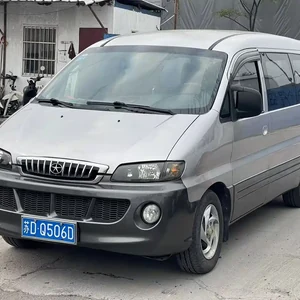
JAC Motors Refine 2015 1.9T Shuttle Long Wheelbase Comfort HFC4DB1-2C
How to buy a JAC Motors Refine from China
-
1
Define the operating requirement
Set the passenger or cargo load, route, fuel, transmission, seating, steering side and destination market before choosing a Refine sub-model.
-
2
Build a live shortlist
Use current Refine listings to compare the exact body, model label, engine, gearbox, fuel, seating, condition, mileage, VIN and photographs.
-
3
Verify identity and history
Request the VIN, build plate, registration details, ownership statement, service records and all documents needed for the intended import.
-
4
Request a landed quotation
Send an RFQ identifying the vehicle, destination, port, Incoterm, currency, freight basis and compliance requirements; confirm current per-unit price, MOQ and availability in writing.
-
5
Approve the order and payment terms
Check the pro forma invoice for the deposit, balance, unit allocation, inspection rights, dispatch window, cancellation terms and every non-vehicle charge.
-
6
Inspect before loading
Tie the approved VIN to the inspection report and shipping documents, photographing condition, equipment, engine and bodywork before departure.
-
7
Arrange freight, clearance and registration
Book suitable transport and insurance, appoint a local broker, confirm freight and customs documents, and complete destination inspections and vehicle registration.
Refine vs rivals
| Toyota Avanza | The Avanza is a straightforward MPV benchmark with a strong local identity in many Asian markets. The Refine offers broader engine, gearbox and body-label choice from China sourcing, but Toyota may provide better parts and resale confidence where its support network is established. |
|---|---|
| Mitsubishi Xpander | The Xpander competes through crossover-like styling and road presence, especially in Southeast Asia. It may better suit private buyers seeking SUV cues, while the Refine can be a more functional choice for fleets needing a traditional MPV, shuttle or utility configuration. |
| Suzuki Ertiga | The Ertiga is an established compact MPV benchmark with a packaging-focused reputation. Refine buyers can consider more diesel, manual and commercial derivatives, but the Ertiga may be the lower-risk choice where Suzuki dealers, parts and resale recognition already exist. |
Frequently asked questions
How is JAC Motors Refine export pricing determined?
The live price reflects the selected vehicle's model, age, trim, engine, transmission, condition, mileage, equipment and seller terms. Freight, insurance, Incoterm, currency, exchange rates, duty, taxes and compliance costs determine the landed total. Check the live Refine listings for the current per-unit price and request a written quote for binding terms.
Which engines and transmissions are available, and does the Refine have EV range?
The export range represented includes petrol engines from 1.3L to 2.0L, several turbo-labelled versions and a 1.9L diesel, paired with manuals, CVTs or automatic transmissions. These are combustion vehicles; no BEV, PHEV or range-extension version appears in the represented listings, so battery, charging and electric-range figures should not be assumed.
Is a used JAC Motors Refine better than a new one?
A new vehicle usually provides a more coherent factory specification, clearer ownership history and stronger warranty documentation. A used vehicle transfers more uncertainty in wear, repairs and service history, so compare inspection evidence, expected downtime and parts needs with the operational benefit of a newer unit.
What is the MOQ for a JAC Motors Refine order?
MOQ is supplier- and shipment-specific rather than a fixed model-wide rule. Live listings show the current requirement for each offer, while the RFQ should confirm whether an individual vehicle, a group of matching units or a mixed-model consolidation is acceptable in writing.
How long does Refine shipping take, and what affects the cost?
No single transit time applies because the origin port, destination, vessel or air schedule, customs clearance and port congestion all affect delivery. Cost also depends on the vehicle and body type, freight method, insurance, handling, documentation, destination charges, duty and tax, so the quotation should identify the Incoterm and delivery basis.
Are spare parts available for the JAC Motors Refine?
Parts support follows the exact model and engine, and availability can differ for body-specific or trim-specific components. Before purchase, ask for part references, the recommended maintenance checklist and realistic lead times, then compare local distributor support and plan fast-moving service stock for a mixed fleet.
Is a right-hand-drive JAC Motors Refine available?
Do not assume a listing is right-hand drive merely because it is exported. Ask for steering-side photographs, the VIN and approval documents; if only left-hand drive is available, check local conversion, inspection, wiring and registration rules before ordering.
How do I order a JAC Motors Refine from China?
Browse the live Refine inventory, select the exact vehicle and send an RFQ with the destination and required Incoterm. Compare the written price, MOQ, payment milestones, allocation process and dispatch terms, verify the documents and inspection, then arrange freight, customs clearance and local registration.
Ready to source the JAC Motors Refine?
Request a current Refine quotation and live-unit shortlist from ChinaCarDirect for your target market.
Request a quote