
JAC Motors Refine S7 Export Buying Guide
Plan a JAC Motors Refine S7 export purchase with practical guidance on trims, engines, new and used units, MOQ, pricing, shipping and destination compliance.
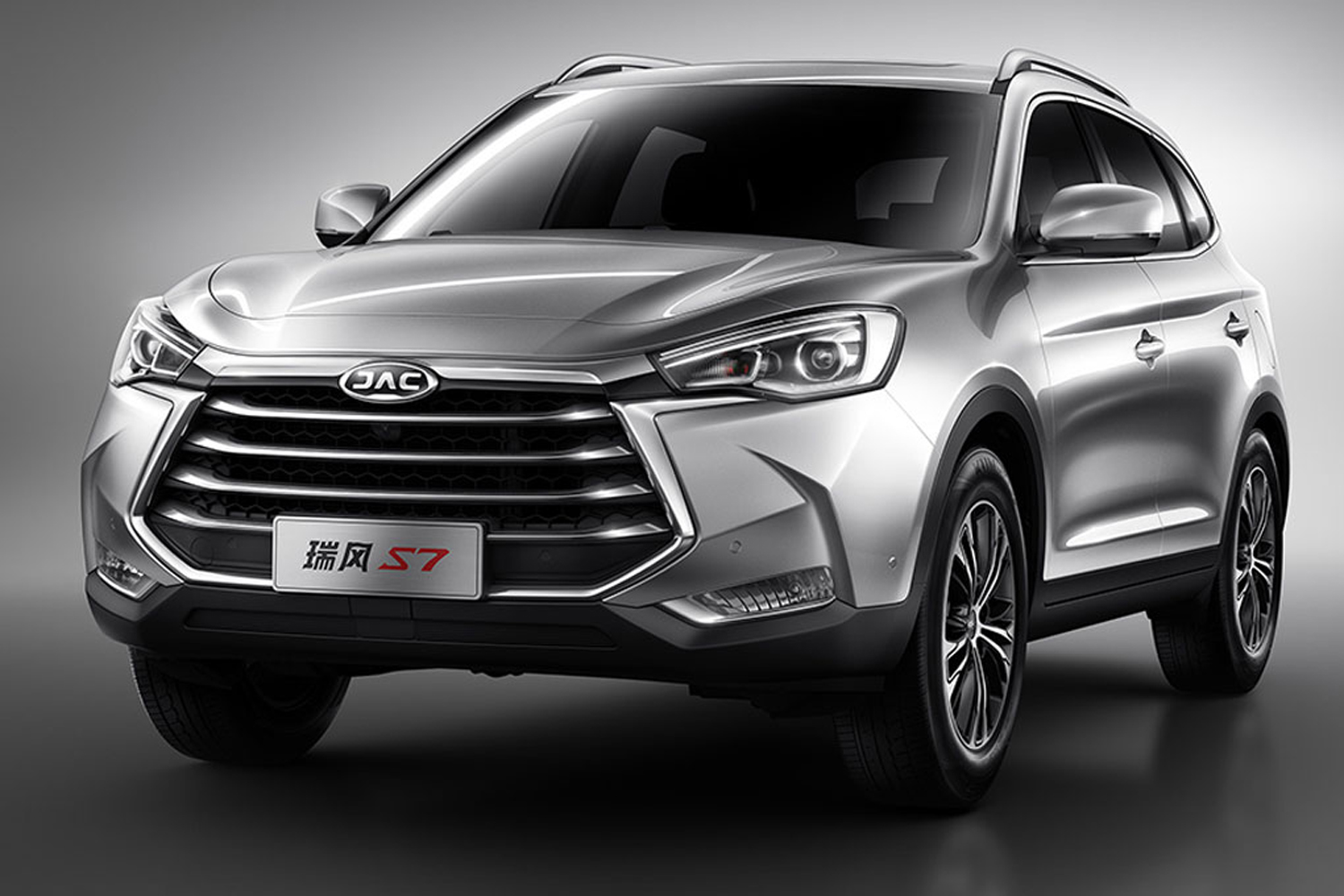
At a glance
- The Refine S7 is a petrol SUV with 1.5T and 2.0T engine options for mainstream export channels.
- Manual and automatic transmissions plus five- and seven-seat versions support different market roles.
- New and used choices should be compared by documented condition, exact specification and total landed cost.
- Live prices and MOQ must be read from unit-level listings and matched quotations, not remembered from another market.
- Destination-country steering, homologation, customs and registration checks belong in the buying plan.
Why the JAC Motors Refine S7 matters for export markets
The Refine S7 gives overseas buyers a practical entry into the China-built SUV market without limiting the choice to a single configuration. Its export relevance comes from the combination of 1.5T and 2.0T engines, manual or automatic transmissions, and five- or seven-seat layouts across the named trims. That mix lets an importer match a vehicle to driving conditions, passenger needs and local resale positioning instead of treating the model as one generic SKU. It is especially relevant to distributors building a cost-conscious SUV range where buyers expect familiar controls and flexible seating.
The Refine S7 sits in a segment that overseas buyers often approach with caution: vehicles must be affordable enough to compete after freight, duties and dealer preparation, yet durable enough for daily use and broad resale. Its range of engine and transmission choices gives buyers a way to balance acquisition cost, drivability and equipment against local preferences. The five-seat versions suit fleet and family-SUV use where the third row is unnecessary, while the seven-seat Sport Edition configuration creates a distinct passenger or shuttle proposition without changing the model family or import process.
For an importer, the commercial case is strongest when the target market values practical SUV packaging more than prestige branding. The Refine S7 can be positioned as a mainstream alternative to higher-priced imported crossovers, but only if the importer protects the commercial case with careful specification, homologation and after-sales planning. Low acquisition price alone does not guarantee low cost of ownership: fuel economy, parts lead times, insurance, residual demand and local workshop capability can determine whether a shipment becomes profitable. That makes model selection and market preparation as important as the vehicle purchase.
- 1.5T and 2.0T options
- Manual or automatic
- Five- or seven-seat layouts
Model range, trims and powertrain variants: how the lineup is structured and how to choose
The Refine S7 lineup is organized around two turbocharged engine displacements, 1.5T and 2.0T, with manual and automatic transmissions appearing in different trim combinations. Named versions include 1.5T Automatic Comfort and Luxury, 2.0T Automatic Comfort and Luxury, a 1.5T Manual Premium Edition, a five-seat Safety version, a seven-seat Sport Edition and a Super Edition with the 251T Smart Connect designation. Because trim names can change between production years and destination markets, buyers should treat a live listing as the starting point rather than assume every combination is factory-equivalent across the model range.
Engine choice should follow the use case rather than the largest badge. The 1.5T versions form a practical starting point for buyers seeking a conventional SUV powertrain, while the 2.0T options may suit buyers who prioritize stronger performance or higher carrying capacity. Because the available records do not establish a common output, payload or towing figure, compare certified specifications for the exact vehicle. A manual can simplify familiarization in markets with a strong manual habit, whereas an automatic may reduce driver workload in urban fleets, private vehicles and taxis.
Seating configuration is the next practical filter. The explicit five-seat and seven-seat versions show that the Refine S7 can address both conventional SUV buyers and operators needing an additional row for passengers or luggage. A third row also changes cabin access, comfort over long distances and the loading compromises buyers must accept. Match the body variant to the mission, then check whether the listed trim includes the seat count, equipment and regional specification you actually require. Do not infer air-conditioning, infotainment or safety content from a trim title alone; verify export documents.
- Verify trim equipment
- Match seats to duty
- Check VIN-level codes
New vs used JAC Motors Refine S7: how export inventory is structured and how buyers choose
New and used Refine S7 units should be separated by evidence, not just by a marketplace label. A new vehicle should be presented as unallocated or minimally used, with a traceable production identity, delivery status and factory condition described. Check VIN, model year, engine and transmission codes, odometer reading, manufacturing dates and any dealer or export preparation. For an importer, these records determine whether the unit can be registered cleanly and whether the advertised specification matches the physical vehicle and import eligibility.
A used example can offer a different route into the model, but the purchase should be treated as a condition and documentation exercise. Review the odometer, service records, accident indicators, paintwork, panel alignment, interior wear, tyre condition and evidence of repainting or structural repair. Ask whether the engine, transmission, climate system and electronic functions have been tested, and whether the VIN matches the paperwork. A lower headline price may be offset by repairs, higher freight or a weaker resale position, so inspect condition before shipment rather than relying on the model name alone.
The export inventory structure can include different production years, trims, transmissions and condition categories, so comparison begins by defining the target specification. Confirm current unit-level availability in the live Refine S7 listings, build a shortlist, then normalize each vehicle by year, engine, gearbox, seating, mileage, condition and equipment. For a dealer test or sample purchase, a well-documented used vehicle may expose expected wear and help validate refurbishment assumptions; for launch stock, a new unit may simplify presentation and downstream resale. Neither status removes the need for inspection, document checks and market-specific preparation before shipment.
- Verify VIN and mileage
- Review repair history
- Confirm ownership documents
How export pricing works: the factors behind a live listing price, and how to read one
A Refine S7 export price is the starting commercial value of one described vehicle, not necessarily the landed cost in the buyer’s warehouse. The amount shown on a live listing can be affected by the vehicle’s production year, trim, engine, transmission, seating and options; for used units, mileage and condition matter too. Currency conversion can alter the displayed amount, while freight, insurance, duty, tax, port charges and dealer preparation usually sit outside or must be clearly allocated. Read the Incoterm and inclusions before treating any figure as comparable across suppliers.
The variables behind that figure should be treated as a hierarchy. Start with the exact vehicle identity and condition, then compare transmission, seating, equipment and any documented history. After that, establish whether the seller’s quote includes inland transport, export declaration, marine insurance, vehicle-carrier space, destination charges or only the vehicle at the agreed trade point. Exchange-rate movements and freight capacity can also change a quote between enquiry and payment. A serious importer therefore compares the same Incoterm and specification across quotations rather than ranking headlines from different sellers without context for omitted charges.
To read a live listing efficiently, capture the SKU or reference, model year, trim, engine, gearbox, seat count, mileage or new status, condition notes, listed MOQ and seller location. Then ask for the vehicle photo set, VIN, options list and a written quotation stating currency, payment terms and Incoterm. Calculate a landed-cost worksheet separately for freight, insurance, customs, taxes, port handling, compliance work, inland delivery and dealer margin. Current binding vehicle price, MOQ and unit-level availability are shown on the [live Refine S7 listings](https://chinacardirect.com/products?q=Refine%20S7&brands%5B%5D=1343), while an RFQ is the right route for a transaction-specific quote.
- Compare equal specifications
- Build landed-cost worksheet
- Confirm Incoterm
MOQ, ordering and payment: single units vs consolidating a container
Minimum order quantity is a per-listing commercial condition, not a permanent rule for the Refine S7 model. A seller may accept a single vehicle, set a small batch requirement for a particular configuration, or require several units before releasing a consolidated shipment; the live record and written confirmation control. For an importer testing demand, one-unit ordering limits inventory exposure but may not provide the best freight terms. For wholesale distribution, larger quantities can improve purchasing control, but only if slow-moving trims can be sold locally at an acceptable total margin.
Container consolidation is useful when several buyers or branches need the same model, but it is not simply a volume discount. Each vehicle must have an agreed specification, purchase price, allocation priority, inspection standard and document set. The seller or freight coordinator must confirm whether mixed trims and model years can share one shipment, how title is transferred separately, and how damage or delay claims are handled. Consolidating units can reduce transport handling per vehicle and simplify dealer receiving, yet it concentrates inventory, payment and departure risk in one decision.
A sound ordering process separates vehicle selection from payment release. After the specification and quote are approved, verify the identity and condition again, review the pro forma invoice, and confirm who owns the vehicle before any balance is paid. The agreement should state the Incoterm, deposit, balance trigger, documentary deadlines, cancellation terms, title documents, export declaration and treatment of inspection findings. Keep all correspondence and payment references tied to the specific SKU. Once the vehicle is released for shipment, preserve the signed records needed for customs, registration, insurance and the eventual buyer handover.
Shipping, homologation and market compliance caveats: LHD/RHD and import rules by country
Shipping cost and transit time for an exported Refine S7 depend on the origin port, destination port, carrier service, vehicle dimensions, securing method, route, season and the Incoterm. Roll-on capacity, container grouping and the number of vehicles moving together can affect available space, while congestion, transshipment and customs inspection can extend the schedule. Freight quotations should state whether they cover the vehicle only, loading, insurance, destination terminal charges or delivery to the importer. Compare forwarders using the same route and service level, and avoid treating a door-to-door estimate as identical to a port-to-port quote.
Steering configuration is a source of both availability risk and compliance work. Most vehicles are prepared for left-hand-drive or right-hand-drive use in the factory, but the exact configuration must be confirmed for the unit, model year and destination. Do not assume a RHD market can accept a LHD vehicle or that a Chinese-market RHD conversion automatically satisfies local rules. Ask for photographs of the steering position, VIN plate and homologation documents, then confirm with the importer, insurer and authority in the destination country before committing the vehicle to a sale.
Import rules are country-specific and cannot be settled by the trim name alone. The importer may need to address VIN checks, roadworthiness or type approval, emissions and safety requirements, local-language labels, customs classification, duty, VAT or other taxes, and age or emissions-zone restrictions, especially for used vehicles. Confirm whether the vehicle has the required certification for the precise market and whether any modification or registration is permitted. The same Refine S7 can face different treatment in two countries, so legal and customs advice should precede dispatch rather than follow arrival.
- Confirm LHD or RHD
- Check local type approval
- Map customs and tax
Who should buy the Refine S7 — and who should pick a different vehicle
The Refine S7 is a sensible candidate for importers and fleet buyers who want a China-built SUV with recognizable petrol powertrain choices, flexible seating and a broad trim hierarchy in the mainstream export market. A distributor can build a simple range around automatic Comfort and Luxury variants, while a manual Premium unit may serve markets where manual vehicles remain familiar. The seven-seat version is worth reviewing where passenger capacity, airport transfers or shuttle work justify the additional cabin demands. The strongest case is a market that values utility and operating cost over premium badge appeal.
It is a weaker choice for buyers whose core requirement is an electric powertrain, very low fuel consumption, a premium performance specification or a deeply proven residual-value network. Those needs point toward a different powertrain or brand rather than a different Refine S7 trim. Buyers requiring exact European, Middle Eastern or North American type approval should also avoid assuming the Chinese catalogue version already qualifies. A fleet needing advanced driver-assistance systems, a particular emissions class or specialized cargo conversion should specify those requirements before selecting any engine or seat layout.
The most reliable buying decision compares use case, total operating assumptions and evidence rather than badge appeal alone. Build a requirement sheet covering payload, passenger count, transmission preference, local fuel availability, service intervals, parts access and expected resale channel. Match each candidate Refine S7 to that sheet, then ask the seller for VIN-level documents and a third-party or local inspection where warranted. If two configurations meet the same need, choose the one with clearer parts support and stronger local demand. If neither does, step outside the model range before committing inventory.
- Best for utility buyers
- Alternatives suit EV needs
- Match resale channels
Main rivals and how the Refine S7 compares
The closest export-market benchmark for many buyers is the Chery Tiggo 7, another Chinese SUV sold through dealer and distributor channels. Both models can appeal where the objective is mainstream transportation with a choice of petrol engines and automatic or manual availability across different grades. The Refine S7 is the more relevant choice when a buyer values its specific trim hierarchy or the seven-seat version; the Tiggo 7 may be easier to consider where Chery’s local dealer network and model familiarity dominate. Compare exact homologated versions, not badge-level assumptions alone for export.
The Geely Atlas is a useful comparison for importers focused on a comfort-oriented Chinese-brand SUV and an alternative route through the brand’s destination-country dealer network. The Refine S7’s appeal lies in its more explicit spread of manual, automatic, five-seat and seven-seat configurations, which can simplify segmentation for a distributor willing to build a mixed range. The Atlas may be more familiar in some markets, so local aftersales, warranty handling and parts availability should carry weight in the comparison. Neither model’s China-origin catalogue status guarantees local approval without local checks.
The Haval H6 represents another mainstream SUV alternative that many distributors already evaluate alongside the Refine S7. It is useful as a benchmark for design, equipment, drivetrain preference and dealer support, but the final choice should be based on the exact destination-market specification. The Refine S7 can be preferable where seven-seat availability or a particular manual, automatic, Comfort or Luxury configuration is commercially useful. Conversely, choose the Haval where its certified local version, parts channel and resale history better match the market. A side-by-side landed-cost and compliance review is more meaningful than a generic model comparison.
Live JAC Motors Refine S7 export inventory
View all listings →Real units currently on ChinaCarDirect with per-unit asking prices and MOQ. Availability updates live from the catalogue.
JAC Motors Refine S7 2018 Super Edition 251T Automatic Smart Connect
How to buy a JAC Motors Refine S7 from China
-
1
Define the market-ready specification
Start with the destination country, steering requirement, passenger count, engine, transmission and intended use. Separate mandatory homologation requirements from optional equipment preferences.
-
2
Compare like-for-like live units
Review the current Refine S7 listings and normalize each vehicle by year, trim, engine, gearbox, seating, mileage, condition and equipment. Confirm unit-level availability directly with the seller.
-
3
Request documents and a written quote
Ask for VIN-level photographs, the options list, condition report, ownership documents and a quotation stating currency, payment schedule, MOQ and Incoterm.
-
4
Verify the vehicle and counterparty
Confirm the legal owner, vehicle history, export status and agreement terms. Use an independent inspection when the condition or documentation does not fully match the listing.
-
5
Clear destination compliance
Work with the importer, customs broker and relevant authority on type approval, customs classification, taxes, registration and any age or emissions restrictions.
-
6
Choose the order and payment structure
Decide between single-unit purchasing and consolidation after reviewing allocation, mixed-model rules, title transfer, deposits and balance triggers. Tie every payment reference to the specific SKU.
-
7
Inspect, release and ship
Complete the final inspection before releasing the balance, then confirm export, insurance, shipping and customs documents. Track the vehicle through loading, transit and destination arrival.
Refine S7 vs rivals
| Chery Tiggo 7 | The Chery Tiggo 7 is a mainstream Chinese SUV alternative and a useful export-market benchmark for buyers seeking a familiar dealer-led model. Prefer the Refine S7 where its seven-seat option or particular trim hierarchy fits the program, but compare homologated specifications, parts access and landed cost rather than assuming either model is inherently cheaper. |
|---|---|
| Geely Atlas | The Geely Atlas is a comfort-oriented Chinese-brand alternative for buyers who already have access to Geely’s dealer network. The Refine S7 differentiates through its explicit manual, automatic, five-seat and seven-seat choices, while the Atlas may be more commercially familiar in certain markets. |
| Haval H6 | The Haval H6 is a mainstream rival for cost-conscious SUV programs and a useful benchmark for equipment and fleet suitability. Choose the Refine S7 for a better seating or trim fit, or the Haval where its certified local specification, parts channel and residual demand better match the market. |
Frequently asked questions
How is JAC Motors Refine S7 export pricing determined?
Export pricing starts with the exact vehicle’s year, trim, engine, transmission, seating, equipment and condition, then may be affected by currency, freight, insurance, duties, taxes, port charges and Incoterm. Compare quotations only when those inclusions match. Current binding per-unit figures are shown in the [live Refine S7 listings](https://chinacardirect.com/products?q=Refine%20S7&brands%5B%5D=1347); request an RFQ for the full landed-cost scope.
Which JAC Motors Refine S7 engine and transmission options are available?
The range includes 1.5T and 2.0T turbocharged petrol engines, with manual and automatic transmissions depending on trim, plus five- and seven-seat versions. The trim label does not prove a standardized output or equipment set across years. Use the VIN, model-year listing and manufacturer documents to confirm the final specification.
Should an overseas buyer choose a new or used Refine S7?
New units generally offer the cleanest presentation and simpler condition comparison, while used units can suit buyers seeking a lower entry point or willing to manage wear. For either, verify VIN, mileage or delivery status, service and accident history, repairs, options, title and export documents. The best choice depends on the resale channel and the importer’s inspection and refurbishment capacity.
How does MOQ work when buying a JAC Motors Refine S7?
MOQ is set per listing or commercial quote and may differ by seller, trim, payment method or shipment structure. A listing may allow a single-unit purchase, but buyers should confirm the displayed MOQ, mixed-model consolidation, allocation and cancellation terms in writing. Larger orders should be justified by confirmed local demand rather than a discount alone.
What determines shipping time and cost for a Refine S7?
Transit time and freight cost vary with origin and destination, carrier service, route, congestion, seasonality, vehicle size, securing requirements and the Incoterm. Obtain a written quote stating what is included, such as loading, insurance, terminal charges and inland delivery. Ask the freight provider for the planned route, schedule assumptions and customs documentation required.
How should an overseas buyer source Refine S7 spare parts?
Parts should be ordered by VIN, model year and exact trim whenever possible, because similar Refine S7 versions may use different components. Before a bulk purchase, confirm engine, transmission, interior, electrical and body-part availability with the seller or a local dealer. Fleet buyers can hold critical service items, but the parts list should follow actual usage and planned mileage.
Is a right-hand-drive JAC Motors Refine S7 available for RHD markets?
RHD availability depends on the specific vehicle, production batch and destination supply. Do not infer steering configuration from a model image or assume an aftermarket conversion will meet local registration, insurance and roadworthiness rules. Confirm LHD or RHD from the VIN-level listing, photographs and documents before contracting.
How do I order a JAC Motors Refine S7 from China?
Start with the live Refine S7 listings, compare equivalent vehicles and request a written quote containing the SKU, specification, MOQ, currency, payment schedule and Incoterm. Verify ownership, condition, VIN and documents before releasing the balance, then confirm destination compliance and shipping arrangements. ChinaCarDirect can receive the RFQ for current unit-level availability and a transaction-specific response.
Ready to source the JAC Motors Refine S7?
Request a current JAC Motors Refine S7 quotation and confirm the exact unit, Incoterm, MOQ, compliance requirements and shipping plan before payment.
Request a quote