
JAC Motors Star锐 Export Buying Guide for Overseas Dealers
Buy JAC Motors Star锐 from China with clear guidance on trims, seating, export pricing logic, MOQ, shipping, compliance and stronger rival options.
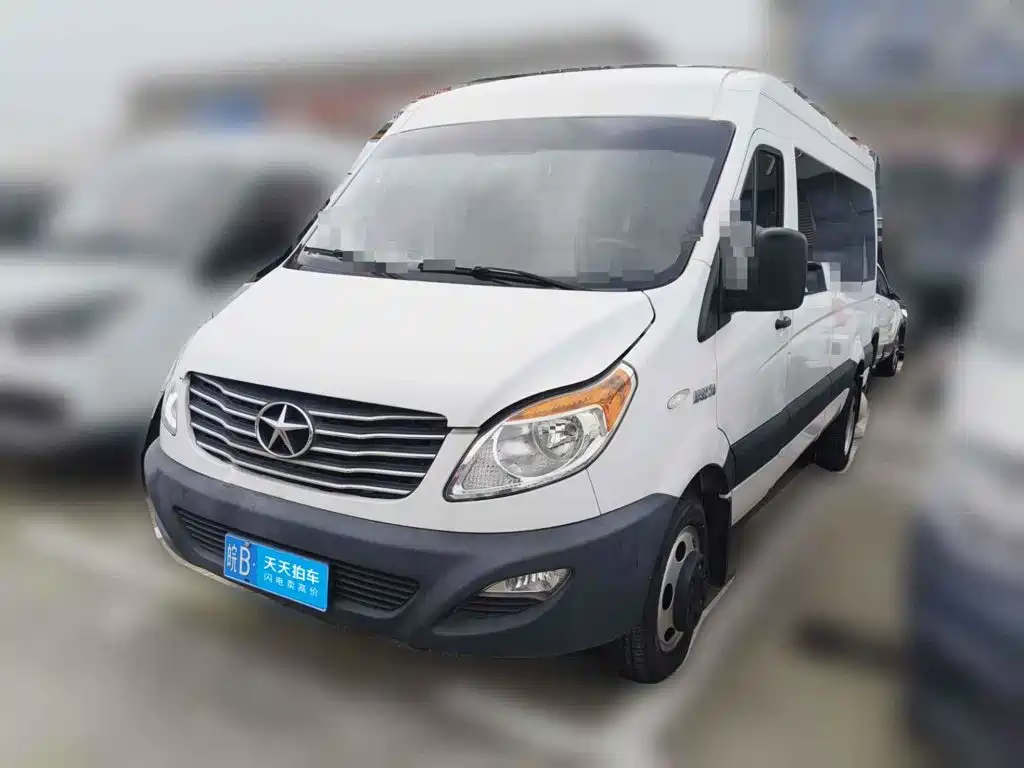
At a glance
- The JAC Motors Star锐 is a multi-purpose passenger van/MPV offering configurable seating from five to nine places.
- Engine choices include 1.9T, 2.0T, 2.7T and 2.8T turbocharged variants, with different wheelbase, roof and equipment configurations.
- New vehicles offer cleaner condition and clearer specifications, while used purchases should be selected through individual inspection.
- Export price and MOQ are unit-specific, so buyers should compare equivalent vehicles and confirm the Incoterm before calculating landed cost.
- Steering configuration, local homologation, customs classification and parts support must be confirmed before committing to shipment.
Why the JAC Motors Star锐 matters for export markets
The JAC Motors Star锐 occupies the practical middle ground between a passenger car and a commercial van. Its multi-purpose body, configurable seating and turbocharged engine choices make it relevant to overseas dealers serving group transport, hotel shuttles, business travel, shared mobility and family-caravan demand. The strongest export opportunities are usually in markets where buyers need more seats and luggage flexibility than a sedan offers but prefer a more manageable vehicle than a full-size bus or premium van. Local operating practicality, parts access and regulatory fit matter more than headline trim badges.
Demand is not uniform across regions, so the model’s appeal should be assessed by use case rather than by global sales claims. In markets with strong domestic van and MPV traditions, buyers may compare it with established European and Japanese nameplates; in emerging markets, locally sourced or lower-cost imports can create stronger price competition. For an importer, the decisive questions are whether the Star锐’s seating layout, fuel choice and payload suit local operating rules, and whether a viable parts and service network exists near the fleet operator. That local ecosystem can materially affect resale prospects.
For a dealer preparing a quotation, the Star锐’s value proposition is the combination of body versatility and specification choice rather than a single universal version. A short-wheelbase vehicle may suit urban carrying duties, while a medium-wheelbase or business-travel configuration can prioritize passenger room. Roof, seat count, engine and market designation all need to be matched to the customer. This approach avoids treating the model name as a complete specification and helps prevent an attractive listing from becoming an unsuitable import. It also gives buyers a cleaner basis for comparing quotations and competing offers on equivalent terms.
- Multi-seat passenger and light-commercial focus
- Configuration-led model comparison
- Local parts and service support
Model range, trims and powertrain variants: how the lineup is structured and how to choose
The Star锐 range is easiest to understand as a family of multi-purpose vehicles rather than one fixed derivative. Available catalogue naming identifies 1.9T, 2.0T, 2.7T and 2.8T turbocharged engines, with five-, six-, seven-, eight- and nine-seat arrangements across the range. Listings also distinguish short-wheelbase, medium-wheelbase and mid-roof versions. Because the same model name can cover materially different cabin, roof and powertrain combinations, the full trim label—not the headline model alone—must drive your comparison. That discipline matters for fleet buyers, where seat capacity can alter luggage space, permitting and route suitability.
Engine choice should follow load, route and fuel availability rather than displacement alone. The 1.9T derivatives are positioned around efficient transport and fuel-saving use, while 2.0T versions appear across business, express and Series 4 or Series 5 configurations. Larger 2.7T and 2.8T variants provide a different engine-capacity proposition, but exact output, transmission, axle layout and payload must be checked in the live listing because trim labels alone do not establish them. A larger engine does not automatically mean better economy or commercial suitability for the routes and payloads expected in the destination market.
Seat count should be selected around the actual operating scenario. Five- to seven-seat versions can work for executive transfer, family or executive hotel use, where luggage volume and comfort matter more than maximum occupancy. Eight- and nine-seat derivatives make more sense for shuttle, group tour and light passenger-carrier work. A medium-wheelbase body may improve passenger accommodation, whereas a shorter body can ease urban access. Confirm whether the market version is configured for passenger transport or cargo conversion before finalizing seats and body use. Local licensing and passenger-safety rules can also depend on that declared configuration.
- Seats matched to operating scenario
- Full trim labels required
- Verify output, fuel and payload
New vs used JAC Motors Star锐: how export inventory is structured and how buyers choose
For overseas buyers, the new-versus-used decision is primarily a balance between acquisition certainty, operating history and total cost. A new export vehicle normally offers the cleanest condition story, a defined model-year specification and a clearer warranty position, although the exact warranty terms depend on seller and destination. A used Star锐 can make sense for a budget fleet operator when the lower acquisition cost offsets expected wear, but it should be bought as a specific, inspectable vehicle rather than as a generic model discount. Compare the remaining useful life against financing, downtime and maintenance assumptions.
If choosing used inventory, build the decision around condition and remaining life. Check body and chassis condition, paint, glass, interior wear, tire age, service records, warning lights, engine mounts, fluid condition and evidence of accident repair. Compare mileage with age and duty cycle, but do not treat mileage alone as proof of condition. Ask for cold-start and road-test evidence, verify the VIN and model designation, and obtain an independent inspection before committing funds to a vehicle that may need immediate corrective work. For shuttle use, inspect door operation, seat mounting and passenger-compartment wear.
Live export inventory structure changes over time, so the right approach is to filter for the configuration you need and read each unit record rather than infer availability from the model name. New listings may represent different production years and trim levels; used units may enter the market from prior fleet or private use. Use the live Star锐 search to confirm condition, year, seating, wheelbase, roof, engine label and location. If a commercial deadline is fixed, ask the supplier which matching units can be reserved and how quickly each can be made ready for shipment.
- New: cleaner, defined specification
- Used: inspect the individual vehicle
- Confirm matching live inventory
How export pricing works: the factors behind a live listing price, and how to read one
A JAC Motors Star锐 export listing price is a vehicle-level starting point, not necessarily a complete landed cost. The model year, trim, engine designation, seating capacity, wheelbase and roof can move the price because they change the product being compared. For a used vehicle, mileage, service history, paint condition, accident history and warranty position also matter. Export charges may then be added for freight, insurance, documentation, port handling, taxes and destination charges, depending on the quoted Incoterm and buyer location. Always establish whether the displayed amount is ex-works, FOB, CIF or another basis before comparing offers.
Currency and logistics also affect what a buyer ultimately pays. Exchange-rate movement can change an otherwise unchanged quote, while freight depends on vehicle dimensions and weight, transport mode, origin and destination ports, sailing schedule, carrier space and handling requirements. A larger or heavier configuration should not be assumed to cost the same to ship as a shorter one. Ask for the quote currency, price validity, payment timing, whether marine insurance is included, and every charge that sits outside the displayed listing amount. This turns the headline figure into a comparable commercial offer rather than a misleading bargain.
To read a live listing efficiently, normalize each offer before comparing it. Start with the unit’s year and full trim, confirm seats and body configuration, select new or used condition, then note engine code, fuel type, transmission, drivetrain, mileage and dimensions. Review supplier terms and location, open the RFQ for the current per-unit price and MOQ, and request a written pro forma invoice with the Incoterm and delivery scope. Compare alternatives on a landed-cost basis: a lower displayed number can still cost more after freight, tax, compliance work and local registration.
- Compare equivalent vehicles
- Separate listed and landed cost
- Confirm currency, Incoterm and validity
MOQ, ordering and payment: single units vs consolidating a container
Minimum order quantity should be treated as a commercial field, not a promise about every seller or market. Some live Star锐 listings are structured for direct single-unit acquisition, while other suppliers or batch arrangements may set a higher requirement or ask buyers to consolidate demand. A dealer testing demand can start with one matching vehicle if the live MOQ permits it, but should confirm whether the unit is held exclusively and whether its terms change after inquiry. Fleet buyers should model full landed cost rather than equating a larger order with a lower per-vehicle cost.
Consolidating a container can improve freight planning, but it should be driven by confirmed demand and compatible specifications. Identical vehicles simplify inspection, loading and spare-parts standardization; mixed trims may create more administration and make it harder to promise a uniform color, seat layout or equipment level. Ask the supplier or consolidator for the loading plan, gross-weight and cubic-volume treatment, export documentation responsibility, insurance, delivery milestones and the consequences if one unit is damaged or unavailable. This protects the schedule more effectively than simply filling space. A confirmed sales pipeline is more valuable than speculative volume.
A disciplined wholesale order follows a clear sequence: specification, quotation, written terms, payment, vehicle inspection, documentation and release. Ask the seller to confirm the exact unit, serial or VIN information, condition, options and agreed commercial terms in a pro forma invoice. Agree deposit and balance milestones, acceptable payment method, title-transfer documents, warranty treatment and cancellation rules before remitting funds. Keep all correspondence linked to the same SKU or vehicle reference because informal chat descriptions are not a substitute for a binding document. Payment and shipping releases should follow evidence that the agreed inspection milestones have been completed.
- Check exact-listing MOQ
- Consolidate confirmed demand only
- Use a written pro forma invoice
Shipping, homologation and market compliance caveats: LHD/RHD and import rules by country
Shipping method and cost depend on the Star锐’s packaged dimensions, weight, origin, destination and required delivery date. A multi-purpose van is commonly moved by enclosed vehicle carrier or container, but the feasible method must be confirmed against the unit and available capacity. Ask for origin handling, export documentation, marine insurance, destination terminal charges, customs brokerage and final delivery as separate cost items. Transit duration varies with schedules, port congestion, transshipment and customs clearance, so avoid relying on an unverified departure-to-arrival promise. The freight quotation should identify the full delivery scope and exclusions.
Left- and right-hand-drive availability must be confirmed for every candidate vehicle rather than inferred from the model family. The catalogue naming used for export does not itself prove the steering configuration of a particular unit, and converting a left-hand-drive vehicle after shipment can add cost, complicate warranty and parts work, and create inspection issues. Where a right-hand-drive market is essential, ask for a matching vehicle or an approved conversion with written confirmation of scope, safety checks and parts coverage before paying. Local registration rules can make a suitable vehicle unacceptable if the configuration is wrong.
Import compliance starts before payment, not after arrival. Verify VIN and model documents, emissions standard, seating configuration, gross vehicle and payload information, axle and brake requirements, safety equipment and whether the vehicle will be registered as a passenger carrier or commercial vehicle. Each destination has its own age limits, customs classifications, duties, taxes, inspection rules and applicable permits, and a China IV designation does not automatically satisfy a newer local emissions regime. For used imports, roadworthiness tests and age restrictions may be stricter, while fleet use can trigger additional operator licensing.
- Confirm LHD or RHD
- Verify local emissions and safety rules
- Itemize all logistics charges
Who should buy the Star锐 — and who should pick a different vehicle
The Star锐 is best suited to overseas buyers who need a versatile, multi-seat vehicle and can manage an internal-combustion-powered fleet. It fits dealer groups, shuttle operators, tour companies, business-transfer services and family or institutional transport where a single vehicle must switch between occupied and lightly loaded duties. The range of seat layouts and wheelbase choices allows the buyer to trade passenger capacity against exterior packaging. The strongest business case appears where the vehicle’s operating utility offsets the cost of freight, tax, insurance and eventual resale. It is less compelling where premium refinement is the priority.
Before ordering, translate the use case into measurable requirements: passengers on a typical trip, luggage volume, daily distance, gradient, local fuel availability, driver comfort, expected loading and the local legal class of the vehicle. A higher seat count may reduce cargo flexibility, while a longer body can complicate city access and parking. For commercial passenger work, door and seat durability matter as much as engine choice. For family or executive use, ride quality, noise, air conditioning and third-row accessibility should be assessed with a real inspection. A test vehicle should reflect the intended trim and wheelbase.
It is not the right default for buyers seeking an electric vehicle, a premium business-class MPV, a heavy-duty commercial van or a compact crossover with off-road intent. This range is based on turbocharged internal-combustion engines and a people-carrying van format, so buyers with charging requirements, low-emission mandates or a need for advanced luxury should look elsewhere. It may also be a poor fit where spare parts are not supported locally, where resale expectations depend on a strong established brand, or where a used unit’s inspection risk exceeds the acquisition saving after freight and duty.
- Strong: multi-seat shuttle fleets
- Conditional: mixed passenger and load duty
- Poor: EV, luxury, off-road or heavy-duty
Main rivals and how the Star锐 compares
The closest functional rival is the Hyundai H-1/Starex family, which competes in the same large multi-purpose passenger and light-commercial role. The Star锐’s attraction is its China-manufactured cost position and the breadth of Chinese-market trims available to importers; the Hyundai’s principal advantage is stronger recognition in many established vehicle markets. For a fleet buyer, compare loading practicality, seat installation, engine choices, parts access and expected resale in the destination country rather than assuming either name guarantees the lower operating cost. Dealer support and the availability of a suitable body version often decide the comparison.
Ford Transit Custom is another relevant benchmark because it is used for passenger conversion, shuttle work and commercial transport. It can appeal to buyers who value a familiar global model, a broad conversion ecosystem and an established parts proposition. The Star锐 may offer a different value equation through Chinese sourcing and a range of high-seat-count derivatives. A Ford comparison should be made at equivalent roof, seating and commercial classification, including local certification, because a nominally similar van can fall into a different regulatory and insurance category. Total compliance and operating cost can outweigh the initial vehicle price.
Haima M5 is a closer China-origin value alternative for buyers focused on passenger MPV use. Both vehicles can suit fleet or family transport, but the better choice depends on the exact seating package, powertrain, dimensions, local homologation and after-sales pathway. The Star锐 gives importers access to several engine and series designations, including fuel-saving, express, business and larger-capacity versions; the M5 may offer a more familiar passenger-MPV proposition in some markets. Test parts availability and resale support before switching from the Star锐 to either alternative. The lowest acquisition quote is not the same as the lowest fleet cost.
- Hyundai H-1/Starex: direct role benchmark
- Ford Transit Custom: global van benchmark
- Haima M5: close China-origin MPV alternative
Live JAC Motors Star锐 export inventory
View all listings →Real units currently on ChinaCarDirect with per-unit asking prices and MOQ. Availability updates live from the catalogue.
JAC Motors Sunray 2018 2.7T Series 5 China V Star Express Mid Roof
JAC Motors Sunray 2019 Model 1.9T Fuel-saving King Platinum Edition 5-9 Seater Star Express
JAC Motors Sunray 2021 2.0T Series 4 Star Express 8/9 Seater D20TCIF1
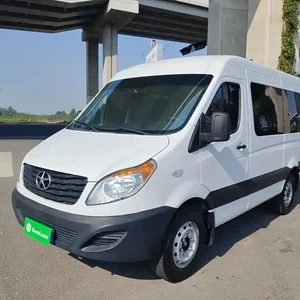
JAC Motors Sunray 2021 2.0T Series 4 Star Express 8/9 Seater D20TCIF1
How to buy a JAC Motors Star锐 from China
-
1
Define the operating requirement
Set the required seating capacity, body length, roof, fuel type, luggage space, route conditions and destination before selecting a trim.
-
2
Filter and verify live units
Review matching vehicles in the live Star锐 inventory. Check the full trim, condition, year, location, current per-unit price and listing-specific MOQ.
-
3
Request a landed-cost quotation
Ask for the quote currency, validity, Incoterm, freight method, insurance, documentation, port charges, customs brokerage, taxes and final delivery scope.
-
4
Confirm market compliance
Verify VIN, steering configuration, emissions designation, seating classification, safety equipment and the destination country’s import and registration rules.
-
5
Order against written terms
Use a pro forma invoice identifying the unit or SKU, condition, price basis, MOQ, payment milestones, warranty treatment, title documents and cancellation rules.
-
6
Inspect and release the vehicle
Complete the agreed condition inspection and document check before releasing payment or shipment. Resolve discrepancies against the same unit reference.
-
7
Ship, clear and register
Confirm the transport method and insurance, track the shipment, complete customs clearance and then satisfy local registration and roadworthiness requirements.
Star锐 vs rivals
| Hyundai H-1 / Starex | The H-1/Starex is a close role-for-role benchmark for passenger and light-commercial use. The Star锐 offers a China-sourcing value proposition and several high-seat-count trims, while the Hyundai can benefit from stronger brand recognition and local support in some markets; verify parts access and resale demand locally. |
|---|---|
| Ford Transit Custom | Transit Custom is a global van benchmark used for shuttle and passenger-conversion duties. The Star锐 may be attractive where Chinese sourcing and flexible seating fit the buyer, but Transit may have a more familiar service and conversion ecosystem; compare equivalent classifications and compliance costs. |
| Haima M5 | The M5 is a close China-origin value alternative in the passenger-MPV segment. The Star锐 differentiates through multiple engine and series designations, while the M5 may suit buyers prioritizing a conventional MPV package; compare dimensions, seating, powertrain, homologation and after-sales access. |
Frequently asked questions
How is JAC Motors Star锐 export pricing determined?
Export pricing is determined per vehicle by model year, full trim, engine, seating and body configuration, condition and market, then adjusted for currency and the agreed logistics terms. Freight, insurance, port handling, customs brokerage, taxes and delivery may be outside the displayed vehicle amount. The live Star锐 listings show the current per-unit price and MOQ; request a written quotation for the binding landed cost.
What engine, seating and powertrain options are available?
Star锐 listings span 1.9T, 2.0T, 2.7T and 2.8T turbocharged internal-combustion engines, with seating configurations from five to nine places. Names also identify fuel-saving, express, business, Series 4, Series 5, short-wheelbase, medium-wheelbase and mid-roof configurations. Exact output, transmission, drivetrain, fuel type and payload should be confirmed on the specific live listing.
Should overseas buyers choose a new or used JAC Motors Star锐?
New vehicles suit buyers prioritizing clean condition, a defined specification and straightforward warranty handling; used vehicles suit budget fleets only when inspection supports the acquisition economics. For a used Star锐, verify mileage, service history, accident evidence, tires, fluids, engine condition, seat and door wear, and the VIN. Treat the condition of the individual vehicle as the purchase, not the model-year discount.
How does MOQ work for wholesale or single-unit purchases?
MOQ is set on the individual live listing or seller’s commercial terms, so check the exact unit rather than assuming a catalogue-wide rule. Where single-unit purchasing is permitted, one vehicle can be used to test demand; wholesale shipments should be based on confirmed orders. For a consolidated container, ask about loading, documentation, insurance and the consequences if a selected unit is unavailable.
What affects JAC Motors Star锐 shipping time and cost?
Shipping cost and time depend on packaged dimensions and weight, transport mode, carrier space, origin and destination ports, routing, schedules, port handling and customs clearance. Obtain a quote that separates vehicle cost from freight, insurance, origin charges, destination charges, brokerage, duties and final delivery. Do not treat a port-to-port estimate as a guaranteed door-to-door schedule.
How are spare parts and after-sales support handled?
Spare-parts planning starts with the exact vehicle code: common wear items may be easier to source, while body panels, electronics and model-specific components can take longer. Ask the supplier for recommended initial stock, part numbers, packing methods and export-document procedures. Confirm local dealer access or a specialist parts route before importing, especially for an older used vehicle.
Is right-hand-drive availability possible for the JAC Motors Star锐?
Right-hand-drive availability must be confirmed for each candidate because the model-family name does not prove the steering configuration. A factory right-hand-drive vehicle is generally preferable to a post-shipment conversion, which can affect cost, warranty and inspection. If local rules require right-hand drive and no matching unit is available, consider another model or an approved specialist conversion before ordering.
How do I buy a JAC Motors Star锐 from China?
Shortlist units in the live listings, verify the full trim and compliance requirements, and send an RFQ with your destination and required configuration. Ask for a pro forma invoice covering unit identity, condition, price basis, MOQ, payment milestones, warranty and delivery terms. Complete payment, inspection, documentation, shipping, customs clearance and local registration in that order, using the same SKU or vehicle reference throughout.
Ready to source the JAC Motors Star锐?
Send an RFQ with your exact Star锐 configuration and destination for the current per-unit price, MOQ and written export quotation.
Request a quote