
Jaguar Xel Export Guide for Overseas Dealers and Buyers
Export a Jaguar Xel from China with confidence: compare trims, pricing logic, MOQ, shipping, compliance and leading rivals for overseas buyers.
At a glance
- The Xel is a compact luxury saloon positioned between mainstream executive cars and larger premium models.
- Export choices centre on 2.0-litre turbo petrol with 200 PS or 250 PS and an automatic transmission.
- R-Dynamic versions provide rear-drive character, but steering configuration must match the destination.
- New and used cars involve different checks covering provenance, warranty, condition and import admissibility.
- Live listings provide binding per-unit price and MOQ, while landed cost also depends on freight, taxes, insurance and Incoterms.
Why the Jaguar Xel matters for export markets
The Jaguar Xel occupies the compact executive-saloon segment, a useful middle ground between an entry-level premium sedan and a larger luxury model. Its appeal for an overseas buyer is not simply the Jaguar badge: it combines a low bonnet, a long cabin and a rear-drive-oriented model range with a footprint generally easier to manage than that of a full-size executive car. That makes the Xel relevant to premium-brand importers, company-car programmes and buyers who want recognisable luxury without moving into the cost and footprint of a larger saloon. Its visual identity also gives it more showroom appeal than a generic fleet sedan.
Demand should be assessed by use case rather than by assuming every market wants the same Xel. In countries with established Jaguar service networks and a developed used-car trade, the model can fill a gap between mainstream executives and premium niche cars. Fleet and company-car buyers may also value a comfortable saloon with a relatively manageable footprint. However, fuel-tax policy, urban access rules, parts support and the availability of the required steering configuration can determine whether the model is commercially viable in a particular destination. Residual-value support also matters to dealers.
For exporters, the Xel’s strongest selling points are differentiation, brand recognition and a clear R-Dynamic and trim hierarchy rather than low-cost mobility. A buyer sourcing from China should confirm whether a vehicle is original-spec imported stock, parallel-imported or otherwise dealer-held, because that affects warranty, service history and title documentation. Use the Jaguar brand hub and live Xel search to compare actual vehicles, then build the commercial case around condition, specification and landed cost—not a broad claim that this model is always in demand in every export market or every model year.
- Compact premium-saloon positioning.
- R-Dynamic rear-drive character.
- Relevant to fleet and dealer channels.
Model range, trims and powertrain variants: how the lineup is structured and how to choose
The export-relevant Xel line-up centres on 2.0-litre turbocharged petrol engines, offered in the listings under 200 PS and 250 PS outputs. Most identified versions use R-Dynamic, Jaguar’s rear-wheel-drive designation, and an automatic transmission. This creates a manageable decision: the 200 PS car prioritises lower output and potentially lower operating or acquisition cost, while the 250 PS version suits buyers who want more performance reserve, particularly for overtaking, fully loaded travel or hillier operating conditions. Exact calibration, market equipment and included options must still be checked on the individual car before final approval.
Trim labels divide the range into equipment and presentation packages rather than changing its basic compact-saloon architecture. Progressive Sport, Progressive Elegance, SE Tech, Premium, Gloss Black and 90th Anniversary names appear across different model years, with combinations such as R-Dynamic S used to denote driven trim level and specification. These labels can correspond to different upholstery, trim materials, infotainment content and convenience equipment. Because package content and option codes vary by year and source market, do not compare two cars solely by their badges. Ask for a line-by-line equipment sheet and photograph the VIN plate.
A disciplined choice starts with the destination: confirm petrol compatibility, steering position, emissions documentation and expected local running costs. Next, compare the 200 PS and 250 PS cars on total cost rather than output alone, including insurance class, tax bands, fuel consumption and likely residual positioning. For fleet use, standard equipment and repairability may matter more than acceleration. For private buyers, availability of the exact special edition, its service history and the quality of the car may outweigh a small specification difference. Check every option that matters before placing a deposit.
- 2.0T petrol: 200 PS or 250 PS.
- Automatic transmission in identified versions.
- Trim content varies by year and market.
New vs used Jaguar Xel: how export inventory is structured and how buyers choose
Condition labelling should begin selection, not end it. A new Xel may have no road mileage and factory warranty cover, but a Chinese-market listing does not prove Chinese manufacture or overseas-warranty eligibility. Jaguar sedans sold through import channels can carry different documents and service arrangements from a car delivered by an authorised distributor abroad. A used car can offer value and known history, but condition and import eligibility may be less straightforward. Request the VIN, ownership documents, warranty explanation and evidence that the Chinese holding arrangement permits re-export to your destination.
For a used Xel, mileage should be considered alongside age, not treated as the sole condition metric. Inspect tyres, brake discs, suspension wear, fluid condition, warning lights, cabin wear and the condition of any accident-damaged panels. Obtain service records and an independent inspection that checks cold starting, engine operation, transmission shifts, cooling and electrical functions. Confirm whether the odometer reading is consistent with records and whether the vehicle has been used for commercial duties. Local age limits or emissions rules may also determine whether an older used car can enter the target market.
For a new or effectively undriven car, the key checks shift towards delivery status, warranty, production date and specification. Ask whether the car has completed pre-delivery inspection, whether paint protection and transport film remain, how long the battery has been stationary and whether factory accessories or documentation are included. A new designation can still be an ageing stock unit, so production age affects depreciation and battery condition. Dealers should compare the economics of a clean, highly specified car against a lower-mileage used example, then confirm that either choice can be supported by parts and aftersales in the destination.
- New status does not prove local manufacture.
- Used cars require condition, history and VIN checks.
- Age, warranty and import rules need verification.
How export pricing works: the factors behind a live listing price, and how to read one
A Jaguar Xel export price is the outcome of several variables, not a fixed category. The model year, 200 PS or 250 PS output, trim and equipment, mileage, condition, paintwork, option packs and the seller’s commercial position all influence the vehicle price. A near-new anniversary or fully equipped car should not be valued like a higher-mileage standard trim. Because exchange rates and Chinese source-market pricing can move, compare like-for-like examples on the same day and retain the written quotation rather than relying on a remembered, advertised or online headline benchmark.
The listed vehicle amount may not be the amount needed at the destination. A landed quote can add or clarify export documentation, inland transport, marine or air freight, insurance, terminal handling, port charges, local taxes, registration and dealer margin. Incoterms decide where risk and cost transfer: under an ex-works structure the buyer arranges almost everything, while a delivered or CIF-style arrangement may give the seller more responsibility up to a named port. Freight is also driven by route, carrier availability, shipment size and seasonal congestion, so one car and a full container cannot be compared using freight alone.
To read a live listing, first verify the year, exact trim, engine output, mileage, condition, steering position and included options. Then establish whether the displayed amount is the unit selling price, whether it includes tax in the Chinese market, and whether the seller offers export terms or only domestic sale terms. Request a written pro forma invoice and a separate freight-and-duty estimate. Exact per-unit prices and MOQ are shown on each live listing and can change, so use the Jaguar Xel inventory page rather than treating this guide as a price sheet.
- Compare year, output, trim, condition and options.
- Separate vehicle price from freight, tax and fees.
- Use live listings for binding per-unit figures.
MOQ, ordering and payment: single units vs consolidating a container
Minimum order quantity must be checked per listing and confirmed in the quotation. Some suppliers release a single vehicle to a serious dealer or fleet buyer; others set a lot requirement or reserve allocations for container orders. Do not infer a universal Xel MOQ from a catalogue view. Before placing funds, ask whether it applies to the model, trim or total order, whether mixed configurations count, and whether a single-unit purchase carries separate handling or freight. The binding answer is attached to the selected unit or written RFQ in writing.
A single-unit purchase offers low capital commitment and allows the buyer to test demand before committing to a container. Its disadvantages are a high freight cost per vehicle and potentially limited negotiating leverage, while securing the right colour, year and specification may take longer. Consolidating several cars spreads freight and handling across more units and can improve commercial terms, but locks up more capital, increases exposure to slow-moving trims and creates a challenge if local demand is uneven. Mixed-year or mixed-trim consolidation can improve flexibility, yet the buyer must plan how each vehicle is marketed and registered.
A safer ordering sequence is to select candidate units, request the pro forma invoice and export documents, complete a specification and VIN check, and negotiate the payment milestones contractually. A deposit may be appropriate to reserve a vehicle, but the balance should be tied to satisfactory inspection, correct documentation and an agreed handover point. Use a verified company account and clear beneficiary instructions, and include cancellation, replacement and shipping-delay provisions in the contract. Avoid sending the full balance before the vehicle and title have been independently checked and before the payment method matches the signed commercial terms.
- Confirm listing-specific MOQ in the quotation.
- Single units test demand with higher freight exposure.
- Containers lower unit logistics but raise inventory risk.
Shipping, homologation and market compliance caveats: LHD/RHD and import rules by country
The Jaguar Xel is normally carried as a complete vehicle by sea or air, with Ro-Ro vessels commonly used for enclosed car transport. Transit time is only one component: booking availability, port congestion, customs inspection, inland haulage and final delivery can all extend the schedule. Sea freight is generally the practical choice for multiple vehicles, while air or specialist transport may suit a low-volume, time-sensitive purchase. Ask whether the quote is port-to-port, door-to-door or ex-works, and confirm insurance, security, tracking and damage-liability terms before the vehicle leaves the source country.
Steering configuration is a critical sourcing decision. A left-hand-drive car is not automatically suitable for every right-hand-drive market, and RHD availability cannot be assumed merely because the model is sold there. Conversely, an RHD vehicle may need to be configured for a left-hand-drive destination. Before ordering, check the VIN, steering position, lighting, instrumentation and any required local modifications. Import rules can also depend on engine emissions, vehicle age, safety and type approval, local inspection, resident or commercial importer status, and duties or taxes such as VAT. The exact combination varies by country.
Treat homologation as a condition precedent to payment, not an administrative afterthought. Give the VIN and vehicle documents to a local import specialist or approved vehicle inspector, and obtain a written view on admissibility, emissions category, registration and road taxes. Confirm the exact documents required for export and entry, including ownership evidence, purchase documents, VIN records and any certificates demanded by customs. After that, schedule a pre-shipment inspection and photograph the vehicle, fuel level, odometer, tyres and loaded options. This creates an evidence trail if damage, missing equipment or documentation disputes arise.
- Confirm LHD or RHD before ordering.
- Obtain local homologation advice before payment.
- Define Incoterms, insurance and delivery responsibilities.
Who should buy the Xel — and who should pick a different vehicle
The Xel is a strong candidate for an overseas dealer seeking a distinctive compact luxury saloon, a company-car customer prioritising styling and a conventional automatic transmission, or a small fleet that wants a premium badge without moving to a full-size luxury model. It is especially useful where right-hand-drive demand is established, Jaguar parts and servicing can be accessed locally, and the buyer can manage petrol and insurance costs. The model also suits a dealer testing a premium segment with a low-commitment single-unit order before considering container volumes, where local demand is proven rather than assumed.
It is less suitable for buyers prioritising the lowest purchase and operating cost, extensive electric range, a tall cargo area or the strongest official after-sales coverage in a new market. An EV or electrified alternative may avoid local petrol taxes and offer different charging economics, although the buyer must compare total ownership rather than assume lower operating costs always offset a higher acquisition price. A practical SUV or estate may serve fleet users better where carrying capacity and robustness matter. Before choosing the Xel, test whether Jaguar servicing, independent repair capability and parts delivery are realistic in the destination.
Fleet suitability also depends on tax treatment, residual-value support and the ability to standardise a mixed trim fleet. The 200 PS version may be easier to rationalise where performance is sufficient, while the 250 PS version can make sense where stronger reserve under load has practical value; neither output should be selected without local operating-cost data. A business buyer should include depreciation, residual risk, downtime, insurance, servicing and compliance in the tender, not just the transaction price. If those supports are weak, a better-established rival may offer lower operational risk.
- Best for premium-sedan dealers and company cars.
- Requires viable Jaguar servicing and parts access.
- Poor fit where low running cost is the priority.
Main rivals and how the Xel compares
The BMW 3 Series is the Xel’s most direct benchmark for buyers focused on a compact premium saloon, established resale channels and a broad service network. It may be easier for some overseas buyers to source and support locally, while the Xel offers more distinctive styling and a model-specific character that can differentiate a dealer. The decisive factors are the exact engine, condition, local running costs, parts access and the value of the specification. Neither badge guarantees lower ownership cost; compare landed compliance and service evidence for each vehicle rather than brochure positioning alone.
The Mercedes-Benz C-Class competes on premium-brand recognition, technology and a broadly similar compact-executive footprint. Mercedes may have stronger local awareness or dealer coverage in some destinations, while Jaguar design and a driver-focused rear-drive format can appeal to buyers seeking something less mainstream. Equipment levels and model-year changes can make direct trim comparisons misleading. A buyer should inspect the actual options list, assess fuel and insurance categories, and verify that servicing, electronic software and parts are supported locally before deciding between a C-Class and an Xel. The Xel should win on fit and total cost, not merely badge prestige.
The Audi A4 is another credible rival, particularly for fleets and company-car buyers who value a restrained, technology-oriented image and established residual-value processes. Audi availability and after-sales reach can vary sharply by country, while the Xel’s stronger visual identity may need more deliberate marketing. Against all three rivals, the Jaguar is most persuasive when its exact specification, condition and local support justify the premium. Build a shortlist of like-for-like cars, normalize the quote to the destination, and choose the model with the clearest ownership case rather than the most prominent badge.
- BMW 3 Series: familiar premium benchmark.
- Mercedes-Benz C-Class: premium presence and technology.
- Audi A4: fleet-friendly, restrained alternative.
Live Jaguar Xel export inventory
View all listings →Real units currently on ChinaCarDirect with per-unit asking prices and MOQ. Availability updates live from the catalogue.

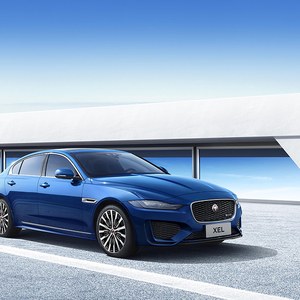
Jaguar Jaguar XEL 2020 2.0T 200PS R-DYNAMIC S Progressive Sport Edition
How to buy a Jaguar Xel from China
-
1
Define the buying brief
Set the destination, steering requirement, preferred output, budget, expected annual mileage and acceptable model years before reviewing vehicles.
-
2
Filter the live inventory
Use the Jaguar Xel listings search to shortlist matching year, trim, output, condition and configuration. Treat each listing as an individual sales unit rather than a fixed catalogue.
-
3
Verify the exact vehicle
Request the VIN, trim name, engine output, equipment list, ownership documents, service history and production details. Confirm that the car is not merely described by a broad model designation.
-
4
Request a landed RFQ
Ask for the unit price, applicable MOQ, export documents, inland handling, freight, insurance, Incoterm and estimated destination charges in one written quotation.
-
5
Complete the compliance check
Give the VIN and documents to a local import specialist. Confirm admissibility, emissions category, registration, tax treatment and any age or importer restrictions before payment.
-
6
Inspect and secure payment
Use an independent pre-shipment inspection and written specification. Tie deposit and balance payments to the inspection, ownership documents, export documents and agreed handover point.
-
7
Ship and complete registration
Confirm insurance, loading photos, shipping documents, arrival tracking and customs release. Complete local registration and verify that the delivered vehicle matches the inspected unit.
Xel vs rivals
| BMW 3 Series | The closest global compact-premium saloon benchmark. It may offer broader local service familiarity, while the Xel stands out through styling and R-Dynamic character; choose according to local support, specification and ownership cost. |
|---|---|
| Mercedes-Benz C-Class | A direct premium-executive rival with strong badge recognition. The Xel can appeal to buyers seeking more distinctive design and a rear-drive format, but the C-Class may be easier to support in established Mercedes markets. |
| Audi A4 | A credible fleet and company-car competitor, especially where Audi support and residual-value processes are proven. The Xel wins through visual differentiation rather than mainstream familiarity, so compare landed ownership carefully. |
Frequently asked questions
How is Jaguar Xel export pricing determined, and where can I see the live price?
Pricing reflects the individual vehicle’s year, output, trim, options, condition and mileage, plus market and logistics conditions. The current binding per-unit price is shown on each live Jaguar Xel listing. Request a separate written freight-and-duty estimate because the displayed vehicle price may not represent the landed cost.
Which engine and powertrain options are available on the export Xel?
The identified export range centres on a 2.0-litre turbocharged petrol engine with either 200 PS or 250 PS, paired with an automatic transmission. R-Dynamic versions are rear-wheel-drive models. Confirm the VIN, engine output, drivetrain and market specification before ordering.
Should an overseas buyer choose a new or used Jaguar Xel?
A new or effectively undriven car may simplify initial condition assessment and warranty planning, but its provenance and overseas warranty coverage still need verification. A used car can offer better value and visible service history, provided it passes a thorough inspection and remains eligible for import into the destination.
What does MOQ mean when ordering a Jaguar Xel from China?
MOQ is the minimum quantity a seller requires for a particular order or allocation. It can apply to a model, trim or total shipment and may differ between single-unit and container arrangements. Check the live listing and obtain the binding MOQ in the written RFQ.
How long does shipping take, and what drives the cost?
Transit time depends on the transport mode, carrier schedule, source and destination ports, customs clearance, inland delivery and congestion. Cost depends on shipment size, route, fuel and carrier charges, insurance, handling and the agreed Incoterm. Request a door-to-door schedule and all-in freight quotation.
How are Jaguar Xel spare parts arranged after export?
Confirm whether parts will come through Jaguar’s authorised network, an independent specialist or the export supplier before concluding the purchase. Provide the VIN and build details when requesting components, and verify lead time, warranty and cross-border shipping charges for long-term support.
Is a right-hand-drive Jaguar Xel available for export?
RHD availability varies by source vehicle and cannot be assumed from the model name. Filter candidate listings, verify the VIN and steering position, and obtain a written import assessment for a right-hand-drive destination. Do not place the final balance until configuration and admissibility are confirmed.
How do I order a Jaguar Xel through ChinaCarDirect?
Search the live Jaguar Xel listings, shortlist vehicles against the required specification and request an RFQ for unit price, MOQ, documentation, freight and Incoterm. Verify the VIN, condition, ownership chain and local import rules. Use agreed payment milestones, complete an independent inspection and confirm shipping terms before releasing the balance.
Ready to source the Jaguar Xel?
Send your target year, trim, steering configuration and destination to ChinaCarDirect for a unit-specific Jaguar Xel quotation and export checklist.
Request a quote