
Jaguar Xfl Export Buying Guide for Overseas Buyers
Buy a Jaguar Xfl from China with guidance on trims, powertrains, export pricing, MOQ, shipping, compliance and rivals for overseas dealers and fleet buyers.
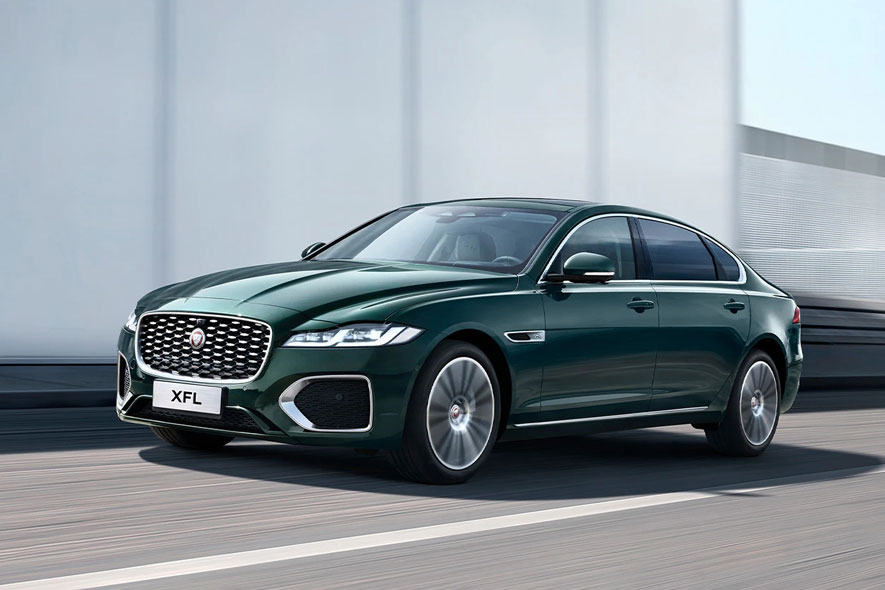
At a glance
- The Jaguar Xfl is a long-wheelbase premium sedan with a strong executive and rear-passenger use case.
- Available Jaguar Xfl specs span 2.0T P200, P250 and P300 petrol versions plus a 3.0 supercharged 340PS V6.
- Front-wheel-drive and all-wheel-drive configurations are both represented, depending on trim and model year.
- New, demonstrator and used cars require different condition, documentation and warranty checks.
- Current price, availability, unit-specific MOQ and RHD options must be confirmed in live inventory.
Why the Jaguar Xfl matters for export markets
The Jaguar Xfl is a long-wheelbase premium sedan positioned for buyers who want Jaguar styling and executive-car space without moving to a flagship. Its four-door layout and extended rear compartment distinguish it from the shorter-wheelbase Jaguar XF, while the available turbocharged petrol engines and front-wheel-drive or all-wheel-drive layouts place it against established business saloons. For overseas buyers, the key attraction is a distinctive alternative in a segment often dominated by familiar German marques. The car is relevant to dealers serving chauffeur, hospitality and executive-fleet use cases, where passenger room and restrained presentation matter.
Export demand for the Xfl is best understood by use case rather than by a global sales claim. Markets with established demand for premium saloons may value its long-wheelbase rear accommodation, quiet executive-car profile and mix of Luxury, Elite and sport-oriented editions. Dealers can also use China-origin examples to serve fleet, hotel or chauffeur customers seeking a Jaguar without importing every used unit from another region. The model’s appeal rises where buyers recognize the Jaguar badge and accept its China-specific XFL specification. That makes trim clarity and destination-country approval more important than headline specifications.
The Xfl should not be treated as a badge-engineered XF with a longer catalogue description. It is a distinct long-wheelbase derivative, and Chinese-market equipment, trim labels, software and option bundles can differ from Jaguar XF sold elsewhere. A buyer comparing it with an XF should therefore compare dimensions, rear-seat features, drivetrain, service requirements and homologation rather than assume equivalent badges mean equivalent content. For export, request the VIN, factory specification and equipment sheet before placing it in a retail valuation. A mismatch can create unexpected running or modification costs after arrival for the importer.
- Long-wheelbase Jaguar sedan.
- Verify trim equipment.
- Fleet and chauffeur fit.
Model range, trims and powertrain variants: how the lineup is structured and how to choose
Most Xfl variants use a 2.0-litre turbocharged petrol four-cylinder, appearing in 200PS, 250PS and 300PS forms under names such as P200, P250 and P300. The export range also includes a 3.0-litre supercharged V6 rated at 340PS. Output alone does not identify the complete car: front-wheel drive, all-wheel drive, transmission, edition and model year must be read together. This is especially important when a seller abbreviates the designation or mixes Chinese and English trim terminology. A P250 can therefore refer to different drive and equipment configurations, so the complete listing description should control the purchase.
The trim hierarchy moves from comfort-oriented Luxury and Premium versions toward Elite, Racing Flag, Flagship Sport and Gilded editions. Those names imply a hierarchy, but they are not a substitute for an equipment checklist. Typical buyer questions include whether a listing has leather upholstery, electric and heated seats, driver-assistance functions, infotainment, climate control, audio, panoramic glass and the expected styling package. Because equipment can change by model year and market, request photos, the original build sheet and a written confirmation of optional equipment rather than relying on the edition badge alone.
For fleet buyers, the sensible choice starts with operating priorities. Front-wheel-drive versions can suit markets where all-wheel drive is unnecessary and fuel efficiency matters; all-wheel-drive P250, P300 and Flagship Sport configurations may be preferable where traction, towing or stable wet-weather performance has greater value. The 340PS V6 appeals to buyers wanting stronger performance and a distinctive powertrain, but it should be weighed against fuel use and purchase cost. Never assume that an advertised output confirms a particular axle configuration; verify it on the unit before committing to a mixed fleet order.
- 2.0T P200/P250/P300.
- 3.0 SC 340PS V6.
- Confirm drive layout.
New vs used Jaguar Xfl: how export inventory is structured and how buyers choose
Export inventory can include factory-new vehicles, demonstrator cars and previously registered used examples, but the structure changes over time. On a live marketplace, classify every Xfl by age, registration status, odometer reading, seller type and warranty rather than assuming “new” means unused. Some vehicles carrying a new designation may have delivery mileage or prior registration for demonstration or export preparation. Ask for the production date, invoice, registration documents and photographs of the odometer and tyres before classifying a unit. This distinction matters for warranty, customs, compliance and residual-value decisions alike downstream.
A new Xfl can offer a clearer warranty pathway, consistent condition and more predictable equipment when documentation is complete. Its risks are not simply higher acquisition cost: imported Chinese-market specification, software functions, parts support and local type approval still require checking. A used Jaguar Xfl may be more practical where the buyer values a particular year, lower mileage or a specific option package and can inspect its history. Used-unit value depends heavily on service records, accident repair, paint condition, interior wear and whether the mileage is supported. Those checks should precede any balance payment.
For a mixed dealer purchase, the best approach is to create a simple condition matrix. Compare factory-new and used units on model year, mileage, service evidence, paint and panel condition, tire age, option content, warranty and expected homologation route. Use independent inspection for any used car, especially one sold at a distance. For a “new” unit, verify whether it is genuinely unregistered and whether factory delivery, warranty start or VAT treatment has already occurred. This method prevents a nominal condition label from masking an important commercial difference in the final contract.
- Check registration and mileage.
- Inspect used-car history.
- Use a condition matrix.
How export pricing works: the factors behind a live listing price, and how to read one
A live Xfl export price is a negotiated commercial reference, not a fixed market value for the model. Year, trim, engine output, drive system, mileage, condition, registration status and option content affect the vehicle’s starting point. Commercial variables matter too: the supplier’s terms, currency movement, payment schedule, inspection, inland transport, insurance, documentation, freight and the selected Incoterm can change what a buyer ultimately pays. Compare vehicles only after confirming that each quote uses the same currency, tax scope and delivery basis. A lower displayed figure may not produce a lower landed cost.
When reading a listing, decode the full title before the photographs. Look for the model year, 2.0T or 3.0 SC, P200/P250/P300/340PS output, front- or all-wheel-drive, Luxury, Premium, Elite or sport designation, and any duplicated or translated edition wording. Then verify that the displayed or stated price is for the exact unit and find out whether it includes export preparation, domestic transport, documentation and export clearance. Request a written pro forma invoice that separates vehicle price, charges and any taxes, so the buyer can audit every line before approval in full.
The Jaguar Xfl export price guide should therefore be used as a method, not as a historical price promise. Current per-unit pricing and availability must be checked in the live inventory, because a particular car can be reserved, sold or repriced. To build a defensible landed budget, combine the confirmed vehicle price with destination-specific duty, tax, VAT or GST, customs brokerage, port and inland delivery, insurance and a contingency for inspection or minor repairs. Obtain a destination-based quotation from the supplier or freight partner and state which charges are fixed versus subject to local assessment.
- Decode the full title.
- Itemize every charge.
- Check live unit pricing.
MOQ, ordering and payment: single units vs consolidating a container
Wholesale MOQ should be confirmed for the selected listing rather than assumed from a model-level catalogue rule. Some buyers purchase one vehicle for a customer or dealer trial, while others combine several Xfl units into one container programme. A single-unit request reduces inventory exposure and can simplify model selection, but it leaves the buyer carrying more of the fixed logistics and compliance cost per car. Confirm whether the supplier will release the chosen unit without additional quantity conditions, and make that commitment part of the order confirmation in writing before any deposit.
Consolidating compatible units can make freight and export administration more efficient, especially when trims share handling requirements and the dealer has firm end-customer demand. It also creates a larger cash commitment and can lock the importer into a mixed, slow-moving specification. Model-year consistency, colour, edition, drive system and equipment should be balanced against freight savings; a full container of similar cars is operationally easier, but not automatically the best commercial choice. Ask the supplier to present consolidated and separated shipment options with the costs and risks stated transparently in writing beforehand.
The payment sequence should mirror the risk of each stage. A typical workflow is quotation, unit reservation, written pro forma invoice, deposit, production or inspection confirmation, balance payment, export documents and dispatch. The exact percentages, deadlines and refund terms are supplier-specific and must not be inferred from the model name. Use a verifiable company account, name the beneficiary consistently across bank instructions and invoice, and independently verify any change to payment details. Do not release the balance because a vehicle photograph has been supplied; tie it to the agreed inspection and documentary conditions.
- Confirm MOQ before deposit.
- Consolidate against demand.
- Tie payment to documents.
Shipping, homologation and market compliance caveats: LHD/RHD and import rules by country
Steering configuration is the first import check. A China-market Xfl may be left-hand drive, and the name Xfl does not prove right-hand-drive availability. Dealers serving markets with right-hand traffic must confirm the steering position, wiper and instrument configuration, and whether any local conversion is legally permissible; altering a vehicle solely to change its steering side can raise compliance, warranty and insurance issues. Ask the supplier for a straight-on cockpit photograph and VIN-linked build information, then have the destination authority or a vehicle importer verify acceptance before committing funds to the order.
Import rules are destination-specific, so the buyer must establish a compliance route before choosing the cheapest car. Depending on the country, a vehicle may need individual type approval, recognition of a prior approval, emissions and safety testing, software or cybersecurity checks, a customs valuation and registration paperwork. Age restrictions, emissions-zone rules, left- or right-hand-drive restrictions, luxury-vehicle taxes and the availability of a homologated catalogue entry can all change the decision. A vehicle that is roadworthy in China is not automatically roadworthy or registrable in the destination market.
Transport choice depends on dimensions, weight, route and urgency, all of which must be confirmed from the actual unit. Roll-on/roll-off shipping is common for finished vehicles, while container or specialist transport may suit particular routes and port constraints. Freight quotations should state the origin and destination terminals, whether the vehicle is owned or chartered, insurance coverage, terminal handling, customs, delivery and any security or inspection fee. Leave time for pre-shipment inspection, document correction and customs clearance rather than treating the sailing date as the final delivery deadline.
- Verify LHD/RHD fit.
- Check type approval.
- Quote all freight charges.
Who should buy the Xfl — and who should pick a different vehicle
The Xfl fits buyers who prioritize a premium saloon, a long rear compartment and distinctive design over the lowest running cost. It is particularly relevant to executive-fleet managers, chauffeur operators, hotels, premium rental businesses and dealers serving customers who need more rear-seat room than a standard compact executive car. Its petrol range gives flexibility between efficiency-oriented front-wheel-drive versions and higher-output or all-wheel-drive variants. The strongest case is a destination where Jaguar is supported, the car can be homologated cleanly and the buyer values the model’s character and rear-seat comfort. That combination is commercially stronger than any one specification.
It is a weaker fit for buyers whose priority is battery-electric operation, minimal maintenance exposure, abundant local parts support or a low total-cost fleet brief. Markets with tightening emissions rules or zero-emission procurement policies may require a different powertrain strategy, and an internal-combustion Xfl should not be presented as an environmental substitute for an EV. Buyers entering a region with limited Jaguar dealer coverage should also test parts availability, technician access and insurance support before ordering. A polished imported car is of limited value if it cannot be maintained predictably afterward.
A buyer seeking a shorter Jaguar footprint should compare the standard XF, while a buyer needing the newest technology or the broadest international service network may be better served by a more recently developed rival model. Those alternatives may also have clearer type approval in the destination country, making them operationally simpler despite a different badge. The decision should compare total ownership factors—purchase, fuel, tax, insurance, parts, downtime and resale—rather than treating the Xfl’s unusual long-wheelbase format as an automatic advantage. Test the business case against the customer’s actual passenger and fleet requirements.
- Strong executive-fleet fit.
- Weak EV-mandate fit.
- Compare total ownership.
Main rivals and how the Xfl compares
The BMW 5 Series is a direct benchmark for business-saloon buyers who prioritise rear-seat space, a broad model ecosystem and a driver-focused image. Its global familiarity can simplify local marketing, while the Xfl offers more distinctive Jaguar design and a clear long-wheelbase proposition. The trade-off is that a buyer should verify Jaguar service reach, parts lead time and type-approval status in the destination market; those operational factors may outweigh styling preference. Neither model should be assumed equivalent in equipment, tax treatment or residual value. Independent valuation remains essential for the importer.
The Mercedes-Benz E-Class is often the benchmark for buyers focused on a formal executive-car environment, rear-passenger comfort and advanced cabin technology. The Xfl’s appeal lies in its unusual silhouette, long-wheelbase packaging and alternative Jaguar character, but the E-Class may be easier for local corporate customers to support through an established network. For fleet use, compare rear-seat dimensions, ride, boot practicality, fuel or energy consumption, tax bands and service access on the same basis. A familiar model may have a lower operational risk even where the Xfl is more compelling on design.
The Audi A6 competes through a restrained design, a broad executive-saloon range and established premium-brand recognition. Against it, the Xfl offers a more individual Jaguar identity and the practical emphasis of an extended wheelbase, but the buyer should not assume either model has a simpler import route. Compare the exact derivative, local homologation, tax class, service footprint and availability of parts on the destination market. The best choice is not the badge with the longest feature list; it is the model whose specification, ownership burden and approval pathway match the importer’s operating plan.
- 5 Series: business benchmark.
- E-Class: technology benchmark.
- A6: premium alternative.
Live Jaguar Xfl export inventory
View all listings →Real units currently on ChinaCarDirect with per-unit asking prices and MOQ. Availability updates live from the catalogue.
Jaguar Jaguar XFL 2024 2.0T P300 AWD Flagship Sport Gilded Edition
How to buy a Jaguar Xfl from China
-
1
Define the destination and operating requirement
Specify the destination country, required steering side, passenger capacity, route conditions and fleet size. This determines which Xfl configurations and homologation routes are commercially realistic.
-
2
Shortlist complete live listings
Use the live Jaguar Xfl inventory and decode the full title, including year, output, drive system and edition. Compare the photographs, option content and condition rather than selecting from the model name alone.
-
3
Request an itemized quotation
Ask for the current per-unit price, vehicle specifications, unit-specific MOQ, payment terms and Incoterm in writing. Request separate figures for vehicle, freight, insurance, documentation and destination charges.
-
4
Verify the vehicle and compliance route
Obtain the VIN, factory build sheet, registration documents, equipment confirmation and relevant photographs. Confirm LHD/RHD configuration, inspection requirements and destination-country type approval before payment.
-
5
Confirm the order and payment safeguards
Have the supplier confirm the chosen unit, reservation period, pro forma invoice, beneficiary details, deposit and balance-payment conditions. Tie the final payment to inspection and agreed documentary requirements.
-
6
Arrange inspection, shipping and delivery
Complete the agreed pre-shipment inspection, verify export documents and select the freight method and Incoterm. Track customs clearance, terminal handling and inland delivery through to the final handover.
Xfl vs rivals
| BMW 5 Series | The 5 Series is a familiar business-saloon benchmark with a broad international identity, while the Xfl offers distinctive Jaguar design and a pronounced long-wheelbase proposition. The Xfl may suit buyers prioritising rear space and character, provided local Jaguar servicing and homologation are confirmed. |
|---|---|
| Mercedes-Benz E-Class | The E-Class is a strong alternative for formal executive use, rear-passenger comfort and advanced cabin technology. The Xfl provides a more individual Jaguar alternative, but buyers should compare local service access, tax treatment and approval requirements before choosing it. |
| Audi A6 | The A6 combines a restrained premium-saloon presentation with established brand recognition, whereas the Xfl stands out through its Jaguar identity and extended-wheelbase focus. Decide between them using the exact derivative, operating cost, parts availability and destination-market homologation. |
Frequently asked questions
How is the export price of a Jaguar Xfl determined?
A live export price reflects the exact vehicle’s year, trim, powertrain, drivetrain, mileage, condition and options, together with commercial terms and logistics. Freight, insurance, documentation, exchange rates, taxes and the selected Incoterm can also affect the landed cost. Check ChinaCarDirect’s live Xfl listings for current per-unit prices and request an itemized pro forma quotation.
Which Jaguar Xfl engines and drivetrains are available?
The petrol range includes a 2.0-litre turbocharged engine in 200PS, 250PS and 300PS forms, plus a 3.0-litre supercharged 340PS V6. Front-wheel-drive and all-wheel-drive configurations are represented depending on trim and model year. Confirm the complete designation and drivetrain for the individual unit.
Should an overseas buyer choose a new or used Jaguar Xfl?
A new car may provide more consistent condition and clearer warranty coverage, but Chinese-market specification and local approval still require checking. A used Xfl can suit buyers seeking a particular year, mileage or option package, subject to service history and independent inspection. Compare both options using the same condition and documentation matrix.
What is the MOQ for a Jaguar Xfl export order?
MOQ is not a universal model constant; it depends on the selected unit, supplier and shipment plan. A one-unit order may be possible when the supplier accepts it, while container consolidation requires a larger commitment. Obtain the applicable MOQ in writing before paying a deposit.
How long does shipping take and what affects the cost?
Shipping time and cost depend on origin and destination ports, vessel or vehicle-carrier schedules, route availability, dimensions, weight, insurance and terminal handling. Customs clearance, inspection and document corrections can also affect the schedule. Request a freight quotation stating the Incoterm, route, included services and all separately charged fees.
Can spare parts be ordered with a Jaguar Xfl?
Parts can usually be sourced, but availability depends on the model year, engine, edition and destination market. Provide the VIN and OEM or supplier part numbers where possible, and do not assume that parts used in another country are directly interchangeable. Ask whether parts can be consolidated with the vehicle shipment and how customs will treat them.
Is a right-hand-drive Jaguar Xfl available for export?
Availability must be confirmed for each unit because the XFL designation does not establish steering configuration. Ask for a VIN-linked specification and cockpit photographs, and verify that the destination country accepts the configuration. Do not order on the assumption that a conversion will be legal or practical.
How do I order a Jaguar Xfl from China?
Start with the live Xfl listings, select a shortlist and send the supplier your destination and complete vehicle requirements. Request a written quote covering the unit, MOQ, payment schedule, Incoterm, inspection and export documents. Verify compliance and payment details before dispatch, then track shipping through customs and final delivery.
Ready to source the Jaguar Xfl?
Request a current Jaguar Xfl export quote with your destination, preferred year, trim, powertrain and required quantity.
Request a quote