
Jeep Cherokee Export Guide for Overseas Buyers
Plan a Jeep Cherokee purchase from China with practical guidance on trims, engines, export pricing, MOQ, shipping, compliance and rival vehicles.
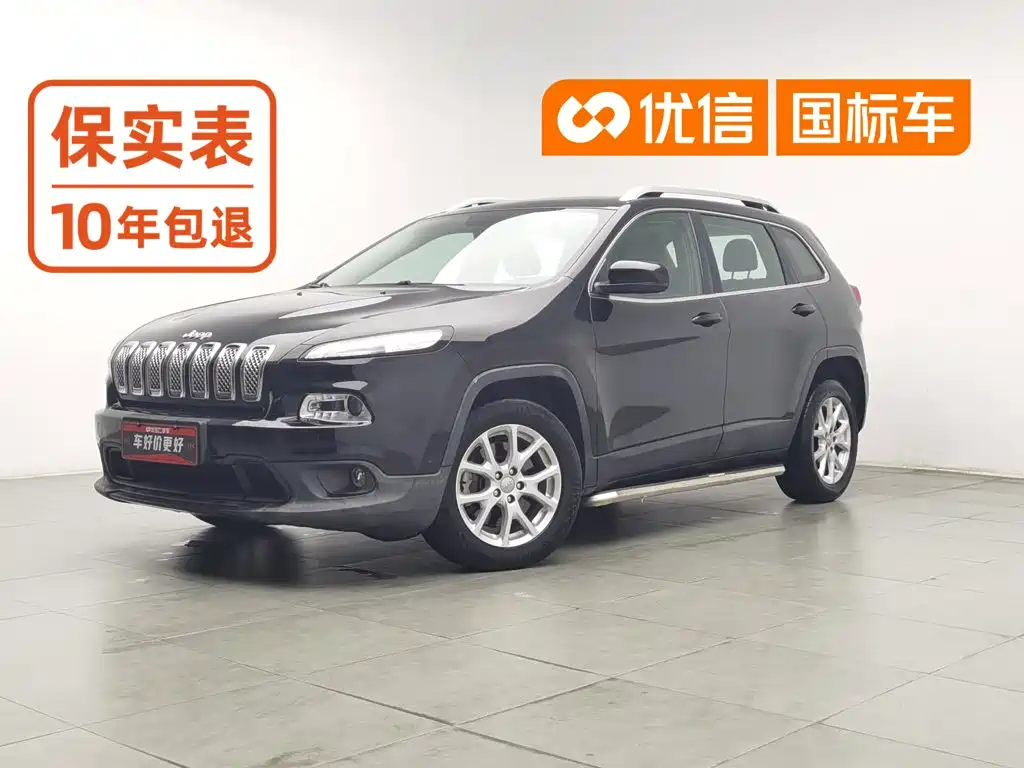
At a glance
- The Cherokee is a China-built compact SUV below the Grand Cherokee, combining road usability with some four-wheel-drive choices.
- The range spans 2.0L, 2.4L, 2.0T, 3.0L, 3.6L and 3.0TD powertrains, with a specialist 6.4L SRT8 record.
- Buyers must distinguish Cherokee from Grand Cherokee and 4xe records that can appear in broad searches.
- Export pricing depends on specification, condition, exchange rates, freight and Incoterm, so compare itemized landed quotes.
- Current per-unit price and MOQ should always be confirmed in the live inventory before payment.
Why the Jeep Cherokee matters for export markets
The Jeep Cherokee is a China-built compact SUV positioned below Jeep’s larger Grand Cherokee. For overseas dealers and importers, that middle ground is commercially useful: it preserves the brand’s upright styling, utility cues and four-wheel-drive options on some grades, while remaining easier to manage than a larger off-road-oriented model. It sits in the mainstream family-SUV class rather than the body-on-frame work-vehicle class, so the strongest case rests on versatile road use, not extreme trail capability. Buyers should assess cargo capacity, road presence and local serviceability rather than assuming every trim has the same off-road hardware.
Export demand for this type of vehicle comes from the combination of recognizable branding, a useful mix of road manners and visual toughness, and dimensions suited to urban use. It can appeal to distributors serving regions where rough roads, unpaved access or seasonal conditions reward extra ground clearance, but it also needs to satisfy ordinary family and fleet buyers who value comfort, space and fuel cost. The strongest market fit is therefore geographic and operational, not simply Jeep badge appeal. A buyer should validate local fuel quality, repair capability and parts access before expanding orders.
Because the Cherokee’s domestic-market equipment and trim labels are not automatically calibrated to foreign expectations, export buyers need a disciplined use case. A dealer can request a practical lower trim for fleet work, a navigation-oriented version for retail customers, or a four-wheel-drive derivative for mixed-terrain service fleets. Comparing like-for-like documents is essential: badges can sound similar while drivetrain, transmission, emission specification and included equipment differ by production year and market. Verify the VIN, build specification and physical vehicle, especially when imported Grand Cherokee records appear alongside Cherokee searches before any payment.
- Verify model designation.
- Match drivetrain to use.
- Assess local parts support.
Model range, trims and powertrain variants: how the lineup is structured and how to choose
The lineup is organized around several gasoline displacements—2.0L, 2.4L, 3.0L and 3.6L—plus a 2.0T turbo variant, 3.0TD diesel versions and a high-output 6.4L SRT8 grade in the available trim records. Exact combinations change across years, so engine, gearbox and drivetrain must be read together rather than inferred from the badge. The range therefore spans smaller, lower-cost four-wheel-drive applications, larger six-cylinder vehicles and a diesel option aimed at higher-torque use. A buyer comparing options should prioritize payload, towing requirement, route, fuel availability and local tax treatment over displacement alone at the outset. That avoids an expensive mismatch.
Drivetrain choice is equally important. Some Cherokee grades are front-wheel drive or two-wheel drive, while others are intended to provide four-wheel drive; the 2.0T Smart Edition China V is explicitly a two-wheel-drive example in the records. Transmission details are not supplied consistently enough to treat every listing alike, so confirm the fitted gearbox, final-drive arrangement and axle equipment. For an export buyer, the correct question is not whether a vehicle has an off-road badge, but whether its hardware matches the roads, load and weather it will encounter in daily operation.
Trim selection should begin with the buyer’s revenue use. Classic, Smart, Professional, Leading and Superior labels cover different levels of equipment, while Comfort, Luxury, Elite and Flagship/Prestige designations point toward more comfort or convenience. Navigation in a trim name is not proof that every feature is present or homologated for export. The SRT8 record is a specialist performance purchase, not a rational fleet default, and any 4xe badge should be checked carefully because some such records belong to the Grand Cherokee rather than the compact Cherokee being sold under a broad search.
- Verify engine and drivetrain.
- Treat China labels carefully.
- Exclude Grand Cherokee 4xe.
New vs used Jeep Cherokee: how export inventory is structured and how buyers choose
ChinaCarDirect’s Cherokee marketplace should be read as a mixed export channel: it can contain new dealer stock alongside used vehicles from earlier production years. The useful first split is not simply new versus old, but factory-new, dealer-demo, ex-fleet or privately used condition. Each status changes the evidence available for service history, wear, warranty transfer and expected presentation. Buyers should therefore ask for condition documents and inspect the exact unit rather than relying on a broad vehicle-year label. A clean title, verified VIN and consistent odometer evidence should precede commercial negotiation in writing.
A factory-new Cherokee is attractive where the importer wants predictable specification, current equipment and a clearer buyer-facing proposition. It also carries the highest exposure to unused-age depreciation and may include equipment tuned for Chinese road, fuel and regulatory conditions. A used vehicle can reduce that initial exposure and may suit a dealer seeking a known, benchmarked configuration, but condition variability is much greater. Savings should never be judged from model year alone; mechanical condition, repair history and remaining service life matter more. Inspection and records must therefore be included in the buying decision.
Choose new when the buyer values a defined factory specification, presentation and the ability to lock the vehicle configuration before dispatch. Choose used when the operating requirement is simpler, the budget is narrower and a well-documented example can be inspected to a standard the buyer trusts. The best used candidate generally has a traceable history, verified mileage, documented repairs, matching trim equipment and no unresolved warning or title issue. For either route, request a pre-shipment inspection and compare the vehicle’s condition with every image and option shown in the live listing, carefully and in writing.
- New means defined condition.
- Verify used-car history.
- Inspect before final payment.
How export pricing works: the factors behind a live listing price, and how to read one
An export listing price is only one component of the vehicle’s commercial value. The amount shown can move with production year, trim, engine, drivetrain, mileage, condition, market demand, exchange rates and the seller’s location. Freight, export handling, insurance, port charges, destination taxes and the selected Incoterm can add materially to the landed result. For that reason, the same model can appear differently depending on whether the quoted figure covers the vehicle alone, domestic transport and export paperwork, or delivery to a named destination. Always confirm the quotation basis before comparing suppliers.
Read each Cherokee listing as a structured buying record rather than a catalogue entry. Start with the full title, which should identify model, year, engine and edition, then check whether it says Cherokee or Grand Cherokee. Review the drivetrain, gearbox, fuel type, mileage, condition, exterior and interior images, options, VIN availability and seller location. Look for omissions, duplicated photographs or inconsistent trim wording. Those signals do not automatically prove a problem, but they justify requesting the build sheet, inspection report and vehicle identity documents before placing a deposit or freight booking.
When buying a Jeep Cherokee from China, use a like-for-like landed quote. Ask each supplier to state the vehicle price, currency, payment schedule, availability, inland movement, export clearance, freight method, insurance, Incoterm, destination charges and expected documentation. Separate vehicle cost from logistics, then add duty and taxes that the destination authority assesses. Buyers should also request how long the quote remains valid, since exchange-rate or vessel-cost changes can alter the total before payment. Current binding figures are available per vehicle in the live listings. Request an itemized RFQ before treating any figure as final.
- Compare like-for-like vehicles.
- Confirm quote inclusions.
- Check live unit pricing.
MOQ, ordering and payment: single units vs consolidating a container
MOQ depends on the seller’s commercial setup and the specific vehicle, not on the Jeep Cherokee name itself. A marketplace purchase may be available as a single unit for an importer or dealer testing demand, while a factory or consolidator may impose a larger batch for allocation, production or container planning. The relevant minimum is the one shown in the live listing and confirmed in the quotation. Buyers should not infer it from the number of vehicles visible in search results or from another Cherokee unit without written confirmation from the supplier.
A Jeep Cherokee wholesale order should be treated as a transaction sequence, not an informal message exchange. After selecting a unit, the buyer should specify destination, trim, colour, drivetrain and any required options; then request the MOQ, reservation period, deposit, balance schedule and accepted payment route. The seller should identify the exact vehicle and its VIN or build identity before the balance is due. Commercial documents should match the unit: invoice, purchase contract, export declaration and shipping instructions must not describe a different model, year or engine. Use a verified RFQ trail and retain every written confirmation.
Container consolidation can improve freight planning for dealers that need several units, but it changes the buying risk. Combining vehicles with different trims, colours or destinations weakens the homogeneity of retail stock and complicates customs paperwork. Finished vehicles must be handled as secured vehicles rather than loose cargo, so slotting, lashing and suitable roll-on/roll-off or container capacity must be planned with the carrier. A single-unit shipment may offer more flexibility; a consolidated shipment may offer better logistics, but only if the vehicle mix and destination are genuinely aligned. Confirm the loading plan before paying.
- Confirm listing-specific MOQ.
- Tie payment to vehicle.
- Plan loads carefully.
Shipping, homologation and market compliance caveats: LHD/RHD and import rules by country
Steering configuration is an early eligibility check. Vehicles originating in China are commonly left-hand drive, while some markets require or strongly favor right-hand drive. RHD availability should not be assumed from the model name, and a conversion can affect cost, lead time, steering components, instrumentation and local type approval. Some importers handle this in the destination market, while others specify a right-hand-drive build at origin. The safer procurement approach is to confirm handedness in the written quotation and inspect the actual vehicle before dispatch. Any adaptation should be costed separately.
Chinese-market compliance does not automatically equal export compliance. A China VI label, for example, describes the source-market emission standard and does not guarantee acceptance in the destination country. Import rules can cover VIN and title documents, vehicle age, emissions, safety, noise, cybersecurity or connected services, roadworthiness equipment and type approval. Duty and tax treatment may also depend on engine, displacement, age and local classification. Buyers should obtain a destination-specific regulatory view from a licensed broker or customs adviser before committing the vehicle. Written import advice should accompany the final purchase order.
Shipping planning begins with the vehicle’s exact dimensions, weight, VIN, declared value and destination. The forwarder should confirm whether the shipment uses a roll-on/roll-off carrier, container or specialist service, and which port or terminal can accept the unit. Insurance should cover the agreed Incoterm and loss or damage during the agreed movement window. Export sealing, photographs, a condition report, customs papers and the bill of lading should be coordinated. Delays at origin, transshipment or customs can add cost without changing the underlying vehicle price. The importer should keep the vehicle and freight terms synchronized.
- Confirm steering configuration.
- Obtain local import advice.
- Coordinate shipping documents.
Who should buy the Cherokee — and who should pick a different vehicle
The Cherokee is a good candidate for a dealer or fleet buyer that wants a recognisable Jeep compact SUV, usable road space and some four-wheel-drive choices without moving into the larger Grand Cherokee class. It can suit mixed-surface operations where ground clearance and all-weather confidence matter, provided the selected drivetrain and tyres are appropriate. For private buyers, it also suits those who value styling, a practical cabin and SUV versatility more than the lowest possible operating cost. The purchase is strongest when the vehicle’s equipment will be appreciated in the local market.
Buyers should choose a different vehicle when the requirement is extreme off-road work, minimal life-cycle cost, zero-emission operation, maximum cargo volume or premium cabin refinement. A body-on-frame pickup or purpose-built utility vehicle is more appropriate for severe terrain and heavy commercial loads. A hybrid crossover may be preferable where fuel consumption and emissions are the dominant fleet criteria. A larger SUV offers more passenger or cargo room, while a locally homologated mainstream crossover can simplify registration, parts supply and residual-value management. The Cherokee should not be chosen merely because it carries the Jeep name.
A disciplined decision starts with a total-cost worksheet covering purchase, inland transport, freight, insurance, import charges, fuel, expected maintenance and eventual resale. It then tests parts availability, technician familiarity, warranty handling and the downtime cost of a failed inspection. For fleet use, standardize a small number of trims and drivetrains rather than creating a mixed parc. Before ordering, ask the supplier for a vehicle specification sheet, inspection evidence and a written confirmation of compatibility. A test-drive and service review in the destination market can be more valuable than a small equipment upgrade.
Main rivals and how the Cherokee compares
The closest alternatives are compact family SUVs that compete for the same dealer shelf space and household budget. The Hyundai Tucson offers a broadly comparable modern crossover format, often with extensive equipment and strong hybrid availability in markets where that powertrain is offered. The Toyota RAV4 is a practical rival for buyers prioritising fuel efficiency, hybrid choice, established servicing and broad global recognition. The Ford Escape, sold under the Kuga name in many markets, competes through efficient powertrain options, family-oriented packaging and mainstream fleet acceptance. Exact powertrains and equipment depend on local model years.
The Cherokee’s advantage is its combination of Jeep identity, upright design and a model family that can include four-wheel-drive or diesel-oriented choices depending on trim. Its trade-offs can include less favourable fuel economics than the strongest hybrid rivals, a service network that varies by country and a resale proposition that depends on recognition among local buyers. The RAV4 may be the safer fleet economics choice in markets with dense Toyota support; the Tucson may offer stronger equipment value; the Escape/Kuga may appeal where its engines and financing are better established.
For an export buyer, the comparison must be made at the destination rather than from a generic global brochure. Check which rival is locally homologated, which powertrains can be serviced, how parts are supplied, what safety and emissions equipment is standard, and which model has the strongest residual market. A Cherokee may win when brand appeal and mixed-road capability justify higher operating costs; a rival may win when hybrid efficiency, lower complexity or easier compliance dominates. Use the live Cherokee listings as the vehicle baseline, then obtain equivalent destination-market quotations for the shortlisted rivals before committing volume.
Live Jeep Cherokee export inventory
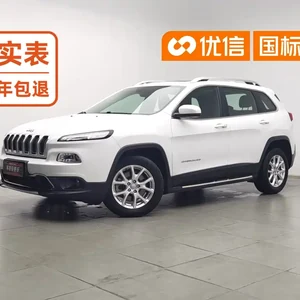
View all listings →Real units currently on ChinaCarDirect with per-unit asking prices and MOQ. Availability updates live from the catalogue.
How to buy a Jeep Cherokee from China
-
1
Define the operating requirement
Specify the destination, annual mileage, road conditions, load, cargo needs and preferred two-wheel-drive or four-wheel-drive configuration. Use those requirements to shortlist an engine and trim rather than selecting on displacement alone.
-
2
Shortlist exact vehicles
Review the live Cherokee listings and confirm the full model designation, year, engine, edition and drivetrain. Broad searches can include Grand Cherokee records, so verify the actual model and build identity before requesting a quote.
-
3
Verify specification and condition
Request the VIN, build sheet, title documents, odometer evidence, equipment list and inspection report. For used vehicles, obtain repair and service history and check for discrepancies between the listing, photographs and physical vehicle.
-
4
Request an itemized landed quotation
Ask the supplier to separate vehicle cost, inland transport, export clearance, freight, insurance, destination charges, duty, taxes, MOQ, payment schedule and quote validity. State the intended Incoterm and destination port.
-
5
Confirm destination compliance
Establish the required steering configuration, VIN documentation, emissions treatment, vehicle-age restrictions, safety standards and type approval with a destination broker. Obtain written advice before placing a non-refundable deposit.
-
6
Complete payment and inspection
Tie the deposit and balance to the exact vehicle identity and agreed documents. Approve a pre-shipment inspection, with the balance released only after any material condition discrepancy has been resolved.
-
7
Book freight and export documents
Confirm the carrier method, loading plan, insurance coverage, export sealing, customs papers and bill of lading. Keep the vehicle specification, payment record and shipping instructions synchronized through arrival and destination clearance.
Cherokee vs rivals
| Hyundai Tucson | The Tucson is a close compact-SUV alternative for buyers wanting extensive equipment and, where offered, a hybrid powertrain. The Cherokee is the more distinctive choice for a dealer seeking Jeep styling and available four-wheel-drive configurations. |
|---|---|
| Toyota RAV4 | The RAV4 is often the lower-friction fleet choice where Toyota support and hybrid efficiency are priorities. Cherokee buyers trade some of that operating-cost advantage for upright styling, diesel or four-wheel-drive choice in certain trims and a stronger brand statement. |
| Ford Escape / Kuga | The Escape/Kuga competes through mainstream fleet familiarity and efficient engine options. Choose the Cherokee where its upright cabin, four-wheel-drive availability and off-road-brand identity matter more than broad local model familiarity. |
Frequently asked questions
How is Jeep Cherokee export pricing determined?
A listing price is shaped by year, trim, engine, drivetrain, mileage or condition, exchange rates and seller location. Freight, insurance, port handling, destination duties and taxes, and the selected Incoterm can change the landed cost, so compare itemized quotations. The current binding vehicle price is shown in each live listing.
Which powertrain should I choose?
The range records include 2.0L, 2.4L, 3.0L and 3.6L gasoline engines, a 2.0T turbo, 3.0TD diesel versions and a 6.4L SRT8 record. Output, transmission and drivetrain depend on year and trim, so verify the live listing. Do not infer Cherokee electric range from a 4xe result because that designation appears on Grand Cherokee records in the source listings.
Should I buy a new or used Jeep Cherokee?
New vehicles provide a more defined factory specification and presentation, while used vehicles can reduce initial exposure but carry greater condition variability. For a used unit, prioritize the VIN, mileage, title, repair history, equipment match and inspection evidence. For a new unit, verify the locked configuration and destination-market compatibility.
How does MOQ work for Cherokee orders?
MOQ is set by the seller and the selected vehicle or quotation, not by the model name. A single-unit purchase may be possible for some inventory, while wholesale or factory arrangements can use larger batches. Confirm the minimum shown in the live listing and in the written RFQ rather than inferring it from the number of search results.
What affects shipping time and cost?
The principal factors are the origin and destination route, carrier type, vessel or roll-on capacity, vehicle dimensions and weight, port charges, insurance, fuel surcharges, congestion and customs clearance. A ready vehicle with complete documents offers more schedule certainty than a production allocation. Obtain a freight quote tied to a named route and Incoterm.
Can spare parts be sourced for an exported Cherokee?
Parts should be matched by VIN, exact trim, engine and production year because similar-looking versions may use different components. Local Jeep dealer support varies, and China-built configurations may require parts to be sourced through the appropriate channel with additional lead time. Confirm availability before purchase and identify service items worth holding in stock.
Is right-hand-drive availability guaranteed?
No. Vehicles originating in China are commonly left-hand drive, and Cherokee right-hand-drive availability is not guaranteed. State the destination and required steering configuration in the RFQ. If conversion is planned, include its cost, lead time, safety checks and local type-approval requirements before ordering.
How do I order a Jeep Cherokee from China?
Select a live listing, then send an RFQ stating the destination, preferred trim, engine, drivetrain, colour and quantity. Confirm the exact vehicle, MOQ, payment schedule, documents, inspection, freight method and Incoterm before paying. Retain written confirmation throughout the transaction and release the balance only after the agreed inspection.
Ready to source the Jeep Cherokee?
Send ChinaCarDirect your destination, preferred Cherokee configuration and quantity for an itemized export quotation.
Request a quote