
Jeep Commander Export Guide for Overseas Dealers and Fleets
Export buyers’ guide to the Jeep Commander, covering trims, 2.0T and plug-in hybrid options, pricing logic, MOQ, shipping and market compliance.
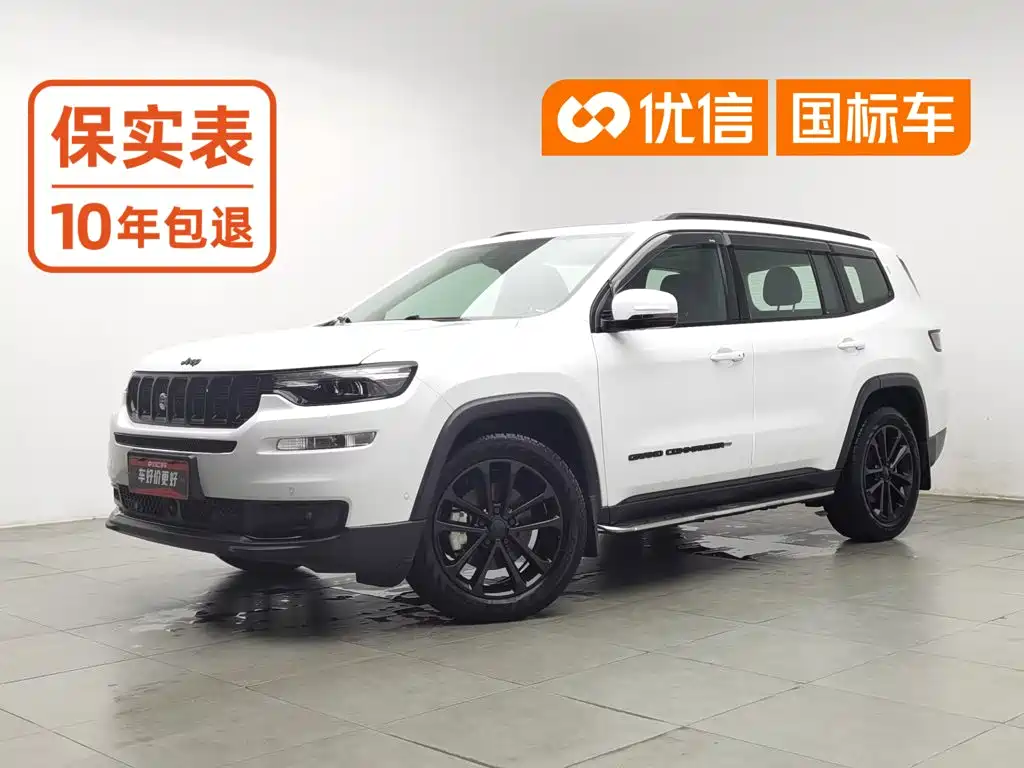
At a glance
- The Commander offers overseas buyers a Jeep-badged SUV with 2WD, AWD and 4WD options across several equipment grades.
- The gasoline line includes 2.0T versions, while a plug-in hybrid option requires separate battery, charging and homologation checks.
- New vehicles provide cleaner documentation, whereas used purchases require VIN, condition and service-history due diligence.
- Export prices vary with the unit, trim, condition, logistics and exchange-rate effects, so live listings are the binding reference.
- MOQ, steering configuration, import compliance and parts support should be settled before payment or shipment.
Why the Jeep Commander matters for export markets
The Jeep Commander is a China-origin Jeep SUV positioned for buyers who want a recognizable off-road-oriented brand, a substantial passenger vehicle and a choice of two-wheel-drive, all-wheel-drive or four-wheel-drive configurations. Its appeal in export markets is not simply the badge: overseas dealers can match it against different duty cycles, from urban fleet use to mixed-road operations, while selecting the edition and drivetrain that suit their market. Dealer listings may also use the related “Grand Commander” name, so confirm the exact vehicle identity rather than assuming every similarly named record has the same body, equipment or compliance profile.
Chinese sourcing is attractive to distributors because it opens several trim and powertrain paths within one model family, including 2.0T gasoline versions, AWD or 4WD versions, China V and China VI naming, and a plug-in hybrid edition. That breadth lets a buyer test a brand and body style before committing to a large fleet order. It also creates comparison work: origin-market emissions labels, steering configuration and equipment must be translated into the destination market’s legal and commercial requirements. A disciplined importer treats those checks as part of product selection, not paperwork to complete after the vehicle has shipped.
For overseas buyers, demand is strongest where the Commander’s combination of SUV packaging, visual identity and selectable drivetrains adds differentiation without requiring a bespoke import programme. Fleets can use it for executive transport, regional mobility or mixed-surface travel, while dealers benefit from a broader parts and resale conversation than a niche model. The practical caveat is serviceability: before ordering, check local technical familiarity, spare-part lead times and whether the selected version’s maintenance needs match the fleet’s operating environment. A low acquisition quote is of limited value if downtime from unavailable components becomes the dominant operating cost.
- Verify Commander versus Grand Commander naming.
- Match drivetrain to road conditions.
- Check local parts support before rollout.
Model range, trims and powertrain variants: how the lineup is structured and how to choose
The lineup is organized around drivetrain and equipment rather than a single global trim hierarchy. Visible names include 2WD Elite, Advance and Leading editions; AWD Luxury, Premium and Ultimate editions; and 4WD Joy, Elite, Ultimate, Intelligent and Night Hawk editions. These labels help identify positioning, but they are not automatically equivalent to trim names in another country. Ask for a complete equipment list, VIN, production specification and the destination-relevant homologation file. Edition badges can change without a mechanical change, while the same badge may cover different content in different model years, so year-specific verification is essential.
A central powertrain path is the 2.0T turbocharged gasoline engine, paired in the range with front-drive, AWD and 4WD configurations depending on edition. A 5.7 designation also appears in the trim vocabulary, while a 2.0T plug-in hybrid Premium Edition forms a separate electrified path. The listing names do not provide a complete technical record, so engine output, transmission, battery capacity, electric range, charging and emissions figures must be checked on the live unit rather than inferred from the badge. For fleet planning, confirm whether the propulsion choice changes payload, duty cycle or service procedure.
Selection should start with the duty cycle, then narrow the trim. A 2WD vehicle may suit paved routes where fuel efficiency and acquisition cost dominate; AWD or 4WD can be more relevant for wet roads, snow, rough access roads or regional travel. The plug-in hybrid may appeal where charging is dependable and the buyer values reduced local emissions, but it adds battery, charging and regulatory questions. For every version, verify cargo, seating, towing and equipment against the actual application rather than relying on broad SUV assumptions. Ask for measured limits and a physical test fit.
- Verify powertrain data on each listing.
- Treat China V/VI as origin labels.
- Select PHEV only after charging checks.
New vs used Jeep Commander: how export inventory is structured and how buyers choose
A new Commander is the cleaner starting point for many importers because its condition, equipment and model-year history can be documented more consistently than a previously registered vehicle. Export supply may include different Chinese-market editions and emissions designations, but buyers should treat each as a separate SKU. Confirm whether the vehicle is factory-new, whether it has been prepared for export and whether the quoted specification matches the physical unit shown in photographs and documents. Also ask whether the warranty begins at production, shipment or another agreed milestone, because that can alter residual-risk allocation.
Used Commander inventory follows a different risk structure. Mileage is only one element: buyers should also inspect body condition, interior wear, tyres, service evidence, accident repair, corrosion, VIN history and whether the odometer and modification records are credible. An export-preparation process can improve appearance without resolving mechanical history. For a used unit, a pre-purchase inspection and a seller warranty are therefore more important than finding the lowest acquisition figure. Ask for the original registration documents, keys, tools, service invoices and a written statement on outstanding finance or salvage status, where applicable.
The new-versus-used decision is therefore a balance between documentation and acquisition cost. New vehicles generally reduce uncertainty around wear and refurbishment, while used units may suit buyers with a firm repair base, a lower depreciation assumption and a shorter planning cycle. Neither category avoids import compliance, and age restrictions or emissions rules can change the economics of an older vehicle. Model the total landed and operating cost before choosing, then set a go/no-go threshold for inspection findings. For fleet tenders, include inspection, spare parts, training and downtime assumptions in the comparison.
- Confirm new status and warranty start.
- Inspect used VIN and service history.
- Model compliance and operating costs.
How export pricing works: the factors behind a live listing price, and how to read one
A live Commander price is the output of several vehicle-level variables. Model year, trim, engine, drivetrain, plug-in hybrid configuration, production date and optional equipment all affect the seller’s asking point. Condition and mileage become material for used units, while factory-new vehicles may carry a different reserve or preparation allowance. Because the same model name can cover meaningfully different vehicles, compare listings only after aligning these variables; otherwise a lower number may simply describe a different product. Request a line-by-line comparison for any procurement shortlist, including what is included in the displayed price.
Export cost is broader than the vehicle listing. Ocean freight or RoRo handling, marine insurance, export documentation, terminal and port charges, inland haulage, taxes, duties and broker fees can all change the landed figure. Exchange rates also affect a quote prepared in another currency, and the Incoterm determines which party carries cost and risk at each stage. The same unit can therefore produce different totals depending on destination, shipment method and the point at which responsibility transfers. Ask whether freight, insurance, customs clearance, destination charges and registration are excluded, included or quoted separately.
To read a live listing correctly, treat the displayed amount as the starting reference for that specific unit, not as a universal Commander price or a guaranteed landed cost. Open the current inventory record, note its vehicle identifiers and specifications, then check whether the seller provides an export quote, payment terms and a delivery estimate. Request a pro forma invoice that names the unit, Incoterm, validity period, documentation scope and any condition or deposit conditions. ChinaCarDirect’s live Commander listings are currently the source for the per-unit price and availability.
- Compare equivalent vehicle specifications.
- Separate vehicle and landed costs.
- Confirm Incoterm and quote validity.
MOQ, ordering and payment: single units vs consolidating a container
MOQ is a supplier and listing term, so a buyer should not carry a blanket Commander MOQ from one campaign into another. Some export sellers may accept a test order or a single vehicle for a dealer sample; others may set a minimum per model or require a mixed-unit consolidation. The minimum quantity shown for an individual offer is therefore the first reference, but the written pro forma and seller confirmation are controlling. Before paying, confirm whether the MOQ applies by model, trim, color or total order value in writing.
Buying one vehicle can reduce inventory exposure and provide useful market feedback before a larger movement. Consolidating several units into one container or consolidated shipment can improve freight planning and may create purchasing leverage, but it ties up more capital and exposes the buyer to unsold stock, storage and model-year aging. A mixed manifest can include different trims for a dealer network, yet each vehicle must still be described accurately. Confirm container capacity, loading plan, delivery sequence and the party responsible for losses before consolidating and damage inspection at loading.
A sound order begins with account verification, a written specification and a unit-specific pro forma invoice. The buyer and seller should agree on the deposit, balance trigger, accepted payment method, inspection period, documentary evidence, cancellation terms and title-transfer process. Common arrangements may involve payment against shipping documents, but the exact mechanism and credit protection must be agreed rather than assumed. Do not release the balance solely because a photograph shows the vehicle; use a defined inspection or third-party report tied to the same VIN and obtain a receipt for every transfer.
- Confirm listing-specific MOQ in writing.
- Pilot one unit before scaling.
- Tie final payment to inspection.
Shipping, homologation and market compliance caveats: LHD/RHD and import rules by country
Steering configuration is a critical sourcing check. A vehicle assembled for China may be left-hand drive, and the Commander’s export availability should not be assumed to include the steering position required in the destination. UK, Australia and other right-hand-drive markets may require a specific configuration or conversion, with associated cost, warranty and safety implications. If RHD is essential, request photographs of the steering wheel and VIN plate, obtain a written confirmation, and have the conversion assessed against local type-approval rules before the vehicle ships. Do not rely on a trim label alone.
Import rules are determined country by country and can include customs valuation, duties, taxes, emissions and safety approval, VIN or identity checks, roadworthiness testing, import permits, insurance and restrictions based on vehicle age. China V and China VI labels in an edition name describe the source-market emissions category; they do not establish approval in Europe, the Gulf, Africa, Latin America or Asia-Pacific. A local homologation specialist or broker should confirm the route, while a PHEV also requires attention to charging standards, battery declarations and any applicable local incentives or restrictions.
Transport choice depends on verified dimensions, weight, securing requirements and route. Suitable vehicles may move by container or roll-on/roll-off service, but the loading plan must match the actual Commander variant rather than an assumed model envelope. Freight quotations should state origin and destination charges, carrier, service basis, booking date and insurance responsibility. Transit time and cost vary with sailing frequency, port congestion, consolidation, weather, destination handling and inland delivery, so treat any schedule as an estimate until space is confirmed. For a plug-in hybrid, confirm whether the carrier or forwarder has specific battery handling or documentation procedures.
- Verify steering side from VIN.
- Complete destination-market homologation.
- Quote freight using verified dimensions.
Who should buy the Commander — and who should pick a different vehicle
The Commander fits an overseas buyer or fleet that wants a substantial Jeep-badged SUV, a broad selection of equipment and drivetrain choices, and a product that can carry a premium or lifestyle positioning. It is particularly relevant for distributors serving mixed roads, for corporate mobility programmes seeking a distinctive alternative, and for fleets that need 4WD availability without standardising every vehicle on the same platform. The buying case is strongest when local service capability, parts planning and residual demand are addressed before the first shipment or properly planned pilot order.
A different vehicle is usually more sensible when the priority is maximum urban efficiency, a compact parking footprint, a guaranteed right-hand-drive build, a commercial cargo platform or straightforward access to local emissions approval. A hybrid crossover may serve a mixed family fleet better than a large SUV, while a locally built model can reduce compliance and parts friction. If the Commander must be converted to RHD, lacks workshop support or carries an unfamiliar powertrain, those burdens can outweigh its styling and 4WD choice. The comparison should therefore be made on total operating friction, not badge appeal alone.
Before committing, map the Commander against the fleet’s actual cost and risk profile. Compare purchase and landed cost, expected fuel use, likely tax treatment, insurance class, maintenance intervals, parts availability, technician training, downtime risk and residual value. A pilot vehicle can validate assumptions about access, parking, load and driver acceptance. For a larger programme, phase the order, retain inspection rights and define a stop rule if parts support or homologation falls short of the agreed plan. This approach turns trim preference into an operating decision rather than an emotional purchase alone.
- Suited to mixed-road fleets needing 4WD.
- Avoid where RHD or service support fails.
- Compare full operating cost.
Main rivals and how the Commander compares
Toyota Highlander is a credible alternative for buyers who prioritise a different ownership proposition: established family-SUV positioning, broad global service familiarity and, in relevant markets, efficient hybrid choices. The Commander may appeal more to dealers wanting a distinctive Jeep product and the option of 4WD-led trims. Highlander can be the stronger choice where fuel efficiency, routine parts supply and a lower-friction ownership experience outweigh brand differentiation, so compare the exact destination-market grade rather than the name alone. Availability, emissions rules and after-sales coverage can change the result substantially in the importing country.
Ford Explorer is another relevant large-SUV comparison, especially for fleets attracted to a road-oriented family utility vehicle and a broad AWD selection. The Commander differentiates through Jeep design and the presence of more overtly 4WD-focused editions in the range, but buyers should not assume those labels guarantee the same trail capability or equipment across rivals. Explorer may suit buyers who prioritise cabin versatility and mainstream fleet familiarity; the Commander may suit those who want a more emphatic off-road brand identity. For either model, verify local parts, warranty coverage and true towing requirements before selection.
Volkswagen Teramont is a more China-market-oriented alternative, particularly useful for buyers seeking a locally produced, multi-row family vehicle with a more value-led running-cost proposition. The Commander gives a more distinctive off-road-brand proposition and a drivetrain ladder that can include dedicated 4WD versions. Teramont may be easier to support where Volkswagen service coverage is strong, while the Commander may command greater lifestyle appeal. Neither advantage is universal; evaluate the exact grade, powertrain and destination-market compliance. This comparison is most useful for regional distributors because production origin can materially affect duties, homologation, parts and residual-value assumptions.
- Highlander: efficient family-SUV alternative.
- Explorer: road-focused large-SUV option.
- Teramont: locally produced value alternative.
Live Jeep Commander export inventory
View all listings →Real units currently on ChinaCarDirect with per-unit asking prices and MOQ. Availability updates live from the catalogue.
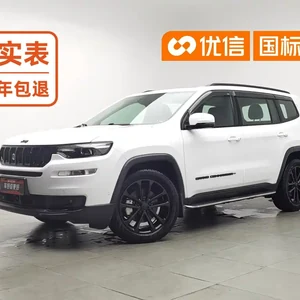
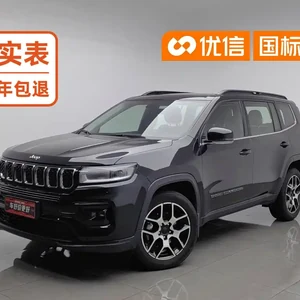
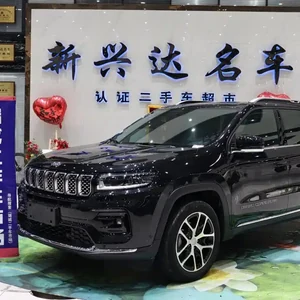
How to buy a Jeep Commander from China
-
1
Define the destination and duty profile
Record the destination country, steering requirement, road conditions, payload, charging access and expected annual distance. These constraints determine which Commander trims and powertrains are worth evaluating.
-
2
Shortlist comparable live units
Use the live Commander inventory to compare vehicles with matching year, trim, engine, drivetrain and condition. Do not compare unlike units merely because they carry the same model name.
-
3
Verify the exact vehicle and paperwork
Confirm the VIN, production details, engine, transmission, equipment, steering side, service history, title and any China V or China VI designation. For a PHEV, request verified battery, electric-range and charging information.
-
4
Request a unit-specific landed quotation
Ask for a written quote identifying the vehicle, MOQ, Incoterm, payment milestones, documentation, freight basis and quote-validity period. Separate vehicle cost from freight, insurance, duties, taxes and destination charges.
-
5
Complete a destination compliance pre-check
Work with a local customs broker or homologation specialist to confirm import permits, age limits, emissions rules, safety approval, roadworthiness and RHD requirements before shipment.
-
6
Inspect before releasing final payment
Use a written specification and a third-party inspection tied to the VIN. Agree the deposit, balance trigger, inspection period and documentary evidence in the pro forma invoice.
-
7
Arrange loading, freight and customs clearance
Confirm verified dimensions, container or RoRo suitability, securing, insurance and loading inspection. Track the shipment and ensure the agreed export documents support customs clearance and delivery.
Commander vs rivals
| Toyota Highlander | Toyota Highlander is a strong family-SUV alternative for buyers prioritising service familiarity and efficient hybrid choices in relevant markets. The Commander is more differentiated for dealers seeking Jeep character and 4WD-focused trims, while Highlander may be easier to support where Toyota coverage is established. |
|---|---|
| Ford Explorer | Ford Explorer competes as a road-biased large SUV with AWD choices and mainstream fleet familiarity. The Commander offers a more overtly Jeep and 4WD-oriented position, but buyers should compare actual equipment, towing requirements and local support rather than infer capability from badge language. |
| Volkswagen Teramont | Volkswagen Teramont is a locally produced, value-oriented family SUV that can appeal where running costs and service coverage dominate. The Commander is more lifestyle- and 4WD-focused, making the better choice dependent on destination-market availability, homologation and after-sales strength. |
Frequently asked questions
How is Jeep Commander export pricing determined?
Jeep Commander export pricing is unit-specific and reflects model year, trim, engine, drivetrain, hybrid configuration, condition, exchange rates, freight, insurance, Incoterms and destination charges. The vehicle amount shown in each live Commander listing is the starting reference, not automatically a landed total. Ask the seller for a written quote identifying the unit, included documentation, delivery basis and quote validity.
What engine and powertrain options are available?
The range centres on a 2.0T turbocharged gasoline engine offered with 2WD, AWD or 4WD depending on trim; some nomenclature also includes a 5.7 designation. A 2.0T plug-in hybrid Premium Edition provides a separate electrified option. Exact transmission, output, battery capacity, electric range and charging data are not safely inferred from a trim name, so check the individual listing.
Should I buy a new or used Jeep Commander?
New units generally offer cleaner condition and documentation, while used units can suit buyers with a strong repair operation who accept more uncertainty. For either, verify VIN, title, service and accident history, inspect condition and calculate import, maintenance and downtime costs. Age or emissions rules may also change the economics of an older vehicle.
What is the MOQ for Jeep Commander wholesale orders?
MOQ depends on the seller, model and listing, so there is no safe blanket Commander minimum to assume. A single-unit sample may be available, while larger container orders or mixed manifests are subject to the supplier’s terms. Check the current live listing and obtain the MOQ and order conditions in writing before paying a deposit.
How long does shipping take and what affects the cost?
Shipping time and cost vary with route, sailing frequency, port congestion, vehicle dimensions and weight, consolidation, freight charges, insurance, customs clearance and inland delivery. A Commander may move in a container or on a roll-on/roll-off vessel, but the method must match the verified vehicle and loading plan. Treat schedules as estimates until freight space and the final booking are confirmed.
Can spare parts be supplied for the Commander?
Spare parts can be sourced, but availability depends on the exact trim, production period, VIN and whether the part is shared with a local vehicle programme. Ask the seller for a parts list and lead-time history, then compare local dealer support and aftermarket alternatives before ordering. For hybrid versions, confirm battery-related components, diagnostic capability and safe handling requirements.
Is a right-hand-drive Commander available for export?
Do not assume a right-hand-drive Commander is available from a China-market listing. Confirm the steering side from the unit and VIN, and obtain written information on any factory RHD version or conversion. If conversion is required, have it assessed for safety, warranty and local type approval before shipment, because installation alone does not establish legal road use.
How do I order a Jeep Commander from China?
Start with the live Commander inventory, shortlist comparable units and request a unit-specific quote showing MOQ, Incoterm, payment milestones and estimated logistics. Then verify documents, destination-market compliance, steering configuration and loading requirements. Use an agreed inspection tied to the VIN before final payment, and only release the balance against the agreed inspection and shipping evidence.
Ready to source the Jeep Commander?
Request a Jeep Commander export quote with your destination, trim, quantity and compliance requirements.
Request a quote