
Jeep Gladiator Export Buying Guide for Overseas Buyers
Compare Jeep Gladiator trims, engines, export pricing, ordering and shipping options, then source a suitable 4x4 pickup for your overseas market with confidence.
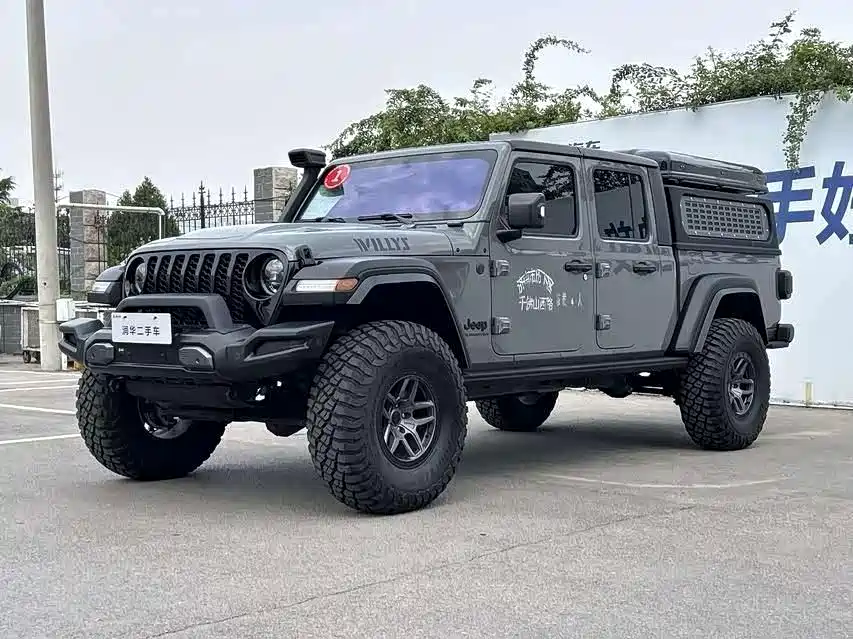
At a glance
- The Gladiator combines a four-door SUV-style cabin with open-bed utility and 4x4 positioning for mixed-duty buyers.
- The represented export configuration centers on a 3.6-litre naturally aspirated V6 petrol engine, automatic transmission and four-wheel drive.
- Pioneer is the functional fleet reference point, while Overland carries a higher equipment position.
- Export pricing moves with trim, condition, year, options, exchange rates, freight and Incoterm, so landed cost must be compared.
- Wholesale buyers should verify the VIN, MOQ, payment milestones, shipping method and destination compliance for each unit.
- Check the live Gladiator inventory for current per-unit pricing and availability, then confirm the details in a written quotation.
Why the Jeep Gladiator matters for export markets
The Jeep Gladiator sits between a lifestyle SUV and a body-on-frame pickup. It combines a four-door passenger cabin with an open cargo bed, while the 4x4 system and Jeep’s trail-oriented engineering appeal to buyers needing equipment for remote work, recreation or mixed-duty fleets. That combination gives it broader export relevance than a conventional work truck without making it the lowest-cost option for moving bulk cargo. For overseas dealers, it can anchor an off-road accessory programme or serve a fleet where towing ability and secure bed access matter more than minimum kerbweight.
Global appeal comes from the Gladiator’s recognizable Jeep identity and a practical format that is easier to explain than a lifestyle-only SUV. Four-wheel drive supports buyers in rural, mountainous, agricultural or winter environments, while the pickup bed supports tools, sports equipment and occasional commercial loads. The model is therefore relevant to specialist dealers, outdoor brands and fleet managers, even when a cheaper work pickup would win on cost alone. Its appeal also extends beyond hardcore off-road use because the passenger cabin is more practical for daily, family and management duties.
Not every export market treats the Gladiator as the same proposition. Fuel availability, insurance classifications, pickup rules and local preferences can change the commercial case. In markets where narrow streets, high parking costs and urban congestion dominate, its dimensions and trail positioning may be secondary benefits. Conversely, in regions with dispersed services and unpaved access, the four-door cabin and four-wheel-drive hardware can justify a higher ownership cost than a compact utility vehicle. The export strategy is to position the model around a use case rather than assume universal global demand.
- SUV cabin, pickup-bed utility.
- 4x4 relevance beyond hardcore use.
- Use case drives export value.
Model range, trims and powertrain variants: how the lineup is structured and how to choose
The export lineup should be read by trim, not by model badge alone. The 3.6-litre Pioneer Edition and 3.6-litre Overland are key export references, both with a naturally aspirated engine, automatic transmission and four-wheel drive. Pioneer is a functional starting point for a commercial or fleet buyer, prioritizing core equipment over decorative or specialist equipment. Overland occupies a higher equipment position and is usually the better candidate when the buyer values comfort, capability-oriented hardware and exterior differentiation. Exact contents and market adaptations must still be checked on the individual listing.
Powertrain choice is narrower in the export examples shown than in Jeep’s catalogue. The recurring configuration is a 3.6-litre naturally aspirated V6 petrol engine paired with an automatic transmission and four-wheel drive. Other markets have used different Gladiator powertrains, including diesel versions, so a buyer should not assume every imported vehicle has the same fuel, emissions system or equipment. Verify the VIN, engine designation, gearbox type, axle ratio where relevant and fuel filling compatibility on the exact unit before committing funds, and retain the written confirmation with the purchase file.
Choose the powertrain around duty cycle first, then the trim. A dealer sourcing for government, utility or rural fleets should prioritize fuel suitability, parts support, service access and homologation over cosmetic differences. A buyer who values the Gladiator’s off-road identity may compare equipment packages because badges alone do not prove a vehicle has locking differentials, gearing, underbody protection or tire specification. If the use case is light commercial work on maintained roads, a lower-spec Pioneer may offer a rational ownership proposition. Compare the live specification, option list, service history and landed cost rather than selecting by trim name alone.
- Pioneer: functional fleet starting point.
- Overland: greater equipment emphasis.
- Verify powertrain details per VIN.
New vs used Jeep Gladiator: how export inventory is structured and how buyers choose
A Jeep Gladiator export catalogue can contain new vehicles and previously registered units sourced through overseas channels. These categories should be treated as different procurement models, not merely different ages. A new example may be in-dealer stock or prepared for export, so the buyer needs its production date, condition report and delivery history. A used example may offer an equipment mix or lower acquisition cost, but mileage, service record, prior market and condition become central to valuation and risk. Start with the job the vehicle must do, not whether a listing says new or used.
For a new or recently registered unit, request the VIN, production date, odometer reading, original invoice and a condition report covering paint, tyres, glass, underbody and interior. Confirm whether the vehicle has been driven in a demonstration role, stored outdoors, exposed to flood or salt, or fitted with accessories not shown in photographs. Also ask whether the new classification refers to registration status only; some markets classify lightly used, demonstrator or ex-fleet vehicles separately, and those categories can affect residual value. Dealer preparation should be documented rather than assumed from a glossy listing photograph.
Used Gladiators can make sense when a buyer wants a known specification, immediate availability and potentially lower entry cost. The decision becomes risk allocation: check the VIN, service history, title and import documents, accident indicators, suspension and drivetrain condition, and the open bed and body. Compare a well-maintained used vehicle with a poorly documented example at a similar asking price, and use inspection to decide whether a discount compensates for foreseeable work. For an unfamiliar market, imported used examples may have different software, parts or emissions arrangements, so local support matters.
- New: verify age and preparation.
- Used: verify VIN and service.
- Import-market support affects value.
How export pricing works: the factors behind a live listing price, and how to read one
A live export price is the seller’s asking position for the vehicle and transaction terms, not automatically the buyer’s final landed cost. Vehicle-specific variables include model year, trim, engine and transmission, four-wheel-drive configuration, factory options, mileage, condition, ownership history and whether the unit is new or used. Commercial variables then add foreign-exchange movement, port and handling charges, ocean or roll-on/roll-off freight, insurance, inland transport, financing and the chosen Incoterm. Duties, taxes and registration costs may sit outside the displayed price and must be calculated for the destination market before payment.
Two listings with the same Gladiator description can carry different economics if one is a Pioneer with lower specification and another is Overland, or if one has more mileage, a different market origin or less complete documentation. Optional equipment is not free value: assess whether it is factory fitted, whether sensors, wiring, modules and software are present, and whether replacement parts will remain available after import. Photos can hide damage, replaced parts or incomplete option lists. Compare using the VIN, factory build sheet, equipment list and condition report rather than headline trim alone.
To read the live ChinaCarDirect result, identify the exact unit, ask whether the displayed amount is EXW, FOB, CIF or another basis, and list what is excluded. Add destination port, inland delivery, insurance, duties, taxes, registration and dealer margin to build a landed-cost comparison. Treat the live inventory page as the source for current per-unit pricing and availability, because condition and commercial terms can change. Replace a budgetary figure with a quotation after the seller confirms the VIN, Incoterm, payment schedule and freight destination. An RFQ creates a record of what was promised.
- Separate price from landed cost.
- Confirm condition, options and Incoterm.
- Check live unit figures.
MOQ, ordering and payment: single units vs consolidating a container
Minimum order quantity is a seller and logistics term, not a model attribute. It can depend on whether the vehicle is in export stock, whether the supplier is releasing a single unit, and which payment and dispatch arrangements are accepted. A single-unit purchase may be possible, but confirm it in writing for that listing and destination. MOQ must be separated from a carrier’s consolidation practice: one vehicle may be bought individually while several orders are combined into one container. Review the live terms or request a quote if no MOQ is displayed.
Consolidating compatible Gladiators can improve freight efficiency and simplify management for a dealer, but it introduces allocation and condition risk. Each unit should remain tied to a specific VIN and listing, with photos, inspection results and agreed option list attached. Confirm who owns the goods during transit, when insurance begins, whether cargo can be partitioned, and how customs declarations will cover multiple vehicles. Mixing trims, years, specifications or condition grades may complicate spare-parts planning. Consolidation is attractive for freight economics but not a substitute for vehicle-level due diligence before loading.
The order process begins with a written purchase agreement identifying the vehicle, VIN, agreed price basis, Incoterm, MOQ, deposit, balance trigger, inspection standard, title documents and remedies if the unit does not match. Payment should be tied to verifiable milestones rather than sent without documents or inspection rights. Confirm currency, method, bank details, cancellation terms and responsibility for costs if customs or destination compliance creates a problem. An inspection before final balance is valuable because issues are not obvious in photographs. Keep the contract, correspondence and inspection evidence in the transaction file.
- Confirm single-unit acceptance.
- Consolidation never replaces inspection.
- Tie final payment to milestones.
Shipping, homologation and market compliance caveats: LHD/RHD and import rules by country
Shipping for a Gladiator is planned around the vehicle’s size, weight, route, port pair and carrier capacity. A specialist carrier may quote container or roll-on/roll-off handling, while a freight forwarder may combine the unit with other vehicles; the appropriate method depends on the shipment. Transit time and cost vary because sailing schedules, port congestion, transshipment, customs inspection, equipment demand and destination road access affect the result. Because the Gladiator is a pickup rather than a cargo unit, request a vehicle-specific freight quote including loading, securing, insurance, discharge and terminal handling.
Left-hand-drive and right-hand-drive versions serve different markets, and steering configuration affects registration, use and parts planning. Do not assume a Chinese export catalogue contains every required configuration; ask the supplier to confirm handedness from the VIN and physical controls before ordering. Converting a left-hand-drive vehicle to right-hand drive is not a steering-wheel swap and may create safety, tax or homologation problems. If a right-hand-drive market is essential, it is safer to source an original right-hand-drive vehicle or confirm conversion legality first. The same principle applies to road standards and equipment.
Import compliance starts with identifying how the destination authority classifies the Gladiator: passenger vehicle, commercial pickup, goods carrier or another category. That classification can affect eligibility, taxes, licensing, insurance and permits. Check emissions, noise, safety, lighting, tyre and security requirements, age restrictions and proof of roadworthiness. The vehicle must match its documents, and any VIN, ownership or registration discrepancy should be resolved before loading. An original-market version may not satisfy another country’s requirements even if its mechanical specification looks suitable. The importer remains responsible for accurate declaration at every customs stage.
- Confirm LHD/RHD before ordering.
- Check pickup classification and rules.
- Match VIN, documents and vehicle.
Who should buy the Gladiator — and who should pick a different vehicle
The Gladiator is a strong fit for overseas dealers serving outdoor, rural, utility and adventure customers, particularly where a four-door cabin and open bed are both expected. It can appeal to fleet managers needing occasional equipment transport, site supervision or remote maintenance rather than maximum payload at the lowest operating cost. The brand also gives access to a broader four-wheel-drive and accessory customer base. For an importer, however, market the vehicle against a defined job rather than as a generic off-road lifestyle badge. Clear use cases make trim and equipment selection easier.
It is less suitable when the core objective is moving maximum payload at minimum life-cycle cost. A diesel work pickup may offer a lower-cost cargo platform, while a smaller utility vehicle can be easier to maneuver, park and fuel in congested or price-sensitive markets. The Gladiator is a poor fit for buyers whose policy excludes combustion vehicles, or whose routes make an off-road stance unnecessary. Fleet operators should compare total cost, loading access, towing needs, crew comfort and restrictions rather than treating badge or four-wheel drive as a substitute for a business-case calculation.
Practical choice depends on the market and customer. In a country with pickup demand and service networks, the Gladiator can occupy a distinctive lifestyle-and-utility segment without fighting work trucks on price. Where off-road access requires more than a road-biased 4x4, a specialist model with stronger hardware may be better, but verify the differences before switching brands. For urban use with little cargo or trail requirement, a compact SUV may be easier to own. The most defensible purchase is the one whose capability and running costs match a documented operating requirement.
- Mixed passenger, cargo and 4x4 fit.
- Poor fit for lowest-cost hauling.
- Match size, fuel and licensing.
Main rivals and how the Gladiator compares
The Toyota Hilux is the benchmark many buyers will use to evaluate the Gladiator. It is established in many global pickup markets and benefits from a strong parts and dealer ecosystem, efficient diesel options in some countries and a work-focused durability reputation. The Gladiator differentiates with stronger brand identity in off-road and lifestyle niches, a passenger-SUV format and a four-door open-bed layout. For a buyer prioritizing low operating costs, fleet availability and logistics simplicity, the Hilux may be safer commercially. It remains credible even where the Gladiator has stronger recreational appeal.
The Ford Ranger is a close competitor because it combines a passenger cabin with a pickup bed and four-wheel-drive variants. It is often attractive when buyers prioritize a mainstream pickup footprint, familiar commercial carrying capacity and regional availability. The Gladiator retains a lifestyle and trail identity, but that positioning can mean a higher acquisition or ownership cost when the work task does not require that character. Ranger powertrain, payload, towing and equipment combinations vary by market, so select neither model from a generic comparison chart. Match the local configuration, running costs, warranty and parts support.
The Chevrolet Colorado is a midsize rival in markets where officially sold, giving buyers a four-door pickup balancing passenger refinement, bed utility and four-wheel-drive capability. It can appeal to buyers wanting a more conventional pickup presentation than the Gladiator while considering an off-road-oriented alternative. Conversely, the Jeep’s stronger visual differentiation and trail-focused positioning may generate more enthusiast demand for a dealer in suitable markets. The Colorado is less available than the Hilux and Ranger, so market availability can decide as much as specification. Compare registration, tax, fuel choices, service reach and resale demand.
- Hilux: work-economy benchmark.
- Ranger: mainstream pickup alternative.
- Colorado: direct midsize rival.
Live Jeep Gladiator export inventory
View all listings →Real units currently on ChinaCarDirect with per-unit asking prices and MOQ. Availability updates live from the catalogue.
How to buy a Jeep Gladiator from China
-
1
Define the destination and duty cycle
Record the destination country, required steering configuration, pickup-tax treatment, typical roads, cargo needs and towing expectations. These constraints should determine the acceptable trim before comparing commercial terms.
-
2
Filter the live inventory
Review the live Gladiator listings by VIN, model year, trim, powertrain, condition and market origin. Check the current per-unit price, availability, photographs and stated equipment for each shortlisted vehicle.
-
3
Request a vehicle-specific quotation
Ask for a written quote identifying the VIN, price basis, Incoterm, freight method, insurance, taxes or duties excluded, MOQ, payment schedule and quotation validity.
-
4
Validate the vehicle and documents
For a new vehicle, confirm production date, preparation, warranty and delivery history. For a used vehicle, verify mileage, service records, title, import documents, accident indicators and mechanical condition.
-
5
Check destination compliance
Confirm whether the unit is left-hand drive or right-hand drive and whether its specification can be registered locally. Use a customs broker or local specialist to check pickup classification, taxes, emissions, safety and conversion requirements.
-
6
Agree MOQ, payment and inspection
Put the accepted MOQ, deposit, balance trigger, inspection standard, document list and remedies in the purchase agreement. Retain inspection rights before releasing the final payment.
-
7
Book freight and release for shipment
Obtain a vehicle-specific freight quote covering loading, securing, insurance, discharge and inland delivery. Match the unit to its VIN, reconcile export documents and track the vehicle through dispatch.
Gladiator vs rivals
| Toyota Hilux | The Hilux is a global work-pickup benchmark with a strong parts and service ecosystem, often attractive for fleet economics and logistics. The Gladiator is the stronger choice for buyers seeking a more distinctive SUV-based cabin and off-road lifestyle identity. |
|---|---|
| Ford Ranger | The Ranger offers a modern, mainstream pickup format with market-dependent four-wheel-drive configurations. The Gladiator differentiates more clearly through its passenger-SUV positioning and trail-focused branding, although that distinction may not justify a higher ownership cost for pure work use. |
| Chevrolet Colorado | The Colorado is a direct midsize pickup competitor where it is officially sold, combining bed utility with a relatively road-focused presentation. The Gladiator may produce stronger enthusiast interest, but local availability, fuel choices, service reach and registration rules can outweigh that branding difference. |
Frequently asked questions
How is the export price of a Jeep Gladiator determined?
Export pricing is driven by the vehicle’s year, trim, engine and options, mileage or condition, plus exchange rates, freight, insurance, handling and the selected Incoterm. Duties, taxes and registration may be outside the displayed vehicle price. Use the live Gladiator inventory for current per-unit asking prices and availability, then request an RFQ for a written quotation stating every included and excluded cost.
What engine and powertrain should I expect?
The export examples shown use a 3.6-litre naturally aspirated V6 petrol engine, automatic transmission and four-wheel drive. Gladiators sold in other markets or periods may offer different powertrains, including diesel, so confirm the engine, gearbox, fuel and emissions arrangement from the VIN and factory information for the exact listing.
Is a new Gladiator always better than a used one?
A new or recently registered example may reduce uncertainty about wear and simplify initial presentation, but production date, preparation, warranty and delivery history still need checking. A used example can offer a known specification and lower acquisition cost, but mileage, service, title, accident history and condition become more important. A pre-shipment inspection should determine whether the price advantage compensates for expected work.
How does MOQ work when buying a Gladiator from China?
MOQ is a seller and logistics term rather than a fixed feature of the Gladiator. Some listings may accept an individual vehicle, while others apply a supplier or shipment minimum, so confirm the MOQ for the exact listing and destination. Consolidating separate orders into one container may improve freight efficiency, but it does not remove the need for unit-level inspection and allocation records.
How long does Gladiator shipping take and what affects the cost?
Shipping time and cost depend on route, sailing frequency, port congestion, transshipment, customs inspection, handling, insurance, vehicle securing and inland delivery. A Gladiator requires a vehicle-specific freight quote because loading method, dimensions and terminal charges differ from a standard car. Ask for the freight basis, route, expected schedule and all surcharges in writing rather than assuming a universal transit time.
Can I obtain spare parts after importing a Gladiator?
Spare-parts support depends on the vehicle’s original market, VIN, engine and electronic modules. Before ordering, ask for the exact build specification and a parts reference or catalogue number where possible, then confirm local dealer support, common wear-item availability and realistic shipping times for electronic or body parts. A unit may use market-specific components even when its model and trim badge look identical.
Is a right-hand-drive Jeep Gladiator available for export?
Right-hand-drive availability cannot be assumed from the model name or a general export catalogue. Ask the supplier to confirm steering configuration from the VIN and physical controls for the exact unit; some available examples may be left-hand drive. For an RHD market, an original RHD vehicle is generally safer, and any conversion should be checked for legality, safety and inspection requirements first.
How do I order a Jeep Gladiator through ChinaCarDirect?
Start with the live Gladiator inventory, shortlist units by VIN, trim and powertrain, and send an RFQ stating your destination, Incoterm, MOQ and required documents. Review the written quotation, vehicle history, inspection result and payment milestones before releasing the balance. The supplier should then coordinate export documents, vehicle-specific freight, insurance and delivery tracking.
Ready to source the Jeep Gladiator?
Request a written Jeep Gladiator quote with the VIN, specification, Incoterm, MOQ, payment milestones and vehicle-specific freight estimate.
Request a quote