
Jeep Grand Cherokee (import) Export Buying Guide
Plan a Jeep Grand Cherokee (import) purchase with guidance on trims, diesel and petrol options, export pricing, ordering, shipping, compliance and rivals.

At a glance
- The import lineup includes 3.0L and 3.6L petrol V6s, a 3.0L turbo-diesel V6 and a 5.7L petrol V8.
- Trim labels such as Comfort, Luxury, Elite, Professional and Flagship Prestige describe equipment levels rather than one uniform specification.
- Every unit should be checked for model year, VIN, steering position, condition, documents and destination-market eligibility.
- A single-unit order lowers inventory risk, while consolidation can improve freight efficiency but ties up more capital.
- Current per-unit prices and availability must be confirmed in ChinaCarDirect’s live listings before budgeting or depositing funds.
Why the Jeep Grand Cherokee (import) matters for export markets
The Jeep Grand Cherokee (import) occupies a middle ground in the global SUV market: it carries Jeep’s off-road identity and four-wheel-drive pedigree, but remains easier to operate on road than a dedicated ladder-frame workhorse. For overseas dealers, the model is attractive where customers recognize the Jeep brand and want a capable midsize SUV without moving into a full-size luxury or commercial 4x4. Its mix of petrol, diesel and high-output engine options also allows distributors to serve several buyer segments from one nameplate rather than relying on a narrow, single-configuration offer.
The commercial case is strongest where the Grand Cherokee’s combination of road presence, towing-oriented four-wheel drive and recognizable badge has commercial relevance. It can suit importers serving remote-area fleets, dealer groups, and customers who want an SUV with trail credentials but do not need a bare-bones commercial body. The imported version also broadens trim and powertrain choice for markets where domestic Jeep supply is limited. However, “import” describes origin and homologation history, not a guarantee that every vehicle is mechanically or legally identical to the model sold in another country.
For buyers, the key attraction is flexibility, but the sourcing decision must be made around destination-market rules rather than appearance alone. A vehicle may have the right trim name and engine label yet require changes to emissions equipment, lighting, radio, safety systems or steering position. Dealers should therefore treat each unit as a distinct product: confirm the VIN, build specification, condition, documents and legal eligibility before promising it to a customer. That discipline is especially important for fleet sales, where several similar-looking vehicles may differ in equipment or regulatory treatment.
- Jeep 4x4 positioning.
- Multiple powertrain choices.
- Destination compliance varies.
Model range, trims and powertrain variants: how the lineup is structured and how to choose
The import lineup should be read as a matrix rather than a simple list of trims. Across the model years, core designations include Comfort, Luxury, Elite, Professional, 80th Anniversary, 75th Anniversary Tribute, Flagship and Flagship Prestige editions, often with Navigation included in the name. Engine labels are equally important: the range includes 3.0-litre and 3.6-litre petrol V6s, a 3.0-litre turbo-diesel V6 and a 5.7-litre petrol V8. For procurement, the engine and edition together define the product more reliably than the Jeep name alone or a selected equipment package on the vehicle.
Petrol V6 choices suit buyers prioritizing broad service availability, predictable charging and simpler fuel logistics. The 3.6-litre version is the larger-capacity petrol option, while the 3.0-litre petrol unit provides a different balance that should be judged by local fuel prices, tax treatment and the efficiency ratings applicable to the exact vehicle. The diesel V6 is more relevant to operators with high annual mileage, good access to compliant diesel fuel or a genuine need for additional torque. The 5.7-litre V8 is a performance and towing-oriented choice, not an economy purchase decision.
All-wheel drive is central to the model’s appeal, but buyers should still confirm the specific drivetrain, transmission, axle ratio and off-road hardware listed for each vehicle. Trim level may add equipment rather than mechanical capability, so do not assume that every Elite or Flagship vehicle has the same traction hardware. Conversely, a lower-named edition may still meet a fleet requirement while costing less to acquire. Compare the options list, maintenance record, wheel-and-tyre specification and local warranty position, then select the edition that earns its premium through equipment buyers will actually use.
- 3.0L and 3.6L petrol V6s.
- 3.0L turbo-diesel V6.
- 5.7L petrol V8.
New vs used Jeep Grand Cherokee (import): how export inventory is structured and how buyers choose
Export supply for this model can include different model years, editions, engines and condition grades, even when listed vehicles are presented as new. That means “new” does not mean one homogeneous batch, and “used” does not necessarily describe the mechanical history in enough detail. The practical structure is unit by unit: each listing should disclose the year, trim, engine, mileage, exterior condition, options, VIN and seller documentation. Buyers should avoid assuming that adjacent listings share identical provenance or service history, because cosmetic refurbishment and import status can conceal important differences.
A new imported vehicle reduces uncertainty about wear and prior repairs, making it attractive for first-time importers, demonstration fleets or buyers establishing a model line. The trade-off is that “new” status should still be verified through title, invoice, import records and VIN checks, particularly if the unit has travelled or been prepared for export. A newer vehicle may also carry a higher acquisition, insurance and registration burden. Buyers should establish the residual value needed before paying for newer stock, especially if the first sale will be at fleet resale level.
Used imports become attractive when a buyer accepts an earlier model year, visible wear or demand for equipment rather than originality. The correct comparison is total purchase cost adjusted for remaining useful life, anticipated repairs and the resale value of the exact specification. Review paint, panel condition, interior wear, tyre age, service invoices, warning-light behaviour and accident-repair evidence; a lower asking price alone is not a warranty. For off-fleet resale, matching the edition to local demand matters because comfort and navigation trims may be easier to place than niche versions.
- Verify new status.
- Inspect service and repairs.
- Compare ownership economics.
How export pricing works: the factors behind a live listing price, and how to read one
Export price is the result of several interacting variables, not a fixed model-level tariff. The model year, edition, engine, mileage, condition, options, paint condition and whether the vehicle is already prepared for shipment all affect the seller’s base price. Conversion between seller currency and the buyer’s currency matters too. At export level, freight method, route, insurance, port charges, documentation, taxes, duties and the selected Incoterm can add different totals. Comparing one listing’s headline figure with another buyer’s landed quote is therefore misleading unless both quotes use the same scope and destination.
A live listing should be read line by line. First establish whether the displayed amount refers to the vehicle alone, domestic export readiness, or delivery to the port or city. Check which taxes and charges are included, who arranges customs clearance, and whether the vehicle is sold on an FOB, CIF or another Incoterm. Ask whether images, VIN, service history, keys, tools, local-language manuals and export documents are included. For a landed-cost comparison, also request destination freight, insurance, duty and VAT estimates, along with the exchange-rate basis and quote-validity period.
Price negotiation should follow specification clarification rather than start with a discount request. Compare equivalent examples: same year, engine, edition, condition and equipment. Identify costs that can be reduced without weakening the purchase—selecting a different trim, accepting a later sailing, consolidating freight, or changing Incoterm. Do not remove safety, compliance or documentation work merely to reach a headline number. Current per-unit prices and availability must be checked in the live inventory, and a written RFQ should state the selected vehicle, scope, payment milestones and validity before a deposit is paid.
- Match year, trim, condition.
- Separate vehicle and landed costs.
- Confirm Incoterm and validity.
MOQ, ordering and payment: single units vs consolidating a container
The MOQ is a supplier term, not an intrinsic feature of the Grand Cherokee. For buyers seeking to buy a Jeep Grand Cherokee (import) from China, some offers permit one unit; others target dealer quantities, a vehicle carrier or mixed-model consolidation. ChinaCarDirect’s live listings show the current unit-level position, while an RFQ should confirm whether a one-unit order is accepted. A single-unit purchase lowers inventory exposure and tests local demand, but it usually leaves the buyer negotiating freight and customs efficiency without the savings created by consolidation on that shipment.
Container consolidation changes the commercial arithmetic. Combining several vehicles can spread fixed port, handling and documentation costs across more units, and a mixed-model shipment may improve load utilization. It also ties up more capital, creates one shared shipping schedule, and makes one damaged or delayed vehicle affect the group’s cash cycle. Buyers should model savings against carrying cost, insurance, storage, local financing and unsold-stock exposure. Confirm whether the quoted freight assumes a vehicle count or container type, and obtain a written loading plan so the units and options contracted are actually loaded.
Payment terms should mirror transaction risk. A sequence may include a deposit, a balance due after inspection or document readiness, and separate payment for freight and insurance, but the sequence must be agreed in writing. The purchase contract should identify the VIN, agreed price, deposit refund conditions, inspection window, document list, title status and party responsible for export clearance. Verify that the seller can issue the invoice and export documents required in the destination country. Never treat a listing photograph or verbal assurance as a substitute for a unit-specific sale contract.
- One-unit orders test demand.
- Consolidation spreads fixed costs.
- Contract milestones and inspection.
Shipping, homologation and market compliance caveats: LHD/RHD and import rules by country
Freight method should match urgency, quantity and budget. Ro-Ro shipping can suit smaller volumes of vehicles, while containerized transport may be preferable for planned dealer consolidation; the best option depends on origin handling, available slots, vehicle dimensions, securing requirements and destination port capability. Transit time is not the only cost variable. Fuel and congestion surcharges, terminal handling, inspection, insurance, storage, demurrage and inland delivery can change the final amount. Request an all-in quotation with charge responsibility clearly allocated, rather than assuming the ocean freight rate represents the vehicle’s landed cost.
Steering position is a source of import mismatch. Left-hand-drive vehicles fit many markets in the Americas, continental Europe and parts of Asia, while right-hand-drive versions are usually required in the United Kingdom, Japan, Australia and other RHD markets. Confirm whether the steering position is original or converted, whether the conversion is recorded, and whether airbags, instruments and lighting were handled correctly. RHD availability can be limited for a given trim and year, so search by configuration and ask the supplier to source a compliant unit when no suitable live listing is shown.
Import eligibility cannot be judged from the vehicle alone. The destination country may impose age limits, emissions standards, roadworthiness and safety-equipment rules, local VIN or registration processes, customs valuation, and restrictions tied to the engine or equipment. Taxes and duties can differ by engine type, vehicle age, declared value and importer status. Before committing, ask a customs broker in the destination country to review the VIN, engine, emissions documents and intended use. Pre-clearance reduces the risk that a vehicle cannot be registered, but approval should never be implied by the seller’s export description alone.
- Confirm original steering side.
- Check local emissions and safety.
- Seek customs pre-clearance.
Who should buy the Grand Cherokee (import) — and who should pick a different vehicle
The Grand Cherokee (import) suits overseas buyers who value Jeep’s brand identity, four-wheel-drive capability, a road-going interior and a choice of petrol or diesel packaging. It is relevant to dealers serving outdoor-oriented customers, fleets, towing users and buyers who prefer an established nameplate and can maintain four-wheel-drive support locally. Diesel may suit intensive mileage where fuel quality and cold-start support are appropriate, while the V8 serves buyers who value performance and towing capacity more than fuel economy. The strongest business case is demand in the destination market for the exact configuration.
It is a weaker choice when the priority is minimum running cost, the lowest outlay, urban maneuverability, abundant local parts or the newest technology. A petrol V8 can be expensive to fuel and insure; diesel can be inconvenient where low-sulfur standards, cold-weather operation or servicing capability are concerns. Buyers focused on hybrid efficiency may find an electrified crossover more suitable, while operators needing a work-ready van or pickup should select a commercial platform. Buyers requiring seven seats must verify the Grand Cherokee’s seating configuration rather than assuming the badge guarantees three rows.
Before ordering, buyers should model the vehicle as part of a fleet rather than isolate the purchase price. Include delivery, registration, duty, insurance, fuel, servicing, tyres, parts availability and downtime, then compare against the resale economics of the selected trim. A lower acquisition price can be outweighed by parts lead times or poor residual demand, while a premium edition may earn more through equipment and easier financing. Ask for the model year, specification and service evidence, and walk away if the vehicle’s economics cannot be supported by the target segment.
- Strong for branded 4x4 fleets.
- Weak fit for urban budgets.
- Verify seating, parts and residuals.
Main rivals and how the Grand Cherokee (import) compares
The closest rival depends on which part of the brief matters most. For buyers who put rugged construction, diesel availability and off-road use first, the Toyota Land Cruiser Prado is the more conventional choice because it uses a body-on-frame architecture and a broad dealer network. The Grand Cherokee offers a more road-oriented, premium SUV with a V8 option in some markets. Dealers should compare the Prado generation and specification rather than assuming it is always more expensive; local service access, fuel rules and actual four-wheel-drive use should decide the fit.
Against the Ford Explorer, the Grand Cherokee emphasizes Jeep’s off-road identity, available diesel and V8 choices, and a more upscale or rugged presentation. Explorer units can be easier for some buyers to source and service, with modern safety and family packaging that may appeal more to road-focused customers. Neither model should be selected from a generic trim label: compare seating, cargo dimensions, towing limits, fuel consumption, warranty and the cost of parts in the destination market. The better fit is usually determined by real-world use, not by badge alone.
The Hyundai Santa Fe is an alternative when efficiency, family comfort, warranty and lower operating costs matter more than trail capability or a V8. It offers a road-focused crossover experience and, in many markets, a broader service network than an imported Grand Cherokee. The Grand Cherokee remains stronger for buyers who prioritize four-wheel-drive heritage, a high seating position and performance choices. Before a fleet purchase, calculate residual values and insurance costs in the destination country, because one rival’s lower acquisition point may not remain lower after tax, fuel, parts and financing.
- Prado favours rugged diesel use.
- Explorer focuses on family roads.
- Santa Fe favours efficiency.
Live Jeep Grand Cherokee (import) export inventory
View all listings →Real units currently on ChinaCarDirect with per-unit asking prices and MOQ. Availability updates live from the catalogue.

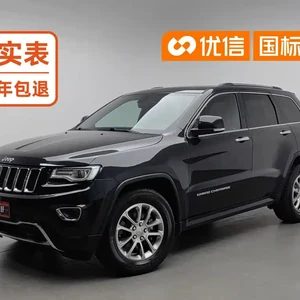
Jeep Grand Cherokee (Import) 2017 3.0L Comfort Navigation Edition
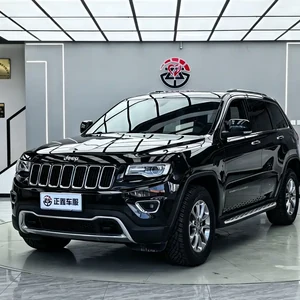
Jeep Grand Cherokee (Import) 2015 3.0TD Diesel Luxury Navigation Edition
Jeep Grand Cherokee (Import) 2015 3.0TD Diesel Luxury Navigation Edition
How to buy a Jeep Grand Cherokee (import) from China
-
1
Define the destination-market requirement
Specify the country, steering side, fuel, body capacity, budget basis and intended use before shortlisting vehicles; local rules can disqualify an otherwise suitable unit.
-
2
Search the live Grand Cherokee inventory
Filter the live listings by year, trim and engine, then treat each listing as a separate vehicle rather than a standardized model.
-
3
Request unit-specific evidence
Ask for the VIN, clear exterior and interior photos, options list, maintenance history, service records and export documents before paying.
-
4
Build a landed-cost comparison
Put vehicle price, freight, insurance, duty, VAT, port and inland charges into one worksheet, using the same Incoterm and currency for every quote.
-
5
Run local compliance checks
Ask a destination-country customs broker or homologation specialist to review emissions, age, safety, registration and steering-position requirements.
-
6
Contract the order and inspection
Record the selected VIN, agreed price, deposit terms, refund conditions, inspection window, document list and shipping responsibility in the purchase contract.
-
7
Ship, clear and deliver
Approve final inspection and release documents, monitor loading and freight milestones, then complete customs clearance and local registration before handover.
Grand Cherokee (import) vs rivals
| Toyota Land Cruiser Prado | The Prado is generally the stronger choice for body-on-frame durability, sustained off-road work and diesel support across many markets. The Grand Cherokee is more road-oriented and premium in character, with a V8 option in the imported range; compare local service coverage and fuel rules before choosing. |
|---|---|
| Ford Explorer | The Explorer is a close road-focused midsize alternative with broad family-SUV availability and modern safety and space packaging. The Grand Cherokee offers stronger 4x4 identity plus diesel and V8 options, but buyers should compare age, warranty, parts cost and real towing duty. |
| Hyundai Santa Fe | The Santa Fe generally prioritizes efficiency, family comfort and warranty value, making it attractive to road-focused buyers. The Grand Cherokee is the stronger fit for 4x4 heritage and performance, but the buyer must account for fuel use and model-year variability. |
Frequently asked questions
How is the export price determined?
The live price reflects the individual vehicle’s year, trim, engine, condition, mileage, options and seller terms. Freight, insurance, exchange rate, port charges, duties and the Incoterm can change the landed total, so compare quotes on the same scope. Current per-unit prices are shown in the live ChinaCarDirect listings and should be confirmed through an RFQ before payment.
Which engine and powertrain options are available?
The import range includes 3.0-litre and 3.6-litre petrol V6s, a 3.0-litre turbo-diesel V6 and a 5.7-litre petrol V8, paired with automatic transmissions. Exact drivetrain hardware, model-year calibration and equipment vary by unit, so check the VIN and live listing rather than assuming every trim is mechanically identical.
Are new or used Grand Cherokees better for export?
A new import may offer a cleaner ownership history and simpler initial resale story, but verify title, invoice, import record and VIN. A used vehicle can make more economic sense when the buyer accepts its model year and condition, but service history, accident repair, wear and parts needs should be valued. Compare total ownership and residual value, not the headline price alone.
How does MOQ work for this model?
MOQ is the seller’s stated minimum for a particular order or shipment, not a permanent model requirement. A buyer may be able to order one unit, while a dealer container or mixed-model consolidation can carry different terms. Ask the supplier to confirm the minimum, unit allocation, loading responsibility and freight basis in writing for the selected listing.
How long does shipping take and what affects the cost?
Shipping time and cost depend on origin handling, vessel or carrier schedules, route, season, port congestion, vehicle count, insurance and inland delivery. The relevant freight mode also depends on whether the order is a single vehicle or a planned consolidation. Request an all-in quote showing charges by Incoterm, plus realistic departure and arrival windows.
How are spare parts handled?
Parts support starts with the VIN, factory build sheet and model-year trim information, because similar Grand Cherokee versions can use different components. Common mechanical and service items are often easier to source through established Jeep networks, while body, electronics and trim-specific parts may need longer ordering or aftermarket alternatives. Confirm part numbers, interchangeability and dealer access in the destination country before committing.
Is right-hand-drive availability guaranteed?
Right-hand-drive availability depends on the exact year, trim and source market, so it should not be assumed from the model name. Confirm whether a vehicle is original RHD or converted, and verify the conversion records and affected safety equipment. If no compliant unit is listed, ask the supplier to source an RHD example and complete destination-country checks before ordering.
How do I order a Jeep Grand Cherokee (import) from China?
Start with the live listings, identify a suitable unit, request its VIN and supporting documents, and obtain a written landed-cost RFQ. Then contract the selected vehicle, deposit and inspection terms, complete destination compliance checks, and approve final inspection before shipment. Use the ChinaCarDirect listings and contact team to keep the vehicle identity and commercial terms aligned.
Ready to source the Jeep Grand Cherokee (import)?
Contact ChinaCarDirect with your destination, powertrain, trim and quantity requirements for a unit-specific RFQ and landed-quote review.
Request a quote