
Jeep Grand Commander Export Guide for Dealers and Fleets
Compare Jeep Grand Commander trims, 2.0T powertrains, export pricing logic, MOQ, shipping and compliance before buying a China-built SUV with confidence.
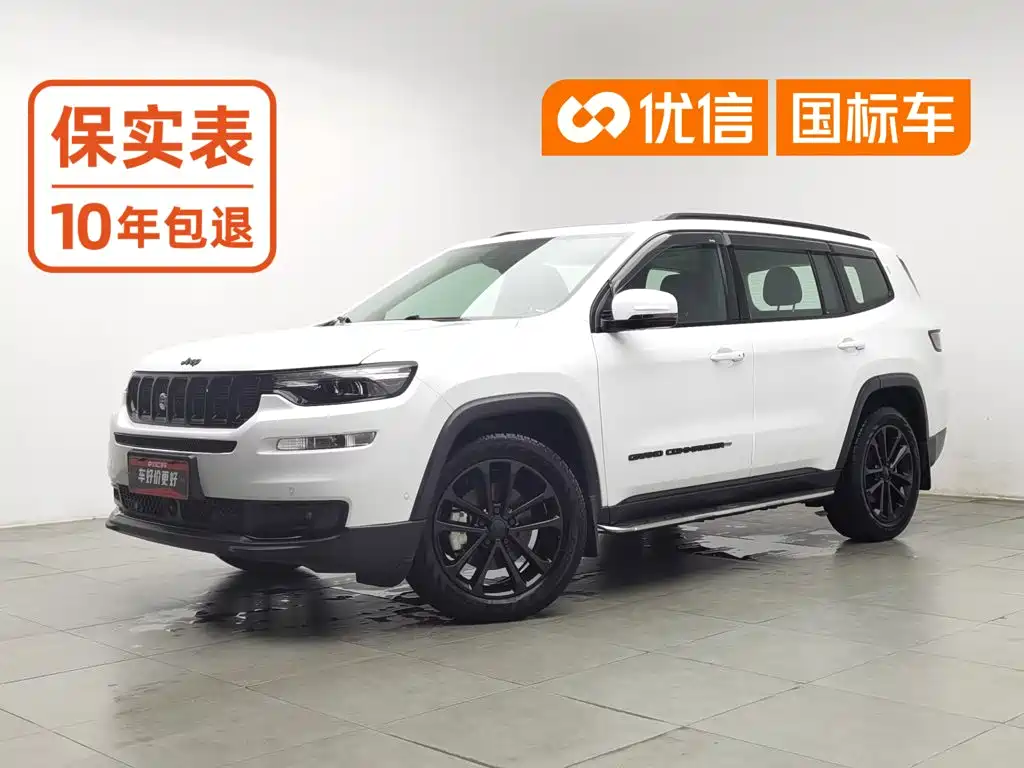
At a glance
- The Grand Commander is a large three-row SUV built around a 2.0T gasoline powertrain.
- Buyers can compare 2WD, AWD and 4WD versions, subject to unit-level verification.
- Trim names cover mainstream, luxury, navigation and off-road-oriented positioning.
- Export price and availability change by vehicle, specification, freight terms and market conditions.
- LHD/RHD status, homologation, parts support and landed cost need pre-purchase checks.
Why the Jeep Grand Commander matters for export markets
The Grand Commander occupies a useful export niche: a large, three-row Jeep SUV with a conventional 2.0T gasoline powertrain rather than an electrified drivetrain. For overseas dealers, that combination can appeal to families, executive transport operators and fleet buyers who need passenger-and-luggage capacity but prefer a familiar fuel format. Its size also gives it a clear visual and practical identity at the showroom, although its China-market origins mean it should be positioned on equipment and value rather than assumed to have the same homologation or residual-value profile as a locally sold Jeep.
In export markets, the strongest case is operational rather than badge-based. The vehicle gives a dealer a roomy three-row product for airport transfers, executive shuttles, hotel groups and family use, while the 2.0T engine avoids dependence on charging networks. Buyers comparing it with larger luxury SUVs may value the upright cabin and usable three-row passenger format, but they will still need to judge fuel consumption, insurance classification, parking suitability and resale prospects in their own market rather than relying on Chinese-market positioning. That evidence-led approach is essential for overseas dealers before committing volume.
Global interest should not be confused with universal suitability. The Grand Commander is a China-specific large SUV, and its China V or China VI version labels do not by themselves satisfy another country’s type-approval, emissions or safety regime. Service expectations can also differ from those of a Jeep sold routinely in the buyer’s home market. The sensible export proposition is therefore a well-equipped, right-sized three-row SUV sold with transparent documents, parts support and realistic local operating costs, not an assumption that the Jeep badge alone will guarantee demand or rapid residual-value appreciation.
- Three-row 2.0T gasoline utility
- Destination-specific import checks
- Compare trim, drive and cost
Model range, trims and powertrain variants: how the lineup is structured and how to choose
The lineup is easier to navigate once one accepts a single core engine family. Across the Grand Commander versions, the vehicle is consistently a 2.0T gasoline model, while the axle designation changes by trim: 2WD for a simpler, lower-complexity setup, and AWD or 4WD versions for buyers who want additional traction or 4x4 positioning. Because AWD and 4WD wording appears across different model years and editions, a buyer should not treat those labels as interchangeable without checking the axle ratio, drive mode, tow rating and option list for the specific vehicle.
Trim names provide a useful map of the range, but not a reliable substitute for a build sheet. Elite and Leading suggest more mainstream or fleet-oriented grades; Luxury, Premium Navigation, Ultimate, Intelligent, Joy, Night Hawk and Royal occupy different positions in the hierarchy, depending on model year. A dealer should compare the actual equipment—seating, infotainment, driver aids, materials, wheels and lighting—because Chinese domestic trims can change over time. A higher-sounding trim is not automatically better value if its equipment is less useful for the buyer’s local driving, resale or operating needs.
Choose by operating environment and customer priorities. For predominantly paved routes, a 2WD vehicle may be adequate and easier to evaluate for acquisition and running costs; for winter roads, poor surfaces or mixed terrain, an AWD or 4WD model needs closer inspection of its actual system. Also check whether the China V or China VI designation changes hardware relevant to the destination. The three-row cabin should be tested for third-row access and luggage space, and the live listing should confirm seating configuration before a purchase order is issued in writing.
- 2.0T anchors every variant
- Define every drive system
- Match equipment to destination
New vs used Jeep Grand Commander: how export inventory is structured and how buyers choose
Export inventory should be read as a set of individual vehicles rather than a uniform factory batch. A listing can represent a different model year, trim, drivetrain and emission-version label, and a vehicle described as new may still be age stock held by a dealer or parallel exporter. Confirm the manufacturing date, odometer reading, tyre condition, paint inspection and whether the unit has completed registration or display mileage. Those checks matter because “new” describes condition more reliably than it describes recency or suitability for a particular buyer, model year or operating purpose.
A new or effectively unused unit offers the cleanest route to predictable preparation, consistent specification and easier quality control across a fleet. Its disadvantages can include depreciation, dated tyres or seals, software and equipment that may be less current, and warranty arrangements that require distributor support outside China. A used vehicle may reduce the initial acquisition commitment and expose a buyer to more genuine customer feedback, but it demands a VIN check, service history, accident and repaint inspection, fluid assessment and a realistic budget for immediate maintenance at the destination before it enters service.
Use a decision matrix rather than choosing only by the word new or used. Dealers taking a first container may prefer uniformity and low preparation risk; fleet operators may accept a carefully selected used unit when utilization is uncertain; and private buyers may prioritize a lower purchase outlay over long-term warranty certainty. For every option, compare equivalent model years, trims, drivetrains and condition, then add freight, taxes, insurance and likely maintenance to the asking price. ChinaCarDirect’s live Grand Commander listings are the reference for the units and status currently available to the buyer.
- New may be age stock
- Used needs VIN evidence
- Compare landed costs
How export pricing works: the factors behind a live listing price, and how to read one
A live export price is the output of several interacting variables, not a fixed market-wide figure. The vehicle’s model year, edition, 2WD/AWD/4WD configuration, China V or China VI designation, mileage, condition and cosmetic work all affect its asking price. Seller margin and the prevailing exchange rate between the quotation currency and the buyer’s currency can also move the number. A listing price is therefore a starting point for comparison, not proof of the total cost after the vehicle reaches the importer or is registered. Confirm whether the quoted amount is vehicle-only or includes the agreed transport and export services.
The landed-cost calculation adds the items a buyer may otherwise overlook: ocean or RoRo freight, marine insurance, origin handling, documentation, destination port charges, inland transport, inspection, duties, taxes and registration. The result also depends on the Incoterm: EXW places more responsibility on the buyer, while FOB, CIF and DAP allocate different costs and risk-transfer points. Compare offers only on the same currency, vehicle specification, condition and Incoterm, and state explicitly whether port charges, taxes and inland delivery are included. Any quoted figure should also state its validity period and exclusions.
When reading a listing, start with identity and condition rather than the headline number. Match the model year, trim, drivetrain, emissions label, mileage, options, VIN status and sales condition; then look for photos, a current quote, stated inclusions and the seller’s terms. Ask for a pro forma invoice tied to the unit or SKU and a written breakdown of vehicle price, freight, insurance and bank charges. Exact price, MOQ and availability are shown per unit in ChinaCarDirect’s live inventory, but they must be reconfirmed in a written quote before payment.
- Year and trim move price
- Compare currency and Incoterm
- Check live unit figures
MOQ, ordering and payment: single units vs consolidating a container
Minimum order quantity should be treated as a transaction attribute, not a permanent property of the model. A live listing may accept a single vehicle for a dealer trial, while a direct factory or container order may have different quantity, configuration or payment conditions. Confirm the MOQ shown on the selected listing and reproduce it in the pro forma invoice. If several units are needed, ask whether they must share the same trim, drivetrain, colour and production standard; mixed requirements can affect sourcing, assembly, documentation and freight planning before funds are committed.
A sound ordering process separates commercial agreement from vehicle release. Select the listing, request the unit specification and documents, agree on quantity and MOQ, and obtain a written payment schedule covering deposit, balance, inspection, release and refund or dispute conditions. Use the business details and beneficial-owner information requested for the transaction, and avoid transferring funds to an account that cannot be reconciled with the seller, broker or contract. A signed invoice and clear inspection standard are more valuable than verbal assurances about condition or timing prior to shipment or release.
Single-unit buying is useful for testing demand in a new market, photographing the vehicle and establishing an import process before committing a full container. Wholesale consolidation can improve freight planning and may give a buyer more negotiating leverage, but it raises the risk that one mismatched vehicle delays the whole shipment. Group units by destination, specification and documentation needs, inspect each VIN separately, and include cure periods for replacement, correction or rebooking in the sales contract. The lowest per-unit vehicle price is not automatically the lowest total delivered cost for the importer.
- Confirm MOQ in writing
- Single units support trials
- Consolidation needs consistent units
Shipping, homologation and market compliance caveats: LHD/RHD and import rules by country
Start shipping planning with verified dimensions and weight rather than the model name. Depending on the vehicle and available equipment, an SUV may move in a container or by roll-on/roll-off; the carrier must confirm stowage, lashing and securement. Freight cost and transit time depend on origin and destination ports, sailing frequency, route, season, container availability, cargo handling, insurance and the delivery term. Ask for a door-to-door or port-to-port breakdown and identify who pays terminal, documentation, customs and inland charges. These variables can change materially between the booking and loading stages.
Steering configuration is a critical sourcing question. China-origin examples are commonly left-hand drive, while right-hand-drive availability is not established by the Grand Commander name and must be confirmed for the specific source market and unit. Conversion is not automatically a simple steering-wheel swap because lighting, controls, safety systems and certification may be affected. In the destination country, check VIN, type approval, emissions, safety, customs classification, tax rules and local registration with an experienced broker before making a non-refundable payment. Document any approved conversion with qualified professionals in the destination market.
Trim names that include China V or China VI are useful for identifying the source version, not evidence that the vehicle is approved elsewhere. Importers should also examine local-language manuals and infotainment, software support, recalls, emissions equipment, warranty transfer and access to diagnostic tools and spare parts. Local environmental or vehicle-class rules may also affect registration and operating cost. Pre-clear the vehicle with the destination authority or broker, and align insurance coverage with the actual transport and entry date before shipment. This sequence reduces port, demurrage and resale risk substantially.
- Confirm steering side
- Version labels are not approval
- Pre-clear customs first
Who should buy the Grand Commander — and who should pick a different vehicle
The Grand Commander fits importers and dealers serving buyers who need a large three-row SUV and prefer conventional gasoline operation. It is particularly relevant where the brand has recognition, charging infrastructure is limited, or customers value a Jeep-styled alternative to locally dominant models. Fleet and executive-transport operators can use the three-row layout for passengers and luggage, subject to local rules on commercial use, tax class and driver responsibilities. The business case becomes strongest when the importer can support parts, servicing and realistic resale values throughout the vehicle’s life in that market.
It is a weaker choice for buyers whose priorities are minimum fuel consumption, plug-in capability, compact urban dimensions or assured right-hand-drive availability. A premium fuel bill, higher insurance category or limited parts network can outweigh the attraction of a large cabin. Buyers with serious towing, payload or off-road requirements should not infer capability from the Jeep name; they need the exact axle system, ratings, equipment and local service support. A test drive and a written specification are essential before committing to fleet quantities, especially for a first purchase or customization.
A simple fit test is to compare the Grand Commander with the smallest vehicle that still meets the mission. If three-row capacity is not regularly needed, a mid-size SUV will usually be easier to park, insure and fuel. If it is needed, inspect third-row comfort, stroller or equipment loading, luggage capacity with the third row occupied and the frequency of towing. For import planning, compare total operating cost with a locally supported hybrid or gasoline alternative. That comparison usually matters more than badge prestige or the initial discount shown online for the destination market.
- Strong three-row gasoline proposition
- Fleet and executive use
- Weak for efficiency-first buyers
Main rivals and how the Grand Commander compares
The Toyota Highlander is a natural benchmark because it also concentrates on a three-row family SUV format, with hybrid and conventional powertrain choices in many markets. It generally benefits from broader international service recognition and strong fuel-efficiency options. The Grand Commander differentiates through its Jeep-specific styling, 2.0T focus and China-market availability, but that distinction may not compensate for weaker local parts support. Buyers should compare the exact destination variants rather than treating the Highlander’s global reputation as a complete cost advantage or a complete technical advantage in the importing market.
The Ford Explorer sits in the same broad consideration set and appeals to buyers who prioritize cabin space, towing capability and a choice of rear- or four-wheel-drive configurations. Its available engines, hybrid versions and equipment differ by country, so the comparison must be made at trim level. The Grand Commander may offer a different balance of size, equipment and China-sourced availability, whereas an Explorer may be easier for local buyers to service and compare. Neither name alone establishes towing, payload or running cost; use certified figures for the selected variant before ordering.
The Volkswagen Teramont is a closer China-market packaging comparison: a large SUV designed around three-row family use. Its local-brand familiarity and diesel availability in some markets may influence buyer perception, while the Grand Commander offers a more distinctive Jeep identity and a predominantly gasoline lineup. Actual exportability depends on the source version and destination rules. For all three rivals, compare seating flexibility, real luggage space, fuel use, safety and software support, service access and the all-in cost after taxes, freight and registration for the importing country before signing the order.
- Highlander: familiar three-row benchmark
- Explorer: broad utility alternative
- Teramont: close China-market rival
Live Jeep Grand Commander export inventory
View all listings →Real units currently on ChinaCarDirect with per-unit asking prices and MOQ. Availability updates live from the catalogue.
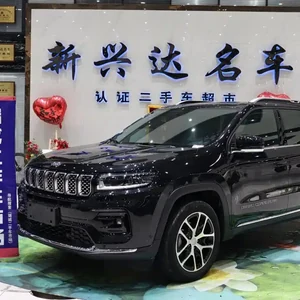
How to buy a Jeep Grand Commander from China
-
1
Define the operating requirement
Decide whether three-row passenger capacity, cargo volume, fuel format or local support is the priority. Record the destination, steering side, expected volume and service radius before shortlisting vehicles.
-
2
Shortlist live vehicles
Use the live Grand Commander listings to compare model year, trim, drivetrain, version label, seating, condition and options. Treat each listing as a starting point and request the complete unit specification.
-
3
Request a landed-cost quote
Ask for a unit-specific quotation naming the currency, Incoterm, freight method, insurance, origin charges, inland delivery, taxes or duties and payment schedule.
-
4
Verify documents and condition
Request the build sheet, VIN or production record, manufacturing date, odometer reading, registration status and clear photographs. Reconcile those documents with the selected listing before payment.
-
5
Lock MOQ and payment terms
Confirm MOQ, unit allocation, deposit, balance, inspection, release, refund and cancellation terms in the pro forma invoice. Ensure the seller, payment account and contract details reconcile.
-
6
Inspect before shipment
Use an independent pre-shipment inspection or seller-provided evidence you accept. Check the VIN, body, tyres, fluids, mileage, options and documents for every unit.
-
7
Book freight and clear import
Confirm LHD/RHD, type approval, emissions, safety, customs, tax and registration requirements before final payment. Book freight only after dimensions and weight are confirmed, and align insurance, securement and delivery scope with the agreed Incoterm.
Grand Commander vs rivals
| Toyota Highlander | A three-row SUV benchmark with global recognition and, in many markets, efficient hybrid options. It may be easier for buyers to support locally, while the Grand Commander offers a more distinctive Jeep identity and China-sourced 2.0T specification. |
|---|---|
| Ford Explorer | A broad three-row SUV alternative with market-dependent engines and rear- or four-wheel-drive choices. Buyers focused on towing or family utility may shortlist it, but must compare certified payload and towing figures for the exact destination variant against the Grand Commander. |
| Volkswagen Teramont | A China-market large-SUV comparison with familiar three-row packaging and, in some markets, diesel options. The Grand Commander stands apart through its Jeep positioning and gasoline-focused line-up, but parts support and local homologation should carry more weight than badge preference. |
Frequently asked questions
How is the export price for a Jeep Grand Commander determined?
The live vehicle price is shaped by model year, trim, 2WD/AWD/4WD configuration, China V or China VI version, mileage, condition, seller terms and exchange-rate movements. Freight, insurance, handling, duties, taxes, inland delivery and the chosen Incoterm determine the landed cost. Check the current Grand Commander listings for the per-unit price, then request a written destination-specific quote because both figures can change before payment.
What engine, transmission and drivetrain should I expect?
The Grand Commander line is offered with a 2.0T gasoline powertrain, generally paired with an 8-speed automatic. Depending on trim, the listings include 2WD, AWD and 4WD designations, which should not be assumed to describe identical systems. Confirm the engine calibration, gearbox, drive layout, version label and seating on the specific unit before ordering.
Is a new Jeep Grand Commander always better than a used one?
A new or effectively unused vehicle usually simplifies preparation, specification consistency and fleet inspection, but it can still be age stock with dated tyres or warranty limitations. A used vehicle can reduce the acquisition outlay while exposing the buyer to wear, repair history and uncertain residual value. Compare the same year, trim, drivetrain and condition, including a VIN-specific inspection and destination maintenance plan.
Can I buy one unit, and how does MOQ work?
MOQ is a property of the selected transaction, not a permanent rule that applies to every Grand Commander listing. A single-unit purchase may be possible where the live listing and supplier allow it, while container orders may impose quantity, trim or payment conditions. Ask for the MOQ, unit specification, delivery scope and cancellation terms in the pro forma invoice before transferring a deposit.
What determines shipping time and cost?
Shipping time and cost depend on origin and destination ports, sailing frequency, route, season, container or RoRo availability, handling, insurance and customs work. The Incoterm determines which party carries more cost and risk, so ask for a destination-specific logistics breakdown and current sailing plan. Confirm dimensions, weight, securement and any local port or inland charges before booking.
How do I source spare parts after import?
Parts support depends on the destination’s Jeep dealer network, vehicle specification and manufacturer supply arrangements, which the model name alone does not guarantee. Before purchase, ask for the relevant service and parts catalog references, diagnostic compatibility, warranty coverage and expected lead times for likely wear items. For a fleet, include parts holding, technical training and repair authorization in the operating budget.
Is a right-hand-drive Grand Commander available for export?
China-origin Grand Commander examples are commonly left-hand drive, but right-hand-drive availability must be confirmed for the source market and exact unit. Do not assume that a conversion will preserve lighting, controls, safety systems or local certification. State the required steering configuration in the RFQ and have the destination authority or broker confirm approval before shipment.
How do I order a Jeep Grand Commander from China?
Start with the live Grand Commander inventory, shortlist equivalent vehicles and request a written quotation for the desired model year, trim, drivetrain, quantity, destination port and Incoterm. Confirm the unit identity, documents, MOQ, payment milestones, inspection standard and shipping scope in the pro forma invoice. Complete the agreed inspection and payment steps, then use a destination broker for customs, registration and compliance clearance.
Ready to source the Jeep Grand Commander?
Request a current Jeep Grand Commander quote from ChinaCarDirect with your preferred model year, trim, drivetrain, quantity, destination port and Incoterm.
Request a quote