
JETOUR X70 Export Buying Guide for Overseas Buyers
Compare JETOUR X70 engines, trims and seating, then plan pricing, MOQ, shipping, homologation and inspection when buying from China with a practical checklist.
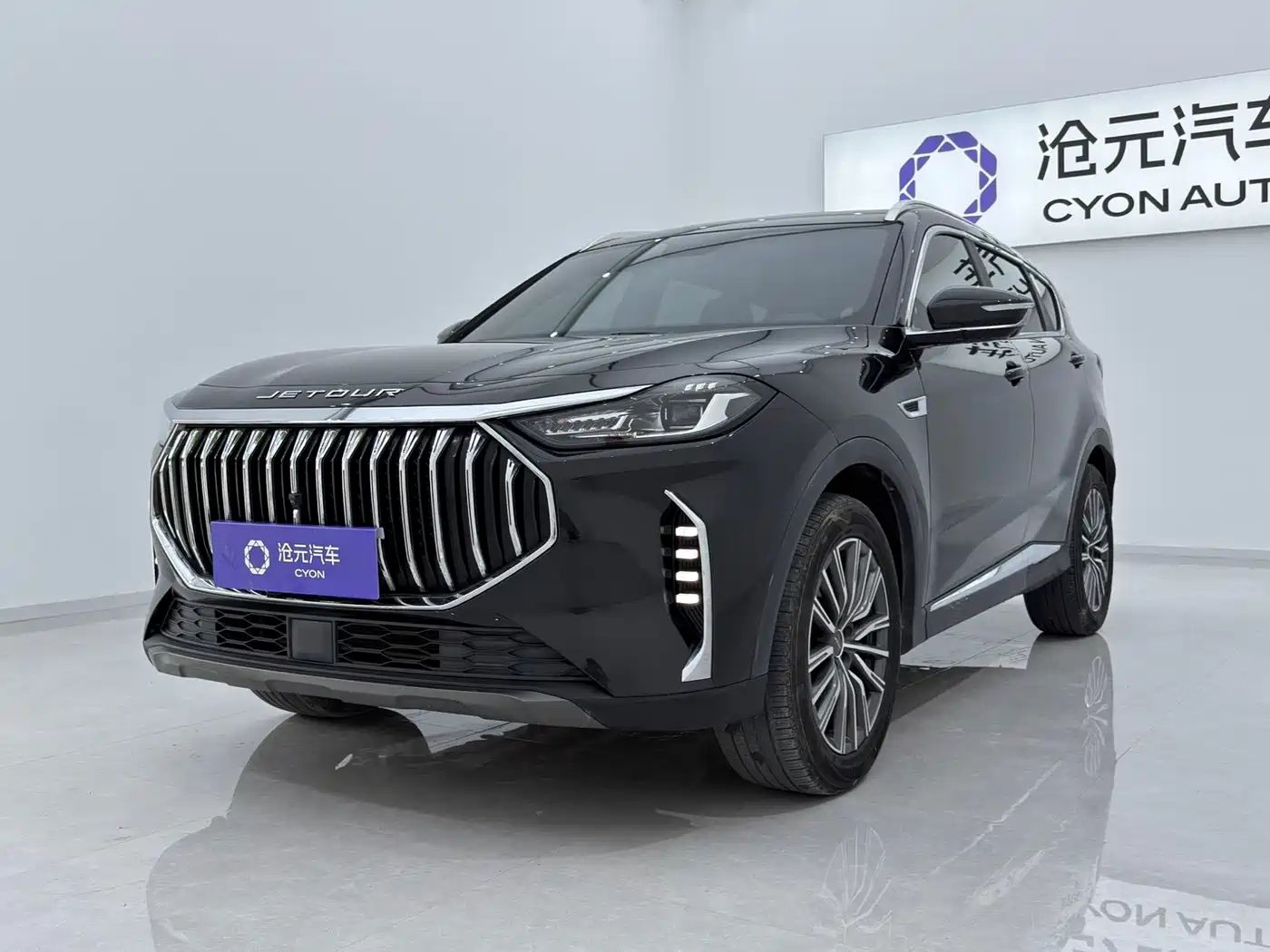
At a glance
- The lineup combines 1.5T and 1.6T turbocharged petrol engines with DCT-led and some manual choices.
- Five-, six-, and seven-seat configurations broaden family, fleet, and passenger-carrying uses.
- Used JETOUR X70 vehicles offer broader model-year and trim choice but need close condition scrutiny.
- Live vehicle prices must be compared on the same Incoterm, condition, documentation, and destination basis.
- Steering side, homologation, parts access, and shipping terms should be settled before an order.
Why the JETOUR X70 matters for export markets
The JETOUR X70 sits in the practical crossover segment, combining SUV packaging with a choice of five-, six-, and seven-seat layouts. That flexibility gives it relevance for importers serving families, hotel and executive fleets, or distributors who need one vehicle family to cover different use cases. It is not positioned as a luxury flagship; the buying case rests on usable passenger space, powertrain choice and equipment value. For overseas buyers, model identification is important because export catalogues can group X70 vehicles, X70 PLUS derivatives, and body variants under a broader model family.
Global demand for vehicles in this class is driven less by lifestyle imagery than by commercial usefulness. Dealers can position a five-seat X70 against family crossovers, while the larger seating configurations appeal to buyers who carry more passengers. Export interest grows across road-connected markets, where buyers often still want SUV styling, easier entry and useful load flexibility. The result is a model that can support multiple retail segments without changing its core platform. The decisive question is not whether an SUV badge is fashionable, but whether the seating, serviceability and landed economics suit the destination.
Before treating the X70 as a global bestseller, buyers should separate market potential from proven local acceptance. Dealer feedback, spare-parts lead times, residual-value expectations and the availability of compatible service facilities will determine whether the model becomes a repeat-order item. A strong initial sale does not guarantee a healthy export programme. The right approach is to test demand with a controlled batch, gather aftersales data, and expand only after confirming that parts, technician support and regulatory processes work reliably. This discipline is especially important for multi-market importers that must protect working capital while building a brand.
- Five- to seven-seat flexibility.
- Practical for mixed fleets.
- Serviceability drives repeat orders.
Model range, trims and powertrain variants: how the lineup is structured and how to choose
The export-facing X70 family is organized around 1.5-litre and 1.6-litre turbocharged petrol engines, with dual-clutch automatic transmissions prominent across many trims. A smaller-capacity manual X70 variant also appears, so “automatic” should not be treated as a universal assumption. Seat configuration is another structural choice: five-seat derivatives dominate the named range, while six- and seven-seat versions support passenger-carrying roles. Names such as Warrior, Champion and other edition labels mainly identify trim and equipment tiers. Exact engine, gearbox and seating combinations must be confirmed on the individual vehicle rather than inferred from the model badge.
For a five-seat buyer, the key comparisons are the 1.5T versus 1.6T choice, DCT versus manual availability, and the equipment of that edition. The smaller engine may suit fleets prioritizing efficiency and operating cost, while the larger engine offers a higher-capacity alternative when load, performance expectations or terrain justify it. Neither output figures nor towing claims should be assumed without the listing and homologation file. A test-drive and route-based assessment is more useful than badge-level conclusions. Buyers should check whether the seven-seat packaging reduces luggage space in the version they intend to use.
Multi-passenger buyers should start with the 1.5T five-, six-, and seven-seat offerings visible across the range, then assess whether their market favours the larger 1.6T variants. A seven-seat X70 can make sense for airport transfers, tours, family use and commercial passenger duties, provided the third row is regularly needed. If it is rarely used, a five-seat vehicle may offer easier ownership and more practical cargo volume. Confirm seat-fold operation, luggage dimensions and real-world loading access before committing. Equipment priorities such as climate control, infotainment and driver-assistance features should be checked trim by trim.
- 1.5T and 1.6T petrol engines.
- DCT automatics lead; manuals appear.
- Five-, six-, and seven-seat trims.
New vs used JETOUR X70: how export inventory is structured and how buyers choose
New and used X70 vehicles should be treated as two different purchasing channels rather than a single price ladder. New examples are generally the cleaner route for buyers who need model-year specification, consistent presentation, known service history and a warranty position. Used examples broaden year and trim choice and can suit buyers with a tighter budget or a configuration that is difficult to source new. Compare total expected ownership value, not simply which vehicle costs less on sale. Depreciation, repair risk, warranty transfer and lead time belong in the same worksheet.
A used X70 can be attractive when a dealer already knows the model, has access to routine parts, and can inspect condition efficiently. Prioritise vehicles with clear service records, matching chassis and engine documents, and evidence that the automatic or manual gearbox has been maintained properly. Inspect bodywork, tyres, suspension, cabin wear and electrical functions, and verify that mileage is plausible. A lower purchase price may be offset by near-term tyres, brakes, suspension work or electronics repairs. For fleet use, compare repairability and parts availability before selecting a specific used vehicle.
New inventory suits importers building a repeatable retail programme because specification and condition can be presented more consistently, while used vehicles suit opportunistic purchasing. Neither route automatically solves homologation, software, emissions or spare-parts issues; a Chinese-market plate does not establish approval in the destination country. Buyers should ask each supplier for the production year, condition report, service history and exact variant, then compare total logistics and compliance costs. This approach avoids treating a catalogue label as proof of local suitability. Apply the same checklist to each supplier, regardless of quote attractiveness.
- New units favour specification consistency.
- Used units broaden configuration choice.
- Inspect condition and service records.
How export pricing works: the factors behind a live listing price, and how to read one
A live X70 listing price is only the starting point for an export decision, not necessarily the landed cost. The vehicle-side value changes with production year, trim, seat count, engine and transmission choice, mileage, condition, ownership history and whether the unit is new or used. A comparison is valid only when those attributes match. Ask for the exact vehicle identifier and a written quotation that separates the selling price from transport, insurance, documentation and destination charges. This prevents a cheaper-looking unit from becoming more expensive after all logistics are added.
Exchange rates, freight space, port and terminal charges, insurance, financing and the selected Incoterm all influence the commercial comparison. Container economics also change with configuration because the units must be secured and loaded within safe handling limits. Duties, taxes and compliance work are destination-specific and should be shown separately rather than hidden in an unexplained adjustment. Review quotes on the same basis: one Incoterm, one destination, one documentation scope and one condition standard. For an apples-to-apples comparison, also specify the warranty treatment and whether local charges are included or quoted later.
Current price and availability must be checked on the live ChinaCarDirect inventory rather than inferred from an old catalogue, because a particular unit may be reserved, withdrawn or replaced. Filter for the intended model year, body variant, seating, engine and transmission, then open the record to confirm its description and references. Treat the displayed amount as a vehicle-level quotation request, not a guaranteed landed total. Have the supplier reconfirm the price when you submit an RFQ, together with payment terms, the validity period and what is excluded, in writing before contracting.
MOQ, ordering and payment: single units vs consolidating a container
One-unit purchasing can make sense for a dealer testing local demand, a fleet buyer assembling a mixed batch, or an importer combining several X70 configurations. Current per-unit availability should be checked in live inventory and reconfirmed by the supplier. A single vehicle should be ordered against its exact listing, with identity, condition and price confirmed before payment. Consolidating several units can improve freight planning and give the importer control over model mix, but it raises capital exposure and makes one defective or mismatched vehicle more consequential. Decide batch size from sales capacity, not merely available space.
MOQ is a supplier or transaction rule, not a permanent property of the model. It can differ for a ready stock unit, a mixed consolidation, a production allocation or a special-order configuration. Ask what quantity qualifies for the quoted freight rate, whether the MOQ is per trim or per vehicle, and which units must be identical. Some sellers may accept individual purchases, while larger lots may be required for the economics they offer. A written purchase order should state the agreed quantity, selected VINs or listing references, deposit, balance trigger and cancellation terms.
Payment sequencing should match the seller’s verification process without exposing the buyer to avoidable risk. A common structure is an initial deposit followed by balance payment after the vehicle identity, export documents, inspection and shipping conditions are confirmed; the exact sequence varies by supplier and payment method. Confirm whether funds are protected by a payment system, how inspection rights are retained, and what evidence triggers dispatch. For a mixed container, use a unit-level acceptance checklist and payment-release rule, naming who resolves damage or documentation discrepancies before the vehicle leaves the supplier's control.
Shipping, homologation and market compliance caveats: LHD/RHD and import rules by country
Chinese-built X70 vehicles are discussed in left-hand-drive and right-hand-drive contexts, but the steering configuration must be checked for each unit and destination. The availability of a RHD example, or the cost of converting one, depends on the vehicle, supplier and market; a listing title alone is not proof. Import rules also differ by country and can cover VIN and documentation standards, emissions, safety, customs classification, duties and taxes. Before contracting, obtain a destination-specific regulatory assessment from an experienced importer or homologation adviser and identify which party is responsible for each approval.
Homologation is a separate step from ordinary export paperwork. A vehicle may need local type approval, emissions compliance, safety-equipment adaptation, software or lighting changes, and registration documents that reflect the actual configuration. Conversion can affect cost, warranty and parts consistency, so modifying a vehicle after purchase should not be the default plan. Request the homologation file, production-date evidence and vehicle identification documents early. If local rules require an approved variant, buy that variant rather than relying on general knowledge of the X70 range. Only an approved configuration should enter your sales plan.
Shipping mode should follow quantity and urgency rather than a preference. A single vehicle may move by roll-on/roll-off, flat rack or container, while a consolidated group can reduce handling events if it can be secured safely. The main variables are origin and destination ports, sailing frequency, vessel space, containerization, cargo dimensions, insurance, fuel and terminal surcharges, customs clearance and inland delivery. Obtain a freight quotation with the selected Incoterm and request the routing, cut-off dates and documentation responsibilities in writing. Do not treat a transit estimate as a delivery guarantee.
- Confirm steering side per unit.
- Seek destination-specific homologation advice.
- Match freight mode to batch size.
Who should buy the X70 — and who should pick a different vehicle
The X70 is a strong candidate for buyers who want a practical SUV with a choice of compact and three-row passenger formats, but not for every importer. It appeals to dealers serving family, ride-hailing, tour-operator and mixed business fleets where one model can cover several seating needs. The 1.5T options are especially relevant to cost-conscious buyers, while the 1.6T provides an alternative for operators expecting more use from the engine. These are starting points, not guarantees; duty cycle, route, load and local rules should determine the final variant for each buyer.
Choose a different vehicle when payload, cargo volume, off-road ability or commercial carrying duties dominate the brief. The X70 is a road-oriented passenger crossover, so buyers needing a working van, heavy-duty tow rating, specialized body or sustained rough-terrain use should look at purpose-built alternatives. Small importers may also prefer a simpler model with fewer variants to reduce parts and training complexity. Markets with limited aftersales coverage may favor a model whose service and parts channels are already established. The cost of those compromises should be weighed against lost sales and higher operating risk.
Before committing, a buyer should test whether the X70’s practical strengths outweigh the uncertainty of importing a less familiar nameplate in some markets. Review real customer feedback, not only specification sheets, and ask local mechanics about common repair items and diagnostic access. Confirm parts availability for the exact engine and gearbox rather than assuming interchangeability between 1.5T, 1.6T, DCT and manual versions. The model makes more sense when the selected trim is supported, understood and able to earn dealer margin without excessive discounting after landed costs are included fully.
- Best for passenger and mixed fleets.
- Choose alternatives for heavy-duty work.
- Check local parts before importing.
Main rivals and how the X70 compares
The closest alternatives depend on whether the X70 is bought as a five-seat value crossover or a seven-seat family and passenger vehicle. In the Chinese-brand segment, the Chery Tiggo 8, Haval H6 and Changan CS75 Plus are sensible comparison points because buyers evaluating the X70 will also consider similar Chinese-brand family SUVs. Comparing brand familiarity, seat layout, powertrain mix, specification and local after-sales support is more useful than placing all three into a single ranking. The right rival can differ by country and even by dealer network and model year.
The Chery Tiggo 8 is a logical benchmark for shoppers who want another Chinese-brand SUV and may value a different approach to styling, equipment and brand recognition. Depending on the market, buyers may find a broader or more familiar support network, so the comparison should extend beyond purchase price. Check whether the alternative offers the same passenger count, luggage practicality and serviceability. A stronger badge can ease resale, but only if local parts and technician support are genuinely easier to access. That is a market fact to verify, not an assumption.
Haval’s H6 and Changan’s CS75 Plus are also useful benchmarks for fleet buyers comparing mainstream family SUV propositions. Haval may appeal where its local presence gives operators greater confidence in parts and service, while the CS75 Plus provides another Chinese-brand alternative for trim and equipment comparisons. The X70’s clearest potential advantages are its broad 1.5T and 1.6T range, its DCT-led offering and the choice of five-, six-, or seven-seat versions. The deciding factor is total delivered cost after local support, compliance and likely resale are considered by local market.
- Compare local support, not badges.
- Tiggo 8 emphasises brand familiarity.
- Haval H6 and CS75 Plus widen choice.
Live JETOUR X70 export inventory
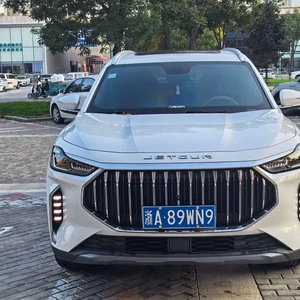
View all listings →Real units currently on ChinaCarDirect with per-unit asking prices and MOQ. Availability updates live from the catalogue.


How to buy a JETOUR X70 from China
-
1
Define the destination and duty cycle
Identify the destination country, required steering side, passenger or cargo role, expected routes and annual sales requirement before choosing a variant.
-
2
Shortlist the live inventory
Use the live JETOUR X70 listings to filter by model year, body derivative, seating, engine and transmission, then open the individual vehicle record.
-
3
Verify the exact vehicle
Request the build information, identification documents, production year, service history, condition report and parts references for the selected unit.
-
4
Request a comparable export quotation
Specify the destination and Incoterm, and ask the supplier to separate vehicle price, freight, insurance, documentation, duties, taxes and compliance work.
-
5
Confirm MOQ and payment terms
Record the agreed quantity, unit references, deposit, balance trigger, cancellation terms, warranty treatment and freight basis in the purchase order.
-
6
Inspect before dispatch
Use a mutually agreed or independent inspection to check identification numbers, bodywork, tyres, fluids, warning lights, starts, gearbox operation and included equipment.
-
7
Ship, clear and deliver
Confirm the booking, route, cargo insurance, export documents, customs clearance, destination registration and inland delivery responsibilities before shipment release.
X70 vs rivals
| Chery Tiggo 8 | The Tiggo 8 is a close Chinese-brand family-SUV benchmark, potentially stronger where Chery has deeper local recognition and support. Choose it when brand familiarity, local parts access or resale evidence outweighs the X70’s 1.5T, 1.6T and multi-seat choice. |
|---|---|
| Haval H6 | The H6 is a mainstream family-crossover alternative, often attractive to fleet buyers where Haval’s local service network is established. The X70 may better suit buyers prioritising its seating and engine choices, but local parts availability and homologation should decide. |
| Changan CS75 Plus | The CS75 Plus competes for family and fleet buyers shopping Chinese-brand SUVs. The X70’s distinguishing points are its broad seating and 1.5T, 1.6T, DCT-led offering, while buyers prioritising another brand’s equipment or market familiarity may prefer the alternative. |
Frequently asked questions
How is the JETOUR X70 export price determined?
A live price reflects the vehicle’s year, trim, engine and transmission, seating, mileage or new status, condition, and other commercial terms. Freight, insurance, port charges, exchange rates, Incoterms, duties, taxes and compliance work affect the landed total. Check the live JETOUR X70 listings for the current vehicle-level amount, then request a written quotation that clearly states inclusions and exclusions.
What engine and transmission options does the JETOUR X70 have?
The export listings shown for the X70 centre on 1.5T and 1.6T turbocharged petrol engines. DCT automatic transmissions appear across many trims, while 1.5T manual versions also appear; six- and seven-seat options extend the passenger range. Confirm the exact engine, gearbox and seat layout on the selected vehicle because model-year and derivative names can differ.
Is a used JETOUR X70 better than a new one?
Used vehicles can broaden year and trim choice and may suit buyers seeking a lower initial purchase outlay. They also require closer checks of mileage, service records, body condition, tyres and wear, and their warranty position may differ. A new vehicle generally offers cleaner provenance and more consistent specification, so compare total ownership needs rather than assuming either condition is automatically cheaper.
What is the MOQ for a JETOUR X70 wholesale order?
MOQ is set by the seller, selected unit and shipment structure; it is not a permanent model-wide rule. Individual-unit purchases may be possible for ready stock, while mixed consolidations or special configurations can carry different quantity conditions. Ask for the minimum per transaction, whether units must match, and the freight basis before agreeing a deposit or purchase order.
How long does shipping take, and what affects the cost?
Shipping time depends on origin and destination ports, sailing frequency, vessel space, customs clearance, inland delivery and any transshipment. Cost is driven by the route, vehicle configuration, container or flat-rack requirement, fuel and terminal surcharges, insurance, exchange rates and the Incoterm. Ask the freight provider for the routing, cut-off dates, documentation scope and estimated transit for the actual unit.
Can spare parts be ordered for a JETOUR X70?
Parts should be requested against the vehicle’s exact engine, gearbox, model year and trim, because compatibility should not be assumed from the X70 name alone. Confirm catalogue references, packaging, lead time, shipping method and whether the supplier supports diagnostic assistance. Before bulk ordering, verify that a local technician can access the required electronic and service information.
Is a right-hand-drive JETOUR X70 available for export?
RHD availability depends on the specific vehicle and destination, so check the live listing and ask the supplier to verify the steering configuration in writing. Converting a left-hand-drive example may be possible, but it can affect cost, warranty, parts consistency and local homologation. Choose a destination-approved configuration before paying.
How do I buy a JETOUR X70 from China?
Start with the live listings, shortlist units by body derivative, seat count, engine, transmission, year and condition, then send an RFQ naming each vehicle or required configuration. The supplier should confirm identity, price validity, MOQ, payment stages, documents, inspection and shipping terms in writing. Complete regulatory and freight checks before the balance payment and shipment release.
Ready to source the JETOUR X70?
Send your destination, seating, engine and transmission preferences, and target quantity to ChinaCarDirect for a unit-specific export quotation.
Request a quote