
Kia Carnival Export Buying Guide for Wholesale Buyers
Buy a Kia Carnival from China with practical guidance on trims, engine options, export pricing, MOQ, shipping, compliance and key rivals before ordering.

At a glance
- The Carnival is a multi-row gasoline MPV suited to families, shuttle operators and mixed passenger-luggage fleets.
- China-market choices span 2.0T, 2.2T and 3.3 GDI engines, with Comfort, Luxury, Luxury Tech and Flagship-oriented trims.
- Compare new and used units by lifecycle cost, condition evidence, documentation and destination-market approval rather than headline price alone.
- A live export quote should separate vehicle cost from freight, insurance, duties, taxes and handling under the selected Incoterm.
- Steering configuration, emissions compliance and parts availability must be confirmed for the destination country before payment.
Why the Kia Carnival matters for export markets
The Kia Carnival is a large, multi-row MPV that addresses a practical export need: carrying several passengers and luggage in one vehicle while retaining a more car-like driving proposition than a commercial van. It appeals to families, hotel and airport transfer operators, executive chauffeurs, and fleet buyers that need flexible seating rather than a fixed cargo body. Its global proposition is based on usable interior volume, flexible row arrangements, comfort and a broadly established Kia name, rather than on electric range or off-road capability for operators comparing MPVs against large SUVs and premium people carriers.
China is a relevant sourcing base because the Carnival has been offered here in several petrol configurations and equipment grades, giving buyers a wider selection of engines and trims than a single-spec export catalogue would suggest. The available naming includes 2.0T, 2.2T and 3.3 GDI powertrains, with Comfort, Luxury, Luxury Tech and Flagship editions represented. That breadth matters to wholesale buyers: they can match engine output, cabin equipment and ownership cost to a route, customer or fleet policy instead of buying every unit on the same basis across mixed fleets.
For an overseas buyer, the Carnival’s attraction is not simply that it is a well-known model; it is the combination of packaging, flexible specification and a potentially manageable entry point relative to some premium MPVs. The strongest business case appears where one vehicle must switch between executive transport, group travel and luggage duty without changing fleet type. The weakest case is where local emissions rules, charging expectations or narrow urban access dominate. Those conditions make a smaller EV, commercial van or locally approved model a better fit for the intended operating cycle.
- Built for passenger-plus-luggage duty
- Multiple petrol engines and trim grades
- Best matched to route, load and local rules
Model range, trims and powertrain variants: how the lineup is structured and how to choose
Within the China-market lineup, three petrol engines create the main technical split. The 2.0T appears with Luxury, Luxury Tech and Flagship-oriented cars; the 2.2T appears in Comfort and Luxury applications; and the 3.3 GDI is associated with Luxury and Flagship versions, including cars carrying China IV or China V designations in the source inventory. Those emission labels describe the Chinese homologation context, not automatic approval for an overseas buyer, and each destination must be checked independently before a vehicle is quoted as ready for import under local customs rules there.
When comparing Kia Carnival specs, engine selection should follow workload and operating cost rather than badge hierarchy. The 2.0T is the logical starting point for operators prioritising acquisition cost, fuel use and frequent passenger work; the 2.2T provides an alternative balance, while the 3.3 GDI suits buyers seeking more output for fully loaded or mountainous duty. Those are general engineering tendencies, not a substitute for certified figures. Before ordering, confirm engine output, torque, transmission, axle layout, payload, towing limit and fuel-consumption data for the exact chassis and obtain any destination-specific approval required for that configuration.
Trim choice is primarily an equipment and operating-brief decision. Comfort-oriented cars may suit cost-conscious fleet use, while Luxury and Luxury Tech versions can add driver-assistance, infotainment, seating and comfort hardware. Flagship cars may carry the richest presentation, but the exact equipment list should be verified because model year and market revision can change it. For every shortlisted unit, check active safety aids, cameras, climate control, upholstery condition, wheel design, infotainment compatibility, luggage capacity with the chosen rows installed, and whether the steering position is suitable for your destination and resale market.
- Match engine to load and fuel budget
- Verify emissions designation separately
- Specify safety, comfort and cargo equipment
New vs used Kia Carnival: how export inventory is structured and how buyers choose
A new Carnival is usually the cleaner choice when an operator values factory condition, consistent specification, clearer warranty terms and no previous ownership. A used Kia Carnival can be more economical for a buyer able to manage uncertainty, and imported used inventory may include earlier 2.2T and 3.3 GDI configurations not represented by the newest cars. The lower ticket is only part of the calculation: downtime, repair exposure, fuel use, parts lead time and resale should be valued alongside the purchase price and shipping cost for the vehicle.
Used units demand stricter evidence because cosmetic condition can hide expensive wear. Request the VIN or chassis number, production date, registration and ownership documents, service records, current odometer reading, photographs of the engine bay and underside, and a clear statement of accident, flood or structural repair. An independent inspection should cover cold start, engine oil, coolant, transmission shifts, brake condition, suspension, tyres, exhaust, cabin wear and emissions equipment. Repeated advertisements using the same SKU should be de-duplicated and tied to one physical vehicle before payment with the seller in writing.
The right new-versus-used decision depends on whether the vehicle is a long-term fleet asset, a short-term rental, a family purchase or a resale project. Fleets often prefer newer cars for uptime and predictable residual value; established operators may accept an older, well-maintained vehicle to reduce initial capital exposure. Buyers with limited repair capability should place more weight on condition evidence and warranty terms, while technically informed buyers may compare older drivetrains for maintainability. Make the decision from a total-cost worksheet, not from model year alone, and confirm the chosen unit in live inventory.
- New cars reduce condition uncertainty
- Used cars require VIN-level evidence
- Compare lifecycle cost, not ticket price
How export pricing works: the factors behind a live listing price, and how to read one
A Kia Carnival export price is the result of several interacting variables. Model year, trim, engine, new or used status, mileage, condition, ownership history, documentation and market demand affect the vehicle’s selling position. The currency used by the seller, payment terms and the time between quotation and payment can also change the apparent amount. Once the vehicle is selected, freight method, route, insurance, port charges, destination duties, taxes and the chosen Incoterm can move the landed cost more than a minor trim difference when comparing otherwise similar vehicles across different markets.
Read a live listing as a unit-level commercial record, not as a universal market price. First confirm the year, condition, exact edition, engine, emissions label, mileage, seller, location and vehicle identifier. Then determine whether the displayed amount includes export documentation, inland movement, inspection, freight and insurance, or only the vehicle at the stated location. For a Kia Carnival export price guide, compare like with like: the same engine, condition standard, Incoterm, destination and payment conditions. Ask for an itemised written quote that identifies what is excluded before making a binding commitment.
The most reliable method is to build a buyer-specific basket rather than rely on a broad advertised range. For a single vehicle, request a landed-cost quotation based on the named VIN or SKU, destination port, Incoterm, payment currency and expected delivery window. For several units, ask the supplier to quote shared freight, handling and documentation separately. Any quoted figure should be reconfirmed immediately before contract and payment because exchange rates, freight capacity and the selected unit can change. Exact binding prices and availability must be taken from the current live listings or a written RFQ, not from general market summaries.
- Compare like-for-like unit records
- Separate vehicle and landed costs
- Reconfirm every quote before payment
MOQ, ordering and payment: single units vs consolidating a container
Minimum order quantity is a commercial condition, not a fixed property of the Carnival model. ChinaCarDirect listings may support single-unit purchasing, but the seller’s payment, documentation and dispatch requirements determine whether one vehicle can be accepted and how the order is released. If a buyer wants a single unit, ask for a one-vehicle quotation and clarify the deposit, balance, inspection period and delivery term. Avoid assuming that a one-unit platform listing guarantees immediate stock or an unchanged price; confirm the physical vehicle and all payment conditions before sending funds for that particular order.
A Kia Carnival wholesale order normally moves through a sequence: select a specific unit, request a formal quotation, verify identity and condition, agree price and Incoterm, pay by the agreed method, complete export inspection and documentation, then release the vehicle for shipment. The seller should issue a sales contract or invoice identifying the vehicle, agreed amount and parties. Payment protection matters: use only the seller’s verified business details, understand whether a deposit is refundable, and avoid sending money to an unrelated personal account. Any bank charges, inspection fees or cancellation terms should appear in the order documents.
Container consolidation can improve freight planning, but it changes the buying risk. Capacity is limited by both cubic volume and vehicle-weight or axle rules, so a container may not carry the number of units an importer expects. Buyers can mix trims and engines, yet should assign each VIN and specification before loading. Larger batches also increase the amount tied up in vehicles that may not sell quickly, especially if ages or equipment grades are mixed. For a pilot order, one or several carefully chosen units may offer better learning; for fleet replenishment, a staged shipment can reduce inventory exposure.
- Confirm seller-specific MOQ terms
- Tie every order to one vehicle
- Use staged buying for fleet risk
Shipping, homologation and market compliance caveats: LHD/RHD and import rules by country
Shipping method must be checked against the exact vehicle’s dimensions, weight and destination constraints. Large MPVs may move by roll-on/roll-off carrier or container, depending on carrier policy and vessel capacity. A buyer should verify floor height, lash points, vehicle width, roof equipment, gross weight, fuel level and battery or mechanical disconnect requirements before loading. Freight cost depends on route, sailing frequency, carrier allocation, port charges, fuel surcharges, insurance, inspection and inland delivery. Request the packing plan and loading photographs, then use them to confirm straps, protective measures and signs of transit damage.
Steering configuration is one of the earliest checks. The Chinese market has traditionally been predominantly left-hand drive, while right-hand-drive availability may be limited and should never be assumed from a model badge. Factory RHD is generally easier to homologate than a converted vehicle; an aftermarket conversion can affect safety, wiring, warranty, parts planning and inspection. For Kia Carnival exports to RHD markets, obtain the actual steering position, VIN, build information and local importer’s written view before contracting. Do not let a seller label a conversion as factory configuration for the vehicle.
Import rules are destination-specific, and a China IV or China V label is not a pass to road use abroad. The importer may need to check VIN and build plate consistency, emissions standards, safety equipment, customs classification, import permits, age limits, duties, taxes, roadworthiness inspection, insurance and local registration. Left- and right-hand-drive treatment also differs by country and may affect insurance or inspection. Software functions, connected services and regional parts support may not be equivalent to the domestic specification. Use a destination-based compliance checklist before the deposit is non-refundable, and involve an experienced customs broker or local vehicle specialist.
- Verify steering configuration before contract
- Check route, loading and insurance
- Treat China IV/V as origin-market labels
Who should buy the Carnival — and who should pick a different vehicle
The Carnival fits buyers who regularly move five or more people plus luggage and need one adaptable vehicle for family travel, hotel transfers, airport runs or executive transport. It is also credible for mixed fleets where a driver occasionally carries clients and normal duties include shopping, school runs or regional travel. The decision should be tested with real occupancy: verify seat count, access, baggage space with the intended rows in place, visibility, ride comfort and loading frequency. A vehicle that looks right in a showroom can be inefficient if every journey requires the third row folded or luggage moved separately.
It is a poorer choice for buyers whose priority is minimum purchase cost, very low running cost in a low-emission city, compact parking, serious off-road use or a commercial load that requires a true cargo van. It may also fail expectations where local rules favor electrified powertrains or where premium badge value is central to resale. A buyer needing frequent heavy towing should not rely on general SUV perceptions; obtain the exact vehicle’s approved gross vehicle weight, towing limit, trailer brakes and local rules. Similarly, a fleet requiring plug-in charging should assess an EV or hybrid alternative.
Before selecting the Carnival, calculate total cost per kilometre or per completed job, including purchase, finance, fuel, maintenance, tyres, insurance, registration, downtime and expected resale. Then test the proposal against realistic routes, passenger loads and local service support. Parts availability, technician familiarity and diagnostic capability can matter as much as the original specification, especially for a used vehicle. The strongest purchase is the one that satisfies legal and technical requirements, matches the duty cycle and remains supportable after arrival. Use the live listing to define the candidate and an RFQ to test commercial and compliance assumptions before committing.
- Strong fit for group and luggage travel
- Weak fit for ultra-low-cost or cargo-first duty
- Evaluate parts and downtime locally
Main rivals and how the Carnival compares
Toyota Sienna is the closest mainstream rival in markets where it is sold. Its hybrid emphasis can win fuel-efficiency-minded fleets, while the China-sourced Carnival offers a choice of 2.0T, 2.2T and 3.3 GDI petrol engines and different luxury grades suited to a separate specification and acquisition strategy. The better choice depends on local aftersales support, homologation, fuel rules and actual equipment rather than badge familiarity alone.
Hyundai Grand Staria competes at the more design-led and premium end of the large-MPV class, depending on market. It may appeal to buyers prioritising contemporary styling, a refined cabin and, where offered, diesel or hybrid efficiency. The Kia’s practical advantage lies in its broader visible trim and petrol-engine choice within the Chinese source market, often making it easier to find a configuration aligned with a specific fleet budget. However, Grand Staria’s stronger brand presentation or alternative powertrain may justify a higher tier for some buyers. Compare local parts support and homologation as carefully as equipment.
Mercedes-Benz V-Class is the premium alternative for chauffeur, executive and upper-market hospitality use. Its refined cabin and brand positioning may better suit a vehicle used to meet high-profile clients, whereas the Carnival is generally the more cost-conscious way to secure a large people carrier with several equipment grades. The trade-off is expected residual value, brand perception, ownership costs and potentially fewer common parts. For a hybrid-focused buyer, Toyota Sienna or a locally electrified MPV may be more logical; for the best Carnival decision, compare landed specification, duty-cycle cost and support network rather than badge alone.
- Sienna emphasizes hybrid efficiency
- Grand Staria adds premium design positioning
- V-Class targets executive and luxury buyers
Live Kia Carnival export inventory
View all listings →Real units currently on ChinaCarDirect with per-unit asking prices and MOQ. Availability updates live from the catalogue.

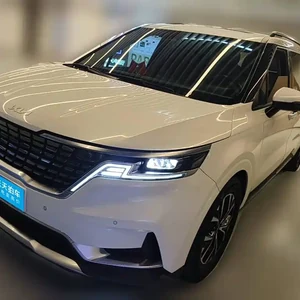
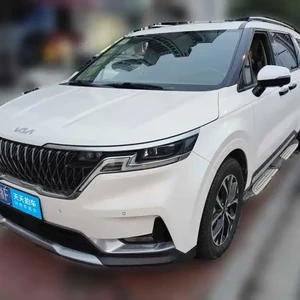
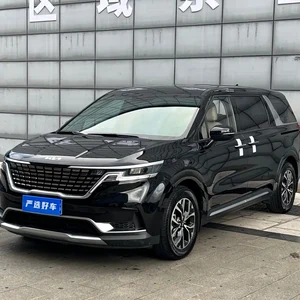
How to buy a Kia Carnival from China
-
1
Define the destination and operating duty
Record the destination country and port, expected annual distance, passenger and luggage loads, fuel considerations and local homologation requirements before choosing a vehicle.
-
2
Filter the live Kia Carnival inventory
Compare new or used status, model year, exact trim, engine, emissions label, mileage, seller information and photographs. Confirm the current unit’s availability directly.
-
3
Verify the exact chassis
Request the VIN, build plate, option list, photographs and condition report. For used vehicles, also obtain service and ownership documents and arrange an independent inspection.
-
4
Request an itemised RFQ
Ask for the vehicle amount, freight, insurance, inspection, documentation, duties or taxes if quoted, Incoterm, payment currency and expected delivery window. Confirm how long the quotation remains valid.
-
5
Complete destination compliance review
Have a local specialist check steering configuration, emissions, safety requirements, customs classification, permits and registration. Do not rely on the Chinese China IV or China V label alone.
-
6
Contract and pay safely
Ensure the contract ties the agreed amount to a specific unit or VIN. Clarify deposits, balance, cancellation, inspection, refunds and bank charges, and use only verified seller business details.
-
7
Release, load and document the shipment
Approve pre-shipment inspection, the packing plan, loading photographs, export documents, insurance and cargo tracking. Record the VINs for comparison during receiving inspection.
Carnival vs rivals
| Toyota Sienna | The Sienna is a close rival where sold, with a strong hybrid proposition for fuel-conscious buyers. The Carnival provides multiple petrol engines and equipment grades, making it a practical alternative for operators seeking a different configuration and acquisition strategy. |
|---|---|
| Hyundai Grand Staria | The Grand Staria competes through contemporary design, a premium cabin and market-dependent diesel or hybrid options. The Carnival generally offers a broader visible choice of Chinese-market petrol powertrains and trims for value-focused fleet buyers. |
| Mercedes-Benz V-Class | The V-Class is the premium choice for chauffeur, executive and hospitality use, with stronger brand perception. The Carnival is generally more cost-conscious and practical for buyers seeking a large passenger vehicle without paying for luxury-brand positioning. |
Frequently asked questions
How is Kia Carnival export pricing determined?
The live price reflects the specific vehicle’s year, trim, engine, condition, mileage, documentation and the seller’s commercial terms. Freight, insurance, port charges, duties, taxes, payment currency and Incoterm can change the landed cost. Check the current live Kia Carnival listings for the per-unit amount and request an itemised RFQ for binding delivery terms.
Which Kia Carnival engines and trims are available for export?
China-market examples include 2.0T, 2.2T and 3.3 GDI petrol engines, with editions including Comfort, Luxury, Luxury Tech and Flagship. The exact engine, transmission, equipment and China IV or China V designation should be confirmed on the selected live listing rather than inferred from the model name.
Should an overseas buyer choose a new or used Kia Carnival?
A new car reduces uncertainty about prior use, condition and specification, while a used vehicle may reduce initial capital exposure. A used purchase requires stronger inspection, VIN verification, ownership documents and an assessment of repair and parts risk. Compare total ownership cost over the intended service life rather than purchase price alone.
What is the minimum order quantity for a Kia Carnival?
MOQ is set by the individual seller and order terms rather than by the vehicle model itself. A single-unit inquiry may be possible, but the written quotation should confirm the required quantity, deposit, balance and inspection conditions. For a fleet order, ask how units will be allocated, documented and consolidated before payment.
What factors affect Kia Carnival shipping time and cost?
The principal factors are the vehicle’s dimensions and weight, carrier method, sailing schedule, freight allocation, loading port, destination charges, insurance and customs clearance. Compliance inspections or document corrections can extend the timeline. Freight cost should be quoted separately from the vehicle under the intended Incoterm.
Are spare parts available for an exported Kia Carnival?
Parts support depends on the destination, engine, trim and whether the required components are China-specific. Confirm part numbers, local Kia dealer coverage and expected lead times before purchasing, particularly for a used vehicle. It may also be necessary to plan how replacement parts will be imported and stored.
Can I buy a right-hand-drive Kia Carnival?
Factory RHD availability can be limited and varies by source market, so it should never be assumed. Ask for the actual steering configuration, VIN and build information, and obtain the destination importer’s written assessment. An aftermarket conversion may create homologation, insurance, warranty and parts-planning issues.
How do I order a Kia Carnival from China?
Start with the live Kia Carnival listings, select a specific vehicle and request a written RFQ covering price, Incoterm, freight, documentation and payment terms. Verify the chassis and condition, complete destination compliance checks, and ensure the sales contract identifies the unit. Payment should follow inspection and document approval, with loading evidence and export records retained.
Ready to source the Kia Carnival?
Send your destination, quantity, preferred Carnival trim and required documents to ChinaCarDirect for a unit-specific RFQ and export quotation.
Request a quote