
Lamborghini Gallardo Export Buying Guide for Overseas Buyers
Export a Lamborghini Gallardo from China with confidence: compare LP550-2, LP560-4 and Superleggera trims, pricing logic, compliance and shipping.
At a glance
- The Gallardo is a naturally aspirated V10 halo model for collectors who prioritize engine character and period styling.
- The LP550-2 is the rear-drive, manual-focused choice, while the LP560-4 adds all-wheel drive and transmission choice.
- The LP570-4 Superleggera, Spyder and named editions should be compared as distinct use cases, not simply as trims.
- Used Lamborghini Gallardo choices can be attractive when mileage, service history, title and rust repairs are fully verified.
- Export price and availability are live: compare the current per-unit listing and request a written destination-specific quotation.
- Destination emissions, safety, tax and RHD/LHD rules can determine feasibility before any vehicle is purchased.
Why the Lamborghini Gallardo matters for export markets
The Gallardo occupies a distinctive part of the global supercar market: an early-2000s, naturally aspirated V10 halo car with a more approachable ownership proposition than many contemporary flagship models. Its appeal comes from the combination of period-correct styling, a high-revving engine, rear- or all-wheel-drive layouts and a driving character that many buyers deliberately seek. For overseas dealers, it attracts collectors and performance-car enthusiasts rather than customers seeking everyday practicality. That specialist demand supports resale positioning, but every transaction still depends on provenance, condition, documentation and local legality before the vehicle is marketed.
Demand is strongest among buyers who value the original V10 experience rather than the latest technology. The Gallardo predates the widespread adoption of turbocharging, electrified performance and driver-assistance packaging, so its appeal is mechanical and emotional: naturally aspirated throttle response, a prominent exhaust note and a dashboard centred on driving. That distinction remains relevant even as newer mid-engined supercars dominate coverage. It also makes the model a complement in a dealer’s portfolio, giving clients an alternative that is visually dramatic and mechanically distinctive without moving into the newest supercar price tier.
For an export buyer, however, popularity should not be confused with easy compliance. The Gallardo is old enough to face emissions, inspection and age-related import restrictions in some markets, and values can be sensitive to rust, service history and, where applicable, matching numbers. The export decision should start with a destination-specific feasibility check, followed by a vehicle-level inspection. Verified title, VIN, maintenance records and an importable specification matter more than broad demand. Buyers should use the model’s appeal to justify the commercial case, not to overlook the due diligence required for a high-value car.
- V10 character attracts specialist collectors.
- Period styling supports halo positioning.
- Check import feasibility before committing.
Model range, trims and powertrain variants: how the lineup is structured and how to choose
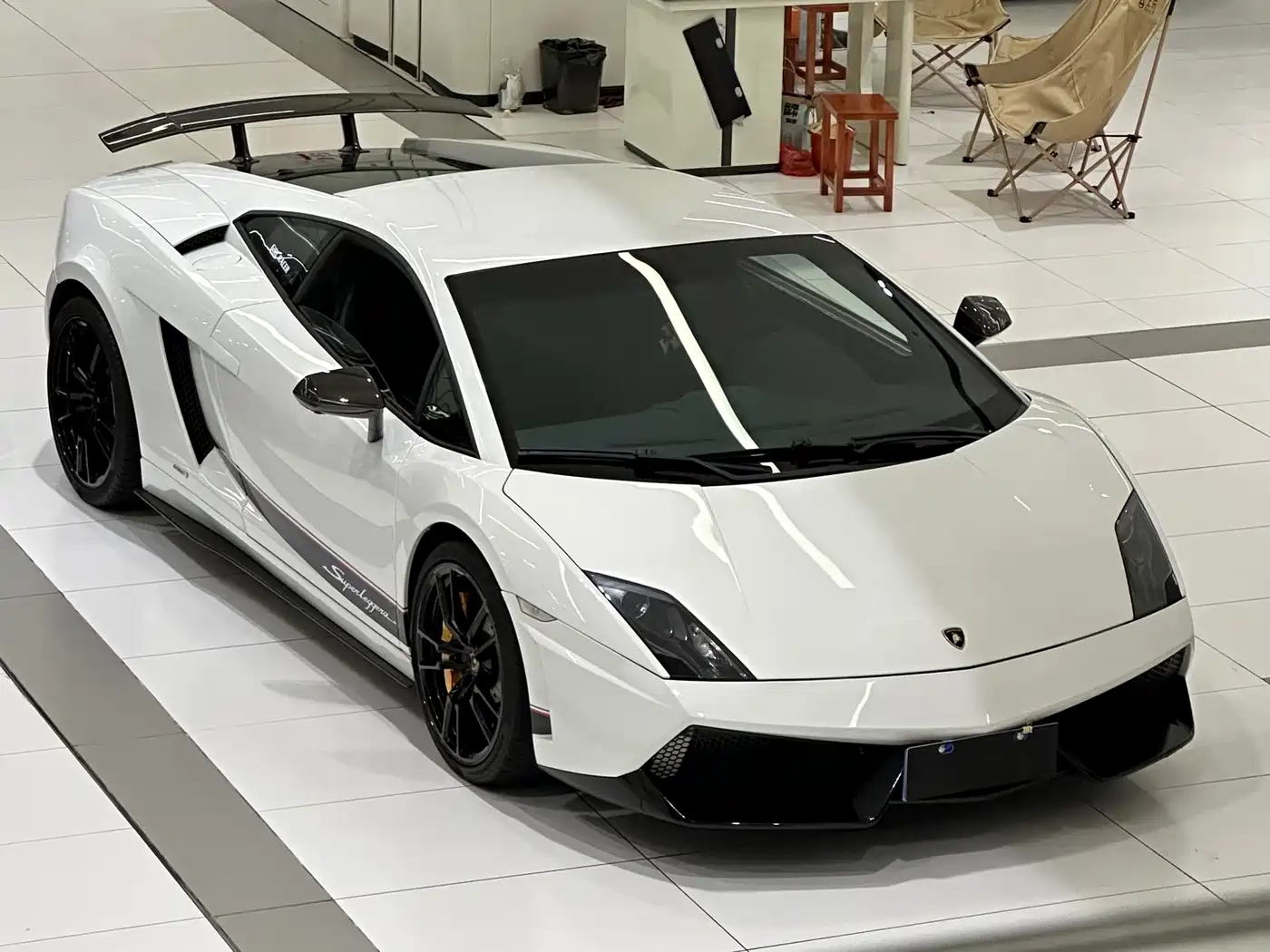
The core range divides into a rear-wheel-drive LP550-2 and the powerful LP560-4 generation, followed by lighter, more focused LP570-4 derivatives. The LP550-2 uses a 5.0-litre naturally aspirated V10 and emphasizes open-road balance and a six-speed manual. The LP560-4 uses a 5.2-litre V10 and is available with either a manual or Lamborghini’s dual-clutch automated gearbox, combining broader traction with greater everyday usability. The LP570-4 Superleggera revisits the lightweight rear-drive concept with modern all-wheel drive, while the Super Trofeo Stradale adapts race-derived hardware for road use and rewards a highly focused buyer.
Trim names carry more than cosmetic meaning. The LP560-4 Gold Edition is a visually distinctive LP560-4 specification and should be valued on its specification rather than assumed to represent a mechanical family. The LP550-2 Valentino Bolboni is an appearance-led derivative of the rear-drive model, while the LP570-4 Superleggera is focused on weight reduction and sharper response. The LP560-4 Spyder trades a fixed roof for open-air use but changes body character, practicality and condition risks. A Super Trofeo Stradale is closer to a limited road-legal performance special than a regular dealership coupe.
Buyers should choose by driving brief, not badge alone. A dealer seeking a manageable V10 car for long-distance weekends may favor the manual LP550-2, provided the destination accepts right- or left-hand-drive arrangements and the car has been maintained properly. Clients prioritizing traction, performance, convenience and broader use will find the LP560-4 versatile. The Superleggera is the stronger choice for enthusiasts who value response and reduced mass enough to accept firmer ride, less refinement and specialist service needs. Verify engine, gearbox, drivetrain, roof configuration and factory options in the VIN-linked listing.
- LP550-2: rear-drive, manual-led V10.
- LP560-4: all-wheel drive, two gearbox choices.
- Superleggera: lighter and more focused.
New vs used Lamborghini Gallardo: how export inventory is structured and how buyers choose
Online export catalogues can mix vehicles of different ages and condition categories, especially for aging models. A listing labelled new should not automatically be interpreted as a current-production or zero-mileage car. In practice, buyers may encounter former-demo, parallel-import, collector or dealer stock presented under a marketplace condition label. The reliable distinction is the evidence attached to each vehicle: VIN, production year, odometer reading, prior use, paint condition, service record and title history. Always ask the seller to reconcile the listing label with those documents before treating the vehicle as new.
A vehicle presented as new can reduce uncertainty about wear when accurate, but it does not remove mechanical, documentation or market risk. Inspect bodywork for transport damage, mileage, visible underbody corrosion and evidence of repainting; verify the odometer is consistent with its year and equipment. A pristine presentation may conceal prolonged storage, for which belts, tyres, fluids, batteries and systems require attention. Treat condition claims as assertions to test, not a substitute for a thorough independent inspection. For a high-value supercar, a documented pre-shipment inspection should be a purchase condition.
A used Gallardo can make financial sense for a collector who prioritizes the car over factory-new presentation. The comparison is like-for-like: same derivative, gearbox, drivetrain, roof, mileage band, condition, service history and documentation. A lower headline number may be offset by deferred maintenance, accident repair, corrosion, missing parts or a title complication, while a well-supported example may be easier to assess and less exposed to storage damage. Buyers should request the sales and service invoices, key records, title and VIN documents, and evidence of the odometer reading before agreeing terms.
- Verify condition labels through VIN and odometer.
- Newer does not mean current-production.
- Used cars need service and title checks.
How export pricing works: the factors behind a live listing price, and how to read one
A live Gallardo export quote is the result of several variables rather than a fixed catalogue amount. The core vehicle identity—model year, LP550-2, LP560-4 or LP570-4 derivative, body style, gearbox, drivetrain and factory options—sets the baseline. Condition and mileage affect the next step, particularly for an aging performance car. Beyond that, the destination, exchange rate, payment terms, transport method, insurance, documentation, customs handling and the Incoterm determine what the buyer ultimately pays. A dealer quote should therefore separate the vehicle price from logistics and duties rather than presenting one unexplained figure.
When reviewing a live listing, confirm that the title, trim, model year and photographs refer to the same VIN. Then examine whether the condition includes cosmetic defects, paint correction, accident repair, ageing tyres or suspension work. Ask whether the amount is export-ready or whether transport, charges, marine insurance, delivery, taxes and registration remain open. The currency and exchange-rate basis matter. ChinaCarDirect’s live inventory shows the current per-unit price and availability; the applicable MOQ and commercial terms should be confirmed in a formal written quotation for the exact vehicle and destination.
Model the total acquisition cost before comparing vehicles. Start with the live vehicle price, then add the selected Incoterm, freight or roll-on/roll-off charges, insurance, inspection, export documentation, destination charges and inland transport. Add taxes only when their treatment is clear for the destination; do not treat a customs estimate as final without local advice. A single high-value car in a container may offer handling advantages, while specialized transport or air freight can change the cost-time balance. The comparison is total delivered cost, risk and timing, not the eye-catching listing amount.
- Compare like-for-like derivatives and condition.
- Separate vehicle price from logistics and duties.
- Live listings show current per-unit references.
MOQ, ordering and payment: single units vs consolidating a container
Gallardo purchases are suitable for single-unit acquisition because each car is a low-volume, individually valued vehicle rather than a standardized commodity. A live listing may not require a batch, but the seller’s minimum order quantity, reservation method and unit allocation must be confirmed for the car. Single-unit buying reduces exposure to unsold inventory and lets the buyer select condition and specification. It concentrates risk in one vehicle, so inspection, payment security, insurance and shipping planning become more important, not less. The listing’s terms, not a catalogue assumption, govern the order.
Wholesale buyers may consolidate several Gallardos or mix specialist stock from multiple suppliers to reach a shipment program. Consolidation can improve freight economics and broaden a showroom, but it should never be used to disguise weak demand. Mixed grades, specifications or documentation standards complicate valuation, insurance, customs declarations, parts standardization and customer handover. A group arrangement needs a vehicle schedule showing VIN, trim, condition, agreed price and shipping method for each unit. The buyer should confirm who owns the units at each stage and who bears loss or damage risk during transport.
The safest ordering sequence is to select the vehicle, complete documentation and technical checks, agree a sales contract, pay through the agreed method, and release the balance against agreed inspection and shipping milestones. The contract should identify the VIN, title and ownership status, condition report, delivery standard, Incoterm, insurer, inspection location, cancellation terms and dispute process. For a consolidated order, payment schedules should be tied to clearly documented stages rather than informal promises. Buyers should avoid unverified transfers and should use the formal quotation and RFQ channels throughout the transaction.
- Confirm MOQ and reservation terms per listing.
- Consolidate with a VIN-level vehicle schedule.
- Link final payment to inspection and documents.
Shipping, homologation and market compliance caveats: LHD/RHD and import rules by country
Transport planning starts with the vehicle’s value, condition and route, not a generic container rate. A low-slung, high-value supercar needs secure loading, ground clearance, wheel restraint, movement and moisture protection, and documentation of its condition before it leaves the premises. The method may be container, specialized open or enclosed carrier, roll-on/roll-off or air transport, depending on urgency and routing. Marine insurance, export handling, port charges, inland delivery and destination inspections all affect the landed cost. Transit time, traffic, weather, customs clearance and suitable loading equipment should be included in the schedule.
Steering configuration is a critical sourcing variable. China-origin examples are generally left-hand drive, but the Gallardo was produced in right-hand-drive form, and neither condition should be assumed from photographs alone. Buyers who require RHD should ask for the VIN, steering position, dashboard and market information to be verified before shipment. Converting an LHD car to RHD can involve parts, labour, electrical work and certification and may reduce value. It is cleaner to source an RHD example, subject to availability and destination compliance, than to treat conversion as a routine export step.
Import rules set by the destination can be decisive. Emissions standards, roadworthiness, noise, safety equipment, VIN and title recognition, age limits, import quotas, tariffs, taxes and registration rules may apply, and Chinese road legality does not guarantee legality elsewhere. Some markets permit imports of older vehicles, while others exclude them because of emissions or crash-test rules. A local customs broker should confirm eligibility in writing before vehicle purchase. Check ownership, lien and export documents, preserve original identification plates, and budget for modifications only after the authority has approved the specification.
- Verify steering side against the VIN.
- Clear destination approval before paying.
- Insure and document condition at loading.
Who should buy the Gallardo — and who should pick a different vehicle
The Gallardo suits an overseas buyer or dealer with an appetite for a modern supercar, especially one who values a naturally aspirated V10 more than driver aids. It works well for weekend driving, collector events and demonstration purposes, where the car’s low seating position, presence and performance are central to the experience. The LP560-4 is the most versatile derivative because its drivetrain and gearbox choices suit roads and buyers. The LP550-2 can be compelling for a purist, and the Superleggera for an enthusiast, but each narrower brief brings its own cost.
It is a poor substitute for a daily vehicle, a touring car or a low-maintenance fleet asset. Ground clearance, visibility, tyre exposure, ride harshness, luggage capacity, fuel use and insurance can make ownership demanding, and examples require ageing tyres, fluids, brakes, suspension bushings or maintenance to be addressed before road use. A first-time supercar owner may underestimate storage, detailing, service and event costs. Buyers who need motorway cruising, a practical hatchback, predictable operating costs or a straightforward homologation path should choose a conventional alternative rather than accept compromises for the badge.
The most successful export buyer treats the purchase as a specialist asset, not a quick resale arbitrage. Budget for a pre-purchase inspection, secure storage, insurance, servicing and access to parts, and compare local support with technical demands. Confirm that the chosen market has experienced support for the exact mechanical specification, especially for automated gearboxes, track-derived variants or long-stored cars. A lower acquisition price can be erased by one imported part, unsold months or compliance work. Conversely, a well-selected, documented and correctly configured example can serve a specialist dealership for years.
- Best for weekends and collector programmes.
- Demanding for daily or fleet use.
- Plan specialist service and parts support.
Main rivals and how the Gallardo compares
Among direct alternatives, the Ferrari 599 GTB Fiorano is the closest conceptual rival: a front-engined V12 two-seat GT with a longer touring focus and a different visual identity. Ferrari offers greater luggage usability and a grand-touring brief, while the Gallardo’s mid-mounted V10, lower visual mass and manual or dual-clutch character create a more aggressive sports-car feel. Neither is straightforwardly the better car. The 599 suits buyers wanting long-distance pace and GT space; the Gallardo suits those prioritizing compact proportions, V10 theatre and the availability of different drivetrain and special-edition concepts.
The Audi R8 Type 42 is a practical comparison because it places a large-capacity V10 behind the seats and offers all-wheel drive in later drivetrains. It tends to present a more road-focused, usable and restrained character than the Gallardo, with an easier fit in markets where Audi service networks are established. The Gallardo offers more model-year drama, a broader special-edition story and a purer-looking mid-engine silhouette. Conversely, the R8 may be easier for a buyer to own casually. The choice is emotional design and character versus refinement, usability and brand convenience.
The Aston Martin V8 Vantage offers a front-engined alternative: lower production drama, a compact V8 and a more traditional GT profile. It may be easier to accommodate in road and ownership contexts, yet it lacks the Gallardo’s mid-engine visual impact and high-revving V10 signature. A buyer choosing between them should test whether the Aston’s restrained character is preferable or whether the Gallardo’s event appeal justifies parts, insurance and servicing. This makes it the more practical ownership comparison when comfort, road manners and service access matter more than a mid-engine V10.
- Ferrari 599: V12 GT with touring space.
- Audi R8 Type 42: restrained V10 alternative.
- Aston V8 Vantage: compact, traditional GT.
Live Lamborghini Gallardo export inventory
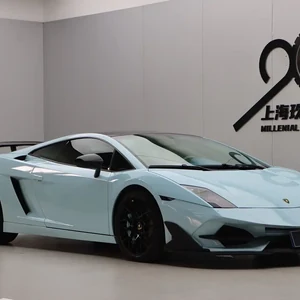
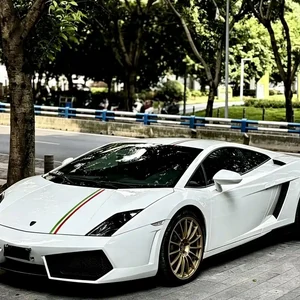
View all listings →Real units currently on ChinaCarDirect with per-unit asking prices and MOQ. Availability updates live from the catalogue.
How to buy a Lamborghini Gallardo from China
-
1
Set the derivative brief
Choose between LP550-2, LP560-4, LP570-4, coupe or Spyder based on drivetrain, transmission, roof and intended use. Buyers seeking a Lamborghini Gallardo from China should also state the required steering side and destination market before shortlisting.
-
2
Review VIN-level live listings
Use the current ChinaCarDirect Gallardo listings to compare model year, trim, options, condition and seller information. Ask for the VIN, clear photographs, odometer reading and any disclosed damage before requesting a firm quotation.
-
3
Verify condition and ownership
Review the title, export documents, service history, key records and bodywork evidence. For a used Lamborghini Gallardo, commission an independent inspection and reconcile the listing condition label with actual wear.
-
4
Build the destination-specific quote
Ask the seller to separate the vehicle price from freight, insurance, documentation, port charges, inland delivery, taxes and the selected Incoterm. Record the currency, exchange-rate basis, validity period, MOQ and exact per-vehicle terms.
-
5
Clear import and road rules
Have a local broker check emissions, safety, age, VIN, title, quota, noise, tax and registration requirements. Confirm LHD or RHD suitability and any required modifications before placing a non-refundable deposit.
-
6
Use a written purchase agreement
Tie the exact VIN, condition, inspection standard, payment milestones, ownership transfer, cancellation and dispute terms to a contract. Verify the seller and payment account through the formal RFQ channel.
-
7
Plan inspection and protected shipping
Specify the inspection point, handover photographs, loading method, marine insurance, shipment mode, delivery terms and documentation package. Release the balance only after the agreed inspection and shipment milestones are satisfied.
Gallardo vs rivals
| Ferrari 599 GTB Fiorano | The 599 GTB Fiorano is a front-engined V12 grand tourer with more luggage space and a stronger long-distance brief. The Gallardo’s mid-mounted V10, compact proportions and wider choice of rear- or all-wheel-drive concepts make it the more character-led and event-focused purchase. |
|---|---|
| Audi R8 Type 42 | The R8 Type 42 also places a V10 behind the seats and, in later versions, all-wheel drive, but generally presents a more restrained, road-oriented character. Choose it for easier everyday usability and established Audi support where available; choose the Gallardo for sharper design drama, special editions and a more involved ownership brief. |
| Aston Martin V8 Vantage | The V8 Vantage is a smaller front-engined V8 GT with a more traditional profile and potentially more practical road manners. The Gallardo wins for mid-engine visual impact, high-revving V10 character and halo appeal, while the Aston may be easier to live with. |
Frequently asked questions
How is Lamborghini Gallardo export pricing determined?
Export pricing is built from the vehicle’s year, derivative, gearbox, drivetrain, options, condition, mileage, currency movement, freight, insurance, documentation and the chosen Incoterm. ChinaCarDirect’s live Gallardo inventory shows the current per-unit price and availability, but confirm the exact vehicle’s written quotation before paying. Taxes and registration are separate destination costs and should be confirmed locally.
What engine and powertrain does the Gallardo use?
The Gallardo is a gasoline-powered, naturally aspirated V10 rather than an EV, so electric range and battery-charging data do not apply. The LP550-2 uses a rear-drive 5.0-litre V10, while LP560-4 and LP570-4 versions use a 5.2-litre V10 with all-wheel drive. Manual and dual-clutch availability depends on the derivative, so verify it by VIN.
Are used Lamborghini Gallardo models worth considering?
Used examples can be attractive when they have clear service history, verified mileage and complete ownership documents. Conversely, a vehicle presented as new may have delivery or storage mileage, so inspect it rather than relying on the marketplace label. Compare like-for-like trims, condition, gearbox and drivetrain.
What is the MOQ for a Lamborghini Gallardo order?
MOQ is set in the seller’s live listing and written quotation, and a specialist car may be sold as one unit rather than as a batch. For wholesale orders, confirm allocation, reservation, per-VIN pricing, payment milestones and whether mixed trims can be consolidated. A container plan does not remove the need for individual vehicle inspections.
How long does shipping take and what affects the cost?
Shipping time and cost depend on origin and destination ports, chosen carrier, container or specialist transport availability, customs clearance, route, insurance and inland delivery. High-value vehicles need secure loading and documented condition at handover. Ask for the Incoterm, estimated transit and every destination charge.
Can spare parts be sourced for an exported Gallardo?
Spare parts can be sourced through Lamborghini dealers and specialist suppliers, but lead time and cost depend on part availability, model derivative and shipping route. Confirm whether the seller includes commonly needed service items or documentation before shipment. For electronic, trim-specific or discontinued components, validate the VIN and supplier before treating repairability as an asset.
Is a right-hand-drive Gallardo available for export?
Right-hand-drive Gallardos exist, but availability varies by trim, original market and the live inventory. China-origin examples are generally left-hand drive, so state the required steering side before requesting quotes and verify it against the VIN. Do not assume a conversion is minor or homologation-ready; use an original RHD car where possible.
How do I order a Lamborghini Gallardo from China?
Start by reviewing the current live listings, shortlist the exact derivative and request a VIN-specific export quote through ChinaCarDirect. The seller should provide ownership documents, condition evidence and contract terms before payment. Confirm MOQ, inspection, Incoterm, insurance, shipping and destination compliance in writing before releasing the balance.
Ready to source the Lamborghini Gallardo?
Send ChinaCarDirect a VIN-specific RFQ for your preferred Lamborghini Gallardo trim, condition and destination.
Request a quote