
Land Rover Discovery Sport Export Buying Guide
Compare Land Rover Discovery Sport trims, powertrains, export pricing, MOQ, shipping and homologation, then source current units through ChinaCarDirect.
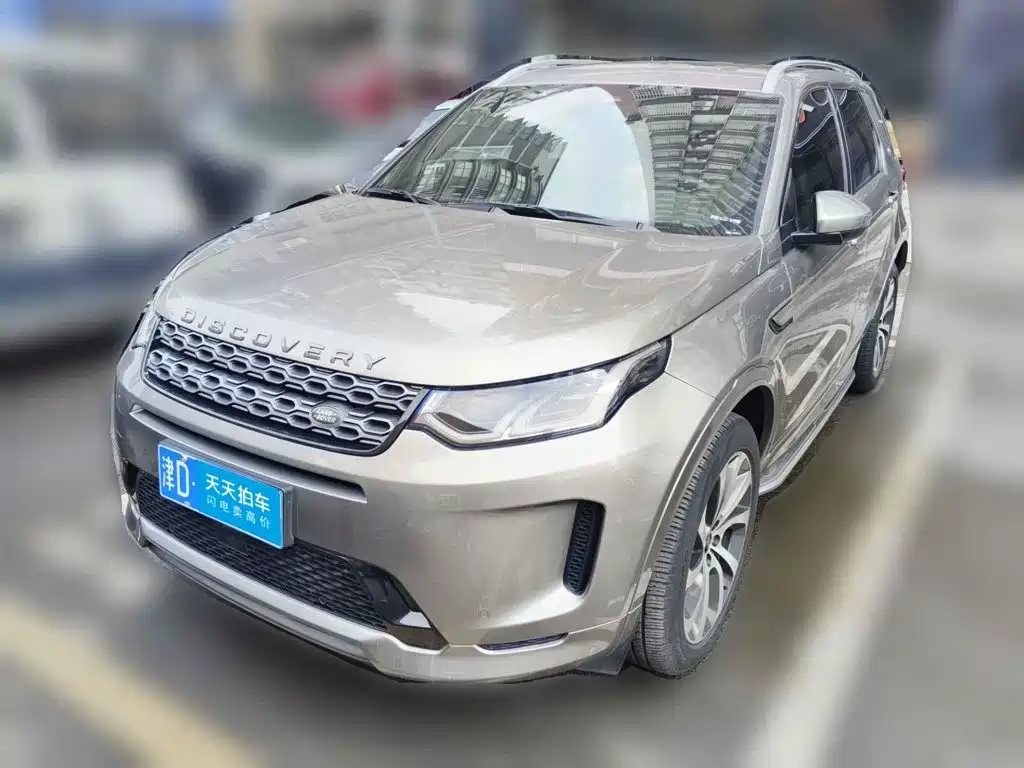
At a glance
- The Discovery Sport combines compact-SUV practicality with Land Rover branding, all-wheel drive and five- or seven-seat options.
- Land Rover Discovery Sport specs vary by trim, power output, seating and powertrain, so each unit needs exact configuration matching.
- Buyers can buy Land Rover Discovery Sport from China by checking unit-level live listings and requesting a written landed quote.
- A Land Rover Discovery Sport export price guide should explain cost drivers rather than repeat a fixed snapshot quote.
- Used Land Rover Discovery Sport purchases require closer inspection, while wholesale shipments demand configuration-level demand planning.
Why the Land Rover Discovery Sport matters for export markets
The Discovery Sport occupies the compact luxury-SUV segment, combining a road-oriented five-door body with Land Rover’s off-road identity and available five- or seven-seat configurations. That balance gives overseas dealers a useful middle ground between conventional family SUVs and more rugged, expensive 4x4 vehicles. It can serve private buyers, chauffeur fleets and company-car programs while presenting a premium image in markets where all-wheel drive and adventure styling carry commercial appeal. Its dimensions are easier to manage than those of a full-size off-road SUV, which helps where roads, parking bays and service arrangements are less accommodating than in the original market.
Export demand for the model is driven by that combination rather than by a single specification. Buyers who want a premium badge, strong road presence and all-weather confidence can choose from 2.0-litre turbo petrol versions in several power and equipment grades, while P300e listings add a plug-in-hybrid route for markets emphasising electrification. For dealers, the useful question is not whether the Discovery Sport is the cheapest compact SUV, but whether its brand cachet, seating flexibility and terrain credentials justify its ownership and compliance costs in their destination market and dealer margin.
For an importer, the model also supports several sales stories: a five-seat premium SUV for executive and premium retail customers, a seven-seat derivative for family and shuttle demand, and a plug-in-hybrid option where charging infrastructure and tax treatment support it. Trim, seat count and powertrain materially change buyer appeal and price, so a live unit should be evaluated on its complete specification rather than on the model badge alone. ChinaCarDirect’s current Discovery Sport inventory is the appropriate place to check which combinations are actually offered when building a specific quotation.
- Five- and seven-seat configurations
- Premium compact-SUV positioning
- Petrol and P300e choices
Model range, trims and powertrain variants: how the lineup is structured and how to choose
The lineup is organised around equipment tiers and performance-oriented derivatives rather than one simple trim ladder. SE, HSE and R-Dynamic names appear across export listings, with Performance, Performance Technology and special-edition packages adding equipment or styling. Some cars are explicitly five-seaters, while others are seven-seaters. Dealers should treat the full listing name as a configuration record: the same model-year name can conceal different seat counts, grilles, wheels, cabin technology and market-specific packages. That matters when preparing a quotation, because visually similar cars may not be direct substitutes for fleet or accessory planning.
For combustion versions, the visible powertrain pattern includes 2.0T petrol grades with 200PS, 240PS and 249PS outputs. Output alone should not decide the purchase: suspension, transmission calibration, drivetrain settings, steering and standard equipment can change the driving result. The 249PS R-Dynamic Performance and related S or SE derivatives are positioned for stronger performance, whereas SE and HSE grades generally suit buyers prioritising comfort and equipment. Confirm the exact engine, gearbox and market specification in the vehicle record before promising performance, consumption or payload figures to a customer. This avoids turning a trim label into an unsupported specification claim.
P300e identifies the plug-in-hybrid branch of the range seen in export naming, but buyers still need the live vehicle’s detailed data. Battery capacity, usable electric range, charging time, fuel consumption and electric-only capability can vary by model year and market, so they should be confirmed rather than inferred from the badge. For import planning, also verify whether external charging is supported, what cable or equipment is supplied, and how local tax incentives treat the car. The same discipline applies to ground clearance, roof rails and seven-seat usability on local roads.
- 200PS, 240PS and 249PS petrol grades
- SE, HSE and R-Dynamic hierarchies
- P300e battery and range require verification
New vs used Land Rover Discovery Sport: how export inventory is structured and how buyers choose
Export inventory should be read as a changing mix, not a permanent product category. Some Discovery Sport units will be factory-new vehicles prepared for export; other opportunities may come from dealer stock, demonstrator cars, ex-fleet units or used vehicles moving through private and auction channels. The source, age, mileage and history of each unit determine how it should be valued and marketed. Buyers should therefore open the live listing rather than assume that a model name or catalogue label reveals whether a car is new or previously registered in a prior market.
A new unit is usually easier to standardise for fleet resale: wear is limited, specification is easier to describe, and factory warranty or after-sales support may be available subject to destination rules. It can still carry showroom preparation, transport damage or delivery mileage, so “new” must be defined in writing. Used vehicles may offer a lower entry cost and a broader range of proven configurations, but they require closer checks of tyres, service history, accident repair, paint, interior condition and electronic diagnostics before a buyer commits to the export order.
For dealers, the best choice depends on the sales channel. A rental company may prioritise predictable condition and serviceability; a premium used-car retailer may value attractive mileage and a documented history; an importer may prefer factory-new cars with simpler remarketing. The right procedure is to compare like with like: same model year, trim, powertrain, seat count, condition and destination charges. Ask for the VIN, production or registration details, odometer reading, service records and photographs before treating either a new or used label as sufficient proof for the vehicle offered to you.
- New: simpler fleet standardisation
- Used: condition and history drive risk
- Compare identical configurations
How export pricing works: the factors behind a live listing price, and how to read one
A Discovery Sport export price is a moving commercial calculation, not a fixed characteristic of the model. The model year and age set the depreciation position; trim, engine output, plug-in-hybrid battery version and seat count affect demand; condition, mileage, ownership history and originality influence a used vehicle; and specification differences can be substantial within one model year. Currency movements also matter when a Chinese supplier quotes in one denomination and an importer settles in another. Freight, insurance, port charges and the chosen Incoterm can move the final commercial result even when the vehicle price does not.
To read a live listing correctly, separate the vehicle asking price from the landed cost. First match the exact year, trim, output, seats and options in the title. Then check whether the price is a vehicle-only amount, which taxes or duties are included, and whether delivery is FOB, CIF or another term. Ask who is the seller, whether the VIN and documents are available, and whether any listing represents an export-ready unit rather than a dealer asking price. The current per-unit price and availability should always be taken from the live inventory, not from an older guide or comparison.
A landed-cost worksheet makes comparisons much clearer. Start with the quoted vehicle amount, then add the agreed international freight method, marine or vehicle insurance, export handling, destination transport, customs duty, taxes, registration and dealer preparation. Remove any amount explicitly refundable or recoverable under local rules, and state which assumptions depend on the destination rather than the car. Ask the seller to confirm the quote in writing and its validity period, especially if exchange rates or shipping arrangements may change before payment. A quote should identify every exclusion before a deposit is authorized.
- Year, trim and powertrain affect value
- Incoterms separate vehicle and landed cost
- Use the live listing and written quote
MOQ, ordering and payment: single units vs consolidating a container
Minimum order quantity is a commercial term attached to the offer, so it should never be inferred from the model alone. A buyer may be able to order one vehicle from a stock unit, while a factory allocation, special-order specification or seller’s export programme may require a batch. The live listing is therefore the first place to check the quantity condition; its displayed terms, rather than a general model rule, govern the offer. If it does not state whether single-unit orders are accepted, request that point in writing before paying. A one-unit purchase can suit a dealer testing demand; it also leaves the importer carrying more freight cost per vehicle.
Consolidating several Discovery Sports into one shipment can improve freight and handling economics, but it should not be treated as simple volume buying. Units with different model years, trims, seat counts and powertrains are separate retail products, and each carries its own demand and residual-value risk. Secure buyers or allocation commitments before moving a larger batch, and avoid mixing scarce configurations with slow-moving stock merely to fill space. A container also ties up more capital and may create storage or demurrage costs if sales are slower than planned at either end.
Payment terms should mirror the transaction’s risk. A pro forma invoice should identify the vehicle or allocation, price basis, deposit, balance trigger, payment currency, bank charges, inspection period, refund conditions and estimated delivery terms. Buyers should avoid paying a balance solely on a photograph or an unverified shipping promise; use documentary milestones and an inspection process appropriate to the vehicle’s value. For a container, define how units are allocated, who bears loss during handling, and what happens if an export licence, homologation step or transport booking fails before departure commences.
- Single-unit orders depend on seller terms
- Containers improve freight efficiency
- Invoices define payment milestones
Shipping, homologation and market compliance caveats: LHD/RHD and import rules by country
Steering configuration is one of the first checks when planning a Discovery Sport import. A left-hand-drive car suits many markets, while right-hand-drive availability differs by source and model year; converting a steering side is not a simple, low-cost adjustment and can affect parts, safety procedures and resale positioning. Do not infer drive side from the country of sale or from a photograph. Ask for the VIN and original build specification, confirm whether the vehicle is LHD or RHD, and verify that the destination will accept that configuration before committing to transport.
Import rules are destination-specific, and a China VI or China V label in a vehicle description does not itself prove that the car is eligible elsewhere. The importer may need to address emissions, roadworthiness, vehicle type approval, safety equipment, cybersecurity or software rules, age restrictions, customs valuation, duty, taxes and local registration requirements. Homologation can also require documentary proof, component records or modifications. Build a country-specific compliance file before the vehicle leaves its origin, and use a broker or qualified inspector rather than assuming another market’s rules apply to the vehicle.
Transport method affects both landed cost and vehicle condition. RoRo is often suited to finished vehicles, while container or flat-rack arrangements may suit higher-value or particularly vulnerable cars; actual suitability depends on dimensions, height, weight, port equipment and carrier approval. Secure lashing, chocks and protective requirements in writing, and clarify who bears damage during loading, voyage and discharge. Shipping time is not a simple constant: factory preparation, port congestion, transshipment, customs clearance, inland delivery and seasonal capacity all affect the schedule, so build contingency into stock commitments and customer promises.
- Verify LHD or RHD before payment
- China V/VI does not ensure local approval
- Define insurance and damage responsibility
Who should buy the Discovery Sport — and who should pick a different vehicle
The Discovery Sport fits a dealer or fleet buyer that wants a premium compact SUV with a stronger off-road identity than a typical urban crossover. Its available five- and seven-seat layouts, Land Rover branding and selection of petrol and plug-in-hybrid derivatives broaden its retail and corporate appeal. It is especially relevant where clients value all-wheel-drive confidence, a commanding road presence and a family-friendly cabin, yet still need a vehicle that is less cumbersome than a full-size off-road SUV. For business use, the case is strongest when the vehicle’s image and road versatility support the premium customers being served.
Fleet selection should begin with operating reality rather than badge appeal. A company car programme needs verified fuel use, maintenance assumptions, residual-value support, insurance classification and tax treatment; an airport or hotel shuttle may prioritise seven-seat practicality, luggage space and uptime; a regional sales team may value a plug-in-hybrid only if employees can charge and the duty cycle suits electric running. Ask for realistic range or consumption data for the exact configuration, and include local servicing and parts access in the total-cost comparison rather than relying on generic brochure claims.
It is the wrong choice for some buyers. Someone prioritising the lowest purchase price, urban efficiency or a zero-emission fleet may be better served by a mainstream compact SUV or a battery-electric model. A family needing maximum cargo volume, seven full-size seats or commercial-duty durability may need a larger vehicle. Buyers with no access to Land Rover service, limited parts supply or no viable repair network should treat local support as a decisive constraint. The best vehicle is not merely capable on paper; it must remain supportable after registration there.
- Best for premium and versatile SUV buyers
- Charging access determines PHEV suitability
- Service access can disqualify the model
Main rivals and how the Discovery Sport compares
The closest alternatives depend on how the buyer defines the class. A BMW X3 is a credible road-focused premium SUV for drivers who prioritise handling, engine response and a more sporting identity. A Volvo XC60 competes through Scandinavian comfort, safety thinking and a restrained luxury presentation. A Mercedes-Benz GLC offers a more car-like premium SUV proposition with extensive equipment and brand appeal. Discovery Sport’s distinction is its off-road-oriented positioning, flexible seating choices and a market value proposition that can reward importers serving customers who want Land Rover identity without moving to a full-size model.
Against the X3, the Discovery Sport generally places stronger emphasis on rugged styling, usable terrain hardware and family versatility, while the X3 may appeal more to buyers seeking a predominantly road-biased driving style. Against the XC60, it offers a more adventure-focused image and a choice of seating layouts, whereas the Volvo may attract those who prioritise restraint, interior calm and Scandinavian design. The GLC provides a more formal, comfort- and technology-led premium impression; the Land Rover is the more distinctive choice for outdoor-oriented branding. Equipment varies by market, so badges cannot replace a feature-by-feature comparison.
A useful dealer comparison sheet should record more than brochure features. Compare the exact powertrain and drivetrain, dimensions, seating flexibility, boot usability, ride, steering, fuel or energy consumption, warranty position, local service access, parts lead time, safety and driver aids, and expected residual demand. Then estimate landed cost rather than comparing advertised vehicle prices alone. If a buyer values city running costs above all else, an EV may win; if road presence and all-weather usability dominate, the Discovery Sport can be the more coherent choice, provided compliance and after-sales support are properly costed.
- BMW X3: road-focused premium alternative
- Volvo XC60: comfort and safety emphasis
- Mercedes-Benz GLC: formal premium alternative
Live Land Rover Discovery Sport export inventory
View all listings →Real units currently on ChinaCarDirect with per-unit asking prices and MOQ. Availability updates live from the catalogue.
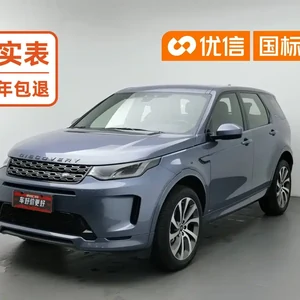
Land Rover Discovery Sport 2022 Model Facelift 249PS R-Dynamic HSE Luxury Custom Edition 7-seater
How to buy a Land Rover Discovery Sport from China
-
1
Define the destination and compliance brief
Specify the destination country, preferred steering side, intended customers and charging or fuel infrastructure. Confirm local homologation, emissions, safety, customs and registration requirements before selecting a vehicle.
-
2
Choose the exact configuration
Decide on model year, trim, petrol or P300e powertrain, and five- or seven-seat layout. Treat equipment names as configuration references and request a complete specification sheet.
-
3
Review the live unit listings
Use the live Discovery Sport inventory to compare matching vehicles and confirm current price, availability and MOQ conditions. Ask for the VIN, detailed photographs, ownership status and supporting documents.
-
4
Request a written landed quote
Provide the destination, quantity and preferred Incoterm when requesting a quote. Require the seller to state included freight, insurance, handling, taxes and exclusions.
-
5
Confirm MOQ and payment terms
Confirm whether the offer accepts a single unit or requires consolidation, then document the deposit, balance trigger, inspection period and refund conditions. Check how payment currency and bank charges affect the total.
-
6
Complete a pre-shipment inspection
Use an independent or agreed inspector to verify the VIN, exterior, interior, tyres, fluids, warning lights and service records. Photograph the vehicle before loading and record any agreed repairs or exclusions.
-
7
Book shipping and complete the import
Select the transport method, insurance coverage and shipping terms appropriate to the vehicle and route. Complete export documents, customs clearance, destination homologation, registration and inland delivery before releasing the vehicle.
Discovery Sport vs rivals
| BMW X3 | The X3 is a road-oriented premium SUV with a more sporting emphasis, so it may suit buyers who prioritise dynamic handling over the Land Rover’s rugged image and flexible seating choices. The Discovery Sport is the stronger fit when all-weather confidence, Land Rover identity and five- or seven-seat versatility are central. |
|---|---|
| Volvo XC60 | The XC60 competes through comfort, restraint and safety-led design, often appealing to buyers seeking a calmer family SUV. The Discovery Sport stands apart through more overt off-road styling and seating flexibility, although exact equipment and servicing support vary by market. |
| Mercedes-Benz GLC | The GLC offers a more formal, comfort- and technology-led premium SUV character and may have broader local brand recognition. Choose the Discovery Sport when distinctive Land Rover credentials and terrain-oriented positioning matter more than a conventional road-SUV presentation. |
Frequently asked questions
How is the Discovery Sport export price determined?
Export pricing reflects the live unit’s year, trim, powertrain, condition, mileage, currency movement, freight, insurance and chosen Incoterm, plus destination-side taxes where the quote includes them. The current per-unit price, MOQ and availability are shown on each live listing on ChinaCarDirect. Treat that listing and a written quote as binding; older guide figures are not a purchase offer.
Which engine and plug-in-hybrid specifications are available?
The export lineup includes 2.0T petrol grades with 200PS, 240PS and 249PS outputs, plus P300e plug-in-hybrid versions. Exact battery capacity, electric range, charging time, fuel consumption and PHEV equipment vary by model year and market. Read the live vehicle specification rather than inferring those figures from the P300e badge.
Should I buy a new or used Discovery Sport?
New vehicles generally offer simpler fleet standardisation and a clearer warranty position, while used cars can provide a lower entry cost but carry wear and history risk. For a used Discovery Sport, request the VIN, odometer reading, service records, accident history, photographs and an inspection. Compare equivalent year, trim, powertrain, seats and condition before deciding.
How does the minimum order quantity work?
MOQ is seller- and offer-specific, not a fixed rule for the model. Some stock units may accept single-vehicle orders, while factory allocations may require batches, so check the quantity field on each live listing or obtain written confirmation. For consolidation, match every unit to buyer demand before committing to a larger shipment.
What affects shipping time and cost?
Shipping time and cost depend on transport mode, vehicle dimensions, origin and destination ports, routing, transshipment, customs clearance, insurance and carrier capacity. Factory preparation, port congestion and inland delivery can add time, and the quoted Incoterm determines which charges are already included. Ask the freight provider for a route-specific schedule and damage-responsibility terms.
Are spare parts available for the Discovery Sport?
Spare-parts support depends on the destination’s Land Rover dealer network and the vehicle’s production year, so older or lower-volume configurations can take longer. Before purchase, ask for a parts check covering tyres, brakes, filters, body panels, electronic modules and service requirements. Confirm local availability rather than relying on cross-border supply alone.
Is right-hand-drive Discovery Sport availability guaranteed?
Right-hand-drive availability varies by source vehicle, model year and trim, so it must be confirmed for the individual unit rather than assumed from the catalogue. Ask the seller to state LHD or RHD from the VIN and build record and confirm local acceptance. Steering-side conversion is not a routine pre-delivery adjustment and can add cost and compliance risk.
How do I order a Discovery Sport from China?
Start with the live Discovery Sport listings, select the closest configuration and send an RFQ with the destination, quantity, preferred Incoterm and required documents. Before payment, obtain the VIN, specification sheet, written landed quote, MOQ, deposit and balance terms, inspection conditions and refund conditions. Then complete pre-shipment inspection, transport booking, export documents, customs clearance and destination registration.
Ready to source the Land Rover Discovery Sport?
Send an RFQ with your destination, preferred trim and powertrain, seat count, quantity and shipping terms for a current unit-level quote.
Request a quote