
Land Rover Range Rover Export Buying Guide
Buy a Land Rover Range Rover from China with clear guidance on trims, powertrains, export pricing, MOQ, shipping, compliance and rival options.
At a glance
- The full-size Range Rover combines flagship comfort, usable space and Land Rover's off-road identity for premium SUV buyers.
- Export listings can include Range Rover Sport, Velar and Evoque, so buyers should confirm the full-size model designation before comparing prices.
- Represented engines include 3.0-litre six-cylinder units, 5.0-litre V8s and a 3.0-litre TDV6 diesel, depending on model year and derivative.
- New vehicles reduce condition uncertainty, while used vehicles require careful inspection and VIN-based parts planning.
- Exact price, MOQ and availability are unit-specific; landed cost must include freight, insurance, taxes, duties and registration.
Why the Land Rover Range Rover matters for export markets
The full-size Land Rover Range Rover sits at the top of Land Rover's passenger-car range. It combines flagship-level comfort, a high seating position, generous luggage capacity and the marque's off-road identity in a vehicle intended to work as a premium utility SUV. For overseas dealers, that combination matters because it addresses customers who want brand prestige without moving down to a conventional luxury estate or a body-on-frame work vehicle. Its imposing presence also helps it fit chauffeur, executive and hospitality use, although running costs and local tax treatment must be assessed.
Demand for this kind of vehicle is strongest in markets where buyers associate four-wheel drive with status and all-weather or off-road capability. Range Rover's combination of luxury, usable space and long-distance composure gives it broader appeal than a specialist performance SUV, while its recognisable badge supports premium positioning. The practical export question is not simply whether the model is popular, but whether local fuel, parking, taxation, road conditions and servicing arrangements support ownership. Dealers should compare the full-size Range Rover with smaller derivatives because badge, fuel use and after-sales economics can point to different customers.
Dealers looking to buy a Land Rover Range Rover from China can compare different production years, trims and body configurations to match customer preferences and service capability, but a China-market vehicle may not match the specification expected in the destination country. Before treating a listing as a finished export product, check the steering side, VIN, engine, gearbox, emissions equipment, options, registration documents and local parts support. This verification is more valuable than a headline trim badge alone for overseas procurement before a final purchase decision is made by the buyer.
- Verify full-size model designation.
- Confirm destination steering side.
- Compare full landed cost.
Model range, trims and powertrain variants: how the lineup is structured and how to choose
Land Rover Range Rover specs differ across the family, so buyers should separate the flagship Range Rover from derivatives such as Range Rover Sport, Velar and Evoque. Within the flagship, trims such as SE, HSE, Vogue and Dynamic form a hierarchy of equipment, while names like Gloss Black, Heritage, Sport Tech, Smart and other editions add styling, comfort or technology packages. Standard and extended-wheelbase versions also appear. Because trim names and equipment can change between model years, compare the VIN-level specification rather than assuming an HSE in one year equals an HSE in another.
Export listings show a spread of mechanical choices. Depending on the derivative and year, the catalogue includes the 3.0-litre supercharged V6, the 3.0-litre inline-six, 5.0-litre naturally aspirated or supercharged V8, and the 3.0-litre TDV6 diesel. Power labels such as 240PS, 249PS, 360PS and 400PS appear, but they belong to specific engines and model years. There is no defensible single engine or output figure for a vehicle labelled simply Range Rover, so the full model designation must be checked. This matters because fuel choice, tax band, servicing and performance all depend on the exact powertrain.
Choose the powertrain around the destination and customer, not simply around the badge. A petrol six-cylinder may suit markets with limited diesel demand or emissions policies, while a diesel can suit high-distance commercial use where its fuel economy is relevant and local rules permit it. V8 versions provide more performance but can increase fuel, insurance and servicing costs. For a buyer balancing road use and occasional off-road travel, also verify suspension, axle, tow rating, tyres and off-road equipment in the live listing rather than inferring them from the trim name.
- Separate flagship from derivatives.
- Match engine to local fuel policy.
- Check VIN-level equipment.
New vs used Land Rover Range Rover: how export inventory is structured and how buyers choose
New and used export stock should be treated as two different buying propositions, not simply two labels on the same listing. A new vehicle may be current-production or recently registered, while a used vehicle may carry mileage, prior ownership and service history. The exact mix on ChinaCarDirect changes with sourcing activity. Buyers should therefore read the vehicle-status field, model year, odometer, registration history and condition report for each unit, because those details determine the commercial proposition and the documents that can be exported. Ask for supporting evidence when any status is ambiguous.
Buying new generally reduces uncertainty about wear, condition and remaining factory warranty, and it can make model-year, colour and option matching easier for a dealer. The trade-offs are timing and destination-market suitability: a newly sourced vehicle still has to be paid for, inspected, shipped, cleared and registered, and a local-market warranty may not transfer. Confirm whether the unit is genuinely unused, whether registration or consumption tax has been paid, and whether factory warranty and service history are documented before calculating its commercial value. These checks prevent a nominal new status from hiding ownership costs.
A used Range Rover can make sense when the buyer accepts an acquisition trade-off for a vehicle that has been inspected. Its price may sit below comparable new stock, but age brings uncertainty around tyres, fluids, brakes, suspension components, electronics and future maintenance. For an export buyer, service records and the ability to support the exact build are especially important because replacement parts may need to be sourced by VIN. Commission an independent pre-purchase inspection, verify the VIN and title, and budget corrective work rather than treating the listing price as the cost.
How export pricing works: the factors behind a live listing price, and how to read one
A Range Rover listing price is shaped first by the vehicle itself: model derivative, production year, trim, engine, gearbox, wheelbase, mileage, condition, ownership history and fitted options. New versus used status can change the starting point, while editions or scarce configurations may be valued differently from standard vehicles. Colour alone is usually secondary to those fundamentals. For a fair comparison, normalise several listings to the same derivative and equipment level before comparing their quoted amounts, and ask the seller to explain a premium. This prevents a lower headline quote from concealing a costlier specification.
The landed cost is usually more important than the vehicle price alone. Exchange-rate movement, ocean or roll-on/roll-off freight, marine insurance, terminal and handling charges, inland delivery, customs duties, VAT or GST, registration, inspection and local taxes can all change the amount payable. Incoterms define where responsibility passes: EXW leaves more work with the buyer, while FOB, CIF and delivered terms allocate freight, insurance and destination costs differently. Ask for a written quotation that states the currency, term, validity, included charges and any assumption about destination charges. Do not assume insurance is included.
Use the live Range Rover inventory as the source for the current vehicle-level figure, not a catalogue average or an old saved page. For every shortlisted unit, record the listing identifier, model year, derivative, trim, engine, mileage, condition, steering side, options and currency. Then ask for a refreshed written quote and an itemised total under a stated Incoterm. Confirm whether the quote includes documentation, inspection, transport and insurance, and whether it changes if the vehicle is held, loaded or delivered. Exact price, MOQ and availability appear per unit in the live ChinaCarDirect inventory; written confirmation makes them binding.
- Compare equivalent vehicle specifications.
- Record currency, Incoterm and validity.
- Itemise insurance and destination charges.
MOQ, ordering and payment: single units vs consolidating a container
MOQ means the minimum quantity a seller requires for an order under the stated terms. It is not a universal Range Rover rule and should be read on the specific vehicle or supplier agreement, because model, configuration, packaging and negotiation can affect it. Some offers may accept one unit, while others expect a mixed batch or container order. Check the displayed MOQ for each live listing and include it in the written quotation. Treat that field as the starting point for discussion, not as a promise that identical vehicles will be available on demand.
A single-unit purchase offers clear control over model year, trim, colour and condition. It is easier for a first-time importer because the commitment is concentrated in one inspectable vehicle, although transport and fixed charges are spread across fewer units and can be significant per vehicle. For wholesale buyers, consolidating several vehicles into one container can reduce freight cost per unit and simplify dispatch, but it ties up more capital, requires correct packing and creates mixed-specification risk. Model the container option on expected sales velocity, margin and service parts, not only on the potential freight saving.
An ordering sequence starts with a specification request, followed by a written quote and pro forma invoice showing the vehicle, price, MOQ, payment milestones, Incoterm and delivery scope. The parties should then address identity checks, deposit, pre-shipment inspection, balance payment, release of documents and cancellation terms. Payment should use the seller's verified business channels, with the buyer confirming the beneficiary and contract details. Before funds are released, confirm VIN matching, ownership title, export eligibility and the exact document set; a listing image is not a substitute for a binding contract.
- Check the listing-specific MOQ.
- Use a binding pro forma invoice.
- Match batches to sales velocity.
Shipping, homologation and market compliance caveats: LHD/RHD and import rules by country
Steering configuration is the first export check. A vehicle sourced from one market may be left-hand drive, while a right-hand-drive requirement calls for a unit built or configured for that side. The listing must state the configuration, supported by photographs and the VIN record. Converting a left-hand-drive vehicle is not simply a matter of moving the steering wheel: safety, trim, electronics and local type-approval consequences may follow. Buyers in right-hand-drive markets should therefore ask specifically for RHD availability rather than assuming a China-sourced Range Rover can be registered without modification.
Import rules differ by country and can depend on the vehicle's age, engine, emissions, value, steering side and whether it is new or used. A buyer may need to satisfy VIN and identification rules, customs valuation, duties, VAT or GST, emissions standards, lighting, noise, safety or local vehicle-type requirements. Some destinations offer age-related conditions or exemptions for classic vehicles, but those are market-specific and must not be presumed. Obtain the destination country's requirements through a customs broker or compliance adviser, and have the seller provide the registration and homologation documents before payment.
Transport planning starts with the vehicle's dimensions, weight and destination restrictions. Depending on the route and cargo, a vehicle may move by roll-on/roll-off vessel, enclosed container or another method, with the choice affecting cost, protection and handling risk. Use a pre-shipment inspection to verify condition, VIN, fluids, battery condition, tyres and loose equipment, then photograph loading and securing. Transit time and cost vary with origin and destination, sailing schedule, carrier space, season, route, insurance and terminal charges. Keep the bill of lading or transport document, commercial invoice and export paperwork aligned for smooth clearance.
- Confirm LHD or RHD.
- Verify local type approval.
- Inspect before loading and securing.
Who should buy the Range Rover — and who should pick a different vehicle
The Range Rover is a strong fit for an importer targeting premium customers who value status, comfort, road presence and credible off-road ability in one vehicle. It also suits buyers needing a high, commanding driving position and flexible passenger or luggage space, including executive, hospitality or chauffeur applications where the image is part of the purchase. For dealers, the model's badge can simplify the proposition, while the ability to select standard- or extended-wheelbase configurations broadens customer matching. The case is strongest where local service capability and ownership taxes are manageable.
It is less suitable when low operating cost, easy city parking or commercial uptime is the priority. A large premium SUV can be costly to insure, fuel and maintain, and difficult to garage or park. Buyers without reliable access to suitable fuel, servicing or parts should reconsider. Electric buyers should not infer battery capacity or range from this internal-combustion-focused export selection; a plug-in hybrid or battery-electric alternative should be evaluated on its own certified range, charging method and local incentives. Frequent high-mileage fleet use may also favour a more economical vehicle.
Before committing, build a total-cost comparison rather than a purchase-price comparison. Include freight, duties, taxes, insurance, registration, fuel, scheduled servicing, likely tyres and repairs, warranty support, downtime and expected resale. A newer vehicle may reduce immediate maintenance risk but cost more and depreciate faster; an older unit may fit the budget but need more care and a narrower parts pool. The best choice is the vehicle whose specification, documentation and ownership burden match a specific customer and operating country, not simply the most expensive or most powerful example available in the catalogue.
Main rivals and how the Range Rover compares
The Mercedes-Benz GLS is one of the most direct full-size luxury SUV benchmarks. It offers a comparable premium position, large passenger compartment and strong road-oriented family appeal, so buyers should compare seating flexibility, cargo usability, ride, technology and local service access. Its appeal can be especially strong where Mercedes-Benz aftersales support and the relevant engine or diesel configuration are well established. The Range Rover's more explicit off-road identity and design presence may appeal to a different customer, but neither model should be selected without comparing destination-market homologation and ownership costs.
The BMW X7 is another close alternative for buyers focused on a large road-going luxury cabin. It may be persuasive where BMW's local dealer network, driver-assistance technology and model-year availability meet demand, while the Range Rover may better suit customers who prioritise its off-road credentials and upright flagship design. The Cadillac Escalade is a further full-size rival, particularly in left-hand-drive markets with an appetite for large V8 vehicles. Availability of each rival, especially in right-hand-drive or diesel-sensitive markets, can be narrow, making a live market check essential before purchase.
A useful comparison is a scored matrix covering the derivative, engine and fuel choice, body length, seats, safety and driver assistance, equipment, local tax, servicing, parts, availability and landed cost. The Range Rover is usually most defensible when the buyer wants a distinctive luxury flagship with off-road positioning and enough flexibility for long-distance travel. A road-focused rival may be easier to justify where fuel use, urban size, local dealer familiarity or a particular powertrain matters more. Verify every claim against the selected vehicle and market, because names and equipment vary by year.
- Compare dimensions and cargo space.
- Check local service and parts.
- Calculate compliant landed cost.
Live Land Rover Range Rover export inventory
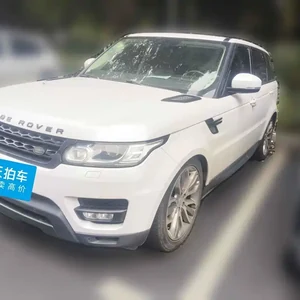
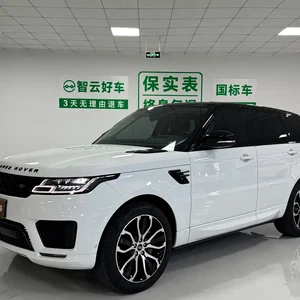
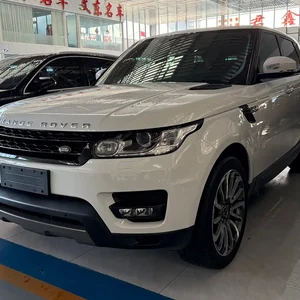
View all listings →Real units currently on ChinaCarDirect with per-unit asking prices and MOQ. Availability updates live from the catalogue.

How to buy a Land Rover Range Rover from China
-
1
Define the destination and configuration
Specify the destination country, required steering side, fuel preference, seating needs and intended customer. This determines which models can be imported and which options are commercially relevant.
-
2
Find the correct Range Rover derivative
Search the live inventory and confirm that the title describes the full-size Range Rover rather than Range Rover Sport, Velar or Evoque. Compare standard and extended-wheelbase listings separately.
-
3
Request VIN-level specifications
Ask for the VIN, model year, trim, engine, gearbox, drivetrain, mileage, condition, steering side and complete option list. Request supporting photographs and registration documents for the selected vehicle.
-
4
Compare itemized export quotes
Compare equivalent vehicles using the same currency, Incoterm and cost scope. The written quote should identify what is included for documentation, inspection, freight, insurance, duties and destination delivery.
-
5
Confirm MOQ and payment terms
Check the MOQ on each live listing and repeat it in the pro forma invoice. Agree on deposit, balance, inspection, cancellation and document-release conditions before transferring funds.
-
6
Verify compliance and ownership documents
Have a destination broker confirm import, tax, emissions and type-approval requirements. Verify the VIN, ownership title, registration status and complete export-document set before final payment.
-
7
Inspect, ship and register
Complete the agreed inspection before releasing the balance, then book suitable transport and retain loading and shipping records. Clear customs, complete local registration and arrange any necessary parts or service setup.
Range Rover vs rivals
| Mercedes-Benz GLS | A direct full-size premium SUV rival with strong road-going family appeal and established service options in many markets. Choose the GLS where local Mercedes-Benz support and road-focused ownership matter more; the Range Rover is more compelling for buyers prioritising off-road identity and flagship design. |
|---|---|
| BMW X7 | A close alternative for large-cabin luxury, technology and road comfort, particularly where BMW dealer support is convenient. The Range Rover better serves buyers focused on Land Rover's off-road positioning, while the X7 may be easier to justify for predominantly on-road use. |
| Cadillac Escalade | A full-size alternative aimed particularly at left-hand-drive markets and buyers interested in large V8 vehicles. It may be harder to source for right-hand-drive or diesel-sensitive destinations, while the Range Rover offers a broader selection of represented derivatives and configurations. |
Frequently asked questions
How is the export price of a Land Rover Range Rover determined?
The vehicle-level quote reflects model year, derivative, trim, engine, wheelbase, mileage or condition, options and ownership status, then may be adjusted by exchange rates, freight, insurance, terminal charges and the selected Incoterm. Destination taxes and registration costs may sit outside the listing price. Check the current amount and terms in the live Range Rover inventory and request an itemized written quote for the selected unit.
Which engine and range should I expect?
The represented vehicles are conventional petrol/gasoline or diesel models, with configurations including a 3.0-litre supercharged V6, 3.0-litre inline-six, 5.0-litre V8 and 3.0-litre TDV6 diesel. There is no single engine, fuel-consumption or driving-range figure across the family, and battery-electric range should not be inferred from these listings. Confirm the derivative, engine code, gearbox, fuel and certified consumption in the live listing and VIN documentation.
What are the main new versus used trade-offs?
New vehicles generally reduce uncertainty about wear and condition, but they still require inspection, transport, clearance and registration, and warranty coverage may not transfer. Used vehicles can provide access to a suitable year or specification at a lower acquisition outlay, but require a more thorough inspection and VIN-based parts plan. Compare the complete ownership cost rather than using condition status alone.
How does MOQ work for a Range Rover order?
MOQ is the minimum quantity required under a particular seller's terms and can vary by model, configuration and negotiation. Check the MOQ shown on the specific live listing and repeat it in the written quotation and pro forma invoice. For a single-unit or wholesale batch, confirm whether vehicles can be mixed and whether any container requirement applies.
What determines export shipping time and cost?
Transit time and cost depend on the origin and destination, transport method, carrier schedule, route, season, vehicle dimensions, insurance and terminal handling. Request a booking quotation and delivery estimate tied to the selected unit and Incoterm. Customs clearance and local homologation can continue after arrival, so ask the broker for a document-readiness timeline.
How should buyers plan Range Rover spare parts?
Parts compatibility is determined by the model derivative, build year, engine, VIN and sometimes market-specific equipment; a badge alone is not enough. Obtain the VIN and factory equipment references, then have a parts supplier confirm compatibility before ordering. Local Land Rover service access may reduce delays, but verify that the relevant catalogue covers the exact build.
Is right-hand-drive availability guaranteed?
RHD availability depends on how the vehicle was originally built and the seller's sourcing network. Ask for the steering configuration, VIN record and destination-country type approval rather than assuming a China-sourced unit is suitable. If no compliant RHD vehicle is available, an LHD vehicle should be considered only where local rules permit it.
How do I order a Land Rover Range Rover from China?
Start with the live inventory, then submit your destination, preferred derivative, powertrain, condition, quantity and budget requirements in an RFQ. Compare written quotes and confirm the MOQ, Incoterm, documents, inspection and payment milestones. Release funds only against verified business and contract details, then arrange transport, customs clearance and local registration.
Ready to source the Land Rover Range Rover?
Review the live Range Rover listings, then send your destination, preferred derivative, powertrain, condition and quantity to ChinaCarDirect for a current written export quote.
Request a quote