
Leapmotor B10 Export Buying Guide for Overseas Buyers
Export buying guide for the Leapmotor B10, with trim advice, EV specification checks, live price methodology, MOQ guidance, shipping and market-compliance essentials.
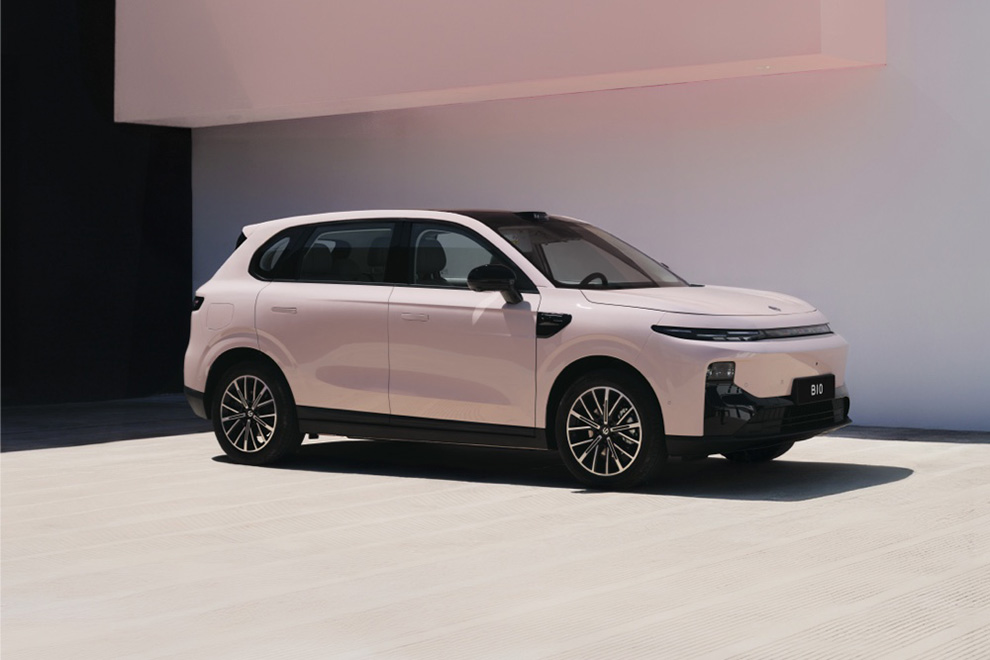
At a glance
- The B10 is a compact battery-electric SUV suited to urban dealers and mixed fleets.
- The named range includes 510 Joy, 510 Comfort, 510 LiDAR and 600 Joy editions.
- Current unit price, MOQ and availability must be checked in ChinaCarDirect’s live B10 listings.
- Export cost depends on specification, condition, freight, exchange rates, taxes and Incoterm.
- Factory LHD or RHD, destination homologation and after-sales support require early confirmation.
Why the Leapmotor B10 matters for export markets
The Leapmotor B10 occupies the compact battery-electric SUV segment, a useful middle ground for overseas dealers serving city drivers, company fleets and buyers who want a practical footprint with a new-energy drivetrain. Its export proposition rests on mainstream packaging, modern electronic equipment and a range of equipment grades rather than on a niche performance identity. For importers, that positioning matters: it is easier to build a repeatable sales proposition around a model intended to appear in several trims than around a one-off specialty vehicle without losing differentiation at the upper end for buyers.
Within that segment, demand tends to be strongest where consumers can charge at home or work, fuel costs matter, and local rules support electrified vehicles. The B10’s 510 and 600 grade families provide a practical way for buyers to compare configurations and expected use cases, while the 510 LiDAR Edition gives dealer demos a clear technology story. These benefits do not remove market-specific constraints, but they create a credible case for an “Leapmotor B10 for export” programme aimed at importers that can support software, charging guidance and after-sales parts rather than merely reselling vehicles.
An importer should judge the B10 as a channel product, not simply as the cheapest-looking specification on a screen. Ask whether the intended trim has the range, charging method, assistance hardware and cabin equipment expected by local customers; then test whether spare-parts lead times, software support and technician training fit the planned holding period. The vehicle can make sense for fleet use where operating routes are predictable and charging is controlled. For retail, the Joy, Comfort and LiDAR grades give a cleaner sales ladder than a dealer carrying only one configuration in one destination market.
- Compact BEV, urban-led positioning.
- LiDAR dealer-demo differentiation.
- Service support drives viability.
Model range, trims and powertrain variants: how the lineup is structured and how to choose
The B10 range is organised around the 510 and 600 naming families, with the identified export-facing grades comprising 510 Joy Edition, 510 Comfort Edition, 510 LiDAR Edition and 600 Joy Edition. This is the clearest way to understand the line-up: Joy and Comfort are separate equipment grades, while LiDAR identifies the sensor-equipped derivative and 600 denotes the separate higher-numbered family. Confirm the exact specification attached to the VIN and production documentation rather than relying on grade names alone before promising features to a buyer for that market.
Do not treat “510” or “600” as a substitute for a destination-market range figure. The number is part of the model designation, while official battery, motor, charging and range data can differ by market and test cycle; software and climate also affect real-world results. For an overseas buyer, request the homologation or technical sheet attached to the exact vehicle, then record both the claimed and independently approved range. That discipline prevents a buyer from advertising a Chinese-market CLTC figure in a country where the customer expects a different official test result for marketing.
For a fleet buyer, the decision can be framed around duty cycle rather than badge value. Compare usable energy, charging time and range under the local climate with the longest and most typical routes. For a retail buyer, examine seat and cargo practicality, ride comfort, infotainment language, driver-assistance functions and the availability of the LiDAR package. Also confirm whether the destination specification includes the hardware and software needed for local assistance systems. A stronger-looking configuration can still be poorer if features cannot operate safely, lawfully or reliably in the importing country.
- Verify battery and motor.
- Compare local range cycles.
- Match charging to routes.
New vs used Leapmotor B10: how export inventory is structured and how to choose
A Leapmotor B10 export programme may be built from factory-new vehicles, low-mileage demonstration cars, or previously registered examples, and each source serves a different commercial purpose. The live inventory page is the source for which categories are currently offered. New vehicles give the cleanest specification matching, warranty pathway and customer-facing story. Demonstration units can offer a more restrained entry point while remaining near-new, but their history, tyres and preparation condition must be documented. Used examples broaden acquisition options, yet their value depends much more heavily on actual battery condition, repair history, remaining manufacturer support in the destination market, and the warranty terms offered before resale.
Used Leapmotor B10 buyers should request the VIN, production date, exact grade, verified mileage, battery-health evidence, charging-cycle history and a document-backed service record. Review bodywork, cabin wear, tyres, brake condition and whether the car was used as a fleet or demonstration vehicle. Ask for an independent inspection rather than relying only on dealer photographs. The most important commercial question is whether the price reduction outweighs uncertainty about battery degradation, software entitlements, replacement parts and future resale support in the destination country or the cost of rectifying them before delivery to the overseas market.
For a dealer, the practical comparison is total inventory risk. Factory-new cars require less diagnosis and present a clearer warranty proposition, but they usually carry the highest acquisition commitment and may have a longer lead time. Used cars can release cash at a lower entry point, although refurbishment, battery uncertainty and uncertain replacement-part lead times can erase that advantage. A hybrid sourcing plan is sensible: preserve most purchases as new, use a demonstrator for coverage, and consider a used vehicle only where its history supports a clearly defined retail or fleet need.
- New units reduce warranty uncertainty.
- Used units need battery checks.
- Inspect non-new vehicles.
How export pricing works: the factors behind a live listing price, and how to read one
Export pricing for the B10 should be read as a structured commercial quote, not as a permanent market value. The starting vehicle price reflects the grade, production year, battery or motor specification, factory options and condition. The final delivered position may also reflect currency movements, freight, marine insurance, terminal or inland handling, destination charges and taxes. Incoterms determine where risk transfers, while factory allocation and seller margin affect availability. Comparing one B10 listing with another is only valid when those variables are aligned line by line and confirmed in the written quotation.
When reviewing a live listing, first confirm the model year, exact edition, battery version, motor, mileage, condition, steering position, colour and included options. Then check what the displayed amount represents: vehicle-only, port basis, or a delivered estimate to the stated destination. Look for a unique unit reference and ask the seller to repeat the specification in the quotation or sales contract. If the page does not resolve a field, treat it as unverified rather than filling the gap with an assumption from another trim, model year or export-market variant.
A landed-cost comparison should be rebuilt for each shortlisted configuration. Start with the live unit quote, then add the agreed freight mode, insurance, inland transport, port charges and estimated duties or taxes under the selected Incoterm. Test sensitivity to exchange rates and shipping routes because both can change before delivery. A lower vehicle quote may not produce a lower total if it carries a different battery, condition report or delivery scope. The binding amount is the one confirmed for the actual unit in the seller’s current quotation; use the live listings and an RFQ for those figures.
- Align specifications before comparing.
- Separate price from landed cost.
- Confirm Incoterm risk transfer.
MOQ, ordering and payment: single units vs consolidating a container
MOQ is a commercial term for the smallest sale the seller will accept, and it can differ between a private vehicle, a ready-to-ship vehicle and a consolidated export lot. Some listings accept one unit, while others require several or offer greater container-volume savings for buyers. Buyers should never infer a blanket MOQ from a marketplace category. Read the unit’s stated terms, ask the seller for the minimum order in writing, and clarify whether mixed grades are accepted. This protects a first-time importer from designing a launch around an unconfirmed purchasing rule.
Single-unit ordering is useful for test-market programmes, pilot fleets and buyers validating demand before committing capital. The usual sequence is specification confirmation, reservation or purchase order, payment, production or stock verification, inspection, release for export and shipment. Payment milestones and documentary requirements should be stated in the contract; buyers should verify the seller identity and reconcile the invoice with the agreed vehicle. A refund, cancellation or substitution clause is especially important if the ordered grade, steering position or destination-document package is not yet secured before committing funds or shipment.
For wholesale purchasing, consolidating a container can improve freight efficiency and create a broader retail mix, but it adds configuration and allocation risk. Match grade popularity to confirmed local demand rather than buying equal quantities mechanically; also reserve space for higher-demand derivatives and parts. Compare the container discount with port, handling, financing and storage effects, and decide which units or grades can be sold if another variant sells slowly. A mixed container needs loading, marking, insurance and damage-allocation instructions. For smaller quantities, a consolidator may offer more control than attempting an unsupported direct shipment.
- Confirm listing-specific MOQ.
- Pilot demand before scaling.
- Contract milestones and remedies.
Shipping, homologation and market compliance caveats: LHD/RHD and import rules by country
Steering configuration is one of the earliest checks in an export order. Most vehicles sourced from China are left-hand drive, while some markets require or strongly prefer right-hand drive. Do not assume a RHD B10 can be produced simply by changing the steering position: conversion can affect safety, controls, warranty, wiring and type approval. Ask whether factory RHD production is available for the destination, and request evidence in the VIN and production documents. If conversion is unavoidable, have a qualified local specialist assess it and confirm whether the market will accept the modified vehicle.
Chinese type approval does not automatically establish compliance in the destination country. The importer may need to address vehicle safety, emissions or exhaust-system rules where relevant, electromagnetic compatibility, charging-system requirements, battery transport documentation, software cybersecurity, local labelling and inspection. Import age restrictions, licensing categories, emissions zones and local incentive rules can also determine whether a particular B10 configuration is commercially useful. Treat homologation as a country-by-country workstream involving the vehicle, the seller and a competent customs or type-approval adviser, not as a checkbox completed at export or destination clearance in advance.
Shipping plans should be matched to battery-EV logistics and the buyer’s risk appetite. Sea freight is economical for longer routes, while rail, road or air may suit smaller lots or urgent launches, subject to carrier acceptance and route constraints. For batteries, confirm the transport classification, packing requirements and documents such as the UN 38.3 test summary where relevant. Complete a pre-shipment inspection, photograph sealing and condition, verify VIN plates and export documents, and ensure cargo insurance matches the Incoterm. Extra planning is worthwhile because a compliance hold can create storage and demurrage costs as well as delivery delay.
- Verify factory steering side.
- Approve destination configuration.
- Check battery transport documents.
Who should buy the B10 — and who should pick a different vehicle
The B10 is a strong candidate for an overseas dealer serving a market with reliable charging access, transparent EV pricing and enough technical support for an electric fleet. It is useful for company-car and mixed fleets where compact dimensions, predictable routes and a modern powertrain suit daily use. Retailers can use the Joy, Comfort and LiDAR grades for different customer priorities, provided hardware and software are approved locally. The strongest case is a market where the dealer can finance stock, train technicians and sell the vehicle without unsupported assumptions about Chinese-market equipment.
Different vehicles are better when a foundation is missing. A plug-in or conventional hybrid may be more practical where charging is sparse, winter conditions reduce range confidence, or customers cannot access home charging. A smaller EV can serve fleets with lower acquisition and charging requirements, while a larger SUV or premium crossover may suit buyers needing more cargo space, all-terrain capability or a stronger resale proposition. If the buyer values an established local service network over equipment differentiation, a rival with deeper parts and technician coverage may be the wiser import.
Before ordering, run a conservative total-cost assessment covering acquisition, freight, insurance, taxes, charging installation, service contracts, parts stock, technician training and expected residual value. Price the destination specification rather than the visible Chinese listing, and include enough time in the cash-flow plan for shipping, clearance and initial warranty work. A pilot order can test customer acceptance, charging compatibility and parts availability before a container is committed. If the B10 cannot be supported properly after arrival, a more conventional rival with mature local support may deliver a better ownership outcome despite less novel technology.
- Strong charging-market fit.
- Thin support weakens fit.
- Pilot before scaling volume.
Main rivals and how the B10 compares
The BYD Atto 3 is a natural benchmark because it is also a compact electric SUV sold to international buyers seeking a family vehicle and established brand familiarity. The B10 competes through its differentiated grade structure, with LiDAR-equipped derivatives providing a technology angle. An Atto 3 buyer may prioritise the strength of BYD’s international recognition and service expectations, while a B10 buyer may focus on equipment value and the appeal of a newer Chinese marque in many export markets. Neither advantage is meaningful without local parts, financing and aftersales support after import.
The Chery Omoda 4 EV is a closer size-and-use alternative, with a similarly modern compact-SUV format aimed at international retail and fleet programmes. Compared with the B10, selection should centre on the exact destination battery, range, equipment, warranty support and the strength of the local importer network. The Geely EX5 is another relevant electric-SUV comparator for buyers prioritising family practicality, electric-platform packaging and brand-level global ambitions. These comparisons are not universal wins: local rules, charger access, customer familiarity and delivered cost can outweigh a specification-sheet advantage in a specific market after approval.
A disciplined comparison uses the same brief for every candidate: destination specification, real-route range, charging access, homologation, landed cost, parts lead time, warranty and expected resale. The B10 is compelling when the buyer can exploit its LiDAR differentiation and grade ladder without underestimating the cost of establishing local support. Atto 3 ownership may be easier where BYD has a stronger service footprint; Omoda 4 or Geely EX5 may suit buyers with an importer relationship. The correct rival is therefore the model that best matches your market and operating setup, not automatically the one with the longest written specification.
- Atto 3: brand familiarity.
- Omoda 4: direct EV alternative.
- Geely EX5: family SUV comparator.
Live Leapmotor B10 export inventory
View all listings →Real units currently on ChinaCarDirect with per-unit asking prices and MOQ. Availability updates live from the catalogue.
How to buy a Leapmotor B10 from China
-
1
Set the destination and duty profile
Specify the import country, required steering side, charging setup, route lengths and local approval route. These constraints determine which B10 configuration is commercially viable before any vehicle is shortlisted.
-
2
Shortlist exact units in live inventory
Review current Leapmotor B10 listings and compare the named edition, battery version, motor, condition, mileage, options and steering position. Treat unlisted fields as unverified and request the production sheet for the VIN.
-
3
Request a written export quotation
Ask the seller to state the unit price, MOQ, payment milestones, document scope, production status and Incoterm. Obtain a validity period so exchange-rate or freight assumptions do not silently change.
-
4
Confirm compliance and landed cost
Have a destination-market specialist check type approval, taxes, charging and software rules. Build the landed comparison with freight, insurance, handling, inland transport and local charges.
-
5
Inspect before release
Use an independent pre-shipment inspection covering the VIN, condition, mileage, battery information, equipment and export documents. Record discrepancies before payment or shipment release.
-
6
Arrange transport and insurance
Select a carrier and route that accept battery-EV cargo, verify battery transport papers and align cargo cover with the Incoterm. Photograph sealing and container loading.
-
7
Clear, register and support the vehicle
Complete customs, local registration and any required inspections, then activate the warranty and parts plan. For a larger order, sequence stock by confirmed demand and preserve cash for clearance, storage and initial service.
B10 vs rivals
| BYD Atto 3 | A compact electric SUV benchmark with stronger international brand familiarity for buyers prioritising recognition and an established support expectation. The B10 differentiates through its grade ladder and LiDAR-equipped option, which may appeal where equipment-led differentiation is worth building a new service channel. |
|---|---|
| Chery Omoda 4 EV | A close compact electric SUV alternative for international retail and fleet programmes. Compare the destination battery, equipment, warranty and local importer network; the B10 is the stronger choice where its LiDAR derivative and specific grade mix create clearer customer differentiation. |
| Geely EX5 | A relevant electric family SUV for buyers weighing packaging, charging and brand reach against delivered cost. The B10 may appeal more when dealer-specific equipment positioning matters, while the EX5 can suit buyers already served by local Geely channels. |
Frequently asked questions
How is the export price for a Leapmotor B10 determined?
The live vehicle amount is built from the exact unit’s year, grade, battery or motor version, options, condition, seller terms and exchange rate. Freight, insurance, handling, destination charges and the Incoterm can change the landed total. ChinaCarDirect’s live B10 inventory shows the binding per-unit price, MOQ and availability; request a written quote for the selected configuration and destination.
What powertrain and range should I expect from the Leapmotor B10?
The B10 is a battery-electric compact SUV. The 510 and 600 names identify model families, but exact battery capacity, motor output, charging specification and official range must be taken from the exact vehicle and its destination-market documentation. Do not substitute a Chinese-market CLTC claim for the range approved for the importing country.
Should I buy a new or used Leapmotor B10?
Factory-new vehicles give the cleanest specification match, warranty path and customer-facing consistency, while used vehicles can reduce entry cost but add battery, history and support uncertainty. Review the VIN, mileage, battery-health information, service records and damage history for any used B10, and have an independent inspection. Current new or used availability must be checked in live listings rather than assumed from general market commentary.
What is the MOQ when ordering a Leapmotor B10?
MOQ is set by the seller and listing, not by a blanket rule for the B10. A seller may accept one vehicle, require several, or apply different terms to ready-to-ship stock and container lots. Confirm the minimum, mixed-grade rules, price basis and remedies in writing before committing funds.
How long does shipping take and what affects the cost?
Transit time and cost are route-specific rather than fixed for the model. The shipping mode, origin and destination ports, carrier space, battery documentation, insurance, freight surcharges and customs handling all affect them. Ask the forwarder for a door-to-door or port-to-port quotation with a stated route and validity period.
How are spare parts and service supported?
Do not assume a Chinese parts catalogue is equivalent to local service coverage. Before ordering, confirm diagnostic access, warranty handling, initial consumables, fast-moving spares and expected lead times for the destination. A staged first shipment can reveal demand while preserving a controlled parts budget.
Can I get a right-hand-drive Leapmotor B10?
Right-hand-drive availability depends on factory production and the destination, so it must be confirmed rather than assumed. Request evidence of the steering configuration in the VIN and production documents, and check local type approval. Converting a left-hand-drive vehicle afterwards can affect safety, warranty and market acceptance.
How do I order a Leapmotor B10 from China?
Start with the live B10 listings, shortlist the exact edition and unit, and send an RFQ with destination, steering and delivery requirements. Agree the specification, price, MOQ, payment milestones and documents in writing, then complete compliance review and pre-shipment inspection. Release payment and freight only against the agreed documents and inspection outcome.
Ready to source the Leapmotor B10?
Request a current quote to buy a Leapmotor B10 from China for your destination, preferred grade, MOQ and delivery terms.
Request a quote