
Leapmotor C11 Export Buying Guide for Overseas Dealers
Buy a Leapmotor C11 from China with confidence: compare BEV and range-extended trims, live export pricing, MOQ, shipping, homologation and rivals.
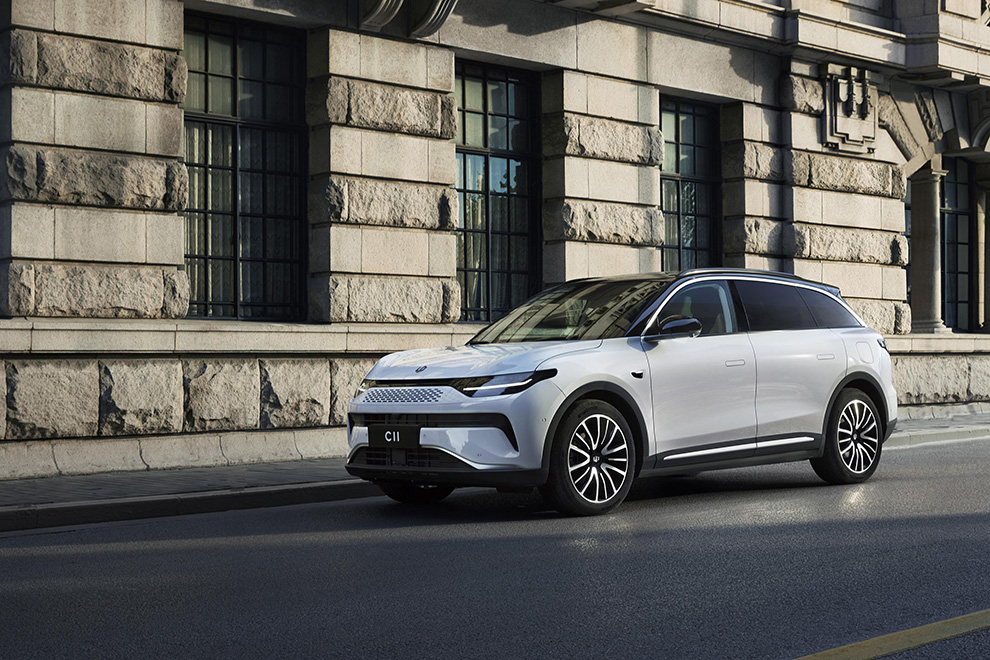
At a glance
- The C11 is a mid-size SUV offered in battery-electric and range-extended forms, giving importers two distinct operating concepts.
- Range-labelled BEV trims include 500, 515, 580 and 640 designations, while range-extended editions carry 180, 200, 285 or 300 labels.
- LiDAR-labelled editions distinguish higher driver-assistance positioning, but installed features and software availability vary by market.
- New and used C11 vehicles suit different fleet economics; condition, warranty and remaining battery health deserve more attention than trim names alone.
- Live export quotes should be compared on like-for-like specification, Incoterm, destination, exchange rate, freight and payment terms.
Why the Leapmotor C11 matters for export markets
The Leapmotor C11 matters to overseas buyers because it combines a familiar SUV format with two electric powertrain concepts: a battery-electric model for drivers with dependable charging access and a range-extended model for routes where charging gaps remain a concern. That choice changes fleet planning more than a conventional trim upgrade. Importers can match the C11 to charging-dependent private buyers, municipal fleets and long-distance operations without leaving the model family. It also gives a dealer a clearer way to explain customer needs than a badge-led comparison, since energy supply becomes part of the product decision rather than an afterthought.
Within its segment, the C11 is best understood as a value-oriented, mid-size family SUV rather than a niche performance car. Its export appeal comes from the breadth of its trim naming, which links range-oriented versions with comfort, premium, LiDAR and performance grades. For an overseas buyer, the relevant question is not which badge has the longest specification sheet, but which version can be supported locally, registered for the intended road use and delivered within a sensible operating budget after duty, insurance and maintenance costs. It is a model that rewards due diligence.
Global demand for vehicles in this class is shaped less by one universal trend than by local infrastructure, taxation and driver habits. Markets with dense public charging can support battery-electric deployment, while regions with long intercity routes may value the range-extended C11’s ability to combine electric driving with a combustion-based range safeguard. Before treating either version as export-ready, buyers should confirm steering configuration, charging standards, software support and aftersales coverage. A model that sells well in China still needs a credible ownership plan abroad for dealers and fleet operators alike.
- Two powertrain concepts.
- Charging guides selection.
- Approval and support are essential.
Model range, trims and powertrain variants: how the lineup is structured and how to choose
Leapmotor C11 specs are structured around energy type and a range-based version label, then equipment grade. The pure-electric family includes 500, 515, 580 and 640 designations, while range-extended editions appear with 180, 200, 285 and 300 labels. Some names also identify Comfort, Smart, Premium, Luxury, Prestige or LiDAR positioning, and an AWD Performance Edition. These labels help screen inventory, but they do not replace a model-year specification sheet or destination-market homologation record. A live listing should therefore be checked for powertrain, test cycle, motor output, battery data and included equipment before ordering.
For a battery-electric buyer, begin with the operating route rather than the highest trim. A lower-range version may be sufficient for urban sales or depot charging, whereas longer-range designations suit high-mileage fleets that need greater operational margin. LiDAR-labelled models may appeal where advanced driver assistance is important, but sensor presence does not prove that a particular function is enabled, approved or reliable in the destination country. The AWD Performance label points to a different traction and cost proposition. Always verify charging connection, software, warranty and actual specification for the quoted vehicle.
A range-extended C11 serves a different brief. It is designed to support electric driving while retaining a combustion engine for additional range, making route planning more flexible than a pure battery version when charging access is uneven. Buyers should still distinguish the stated electric-only range from total driving range and understand local taxation, fuel rules and emissions treatment, which can differ by country. The engine, generator output, fuel tank, charging specification and battery capacity must be confirmed for the exact listing before comparing it with a locally certified plug-in hybrid.
- Range labels filter inventory.
- Trim names signal equipment.
- LiDAR availability varies by market.
New vs used Leapmotor C11: how export inventory is structured and how buyers choose
Export inventory can include both factory-new C11 vehicles and used examples from earlier production or facelift periods. New units are generally easier to standardize when a dealer wants a predictable specification, current software and the seller’s warranty route. Used vehicles can make fleet expansion more economical when the business case depends on immediate acquisition and familiar depreciation assumptions. Neither category is automatically superior: the correct comparison begins with service life, operating profile, warranty responsibility and the buyer’s ability to inspect and maintain the vehicle through authorized or capable local service channels.
For a used C11, visual condition is only the first filter. Ask for battery state-of-health evidence, a diagnostic report, charging test results, photographs of the underbody and wheels, and a traceable service history. For range-extended cars, inspect the combustion engine, cooling system, exhaust, leaks and maintenance records as well as the high-voltage components. Verify whether software, driver-assistance functions, digital manuals and infotainment features are enabled for the intended market, since replacement parts or calibration may be limited after export. This is especially important for LiDAR-labelled cars and performance variants specifically.
The commercial choice becomes clearer when total operating cost is modeled over the intended holding period. A new vehicle may offer simpler standardization, a newer warranty and less uncertainty over battery degradation, while a well-maintained used vehicle can reduce acquisition exposure and suit a short deployment cycle. Compare tyres, suspension wear, insurance class, software support and expected downtime as well as the vehicle payment. For wholesale buyers sourcing a used Leapmotor C11, request the VIN or chassis number, title status, inspection record and a written condition statement before placing non-refundable funds with the supplier.
- New units aid standardization.
- Used units need evidence.
- Model costs over holding period.
How export pricing works: the factors behind a live listing price, and how to read one
A Leapmotor C11 export price guide should treat the listing price as the starting point for a transaction, not automatically the landed cost of putting the vehicle on the importer’s road. The amount can move with model year, pure-electric versus range-extended configuration, range version, equipment grade, LiDAR hardware, drivetrain, mileage and condition for used cars, and the seller’s commercial terms. Currency movements, payment conditions, warranty, inspection and documentation may also be embedded. Freight, insurance, destination charges, customs duty and taxes should be identified separately unless the quote expressly includes them. Buyers should not compare headline figures without this scope.
To read a live quote correctly, identify the Incoterm and named place first. EXW generally places more responsibility on the buyer, while FOB and CIF terms shift defined costs and transfer points; CIF also carries particular marine-insurance implications. Check whether the displayed amount is per vehicle, how long it remains valid, which taxes or charges are included, and whether the seller or buyer arranges inspection, documentation and transport. Every unit may differ, even when the model and trim names match. Ask the supplier to state exclusions in the written quotation.
Price comparison should be like-for-like. Compare the same model year, energy type, range version, equipment, condition, mileage, documentation and warranty, then add the same destination, freight and tax assumptions. A quote adjusted for currency exposure or payment risk is not equivalent to a cash price. Sellers may offer different commercial structures for single vehicles and consolidated orders, so negotiate against the complete proposal rather than one headline number. Current binding figures are shown on the live C11 inventory; request a written quote for the unit you intend to buy before commitment.
- Compare like-for-like listings.
- Confirm Incoterm and validity.
- Separate freight, duty and tax.
MOQ, ordering and payment: single units vs consolidating a container
Minimum order quantity is a commercial term in the quotation rather than a fixed characteristic of the C11. Some sellers may accept a single vehicle, while others set a unit threshold for a particular trim, production run or export preparation. A buyer should therefore read the MOQ shown for each live listing and have it confirmed in the pro forma invoice. Clarify whether the threshold applies per model, per specification or per order, and whether mixed versions can share the same production or shipping slot and what alternatives are available.
The ordering sequence should be controlled rather than improvised. Select a live listing, request the VIN or chassis number and full specification, then ask for a written quotation covering the vehicle, Incoterm, MOQ, deposit, balance trigger, document list, warranty and delivery estimate. After identity and contract checks, pay through the agreed method and use milestone-based releases. A pre-shipment inspection should occur before final balance, while shipping documents and original title or registration documents should be reviewed before release. The RFQ channel is the practical starting point for a custom request.
Consolidating several C11s into one container can improve shipment economics, but it creates an operational trade-off. Grouping similar year, trim, condition and destination reduces confusion at clearance and simplifies parts planning, while mixing variants may leave different homologation, software or warranty files. Less-than-container and full-container options should be compared with handling, storage, insurance and delay risk. High-voltage battery transport requires the carrier and forwarder to apply the correct dangerous-goods procedures, so confirm packaging, labeling and documentation before loading rather than assuming ordinary vehicle handling and verify compliance with the chosen route.
- Confirm quote-specific MOQ.
- Use a written invoice.
- Verify transport documentation.
Shipping, homologation and market compliance caveats: LHD/RHD and import rules by country
Left- and right-hand-drive availability is a market-specific issue, not a simple order option. China-origin C11 examples may be left-hand drive, and a right-hand-drive requirement cannot be solved merely by changing the steering wheel. The importer should confirm the steering position, accelerator and pedal arrangement, lighting, displays, driver-assistance calibration, local radio and software language. Live listings may offer different configurations, so ask for a clear dashboard photograph, VIN confirmation and written statement of origin before including the vehicle in an import plan. This protects against buying a car unsuitable for local registration.
Import rules vary by destination and cannot be transferred automatically from one country to another. The importer’s local specialist should check VIN and type approval, emissions or noise rules, battery and charging requirements, cybersecurity and software obligations, radio approval, advanced driver-assistance restrictions and any local safety or tax classification for range-extended vehicles. The vehicle’s Chinese configuration is not proof of homologation elsewhere. Responsibility for conversion or software work should be written into the contract, with evidence of what the seller will complete and what remains the importer’s legal duty there.
Shipping planning should begin before the vehicle is committed, because regulatory corrections can delay loading or release. The forwarder needs the correct VIN, model, powertrain, destination, Incoterm and port details, as well as the battery information required for transport documentation. Buyers should compare sailing and inland-delivery routes, secure covered loading, pre-shipment inspection, marine insurance and the cost of demurrage or storage if documentation is delayed. Transit time and freight cost depend on origin and destination ports, carrier space, route, season, container availability, fuel surcharges, customs clearance and inland transport—not simply the vehicle’s trim.
- Verify LHD or RHD early.
- Seek local homologation advice.
- Match battery data to transport.
Who should buy the C11 — and who should pick a different vehicle
The C11 is a strong candidate for overseas dealers and fleet buyers that want a modern SUV with a choice of fully electric or range-extended operation. It can suit organizations with dependable depot charging, businesses seeking lower-noise urban running, or regions where range anxiety makes a pure EV impractical. A distributor can also build a simple range ladder around the different range-labelled versions. That flexibility is valuable only when the buyer has selected the right energy type and can credibly support the vehicle through local parts, software, charging and technician coverage.
The C11 is a weaker fit for buyers whose priority is an established worldwide dealer network, predictable residual values, long-duration warranty coverage or immediate availability of every service part. A range-extended model may also be unsuitable where tax policy treats it differently from a pure EV, or where local emissions certification is difficult. Buyers needing a specific towing rating, payload certification, specialized commercial body or proven software ecosystem should verify those requirements before committing. Low purchase cost alone cannot compensate for a vehicle that is difficult to approve or maintain.
The right decision should follow duty cycle, not fashion. A courier with daily urban routes and controlled charging may obtain the most value from a battery-electric C11, while a regional sales fleet needing flexibility across charge and fuel networks may prefer a range-extended version. Dealer economics also matter: the importer must consider residual demand, remarketing, charging installation, insurance and service training before choosing inventory. Compare the C11 with locally proven rivals on total delivered cost and support. If the C11 wins on configuration but loses on parts and approval, a different vehicle is usually the sounder purchase.
- Suits managed charging fleets.
- Supports mixed-use routes.
- Verify support and payload needs.
Main rivals and how the C11 compares
The BYD Song Plus EV is a close battery-electric comparison because it targets a similar mainstream family-SUV buyer from China. Depending on the destination, Song Plus may benefit from greater brand familiarity or a more developed resale and service proposition, while the C11 offers the unusual option of moving between pure-electric and range-extended formats within one model name. Neither automatically wins: compare local homologation, range under the destination test cycle, charging, assistance systems, delivered cost and the importer’s ability to maintain each vehicle before selecting inventory for resale or fleet use.
The XPeng G6 is another relevant BEV rival, with a technology-forward image that can appeal to buyers focused on digital cabin features and driver assistance. The Leapmotor C11 counters with a broader powertrain choice and a trim ladder that includes LiDAR-labelled and performance-oriented versions. The comparison must remain local: software features, sensor functionality and even advertised range can change by market. A buyer should test the actual quote for availability, charging provisions, warranty support and parts rather than infer either brand’s strengths from global model announcements or social-media specifications alone.
The Volkswagen ID.4 represents the more established global alternative for buyers who place weight on brand recognition, conventional after-sales networks and proven resale prospects. The C11’s counterargument is its China-export value proposition and the ability to choose BEV or range-extended power, but those advantages can be offset by localization, certification and parts complexity. For a first-time importer, the ID.4 may offer a simpler support proposition; for a distributor seeking broader configurations, the C11 may create more opportunities. The final choice should follow a destination-specific landed-cost and service study before purchase.
- Song Plus EV: direct BEV rival.
- G6: technology-focused alternative.
- ID.4: established global benchmark.
Live Leapmotor C11 export inventory
View all listings →Real units currently on ChinaCarDirect with per-unit asking prices and MOQ. Availability updates live from the catalogue.
How to buy a Leapmotor C11 from China
-
1
Define the destination and use case
Record the import country, expected routes, charging access, annual mileage and relevant tax or emissions rules before selecting a C11 version.
-
2
Choose the powertrain
Compare battery-electric and range-extended configurations against the fleet’s charging network, route flexibility and local operating costs.
-
3
Shortlist live inventory
Review current C11 listings by model year, range designation, equipment, condition, steering position and seller location. Treat each listing as a separate vehicle rather than a generic model offer.
-
4
Request a written quotation
Ask the seller or RFQ team to confirm the VIN, full specification, MOQ, Incoterm, payment milestones, warranty, documentation and delivery estimate in writing.
-
5
Verify market compliance
Have the destination-country importer check VIN approval, emissions, charging, radio, software, cybersecurity and any special taxation of range-extended models.
-
6
Inspect before final payment
Use an agreed pre-shipment inspection to verify condition, equipment and option consistency, then release the balance only after the inspection and required documents are satisfactory.
-
7
Arrange compliant shipping
Provide the forwarder with the VIN, powertrain details, destination and Incoterm, then confirm battery transport paperwork, secure loading, marine insurance, export documents and inland delivery.
C11 vs rivals
| BYD Song Plus EV | A close pure-electric family-SUV alternative with potentially greater brand familiarity and an established resale proposition in some markets. The C11 gains flexibility from its range-extended options, while Song Plus may offer a more familiar ownership and support proposition. |
|---|---|
| XPeng G6 | A technology-oriented BEV rival with a strong appeal for digital-cabin and driver-assistance buyers. The C11 counters with a broader powertrain choice and performance-oriented versions, but actual software, charging and support must be compared locally. |
| Volkswagen ID.4 | A more established global BEV choice for buyers prioritizing brand recognition, conventional after-sales networks and resale confidence. The C11 offers broader configurations and China-export value, but may require more localization, certification and parts planning. |
Frequently asked questions
How is Leapmotor C11 export pricing determined?
The live price reflects the vehicle configuration, year, condition, seller terms, currency and any services included in the quote. Freight, insurance, duty, tax, port charges and inland delivery may sit outside it, depending on the Incoterm. Check the current per-unit figure on the live Leapmotor C11 listings and require a written quote naming the destination and all exclusions.
Which powertrain and range options are available?
The range includes pure-electric versions labeled 500, 515, 580 and 640, plus range-extended versions labeled 180, 200, 285 and 300. These are version identifiers; the applicable test cycle, electric range, battery capacity and charging details must be confirmed for the exact vehicle and destination market. LiDAR and AWD Performance labels describe particular configurations, not a blanket feature for every C11.
Should an overseas buyer choose a new or used Leapmotor C11?
New vehicles suit buyers prioritizing standardized specification, warranty handling and newer model years; used vehicles can suit buyers managing acquisition cost and shorter holding cycles. A used C11 should be supported with battery health, diagnostic, charging, accident, service and software evidence, plus a written condition statement. Compare total cost over the planned holding period rather than assuming one category is always better.
How does MOQ work for a Leapmotor C11 order?
MOQ is set within each quotation and may vary by trim, seller, production slot and export preparation. Read the MOQ shown on the selected live listing and get it confirmed on the pro forma invoice, including whether mixed versions are permitted. A single-unit request can be submitted through the RFQ channel, but acceptance and payment terms must be agreed rather than assumed.
How long does shipping take and what determines the cost?
Shipping time depends on origin and destination ports, vessel space, route, season, documentation, customs clearance and inland delivery. Cost is affected by freight, fuel surcharges, insurance, handling, storage, demurrage and the selected Incoterm. Obtain a forwarder estimate tied to the VIN, vehicle type, destination port and delivery address rather than relying on a generic lead time.
Are spare parts available for exported Leapmotor C11 vehicles?
Parts can be ordered through the supplier or importer, but availability depends on model year, trim, market, software and whether the car was built for left- or right-hand drive. Before purchase, request a parts and service plan covering common wear items, sensors, body parts, charging accessories and software support. This prevents a low acquisition price from becoming a high maintenance or downtime cost.
Can overseas buyers obtain a right-hand-drive Leapmotor C11?
Right-hand-drive availability varies by source and market, and a Chinese left-hand-drive vehicle should not be assumed convertible without an approved conversion and local inspection. Check the current live listings for steering position and ask the seller to confirm it in writing. Local homologation, radio, software, lighting and driver-assistance compatibility still have to be assessed separately.
How do I order a Leapmotor C11 from China?
To buy Leapmotor C11 from China, start with a live listing or RFQ, confirm the exact specification, destination, Incoterm and MOQ, and request a written quotation. After contract and payment checks, use milestone payments, complete a pre-shipment inspection, and release the balance only after documents and vehicle condition are verified. The seller or forwarder should then coordinate compliant loading, marine insurance, export documents and final delivery arrangements.
Ready to source the Leapmotor C11?
Submit an RFQ for your chosen Leapmotor C11 version, destination and quantity to receive a current unit-based quotation.
Request a quote