
Leapmotor C16 Export Guide for Overseas Buyers
Export buying guide for the Leapmotor C16, covering BEV and range-extended trims, live pricing logic, shipping, compliance, MOQ and fleet fit checks.
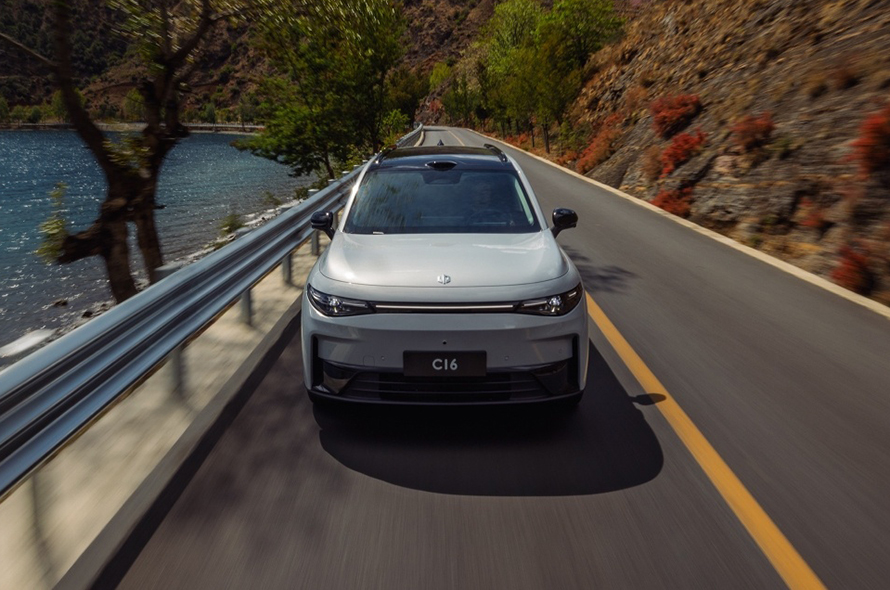
At a glance
- The C16 pairs pure-electric and range-extended options with five- or six-seat layouts.
- Buyers looking to buy Leapmotor C16 from China should model charging access and service support.
- Leapmotor C16 specs should be compared by trim, range label, seat count, and destination homologation.
- Range numbers in trim names require verification against battery condition and destination-certified figures.
- Live C16 listings carry current per-unit prices and availability; landed cost requires a separate quote.
- New-versus-used decisions should center on condition evidence, warranty, operating fit, and residual risk.
Why the Leapmotor C16 matters for export markets
Leapmotor C16 is a large family SUV that gives export buyers a useful combination: pure-electric and range-extended powertrains, five- or six-seat layouts, and trim levels that range from practical to LiDAR-equipped. That combination places it between a conventional premium crossover and a full-size SUV, without asking every buyer to change charging habits or seating priorities. For dealers, it creates a broader addressable market; for fleet operators, it creates more powertrain scenarios to qualify. Its export relevance is the ability to match routes, charging access, luggage needs, and local rules in real operations.
Demand is strongest where buyers need SUV space and flexibility but cannot rely on one energy model. Pure-electric C16 versions suit routes with dependable charging and predictable daily mileage, while range-extended versions reduce charging anxiety on longer journeys by combining electric driving with a combustion-based range extender. In markets transitioning toward electrification, offering both can let a dealer match corporate fleets, taxi operators, and family buyers without fragmenting the range too early. The key question is not which powertrain is globally best, but which one fits the buyer’s actual operating pattern within each market.
The C16’s six-seat versions can suit passenger businesses, executive transfers, and families that regularly carry more than five occupants, while five-seat versions may be easier to load and offer a different luggage equation. LiDAR-equipped trims may be attractive where buyers value advanced sensing hardware, but sensor presence does not by itself guarantee homologation or feature parity overseas. Export success therefore depends on local product education, charging partnerships, and after-sales support rather than range labels alone. That makes serviceability, software support, and realistic route planning decisive commercial questions for every importer before any shipment.
- BEV and EREV options.
- Five- or six-seat layouts.
- Trim-specific LiDAR hardware.
Model range, trims and powertrain variants: how the lineup is structured and how to choose
The C16 lineup is easier to navigate by separating body and seating from energy type. Factory designations distinguish Pure Electric from Range-Extended versions, while names such as Premium, Deluxe, Luxury, LiDAR, and Zhizun indicate different equipment levels. Some exported catalogues translate these Chinese trim names inconsistently, so buyers should compare the underlying standard equipment list, not assume two similarly named editions are identical. Model year and destination configuration can also change what a label represents. Ask for a line-by-line specification sheet tied to the exact vehicle being quoted before contract signature.
For a pure-electric C16, the listed range designations form the first decision ladder: 520, 580, and 630 versions. The higher-numbered designation can suit buyers with more charging confidence or longer routes, but the practical decision should also consider battery condition, real-route consumption, charging access, and payload. On a new vehicle, verify the battery warranty and destination-certified range; on a used vehicle, treat the range label as an original specification rather than proof of present capacity. A live listing should be checked against the production specification, current condition report, and route conditions.
Range-extended C16 versions are listed with 200 or 280 electric-range designations, and the distinction matters because that figure is not the vehicle’s maximum combined travel distance. They are most attractive to operators who want electric daily running without depending solely on public charging during long routes. Seat count and LiDAR content can vary independently, so a buyer should decide whether the priority is electric range, luggage capacity, passenger flexibility, or a specific driver-assistance package. Then request the exact engine, battery, charging data, and certification status for that trim before comparing quotes.
- BEV designations: 520, 580, 630.
- EREV designations: 200, 280.
- Confirm exact equipment by trim.
New vs used Leapmotor C16: how export inventory is structured and how buyers choose
ChinaCarDirect’s export catalogue can contain both factory-new C16 vehicles and used examples sourced through domestic ownership channels. The distinction should drive the first risk review, not simply the headline saving. New vehicles normally reduce uncertainty around initial battery wear, accumulated mileage, and prior repairs, while used vehicles can suit buyers with a tighter replacement budget who accept more condition risk. Neither category is automatically cheaper once freight, duty, financing, and resale assumptions are included. Compare total ownership cost and supporting evidence for each case, not the listing label alone during due diligence.
A used C16 requires stronger verification because its catalogue range label describes the original configuration, not necessarily today’s usable performance. Ask for battery health information, current charging behavior, diagnostic reports, accident and flood-history checks, tire condition, cabin wear, and evidence of service. The LiDAR-equipped trims also warrant checks of sensor condition and whether every listed function works after transfer. Missing records should be treated as a negotiation and risk issue, not left for a buyer to discover after delivery. Written confirmation before payment is more valuable than optimistic photographs alone before any commitment.
New inventory offers the cleanest route for fleet standardization because battery condition, mileage, and trim specification can be fixed before deployment. It is especially useful where buyers need standardized charging procedures, predictable software baselines, or a warranty chain that can be transferred clearly. However, a new export vehicle is not automatically homologated for the destination, and delivery schedules can still move. Buyers should confirm production date, specification sheet, warranty terms, and the exact vehicle identity before committing. A signed order should mirror every item in the live listing, quote, and importer terms.
- New units support fleet standardization.
- Used units require detailed verification.
- Compare total ownership cost.
How export pricing works: the factors behind a live listing price, and how to read one
A Leapmotor C16 export price guide should treat the listed vehicle amount as a starting point, not automatically a landed cost. The quoted vehicle price can move with model year, trim, powertrain, battery or range version, mileage, condition, and whether equipment is standard or optional. Exchange-rate movements and seller-specific terms also affect the figure. Freight, insurance, export handling, destination duty, taxes, registration, and port charges normally sit outside the displayed vehicle price unless the offer explicitly says otherwise. A disciplined buyer should convert each live quote into a like-for-like total before comparing any supplier or approving a deposit before any commitment.
Read a live C16 listing line by line: confirm whether the figure is ex-works, FOB, CIF, or another basis, and identify what the seller includes. Check whether the image and description identify the same trim, seating layout, LiDAR package, and condition. A year in the name is useful but insufficient; battery health, service history, and cosmetic condition can matter more for a used vehicle. Treat unusually broad claims or inconsistent photos as reasons to request primary documents. Ask for a written quote that ties price to the vehicle identifier and terms before releasing funds.
The best comparison sheet separates vehicle price, inland transport, export charges, ocean or air freight, insurance, destination taxes, customs duty, registration, and dealer margin. Request both the seller’s Incoterm and the port of destination; otherwise two apparently low numbers may not describe the same obligation. For a fleet, also model charging equipment, residual value, downtime, and financing separately. Exact current vehicle prices and availability should be taken from the live inventory, not from an old article or cached comparison. Use the same assumptions for every supplier and every vehicle considered for final approval.
- Trim, year, condition, and mileage drive price.
- Incoterms allocate cost and risk.
- Build a landed-cost worksheet.
MOQ, ordering and payment: single units vs consolidating a container
For Leapmotor C16 wholesale ordering, minimum order quantity is a commercial term to confirm for the selected listing rather than assume as a catalogue-wide rule. Many export marketplaces allow a buyer to reserve one vehicle, while container-consolidation arrangements have different payment, handling, and allocation conditions. The relevant questions are whether the unit can be sold alone, whether its price is tied to one physical vehicle, and whether payment creates a binding purchase order. ChinaCarDirect should show the current terms and exceptions for each live unit before any payment is made.
Single-unit purchasing gives a dealer a low-volume test of trim acceptance, service capability, and residual demand, but it exposes the importer to container inefficiency. Consolidating several C16 units can improve freight economics and give a fleet more configuration control, yet it adds inventory risk if one trim sells slowly. Decide the mix only after comparing demand by seat count and powertrain. A balanced container may pair a higher-demand BEV with more specialized LiDAR or six-seat EREV units rather than ordering one variant in volume. That is more prudent than speculative inventory duplication across the container without demand proof.
A structured order should identify the vehicle or allocation rule, production year, trim, seat count, colour, condition, and agreed price. Confirm whether a deposit is refundable, when it becomes non-refundable, and which party holds title or export custody. Payment methods, beneficiary details, and invoices should match the signed terms, with no request to send funds to an unverified account. For container orders, specify inspection timing, loading evidence, and the point at which unsold allocations remain the buyer’s responsibility under the allocation clause.
- Confirm the selected unit’s MOQ.
- Consolidate against real trim demand.
- Document deposits, title, and custody.
Shipping, homologation and market compliance caveats: LHD/RHD and import rules by country
Before reserving a C16, establish whether the destination expects left-hand-drive or right-hand-drive configuration and whether a locally converted model is acceptable. Steering position, instrument and control layout, lighting, safety equipment, and software can all affect suitability, and a Chinese-market listing does not prove local eligibility. For RHD markets, ask directly whether the seller can source or arrange a compliant RHD example; never assume a left-hand-drive vehicle can simply be registered or converted without local approval. Dealers should record the steering requirement in the purchase specification before issuing any binding final purchase order.
Import rules are country-specific and may cover vehicle type approval, emissions or noise, cybersecurity and software updates, safety equipment, labeling, taxation, and registration. Electric powertrains do not bypass these checks, and local rules can narrow what features or configurations may be used. The importer or its local homologation partner should review the VIN, manufacturer documents, battery and charging declarations, and any required certificates before shipment. Certification should be confirmed for the exact destination variant, not inferred from another C16 sold elsewhere. Local advice is inexpensive insurance against costly rework later before final shipment.
Choose the shipping method against delivery urgency, route reliability, vehicle value, and cargo-insurance terms. Ro-ro or containerized sea freight is generally the economic choice for standard vehicles, while enclosed or air transport may suit urgent, low-volume shipments but can sharply raise cost and handling risk. The Incoterm should state where risk and cost transfer, and the quote should separate inland haulage, port handling, documentation, freight, insurance, and destination charges. Confirm that battery-related transport requirements and the carrier’s vehicle-handling rules are satisfied, including destination handling. Allow realistic time for inspection, loading, transit, customs, and port congestion.
- Specify LHD or RHD.
- Confirm destination homologation.
- Separate freight, insurance, and port costs.
Who should buy the C16 — and who should pick a different vehicle
The C16 is a strong candidate for buyers who value a spacious family SUV, need either five- or six-seat flexibility, and want access to both BEV and range-extended architectures within one model family. It can suit ride-hailing, executive transport, hotel and company fleets, and family-car dealers where charging access varies by customer. The strongest case is operational rather than emotional: a business can route BEV-equipped vehicles for depot charging and EREV vehicles for wider geographic coverage while retaining common branding and platform familiarity. That can simplify training and parts planning for larger fleets.
It is less suitable for buyers whose priority is a small, highly efficient urban car, a commercial van, or a proven off-road platform. The size and equipment of a C16 may also be excessive for narrow parking structures or premium buyers seeking a smaller luxury footprint. Used-unit buyers with incomplete service evidence should consider another vehicle unless they can absorb the uncertainty. Before buying, match the vehicle to legal load, route, charging, and service constraints rather than relying on segment reputation. A competitor may reduce compliance, insurance, and operating costs before procurement.
Make the final choice with a total-cost worksheet covering acquisition, freight, taxes, insurance, charging hardware, maintenance, tyres, downtime, and expected resale. For EREV, include fuel use and generator servicing; for BEV, include charging time, electricity cost, and route efficiency. The destination’s approved sales channel and parts network may be as decisive as the vehicle itself. If the importer cannot support the chosen configuration, a simpler rival with stronger local backing may be the better commercial purchase. This discipline also reveals whether one C16 trim supports volume better than several mixed variants across the portfolio.
- Strong for varied charging access.
- Useful for larger passenger groups.
- Choose rivals for urban or off-road needs.
Main rivals and how the C16 compares
Against the Li Auto L6, the C16’s clearest distinction is its six-seat option and broader emphasis on large-family-SUV space. The L6 is also a credible alternative for buyers focused on BEV or range-extended family mobility, but it is generally positioned around a five-seat format. A dealer should compare aftersales coverage, homologated range, charging provision, and local incentives rather than treating similar price positioning as equivalence. The C16 fits buyers who regularly prioritize third-row flexibility over the L6’s more compact packaging. Local parts support can reverse that preference in new markets.
Versus the XPeng G9, the C16 offers a broader energy proposition and the ability to specify a six-seat large SUV, while the G9 is more strongly identified with the premium BEV large-SUV segment. Buyers with reliable charging and a preference for a predominantly electric fleet may find the G9’s established positioning easier to explain. The C16 can be more flexible where range anxiety, mixed routes, or passenger capacity drive the requirement. Software, assistance features, service access, and homologation still require direct comparison. Neither imported badge guarantees a smooth ownership experience in each market.
Compared with the BYD Tang, the C16 is a more streamlined family SUV with a focused BEV/EREV portfolio and LiDAR-led trim progression. The Tang remains a relevant large-SUV alternative, particularly for buyers comfortable with BYD’s plug-in hybrid route or wanting a larger seven-seat-oriented cabin. The C16 may appeal more to operators who value electric-first fleet branding and selectable six-seat packaging. Dealer support, spare-parts logistics, resale expectations, and destination approvals should carry as much weight as the brochure comparison. For an importer, the best rival is the one that is easier to support locally after local validation.
- Li Auto L6: five-seat family focus.
- XPeng G9: BEV-led large SUV.
- BYD Tang: plug-in hybrid alternative.
Live Leapmotor C16 export inventory
View all listings →Real units currently on ChinaCarDirect with per-unit asking prices and MOQ. Availability updates live from the catalogue.
Leapmotor Leapmotor C16 2026 Model Year EV 630 LiDAR Edition 6-Seater

How to buy a Leapmotor C16 from China
-
1
Define the operating case
Record the destination country, routes, charging access, daily mileage, passenger count, and budget. Decide whether BEV or EREV is the primary fleet architecture.
-
2
Shortlist exact trims
Use the live inventory to compare matching model years, trims, seat counts, and LiDAR packages. Treat the range labels as a starting point and open each listing for its current details.
-
3
Verify the vehicle and market compliance
Request the VIN or production date, specification sheet, condition evidence, warranty terms, and homologation documents. Confirm LHD or RHD requirements and destination approvals before payment.
-
4
Build a landed-cost quote
Ask the seller to state the vehicle price, Incoterm, destination, freight, insurance, duties, taxes, and handling charges separately. Use the same cost basis for every supplier being considered.
-
5
Confirm MOQ and contract terms
Ask whether the selected unit can be purchased alone and what rules apply to container consolidation. Put the vehicle, allocation, deposit, title, custody, warranty, and refund conditions in writing.
-
6
Inspect before loading
Use an independent inspection to reconcile the VIN, condition, battery, sensors, tires, and included equipment with the order. Document the inspection result before authorizing vehicle release.
-
7
Ship and complete the import
Confirm export documents, loading evidence, insurance, customs clearance, and destination registration arrangements. Track the shipment through port handling and retain the records needed for after-sales support.
C16 vs rivals
| Li Auto L6 | The Li Auto L6 is a close family-SUV alternative with BEV and range-extended choices, but it is generally a five-seat proposition. The C16 stands out for buyers who regularly need six-seat flexibility, while local parts support and homologation should decide the final comparison. |
|---|---|
| XPeng G9 | The XPeng G9 is a credible large BEV alternative for buyers with dependable charging and a preference for a five-seat-oriented premium SUV. The C16 offers broader powertrain choice and a six-seat option, giving it more flexibility for mixed-route or higher-passenger fleets. |
| BYD Tang | The BYD Tang is a relevant large-SUV alternative with plug-in-hybrid and BEV choices, including a more traditional high-capacity cabin format. The C16 may appeal more to operators seeking a streamlined BEV/EREV portfolio and selectable six-seat packaging, but local service, parts, and resale support remain decisive. |
Frequently asked questions
How is Leapmotor C16 export pricing determined?
Leapmotor C16 export pricing is driven by model year, trim, powertrain and range version, mileage, condition, options, and the seller’s commercial terms. Currency movements can also affect the displayed amount, while freight, insurance, duty, taxes, and registration are added only if the written offer includes them. Check the current per-unit price and availability in the live Leapmotor C16 listings, then request a quote tied to the vehicle identifier and destination.
Which powertrain and range options are available?
The lineup includes Pure Electric versions carrying 520, 580, or 630 range designations and range-extended versions carrying 200 or 280 electric-range designations. The EREV figures describe electric driving range, not the maximum combined range with the range extender. Confirm battery capacity, motor output, charging data, and the destination-certified range for the exact vehicle because specifications can vary by model year and market.
What are the main new versus used Leapmotor C16 trade-offs?
A new C16 generally offers the cleanest condition history and fleet standardization, while a used Leapmotor C16 can reduce initial acquisition cost but adds battery degradation, repair, and service-history risk. Used buyers should request diagnostic reports, battery-health evidence, accident and flood checks, and maintenance records. Neither option is automatically more economical until freight, duty, warranty, downtime, and resale costs are included.
How does MOQ work when ordering a Leapmotor C16?
MOQ is set within each commercial arrangement, so ask whether the selected C16 listing can be purchased as one vehicle and what conditions apply. Container consolidation can have separate allocation, payment, inspection, and freight terms, so it should not be assumed to offer the same mechanics. The live listing and written order confirmation are the authoritative places to check the current quantity terms.
What determines shipping time and cost?
Shipping time and cost depend on the chosen sea or air route, origin and destination ports, cargo handling, insurance, documentation, customs clearance, and congestion. Sea freight is generally the lower-cost option for standard vehicle shipments, while air or specialist enclosed transport can be faster but usually costlier. Ask the supplier for a complete cost and timing estimate under the stated Incoterm.
Are spare parts available for the Leapmotor C16?
Confirm that the destination can support the exact C16 configuration, including battery, range-extender, electronic, body, and LiDAR-related parts where fitted. Parts availability, software support, technician training, and cross-border lead times should be covered in the after-sales plan before dispatch. For a fleet, holding agreed spare-parts quantities and a clear escalation process can reduce downtime.
Is a right-hand-drive Leapmotor C16 available?
Do not assume that a China-origin C16 will be available in right-hand-drive form for every destination. Ask the supplier to confirm an RHD example or a locally approved conversion, and have the importer verify steering, lighting, safety, software, and type-approval requirements. A physical conversion does not automatically preserve the original vehicle’s homologation or warranty position.
How do I order a Leapmotor C16 from China?
Start with the live Leapmotor C16 listings, shortlist matching trims, and request the specification sheet and vehicle identity. Next, confirm destination compliance, LHD or RHD needs, MOQ, payment, title, custody, warranty, and the Incoterm in writing. Only then make the binding payment and complete inspection, export documentation, loading, freight, customs, and registration.
Ready to source the Leapmotor C16?
Send ChinaCarDirect your destination, powertrain, seat count, quantity, and Incoterm preference for a current Leapmotor C16 export quote.
Request a quote