
Leapmotor T03 Export Buying Guide for Overseas Buyers
Compare Leapmotor T03 trims, battery variants and export pricing, then plan sourcing, shipping, homologation and fleet purchasing with confidence.
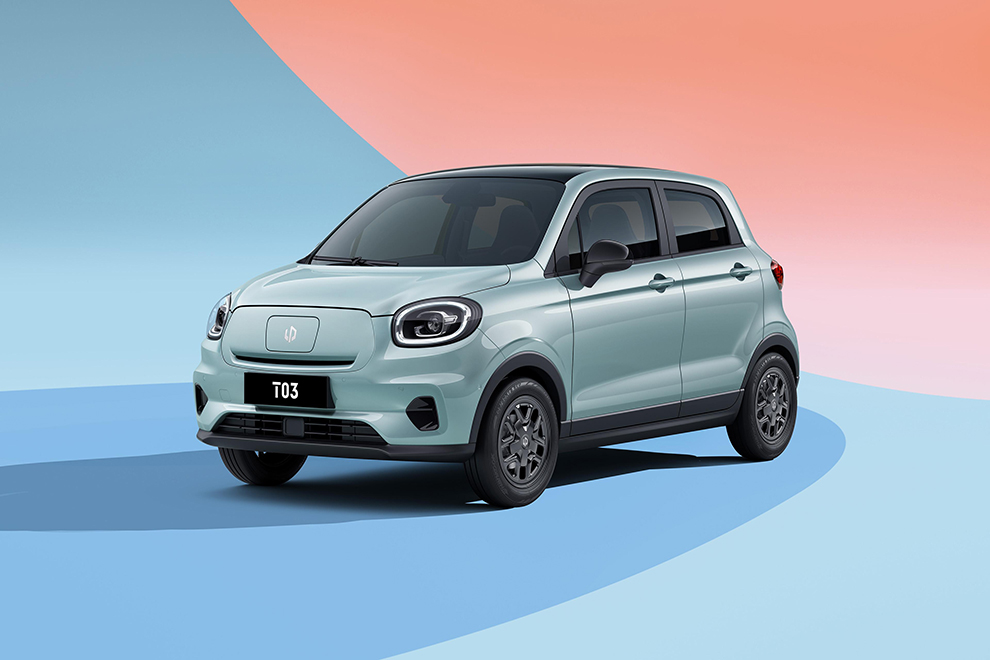
At a glance
- The T03 is a compact battery-electric hatchback suited to urban private buyers and short-route fleets.
- Range-led 200-, 310-, 400- and 403-labelled editions allow an initial budget-versus-duty-cycle match.
- The 400 Lite Edition LFP identifies a chemistry option, but used-car value still depends on battery condition.
- New units simplify configuration history; used units require mileage, service, title and battery-health evidence.
- Exact price, MOQ and availability are vehicle-specific and should be confirmed in the live T03 listings.
- RHD availability and destination-country homologation must be established before an export commitment.
Why the Leapmotor T03 matters for export markets
Leapmotor T03 occupies a practical middle ground in the global compact electric hatchback segment. It is small enough for urban parking and short routes, yet its range-led trim structure gives importers more than one generic EV listing. For dealers, the model can serve as an accessible entry point for private customers, a city fleet proposition, or a lower operating footprint than larger EVs. Its value rests on practical range, charging access and landed cost, not premium positioning, with suitability determined by the destination market and operating model rather than badge alone.
Demand for the T03 for export should be evaluated market by market rather than inferred from Chinese availability. Cities with dense traffic, constrained parking, short average journeys and dependable charging access are the most natural environments for a compact BEV. It can appeal to municipal, delivery, hotel, real-estate and shared-mobility operators, although each group has different uptime and payload needs. Fleet buyers should also examine software connectivity, insurance rules, driver training and whether local technicians can service high-voltage systems before committing to a large order or forecasting residual value in each market.
For overseas buyers, the T03’s importance also lies in offering a manageable alternative to large crossover EVs and expensive imported premium models. That does not make it universally suitable: charging connector standards, road rules, climate, insurance, homologation and after-sales support can alter the proposition. The export decision should therefore be built around a market-specific landed-cost and compliance review, not around the badge or range number alone. Buyers who compare the live inventory should confirm that the exact vehicle can be registered and supported in their destination market before payment is made.
- Compact BEV for urban operations.
- Range labels aid fleet matching.
- Homologation remains market-specific.
Model range, trims and powertrain variants: how the lineup is structured and how to choose
The T03 lineup is organized around battery-and-range-oriented editions rather than a broad diesel or petrol range. Across the available model names, buyers will encounter the 200 Light Edition, 310 Comfort Edition and Lite Edition, 400 Comfort and Luxury Editions, a 400 Lite Edition LFP, and a 403 Smart Edition. These badges help separate the vehicles, but a model year or export market can change equipment and homologated figures. Treat the numeric label as a shortlist clue, then verify usable battery capacity, rated range, charging and equipment against the individual vehicle.
For a buyer matching vehicles to duty cycles, a lower-range version may make sense where daily mileage is short, charging is available at base or overnight, and purchase cost is the priority. A mid-range edition offers more tolerance for weather, detours and incomplete charging, while the highest-labelled versions suit routes where range anxiety would otherwise limit utilization. Range badges should not be compared as if they were identical certified figures: the underlying test cycle, local homologation and wheel or battery configuration can change the value buyers actually receive in practice.
Battery chemistry and condition become decisive, especially for used cars. The 400 Lite Edition LFP name provides a clear chemistry identifier to investigate, while other editions may use a different lithium-ion formulation; the seller should supply the exact pack description and warranty terms. LFP can be attractive where durability and thermal performance are priorities, but chemistry alone does not determine value. Check state of health, charging consistency, under-bonnet or under-floor component condition, and evidence of repair history. For a used T03, a battery report is more useful than the range badge alone.
- Numeric labels guide shortlisting.
- Verify homologated range per market.
- Used cars need battery-health evidence.
New vs used Leapmotor T03: how export inventory is structured and how buyers choose
New and used Leapmotor T03 vehicles should be evaluated as different procurement products. A new vehicle offers a cleaner history and makes configuration, delivery timing and warranty administration easier to coordinate, which is valuable for a dealer building a repeatable range or a fleet operator standardising equipment. A used vehicle can make more sense for a buyer seeking a lower entry cost, an available budget car or a fleet driver’s unit. The key is not the age label alone but whether the seller can document condition, title history and battery status consistently.
Used inventory requires a stricter evidence chain. Ask for the production or model year, exact trim, odometer reading, battery state-of-health report, charging test, accident and flood checks, service records, and photographs of the underside, wheels, cabin and battery area. Confirm whether the car has been used as a fleet or rental vehicle and whether software updates or recalls are complete. A lower purchase price can be offset by battery refurbishment, replacement tyres, cosmetic repair or downtime, so reserve a repair and downtime contingency rather than comparing only the vehicle’s headline economics.
A mixed new-and-used sourcing strategy can balance commercial risk. Dealers may use new vehicles for launch stock, then add selected used examples to widen price points or meet immediate demand. Fleet operators can apply tighter age, mileage and service criteria than retail buyers, while rental-oriented channels may accept earlier model years if charging compatibility and running costs are attractive. Whatever the mix, standardise an acceptance checklist and reject any listing that cannot substantiate its year, condition, title and configuration. New, used and model-year availability must be checked on the live T03 listings.
- New units simplify configuration history.
- Used units require documented condition.
- Live listings show current status.
How export pricing works: the factors behind a live listing price, and how to read one
A ChinaCarDirect listing price should be treated as the starting point for a vehicle transaction, not automatically as a complete delivered price. The amount commonly moves with production year, exact trim, battery or range version, mileage and condition, and whether the unit is new or used. Market exchange rates also affect how a China-based quote is translated or settled. On top of the vehicle price, the buyer may need to budget export handling, inland transport, freight, insurance, destination charges, customs clearance, duties and taxes, depending on the agreed Incoterm and destination.
To read a live quote correctly, first establish what it includes: vehicle only, export-ready, or delivered to the named port or warehouse. Check the stated year, trim, range label, condition, odometer, battery version and availability. Then look for a seller-specific minimum order, payment schedule, validity period and named shipping terms. If the quote excludes freight or destination expenses, model them separately rather than assuming they are hidden in the vehicle figure. A request that shows the same vehicle under several Incoterms can make comparisons with local rivals much clearer and less ambiguous.
Wholesale pricing should be negotiated from verified demand rather than assumed from a low catalogue figure. For a multi-unit order, request a written break by trim and condition, separate unit pricing from logistics, and identify which costs are fixed and which scale. Obtain the current binding figures from the [live T03 inventory](https://chinacardirect.com/products?q=T03&brands%5B%5D=80) and an RFQ; do not rely on an old enquiry, an indicative range or a remembered figure. Confirm the currency, validity, inspection rights, refund terms for non-conforming vehicles and whether the quoted battery specification matches the physical unit before shipment.
- Separate vehicle cost from logistics.
- Confirm currency, Incoterms and validity.
- Request a written landed quote.
MOQ, ordering and payment: single units vs consolidating a container
Minimum order quantity is a transaction term, not a permanent model attribute. A marketplace vehicle may be offered to a single-unit buyer, while a containerized order or seller with allocated stock may carry a different minimum. Do not infer a universal T03 MOQ from one catalogue view. Read the MOQ shown on each live listing and include it in the RFQ, along with the exact quantity, mix of trims and destination. If a seller asks for more units than the operation needs, request a split shipment or smaller lot where commercially possible.
Single-unit purchasing is best treated as a controlled test order: request a vehicle-specific quotation, confirm the identifier and specification, agree inspection and payment milestones, and reserve the unit in writing before collecting or shipping it. For a container or consolidated order, define packing-list and VIN-level requirements, approve a representative vehicle where possible, and state how substitutions will be handled. Consolidation can improve freight efficiency, but it reduces flexibility if one trim is oversupplied. Grouping compatible vehicles by condition, year and specification is usually more useful than buying a single mixed batch.
Payment terms should protect the parties without hiding commercial terms. A common sequence is a deposit, inspection or documentation stage, balance payment before release, followed by shipping against agreed documents; the exact sequence must be agreed in writing. Buyers should use a traceable payment channel, verify the beneficiary matches the contracting seller, and understand how refunds, exchange-rate changes, taxes and title issues are handled. The RFQ should also specify who books freight, selects the carrier, pays port charges and bears delay or storage risk, so no cost is left implicit at handover.
Shipping, homologation and market compliance caveats: LHD/RHD and import rules by country
Export logistics depend on vehicle size, quantity, destination port and urgency. Small electric hatchbacks may move in containerised or specialist roll-on/roll-off shipments, while a single vehicle can be consolidated with other cargo if the carrier and route permit. The battery remains a regulated dangerous-goods element, so carriers must declare the chemistry, energy condition and applicable packaging or vehicle rules. Freight quotations should state origin and destination charges, route, insurance coverage, loading method, and the cutoff for late inspection or document corrections. Neither vehicle price nor battery range predicts the landed logistics cost.
Homologation is a country-by-country gate, not a formality attached to the Chinese model name. The importer must establish local type approval, VIN and registration documents, emissions or electric-drive requirements, cybersecurity and software provisions, charging-conductor compatibility, lighting, crash and equipment rules, and any local labelling or insurance needs. A vehicle built for Chinese use may not satisfy every destination requirement without approved modifications. Obtain the homologation dossier for the exact configuration, and have the destination broker or authority confirm what the importer—not the exporter—must complete before registration or temporary admission.
Steering configuration is easy to overlook. China-origin vehicles are commonly associated with left-hand drive, but a right-hand-drive T03 should not be assumed available merely because the model can be exported. Ask the seller to confirm the steering position, pedal and control layout, lighting, charging connector, software and market specification. An RHD conversion can add cost and still leave questions over warranty, software, insurance or inspection. Because local rules and incentives vary, buyers should establish duties, VAT or sales tax, battery or vehicle-age restrictions, port procedures and fleet incentives before signing.
- Confirm charging and software compatibility.
- Verify RHD configuration before ordering.
- Check duties and destination rules.
Who should buy the T03 — and who should pick a different vehicle
The T03 is a candidate for urban dealers, shared-mobility operators, hotel transport, last-mile delivery fleets, and private buyers who can charge predictably. Its compact hatchback format eases parking and maneuvering, while the range-led editions allow a match between budget and duty cycle. The business case is strongest where routes are repeatable, vehicles return to a depot each day, and the operator can control charging and maintenance. For a mixed fleet, starting with a representative route and monitoring energy use, availability and service incidents is more informative than extrapolating from a showroom test.
It is less suitable for operators needing long unscheduled routes, heavy payloads, rapid charging turnarounds, rough-road capability, or a commercial platform designed for intensive daily use. Buyers in markets with weak charging coverage should model the real charging network rather than rely on the range label. Those requiring a larger cargo area, seven seats, a high-riding position or proven nationwide service should consider another body style. Safety expectations, software support and local parts availability may also outweigh a lower purchase price, especially for a business whose downtime cost is high.
A purchase decision therefore combines vehicle suitability with business resilience. Compare total cost over the holding period, not purchase cost alone: include energy, insurance, charging equipment, tyres, inspections, repairs, residual risk and export administration. Confirm access to high-voltage support and a supply of agreed spare parts before scaling the order. If the T03 meets route, payload, charging and compliance needs with margin, its compact format and trim choice make it an export product. If any of those assumptions fail, moving up to a larger EV or a different drivetrain may reduce risk.
Main rivals and how the T03 compares
Among the closest global comparators, the BYD Dolphin is a more conventional compact electric hatchback with a broader mainstream-brand footprint in many markets. It may appeal to buyers prioritising a longer-established after-sales network, a different cabin or boot proposition, and the confidence of a larger corporate presence. The T03’s counter-arguments are its especially small footprint and the visible choice of range-led editions, which can simplify entry-level fleet segmentation. The deciding factor is local homologation, charging support and landed cost rather than badge alone. Neither model should be shortlisted without checking destination-market service coverage.
The Dongfeng Box is a closer small-EV alternative for buyers focused on urban use and value-oriented procurement, with a hatchback/crossover character that can appeal where a slightly more elevated-looking vehicle is preferred. It is a useful T03 benchmark on packaging, equipment and local-brand recognition. However, the destination market may offer one in a different equipment or homologation state, so a like-for-like comparison must use the actual export specification. Between the two, test the dealer’s ability to source parts, support software and satisfy fleet servicing needs, not merely which quote is lower.
The Wuling Bingo represents the smaller, city-focused end of the segment and may give budget buyers a minimalist alternative with different packaging and homologation options. It can be appropriate where parking footprint and cost matter more than luggage space, refinement or extended route capability. The T03 offers a broader small-hatch proposition and a set of range labels for matching fleet needs, while the Bingo may have stronger familiarity in some local channels. Compare seating, luggage, charging, crash documentation, service access and total cost in the destination market before making the choice.
- Compare homologated specifications, not badges.
- Assess local service and parts access.
- Match body size to operating duty.
Live Leapmotor T03 export inventory
View all listings →Real units currently on ChinaCarDirect with per-unit asking prices and MOQ. Availability updates live from the catalogue.
How to buy a Leapmotor T03 from China
-
1
Set the market and duty cycle
List the destination country, steering requirement, daily distance, payload, charging access and operating period. This turns the trim and range decision into a compliance and total-cost case.
-
2
Shortlist live inventory
Review the live T03 listings by condition, model year, range-led edition and commercial terms, shortlisting new and used examples for the same use case. Treat each live record as the starting point, not proof of the final specification or availability.
-
3
Verify unit-level configuration
Ask for the VIN or build date, exact edition, battery chemistry and capacity, used-car state of health, charging interface, motor output, steering side, software and documents. Have the seller reconcile those details with the physical vehicle and proposed quotation.
-
4
Request a written landed quote
Send an RFQ with quantity, trim mix, destination, Incoterm and required paperwork. Ask for vehicle price, MOQ, payment milestones, freight, insurance, customs, duties or taxes, inspection rights and quote validity as separate items.
-
5
Approve inspection and payment
Agree who inspects the vehicle, what evidence is required and what happens if it is non-conforming. Use a secure, traceable payment method and make the final payment conditional on documented acceptance before release.
-
6
Plan freight and consolidation
Decide whether to move one unit or consolidate compatible vehicles, then obtain route-specific origin and destination charges. Confirm the loading method, cargo declaration, insurance, document cut-off and who bears storage or delay charges.
-
7
Complete compliance and handover
Have the destination broker confirm type approval, registration, duties, VAT or sales tax, charging compatibility and any local incentives. Release the vehicle only after its identity, condition, documents and shipping records have been reconciled.
T03 vs rivals
| BYD Dolphin | The BYD Dolphin is a more conventional compact electric hatchback and generally carries stronger brand familiarity in markets where it has an established network. The T03 is easier to justify for buyers wanting a smaller footprint and clearly range-led editions, but the Dolphin may be the safer service choice where BYD support is deeper. |
|---|---|
| Dongfeng Box | The Dongfeng Box targets a similar small, value-oriented BEV segment with a hatchback/crossover-style package. Compare the T03 for fleet range segmentation and the Box for local recognition and the exact market specification; neither should be selected without homologation and service checks. |
| Wuling Bingo | The Wuling Bingo is a smaller, more minimalist city EV and can appeal where parking footprint and entry cost dominate. The T03 offers a more conventional five-door proposition and a clearer spread of range labels, while the Bingo may have better familiarity and configuration availability in some local markets. |
Frequently asked questions
How is Leapmotor T03 export pricing determined?
A vehicle quote is driven by model year, trim, battery/range version, mileage, condition, new-or-used status and the applicable exchange rate. Freight, insurance, customs clearance, duties and taxes depend on the Incoterm and destination, so request a written landed-cost breakdown. Current binding per-unit figures are shown in the [live T03 listings](https://chinacardirect.com/products?q=T03&brands%5B%5D=80); confirm the specific vehicle and quote validity before paying.
What powertrain and range specifications should I check?
The T03 is a battery-electric compact hatchback with a single electric motor, front-wheel drive and single-speed reduction gear. Its visible editions use range-led 200-, 310-, 400- and 403 labels, including a 400 Lite Edition LFP. Exact battery capacity, motor output, test-cycle range, charging interface and homologated range vary by year and market, so check the live listing and request written confirmation.
Should I choose a new or used Leapmotor T03?
A new unit is easier to standardise for dealer stock and fleet deployment because configuration, history and warranty administration are clearer. A used unit can reduce initial cost, but buyers should verify mileage, service and title records, accident or flood exposure, software status and battery state of health. Treat the listing condition and supporting documents—not the model year alone—as decisive.
What is the MOQ for a Leapmotor T03 wholesale order?
MOQ is set by the seller, vehicle allocation and transaction rather than being a permanent model rule. Check the MOQ on each live listing and state the required unit count and trim mix in the RFQ. If a container lot is larger than demand, ask whether the seller can split the shipment or accept a smaller lot.
How long does shipping take and what determines the cost?
There is no single shipping time or rate for this model because route, carrier capacity, port handling, vehicle count and documentation readiness can all change the schedule. Ask for freight, insurance, origin handling, destination charges, customs and any storage assumptions as separate line items. Confirm the loading plan and latest date for inspection and document corrections before paying the balance.
Can overseas buyers obtain spare parts for the T03?
Parts support depends on the seller’s stock, the vehicle’s build date and the destination’s official parts channel. Before ordering, request a parts list covering tyres, brake, suspension, body, charging and high-voltage items, and ask about diagnostic software, firmware and battery-related support. Also confirm lead times and whether left-hand-drive and right-hand-drive components may differ.
Is a right-hand-drive Leapmotor T03 available for export?
Do not assume RHD availability merely because the model is offered for export; China-origin inventory is commonly left-hand drive, and RHD supply or conversion must be confirmed for the exact vehicle. Check steering position, controls, lighting, connector, software and market approval with the seller and destination authority. An unapproved conversion can create registration, insurance and warranty problems.
How do I buy a Leapmotor T03 from China?
Start with the [live Leapmotor T03 listings](https://chinacardirect.com/products?q=T03&brands%5B%5D=80), shortlist suitable vehicles, and send an RFQ stating the destination, quantity, edition mix, condition preference and required documents. Obtain a vehicle-specific quotation with MOQ, payment milestones, Incoterm, inspection rights and shipping scope. Approve the exact vehicle and supporting paperwork before release, then complete destination homologation and customs clearance.
Ready to source the Leapmotor T03?
[Request an RFQ](https://chinacardirect.com/contact) with your destination, quantity, preferred edition and document requirements for a current, vehicle-specific Leapmotor T03 export quotation.
Request a quote