
Lexus ES Export Buying Guide for Overseas Dealers
Buy a Lexus ES from China with practical guidance on hybrid trims, export pricing, MOQ, shipping, compliance and model-year checks for overseas buyers.
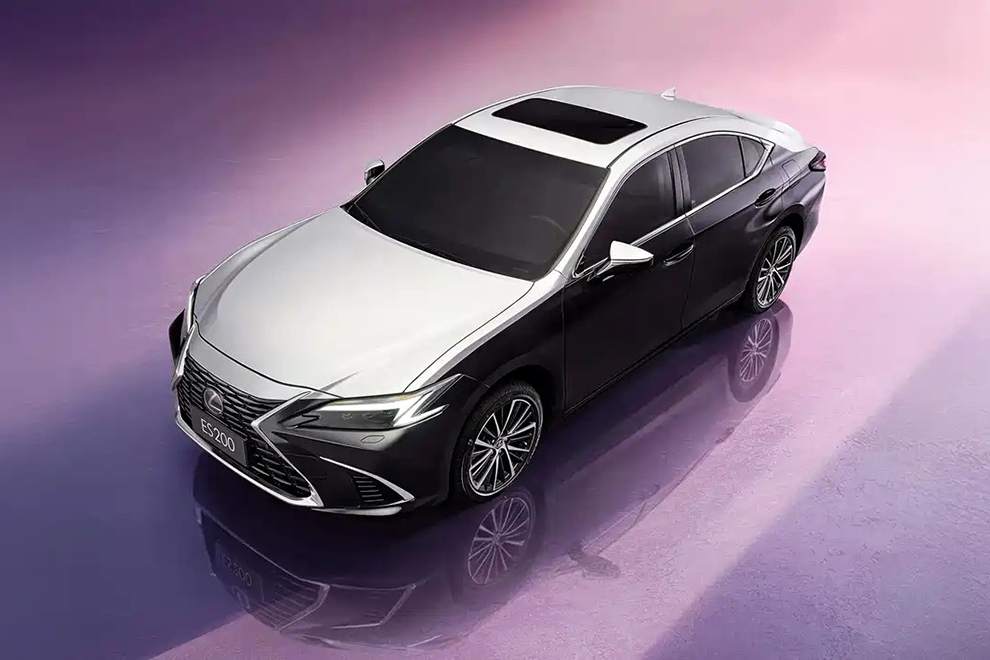
At a glance
- The Lexus Es is a midsize luxury sedan offered with gasoline and self-charging hybrid versions, so the drivetrain should match the buyer’s duty cycle.
- The 200, 260, 300h, 350, F SPORT and Mark Levinson designations need model-year verification because equipment and powertrain combinations change.
- A live export quote is unit-specific: year, trim, condition, hybrid version, freight, Incoterm and exchange-rate movement all affect the final commercial basis.
- MOQ, deposit terms and availability belong to the individual supplier and listing and should be confirmed before any unit is reserved.
- LHD or RHD configuration, destination homologation, customs treatment and aftersales support should be resolved before an overseas shipment is committed.
Why the Lexus Es matters for export markets
The Lexus Es occupies a useful middle ground in the global executive-sedan market: it combines a Lexus badge, a comfort-focused midsize sedan and a choice of gasoline or self-charging hybrid powertrains. For overseas dealers, it is easier to position than a full-size luxury car while still appealing to company-car, chauffeur and executive-fleet customers. Its appeal is strongest where buyers value cabin refinement, predictable fuel use and a premium badge without moving to a larger vehicle. The trade-off is that the Es does not lead in performance or cargo flexibility, so the target buyer must value comfort and ownership experience over maximum dynamism.
Export demand for the Es is supported less by a single specification than by a flexible set of use cases. A self-charging hybrid can suit high-mileage business users who want fewer stops at the pump and no dependency on charging infrastructure, while gasoline versions offer a conventional proposition for markets with limited hybrid awareness. Fleet buyers should model taxation, insurance, fuel policy and residual values locally, because the drivetrain that looks economical in one country may not carry the same case in another. Compare total operating cost rather than rely on a generic fuel-economy label.
For a Chinese export buyer, the Es creates a straightforward cross-border proposition because the model is familiar to international drivers and has a long-standing luxury-sedan format. Dealer teams can explain it through established Lexus design cues, hybrid technology and comfort-led positioning rather than rebuilding a niche product story. The important discipline is to avoid treating the Chinese-market nameplate as identical to every global variant: equipment, grade names and regional specifications must be checked against the precise vehicle being sold. That protects customer expectations and prevents an unsuitable import from reaching the sales floor.
- Executive-fleet focus.
- Hybrid or gasoline.
- Year-specific checks.
Model range, trims and powertrain variants: how the lineup is structured and how to choose
Lexus Es trim labels should be decoded by model year, not ranked as if every generation followed one global chart. Export listings can include 200, 260 and 300h grades, 350 versions, F SPORT derivatives and Mark Levinson-equipped cars. The 300h name identifies a self-charging hybrid, while the 350 designation generally denotes the 3.5-litre V6. The meaning of 200 and 260 can shift with market and generation, so buyers should request the VIN, engine description, transmission and hybrid-system details before treating a trim badge as equivalent to a specification in their market.
The 300h family is a core export consideration for buyers who want Lexus hybrid character without plug-in charging. Its appeal lies in smooth electric assistance, regenerative braking and no routine charging dependency. Within the range, front-wheel drive, all-wheel drive, suspension, wheels, interior trim and sound-system equipment can separate otherwise similar cars. For fleet uniformity, match these items rather than ordering solely by grade name, and confirm whether a listing includes the manufacturer warranty expected in the destination market for new inventory; verify it separately for any used car before contracting.
Other grades serve different missions. F SPORT versions emphasize a sportier appearance and driving setup than comfort-led Es trims, making them more relevant to discerning private buyers than homogeneous company fleets. Mark Levinson versions add a premium audio focus for executive use, while the 350 is relevant to buyers who specifically want the larger V6 engine rather than a hybrid. The 200 and 260 labels can represent lower-positioned or market-specific configurations. Always confirm standard equipment, option content, battery version and drivetrain on the individual listing before agreeing on the final order configuration.
- 300h: hybrid.
- 350: V6 generally.
- Match fleet configurations.
New vs used Lexus Es: how export inventory is structured and how buyers choose
A Lexus Es export purchase can be structured around new, previously unregistered or used vehicles, but each category carries different risks. New examples normally offer the clearest condition history and the simplest warranty conversation, particularly for a dealer building a standardized fleet. They may represent a narrower set of model years and configurations than the broader used market. The right choice depends on delivery timing, budget approval, desired specification and how much uncertainty your finance, insurance and aftersales teams can absorb. Do not classify a vehicle solely from a thumbnail or seller category label.
Used Lexus Es sourcing unlocks older model years and may provide a lower entry point for price-sensitive buyers, but it requires much stronger inspection. Ask for the VIN, registration documents, service records, odometer evidence, photographs of the underbody and a diagnostic report. For a hybrid, review battery condition information and confirm that the hybrid system, inverter and engine are covered by a clear condition statement. A low purchase figure is not a saving if repair, battery or compliance work becomes necessary after arrival. Treat documents and physical condition as separate approval gates.
Dealers should build a procurement ladder that meets the vehicle program before chasing individual bargains. Start with a target year, body style, drivetrain and equipment list; then decide which deviations are acceptable and which are prohibited. For example, a fleet may accept several paint colours but not mixed hybrid systems, while a retail buyer may prioritize a specific wheel or audio option over production year. Keep the acceptance rules visible in the RFQ, because a mixed shipment can save administration time while creating costly variation at handover to sales staff and workshop teams.
- New: less uncertainty.
- Used: inspect fully.
- Set RFQ tolerances.
How export pricing works: the factors behind a live listing price, and how to read one
A Lexus Es export price is a live commercial calculation, not a fixed catalogue value. The vehicle-side starting point normally reflects model year, trim, engine or hybrid version, drivetrain, mileage, condition and optional equipment. Market conditions then add or remove cost: supplier availability, exchange-rate movement, local charges, inspection, documentation and the seller’s commercial terms. For a used car, service history, paint condition, tyres and hybrid-battery status can materially change value. The same trim badge therefore should not be treated as guaranteeing the same quoted amount. Compare like-for-like vehicles and document every difference.
Freight and Incoterms determine what the quoted vehicle price actually buys. A seller may quote only the vehicle at the origin warehouse, while a delivered quote can include transport, export handling, insurance and destination charges under a named trade term. Port, destination, route, seasonal capacity and the need for special vehicle or battery documentation all affect logistics cost. Buyers should ask whether port charges, customs clearance, inland delivery, taxes and registration are excluded. Those items belong in a landed-cost worksheet even when the supplier labels them outside the vehicle price.
To read a live Lexus Es listing properly, work from the vehicle identifier outwards. Confirm the full model code, model year, trim, engine, hybrid type, drivetrain, mileage, condition, factory options, warranty and included documents. Then check the quoted Incoterm, named place, availability status, payment conditions and stated lead time. Treat any promotional figure as subordinate to the unit-specific terms and ask for a written quotation that remains valid through payment. Current exact prices and availability should always be taken from the live Lexus Es listings, not from an old article or cached market snapshot.
MOQ, ordering and payment: single units vs consolidating a container
The minimum order quantity for a Lexus Es is a per-supplier and per-listing commercial term, not a universal feature of the model. Some export sellers may deal directly with a single vehicle, while factory-backed, wholesale, allocated or containerized programs can impose different unit requirements. Because inventory moves and supplier policies change, ask the seller what MOQ applies to the exact configuration and whether it differs for a test unit, a repeat fleet order or a mixed-model container. ChinaCarDirect’s live listing and RFQ process should be used to confirm the binding quantity, not an assumed catalogue rule.
Container consolidation can reduce freight and handling costs per vehicle, but it magnifies configuration and timing risk. Grouping vehicles of the same year, trim, drivetrain and finish simplifies parts planning, warranty administration and onward distribution. A mixed load may improve fit for several customers, yet it can complicate inspections, customs descriptions, insurance allocation and delivery sequencing. A serious RFQ should state the preferred mix, acceptable substitutions, shipment size and whether the buyer can release freight space in stages. That gives the supplier enough information to design a practical loading plan.
Ordering should follow a controlled payment and document sequence. After the unit and commercial terms are confirmed, request a pro forma invoice showing the vehicle, options, price basis, Incoterm, deposit, balance timing, refund conditions and expected documents. Confirm which payment method is accepted, who bears bank charges, and when title or release documents are issued. Recheck production status immediately before the balance payment, and use a written inspection and discrepancy process. These controls matter more than a small procedural shortcut because a single mismatch can delay customs release or handover.
- MOQ varies by listing.
- Consolidate compatible units.
- Control payment stages.
Shipping, homologation and market compliance caveats: LHD/RHD and import rules by country
Chinese-market Lexus Es vehicles are commonly encountered with left-hand-drive steering, but an overseas buyer must not assume the steering configuration from the origin country. Right-hand-drive demand is a separate sourcing requirement and may require finding a suitable factory version, waiting for an RHD allocation or accepting a different vehicle. Changing a steering system is not a routine export solution because it can affect safety certification, wiring, controls and warranty. State the required hand of drive in the RFQ and have the VIN, build specification and physical configuration verified before payment.
Import rules are determined by the destination country and can include customs classification, duties, value-added or goods taxes, emissions rules, safety requirements, noise standards, registration documents and local inspection. A vehicle that is roadworthy in China may still need age restrictions, emissions approval or modification checks elsewhere. Buyers should obtain a written estimate from a customs broker or vehicle-compliance specialist before committing funds. Ask which documents the importer will accept, whether the VIN and model designation match the paperwork, and whether the powertrain is subject to special local charges or restrictions.
Shipping a battery-equipped hybrid also requires coordination between the vehicle carrier, insurer and freight forwarder. Ask whether the battery state of charge, emergency-response information, vehicle roll restrictions and electrical-safety documents must accompany the shipment. The carrier should confirm vessel or roll-on/roll-off suitability, lashing requirements, weather protection and the documentation needed at both ends. Neither sea nor road transit time is fixed: vessel space, customs holds, port congestion, inland road capacity, inspections and weather all affect the schedule, so build a contingency into launch dates for a vehicle launch rather than relying on a generic estimate.
- Specify steering hand.
- Check local compliance.
- Coordinate battery paperwork.
Who should buy the Es — and who should pick a different vehicle
The Lexus Es fits buyers who put refinement, quietness, a premium badge and low-friction hybrid operation ahead of sporty handling or maximum cargo utility. It is especially relevant to executive-company fleets, chauffeur operators, hotel and VIP transport businesses, and dealers serving customers who already understand Lexus. The car can also appeal to private buyers wanting an efficient luxury sedan with a conventional fuel stop. The strongest business case comes from combining the right powertrain with predictable annual mileage, good residual-value support and access to maintenance in the destination market over time.
Different operating priorities call for different vehicles. A buyer with reliable charging and a zero-emission policy should compare a battery-electric executive sedan rather than accepting compromise from a conventional hybrid. A performance-focused customer may prefer a rear-drive sports sedan with sharper steering and a more engaging powertrain. Families or operators carrying substantial cargo may prefer an SUV or MPV. If the destination has limited Lexus dealer coverage, a similarly priced mainstream hybrid sedan may offer easier servicing and parts planning despite a different brand position. This is often more important than a small equipment difference.
Before ordering an Es, compare the complete ownership case rather than the badge. Obtain local fuel, tax, insurance, servicing and registration assumptions; ask what hybrid support and technician training are available; and investigate spare-part lead times for the exact model year. For a used vehicle, include battery assessment and unplanned repair risk. A dealer should also consider whether its customers value Lexus resale demand strongly enough to carry a higher sourcing and marketing commitment than for a volume-brand alternative. The Es is strongest as a deliberate premium choice, not as a generic fleet discount purchase.
- Executive fleets fit.
- Alternatives suit other needs.
- Check local support.
Main rivals and how the Es compares
The BMW 5 Series is the closest comparison for buyers focused on executive-car prestige and a more driver-oriented character. It gives some markets a broader choice of rear-wheel-drive and all-wheel-drive configurations and a performance-led model ladder, while the Es places stronger emphasis on hybrid smoothness, quietness and comfort. Which is cheaper depends on specification, taxation, incentives and local service costs, so a headline comparison is misleading. A dealer should test the buyer’s priorities: badge dynamics versus fuel efficiency, hybrid familiarity and a calmer cabin. That produces a more useful sale than an unsupported winner.
The Mercedes-Benz E-Class is another direct alternative for premium business users, particularly where brand recognition and a formal executive-saloon image carry commercial weight. Mercedes typically competes through a conventional luxury presentation and a broad model hierarchy, whereas Lexus differentiates with hybrid engineering, understated styling and a comfort-first cabin. The buyer should compare exact rear space, standard equipment, fuel consumption, tax bands and aftersales access rather than assume either brand is inherently more desirable. For chauffeurs and company-car managers, service convenience and driver efficiency may matter more than premium-badge image.
The Audi A6 is a direct rival for business fleets and premium private buyers who prioritize a modern, technology-led executive saloon. Audi can emphasize a broader mix of efficient combustion and electrified powertrains, while Lexus differentiates with its self-charging hybrid identity, quiet cabin and comfort-focused presentation. The comparison should be made with matched rear space, standard equipment, tax treatment, fuel use and aftersales access, not brand averages. For the Es to win, the buyer should identify a tangible benefit—refinement, driving simplicity, prestige or equipment—that justifies the sourcing commitment.
Live Lexus Es export inventory
View all listings →Real units currently on ChinaCarDirect with per-unit asking prices and MOQ. Availability updates live from the catalogue.
How to buy a Lexus Es from China
-
1
Define the destination and use case
Specify the destination country, required steering hand, preferred model years, annual mileage, passenger needs and whether the purchase is new or used. This prevents incompatible vehicles from entering the RFQ.
-
2
Review live Es inventory
Use the live Lexus Es listings to compare model codes, trims, powertrains, condition and stated availability. Shortlist units that meet the non-negotiable specification before discussing commercial terms.
-
3
Verify each vehicle
Request the VIN, build sheet, engine and hybrid description, drivetrain, factory options, mileage and ownership documents. For a used hybrid, also request battery condition information and diagnostic evidence.
-
4
Request a written landed quotation
Ask for a unit-specific quote showing the vehicle basis, Incoterm, named place, freight, handling, insurance, inland delivery and any excluded duties or taxes. This makes comparison with other suppliers practical.
-
5
Confirm MOQ and payment conditions
Confirm the binding quantity, allocation method, deposit, balance trigger, cancellation terms and required release documents. Check any phased-delivery or mixed-model conditions before authorizing payment.
-
6
Approve pre-shipment inspection
Use a written inspection process covering VIN, mileage, exterior and interior condition, underbody, tyres, options and hybrid diagnostics where applicable. Define how discrepancies must be resolved before the balance payment.
-
7
Arrange shipping and destination compliance
Coordinate a licensed customs broker, vehicle carrier, insurer and freight forwarder. Confirm battery documentation, customs classification, homologation, destination registration, insurance and delivery tracking before shipment.
Es vs rivals
| BMW 5 Series | The 5 Series is the closest driver-focused European alternative for executive buyers, while the Es emphasizes self-charging hybrid operation, quietness and comfort. Choose according to the buyer’s balance of driving character, fuel strategy and local service support. |
|---|---|
| Mercedes-Benz E-Class | The E-Class competes through formal luxury presentation and a broad hierarchy, whereas the Es differentiates through hybrid simplicity, understated design and a comfort-led cabin. Compare rear space, tax, equipment and aftersales access on matched specifications. |
| Audi A6 | The A6 is a direct technology-led executive-saloon rival with a broad mix of combustion and electrified powertrains. The Es is the stronger choice for buyers prioritizing a self-charging hybrid identity and comfort, provided local support and ownership economics justify it. |
Frequently asked questions
How is Lexus Es export pricing determined?
Live export pricing is set from model year, trim, powertrain, drivetrain, options, mileage or condition, supplier terms and current market conditions. Freight, insurance, port handling, inland delivery, duties and taxes may sit outside the vehicle quote, so ask for the Incoterm and a landed-cost breakdown. The binding per-unit price and availability are shown in the live Lexus Es listings and should be reconfirmed in a written quote.
Which powertrain does the Es use, and is there a battery range to compare?
The Es has gasoline and self-charging hybrid versions. The 300h badge identifies a hybrid, while 350 generally denotes the 3.5-litre V6; 200 and 260 require model-year and market verification. Battery capacity and electric-only range are not interchangeable between hybrid versions, so match the VIN before comparing specifications.
Is a new or used Lexus Es better for export?
New vehicles generally reduce condition uncertainty and simplify warranty arrangements; used vehicles broaden model-year choice and may reduce the initial acquisition commitment. A used hybrid needs documented battery condition, service history and a mechanical inspection. Choose according to fleet standardization, delivery timing, inspection capacity and total ownership risk rather than a blanket rule.
What is the MOQ for buying a Lexus Es from China?
MOQ is set by the seller, listing and transaction type rather than by the Lexus Es model itself. A single-vehicle purchase, a wholesale allocation and a container consolidation can carry different requirements. Confirm the binding quantity for the exact configuration in the live listing or RFQ, along with any mixed-model and phased-delivery rules.
How long does shipping take and what affects the cost?
Shipping time and cost vary with origin and destination ports, transport mode, route, vessel or truck space, customs holds, port congestion, insurance, handling and documentation. Hybrid vehicles also need carrier confirmation for battery state of charge and related safety paperwork. Ask the forwarder for a door-to-door schedule and a complete cost breakdown with the Incoterm and named place.
Can buyers source spare parts for the Lexus Es?
Spare parts can generally be ordered against the vehicle VIN and the correct part number, although availability and lead time vary by market and component. For hybrid systems, identify the exact battery and hybrid variant before ordering related parts. Compare local dealer support, aftermarket alternatives, shipping time and customs treatment before committing to a parts plan.
Is right-hand-drive Lexus Es availability a problem?
Right-hand-drive availability is a separate sourcing constraint and should not be assumed from a Chinese-market listing. It may require a factory RHD vehicle, a suitable allocation or acceptance of a different configuration. Confirm steering hand, build specification and VIN before payment; converting a left-hand-drive car is not a routine export solution.
How do I order a Lexus Es for export?
To buy a Lexus ES from China, start with the live listings, shortlist the exact year and trim, then send an RFQ stating the destination, hand of drive, quantity, preferred configuration and required documents. Ask for a written quote with Incoterm, MOQ, payment milestones, inspection terms and lead time. Confirm freight, customs compliance, insurance and destination registration before releasing the balance.
Ready to source the Lexus Es?
Send your destination, preferred model year, trim, powertrain and quantity to ChinaCarDirect for a current Lexus Es export quote and logistics review.
Request a quote